


17,99 €
Mehr erfahren.
- Herausgeber: John Wiley & Sons
- Kategorie: Geisteswissenschaft
- Serie: PKGS - Polity Key Themes in Organizational Communication
- Sprache: Englisch
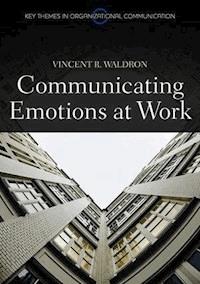
Communicating Emotion at Work chronicles the rich emotional experiences of employees drawn from a broad cross-section of industries and occupations. It takes a decidedly positive approach, recognizing that emotional communication is a vital and creative response to the challenges of life in complex organizations. The text introduces readers to the engaging and cross-disciplinary body of research that has emerged around organizational emotion. At the same time, each chapter is steeped in real-life emotional narratives, concrete examples, and the contemporary trends that are changing the emotional tenor of work.
Sie lesen das E-Book in den Legimi-Apps auf:
Seitenzahl: 326
Veröffentlichungsjahr: 2013
Ähnliche




















Communicating Emotion at Work
Key Themes in Organizational Communication
Organizational Rhetoric, Charles Conrad
Dissent in Organizations, Jeffrey Kassing
Organizational Socialization, Michael W. Kramer
Communicating Emotion at Work, Vincent R. Waldron
Communicating Emotion at Work
Vincent R. Waldron
polity
Copyright © Vincent R. Waldron 2012
The right of Vincent R. Waldron to be identified as Author of this Work has been asserted in accordance with the UK Copyright, Designs and Patents Act 1988.
First published in 2012 by Polity Press
Polity Press65 Bridge StreetCambridge CB2 1UR, UK
Polity Press350 Main StreetMalden, MA 02148, USA
All rights reserved. Except for the quotation of short passages for the purpose of criticism and review, no part of this publication may be reproduced, stored in a retrieval system, or transmitted, in any form or by any means, electronic, mechanical, photocopying, recording or otherwise, without the prior permission of the publisher.
ISBN 978-0-7456-8068-2
A catalogue record for this book is available from the British Library.
The publisher has used its best endeavours to ensure that the URLs for external websites referred to in this book are correct and active at the time of going to press. However, the publisher has no responsibility for the websites and can make no guarantee that a site will remain live or that the content is or will remain appropriate.
Every effort has been made to trace all copyright holders, but if any have been inadvertently overlooked the publisher will be pleased to include any necessary credits in any subsequent reprint or edition.
For further information on Polity, visit our website: www.politybooks.com
Contents
List of Figures and Tables
Preface
Acknowledgments
1 Emotional Connections: Intersections of Communication, Work, and Feeling
The Ubiquity of Emotional Communication
Five Types of Organizational Emotion
Emotional labor and surface acting
Emotional work and deep acting
Relational emotion
Emotional boundary spanning
Emotional effects
Why Take an Organizational Communication Perspective?
Good Work: Emotional Communication and Moral Meanings
Survival of the Kindest?
Emotion-Guided, Interest-Sensitive Communication
Emotion guided
Interests and goals
Emotionally Competent Employees
Conclusion
2 Communicating Emotion: Levels of Organization and Forms of Expression
Levels of Communication
Individual
Relational
Workgroup
Organizational
Occupational
Societal
Global
Processes of Emotional Communication
Non-verbal cues
Words and language
Tactics
Interaction sequences
Emotion sharpening
Emotion uncovering
Blunders and slips
Narratives
Rituals
Conclusion
3 Emotional Occupations With Joshua Danaher
Emotional Jobs
Surface Acting and Boundary Work: Meet the “Director of First Impressions”
Emotional Believers: Deep Acting and the Education of Book Salespersons
Emotion Prescribers: The Curious Case of “Dr Phil”
Emotion Elicitors: Stand-up Comics, Film-makers, and Police Officers
Emotional Meaning Makers: Clergy, Gurus, and a “Spiritual Warrior”
Emotional Resilience Builders: Trainers, Drill Sergeants, and Medical Students
Emotion Orchestrators: Athletic Coaches, Funeral Directors, and Managers
Coolers and Soothers: Crisis Workers, Counselors, and Con Artists
Moral Emoters: Social Activists, Politicians, and Cable Television Hosts
Emotional Utility Players
Toxin Handlers
Mood shifters
Emotion articulators
Occupational Socialization: Learning the Emotional Ropes
Parenting and family experiences
Childhood activities
Media modeling
Formal education and training
Diverse life experiences
Conclusion
4 Work Relationships: Getting Emotional with Peers, Supervisors, and Others
Work Relationships are Emotionally Unique
Workplace varieties of relational emotion
Types of Work Relationships
Leaders and followers
Peer Relationships
Workplace friendships
Emotionally difficult relationships
Team relationships
Creative partnerships
Relational Functions of Emotional Communication
Provoking
Detecting/anticipating
Maintaining
Tipping
Intensifying
Forgiving
Soothin g
Remembering/reconstructing
Developing/maturing
Conclusion
5 Emotion and Organizational Morality
The Signal Function of Emotion
Signaling danger
Signaling moral jeopardy and moral decay
Signaling face threat
Moral Emotions at Work
Documenting the moral emotions
Moral Emotions and Communication Process
Emotional Tyranny
Emotional weaponry: a brief primer
Conclusion: Emotion as a Guide to Doing Good
6 Emotional Trends
Emotional Connectivity
Ephemeral Emotional Connections
Emotional Jobs, Products, and Services
Emotional jobs
Emotional products and services
Economic Trends and Emotional Costs
Popular Media and Emotional Desensitization
Emotional Rampage
Emotional Mending: Justice and Forgiveness at Work
Conclusion
Index
Figures and Tables
Figures
5.1 Communication of the moral emotions
Tables
1.1 Selected questions about emotional communication in the workplace
1.2 The roles played by emotions in Alejandra’s work life
1.3 Selected prosocial emotions and workplace interactions that yield them
2.1 Emotional communication and levels of social organization
2.2 Selected work contexts, cues, and interpretative considerations
2.3 Selected emotional words and phrases from work-related Internet sites
2.4 Emotional communication tactics with illustrative examples
3.1 Emotional occupations: categories, illustrative jobs, and communication functions
4.1 Emotional descriptions of work relationships
5.1 Some moral emotions and social referents
5.2 Tactics of emotional tyrannists with discourse examples
6.1 Some reasons for temporary work
Preface
In recent years, researchers of communication and organizational behavior have become intensely interested in the communication of emotion at work. This interest is also evident in our classrooms, as those of us who teach courses in organizational communication or organizational behavior pay more attention to the topic. At research conferences, audiences pack those sessions that address the emotional experiences of workers. Why the interest? Several reasons come to mind. First, researchers have documented the importance of emotional communication practices in a startling array of occupations: healthcare providers, teachers, managers, detectives, airline attendants, emergency responders, salespeople, public relations specialists, and even sex workers, among so many others. Second, despite cultural norms that discourage workplace emotionality, nearly all workers recall vivid and career-changing emotional experiences. One might recall the intense feelings of camaraderie and pride that attended the successful completion of a grueling team project. Another remembers feelings of burning indignation when a team member unfairly took credit for the work she completed. Yet another recollects feelings of anger and fear when confronted with a bullying boss or a harassing co-worker. Feelings of admiration, frustration, awe, grief, joy, and glee – these too are memorable markers on the emotional landscape of a career.
Another, third, reason for the interest is that emotional experiences mark meaningful episodes in working lives that might otherwise be routine, regulated, and mundane. Experiences become emotional because they matter. We get emotional when our peers support us through difficult moments or our work identity comes under unexpected attack. Our emotions signal danger. They tell us when our career is at risk or our values are under attack. But they also bond us to leaders and colleagues in enriching, supportive, and lasting relationships. Organizations that tend to the emotional climate of the workplace are more likely to detect lapses in ethical conduct and to redress sagging employee morale. In all of these ways, the communication of emotion creates important meanings for employees and their organizations.
Finally, emotion interests us because it is often a communicative experience. Certainly, emotion is a psychological and biological phenomenon. But it is through communication that emotion is recognized in others, expressed, regulated, interpreted, and elicited. The communication of emotion is an important competency for workers, their leaders, and organizations. Emotional norms are communicated via popular media, including reality TV shows such as The Apprentice and “mockumentaries” such as The Office. Communication technologies such as Facebook, videoconferencing, and even email can inhibit and enhance emotional communication. Finally, emotion is communicative in that larger cultural and economic discourses shape the emotional experiences of employees – through gender roles, definitions of heroism and leadership, the degree to which feelings associated with work are discounted or granted economic value, and many other factors.
The Approach: Research-Grounded, Theory-Guided, Example-Driven
The book is grounded in the author’s own research and that of other emotion researchers. Students are exposed to key contributions by scholars of organizational behavior, management, psychology, and organizational communication. Each chapter shares the lived experiences of working people – as collected through surveys, interviews, and the author’s own observations. Some of the examples are based on the experiences of my students, many of whom work full or part time. In all cases, names and identifying details are fictionalized to protect the identities of those involved. Readers will hear from probation officers, factory workers, teachers, salespeople, managers, customer service representatives, social workers, and engineers, among others. They will hear family members describe how the emotional nature of work influences their personal lives. Where illustrative, I draw from my own experiences working in a variety of corporate and university settings.
Keeping in mind the undergraduate reader, the text is rich in examples and applications: rich quotations from working people; references to popular media programs and significant news stories; brief case analyses; and summaries of interesting or foundational research studies. Each chapter begins with a stimulating quotation, narrative, or question. Always, the focus is squarely on communication and the concepts that student readers will encounter in their courses.
How is the Book Organized?
Communicating Emotion at Work begins with an accessible introduction to the study of emotion in the workplace. In chapter 1, students learn that emotional communication has been an interest of scholars for literally thousands of years. The emotionally unique features of work are discussed as are some of the seminal studies of emotional labor. The chapter familiarizes readers with different conceptualizations of emotion and the recent emphasis on “positive” emotions. Ultimately, chapter 1 makes the case that emotional communication plays a crucial, humanizing, and constructive role as employees perform tasks, make meaning, forge healthy and just relationships, and navigate the requirements of work, family, and culture. In a variety of ways, emotional communication helps employees and organizations do good.
Chapter 2 is all about communication. It examines the functions of emotional communication at various levels of organizations – individual, relational, workgroup, organizational, occupational, societal, and global. The second half of the chapter delineates the many and rich forms of emotional communication in the workplace. I consider non-verbal cues, emotion words, metaphors, stories, interaction patterns, rituals, externally directed organizational messages, and many others. Chapter 3 chronicles an interesting assortment of emotional occupations. Students will read about the emotional labors of crisis workers and con artists, salespeople and sports coaches, secretaries and religious leaders.
Chapter 4 explains how communication processes get played out as work relationships are nurtured, maintained, and terminated. The emotional requirements of leadership and followership receive attention. Supportive and troubled peer relationships are discussed as are some less familiar relational bonds, including creative teams, partnerships, and workplace romances. Chapter 5 focuses attention on the ethical dimensions of emotional communication at work. The important contributions of the “moral emotions” are explored, with particular attention given to such feelings of guilt, pride, envy, and embarrassment. Emotional communication is depicted as an important check on immoral practices and a contributor to just work relationships. The immoral communication tactics of “emotional tyrants” are detailed, as are the sometimes unintended moral consequences of organizational procedures and communication practices.
Communicating Emotion at Work ends with a look at the societal and economic trends that are shaping the emotional lives of workers. Among these are round-the-clock connectivity, the rise of temporary work arrangements, occupational trends, new products and services, and the role of forgiveness in redressing hurt and wrongdoing at work. As is the case throughout this book, the possibilities of emotional exploitation are fully acknowledged, but the productive, ethical, and humanizing aspects of emotional communication are embraced. Communicating Emotion at Work makes the case that communication of feeling is not only necessary at work; it is often good.
Acknowledgments
The study of emotion at work has interested me since my days as a PhD student at Ohio State in the late 1980s. Due to the demands of my other research interests and responsibilities, I have had the pleasure of writing on the topic only sporadically over the years. Nonetheless, my passion has never abated, due largely to the continuous stream of intriguing studies, stimulating conversations, and supportive messages provided by colleagues in the discipline. Some of these exchanges occurred long ago and others are of more recent vintage.
Kathleen Krone was among my first mentors and we co-authored one of the earlier studies on the communication of emotion at work – a rewarding experience that I still remember with fondness. Although we speak only rarely, over the years I have deeply appreciated her quiet support, stimulating research questions, good humor, and humane approach to the work of teaching and researching. As a graduate student and young professor, I had the opportunity to chat with Linda Putnam on a variety of occasions about our mutual interest in workplace emotions. Her encouragement during those early years convinced me that I was on to something important, something worth studying for the long run. Thanks, Linda. In 1999, Sally Planalp wrote an important book on communication and emotion – one that inspired me to try the same thing one day. Although her understanding of emotion far exceeds mine, that day has finally arrived.
More recently, I have had the pleasure of working at the same institution (Arizona State University) with Sarah Tracy, whose research on workplace emotion continues to be prolific, thought-provoking, and useful to real-life workers and my own students. I met Pamela Lutgen-Sandvik in one of Sarah’s doctoral seminars some years ago. Pam’s research is fresh, inspiring, and grounded in an assumption that I think we share: that the nature of emotional communication is an important indicator of the degree to which a workplace community is healthy, ethical, and humane.
Various other scholars have offered collegial support or inspiration over the many years that I have been contemplating this project. To name just a few: Ted Zorn, Jeff Kassing, Patricia Sias, Don Cegala.
My deepest thanks go to all of the many students who shared their emotional work experiences in class. More than anything else, their stories keep me thinking about the power of emotional communication at work.
Josh Danaher, my former student and co-author on the “Emotional Occupations” chapter, proved to be an inquisitive, hard-working, and patient collaborator. Josh has a bright future as a communication educator and I am grateful for his help.
Finally, as always, I thank my wife Kathleen for her invaluable help as I work though my most challenging tasks, which include, appropriately enough, communicating emotion at work.
1
Emotional Connections
Intersections of Communication, Work, and Feeling
Ryan was a senior manager who kept two fishbowls in his office. In one were goldfish; in the other, a piranha. Ryan asked each of his staff to pick out the goldfish that was most like themselves (the spotted one, the one with the deeper color and so forth). Then, when Ryan was displeased with someone, he would ask that person to take his or her goldfish out of the bowl and feed it to the piranha.
Frost, 2003: 35
This rather chilling tale, shared by organizational scholar Peter Frost, illustrates vividly how communication and emotion are so richly and complexly intertwined in organizations. Ryan appears to be a tyrannical manager with a taste for fish-sacrificing ritual, but only a few unfortunate employees will come to know this through direct observation. The vast majority will learn about Ryan’s terrorizing ways through communication. It will be a coworker’s telling of the story that strikes fear in their hearts. Indeed, we can imagine shudders of emotion rippling down the hallways as this fishy tale flows ever further from Ryan’s office. Wide-eyed colleagues will gather around the office coffee pot, gasping as they hear the story for the first time. What feelings will they share during those hushed conversations? in the knowledge that “my fish” has yet to be terrorized? at upper management’s failure to curb Ryan’s over-the-top antics? about their own efforts to ingratiate themselves with Ryan, hoping to remain in his good graces and out of the piranha’s lair? of what the future may bring? Mutual at their capacity to thrive in a “survivalof-the-fittest” organizational culture? As the story is told and then retold, emotion will be created collectively: expressed, interpreted, labeled, modified, magnified, and remembered.
Lesen Sie weiter in der vollständigen Ausgabe!
Lesen Sie weiter in der vollständigen Ausgabe!
Lesen Sie weiter in der vollständigen Ausgabe!
Lesen Sie weiter in der vollständigen Ausgabe!
Lesen Sie weiter in der vollständigen Ausgabe!
Lesen Sie weiter in der vollständigen Ausgabe!




