


Complete Works of Wilkie Collins: Novels, Short Stories, Plays, Essays and Memoirs (Illustrated) E-Book
Wilkie Collins
1,99 €
Mehr erfahren.
- Herausgeber: Booksell-Verlag
- Kategorie: Krimi
- Sprache: Englisch
The "Complete Works of Wilkie Collins" is a monumental collection that encompasses the full range of Collins's literary output, including his celebrated novels, gripping short stories, enlightening essays, and theatrical works. Known for pioneering the detective genre, Collins masterfully intertwines suspense and social commentary within his narratives. His distinctive style blends vivid characterization with intricate plotting, employing a rich tapestry of narrative techniques, including unreliable narrators and multiple perspectives, all set against the backdrop of Victorian society, where issues of social class and gender are deftly explored. Wilkie Collins (1824-1889) was a contemporary of Charles Dickens and a prominent figure in the Victorian literary scene. His personal experiences, such as living with chronic illness and navigating complex familial relationships, deeply informed his writing. Collins's friendships with notable literary figures and his keen interest in the burgeoning fields of psychology and sociology are reflected in his works, offering modern readers both entertainment and profound insights into human nature. This comprehensive anthology is an essential acquisition for literary enthusiasts and scholars alike, as it not only preserves Collins's artistic legacy but also illuminates the socio-cultural dynamics of 19th-century England. Readers are invited to delve into the ingenuity of Collins's storytelling, where every story unravels a compelling narrative, encouraging reflection on morality and society. In this enriched edition, we have carefully created added value for your reading experience: - A comprehensive Introduction outlines these selected works' unifying features, themes, or stylistic evolutions. - The Author Biography highlights personal milestones and literary influences that shape the entire body of writing. - A Historical Context section situates the works in their broader era—social currents, cultural trends, and key events that underpin their creation. - A concise Synopsis (Selection) offers an accessible overview of the included texts, helping readers navigate plotlines and main ideas without revealing critical twists. - A unified Analysis examines recurring motifs and stylistic hallmarks across the collection, tying the stories together while spotlighting the different work's strengths. - Reflection questions inspire deeper contemplation of the author's overarching message, inviting readers to draw connections among different texts and relate them to modern contexts. - Lastly, our hand‐picked Memorable Quotes distill pivotal lines and turning points, serving as touchstones for the collection's central themes.
Das E-Book können Sie in Legimi-Apps oder einer beliebigen App lesen, die das folgende Format unterstützen:
Veröffentlichungsjahr: 2024
Ähnliche










Complete Works of Wilkie Collins: Novels, Short Stories, Plays, Essays and Memoirs (Illustrated)
Table of Contents
Introduction
This collection presents the full span of Wilkie Collins’s achievement, bringing together his complete novels alongside a rich array of novellas, short stories, plays, essays, and memoirs. It is conceived to show the breadth and coherence of a writer who shaped popular and literary culture in the Victorian era. From early experiments to late reflections, the volumes chart his persistent engagement with narrative suspense, social institutions, and the pleasures of storytelling. By gathering major fiction, theatrical works, journalistic pieces, and life writing, the collection enables readers to follow Collins’s methods across forms and to see how themes recur, deepen, and transform throughout his career.
The contents span multiple genres and text types. Readers will find sensation novels, domestic and legal dramas, investigative and adventure narratives, novellas and shorter tales, collaborative seasonal stories, and stage adaptations. The plays include original dramas and versions of his own fiction written for the theatre. Essays, addresses, and journalism explore literature, art, copyright, social questions, and popular entertainments. Travel writing appears in descriptive sketches, while memoir and biography offer authorial self-portraiture and family history. Selections from journals and correspondence are included within the biographical volume on his father, providing documentary textures that complement the fictional uses of letters, statements, and testimonies.
The novels gathered here show Collins at full range. Landmark titles such as The Woman in White, The Moonstone, Armadale, and No Name sit alongside Basil, Antonina, The Dead Secret, Man and Wife, The Law and the Lady, The New Magdalen, Poor Miss Finch, The Black Robe, The Fallen Leaves, Jezebel’s Daughter, Heart and Science, The Two Destinies, The Evil Genius, The Legacy of Cain, Guilty River, A Rogue’s Life, I Say No, Blind Love, and others. Together they reveal the evolution of the sensation mode, the interplay of crime and domesticity, the pressure of law and custom, and an enduring interest in evidence and interpretation.
Collins’s shorter fiction displays remarkable versatility. Collections and single tales such as After Dark, The Queen of Hearts, The Ostler, Miss or Mrs?, The Haunted Hotel, My Lady’s Money, The Dead Alive, The Frozen Deep and Other Stories, The Dead Hand, The Devil’s Spectacles, and Little Novels offer compact studies in suspense, character, and moral testing. Many are framed through storytellers, diaries, letters, or legal statements, refining techniques that also energize the longer work. Other pieces—A Message from the Sea, The Perils of Certain English Prisoners, and The Lazy Tour of Two Idle Apprentices—show a collaborative and periodical context that fueled experiment and reach.
This collection also foregrounds the interplay between page and stage. The Frozen Deep and No Thoroughfare exemplify Collins’s collaborations, moving between narrative and performance. Seasonal numbers such as A House to Let and The Haunted House include his contributions to multi-author projects, where linked episodes and shared settings encouraged inventive forms. These works illuminate how Victorian audiences encountered stories across media and occasions. By reading them alongside the novels and independent tales, one can trace Collins’s instinct for theatrical scene-building, his management of revelation and surprise, and his responsiveness to the communal, festive traditions that shaped popular storytelling in his time.
The dramatic corpus reinforces Collins’s reputation as a craftsman of plot and situation. Plays such as The Woman in White, No Name, The New Magdalen, The Moonstone, Miss Gwilt, Black and White, The Frozen Deep, and No Thoroughfare adapt or extend narrative materials for the stage. They sharpen confrontations, concentrate motive, and test ideas in public performance. The theatre demanded economy and clarity, and Collins’s dramatic writing in turn influenced the pacing and architecture of his fiction. Seen together, the plays and novels disclose a two-way exchange: theatrical instinct informs the printed page, while narrative layering enriches the stage picture.
The biographical and memoir elements deepen context. Olive Logan’s Wilkie Collins’ Charms offers a contemporary portrait of the author’s appeal and manner, situating his celebrity within a lively cultural scene. Memoirs of the Life of William Collins, with selections from journals and correspondence, records the life and work of the painter William Collins and reveals the younger Collins’s close attention to artistic labor, family history, and documentary evidence. These materials illuminate the roots of Collins’s descriptive precision and his persistent interest in the relationship between art, audience, and everyday life, providing a human frame around the diverse imaginative worlds collected here.
The essays and literary writings show Collins as an observer and participant in Victorian debates. How I Write My Books reflects on craft; Considerations on the Copyright Question addresses the conditions of authorship; A Dramatic Author and Deep Design on Society probe theatre and manners; Rambles Beyond Railways extends his curiosity to travel and place; The Exhibition of the Royal Academy and The National Gallery and the Old Masters engage with art and public taste. Pieces such as Magnetic Evenings at Home, The Debtor’s Best Friend, and sermon, address, or thanks sketches display wit, advocacy, and topicality, revealing a writer attuned to institutions and audiences.
Across forms, Collins returns to unifying concerns: identity under pressure, the ethics of knowledge, the reach of law, and the ambiguities of testimony. Hidden histories collide with public records; private rooms echo with social consequences. Marriage contracts, wills, and business documents frame choices and constrain lives. Medical settings and scientific disputes introduce questions of authority and care. Investigation—formal and informal—becomes a means of understanding who we are and how we can be misled. The result is a coherent imaginative world, one where evidence is weighed, narratives compete, and truth depends upon perspective, memory, and the patience to read closely.
Stylistically, Collins is notable for structural invention and control. He favors multiple narrators, embedded statements, and documentary fragments that encourage readers to judge credibility and assemble the case. Chapters often end with poised turns, a legacy of serialization that enhances momentum without sacrificing detail. Dialogue is tuned to character and social role, while descriptive passages focus on telling objects, rooms, and gestures. Professional milieus—legal offices, medical practices, studios, and theatres—are rendered with confident specificity. Melodramatic situations appear, but are anchored in motive and consequence. This blend of architecture and atmosphere sustains suspense and rewards careful, comparative reading across the oeuvre.
Collins’s social imagination is consistently engaged. He scrutinizes the status of women within marriage and property law, the vulnerabilities created by inheritance and reputation, and the pressures exerted by class and employment. He is attentive to bodily difference and perception, and to the ways prejudice distorts judgment. Travel and maritime settings, colonial routes, and provincial and metropolitan spaces widen the field of action without diminishing domestic stakes. Essays amplify these concerns by addressing institutions and public culture directly. Taken together, the works consider how individuals negotiate systems—and how sympathy, responsibility, and reform might be imagined within those systems.
Read as a whole, the collection demonstrates how one author reconfigured narrative across media and decades. The major novels define a tradition of sensation and investigation; the shorter fiction compresses experiment; the plays confirm a scenic intelligence; the essays and memoirs articulate principles and contexts. Recurring motifs and techniques allow readers to trace continuities, while the variety of settings and problems shows inexhaustible curiosity. Whether approached sequentially or thematically, these volumes present a complete, interlinked body of work whose influence remains evident, and whose vitality lies in the careful interplay of plot, character, and the documents by which lives are told.
Author Biography
Wilkie Collins (1824–1889) was a British novelist, short-story writer, and dramatist whose work helped define Victorian sensation fiction and lay foundations for modern detective narratives. Emerging in mid-nineteenth-century London’s vibrant print culture, he married meticulous plotting with social critique, questioning the stability of marriage, property, and identity. His bestselling novels The Woman in White and The Moonstone became touchstones for readers and critics alike, prized for narrative invention and psychological suspense. A close professional associate of Charles Dickens, Collins mastered serial publication and theatrical adaptation, reaching large audiences across classes. His fiction remains central to studies of popular literature, law, and crime.
Raised in an artistic milieu and spending formative time in Italy, Collins acquired languages and a taste for history and art that would animate his early writing. Educated at private schools in England, he entered commercial employment as a young man before turning to legal study at Lincoln’s Inn. Called to the bar in the early 1850s, he chose not to practice, yet his training in evidence, testimony, and institutional procedure shaped his plots. Legal dilemmas, disputed wills, and contested identities became recurring engines of suspense. Travel, especially in Britain, also supplied material, and he began publishing journalism alongside sketches and tales.
Collins’s first novel, Antonina, set in late antiquity, appeared in 1850, followed by the travel book Rambles Beyond Railways on Cornwall. Basil and other early fictions established his interest in moral transgression and domestic peril. In the early 1850s he joined the circle around Dickens, contributing prolifically to Household Words and, later, All the Year Round. There he refined episodic storytelling, adjusting pace, cliffhangers, and character revelation for serial form. He acted and wrote for the stage, notably collaborating with Dickens on the play The Frozen Deep, and learned how theatrical effects could be translated into narrative shocks on the page.
The Woman in White, serialized in 1859–60, made Collins a literary celebrity. The novel’s dossier-like structure, with multiple narrators and documentary voices, foregrounded questions of evidence and credibility while turning domestic life into a site of high suspense. He extended these concerns in works such as The Dead Secret, No Name, and Armadale, blending romance, mystery, and social observation. Short-story collections such as After Dark and The Queen of Hearts showcased his gift for framed narratives and embedded testimonies. Many works moved fluidly between page and stage, amplifying acclaim and sparking debate about sensation’s cultural value.
The Moonstone (1868) is frequently cited as a pioneering English detective novel, notable for its ensemble of narrators, attention to investigative method, and exploration of perception altered by opiates. Around the same time and after, Collins pursued social questions through fiction: Man and Wife scrutinized marriage and athletic celebrity; The New Magdalen examined charity and reputation; The Law and the Lady placed a woman investigator at the center of a case shadowed by legal ambiguity. His technique combined legal intricacy with vivid characterization, maintaining suspense without reliance on supernatural explanation. He also co-authored No Thoroughfare with Dickens for stage and print.
Despite recurring ill health in the 1870s and 1880s, Collins remained productive, publishing novels that engaged contemporary controversies. Heart and Science argued against vivisection within a medical melodrama, while works like Jezebel’s Daughter, The Black Robe, I Say No, The Evil Genius, and The Legacy of Cain continued to test the boundaries of respectability and belief. Though some reviewers found the later books uneven, they maintained a loyal readership and lent themselves to adaptation. His final project, Blind Love, was left incomplete at his death and was issued soon afterward, completed for publication by another novelist.
Collins died in 1889, having shaped key forms of Victorian popular narrative. His mastery of serial suspense, multi-voiced testimony, and intricate plotting influenced later crime and mystery writers, including Arthur Conan Doyle, and informed the development of detective fiction conventions. Twentieth-century critics sometimes downplayed his achievement, but renewed scholarship from the late twentieth century onward restored his reputation, emphasizing the sophistication of his structures and his engagement with law, gender, disability, empire, and the ethics of science. His novels remain widely read and frequently adapted for stage, film, and television, valued for both narrative drive and cultural insight.
Historical Context
William Wilkie Collins (1824–1889) wrote across the full span of the high Victorian age, and his oeuvre—novels, tales, plays, essays, and memoirs—registers the era’s converging pressures of urban modernity, legal reform, scientific discovery, and imperial reach. Born in Marylebone, London, and dying in the same city, he lived through the railway revolution, the Great Exhibition of 1851, the Indian Rebellion of 1857, the Second Reform Act of 1867, and the spread of mass literacy. His long collaboration with Charles Dickens linked him to the most powerful engine of mid-century print culture. Across this collection, domestic spaces become theaters of social change, and private dilemmas mirror public debates about authority, expertise, and justice.
Collins’s earliest sustained project, Memoirs of the Life of William Collins, RA (1848), arose from his proximity to the institutions of British art. His father, a Royal Academician, exhibited in Trafalgar Square and at Somerset House; the family’s itineraries included Italy and the Low Countries, mapping the grand tour’s visual education onto Wilkie’s descriptive practice. Essays such as The Exhibition of the Royal Academy and The National Gallery and the Old Masters draw on this training, tracking how curating, connoisseurship, and public taste shaped narrative ways of seeing. The painterly patience and attention to detail that inform Antonina, Basil, and later sensation fiction sprang from this apprenticeship in looking.
Legal culture frames much of Collins’s plotting. He entered Lincoln’s Inn in 1846, just as Victorian statutory reforms were recasting private life. The Matrimonial Causes Act (1857) established a civil Divorce Court; the Married Women’s Property Acts (1870, 1882) began to pry financial agency from coverture; and the Debtors Act (1869) largely ended imprisonment for debt. Scottish anomalies—irregular marriage, the Not Proven verdict—gave him comparative leverage. These contexts animate narratives of contested wills, clandestine unions, and moral liability, while essays such as Considerations on the Copyright Question and A Clause for the New Reform Bill reveal a writer alert to the machinery of legislation and public policy.
His career cannot be separated from mid-century periodicals. Dickens launched Household Words in 1850 and All the Year Round in 1859, platforms that serialized Collins’s fiction and essays and incubated collaborative Christmas numbers. The Frozen Deep was born in private theatricals at Tavistock House in 1856–57 before public performances at Manchester’s Free Trade Hall. No Thoroughfare followed as a Christmas story (1867) and a Drury Lane spectacle. A House to Let and The Haunted House display the seasonal anthology’s conversational intimacy. The Queen of Hearts and My Miscellanies recycle magazine practices—frames, tale-telling, and topical vignettes—that trained readers to chase clues and savor voices across installment breaks.
Collins helped define the sensation novel, a form nourished by circulating libraries (Mudie’s), railway bookstalls (W. H. Smith), and triple-decker economics. The Woman in White (1859–60) and No Name (1862) installed domestic secrecy, forged identities, and legal traps at the center of middle-class life; Armadale (1866) pressed the genre’s psychological and ethical daring; The Moonstone (1868) fused sensation with detection. These works exploited the serial cliffhanger and the culture of the weekly number. Their plausibility leaned on the modern city’s new thresholds—hotels, lodging-houses, suburban roads—spaces where anonymity flourished and credibility had to be reconstructed from documents, chatter, and the theater of everyday performance.
The professionalization of policing and the rise of forensic reasoning furnished Collins with narrative apparatus. London’s Metropolitan Police (1829) and its Detective Branch (1842) signaled a shift from private prosecution to state investigation. Public fascination with cases like the Road Hill House murder of 1860 primed readers for multiple narrators, exhibits, and depositions. In long and short forms alike—The Dead Secret, My Lady’s Money, Who Killed Zebedee, the story-cycle After Dark—Collins staged inquiries in which evidence is partial and testimony interested. This procedural texture paralleled advances in toxicology, handwriting analysis, and photography, while critiquing the complacency of class-bound credibility and the opacity of institutional routines.
Medical modernity, from anesthesia after 1846 to widespread use of laudanum, shadows Collins’s pages and his biography. His own dependence on opiates during bouts of neuralgia and gout acquired narrative form in The Moonstone’s pharmacological hinge and in characters whose bodies are negotiated by physicians, nurses, and charlatans. The Pharmacy Act (1868) tightened access to poisons; the Lunacy Act (1845) rationalized asylums and oversight, themes legible in wrongful confinement plots. The antivivisection controversy culminated in the Cruelty to Animals Act (1876), prefiguring Heart and Science’s polemic. Essays like Magnetic Evenings at Home and Fie! Fie! Or The Fair Physician probe mesmerism, quackery, and the marketplace of experimental cures.
Empire and mobility supplied both substance and settings. The Great Exhibition (1851) publicly unveiled the Koh-i-Noor, emblem of imperial plunder later refracted in The Moonstone’s contested diamond. The Indian Rebellion (1857) altered British self-understanding and haunted tales of retribution and cultural misunderstanding. Collins’s geographical canvas stretched to Rome in Antonina, to Venice and Trieste in The Haunted Hotel, and to Frankfurt’s counting-houses in Jezebel’s Daughter, while maritime stories—A Message from the Sea, John Steadiman’s Account of the Wreck of the Golden Mary—rode steamship routes and Atlantic networks. Imperial wars, consular paperwork, and tourist circuits made distant conflicts intimate, imbuing plots with transnational obligations and anxieties.
War and relief culture threaded through Collins’s collaborations and social fiction. The Crimean War (1853–56) reoriented British nursing and logistics; the Franco-Prussian War (1870–71) exposed civilians to siege and displacement. The New Magdalen harnessed wartime emergency to examine charity, sexual reputation, and the right to begin again. The Frozen Deep, written amid Victorian obsession with Sir John Franklin’s lost Arctic expedition (1845), transformed polar endurance into a drama of sacrifice and fate. Collins moved between the stage, the feuilleton, and the newsroom to test how crisis reshaped private consciences, and he used benefit performances and Christmas publishing to braid philanthropy with popular entertainment.
Finance and class mobility supplied engines for suspense. The expansion and periodic shocks of joint-stock capitalism—from railway scrip to the Overend Gurney collapse (1866)—made the middle classes newly precarious. Trusts, wills, and inheritance disputes, framed by the Wills Act (1837) and the Legitimacy Declaration Act (1858), furnished legal machinery for domestic plot. The Debtors Act (1869) reframed personal failure and credit, a topic echoed in Collins’s essay The Debtor’s Best Friend and in tales of impecunious clerks and scheming guardians. In Jezebel’s Daughter and Basil, the friction between aspiration and pedigree animates courtship, crime, and confession, mapping London’s boardrooms and backstreets as interlocking theaters of risk.
The Victorian stage, regulated by the Theatres Act (1843) and the Lord Chamberlain’s licensing, shaped Collins’s dramaturgy and his reputation. Actor-managers at the Adelphi and Drury Lane scaled up sensation: No Thoroughfare (1867–68) became a visual extravaganza; The Frozen Deep moved from private theatricals to public benefit; stage versions of The Woman in White, No Name, Miss Gwilt, and The Moonstone multiplied audiences. Performers like Charles Fechter and, later, Henry Irving helped define a manner of psychological melodrama that fed back into fiction’s dialogue and timing. Essays such as A Dramatic Author anatomize the labor, financing, and censorship pressures behind apparently effortless theatrical thrills.
Travel writing and the georgic formed a counterpoint to urban modernity. Rambles Beyond Railways (1851) records Cornwall just as iron rails were knitting Britain together, preserving miners’ lore, cliff-top chapels, and tidal rhythms on the edge of the steam age. Sea-stories in The Frozen Deep and Other Stories, The Seafaring Man, and the collaborative Christmas numbers exploit lifeboats, packet-boats, and fogs as moral weather. The Royal National Lifeboat Institution (1824) and the spread of lighthouse engineering provided a heroic vernacular that Collins mobilized, while improvements in timetables and guidebooks let plots hinge on missed trains, tidal tables, and the punctuality—or treachery—of scheduled modern life.
Religious argument and skepticism traverse the collection. The “Papal Aggression” of 1850, when Rome restored a Catholic hierarchy in England, stirred anti-Jesuit polemic that surfaces in The Black Robe. Meanwhile, Darwin’s On the Origin of Species (1859) and Essays and Reviews (1860) unsettled inherited certainties; Collins often tests secular ethics detached from doctrine. The spiritualist vogue, parlors of table-turning, and mesmeric salons animate ghostly tales like The Haunted Hotel and midnight rituals in shorter fiction, where confession and exposure often mimic rites. Sermon for Sepoys and other topical pieces situate moral reasoning within imperial contexts, showing how theology, law, and sentiment jostled in public debate.
Questions of race and heredity were reframed by transatlantic events and new sciences. The American Civil War (1861–65) sharpened British arguments about slavery, citizenship, and empire, shadows detectable in Collins’s play Black and White and in stories attentive to outsiders’ status. Late-century criminal anthropology—popularized by Cesare Lombroso’s Criminal Man (1876)—fed speculation about innate propensity, a speculation Collins interrogated in The Legacy of Cain. The Dead Alive adapts an American miscarriage-of-justice case, binding Anglo-American legal cultures. Essays such as A Column to Burns and Burns Viewed as a Hat-Peg engage national character and commemoration, revealing how identity could be manufactured as readily as evidence.
The economics of authorship are legible across this volume. Steam presses, stereotyping, and wood-engraving enabled illustrated serials in London and New York; Harper’s Weekly printed Collins alongside All the Year Round, with artists like John McLenan visualizing scenes for transatlantic readers. Circulating libraries dictated the triple-decker’s scale and respectability; yellowbacks found travelers at W. H. Smith bookstalls. Before the Berne Convention (1886) and the American International Copyright Act (1891), piracy made the “copyright question” urgent; Collins’s essay on that subject and How I Write My Books disclose a craftsman negotiating cliffhangers, multiple narrators, and contracts in a competitive, globalizing marketplace for suspense.
Collins’s private arrangements, unconventional for his time, complicate the biographical essays and memoirs included here. From the late 1850s he maintained a long partnership with Caroline Graves while, from the mid-1860s, supporting a second household with Martha Rudd—living evidence of his skepticism toward marriage law as then constituted. Illness and laudanum shaped his late routine, yet he continued to publish into the 1880s: Jezebel’s Daughter, The Black Robe, Heart and Science, I Say No, Guilty River. He died in London on 23 September 1889 and was buried at Kensal Green. Blind Love appeared posthumously, completed by Walter Besant, a testament to durable professional networks.
Finally, the biographical sketch by the American journalist Olive Logan attests to Collins’s transatlantic celebrity and the appetite for author-centered reportage in the 1860s and 1870s. Alongside Reminiscences of a Storyteller and topical essays—from Thanks to Doctor Livingstone to Doctor Dulcamara, MP.—the collection situates his fictional intrigues within Victorian institutions: the court, the theater, the gallery, the newsroom, the laboratory, and the imperial port. Read together, these works chart Britain’s passage from paternalism to bureaucracy, from intuition to procedure, and from provincial horizons to global circuits. Collins’s method—restless, hybrid, ethically probing—remains a primer in how narrative can stage the pressures of history.
Synopsis (Selection)
Wilkie Collins' Charms (Biography by Olive Logan)
A contemporary profile that highlights Collins’s storytelling gifts, theatrical instincts, and popular appeal.
Memoirs of the Life of William Collins (With Selections From His Journals and Correspondence)
Collins’s biography of his painter father, drawing on journals and letters to chart his career, travels, and family life.
I Say No
At a ladies’ school, a young woman resists an unwelcome courtship while probing the murky circumstances of her father’s death and the charm of a suspect suitor.
A Rogue's Life
The picaresque misadventures of a clever scamp whose forgeries, masquerades, and near-scrapes test his luck and conscience.
Antonina
A historical romance set during the Gothic sack of Rome, tracing the collision of faith, love, and empire amid the city’s downfall.
Armadale
Two men linked by a dark legacy share the same name, while a brilliant adventuress sets a high-stakes plot in motion against them.
Basil
A young gentleman’s secret cross-class marriage unravels into betrayal, scandal, and a reckoning narrated in confessional form.
Blind Love
A dark courtship entangles a spirited heroine with a reckless Irish lord amid political intrigue and deception, in a novel completed by Walter Besant.
Guilty River
Returning to his boyhood home, a man falls for a miller’s daughter and confronts a sinister rival whose obsession turns violent.
Heart and Science
A critique of materialist science and vivisection set against a conflicted love story and a domestic power struggle.
Hide and Seek
The mystery of a deaf-mute girl’s parentage draws together an artist’s household, a circus past, and an old wrong demanding redress.
Jezebel's Daughter
A tale of poison, commerce, and calculated motherhood in Frankfurt, where a notorious widow schemes to secure her daughter’s future.
Man and Wife
Sporting mania and the quirks of British marriage law ensnare a gentlewoman in a coercive bond, inviting legal ingenuity and moral debate.
No Name
Two sisters are disinherited by a technicality; the younger embarks on audacious schemes to reclaim their lost inheritance.
Poor Miss Finch
A blind heroine and a pair of twin suitors—one marked by an unusual discoloration—set the stage for love, disguise, and ethical choice.
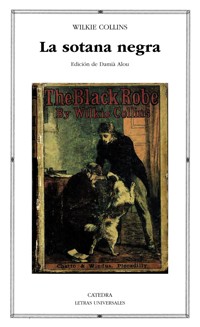
The Black Robe
A Jesuit strategist maneuvers a guilt-ridden gentleman toward conversion while entangling him in romance and moral peril.
The Dead Secret
A hidden letter concealing a family secret haunts a Cornish mansion, drawing a young couple and a tormented servant into its mystery.
The Evil Genius
A domestic drama of adultery, divorce, and custody that interrogates social judgment and the interests of a child.
The Fallen Leaves
A generous idealist returns from a utopian colony to rescue a ‘fallen’ girl in London, confronting class prejudice and moral compromise.
The Law and The Lady
A determined bride investigates her husband’s past ‘Not Proven’ verdict in a poisoning case to clear his name.
The Legacy of Cain
A minister adopts the child of a condemned murderess, testing nature versus nurture as the girl’s character and destiny unfold.
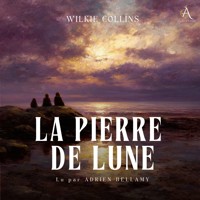
The Moonstone
A sacred Indian diamond disappears from an English country house, prompting a layered investigation that sifts motive, memory, and chance.
The New Magdalen
A battlefield encounter prompts a woman to assume another’s identity, pitting compassion and self-preservation against truth and status.
The Two Destinies
A supernatural-tinged romance reunites childhood sweethearts through visions and coincidences that seem to guide fate.
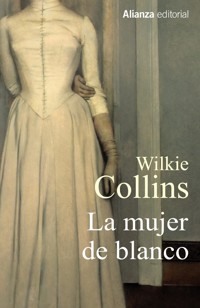
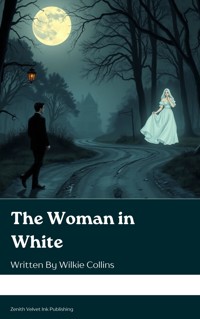
The Woman in White
A drawing master and two half-sisters battle a conspiracy orchestrated by a sinister aristocrat and his mesmerizing ally, heralded by a mysterious woman in white.
After The Dark
A framed collection in which a sight-impaired artist and his wife elicit tales from sitters, mixing domesticity with mystery and the uncanny.
The Ostler
A stable-hand is haunted by a recurring dream of a woman who tries to murder him, which seems to foretell a real threat.
Mr. Wray's Cash Box
An early tale of misplaced trust and petty fraud surrounding a missing strongbox in a small community.
The Queen of Hearts
Three retired brothers spin stories to delay their niece’s engagement, as a buried family secret quietly nears discovery.
A House to Let
An inquisitive neighbor investigates the odd comings and goings at an apparently empty house, uncovering a sentimental mystery.
The Haunted House (The Ghost in the Cupboard Room)
A comic-ghost episode in a collaborative Christmas number, where a ‘haunting’ yields a worldly explanation.
My Miscellanies
A miscellany of essays and short narratives on crime, travel, and curious incidents, revealing Collins’s reportorial eye.
No Thoroughfare (novella)
A foundling’s contested identity embroils him in mercantile intrigue and Alpine pursuit against a ruthless adversary.
Miss or Mrs?
A clandestine marriage between a ward and her music teacher is threatened by a legal technicality and a predatory suitor.
'Blow up with the Brig!'
A sea tale of treachery aboard a brig that builds toward catastrophic retribution.
The Hidden Cash
A brief mystery where concealed money breeds suspicion until its origin comes to light.
The Perils of Certain English Prisoners
Pirates seize a coastal outpost, and the captives’ resourcefulness drives an audacious escape and reckoning.
The Lazy Tour of Two Idle Apprentices
Two writers roam the North on a whim, recording comic mishaps, travel sketches, and a brush with the macabre.
The Last Stage Coachman
A nostalgic portrait of the dying days of stagecoach travel through the reminiscences of a veteran driver.
The Fatal Cradle
A domestic sensation sketch in which an infant’s fate triggers investigation and exposure of deceit.
The Frozen Deep and Other Stories
An Arctic expedition is shadowed by foreboding and self-sacrifice; companion tales probe fate and moral choice.
The Captain's Last Love
A seafarer’s late-blooming romance collides with duty and memory, forcing an irrevocable decision.
The Dead Hand
A gothic-tinged mystery where a sudden death leaves a chilling token and a lingering doubt about guilt.
The Devil's Spectacles
A playful fantasy in which magical spectacles reveal disconcerting truths, with comic and cautionary outcomes.
The First Officer's Confession
A mariner recounts a voyage marked by moral lapse and a secret that must be owned.
Farmer Fairweather
A rustic vignette where shrewd common sense steers a household through minor scandal and temptation.
Fatal Fortune
A forecast or chance omen appears to dictate a character’s course, testing belief in fate versus coincidence.
Fie! Fie! Or The Fair Physician
A satirical squib about a lady doctor whose presence stirs gossip and exposes prejudice.
Love's Random Shot
A light caprice in which misdirected intent and chance encounters rearrange affections.
The Midnight Mass
A brief supernatural episode set around a church service, where a vision unsettles the devout.
Nine O'Clock
A compact mystery keyed to a fixed hour, where timing unlocks a concealed wrongdoing.
A Passage in the Life of Mr. Perugino Potts
A humorous confession tracing an absurd entanglement to its tidy resolution.
The Haunted Hotel
A murder mystery tinged with superstition follows a vanished nobleman and a Venetian hotel that seems to hold his secret.
My Lady's Money
Banknotes vanish in a country house, casting suspicion on a dependent companion until amateur sleuthing and romance resolve the case.
Who Killed Zebedee
A dying ex-policeman reopens a lodgings-house murder, assembling overlooked clues at last.
Little Novels
A suite of compact tales that pivot on deception, irony, and moral reversals.
The Poetry Did It
A comic trifle in which a poem inadvertently sets off social confusion.
A Sad Death and A Brave Life
Twin sketches juxtaposing an untimely loss with a quiet act of heroism.
The Twin Sisters
Identical siblings invite misapprehension that tests loyalty and character.
Volpurno — Or The Student
An early melodrama of a brooding scholar caught in fatal passion and remorse.
John Steadiman's Account (The Wreck of The Golden Mary)
A captain’s narrative of shipwreck and survival foregrounds leadership, endurance, and providence.
A Message from The Sea
A sailor’s quest to right an old wrong draws a Cornish village into uncovering a suppressed inheritance.
The Seafaring Man
A nautical sketch in which a veteran mariner’s past returns in an unexpected claim.
The Dead Alive
A wrongful murder charge collapses when the ‘victim’ reappears, exposing zeal and evidentiary error.
No Name (play)
A stage adaptation condensing Magdalen Vanstone’s illicit schemes to reclaim her birthright and the moral test they pose.
The Frozen Deep (play)
A melodrama of Arctic peril, foreboding visions, and selfless devotion, originally staged by Dickens’s circle.
No Thoroughfare (play)
The theatrical version of the foundling-and-fraud tale, heightening villainy and Alpine pursuit for the stage.
Black and White (play)
A courtroom melodrama set in a colonial milieu, confronting racial identity, inheritance, and justice.
The Woman in White (play)
A dramatic retelling of conspiracy and wrongful incarceration centered on the enigmatic woman in white.
The New Magdalen (play)
A compact stage treatment of assumed identity, charity, and exposure under public scrutiny.
Miss Gwilt (play)
A spin-off melodrama focusing on Armadale’s brilliant adventuress and her designs.
The Moonstone (play)
A detective drama for the stage about a stolen sacred diamond and the inquiry that untangles its nocturnal theft.
Rambles Beyond Railways
Travel essays exploring Cornwall’s byways, mines, and coast, blending topography, folklore, and social observation.
Reminiscences of a Storyteller
Autobiographical reflections on Collins’s craft, influences, and professional life in print and on stage.
How I Write My Books
An authorial self-portrait outlining methods of plotting, research, and serialization.
Considerations on The Copyright Question
An argument for stronger authorial rights and fair remuneration in an international market.
The Debtor’s Best Friend
Advocacy for humane reform of debtor law and relief from imprisonment for debt.
The Exhibition of the Royal Academy
Art criticism surveying contemporary works with an eye to public taste and artistic merit.
The National Gallery and the Old Masters
A polemical review of gallery management and the public presentation of Old Masters.
Essays on Robert Burns (A Column to Burns; Burns Viewed As a Hat-Peg)
Two contrasting pieces that honor Burns’s genius while wittily deflating excessive hero-worship.
Satire and Social Commentary (A Clause for the New Reform Bill; A Shy Scheme; Address from the Queen to Certain of Her Subjects in Office; Awful Warning to Bachelors; Books Necessary for a Liberal Education; Deep Design on Society; Doctor Dulcamara, MP.; Pity a Poor Prince; Sermon for Sepoys)
Short satirical sketches lampoon bureaucracy, politics, marriage markets, quackery, and imperial attitudes.
Literary and Theatrical Essays (A Dramatic Author; A Fair Penitent; Magnetic Evenings at Home)
Reflections on playwrights’ labors, repentance on stage, and the mid-century craze for parlour mesmerism and spiritual entertainments.
Travel and Occasional Sketches (A Pictorial Tour to St George Bosherville; Thanks to Doctor Livingstone; The Cruise of the Tomtit; The Little Huguenot)
Brief excursions and commemorations that blend local history, light travelogue, and topical homage.
Complete Works of Wilkie Collins: Novels, Short Stories, Plays, Essays and Memoirs (Illustrated)
Introduction:
Wilkie Collins' Charms (Biography by Olive Logan)
In the Winter of 1879 Wilkie Collins wrote to ask me what day would be convenient for me to receive a friendly little visit from him. I was then residing at the Midland Grand, the precursor of the now numerous hotels of size and splendor which have contributed so largely to the attractiveness of London for the American traveller. My reply to the distinguished novelist was as cordial as I knew how to make it, We agreed upon a day, an hour, and on that day and promptly at that hour Mr. Wilkie Collins came.
He had been ushered into the music room of the hotel before I descended from my apartment above stairs. I found him seated upon a sofa near a large window, from which one obtained a marvellous view of the densely populous parish of St. Pancras. Directly beneath was the entrance to the Midland Railway Station with its wide courtyard inclosed behind high iron railings, in itself a remarkable scene of busy life: hundreds of cabs arriving and departing every hour, bringing or carrying away uncountable travellers; scores of porters lifting trunks (carefully, as is the custom in England) or running about with small parcels, umbrellas and the various impediments of those who journey by rail.
The old church of St. Pancras was visible on the south, an interesting edifice, with a noble façade adorned with Corinthian columns, the pristine purity of whose Italian marble has been softened into a picturesque gray by innumerable fogs. Euston station was close at hand, teeming with throngs, composed in the majority of Americans bound from or towards home. But the crowds passing through the streets, the resident population of the neighborhood, were, after all, the most striking feature of the window view. They were the poor, the lowly, the tattered, the quaint, the unmatchable hordes which Dickens pressed into service as models for his characters. Wilkie Collins was thoughtfully looking down upon the varied scene when I approached him.
“A strange picture, is it not?”
“Yes,” returned he, “queer old parish, St. Pancras. Always considered one of the poorest London neighborhoods until the Midland Railway people built this fine hotel. This will attract well-to-do travellers, of course.”
The high-art idea in furniture and decoration was a novelty in England at that time, and the room in which we sat was an exaggerated expression of the “truly precious” fancy in adornment. Dull blues and brick-dust-reds in wall paper and hangings alternated their lowness of tone with that of wrought-iron sconces and diamond pane lights. Gilding and rainbow colorings shone by their absence.
I asked my visitor if he admired the new taste in domestic decoration. He replied emphatically that he did not.
“I was thinking before you came in,” he went on, “how Dickens would have detested this room. He was so fond of a large, square room. An irregular oblong apartment like this would have driven him mad if he’d been obliged to stay long in it.”
HIS HIGH ESTEEM OF DICKENS
Frequently during our long conversation he spoke of Dickens, whose opinions on every subject — moral, social and intellectual — he evidently held to be of superlative value. For instance, referring to the realistic school of fiction as represented by contemporaneous French authors, he exclaimed.
“Zola! Faugh! Heaven preserve one from such realism as that! How Dickens would have recoiled from it — he was realistic, indeed, but so pure. Well, Daudet is not quite so bad as the rest; still they are all but poor echoes of Balzac, ‘Le Père Goriot’ is worth more than the whole lot of these modern Frenchmen’s novels put together. It will be a long day before M. Zola or M. Daudet produces anything that can approach that pathetic masterpiece.”
“You value pathos in fiction?”
“The power of touching the heart surpasses every other in its influence on the reader. Humor is delightful, accurate description is interesting, but pathos holds the reader spellbound and leaves an unfading impression on his mind. “
We spoke of Bulwer and his once so popular novels.
“That sort of story would not be liked now — I mean that rambling way of writing fiction.”
I had been that morning to the British Museum, where in an old magazine I had found a paper by Bulwer Lytton on the art of writing fiction, in which he said that all that was necessary was to start with a connée [?] quelconque and then proceed, letting the incidents and the dénouement of your novel suggest themselves en route.
“I wonder he preserved his sanity under such a method. There is but one way to write a good novel.”
“That way must be very familiar to you, as you have written so many good ones. Will you impart it to me?”
“With pleasure,” he replied. “I am always glad to give hints to young writers. In the first place you must think out your plot in its main features before you put pen to paper. You must know how you are going to begin, to continue and to end your story. You must divide your novel into parts, which I myself call ‘books,’ and which correspond to the acts of a play. The most thrilling incident must come as a dénouement to the end of your fourth part: and number five is the éclairissement, like the satisfactory unravelling of everything in the fifth act of a play. Undoubtedly, many incidents and characters will suggest themselves as you are writing, and these may in some degree modify your original intention but in the main [, the] method should be what I have said, to know how you are going to end before you begin.”
“Characterization is such a wonderful aid to success! You must be a close student of human nature; we know that by your books.”
MR. COLLINS’S THEORY OF FICTION.
”The secret of that is to get out of the beaten track of ideas,” he replied. “The popular impression, I believe, for ages has been that fat people are necessarily good-humored. Now, I never observed that fat people were any more good-humored or virtuous than thin people, and that is the reason why I made Count Fosco a fat man. A fat villain was an absolute novelty in fiction, though not so, I maintain, in fact.”
“You are so prolific a writer that it is evident you must work very hard.”
“I write all day long; yes, absolutely. I work like any other laborer. Immediately after breakfast I seat myself at my desk, work without intermission until luncheon time, and then again straight on till dinner.”
“Do you write at night?”
“I used to, but I was obliged to give that up. Really, there were too many ghosts about.”
“Those you had summoned for use in your fiction?”
“Yes — accompanied by their friends. They clustered together just beyond the smoke from my pipe and stared at me with glassy eyes. I was forced to jump up, seize my hat and go to the club.”
“Don’t you require more exercise than you get seated all day at your desk?”
“I can’t spare time for any more. I walk to the club every evening and back, and play a game of whist with one or other of my literary friends.”
“Will you not give me some more hints about writing, please?”
“Pay great attention to style. That is a point upon which I am most solicitous. Every line of my books is carefully worked over, sometimes rewritten two or three times in order that it may be perfect in the matter of style.”
“Your books are widely translated?”
“In every living tongue, I believe.”
“Do other publishers treat you as badly as those in America?”
“American publishers treat me very well. I don’t complain of American publishers. The Harpers are splendid people. Dutch publishers leave much to be desired. My last book had a great sale in the Dutch language and I did not receive a penny from it. I wrote the publisher about it — like a Dutch uncle.”
Naturally enough the conversation turned on Mr. Collins’s visit to America. He was charmed with our country, the cordiality of our people and with the succulence of our native viands.
“I liked your corn,” he said,” with gustatory enthusiasm, “and your tomatoes, and, yes, — I liked your tarrapin, too. (His pronunciation of the word should go far towards strengthening the philological soundness of Uncle Remus’s utterances.) Still, I must say your tarrapin stew is inferior to our turtle soup. Americans don’t agree with me, but it is.”
“Shall you visit America again?”
“I hope so. I enjoyed myself immensely there. I like Americans. They’re so hearty! So free from jealousy and spite!”
THE YEAR OF JUBILEE
In London with its hurried life, in which every day is too short to contain tits quota of engagements, and must carry forward till the morrow its uncompleted list of social indebtedness, it is not unusual for months to elapse without meeting friends and acquaintances whom, were one free, one would gladly seek out. The boulevards of Paris and Broadway in New York are the universal rendezvous in those cities, where sooner or later persons run against each other, and have at least the opportunity to exchange a friendly ‘how d’ye?’ but in London, one may pace Regent street and Bond street for months and never enjoy the pleasure of an unexpected encounter with such and such a person, whom one knows is alive, but has not seen “for ages,” as the saying goes.
A writer so devoted to his diurnal duty as Wilkie Collins, according to his own showing, was seldom if ever to be met in the public thoroughfares or at the houses of his friends. As we have seen, his life was spent between his study and his club. It therefore happened between the year of 1879 and the Summer of the Queen’s Jubilee I saw him only on a few occasions, and but or a minute or two at those times.
One lovely June day in the Jubilee year an opulent New York lady, who was staying at the Hotel Metropole, in London, invited a few of her literary friends to partake of luncheon, the chief guest being Wilkie Collins.
The novelist was in a delightful mood, full of reminiscences, of anecdotes — especially those relating to the painter Wilkie after whom he was named and whose talent he esteemed highly. The conversation was sustained with vigor by another celebrity who was present, Mr. Francis Bennoch, the poet-merchant, as he is called, or — to refer to him by a name in which he naturally takes great pride — ”the friend of Hawthorne.” Readers of “The Old Home” cannot fail to observe the frequent references to “B.” “Our dear friend B.” “B’s face fell, but instantly resumed its brightness — and it is the brightest face I ever saw.”
Between the genial B., whose face in old age retains much of the brightness immortalized by Hawthorne, and the equally genial Wilkie Collins, the table-talk was rarely interesting. Eulogy of Dickens, not as a writer — that was supererogatory — but as a man, was exchanged in free confidences. Mr. Bennoch has lived for long years in Tavistock Square, and when Dickens was at Tavistock House he used frequently of an evening to climb “over the garden wall” and come in to Mr. Bennoch’s by the back door to have a neighborly dish of chat. Wilkie Collins, if I remember rightly, never knew Hawthorne, but greatly admired “The Scarlet Letter,” a masterpiece which Dickens had little appreciation of, as he has left the strange opinion on record that “The Scarlet Letter,” is a building which is “all antechamber and no house” — a reference to the long preface, in which Hawthorne writes so interestingly of his life at Salem. Carlyle’s works, Wilkie Collins thought, would be better liked by Englishmen, including himself, if they were written “in English, instead of German.”
He took leave of our hostess in the richly decorated hall of the Metropole, and as the tall chasseur in gold-laced uniform who keeps watch and ward over the entrance of the hotel brushed past him and hurried out to call a cab, I was struck with the disparity in size between the head and the body of Wilkie Collins. His brow was wide and thoughtful, strongly magnifying spectacles afforded their aid to large and humorous eyes: a patriarchal beard swept upon his breast, and a long mustache partly covered a firm mouth, from which all the upper teeth were lacking.
The size of his head was magnified by the wide-brimmed, soft black felt hat which he wore; and perhaps the relative smallness of the body was increased by this negligé head gear. Our hostess politely urged him to let her call for him and take him driving in her carriage during the lovely weather then prevailing; but he excused himself, saying his literary duties were so imperative that it was with difficulty he could spare an hour for social enjoyment, as he had done today.
THE INCORPORATED SOCIETY OF AUTHORS
On the 25th of July, 1888, the Incorporated Society of Authors (Lord Tennyson, President) gave a dinner to American Men and Women of Letters at the Criterion Restaurant, in Piccadilly Circus. As Mr. Walter Besant was taking me to dinner I saw Wilkie Collins coming upstairs. Never shall I forget the spiritual light which was radiant upon his intellectual face! The simile is well worn of a lamp burning in an alabaster vase; yet I can call to my aid no other which so aptly describes the translucence of the mask of his features, through which the sacred fire of Soul cast its supernal rays. Illness and unswerving devotion to the cult of letters had rendered his physiognomy so much more delicate than when I first saw it that I found difficulty in associating this valetudinarian with the robust gastronomist who had discoursed so earnestly upon the relative merits of terrapin and turtle. His form, too, had undergone a change. He was bent so that his head was scarcely higher than the hand which held the stick by whose assistance he walked. In reply to my inquiry he said that he had been very poorly, very poorly indeed, but was better now, and, as usual, exceedingly busy. At this repast I fancy he made but a pretext of eating, and, if I remember rightly, drank nothing but mineral waters — Apollinaris or the Malvern spring. His face was grave during all the merriment of the banquet. I gazed upon his features with more interest than ever previously; upon each lineament there dwelt a strange, pathetic beauty, with whose peculiarities all are familiar who have seen a face with “Death’s pale flag advanced there.” As he idly toyed with a fork during the change of courses I called to mind the many noble works he had given to enrich English fiction, and I felt a deep sense of gratitude to him for the enjoyment he had furnished us by his powerful contributions to our literature. The special advice he had imparted to me regarding the best method of writing fiction I appreciated highly, but I knew then and know now that such directions are of no small avail to the writer who is not otherwise endowed with power.
That Nathaniel Hawthorne made a technical error when in “The Scarlet Letter” he built his antechamber larger than his house is evident from Dickens’s criticism; but in spite of this mistake, and Dickens to the contrary notwithstanding, “The Scarlet Letter” is a masterpiece of fiction. So, also, one cannot believe that “The Woman in White,” “No Name,” “The Moonstone,” and many others of Wilkie Collins’s absorbing tales would have enthralled the reader whether or not they had been divided into books and reached their dénouement and their éclairissement according to a certain fixed rule. Rule and regularity may prove potent factors in the production of such novels as those of Anthony Trollope, but the thrilling romances of Wilkie Collins were written with the collaboration of those ghosts with the glassy eyes, who stared at him at night behind his pipe-smoke; the phantoms evoked by his imaginative genius working in the fairy field of fiction.
Memoirs of the Life of William Collins (With Selections From His Journals and Correspondence)
TO THE RIGHT HONOURABLE
SIR ROBERT PEEL, BART.,
ETC., ETC., ETC.,
THIS BIOGRAPHY OF AN
ENGLISH PAINTER,
WHOSE GENIUS HE ENCOURAGED
AND WHOSE CHARACTER HE ESTEEMED,
IS RESPECTFULLY INSCRIBED.
Preface
The writer of such portions of the following pages as are not occupied by his father’s diaries and correspondence, has endeavoured to perform his task with delicacy and care, and hopes to have succeeded in presenting to the friends and lovers of Art, a faithful record of a life devoted, with an enthusiasm worthy of its object, to the attainment of excellence in a pursuit which is admitted, by common consent, to refine no less than to exalt the human heart.
The Journals and Letters of Mr. Collins, which are interwoven with this Memoir, are not presented to the public on account of any literary merit they may be found to possess, but merely as expositions, under his own hand, of his personal and professional character — of the motives by which he was uniformly actuated, in his private and public capacities; and of the reflections which were suggested to his mind by his genius and experience throughout his professional career.
Having blended with the passages of the Memoir to which they refer, such explanations as might otherwise have been looked for in this place, the only duty which remains for the Author to perform, (and a most grateful one it is,) is to return his sincere thanks for the valuable assistance which has been afforded to him in various ways, throughout the progress of his work, by many of his father’s friends; among whom he begs to be allowed to mention: the Right Honourable Sir Robert Peel, Bart, (who favoured him further by accepting the dedication of the book); the late Sir Thomas Baring, Bart.; C. R. Leslie, Esq., R.A.; C. L. Eastlake, Esq., R.A.; Joseph Bullar, Esq., M.D.; Mrs. Hunter; Miss F. Clarkson; R. H. Dana, Esq.; Bernard Barton, Esq.; William Richardson, Esq.; Samuel Joseph, Esq.; and E. V. Rippingille, Esq.
Among the more intimate associates of the late Mr. Collins, who have favoured the Author with anecdotes and recollections of their departed friend, are: William Etty, Esq., R.A.; C. R. Leslie, Esq., R.A.; James Stark, Esq.; and George Richmond, Esq.: whilst, by the courtesy of Thomas Uwins, Esq., R.A., he has been enabled to obtain access to his father’s works, painted for His Majesty George IV., now in the private apartments of Windsor Castle.
Through the kindness of Messrs. John and James Kirton, in furnishing him with their recollections of Mr. Collins and his family, at a very early period, he has been enabled to present some interesting particulars of his father’s life, at a time not included in the sources of biographical information possessed by other friends.
In conclusion, the Author has to express his sense of the benefit he has received from the valuable literary advice of Alaric A. Watts, Esq., during the progress and publication of the work.
Volume I
Part I
Chapter I
1788-1807.
Introductory remarks — Mr. Collins’s parents — Notices of his father’s literary productions, and of “Memoirs of a Picture” especially — Anecdotes of his first attempt to pourtray coast scenery, and of his introduction to George Morland — He adopts the Art as a profession, and commences his studies under his father and Morland — Anecdote of the latter — Letters, etc. — Admission of Mr. Collins to study at the Royal Academy.
To write biography successfully, is to present the truth under its most instructive and agreeable aspect. This undertaking, though in appearance simple, combines among its requirements so much justice in the appreciation of character, and so much discrimination in the selection of examples, that its difficulties have been felt by the greatest as by the humblest intellects that have approached it. A task thus experienced as arduous, by all who have attempted it, must present a double responsibility when the office of biographer is assumed by a son. He is constantly tempted to view as biographical events, occurrences which are only privately important in domestic life; he is perplexed by being called on to delineate a character which it has hitherto been his only ambition to respect; and he is aware throughout the progress of his labours, that where undue partiality is merely suspected in others, it is anticipated from him as an influence naturally inherent in the nature of his undertaking.
Feeling the difficulty and delicacy of the employment on which I am about to venture, and unwilling to attempt a remonstrance, which may be disingenuous, and which must be useless, against any objections of partiality which may meet it when completed, I shall confine myself to communicating my motives for entering on the present work; thereby leading the reader to infer for himself, in what measure my relationship to the subject of this Memoir may be advantageous, instead of asserting from my own convictions, how little it may be prejudicial to the furtherance of my design.
To trace character in a painter through its various processes of formation; to exhibit in the studies by which he is strengthened, in the accidents by which he is directed, in the toils which he suffers, and in the consolations which he derives, what may be termed his adventures in his connection with the world; and further, to display such portions of his professional life, as comprehend his friendly intercourse with his contemporaries, as well as the incidents of his gradual advance towards prosperity, and the powerful influence of rightly-constituted genius in the Art, in exalting and sustaining personal character; are my principal objects, in reference to that part of the present work, which depends more exclusively upon its author, and less upon the journals and letters which are connected with its subject. In thus reviewing my father’s career as a painter, it is my hope to produce that which may interest in some degree the lover of Art, and fortify the student, by the example of reputation honestly acquired, and difficulties successfully overcome; while it tends at the same time to convey a just idea of the welcome, steadily, if not always immediately, accorded to true genius in painting; not only by those whose wealth enables them to become its patrons, but also by the general attention of the public at large.




