


16,99 €
Mehr erfahren.
- Herausgeber: John Wiley & Sons
- Kategorie: Geisteswissenschaft
- Serie: New Russian Thought
- Sprache: Englisch
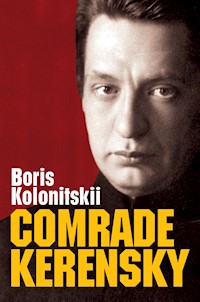
As one of the heroes of the 1917 February Revolution and then Prime Minister at the head of the Provisional Government, Alexander Kerensky was passionately, even fanatically, lauded as a leader during his brief political reign. Symbolic artefacts – sculptures, badges and medals - featuring his likeness abounded. Streets were renamed after him, his speeches were quoted on gravestones and literary odes dedicated to him proliferated in the major press. But, by October, Kerensky had been unceremoniously dethroned in the Bolshevik takeover and had fled to Paris and then to the US, where he would remain exiled and removed from his former glory until his death. The breakneck trajectory of his rise and fall and the intensity of his popularity were not merely a symptom of the chaos of those times but offer a window onto a much broader historical phenomenon which did not just begin with Lenin and Stalin – the cult of the leader.
In this major new study of the Russian leadership cult, Boris Kolonitskii uses the figure of Kerensky to show how popular engagement with the idea of the leader became a key component of a cultural re-imagining of the political landscape after the fall of the monarchy. A parallel revolution was taking place on the level of creating a resonant political vocabulary where one had not existed before, and it was in the shared exercise of bestowing and dissolving authority that a politicised way of seeing began to emerge. Kolonitskii plots the unfurling of this symbolic revolution by examining the tapestry of images woven by Kerensky and those around him, and, in so doing, exposes his vital role in the development of nascent Soviet political culture.
This highly original portrait of a revolutionary sheds new light on the cult of Kerensky that developed around this charismatic leader during the months following the overthrow of the tsar. It will be of value to students and scholars of Russian history and to those interested in political culture.
Sie lesen das E-Book in den Legimi-Apps auf:
Seitenzahl: 952
Veröffentlichungsjahr: 2020
Ähnliche




















CONTENTS
Cover
Series Page
Title Page
Copyright
Dedication
Acknowledgements
Introduction
Notes
I Revolutionary Biography and Political Authority
1 Biographies and biographers
2 The youth of the Leader
3 ‘Tribune of the people’
4 ‘Hero of the revolution’
5 ‘Champion of freedom’ and the cult of champions of freedom
Notes
II ‘Revolutionary Minister’
1 The great conciliator
2 The omnipresent ‘minister of the people’s truth’
3 ‘Democratic minister’
4 ‘Minister of revolutionary theatricality’ and ‘poet of the revolution’
5 ‘Great martyr of the revolution’
6 Kerensky as Louis Blanc: features of the Bolsheviks’ political propaganda
7 ‘Rebellious slaves’ and the ‘great citizen’
Notes
III ‘Leader of the Revolutionary Army’
1 The iron discipline of duty
2 The visit to Helsingfors
3 The ‘Kerensky Declaration’
4 ‘Tireless victor’: Kerensky at the front
5 ‘Wanted: a Napoleon’: Kerensky and Bonapartism
6 The Bolshoy Theatre and the birth of the New Man
7 Kerensky and the Socialist Revolutionary Party
Notes
IV The ‘Kerensky Offensive’
1 ‘Commender-in-chief’: rhetorical preparations for the offensive
2 ‘Kerensky’ and ‘Lenin’
3 The June Crisis and the June Offensive
4 A popular ‘brand’ and symbol of the revolution
Notes
Conclusion
Notes
Index
Ebook plates
End User License Agreement
Guide
Cover
Table of Contents
Series Page
Title Page
Copyright
Dedication
Acknowledgements
Introduction
Begin Reading
Conclusion
Index
Ebook plates
End User License Agreement
Pages
ii
iii
iv
vii
viii
ix
x
1
2
3
4
5
6
7
8
9
10
11
12
13
14
15
16
17
18
19
20
21
22
23
24
25
26
27
28
29
30
31
32
33
34
35
36
37
38
39
40
41
42
43
44
45
46
47
48
49
50
51
52
53
54
55
56
57
58
59
60
61
62
63
64
65
66
67
68
69
70
71
72
73
74
75
76
77
78
79
80
81
82
83
84
85
86
87
88
89
90
91
92
93
94
95
96
97
98
99
100
101
102
103
104
105
106
107
108
109
110
111
112
113
114
115
116
117
118
119
120
121
122
123
124
125
126
127
128
129
130
131
132
133
134
135
136
137
138
139
140
141
142
143
144
145
146
147
148
149
150
151
152
153
154
155
156
157
158
159
160
161
162
163
164
165
166
167
168
169
170
171
172
173
174
175
176
177
178
179
180
181
182
183
184
185
186
187
188
189
190
191
192
193
194
195
196
197
198
199
200
201
202
203
204
205
206
207
208
209
210
211
212
213
214
215
216
217
218
219
220
221
222
223
224
225
226
227
228
229
230
231
232
233
234
235
236
237
238
239
240
241
242
243
244
245
246
247
248
249
250
251
252
253
254
255
256
257
258
259
260
261
262
263
264
265
266
267
268
269
270
271
272
273
274
275
276
277
278
279
280
281
282
283
284
285
286
287
288
289
290
291
292
293
294
295
296
297
298
299
300
301
302
303
304
305
306
307
308
309
367
368
369
370
371
372
373
374
375
376
377
378
379
380
381
New Russian Thought
The publication of this series was made possible with the support of the Zimin Foundation.
Boris Kolonitskii, Comrade Kerensky
Sergei Medvedev, The Return of the Russian Leviathan
Maxim Trudolyubov, The Tragedy of Property
Comrade Kerensky
The Revolution against the Monarchy and the Formation of the Cult of ‘The Leader of the People’ (March–June 1917)
Boris Kolonitskii
Translated by Arch Tait
polity
Originally published in Russian as Б.И. Колоницкий, “Товарищ Керенский”: антимонархическая революция и формирование культа “вождя народа” (март–июнь 1917 года) © Novoe Literaturnoe Obozrenie, Moscow, 2017
This English edition 2021 © Polity Press
The Translator asserts his moral right to be identified as the Translator of the Work.
The translation of this work was funded by the Zimin Foundation.
James Manteith’s translation of Leonid Kannegiesser’s ‘On Review’ originally appeared in Cardinal Points, vol. 7 (2017), edited by Boris Dralyuk and Irina Mashinski.
Polity Press65 Bridge StreetCambridge CB2 1UR, UK
Polity Press101 Station LandingSuite 300Medford, MA 02155, USA
All rights reserved. Except for the quotation of short passages for the purpose of criticism and review, no part of this publication may be reproduced, stored in a retrieval system or transmitted, in any form or by any means, electronic, mechanical, photocopying, recording or otherwise, without the prior permission of the publisher.
ISBN-13: 978-1-5095-3366-4
A catalogue record for this book is available from the British Library.
The publisher has used its best endeavours to ensure that the URLs for external websites referred to in this book are correct and active at the time of going to press. However, the publisher has no responsibility for the websites and can make no guarantee that a site will remain live or that the content is or will remain appropriate.
Every effort has been made to trace all copyright holders, but if any have been overlooked the publisher will be pleased to include any necessary credits in any subsequent reprint or edition.
For further information on Polity, visit our website: politybooks.com
Dedication
In memory of Rafail Sholomovich Ganelin
Acknowledgements
The writing of this book has been a long and tortuous process, and my enthusiasm for it was not shared by all my colleagues. One distinguished scholar suggested that, if I was going to write a biography, Tsereteli was a more interesting and thoughtful personality. But it was not Kerensky’s life I wanted to study. I have never seen myself as someone else’s biographer. What interested me was what had been written and said, what words had been used, about Kerensky and other political leaders during the 1917 revolution, because I believe that brings out important aspects of how the revolution proceeded.
The topic captured my imagination in the mid-1980s, the historical sources themselves propelling me in that direction. I was astonished by how the rapturous language used to describe the revolutionary leaders in 1917 anticipated the extolling of the Soviet leaders in the 1930s, and I thought it could not simply be written off as evidence of coercion. Zinaïda Gippius’s Blue Book made a powerful impression. It is based largely on the author’s diary and illustrates the changing attitude of a section of the intelligentsia towards Kerensky. People who in spring 1917 were busily and creatively contributing to the cult of a Leader and saviour were, by the autumn, reviling the very leader they had set up: Kerensky was now the main, if not, indeed, the sole, culprit for the political crisis. They appeared quite unaware of any responsibility on their part for the actions of their anointed.
I had a similar reaction when I heard the recrimination in the late perestroika period. ‘I so loved Gorbachev,’ one good lady in Moscow told me with a sigh. She sounded like a young girl disenchanted with the object of her infatuation. She sounded like those people who see their way out of a crisis by bestowing on some new messianic Leader all manner of powers and authority, only later to berate him as they absolve themselves of all blame. I have been publishing since 1991 on Kerensky’s various public images and have been gratified that some of my research has struck readers as having a bearing on the present.
Many people have taken an interest in my work, and there are many I need to thank for their help.
Alexey Miller and Vladimir Chernyaev were the benign, interested and critical readers of this book, and their comments and advice were exceptionally important for me.
Different versions of chapters, and subsequently the book in its entirety, have been discussed at meetings of the History Faculty of the European University at St Petersburg and the Department of the History of Revolutions and Social Movements of the St Petersburg History Institute of the Russian Academy of Sciences. I am grateful to Tamara Abrosimova, Alfrid Bustanov, Boris Dubentsov, Mikhail Krom, Vladimir Lapin, Nikolai Mikhailov, Anatoly Pinsky, Natalia Potapova, Pavel Rogoznyi, Yuliya Safronova, Nikolai Smirnov, Konstantin Tarasov, Igal Halfin and Samuel Hirst, who made valuable contributions in these discussions.
Dietrich Beyrau, I. F. Danilova, Victor Kelner, Louise McReynolds, Jan Plamper and Valeriy Sazhin all read chapters of the book, and their advice and comments have been a great help. Collaborating with Murray Frame, Melissa Stockdale and Steven Marks on editing a volume in an international project on the history of the First World War and revolution in Russia taught me a great deal. The advice of the other project participants, notably Anthony Heywood, David McDonald, John Steinberg and Christopher Read, was very helpful.
At various stages in my research I have presented my results at conferences and colloquia. The comments of Vladislav Aksyonov, Jörg Baberowski, Vladimir Buldakov, Ziva Galili, Klaus Gestwa, Katharina Kucher, Daniel Orlovsky, Mark Steinberg, Tanja Penter, Orlando Figes, Jutta Scherrer, Ingrid Schierle and Laura Engelstein were very important. I discussed many aspects of my research with William Rosenberg and was constantly aware of his support.
My consultations with Alla Lapidus, Irina Lukka and Olga Novikova were extremely useful. Dmitry Aziatsev, Vladislav Aksyonov, Alexander Astashov, Mikhail Bezrodny, Marina Vitukhnovskaya, Alexey Gnoevykh, Konstantin Godunov, Alexander Danilevsky, Ilia Doronchenkov, Boris Kotov, Alexander Medyakov, Andrey Nikolaev, Margarita Pavlova, Pavel Rogozny, Nikolai Rodin, Alexander Sokolov, Konstantin Tarasov, Yana Guzey, Yelizaveta Zhdankova, Ella Saginadze and Alexander Reznik all helped me to assemble materials.
Topics which subsequently morphed into paragraphs of the book were discussed in seminars attended by Felix Yakubson, Viktor Voronkov, Vladimir Gelman, Yelena Zdravomyslova, Maria Matskevich, Andrey Stolyarov, Dmitry Travin and Sergey Shelin. Remarks by sociologists, political scientists, journalists, writers and directors gave me a different perspective on my research.
My administrative experience as a provost of the European University at St Petersburg gave me new insights into political history, and my conversations with the university’s rector, Professor Oleg Kharkhordin, constantly stimulated me to reflect on the practical application of political philosophy.
I am grateful to Victor Pleshkov, Nikolai Smirnov and other members of the administrative staff of the St Petersburg Institute of History of the Russian Academy of Sciences for their unfailing support.
I thank the senior staff of the European University at St Petersburg for granting me sabbatical leave, which gave me the opportunity to concentrate on this research project.
The support of the Kone Foundation and the Helsinki Collegium for Advanced Studies at the University of Helsinki enabled me to work in Finnish libraries and archives in 2013.
A grant from the German Research Foundation (Deutsche Forschungsgemeinschaft) and the support of the Institute for Eastern European History at the University of Tübingen gave me the opportunity to work for three months in German libraries in 2016.
I thank Irina Zhdanova and Anna Abashina, who edited this book, for their advice and comments.
I am constantly conscious of the support of my wife. ‘If my husband is looking out of the window, that does not mean he is not working,’ Katya will sometimes tell people. I am proud that, after some entirely understandable doubts, she has come to this view. Moreover, she has sought, if not always successfully, to defend my card indexes from the onslaught of our granddaughters, Faina and Taisia. I am, of course, gratified that the youngest members of my family are showing so much interest at such an early age in my old-fashioned research laboratory.
As my work on this book was nearing completion, my thoughts were constantly turning to Rafail Ganelin, who died in 2014. He was a most remarkable researcher and a wise person who did a great deal for generations of historians of Leningrad/St Petersburg. I am one of those he helped, and without his support my academic career would have been different. His advice saved me from many errors and blunders. I dedicate this book to the memory of Rafail Sholomovich Ganelin.
Introduction
George Buchanan, the British ambassador, heard a Russian soldier remark during the revolution, ‘Oh, yes, we must have a Republic, but we must have a good Tsar at the head.’ Buchanan regarded this pronouncement as an oxymoron and saw it as confirmation of the view he had formed of his host country’s curious political culture: ‘Russia is not ripe for a purely democratic form of government …’1
Analogous statements by simple people are quoted in the diaries of other foreigners.2 They are eager to present Russia as even more exotic than it was, and evidently the desire of its inhabitants for a democratic republic with a good tsar bolstered their case. Military censorship reports also quote soldiers’ letters along the same lines: ‘We want a democratic republic and a father-tsar for three years’; ‘It would be good if we were given a republic with a practical tsar’; ‘The tsar has been toppled from his throne, now there’s a new government, that’s all right, fine, no bother, and when they choose a new tsar, a good one, it will be even better.’ One censor concluded, ‘Almost all the letters of peasants express a desire to see a tsar leading Russia. Monarchy is evidently the only mode of governance they can imagine.’3
It is hardly likely that all these peasants and soldiers were staunch monarchists. They had said they wanted to limit the tsar’s term in office. They were anticipating he would have to seek re-election. Rather, we may suppose they saw the concepts of ‘state’ and ‘tsardom’ as synonymous. They struggled to picture a sovereign state without a sovereign, a strong head of state. Not a few soldiers refused to swear allegiance to the Provisional Government, because the very mention of ‘the state’ in the wording of the oath was regarded as endorsing monarchism. They shouted, ‘We don’t have a sovereign state, we have a republic.’4
We may, however, surmise that the soldiers aspiring to a democratic republic with a good tsar did in fact want to see a presidential republic established whose head of state would be endowed with extensive powers.
They could not give a precise formulation of their ideal system of government, for the simple reason that they lacked the necessary technical language. They did not know how to describe their ‘authoritarian republicanism’. It was not only poorly educated people who experienced difficulty in translating their ideals into the language of contemporary politics: the same was true of such groups as professional army officers who had cultivated an apolitical stance before the revolution. Indeed, even those who concerned themselves with politics could not always find the right vocabulary to characterize an unfamiliar and rapidly changing reality.5
These examples give a sense of just how complex was the situation in which the former subjects of the tsar, now citizens of a new Russia, found themselves. The political messages being targeted at them needed to be translated, and this led to the appearance of a host of ‘political dictionaries’, which were greatly in demand.
People might have had different emotions about the monarchy, but it had been familiar and had seemed comprehensible. The language for describing the tsarist regime, the standard attitudes towards the tsar himself, even the range of emotions he was expected to evoke were traditional and had been passed on down the generations.
The overthrow of the monarchy necessitated new vocabulary, new rituals, new prescribed political emotions. How were the legitimacy and the sacrosanct nature of the new government to be conveyed? How should the political leaders be addressed? To what extent was it permissible to view the new bearers of political power ironically? These were urgent questions. Different parties and organizations tried to take on the role of devising the new political language. This process of creating new words, rituals and symbols was taking place in the midst of an intense power struggle, with competing forces trying to establish their right to develop the authoritative, ‘correct’ political terminology and determine how it was interpreted.
All this has a direct bearing on the key issues involved in studying revolutions. Few people would seek to deny that power is an important issue in any revolution, and yet that is not quite enough. Power is an important issue in any political process, so what is of more interest is what it is about power that is specific to revolutionary, as opposed to non-revolutionary, eras.
Max Weber, in his ‘Politics as Vocation’, a lecture delivered in 1918 under the influence of the revolutionary upheavals of the time, quoted Leon Trotsky’s remark that ‘Every state is founded on force.’ Weber himself describes the state as a ‘human community that (successfully) claims the monopoly of the legitimate use of physical force within a given territory.’ He continues, ‘The state is considered the sole source of the “right” to use violence.’6
If we adopt Weber’s formulations, a revolution is a particular political situation when the state’s ‘monopoly of the legitimate use of physical force’ is under constant challenge. The demonopolization and monopolization of the right to use force is paralleled by a delegitimation and legitimation of that right. One of the most important issues in a revolution is the legitimizing of force. Accordingly, what historians of revolution should be studying is the political tactics and cultural forms of that legitimation.
Weber identifies three basic ‘legitimations of domination’, while noting that ‘the pure types are rarely found in reality.’ There is the authority of tradition, of the ‘eternal yesterday’, based, for example, on religion. Then there is the ‘authority of the extraordinary and personal gift of grace (charisma)’. Finally, there is domination by virtue of ‘legality’ based on rationally created rules.7
Different revolutions have had different attitudes to tradition. The leaders of the civil war in seventeenth-century England formulated their political ideas using the language of religion and talked about returning to an ‘interrupted’, ‘perverted’ tradition which needed to be revived after removing later accretions. This is an early meaning of the word ‘revolution’, taken from the language of astronomy and astrology: a return to an original state.8 Other revolutions were insistent on their absolute newness, declaring they were creating a new world completely different from the old order. In the Russian Revolution the dominant trend demanded a radical break with the epoch of the old regime. A resolute overcoming of the past was a source of legitimation for the revolutionaries.
The authority of ‘rationally based legality’ is open to challenge during revolutions: the state’s monopoly on lawmaking and how the law is applied is called into question, and multiple competing legal systems can appear. This occurred during the Russian Revolution: the Provisional Government, the Petrograd Soviet, the Ukrainian Central Rada and other political bodies set up their own jurisdictions, and sundry other associations initiated or supported ‘lawmaking by the people’ from below and based their own legitimacy on that.9
In order to research the phenomenon of revolutionary power, we need comprehensively to examine the authority of leaders, helmsmen, and individuals who underpin their charisma with prophecies which come true or by acts of heroism or extraordinary successes. Charisma is conferred not only by the real or imagined qualities of a leader but also by the extent to which he symbolizes the community recognizing the charisma which legitimizes his actions. The historian needs accordingly to take an interest in the words and deeds of people who, in various ways, contribute to making the Leader authoritative. Studying the tactics and techniques by which leaders are legitimized, and analysing the associated political conflicts, is important if we are to understand the social and political processes which form the background to the building up of the images of leaders.
The leader cults, without which it is impossible to imagine Soviet history, have long been a recognized research topic. Most attention has been devoted to studying the Lenin cult (see the work of Nina Tumarkin, Benno Ennker, Olga Velikanova and others).10 Nevertheless, historians studying the key stages of the formation of the Lenin cult – the assassination attempt in 1918, Lenin’s fiftieth birthday in 1920, his death, his embalming – deal cursorily with the events of 1917, despite the fact that this was an extremely important period in terms of evolving cultural forms for the glorification of charismatic leaders. Benno Ennker’s approach is germane to this study’s objectives. Examining the transformation of the Leader’s charisma into the Lenin cult, Ennker correlates the process with the contemporary political aims of various groups of Bolshevik leaders.
Jan Plamper examines the personality cult of Stalin through images of the Leader.11 I repeat, nevertheless, that those researching Soviet leader cults seem to me to underestimate the significance of changes during 1917 which favoured development of the political culture of the Soviet period.
This study will consider the tactics used both for bolstering and for destroying Kerensky’s authority, together with the representation of his image, and how all these were perceived. I examine the texts and visual imagery, the symbolic gestures and rituals which were used to create, sometimes incompatible, images of the Leader.
This particular politician was chosen because of the authority he initially possessed. The connection between the extraordinary deference shown to Kerensky and the cults of Soviet leaders was noted by Vasiliy Maklakov, a prominent member of the Constitutional Democratic Party, who asserted that, after the monarchy was overthrown, ordinary Russians had ‘a preference for individualized power, a boss’. ‘This feeling provided the foundation for the adulation, first of Kerensky, then of Lenin, and ultimately for the deification of Stalin. I have no wish to compare people so dissimilar in spirit, but in all the regimes which succeeded each other after 1917 there was a latent craving for an authoritarian personality and a lack of trust in institutions.’12
For many contemporaries, Alexander Kerensky was the central figure of the February Revolution. For them he was the personification of that successful coup d’état. By the end of 1917 his opponents were speaking of the eight months of his ‘reign’, meaning from March to October, although Kerensky became prime minister only in July.13
In this book I examine images of Kerensky created by the man himself, by his supporters and allies, and by his opponents and enemies. By ‘image’ is meant a semantically coherent set of characteristics of the Leader, attributed to him in texts and illustrations.
The present book is about the political culture of the revolution and makes no claim to be a new biography of Kerensky. We cannot, of course, differentiate crisply between the biography of a politician and the cultural forms in which he was praised or damned. Our approach will enable us to see Kerensky in a new light, and his future biographers will have our observations and conclusions to draw on. It is not, then, my main purpose to augment the facts of Kerensky’s biography. I attempt, through exploring the different images of the Leader, how they were created and the use that was made of them, to examine the organizations and the people who produced them. Through them I seek insight into the political, cultural and social processes of the revolutionary era.
Kerensky has been unlucky with his historians. Few have portrayed the ‘revolutionary minister’ sympathetically, or even without bias, and that is hardly a surprise. Historians quite commonly side with particular protagonists of the revolution and set themselves against others. The historiography of 1917, for the most part, also continues to settle for parti pris. Often researchers and, to an even greater extent, readers genuinely believe historiography cannot and should not be otherwise. To this day there are different versions of the history of the revolution, liberal and conservative, socialist and communist, nationalist and imperial, ‘red’ and ‘white’. To this day there is a demand for historical narratives derived from the memoirs of participants in the events. It is not absurd to talk of an ‘anti-party line’, with anti-communist historians faithfully reproducing the bias of the Soviet historical narrative, only with the plus signs turned into minus signs and vice versa.
Few people identify with Kerensky now. As we shall see, although officially a Socialist Revolutionary, he did not bind himself to any one party and tried to be someone who brought together, acted as a bridge between, the moderate socialists and the liberals. His manoeuvring initially brought success, but by October the disagreements between the coalition partners had intensified. Kerensky’s support base narrowed and weakened, and the room for manoeuvre became increasingly constricted. None of the leading political forces was giving him wholehearted support. Indeed, virtually all of them, to differing degrees and in different ways, were criticizing him. This coloured the attitude of several generations of partisan historians, the heirs of Kerensky’s political opponents. In their view he was not ‘with us’, and those caught up in today’s political tussles do not identify with him either.
Kerensky fared little better with his autobiographies, which, of course, influenced later biographies. In 1918, already the former head of the Provisional Government, Kerensky published a pamphlet titled The Kornilov Affair. Later he published several versions of his autobiography, rewriting his understanding of the history of the revolution.14 One constant in these writings of different eras is Kerensky’s desire to glorify the February Revolution and immortalize his role in it. Over time he changed his lines of argument and adjusted the narrative. Compared to the leader he actually was in 1917, Kerensky wanted to present himself as having been more modern, more Western, more judicious, far-sighted and confident. And, it has to be said, as a result – less interesting. These official self-portraits, idealizing and romanticizing their painter, overlay like palimpsests the more vivid image of a unique, tough-minded politician whose rise to become the leader of a revolutionary government was by no means a matter of chance, whatever the opinion of many of his contemporaries and of a certain number of historians.
The distortion of history in Kerensky’s autobiographies, which it is tempting to call ‘autohagiographies’, came back to haunt their author. Researchers negatively inclined towards him used his memoirs as a punchbag but, in their polemics with him, tended to follow the outline of his narrative. They caricatured his self-portraits but perpetuated their approach. Kerensky’s memoir campaigning certainly had an impact on the historiography of the revolution, but hardly as he might have intended.
Many historians of the revolution touched on aspects of Kerensky’s career. Censorship during the Soviet period was an obstacle to publication of unbiased research, but Vitaliy Startsev managed to publish a worthwhile book on the autumn crisis of 1917.15 In an innovative project, Gennadiy Sobolev studied the revolutionary consciousness of workers and soldiers.16 In this connection he also examined aspects of Kerensky’s popularity, as well as some features of the socio-psychological climate in which the leader cult appeared and flourished.
The most thorough account of Kerensky’s life was written by Richard Abraham, a British historian.17 He was unable to work in Russian archives at that time, but he carefully studied the press of the era, worked in the archives of several countries, and interviewed people who had known Kerensky.
Perestroika made it possible to study Kerensky’s biography in depth in Russia. New sources became available and censorship taboos were lifted. By the end of the Soviet period, readers were taking an interest in work by Genrikh Ioffe. Glasnost made possible a different kind of research, and Ioffe devoted one of his publications to three leaders: Kerensky, Kornilov and Lenin.18 This book invites us to give thought to the topic of personification of politics. Historians have a tendency to describe a period’s conflicts by studying opposed leaders. Sometimes this is a literary device. Some readers perceive history as an interweaving of biographies, and this is what they demand. Historians often follow the example of contemporaries who contrasted Lenin, Kornilov and Kerensky not only as individuals but also as alternative approaches to social and political progress. This raises the issue of whether we need to study the techniques of personalization in use at the time.
Several biographies of Kerensky have appeared in the last few decades, some focusing on particular aspects of his life.19 Stanislav Tyutyukin, for example, carefully examines Kerensky in action in the State Duma. Interesting sources have been brought into circulation and important observations have been made, but Kerensky’s actions in 1917 merit further consideration.
For the current study, an article by Andrey Golikov on the public representation of the ‘Kerensky phenomenon’ and how it was received has been particularly helpful.20 Golikov does view the period from March to October as a single unit, paying no attention to modification of images as the political situation changed. In writing about the life he draws on Kerensky’s file in the State Archive of the Russian Federation and, when examining the Kerensky phenomenon, turns mainly to the periodical press in 1917.
On the basis of Kerensky’s biography, having at our disposal the extensive research on the history of the revolution, we can embark on a study of the leader cult. This approach will enable us to examine aspects of the struggle for power which are not readily to be understood using more traditional methods of studying politics.
In examining images of the Leader, I have adopted approaches used by historians of public consciousness. Gennadiy Sobolev expanded historians’ ideas particularly about the political aspect of the revolution. He drew attention to the political dimension of the way mass culture functions and to the political significance of changes in the Church. His close analysis of resolutions showed a significant dichotomy between the ideas of activists at various levels and the principles of parties’ policy-makers. Historians had previously studied the environment in which the parties functioned and had focused primarily on socio-economic aspects. Sobolev raised the question of whether there was a need also to study issues of language and culture.21
I have also relied on Richard Wortman’s approach to studying the representation of imperial power,22 having previously adapted some of his research techniques for use in my work on the image of members of the tsar’s family during the First World War.23
In Tragic Erotica: Images of the Imperial Family during the First World War, I attempted to describe not only the representation of the tsar but also the image of other members of the dynasty, which impacted on the monarch’s public relations and gave a better understanding of the matter. My interest was not only in how an image was created but also in how it was used, and I studied not only positive but also negative images. Of course, whether an image is positive or negative can be a moot point, and in different contexts they could be perceived and used by players in different ways.
I have adopted a similar approach in this study, although the specifics of the cultural and political situation of the time, in particular the dynamism of the revolutionary era, have necessitated bringing in further research methods. More attention has had to be paid to the volatile politics which directly influenced the design of images of power. I compare the Kerensky cult with representation of other leaders of the time.
My aim, on the basis of the resources available, has been to construct a narrative about representation of the Great Revolutionary Leader. I have tried to bring order to the disparate sources of images of Kerensky, giving priority to images which became particularly important and were widely disseminated. At the same time, the frequent occurrence or absence of any such image in a particular category of sources has often raised issues to consider. In order to understand the creation, distribution and use made of images of Kerensky, I try to reconstruct the cultural and political context, paying particular attention to the political struggle. This ‘multifaceted contextualization’ enables us to tie in study of the Kerensky cult with the overall political history of the revolution.
Studying the rumours about a leader is no less important than factual reconstruction of events.24 A rumour passed on by an acknowledged expert has the status of an authoritative pronouncement and influences political decision-making, while rumours believed by masses of the population have a huge direct impact on the course of history. Contrasting rumours with ‘what really happened’ is methodologically naive: the researcher needs to take account of all the factors influencing the processes under study.
Clearly, Kerensky’s own writings, and in particular his speeches and orders, are important for studying the cultural means of strengthening a leader’s authority. Many party leaders exercised their leadership by publishing articles and pamphlets and devoted a good deal of time to correspondence. During the revolution many ‘leaders’ remained desk-bound. Lenin’s Collected Works include several volumes of articles, pamphlets and letters written in 1917. In this he was not alone: the liberal politician Milyukov and the Socialist Revolutionary leader Chernov, the ‘grandfather of Russian Marxism’ Plekhanov and the Socialist Internationalist Martov, the conservative Shulgin and the revolutionary Trotsky wrote a lot at that time, and read even more.25 In Russia political authority was often built on a foundation of writing: the Leader was a sage. The Soviet leaders who came after Lenin aspired to intellectual leadership. Styling themselves his ‘faithful disciples’, they sought the status of great teachers.
Kerensky asserted his leadership status by issuing orders and making speeches. His public speeches were widely disseminated in the press, and in 1917 several collections of his speeches and orders appeared as separate publications. This testifies to popular demand. The speeches of other politicians were of far less interest to publishers. At times, what Kerensky said in a particular speech is reported variously in different publications, and here the historian faces the task of evaluating one version against another. It is impossible to reconstruct exactly what was said, but studying the orator’s rhetorical tactics provides a basis on which to generalize about how the Leader is presenting himself. An important question is the impact speeches had, and here the history of how and when they are quoted needs to be reviewed. Reports can also give a sense of audience reaction by mentioning applause or exclamations made by those listening. Different sources can also report variously on audience reaction.
Propaganda and news handouts are important. It might seem a simple matter to study them, but the researcher cannot always be sure of accurately understanding the meaning given to terms which appear straightforward to the modern reader – words such as ‘democracy’, ‘tsar’ and ‘state’. The historian needs to bear in mind the different meaning their authors might have put into them and how readers and listeners might have interpreted them. There is a need to act as a translator from the language of revolution.
Another source is political resolutions, petitions, congratulations and collective letters. Historians differ as to their value as evidence, but the very fact that a letter is sent to a particular publication or institution signals a certain stance. They are usually sent to a body the writer deems authoritative. The views of people writing to Izvestiya (‘News of the Petrograd Soviet’) are probably going to be close to that newspaper’s position. Those overtly opposed to its position are predictably underrepresented.26
Sometimes resolutions and collective letters are seen as having no value as historical evidence. The argument is that, to be valid, a source must illustrate the mood of those directly participating in events. Vladimir Fedyuk quotes a resolution published in a Yaroslavl newspaper after Kerensky’s appointment as minister of war: ‘The team of the Yaroslavl military hospital, meeting on 9 May to elect members of the disciplinary court, have unanimously resolved to send greetings to you, the first socialist minister, who command the love and respect of all Great Rus. We gladly place all our strength at your disposal.’
Professor Fedyuk is perplexed. ‘A team in a hospital (how many people were in it? Twenty? Thirty?), meeting to resolve a very specific matter, for no reason at all send a telegram to the minister expressing their love and devotion. If you think about it, is that not just very odd?’27 The same might be said of the many telegrams of greetings sent to Kerensky, which really did fill the newspapers at this time.
There are, however, other questions a historian might ask. Why, for example, would the newspaper deem it appropriate to print the hospital workers’ telegram, which might, after all, appear comical? We may reasonably assume that it was not from whom the letter came that mattered but the substance of the resolution. This was exactly how it was hoped the newspaper’s target reader might respond to Kerensky’s appointment. Other periodicals, which had not hitherto been publishing resolutions or collective letters, began doing so in 1917. A signal was being sent to the newspaper’s readers that exemplary citizens should do the same. If the newspaper had authority with them, then such a letter might provoke further such resolutions. The language of the resolution is also interesting: those who passed it are appreciative of the fact that Kerensky is a socialist. They express their confidence that ‘all Rus’ not only respects the minister but also loves him. Appropriate political emotion is being prescribed.
To answer Professor Fedyuk’s question, no doubt whoever drafted the resolution on behalf of the hospital team would claim it was an expression of their opinion, using words he, as an activist, had authority to choose. Such resolutions did not always reflect the precise opinion of the collectives adopting them, but they enable us to judge the language of the populous ‘committee class’ – members of all manner of committees and soviets – who drafted them. That is important for understanding the attitude towards national leaders, and also for studying the influence of activists within collectives. No few komitetchiki [‘committee devotees’] claimed their authority was based on the Leader’s authority and did their utmost to enhance it.
Many of the sources mentioned above are mediated by newspapers. For no other period in Russian history does the periodical press prove such a valuable source of information. Abolition of censorship and interest in printed news led to numerous publications springing up: they reflect the entire spectrum of political views, down to its finer gradations. The historian sometimes enjoys a welcome boost from press surveys, thematic collections of newspaper clippings compiled by various government departments or individuals at the time.28
The diaries and correspondence of those involved in events can be of interest in the studying of leader cults, but caution may need to be exercised. Firstly, historians cannot always be sure they are dealing with an authentic source. The writers themselves, or scholars, may have distorted the text for various reasons, and later memoirs are sometimes misrepresented as diaries. Secondly, researchers may find that, rather than a balanced cross-section of social and cultural groups, there is a preponderance of letters and diaries kept by members of particular professions. For writers their diary is often a working tool, the raw material for creating new works (which are sometimes written in the form of a diary). Many diaries and letters of generals and officers are also of interest to historians. These are educated people, cut off from their families in wartime conditions, writing about the life they are living. There seems to be a dearth of diaries and letters written by entrepreneurs. Also, despite decades of interest in worker history, we know of few personal sources from them. Workers rarely kept diaries and did not usually retain their correspondence. The educational level and literary facility of individuals, of members of their families, and the ways they thought proper of communicating with each other, influenced the writing as well as the publication of letters and diaries. Political repression during the Soviet period also discouraged people at every level of society from preserving them. Here the surveys of correspondence prepared by military censors can be an asset for the historian, who can use excerpts from letters they found typical and/or interesting. Use can also be made of the censors’ professional judgements in analyses summarizing the materials they have surveyed.
The greater knowledgeability of superiors can help us reconstruct the thinking of their illiterate or semi-literate subordinates. This applies particularly to soldiers, where the reports of commanding officers, political commissars and committee delegates of various ranks can be compared with assessments by individuals of diverse political views.
Memoirs are of limited use for the present study. It is impossible to judge the political mindset of participants in the events from writings created later. Their principal use is rather for reconstructing the historical mindset of the era in which they were actually written. Memoirs do, however, have a place in the present study because their writers have wielded, and continue to wield, vast influence on historiography. It is no easy matter to know in the writings of Leon Trotsky and Pavel Milyukov, of Anton Denikin and Fyodor Stepun, where the memoirs end and their analytical theorizing about history begins. This will be based not only on knowledge of what they remember of the past but also on their study of other sources. Conversely, the ‘history’ reconstructed by participants in the events includes fragments of autobiography. This is applicable to some extent to Kerensky’s memoirs.29
Study of Kerensky’s image obviously requires recourse to portraits, posters and postcards and to depictions of him in cartoons and caricatures, on badges and tokens. A consideration of such visual resources sometimes enables us to judge how popular Kerensky was at a particular time. The desire of consumers to acquire images of him provides a measure of this.30
The present work focuses on images of the Leader produced and distributed in March–June 1917, although, when necessary, I go beyond that chronological limitation. Many historians see this as a special time, the ‘peaceful period of the revolution’, the ‘period of dual power’. This period has been chosen, however, not only to accord with historiographical tradition. I have studied all the categories of sources listed above – Kerensky’s speeches, propaganda publications, political resolutions, personal documents, memoirs and visual sources – for the entire duration of the 1917 revolution.31 Having worked on them, however, I am able to say that it is the period from March to June which is most relevant to the formation of the Kerensky cult. The head of the Provisional Government still had no few admirers in the summer, and even autumn, of 1917 and many supportive newspaper comments and political resolutions from this period could be adduced. But Kerensky’s supporters were merely reusing positive images created in the initial stage of the revolution, and the principal armoury of means for glorifying the Leader was stocked in May and June. New images of the man at the helm of the Provisional Government which appeared after that already aimed to delegitimize him.
How, using which techniques, was Kerensky’s authority enhanced (or weakened) in March–June 1917? What cultural forms did his authority assume and what were the tactics employed? What stages were there in the process? How did features of the political struggle in March–June 1917 affect these various projects of legitimation or delegitimation, and what forces and interests lay behind them?
These are the questions I will attempt to answer in this book.
Notes
1.
George Buchanan,
My Mission to Russia and Other Diplomatic Memories
(London: Cassell, 1923), vol. 2, pp. 86, 114. See also pp. 111, 128, 216–17 (
https://archive.org/details/mymissiontorussi02buch/page/n7
).
2.
Louis de Robien,
The Diary of a Diplomat in Russia, 1917–1918
(London: Michael Joseph, 1969), p. 24;
War, Revolution and Peace in Russia: The Passages of Frank Golder, 1914–1927
, ed. Bertrand M. Patenaude and Terence Emmons (Stanford, CA: Hoover Institution, 1992), p. 46.
3.
The military censorship’s documentation is preserved in several different archives:
Rossiiskii gosudarstvennyi voenno-istoricheskii arkhiv
(
RGVIA
, the Russian State Archive of Military History),
fond
2003,
opis’
1,
delo
1494,
list
14;
Otdel rukopisei Rossiiskoi natsional’noi biblioteki
(
OR RNB
, the Manuscript Department of the Russian National Library,
fond
152,
opis’
1,
delo
98,
list
34; and
Rossiiskii gosudarstvennyi arkhiv Voenno-Morskogo Flota
(
RGA VMF
, the Russian State Archive of the Navy),
fond
418,
opis’
1,
delo
5666,
list
4.
4.
See D. P. Os’kin,
Zapiski praporshchika
(Moscow: Federatsiia, 1931), pp. 110–11; Basil Gourko,
War and Revolution in Russia, 1914–1917
(New York: Macmillan, 1919), pp. 326–7; ‘Iz ofitserskikh pisem s fronta v 1917 g.’, publication by L. Andreev,
Krasnyi arkhiv
, vol. 1–22 (50–51) (1932), pp. 194–210. The letter was written by I. D. Grimm.
5.
For different ways in which the term ‘democracy’ and some others were understood, see Boris Kolonitskii, ‘“Democracy” in the Political Consciousness of the February Revolution’,
Slavic Review
, 57/1 (1998): 95–106.
6.
Max Weber, ‘Politics as Vocation’, in
Max Weber: Essays in Sociology
, trans. H. H. Gerth and C. Wright Mills (New York: Oxford University Press, 1946), p. 78 (
https://ia802705.us.archive.org/12/items/frommaxweberessa00webe/frommaxweberessa00webe.pdf
).
7.
Ibid., pp. 78–9.
8.
On the concept of ‘revolution’, see Neithard Bulst, Jörg Fisch, Reinhart Koselleck and Christian Meier, ‘Revolution, Rebellion, Aufruhr, Bürgerkrieg’, in
Geschichtliche Grundbegriffe: Historisches Lexikon zur politisch-sozialen Sprache in Deutschland
, 8 vols (Stuttgart: Klett-Cotta, 1972–97), vol. 5, pp. 653–788.
9.
Iurii Tokarev,
Narodnoe pravotvorchestvo nakanune Velikoi Oktiabr’skoi sotsialisticheskoi revoliutsii
(Leningrad: Nauka, 1965).
10.
Nina Tumarkin,
Lenin Lives! The Lenin Cult in Soviet Russia
(Cambridge, MA: Harvard University Press, 1983); Benno Ennker,
Die Anfänge des Leninkults in der Sowjetunion
(Cologne: Böhlau, 1997); Olga Velikanova,
Making of an Idol: On Uses of Lenin
(Göttingen: Muster-Schmidt, 1996).
11.
Jan Plamper,
The Stalin Cult: A Study in the Alchemy of Power
(New Haven, CT: Yale University Press, 2012).
12.
Vasilii Maklakov,
Iz vospominanii
(New York: Chekhov, 1954).
13.
Petrogradskii voenno-revoliutsionnyi komitet: Dokumenty i materialy
, ed. Dmitrii Chugaev et al. (Moscow: Nauka, 1967), vol. 3, pp. 194, 616.
14.
A brief list of Kerensky’s books:
Delo Kornilova
(Moscow: Zadruga, 1918);
Gatchina (Iz vospominanii)
(Moscow: Knigopechatnik, 1922);
Izdaleka
:
Sbornik statei (1920–1921 g.)
(Paris: Povolotskii, 1922);
The Catastrophe: Kerensky’s Own Story of the Russian Revolution
(New York: Appleton, 1927);
La Révolution russe (1917)
(Paris: Payot, 1928);
The Crucifixion of Liberty
(London: Barker, 1934);
Russia and History’s Turning Point
(New York: Duell, Sloan & Pearce, 1965).
15.
Vitalii Startsev,
Krakh Kerenshchiny
(Leningrad: Nauka, 1982). Startsev wrote other publications about Kerenskii: ‘Begstvo Kerenskogo’,
Voprosy istorii
, no. 11 (1966): 204–6; ‘Kerenskii: Sharzh i lichnost’’,
Dialog
, no. 16 (1990);
Russkoe politicheskoe masonstvo nachala XX v
. (St Petersburg: Tret’ia Rossiia, 1996);
Tainy russkikh masonov
(St Petersburg: D.A.R.K., 2004). This last book is a supplemented edition of
Russkoe politicheskoe masonstvo
.
16.
Gennadiy Sobolev,
Revoliutsionnoe soznanie rabochikh i soldat Petrograda v 1917 g. Period dvoevlastiia
(Leningrad: Nauka, 1973). Sobolev also compiled a collection of primary materials on Kerensky’s political career titled
Aleksandr Kerenskii: liubov’ i nenavist’ revoliutsii: dnevniki, stat’i, ocherki, vospominaniia sovremennikov
(Cheboksary: Chuvashskii universitet, 1993).
17.
Richard Abraham,
Alexander Kerensky: The First Love of the Revolution
(London: Sidgwick & Jackson, 1987).
18.
Genrikh Ioffe,
Semnadtsatyi god: Lenin, Kerenskii, Kornilov
(Moscow: Nauka, 1995).
19.
Mikhail Basmanov, Grigorii Gerasimenko and Krill Gusev,
Aleksandr Fedorovich Kerenskii
(Saratovskaia gosudarsvennaia ekonomicheskaia akademiia, 1996); Vladimir Fediuk,
Kerenskii
(Moscow: Molodaia gvardiia, 2009); Stanislav Tiutiukin,
Aleksandr Kerenskii: Stranitsy politicheskoi biografii (1905–1917 gg.)
(Moscow: ROSSPEN, 2012). Andrei Nikolaev published an article about a 1917 interview in which Kerenskii described the February Revolution: Andrei Nikolaev, ‘A. F. Kerenskii o Fevral’skoi revoliutsii’,
Klio
, no. 3 (2004): 108–16. The latest publication of this primary source is in Semion Lyandres, ed.,
The Fall of Tsarism: Untold Stories of the February 1917 Revolution
(Oxford: Oxford University Press, 2013). Aleksandr Rabinovich, ‘A. F. Kerenskii i V.I. Lenin kak politicheskie lidery perioda krizisa’, in
Politicheskaia istoriia Rossii XX veka. K 80-letiiu professora Vitaliia Ivanovicha Startseva
:
Sbornik nauchnykh trudov
(St Petersburg: Rossiiskii Gosudarstvennyi Universitet imeni A. I. Gertsena, 2011), pp. 209–16.
20.
Andrei Golikov, ‘Fenomen Kerenskogo’,
Otechestvennaia istoriia
, no. 5 (1992), pp. 60–73. See also letters of the young Kerensky, discovered in the archives and prepared for pubication by Golikov: ‘“… Budushchii artist Imperatorskikh teatrov”: Pis’ma Aleksandra Kerenskogo roditeliam’,
Istochnik: Dokumenty russkoi istorii
[Supplement to
Rodina
, vol. 3 (1994), pp. 4–22].
21.
Sobolev,
Revoliutsionnoe soznanie rabochikh i soldat Petrograda
.
22.
Richard S. Wortman,
Scenarios of Power: Myth and Ceremony in Russian Monarchy
, 2 vols (Princeton, NJ: Princeton University Press, 1995).
23.
Boris Kolonitskii,
‘Tragicheskaia erotika’: Obrazy imperatorskoi sem’i v gody Pervoi mirovoi voiny
(Moscow: Novoe literaturnoe obozrenie, 2010).
24.
There is frequent mention of rumours in Valentin Diakin’s authoritative, and in many respects unrivalled, study of the political elite during the First World War. See Valentin Diakin,
Russkaia burzhuaziia i tsarizm v gody Pervoi mirovoi voiny (1914–1915)
(Leningrad: Nauka, 1967), pp. 99, 112, 115, 116 and elsewhere. Diakin points out many instances where rumour affected the political situation.
25.
At sessions of the Provisional Government Chernov would write articles for the party newspaper, despite being implored by his ally, the Menshevik Irakliy Tsereteli, to take part in the discussion of important matters. Oliver Radkey, the historian of the Socialist Revolutionaries, observes that, instead of drafting laws, the party’s leader was writing newspaper articles. Oliver Radkey,
The Agrarian Foes of Bolshevism: Promise and Default of the Russian Socialist Revolutionaries, February to October, 1917
(New York: Columbia University Press, 1958), pp. 332, 333–4. This was the style of political leadership with which Chernov was familiar.
26.
In her important publication, Olga Porshneva does not take this sufficiently into account when studying these letters as a source for reconstructing the thinking of the humbler members of society. See Ol’ga Porshneva,
Mentalitet i sotsial’noe povedenie rabochikh, krest’ian i soldat Rossii v period Pervoi mirovoi voiny (1914– mart 1918 g.)
(Ekaterinburg: Ural’skii gosudarstvennyi universitet imeni A. M. Gor’kogo, 2000).
27.
Fediuk,
Kerenskii
, p. 144.
28.
On surveys of the press created by various departments, see Irina Zhdanova, ‘“Vek propagandy”: Upravlenie informatsiei v usloviiakh voiny i revoliutsii v Rossii v marte–oktiabre 1917 g.’,
Otechestvennaia istoriia
, no. 3 (2008): 129–36. Kerenskii carefully studied such surveys. See ibid., p. 135.
29.
On the basis of documentation in the Hoover Institute of Stanford University, Kerensky published, jointly with Robert Browder,
The Russian Provisional Government, 1917: Documents
, 3 vols, ed. Robert P. Browder and Alexander F. Kerensky (Stanford, CA: Stanford University Press, 1961).
30.
Portraits of Kerensky were printed most frequently in the periodical press. Thus, in 1917 his portrait appeared in no fewer than thirty-two magazines, and twelve printed it in two or more issues. This compares with portraits of Milyukov, printed that year in seventeen magazines, Breshko-Breshkovskaya in sixteen, Guchkov in fifteen, Rodzianko in thirteen, Chernov in twelve, Plekhanov in eight and Lenin in six. See
Russkie portrety, 1917–1918 gg.
, ed. Matvei Fleer (Petrograd: [Gosudarstvennoe izdatel’stvo], 1921; repr. Moscow: Izdatel’stvo V.Iu. Sekachev, 2010). Fleer did not manage to encompass all the periodicals of the time, but he did take in the main illustrated magazines.
31.
I have examined aspects of Kerensky’s political biography during the whole of 1917 in a number of publications: Boris Kolonitskii, ‘A. F. Kerenskii i Merezhkovskie’,
Literaturnoe obozrenie
, no. 3 (1991): 98–106; ‘Kerensky’, in
Critical Companion to the Russian Revolution
, ed. Edward Acton, Vladimir Cherniaev and William Rosenberg (London: Hodder Arnold, 1997), pp. 138–49; ‘Kul’t A. F. Kerenskogo: Obrazy revoliutsionnoi vlasti’,
Soviet and Post-Soviet Review
, 24/1–2 (1997): 43–66; ‘Britanskie missii i A. F. Kerenskii (mart–oktiabr’ 1917 goda)’, in
Rossiia v XIX–XX vv.: Sbornik statei k 70-letiiu R. S. Ganelina
, ed. Aleksandr Fursenko (St Petersburg: Dmitrii Bulanin, 1998), pp. 67–76; ‘Kul’t A. F. Kerenskogo: Obrazy revoliutsionnoi vlasti’,
Otechestvennaia istoriia
, no. 4 (1999): 105–8; ‘“We” and “I”: Alexander Kerensky in His Speeches’, in
Autobiographical Practices in Russia
, ed. Jochen Hellbeck and Klaus Heller (Göttingen: [Vandenhoek & Ruprecht Unipress], 2004), pp. 179–96; ‘Aleksandr Fedorovich Kerenskii kak “zhertva evreev” i “evrei”’, in
Jews and Slavs
, vol. 17:
The Russian Word in the Land of Israel, the Jewish Word in Russia
(Jerusalem, 2006), pp. 241–53; ‘A. F. Kerenskii kak “pervyi grazhdanin”’, in
Fakty i znaki: Issledovaniia po semiotike istorii
, ed. Boris Uspenskii and Fedor Uspenskii,
vyp.
2, Moscow, 2010, pp. 134–49; ‘Feminizatsiia obraza A. F. Kerenskogo i politicheskaia izoliatsiia Vremennogo pravitel’stva osen’iu 1917 goda’, in
Mezhvuzovskaia nauchnaia konferentsiia ‘Russkaia revoliutsiia 1917 goda: Problemy istorii i istoriografii’: Sbornik dokladov
(St Petersburg: Gosudarstvennyi elektrotekhnicheskii universitet, 2013), pp. 93–103; ‘Russian Leaders of the Great War and Revolutionary Era in Representations and Rumors’, in
Russian Culture in War and Revolution, 1914–22
, ed. Murray Frame, Boris Kolonitskii, Steven G. Marks and Melissa K. Stockdale (Bloomington, IN: Slavica, 2014), book 1, pp. 27–54; etc.
IRevolutionary Biography and Political Authority
In May 1917 Kerensky, having just been appointed minister of the army and navy, issued an order reminiscent in style of one of the tsar’s manifestos. It contained a vivid autobiographical element. ‘My new burden is immensely heavy, but as an old soldier of the revolution I have submitted myself unquestioningly to the severe discipline of duty and accepted responsibility before the people and the revolution for the army and navy.’1
The 36-year-old minister accounted himself a veteran of the liberation movement well accustomed to revolutionary discipline, which accorded him the right to demand iron discipline from all in the armed forces. It was an approach Kerensky was to use repeatedly when addressing the troops. These statements enhanced his authority as a revolutionary-turned-statesman, and the claim needed to be substantiated by the events of his biography. In 1917 both Kerensky and his supporters constantly recalled episodes from his life which could be put to political use.
We need both to examine that biographical contribution to establishing the authority of this revolutionary leader and to show the role he and his supporters played in disseminating information about his past career. We need to establish which episodes in Kerensky’s life were most frequently exploited, which were ‘edited’, and which were quietly forgotten. Of interest too are the efforts of Kerensky’s opponents, who had their own spin to put on his past.
1 Biography and biographers
In 1917 information about Kerensky’s past life was obtainable from the minister’s own testimony and reminiscences of his contemporaries. Mention of his career was made by politicians, journalists and those drafting resolutions. From these tesserae of the mosaic, people in Russia were able to piece together a reasonably convincing picture of the man. Of particular importance was writing undertaken specifically to familiarize society with Kerensky’s biography.
There were quite a few reasons why writers and journalists, members of committees and generals might choose to bring up details of Kerensky’s life, to quote his speeches and to recall his actions in the past. Some wanted to bolster the new leader’s authority; others were responding to public demand (there was great curiosity about this suddenly popular politician). Nor can we overlook more mercenary considerations: publishers were prepared to commission writing on a hot topic, and Kerensky was selling like hot cakes. The minister could not directly control every project relating to his biography, but, as we shall see, he and his inner circle did often themselves initiate such writing, helped it on its way, and facilitated its distribution.
Kerensky was good with the press, and his staff knew when and how to release information to influential journalists hungry for news. Despite being overworked, he would find time to converse with publishers and journalists, writers and editors, to brief them on how he saw the changing situation and make recommendations. He periodically declared that he did not read items about himself in the newspapers, but without letting slip that he did study the reviews of the periodical press which his staff constantly provided.
Kerensky set up press and propaganda sections in the departments he oversaw: first in the Ministry of Justice and later in the Ministry of War. These had many shortcomings, and Russian wartime propaganda was overall inferior to that of the Germans and British, but, compared to others, Kerensky and his staff acted energetically and proactively to influence the press and get feedback about the state of public opinion.2
After the revolution, as minister of justice, Kerensky found himself in possession of a major asset. Order No. 1, signed by the new minister in February 1917, delegated Academician Nestor Kotlyarevsky to remove from the Police Department all papers and documents he might deem necessary and deliver them to the Academy of Sciences.3 The Okhrana security department had secret files with sensitive information about many contemporary figures, and it was important that they should be stored securely. Actually, they were not all removed to the Academy of Sciences: the file on Kerensky, which went back to 1905, was delivered to the Ministry of Justice.4
Journalists were shown the documents and allowed to quote from them. There were also fairly extensive publications in the newspapers which drew on Okhrana materials about Kerensky.5 The press likewise reported on researches undertaken by local activists in provincial police archives.6
The Central Committee of the Trud [Labour] Group in the Duma, to which Kerensky belonged, published a pamphlet containing excerpts from his file and two police circulars dating from 1915. The print run of 50,000 copies was large for the time7




