


170,99 €
Mehr erfahren.
- Herausgeber: John Wiley & Sons
- Kategorie: Fachliteratur
- Sprache: Englisch
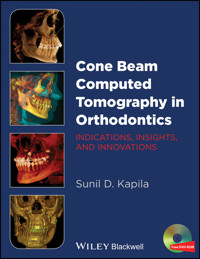
Since its introduction to dentistry, cone beam computed tomography (CBCT) has undergone a rapid evolution and considerable integration into orthodontics. However, despite the increasing popularity of CBCT and progress in applying it to clinical orthodontics, the profession has lacked a cohesive, comprehensive and objective reference that provides clinicians with the background needed to utilize this technology optimally for treating their patients. Cone Beam Computed Tomography in Orthodontics provides timely, impartial, and state-of-the-art information on the indications and protocols for CBCT imaging in orthodontics, clinical insights gained from these images, and innovations driven by these insights. As such, it is the most current and authoritative textbook on CBCT in orthodontics.
Cone Beam Computed Tomography in Orthodontics is organized to progress sequentially through specific topics so as to build the knowledgebase logically in this important and rapidly evolving field. Part I provides the foundational information on CBCT technology, including radiation exposure and risks, and future evolutions in computed tomography. Part II presents the Principles and Protocols for CBCT Imaging in Orthodontics, focusing on developing evidence-based criteria for CBCT imaging, the medico-legal implications of CBCT to the professional and the protocols and integration of this technology in orthodontic practice. Part III provides critical information on CBCT-based Diagnosis and Treatment Planning that includes how to interpret CBCT scans, identify incidental pathologies and the possible other uses of this technology. Part IV covers practical aspects of CBCT’s Clinical Applications and Treatment Outcomes that encompasses a range of topics, including root morphology and position, treatment of impacted teeth, virtual surgical treatment planning and outcomes, and more.
Sie lesen das E-Book in den Legimi-Apps auf:
Seitenzahl: 1230
Veröffentlichungsjahr: 2014
Ähnliche



















Table of Contents
The DVD
Title page
Copyright page
Dedication
List of Contributors
Preface
Acknowledgments
Part 1: Technology Assessment and Enhancements
1: Contemporary Concepts of Cone Beam Computed Tomography in Orthodontics
Introduction
Evolution in and Basics of CBCT Technology
Technology Assessment and Enhancements
CBCT Morphometric Analyses in Health and Disease
Utility of CBCT in Assessing Treatment Outcomes
Incidental Findings, Diagnostician Skills, and Medico-Legal Implications
Indications: Efficacious Use of CBCT in Orthodontic Diagnosis and Treatment Planning
Protocols for Utilizing and Interpreting CBCT in Orthodontics
Areas Requiring Further Study
Conclusions
References
2: Functional and Technical Characteristics of Different Cone Beam Computed Tomography Units
Introduction
Characteristics of a CT Image
Classification of Scanners
Other Key Attributes of CBCT Scanners
Role of Software Functions in Image Interpretation
Other Considerations
Conclusions
References
3: Cone Beam Computed Tomography in Orthodontics: Perspectives on Radiation Risk
Radiation Effects
Radiation Dose Measurement
Doses for Various CBCT Machines
Risk Estimates for CBCT
Reducing Radiation Risk with CBCT
Conclusions
References
4: Rational Basis for Transitioning from 2D to 3D Radiographic Imaging in Orthodontic Practice and Research
Introduction
Can CBCT Replace the Conventional Set of Radiographs?
Will CBCT Lead to Improvement of Treatment?
Will CBCT-Based Research Change the Treatment Approach?
Can the Fusion of CBCT with Other 3D Visualization Modalities Enhance Treatment and Research?
CBCT and Digital Models
CBCT and 3D Photography
Conclusions
References
5: The Future of Cone Beam Computed Tomography and 3D Imaging in Orthodontics
X-Ray Sources
Detectors
Other CT Applications
Future Perspectives
References
Part 2: Protocols and Principles for Cone Beam Computed Tomography Imaging in Orthodontics
6: Development of Evidence-Based Selection Criteria for Cone Beam Computed Tomography in Orthodontics
Introduction
Advantages and Risks of CBCT Imaging in Orthodontics
Selection Criteria for CBCT Imaging in Orthodontics
Determining Patient Radiation Dose Risk
Minimizing Patient Radiation Exposure
Conclusions
Acknowledgments
References
7: To Scan or Not to Scan: Medico-Legal Implications
Introduction
Standard of Care
New Procedures
Associated Ethical, Legal, and Regulatory Issues
Conclusions
References
8: Protocols for the Use of Cone Beam Computed Tomography in Orthodontic Practice
Introduction
Benefits of CBCT for Orthodontists
CBCT Volume Acquisition
Orthodontic Evaluation of the Scan
Reconstructing 2D Radiographs
The Role of the Oral and Maxillofacial Radiologist
The Future of CBCT and Orthodontics
Conclusions
References
Part 3: Diagnosis and Treatment Planning
9: How to Interpret Cone Beam Computed Tomography Scans
Introduction
Protocols for Imaging, Quality Assurance, and Image Reconstruction
Analysis of CBCT Images
Conclusions
References
10: Detection of Incidental Findings in Cone Beam Computed Tomography Imaging and Their Clinical Implications
Introduction
Intracranial Soft Tissue Calcifications and Lesions
Extracranial Soft Tissue Calcifications
Airway
Lesions of the Paranasal Sinuses and Nasal Cavity
Tooth-related Findings and Developmental Defects of the Jaws
Temporomandibular Joint (TMJ)
Cervical Spine
Miscellaneous Findings
Conclusions
Acknowledgments
References
11: 3D Orthodontic Diagnosis and Treatment Planning
Introduction
CBCT's Role in Orthodontic Diagnosis and Treatment Planning
The CWRU Comprehensive CBCT Analysis
The CWRU Transverse Analysis
Developing Norms for the CWRU Transverse Analysis
Interpreting the Analysis Results: Case Reports
Conclusions
References
12: Application of 3D TMJ Imaging to TMJDs, TMJ Functional Analyses, and Orthodontic Treatment Outcomes
Introduction
Imaging of the TMJ
Image-Assisted Evaluation of the TMJ in Orthodontic Treatment
3D Superimpositions for Evaluation of 4D Changes in the TMJ Bone
Multidimensional Imaging and Numerical Modeling of Jaw Biomechanics
Conclusions
Acknowledgments
References
13: Characterization of the Upper Airway Morphology and Its Changes in the Apneic Patient Using Cone Beam Computed Tomography
Introduction
Technological Evolutions in Airway Assessments and Analyses
Relevance of the Airway to Orthodontics
Airway Parameters in Healthy and Apneic Subjects
Conclusions
References
14: Alveolar Boundary Conditions in Orthodontic Diagnosis and Treatment Planning
Introduction
Alveolar Boundary Condition Biotype: A Potential New Diagnostic Criteria
Technical Considerations for Using CBCT to Assess Alveolar Boundary Conditions
Risk Factors for Compromising Alveolar Boundary Conditions
Bone Boundary Conditions Adaptability in Response to Non-extraction Orthodontic Treatment
Complex Cases with Substantial Challenges Posed by Boundary Conditions
Conclusions
References
Part 4: Clinical Applications and Treatment Outcomes
15: Assessment of Root Position and Morphology by Cone Beam Computed Tomography
Introduction
Accuracy of Root Angulation and Length Measurements on 2D and 3D Radiographs
External Apical Root Resorption in Orthodontics Patients
CBCT-Based Diagnosis of Dilacerated Roots
The Future: CBCT Radiographic Root Mapping as an Indicator of Disease
Conclusions
References
16: 3D Image-Aided Diagnosis and Treatment of Impacted and Transposed Teeth
Introduction
Prevalence and Etiology of Impacted and Transposed Teeth
2D and 3D Radiographic Findings on Normal Canine Development and Eruption
Efficacy of CBCT in Diagnosis and Treatment Planning of Impacted Teeth and Associated Root Resorption
Protocols for CBCT Imaging of Impacted and Transposed Teeth
Current Approaches to Treating Impacted Teeth
Virtual Diagnosis and Treatment Planning of Impacted Teeth
Implementing 3D Image-Aided Treatment of Impacted Teeth
Principles of 3D Diagnosis and Treatment Planning of Transposed Teeth
Conclusions
Acknowledgments
References
17: Assessment of Maxillary Transverse Deficiency and Treatment Outcomes by Cone Beam Computed Tomography
Introduction
Accuracy of Maxillary Width Measurements Taken from 2D and 3D Radiographs
Radiographic Assessment of Maxillary Transverse Growth
Diagnosing Maxillary Transverse Deficiency Using PA Cephalographs
Radiographic Assessment of Midpalatal Suture Ossification
2D and 3D Radiographic Evaluation of Maxillary Expansion
Evidence-Based Assessment of Maxillary Expansion Treatment
Maxillary Expansion Effects Assessed with 3D Radiographs
Conclusions
References
18: Planning and Placing Temporary Anchorage Devices with the Aid of Cone Beam Computed Tomography Imaging
Introduction
Advantages and Disadvantages of CBCT Imaging for TAD Application
Approaches for Optimal Clinical Utilization of CBCTs for TADs
Virtual Miniscrew Implant Insertion
Outcomes Assessment
Conclusions
References
19: 3D Planning and Treatment Outcomes of Bone Anchored Maxillary Protraction
Introduction
Two-Dimensional (2D) Analysis of BAMP
Rationale for Using 3D Imaging in Assessing Treatment Effects
Clinical Methodology and Protocols
Outcomes Assessment of BAMP Treatment in 3D
Conclusions
References
20: Applications of Cone Beam Computed Tomography to Orthognathic Surgery Treatment Planning
Introduction
Advantages of In-Office CT Scanning
Evolution from 2D to 3D Radiography for Orthognathic Surgery
Computer-Assisted Orthognathic Surgery (CAOS)
3D Image Cephalometrics for Surgical Planning
Surgical Simulation
Conclusions
References
21: 3D Diagnosis and Management of Facial Asymmetries
Introduction
Midline Determination and Mirroring Techniques
Segmentation and Surface Distance Computation
Surgical Simulation and Outcome Design
Future Perspectives
References
22: 3D Assessment of Orthognathic Surgical Outcomes
Introduction
History and Background of Orthognathic Surgery
2D Mandibular Orthognathic Surgery Studies
Evolving Methods for Using 3D Imaging for Surgical Outcomes Assessment
Class III Surgical Evaluations
Surgery for Class II Correction
Conclusions
References
23: 3D Imaging in Diagnosis and Treatment Planning of Craniofacial Anomalies
Introduction
3D Imaging Modalaties for Craniofacial Patients
Application of 3D Imaging in Craniofacial Anomalies
Rare Syndromes
Growth and Treatment Changes Assessed by 3D Techniques
Conclusions
References
Index
End User License Agreement
List of Tables
Table 1.1 Comparison of effective radiation doses from conventional 2D radiography, CBCTs using pediatric phantoms for dentoalveolar (small and medium) and craniofacial (large) FOVs, MSCT, and background radiation. Most of the radiation data are provided in ranges and medians (in parentheses).
Lesen Sie weiter in der vollständigen Ausgabe!
Lesen Sie weiter in der vollständigen Ausgabe!
Lesen Sie weiter in der vollständigen Ausgabe!
Lesen Sie weiter in der vollständigen Ausgabe!
Lesen Sie weiter in der vollständigen Ausgabe!
Lesen Sie weiter in der vollständigen Ausgabe!
Lesen Sie weiter in der vollständigen Ausgabe!
Lesen Sie weiter in der vollständigen Ausgabe!
Lesen Sie weiter in der vollständigen Ausgabe!
Lesen Sie weiter in der vollständigen Ausgabe!
Lesen Sie weiter in der vollständigen Ausgabe!
Lesen Sie weiter in der vollständigen Ausgabe!
Lesen Sie weiter in der vollständigen Ausgabe!
Lesen Sie weiter in der vollständigen Ausgabe!
Lesen Sie weiter in der vollständigen Ausgabe!
Lesen Sie weiter in der vollständigen Ausgabe!
Lesen Sie weiter in der vollständigen Ausgabe!
Lesen Sie weiter in der vollständigen Ausgabe!
Lesen Sie weiter in der vollständigen Ausgabe!
Lesen Sie weiter in der vollständigen Ausgabe!
Lesen Sie weiter in der vollständigen Ausgabe!
Lesen Sie weiter in der vollständigen Ausgabe!
Lesen Sie weiter in der vollständigen Ausgabe!
Lesen Sie weiter in der vollständigen Ausgabe!
Lesen Sie weiter in der vollständigen Ausgabe!
Lesen Sie weiter in der vollständigen Ausgabe!
Lesen Sie weiter in der vollständigen Ausgabe!
Lesen Sie weiter in der vollständigen Ausgabe!
Lesen Sie weiter in der vollständigen Ausgabe!
Lesen Sie weiter in der vollständigen Ausgabe!
Lesen Sie weiter in der vollständigen Ausgabe!
Lesen Sie weiter in der vollständigen Ausgabe!
Lesen Sie weiter in der vollständigen Ausgabe!
Lesen Sie weiter in der vollständigen Ausgabe!
Lesen Sie weiter in der vollständigen Ausgabe!
Lesen Sie weiter in der vollständigen Ausgabe!




