


Erhalten Sie Zugang zu diesem und mehr als 300000 Büchern ab EUR 5,99 monatlich.
- Herausgeber: Kamera Books
- Kategorie: Geisteswissenschaft
- Sprache: Englisch
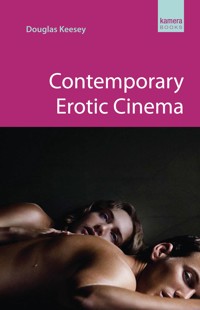
Movies have constantly pushed at the boundaries of sexual representation, outraging censors, transgressing taboos and opening up formerly forbidden realms of sensual pleasure. Whether through an exploration of our dreamiest fantasies or our darkest desires, films have expanded our repertoire of erotic images and challenged who we are as sexual beings. The first book to look at truly contemporary erotic cinema, this publication gives in-depth analyses of sex scenes from over 100 films, more than half of them released in the 21st century. Beginning with an overview of how depictions of sex on screen have changed over the last 40 years, with particular attention to censorship controversies, the book is divided into three main parts - erotic genres, themes and acts - and covers sex comedies, body horror, alien sex and erotic animation; gay, lesbian, bisexual and trans films, movies about youth, marriage and infidelity, films dealing with incest, blasphemy and death; on-screen nudity and voyeurism, masturbation, oral and anal sex, the ménage à trois and the orgy, and bestiality, rape and sadomasochism. The films discussed include 9 Songs, American Pie, Bad Education, Black Swan, Brokeback Mountain, Intimacy, Last Tango in Paris, The Reader, The Wayward Cloud, Y Tu Mamá También and many more.
Sie lesen das E-Book in den Legimi-Apps auf:
Seitenzahl: 344
Veröffentlichungsjahr: 2012
Das E-Book (TTS) können Sie hören im Abo „Legimi Premium” in Legimi-Apps auf:
Ähnliche


















Movies have constantly pushed at the boundaries of sexual representation, outraging censors, transgressing taboos and opening up formerly forbidden realms of sensual pleasure. Whether through an exploration of our dreamiest fantasies or our darkest desires, films have expanded our repertoire of erotic images and challenged who we are as sexual beings.
The first book to look at truly contemporary erotic cinema, this publication gives in-depth analyses of sex scenes from over 100 films, more than half of them released in the 21st century. Beginning with an overview of how depictions of sex on screen have changed over the last 40 years, with particular attention to censorship controversies, the book is divided into three main parts – erotic genres, themes and acts – and covers sex comedies, body horror, alien sex and erotic animation; gay, lesbian, bisexual and trans films, movies about youth, marriage and infidelity, films dealing with incest, blasphemy and death; on-screen nudity and voyeurism, masturbation, oral and anal sex, the ménage à trois and the orgy, and bestiality, rape and sadomasochism. The films discussed include 9 Songs, American Pie, Bad Education, Black Swan, Brokeback Mountain, Intimacy, Last Tango in Paris, The Reader, Shame, The Wayward Cloud, Y Tu Mamá También and many more.
Douglas Keesey is a professor of film and literature at California Polytechnic State University. His published books include Neo-Noir: Contemporary Film Noir from Chinatown to The Dark Knight (Kamera Books) as well as Catherine Breillat, Don DeLillo, Erotic Cinema, Peter Greenaway, and Paul Verhoeven.
Douglas Keesey
CONTEMPORARY EROTIC CINEMA
www.noexit.co.uk
For Helen, my one true love
CONTENTS
Title Page
Dedication
Introduction
1. Erotic Genres
2. Erotic Themes
3. Erotic Acts
Bibliography
Notes
Copyright
INTRODUCTION
Sex is sex, right? You know it when you see it, and you certainly know what it means. A sex scene needs no interpretation; its sense is self-evident. It is what it is.
Well, picture a couple having sex. Are they ‘fucking’ or ‘making love’, and how can you tell the difference? Could it be both? If the man is on top of the woman, is he in a position of dominance or does it have nothing to do with gender hierarchy? If we call this the ‘missionary position’, does that give it religious sanction or remind us of patriarchal religion’s history of subjugating women?
Next we see the two engaged in anal intercourse, with him ‘taking her from behind’. Describing it this way might make it sound disturbingly forceful and animalistic, but this could be exactly what she told him she wants to play at doing. If she then puts on a strap-on dildo and ‘pegs’ him, are they opening up new avenues for pleasure, or does resorting to a sex toy mean that their relationship is so tired it now needs artificial aids?
Let’s say he ‘goes down on her’. ‘Giving her head’ could be a special favour, bowing down before the female sex in a way that some men won’t do, or it might be his preference and something she reluctantly (or readily) gives to him. If he now stands above her while receiving oral sex, is he empowered as the penetrator or is she the one who has him at her mercy, holding his vulnerable member in her mouth? If they lie side by side and engage in 69ing, does this make them equals?
Does it matter if the couple having sex are virginal or experienced, married or adulterous, in their bedroom or at a motel? What if they’re of different ages or races, or both of the same sex? What if there are three or more of them in bed together – or only one self-pleasuring and being watched by someone else?
The fact is that, in any given scene, what ‘sex’ means will change depending on the particular way it is represented and the particular words we use to describe it. As Linda Williams points out, sex ‘is not a stable truth that cameras and microphones either “catch” or don’t catch. It is a constructed, mediated, performed act’,1 conveyed to us by the medium of film which includes, omits, emphasises and editorialises with every angle, cut, actor’s gesture and word of dialogue.
This book looks at the representation of sex in films over the last 40 years,2 studying erotic scenes by directors around the world.3 Contemporary erotic cinema begins with the sexual revolution in the late 1960s. The relaxation of religious restrictions and legal bans on various kinds of sexual behaviour, combined with the widespread availability of birth control, led to a more liberal sexual climate. Feminist, gay, lesbian, transgender and queer groups moved society towards an acceptance of a wider range of sexual identities, acts and affects. Rather than heterosexual monogamy as the presumed and enforced norm (females were expected to act ‘feminine’ and to pair-bond for life with a man, having sex for the purpose of procreation), other possibilities for sexual satisfaction became available. Reflecting or promoting these changes in sexual mores, films began to show a much broader spectrum of intimate acts, including many formerly taboo behaviours. In the US, what was essentially a system of censorship, the Motion Picture Production Code, was replaced in 1968 by a ratings system that theoretically allowed directors to include whatever they wanted in their films. These would then be classified based on content as a service for the viewing public, who were thereby informed of what was in the films and free to see whichever ones they chose.
Thus, one tendency in contemporary erotic cinema is towards increasing liberalisation. Some of the restraints of civilisation are lifted, and characters are freed to pursue pleasure in ways they find to be instinctually gratifying. American Pie reduces the shame of masturbation, making it hilarious – and homey as apple pie. Japan’s The Snake of June also works through shame – this time regarding female pleasure – and finds that exhibitionism is one way to overcome it. Religious repression of women’s sexuality is lasciviously lifted in Italy’s Behind Convent Walls, and a boy’s healthy sexual awakening occurs despite fears of damnation in Australia’s The Devil’s Playground. Y Tu Mamá También takes two Mexican boys on a journey from macho defensiveness to homoeroticism, while Brokeback Mountain shows America that cowboys – the very archetypes of masculinity – can also be gay. England’s The Attendant brings a black museum guard and a white visitor together in a sado-masochistic relationship that plays with racist domination as a way of moving past it, while The Lover presents a passionate liaison between a French girl and a Chinese man, challenging taboos on interracial and cross-generational sex. Me and You and Everyone We Know dares to represent childhood sexuality as natural, healthy and frequently humorous in its awkward stages of development. In Black Swan, masturbation and lesbian oral sex are validated as moments of sexual self-discovery for a young woman. The man in Transamerica is supported in his belief that to find himself he must become a woman, and the intersex character in XXY is encouraged in her hope that she need not mutilate herself to become male or female, but can instead remain whole as both.
Male or female, masculine or feminine, heterosexual or homosexual – these either/or choices have increasingly become both/and possibilities. The limited option of married or single has been expanded to include premarital, extramarital or non-marital sex with more than one partner, serially or simultaneously. Ken Park ends with a threesome and Shortbus climaxes in an orgy, and these are represented as utopian alternatives to the sexual repression, jealousy and possessiveness typical of compulsory monogamy. Similarly, restrictions on what is and is not an erogenous zone have been opened up beyond the merely genital (the penetrative vaginal intercourse of conservative morality) to include oral, anal and potentially all other parts of the body. Fellatio figures largely in Now & Later; cunnilingus is central to In the Cut; and I Love You, I Don’t is all about anal intimacy. In Beautiful Thing, a boy’s back is eroticised, and in 9½ Weeks it is a woman’s belly button. Feet are tantalisingly tickled in Mirch; body hair is stroked in Fur; and the entire epidermis is excited in The Man Who Fell to Earth. In contemporary erotic cinema, the body is increasingly deterritorialised, with its sexuality becoming more and more polymorphously perverse.
Moviemakers’ attempts over the last four decades to expand the boundaries of sex on film have led to some battles with the ratings boards, which have tended to push back in the name of conservative social norms. While apparently applied only after the fact as an advisory notice regarding film content, the NC-17 rating has operated as a form of de facto censorship in the US. Because some movie studios won’t finance NC-17 films – and some media outlets won’t advertise them and some theatre chains won’t show them – the pressure is on directors to cut their films in order to receive an R rating or to censor themselves during filmmaking, not even allowing their imaginations to go into sexually adventurous ‘NC-17’ territory. Despite its not being erect, shots of Ewan McGregor’s male member were cut from Young Adam for an R rating, prompting the actor to remark, ‘If I’d blown away 5,000 people with a semi-automatic machine gun, that would be fine. But I showed my penis.’4 Peter Sarsgaard, an actor who has not shied away from full-frontal nudity (Kinsey, The Centre of the World), has noted that ‘The ratings board can only handle so much penis. They can handle a lot of tits and ass. If you have a penis in a movie, you get a certain amount of time with that penis before you become NC-17.’5
And, if ‘tits and ass’ are allowed, erotic exposure of the female sex is not, as William H Macy and Maria Bello found out about their film The Cooler. To avoid an NC-17, a 1½-second shot of his mouth moving up from her mons after cunnilingus had to be cut. ‘Apparently, you cannot show pubic hair in a sexual situation’, commented Bello after her meeting with the ratings board.6 This same board also took issue with another scene of female-centred pleasure in the movie Coming Soon, where a young woman reaches climax from a jacuzzi water-jet. This scene was deemed ‘too lurid’ for an R rating,7 even though there were no shots of her below the waist and the only ‘private part’ on display was her ecstatic face. Director Colette Burson has called attention to the gender bias of these rating practices: ‘Almost any time a girl orgasmed, the board wanted me to cut the scene by 75 per cent, even though she was 18. I was told specifically that the board has a problem with young girls’ orgasms. I got on the phone with a woman from the board and said I can’t help but point out that, if it were boys, you wouldn’t have a problem. She said that may well be true; however, it is the job of the board to judge for parents across America and, if the parents were to see the movie, they would be judging it with a double standard and therefore the board must judge it that way, too.’8 Director Allison Anders sums up the situation with movie ratings by arguing that they attempt to exert an overall sexual repression: ‘There’s a denial of female pleasure or a denial of pleasure, period – male pleasure, too; you can barely see anything of a male body on the screen. I think that nobody gets to come, basically. I think that that’s what it is.’9
Certainly, one thing you’re not likely to see in a ‘legitimate’ mainstream theatre is a ‘cum shot’. In the UK, the BBFC insisted on cutting an ejaculation shot from The Pornographer, even though this was an art-house film about porn and not porn per se, in order to grant it an 18 certificate. Viewers had to seek out a licensed sex shop if they wanted to see this scene’s dramatic climax. The BBFC deleted a close-up penetration shot from Baise-moibecause it occurred during a rape scene and could be viewed as eroticising violence, despite the fact that it could also be seen as condemning the rapists and the porn-fuelled culture which helped to create them. Before granting the film an R, the US ratings board wanted a scene excised from Storytelling in which a black man roughly sodomises a white woman while having her repeat, ‘Fuck me, nigger.’ Though his thrusting buttocks were the ostensible reason for the cut, the sexualised violence, particularly in an interracial context, may have contributed to the discomfort of the board, which was ready to force its notion of proper sexual conduct and race relations on all viewers. Rather than delete the scene, director Todd Solondz highlighted the board’s repression by blocking out the offending buttocks with a box: ‘Storytelling is the only studio movie where the censorship is perfectly clear, the only studio movie with a big red box covering up a shot. I take pride in that,’ Solondz has said.10
Yet, despite these high-profile cases of actual or de facto censorship, more liberal attitudes to sex have led even the ratings boards to loosen their restrictions. A number of films that would formerly have been subjected to substantial cuts or slapped with an NC-17 have been approved for an R rating and released to mainstream American audiences. Some of these movies may have ‘slipped past the censor’ by presenting sex within the reassuring context of a familiar genre, such as melodrama (Unfaithful’s energetic coupling), comedy (Scary Movie’s geyser-like ejaculation) or noir (8mm’s snuff porn). However, other R-rated films – with no generic ‘alibi’ – are more clearly the sign of greater social acceptance of sexual freedom: sado-masochism (Secretary), male nudity (Boogie Nights), bisexuality (Kinsey), homosexuality (Brokeback Mountain) and lesbianism (Black Swan). In the UK, Intimacy (with unsimulated fellatio) and 9 Songs (with actual penetration) were both passed uncut with 18-certificates for theatrical release, as was Shame which, in focusing on a sex addict, has pervasive sexual images including voyeurism, nudity, rear-entry intercourse, gay fellatio and a three-way with a man and two women. The film’s US distributor has even speculated that Shame may be the first NC-17 film that a larger audience will flock to, their attitudes having changed so much that they are no longer deterred by such a repressive rating: ‘NC-17 is a badge of honour, not a scarlet letter. We believe it is time for the rating to become usable in a serious manner….The sheer talent of the actors and the vision of the filmmaker are extraordinary….It’s a game changer.’11
In spite of these advances, there are still changes that have not been made and aspects of sexuality that remain under-represented, even in contemporary erotic cinema. Back in 1973, Norman Mailer recognised Last Tango in Paris as a breakthrough in its bold depiction of sex by two mainstream stars, Marlon Brando and Maria Schneider, but he also criticised the film for not being brave enough to go all the way: ‘Brando’s real cock up Schneider’s real vagina would have brought the history of film one huge march closer to the ultimate experience it has promised since its inception (which is to re-embody life)….We are being given a fuck film without the fuck. It is like a Western without the horses.’12 Almost 40 years later, the closest cinema has come to unsimulated sex between two name actors is Kerry Fox and Mark Rylance in Intimacy, but they are not megastars and their contact stops at fellatio without going on to penetration. What we don’t have are Brad Pitt and Angelina Jolie – or Kate Winslet and Leonardo DiCaprio – in a scene of actual intercourse. Rather than accepting sex organs and sexual relations as a natural – even wonderful – part of life and depicting these in mainstream movies with idealised stars, we continue to consign sex to porn films as if there were something dirty or shameful about the body and its desires. In the early ’70s, ‘porno chic’ films like Deep Throat (‘the world’s first sexually explicit blockbuster’) and Behind the GreenDoor (‘an attempt to raise the pornographic film to the level of art’)13 seemed poised to bridge the gap between adult films and films for adults, between arse and art. As Paul Thomas Anderson (director of BoogieNights) has said, ‘Where I romanticise it could have gone was a place where acting, storytelling and camerawork got better. With interesting characters where you also had the luxury to show them fucking. We can’t see Forrest Gump fuck Jenny Curran, to make that kid. But, God, wouldn’t it be a great scene? Not just because I want to get off watching Tom Hanks fuck Robin Wright, but think what can be told about Gump through watching him have sex….My romantic notion is that if porno films had been allowed to breathe, and the stories eventually really did come first, then we would have been able to see an actor playing a role and then being able to try on a new way of having sex in a scene.’14
Besides the absence of big-name stars having real sex on screen, most erotic scenes in mainstream movies remain limited to a very narrow range of body-types and sexual situations. Lovers are usually white and young with model-perfect physiques. Desire is prompted by someone new, as in teens just discovering sex, a young couple making out on a first date or a youthful-looking married woman finding excitement in adultery. What you don’t see are conjugal partners still overcome with carnal desire for each other and doing unspeakable things together in the marital bed. You don’t see middle-aged or older couples with beer bellies or wrinkled faces engaged in sexual acts which show that extra flesh and a lived-in body can be arousing in themselves. That mole, pimple or scar – that asymmetrical breast or tiny penis – can inspire as much passion as the air-brushed and surgically corrected specimens normally on display. Androgynous bodies of males with full hips and females with small breasts, bodies of ‘black’ or ‘red’ or ‘yellow’ skin colour, differently abled bodies with certain heightened abilities and senses – the existing repertoire of erotic images could be expanded to include these. Instead of the usual vigorous thrusting, masculine tenderness could be shown as a turn-on, along with feminine sexual aggression. The tantalising feeling of barely touching – or sensing the air electrified with desire across the narrow gap separating a couple – is as sexy as going at it hot and heavy, yet such rarefied desire is rarely conveyed on film. The erotic dimensions of intellectual excitement or artistic expression or religious ecstasy are additional aspects of sexuality that could be explored on screen.
If the range of bodies we see making love could be greatly expanded beyond the presently impoverished view, so too could the body itself be opened up to enjoyment in ways beyond those in which the current cinema has ‘zoned’ it for pleasure. The hollow of the neck, the crook of the arm, and the back of the knee are all potential erogenous zones, readily responding to touch and, if stimulated, capable of inflaming the whole body. Though film is a visual medium, close-ups of a hand stroking skin can evoke a tactile response in the viewer. Beard, chest, underarm and pubic hair excite nerve endings when stroked and are near sweat glands which the nose can find arousing. Yet, rather than focus on hair, film usually ignores or passes quickly over it – a glimpse of underarm, a flash of pubes – to get to the genitals. What you hear endless dialogue about – and occasionally actually see – in mainstream sex scenes are the penis and the vagina. However, virtually no attention is paid to the clitoris, despite the fact that stimulation of it is the surest way for most women to achieve orgasm. Is this because the clit is often ‘hidden’ under a hood when not erect, or because a too-tight close-up of it would be ‘obscene’ – or just because cinema remains largely sexist in disregarding female pleasure? Shots of vigorous thrusting remain the norm, whether or not these make contact with the clitoris or the G-spot. Most sex scenes are phallocentric: she is expected to come from what stimulates him, from the thrusts we can see and not from some organ we can’t. This phallocentrism also means that the man’s testicles are entirely overlooked as a potential means of pleasure. Made to perform a largely symbolic function (a film character with ‘big balls’ is potently dominant), the testicles are deprived of their physical presence and sensual capacity. The camera so rarely shows them, it’s as though they aren’t even there! Similarly, for both men and women, the ass and the anus have very little sensual presence in current cinema. They are a source of humorous embarrassment for men (when caught with their pants down in sex comedies) and of teasing foreplay on the part of women (who may flash their backsides as a lure to vaginal intercourse). But mainstream film almost never shows the ass or anus as exciting in themselves, despite the latter’s lasciviously sensitive nerve endings and the fact that anal intercourse can stimulate the prostate and the clitoris.
Although it doesn’t always go far enough in certain directions, one trend in contemporary erotic cinema is clearly towards an increasing liberalisation of sexual attitudes. However, there is a significant counter-trend which explores the question of whether some limits on sexual gratification may be advisable and even necessary. In the age of AIDS, can someone who is HIV-positive have unprotected sex with a partner (The Living End) or not even tell about his HIV status (Savage Nights)?
Is the ideal really an absolute instinctual freedom in which anything goes? Should nothing be taboo? What about incest (Lolita) or bestiality (Zoo) or necrophilia (Kissed)? How about sado-masochistic sex that borders on rape (A History of Violence) or that could result in injury or death (Killing Me Softly)? Unbridled desire can lead a mother to endanger her young son (Little Children) or cause a father to steal his grown son’s fiancée, exposing him to a killing shock (Damage). Lust can provoke a teenage girl to fellate a series of anonymous men (Melissa P) or a husband to force his wife into a three-way that includes double penetration (The Ages of Lulú). According to director Jean-Claude Brisseau, whose female characters in The Exterminating Angels become sensation-seekers compelled to engage in ever-more extreme sexual experiences, ‘I am mostly and quite frankly in favour of the liberalisation and acceptance of a whole series of things in the sexual domain. These women cross a barrier. But this barrier, it will forever recede. The more they transgress taboos, the more frustrated they’ll get because there will always be a stronger taboo, up to the point of death.’ Brisseau adds that ‘This is what happens to all libertines, who end up no longer capable of orgasm because they can never reach the ultimate taboo, except in death….I remember the rather poignant confession of a man, a true libertine, who told me: “I’ve gone through all the stages. First I made love with a woman, then with two, then three, then I moved on to men, and now I’ve become a sado-masochist. So, the last pleasure that remains for me is to hang myself by the balls.”’15
The hedonistic male character in Shame ends up in a similar downward spiral of ever-more degrading lust – an unchecked carnality which is not coincidentally fuelled by his constant consumption of porn. It is quite striking how many contemporary films show the sexual revolution as having been co-opted by porn, which holds out the promise of libidinal freedom only to trap the consumer into a never-satisfied demand for more extreme images of pre-packaged lust. What looks like liberation becomes a new kind of conformity to capitalism, a ‘repressive desublimation’ in which individual instinct doesn’t find healthy release but is instead channelled into the false freedom of porn-dictated desire. All About Anna, The Brown Bunny, The Centre of the World, Destricted, Enter the Void, The Fluffer – these are just some of the most recent films to critically examine the effect of pornography on the contemporary libido and to suggest that, despite – or maybe because of – liberalisation, sex still isn’t free.
EROTIC GENRES
ANIMATION
Heavy Metal 2000 (2000)
Directors: Michael Coldewey, Michel Lemire
Voice Cast: Julie Strain (Julie)
Animators can reshape the sexual body beyond the limits of the live-action human form. In this science-fiction/fantasy film, a street vendor offers a Cyber Sex Doll equipped with every imaginable feature: ‘We’re talking high-grade silicone rubber flesh here and a PVC skeleton with plastic ball-and-socket joints for optimum movement. You can customise her with a choice of seven synthetic hair dyes and optional entry ports with four speeds of suction. She’s loaded with the latest microsensor orgasmatronic technology and an expandable vocabulary of over 200 dirty words.’ As the sexbot pulls a male customer to her breasts, she coos enticingly, ‘Please select your sexual preference: vaginal, anal, oral, other.’ Given this ability to morph into a nearly limitless range of sexual options to serve the customer’s desire, is it any wonder that ‘test results indicate she’s better than the real thing’?
But the interesting point is that she’s not. Despite the sales talk (and the accompanying heavy-metal song – ‘She can sense the pervert inside of me/She knows how to make me howl’), the Cyber Sex Doll is depicted as a debased female brought to her knees, with her arms together in front of her as if chained. She is dominated by the obese, one-eyed pimp who holds her down, hawking her as merchandise. Her male customer is fascinated but also frightened by the big silicone breasts she pulls him into – as if the overabundance of choice were too much, the satisfaction of his desire too rotely mechanical, based too strongly on what he is conditioned to want, on what is sold to him. When the pimp then offers him a ‘Fillacian blowfish’ as an alternative, with its connotations of fellatio and poison, it’s clear that the moviemakers, while excited by a sucking mouth (a sexbot’s or a fish’s), also sense that such mechanical or bestial sex would be a kind of death. Julie, the film’s heroine, calls the male a ‘sick, twisted, low-life, scum-sucking pig’ for being attracted to such inferior substitutes for human females as herself. Later, as the Cyber Sex Doll emits orgasmic cries and contorts its limbs in climactic convulsions, Julie shoots it to put it out of its misery, for it is nothing but a robot gone haywire: all it can achieve is a soulless mechanical imitation of human ecstasy.
Curiously, the character of Julie is voiced by and modelled on Julie Strain, a Penthouse model and B-movie actress famous for her big – and silicone-enhanced – breasts. In fact, Strain is one of the featured interview subjects in the documentary Boobs: An American Obsession (2010). A significant amount of attention is paid to Julie’s breasts in Heavy Metal2000, such as in the scene where she dons unusual body ‘armour’: a one-piece combination of red thong and ripped, form-fitting leotard top. The film celebrates the power of Julie’s natural and human female sexuality – ignoring the extent to which she herself is an artificially enhanced and commodified body-type.
Team America: World Police (2004)
Director: Trey Parker
Voice Cast: Trey Parker (Gary), Kristen Miller (Lisa)
Should puppet sex be rated NC-17? The lovemaking between Gary and Lisa in this film is enacted entirely by puppets whose strings are visible and who are not anatomically correct (they have no genitals). Yet the film had to be submitted nine times to the MPAA ratings board, which kept demanding further cuts before they would grant it an R rating. According to director Trey Parker – co-creator along with Matt Stone of the South Park TV series and the film South Park: Bigger, Longer & Uncut (1999) – ‘It was all about the sexual positions.’ At times, it seemed as though these ‘couldn’t be anything but missionary’.16 In the uncut version of the film, Gary and Lisa do engage in a variety of sexual positions and acts, including cowgirl and reverse cowgirl; 69ing and cunnilingus from behind; rear entry and/or anal; urination and defecation; and possibly foot fetishism. (The R-rated version drastically shortens most of these and deletes the scatology.) Parker felt that the ratings board didn’t seem to get that this was a comedy: ‘It’s something we all did as kids with Barbie and Ken dolls….The whole joke of it is that it’s just two dolls flopping around on each other. You see the hinges on their legs.’17 Of course, it’s possible that the association with child sex-play made the ‘doll sex’ seem even more obscene, as infantile sexuality and polymorphous perversity tend to make many people uncomfortable.
The puppet sex scene is actually a parody of the love scenes that are interspersed with the patriotic violence in Jerry Bruckheimer action/adventure films like Top Gun (1986), Armageddon (1998) and Pearl Harbor (2001). Gary and Lisa are members of an American paramilitary force fighting global terrorism, a group that ‘naïvely’ tends to destroy villages – like Paris and Cairo – in the process of saving them. The scene begins as a candle-lit romantic encounter between two clean-cut kids with the Gary and Lisa dolls falling onto the bed in slow motion and gazing into each other’s eyes. She strokes his manly chest and we see a cuddly shot of their legs and feet intertwined. But then, as the two assume the various positions and run through all the acts (including intercourse while she does a headstand), the sex becomes less about kindred spirits and more about gymnastic bodies, a parody of American athleticism and ‘healthy’ libido, as superficial and mechanical as illustrations in a Joy of Sex how-to manual. Within this ‘American innocence’ lurks something dark and perverse, as revealed by his increasingly violent rear entry, her devouring of his cock and their pissing and shitting on each other. Like US patriotism, American sex is satirised as having a violent underside.
A Scanner Darkly (2006)
Director: Richard Linklater
Cast: Keanu Reeves (Bob/Fred), Winona Ryder (Donna/Hank), Lisa Marie Newmyer (Connie)
Bob and Donna seem to have a deep emotional connection, but she won’t sleep with him. So Bob takes drugs and has sex with a substitute, Connie. Afterwards, he briefly sees Donna’s face instead of Connie’s on the woman lying next to him. Later, Bob, who is actually an undercover narc named Fred, watches surveillance video of himself and Connie in bed. As the tape fast-forwards, the two are seen moving rapidly through various sexual positions. Theirs is a merely physical encounter, a mechanical conjoining of bodies like the speeded-up sex between Alex (Malcolm McDowell) and the two girls in A Clockwork Orange (1971). But Bob then projects one segment of his own sex scene as a hologram, focusing in on one freeze-framed image that indeed seems to show that Connie has morphed into Donna! Did Bob actually have sex with the woman he loves but not really experience it because he was so addled by drugs – or so alienated by his duplicitous role as a narc, always spying on others and himself like a voyeur at a porn film of his own life?
The characters in A Scanner Darkly were created by filming live actors and then having animators use a rotoscopic computer program to hand-draw over each frame of the actors’ images. Thus each character looks like something of a blur of unstable boundaries and multiple superimpositions, as if seen through a drug haze or in video-scan mode. The animation itself dramatises the sense in which video or drugs perhaps allow Bob to imagine being with his beloved Donna, while they actually impede any real connection. As he tries to identify his female bed-partner in the surveillance video, Bob is wearing a futuristic ‘scramble suit’ that hides his own identity from others by rapidly morphing his image into a blur of different faces and body-types. How can Bob find love if he is losing touch with who he himself is? The ‘scramble suit’ is a metaphor for Bob’s schizophrenia (is he addict or narc? Bob or Fred?). Fred apparently left a happy home with a loving wife because he was bored with suburbia, feeling that ‘nothing would ever change’, but now as an undercover cop suffering from dissociative disorder, Fred/Bob finds that everything is changing all the time, with love a mere sexual performance. Even his boss at police headquarters, Hank, is revealed to be Donna in a ‘scramble suit’, who has been manipulating Fred/Bob into unwittingly taking on an undercover assignment in which he could lose his mind forever. Has the beloved become a femme fatale or is this just another of Fred/Bob’s imaginings, such as the one where a one-night-stand became the woman of his dreams?
COMEDY
Porky’s (1982)
Director: Bob Clark
Cast: Kaki Hunter (Wendy), Wyatt Knight (Tommy), Dan Monahan (Pee Wee), Nancy Parsons (Miss Balbricker)
This coming-of-age sex comedy, set in 1950s’ Florida, is notorious for the scene in which three high-school boys peer through peepholes at girls in the shower room after gym class. At first the humour would seem to be at the girls’ expense as they are unwittingly caught naked by the boys’ prying eyes. ‘This has got to be the biggest beaver shoot in the history of Florida,’ the boys joke to one another, viewing the girls as objects of an animal hunt and a sex film (and making us aware of ourselves as voyeurs of this ‘sex film’ called Porky’s). However, when the peeping Toms are discovered, the girls – who cover up with towels but do not seem terribly embarrassed – turn their eyes on the boys. Says Wendy to Tommy about his spying friend, ‘If Pee Wee’s with you, you better cover his eyes; he might get confused.’ As with the belittling nickname ‘Pee Wee’, Wendy implies that one of the boys is too young to understand what he is seeing – too small for sex. A mini-war for gender dominance ensues, with Tommy talking dirty and sticking his tongue through the hole, Wendy slathering suds on it (as if to tell him to wash his mouth out with soap) and Tommy then poking his penis through. This virile display seems to rout Wendy, who runs away from the shower wall to shudder and scream with the other girls, but theirs are shrieks of delight more than fear, and Tommy’s own laugh is one of mutual enjoyment and not just macho triumph. Tommy waggles his male member and makes it talk in a little boy’s voice in a gesture that combines phallic aggression with childlike innocence: ‘Hi, I’m Paulie the Penis and I just love to have fun!’ The girls look eager to stay and play, but at this point their gym teacher Miss Balbricker catches sight of the offending member and grabs hold of it as it protrudes through the shower wall. As director Bob Clark notes, the ratings board made him delete shots of the (fake) penis, but ‘in the real movie, before I had to do some cutting, Miss Balbricker had a hold of it’ with ‘both her feet up against the wall. Just the penis was holding her up. It was the funniest thing I think I’ve ever seen.’18 Here the joke is on the adult authority-figure so manically repressive of teen sexuality that she nearly dismembers the boy, while her penis envy and her underlying desire for the male sex are also revealed. At the same time, the joke is on the teenage boy for being so proud of his manhood and so sexually aggressive that he practically tempts (a feminist) fate to castrate him. As Clark has said, ‘All the women, they were in control, not the men; the men were always running around with their penises hanging out, looking like fools.’19
American Pie (1999)
Director: Paul Weitz
Cast: Jason Biggs (the boy Jim), Eugene Levy (the father), Molly Cheek (the mother)
Few scenes in sex comedies are as infamous as the one that gives this film its title, in which a father arrives home unexpectedly to find his teenage son humping a warm apple pie – a freshly baked treat left out for the boy by his mother. Why has this scene become such a hilarious highlight? First, there is the fact of the boy, in his sexual ignorance, taking his friends’ words literally. Earlier, when he asked ‘what exactly does third base feel like?’ they told him ‘like warm apple pie’. Second, there is the idea of a hormonally driven teen so desperate for sex that he feels compelled to screw a pastry. Even his father, though admitting to similar urges, says that he ‘never did it with baked goods’. Third, the boy is caught with his pants down in the incriminating act by his own father and is thus exposed as vulnerable to paternal punishment. However, part of the scene’s good-natured humour is that the dad is understanding and actually proves to be the boy’s ally, complicit in a cover-up of the illicit act: ‘We’ll just tell your mother that we ate it all.’ Finally, it is his own mother’s pie that the boy gets down and dirty with. He profanes her sweet innocence with his ‘depravity’, as if coming close to violating the incest taboo. (Elsewhere in the film, one of this boy’s buddies actually sleeps with a friend’s mother.) And then there is that expression ‘as American as Mom and apple pie’. It is almost as though, in his selfish lust, the boy ‘desecrates’ his dear mom, his happy home and his entire beloved country. As director Paul Weitz has noted, ‘In the States, with the apple-pie family and all the baggage that goes with that concept, a kid with his dick in an apple pie is really quite an aggressively subversive image’.20 But the humour also works the other way, bringing ‘dirty’ masturbation into the maternal home, fostering a warm acceptance of teen desires that in past years would have been condemned as merely ‘depraved’. In this sense, American Pie is one of the sweetest sex comedies – especially this scene with the pie.
Another funny aspect of this film is its ridiculous battle with the MPAA over this scene. In the unrated version, the boy is lying on top of the kitchen counter and working the pie with missionary zeal. However, as in the old censor’s rule that lovers had to keep at least one foot on the floor in any bedroom scene lest the action get too steamy, the ratings board preferred that the boy remain vertical with the pie. So, in the R-rated version, the boy stands with his back to us, humping the pie up against the kitchen counter. This does set up what is perhaps an even more obscene sight gag: when discovered by his father, the boy turns around to reveal the pie at his crotch. As the boy lifts his hands away, the pie stays up without his having to hold onto it! The ratings board also insisted on a reduction in the number of pie-thrusts – as if that really made the scene any less offensive to those inclined to be offended: ‘The MPAA was like “Can he thrust two times instead of four?”’21
HORROR
Nekromantik (1987)
Director: Jörg Buttgereit
Cast: Daktari Lorenz (Rob), Beatrice Manowski (Betty)
Rob works on a cleaning crew that collects the remains of accident or murder victims. Sometimes he returns to his apartment with organs and body parts, which he preserves in jars of formaldehyde. One day he brings home a man’s corpse, and Rob and his girlfriend Betty engage in a ménage à trois with it. She rides a broken-off broom handle protruding from the corpse’s crotch while Rob has sex with her from behind. Rob kisses the cadaver’s mouth before Betty’s and then moves its skeletal hand to feel up her breast. The scene is filmed romantically, using soft focus, slow motion and piano music. Is there any point to this necrophilia other than to disturb viewers of this horror film? Is Rob really in love with death?
One clue to an answer can be found in the scene where Rob dissects and disembowels a cadaver, which is cross-cut with a memory of ‘Rob’s father, killing his son’s favourite pet’22 – a rabbit that has its throat slit and its body gutted. This flashback was ‘triggered by a programme on TV’ about phobias,23 such as an aversion to spiders, dirt, excrement or dead bodies, which can perhaps be cured ‘when the person is continually confronted with’ the phobic object. The young Rob, traumatised by the death of his pet rabbit with which he seems to identify, tries to deal with this trauma by acting as a ‘pathologist’ and thus adopting the position of his father as a knife-wielding killer. Rob’s preservation of dead body parts shows his fixation on the gutted rabbit. Rob tries to




