


9,99 €
Mehr erfahren.
- Herausgeber: 50Minutes.com
- Kategorie: Sachliteratur, Reportagen, Biografien
- Serie: History
- Sprache: Englisch
Keen to learn but short on time? Get to grips with the life and discoveries of Copernicus in next to no time with this concise guide.
50Minutes.com provides a clear and engaging analysis of Copernicus and his discoveries.When Copernicus discovered the Heliocentric Revolution, it marked a turning point in astronomy. He changed the way people understood the planets and the solar system forever and called into question the observations made by Aristotle and Ptolemy. Copernicus’ findings were not easily accepted and he faced a great deal of controversy and even anger. But soon a growing number of astronomers began using his discovery to influence their own work thus triggering the Copernican Revolution, changing the way we understand astronomy forever.
In just 50 minutes you will:
• Learn about how Copernicus discovered the Heliocentric Revolution and changed our understanding of the universe
• Discover more about his life and education in Poland and Italy
• Analyse the impact his discovery had at the time and in the future and how it triggered the Copernican Revolution
ABOUT 50MINUTES.COM | History & Culture
50MINUTES.COM will enable you to quickly understand the main events, people, conflicts and discoveries from world history that have shaped the world we live in today. Our publications present the key information on a wide variety of topics in a quick and accessible way that is guaranteed to save you time on your journey of discovery.
Das E-Book können Sie in Legimi-Apps oder einer beliebigen App lesen, die das folgende Format unterstützen:
Seitenzahl: 32
Veröffentlichungsjahr: 2017
Ähnliche
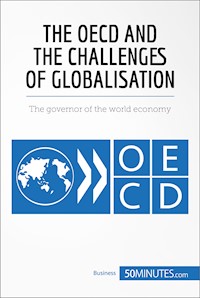












Nicolaus Copernicus and the heliocentric revolution
Born: 19 February 1473 in Toruń, PolandDied: 24 May 1543 in Frauenburg, modern-day Frombork, PolandMajor achievement: formulating a heliocentric model of the solar systemThe name Copernicus is synonymous with a major turning point in the history of astronomy. For fourteen centuries, planetary observation and calculations had been based on Aristotelian and Ptolemaic theory, which held that the Earth was stationary in the middle of a finite universe, orbited by the other planets and extra-terrestrial objects in a realm beyond which lived monsters, gods and angels. Copernicus changed all of this forever, introducing a new system which harboured the seeds of a revolution.
The early 17th century is marked by monumental change. Equipped with new technologies, explorers took to the seas in search of new passages to new lands. While Copernicus was studying in Krakow, Christopher Columbus (1450/1451-1506) discovered America. At the same time, humanism was transforming the intellectual sphere, cultivating a thirst for knowledge driven by Europe’s rediscovery of its antique roots and enriched by the intellectual explosion from the medieval East. The Roman Catholic Church was equally shaken to its core by the Protestant Reformation, and found its second wind through its own counter-reformation.
This period, characterised by a cultural return to antiquity, is nonetheless marked a profound separation from the intellectual traditions for which Claudius Ptolemy (100-170 AD) was responsible. He was a true polymath; a mathematician, geographer and astronomer who established precedents in geography and astronomy which would last for an astonishing length of time. However, the discovery of America showed the cracks in his geographic model and Nicolaus Copernicus too would transform Ptolemy’s theory of the heavens with the shocking proposition that the Earth was not immobile. Further still, Copernicus hypothesised a universe in which the Earth turned on its own axis and orbited the sun, which replaced the Earth as the planetary system’s central entity. These are the only elements which differentiate Copernican theory from Ptolemy’s model, therefore the two hypothetical systems remain largely similar. Nevertheless, Copernicus was at the origin of a revolution which would, across the five centuries which followed his life and work, radically alter our understanding of the universe. This revolution occurred in several stages, from Galileo (Italian astronomer and physicist, 1564-1642) to Kepler (German astronomer, 1571-1630), from Kepler to Newton (English physicist, mathematician and astronomer, 1642-1727) and from Newton to Einstein (American physicist, 1879-1955).
Biography
A humanist education
Nicolaus Copernicus was born on 19 February 1473 in Toruń, a city in Royal Prussia in the heart of the Kingdom of Poland. He was the youngest of four children and his father, a rich merchant from Krakow, was attracted to Toruń by its flourishing commerce as part of the Hanseatic League. Copernicus was orphaned at just ten years old and taken to live with his maternal Uncle Lukas Watzenrode (1447-1512), a highly cultured man who was renowned for his military prowess and above all for his position as Bishop of Warmia (Ermland).
Having been tutored by the future chaplain to Pope Leon X (1475-1521), Bernard Sculteti (1455-1518), the 18-year-old Nicolaus Copernicus was sent by his uncle to the University of Krakow to study theology, canon law and liberal arts. It was under the teaching of Albert de Brudzewo (Polish astronomer, 1445-1497) that Copernicus learned the rudiments of astronomy. In 1496, he left for Italy to continue his studies at the University of Bologna where he continued to specialise in law and philosophy. However, in Bologna he made the acquaintance of Domenico Maria Novara (Italian astronomer, 1454-1504), with whom he made numerous astronomical observations and discovered the philosophical and scientific literature which existed on the subject.




