


99,99 €
Mehr erfahren.
- Herausgeber: John Wiley & Sons
- Kategorie: Geisteswissenschaft
- Sprache: Englisch
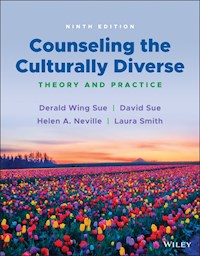
The most up-to-date edition of a critically acclaimed and widely read cross-cultural counseling resource
In the newly revised Ninth Edition of Counseling the Culturally Diverse: Theory and Practice, a team of veteran practitioners delivers an up-to-date and comprehensive exploration of multicultural counseling combining the most recent research and theoretical concepts in the field. The book examines concepts like “cultural humility,” the role of white allies in multicultural counseling, social justice counseling, “minority stress,” and microaggressions.
Readers will also find:
- Expansive discussions on the implications of numerous subjects for real-world clinical practice
- “Reflection and Discussion Questions” that encourage reader engagement, learning, and retention with the concepts discussed within
- Access to an instructor’s website that provides PowerPoint decks, exam questions, sample syllabi, and links to other valuable resources
Perfectly suited to researchers and practitioners who work in or study mental health and interact with a racially, ethnically, culturally, or socio-demographically diverse population, Counseling the Culturally Diverse: Theory and Practice also belongs in the libraries of social workers and psychiatrists.
Sie lesen das E-Book in den Legimi-Apps auf:
Seitenzahl: 1288
Veröffentlichungsjahr: 2022
Ähnliche

















Table of Contents
COVER
TITLE PAGE
COPYRIGHT
PREFACE
SECTION 1: THE MULTIPLE DIMENSIONS OF MULTICULTURAL COUNSELING AND THERAPY
PART 1: THE AFFECTIVE, CONCEPTUAL AND PRACTICE DIMENSIONS OF MULTICULTURAL COUNSELING AND THERAPY
CHAPTER 1: UNDERSTANDING RESISTANCE TO MULTICULTURAL TRAINING: OBSTACLES TO DEVELOPING CULTURAL COMPETENCE
EXPECTATIONS FOR THE COURSE
REACTIONS TO THE COURSE
EMOTIONAL SELF‐REVELATIONS AND FEARS: MAJORITY GROUP MEMBERS
EMOTIONAL INVALIDATION VERSUS AFFIRMATION: MARGINALIZED GROUP MEMBERS
RECOGNIZING AND UNDERSTANDING RESISTANCE TO MULTICULTURAL TRAINING
CULTURAL COMPETENCE AND EMOTIONS
SUMMARY
GLOSSARY TERMS
REFERENCES
CHAPTER 2: MULTICULTURAL COUNSELING AND THERAPY (MCT)
RACE AND CULTURE MATTER
CULTURE‐UNIVERSAL (
ETIC
) VERSUS CULTURE‐SPECIFIC (
EMIC
) FORMULATIONS
THE NATURE OF MULTICULTURAL COUNSELING COMPETENCE
UNDERSTANDING THE THREE DIMENSIONS OF IDENTITY
INDIVIDUAL AND UNIVERSAL BIASES IN PSYCHOLOGY AND MENTAL HEALTH
THE IMPACT OF GROUP IDENTITIES ON COUNSELING AND PSYCHOTHERAPY
WHAT IS MULTICULTURAL COUNSELING AND THERAPY?
WHAT IS CULTURAL COMPETENCE?
SOCIAL JUSTICE AND CULTURAL COMPETENCE
SUMMARY
GLOSSARY TERMS
REFERENCES
CHAPTER 3: CULTURAL PERSPECTIVES AND BARRIERS: THE INDIVIDUAL INTERPLAY OF CULTURAL EXPERIENCES
CHARACTERISTICS OF CONVENTIONAL COUNSELING
CULTURE‐BOUND VALUES
PATTERNS OF CULTURAL ASSUMPTIONS AND MULTICULTURAL FAMILY COUNSELING/THERAPY
LANGUAGE BARRIERS
CLASS‐BOUND VALUES AND PERSPECTIVES
OVERGENERALIZING AND STEREOTYPING
SUMMARY
GLOSSARY TERMS
REFERENCES
PART 2: SOCIOPOLITICAL AND SOCIAL JUSTICE DIMENSIONS OF MULTICULTURAL COUNSELING AND THERAPY
CHAPTER 4: MICROAGGRESSIONS: IMPLICATIONS FOR COUNSELING AND PSYCHOTHERAPY
CONTEMPORARY FORMS OF OPPRESSION: RACISM, SEXISM & HETEROSEXISM
THE EVOLUTION OF THE “ISMS”: MICROAGGRESSIONS
THE DYNAMICS AND DILEMMAS OF MICROAGGRESSIONS
THERAPEUTIC IMPLICATIONS
MICROINTERVENTIONS: THE NEW THERAPEUTIC FRONTIER
SUMMARY
GLOSSARY TERMS
REFERENCES
CHAPTER 5: SOCIOHISTORICAL PRIVILEGE AND OPPRESSION: IMPLICATIONS FOR COUNSELING AND PSYCHOTHERAPY
AN OPEN LETTER TO BROTHERS AND SISTERS OF COLOR
MENTAL HEALTH PRACTICE AND THE REPRODUCTION OF OPPRESSION
CONNECTING THE DOTS BETWEEN MENTAL HEALTH PRACTICE AND SOCIAL JUSTICE: AN OVERVIEW
THE DANGER OF A SINGLE STORY: ETHNOCENTRIC MONOCULTURALISM
ETHNOCENTRIC MONOCULTURALISM, SOCIOHISTORICAL OPPRESSION, AND MENTAL HEALTH
SUMMARY
GLOSSARY TERMS
REFERENCES
PART 3: RACIAL, ETHNIC, CULTURAL (REC) ATTITUDES IN MULTICULTURAL COUNSELING AND THERAPY
CHAPTER 6: RACIAL, ETHNIC, CULTURAL (REC) IDENTITY ATTITUDES IN PEOPLE OF COLOR: COUNSELING IMPLICATIONS
RACIAL AWAKENING
REC IDENTITY ATTITUDE MODELS
A GENERAL MODEL OF REC IDENTITY
COUNSELING IMPLICATIONS OF THE R/CID MODEL
VALUE OF A GENERAL REC IDENTITY FRAMEWORK
SUMMARY
GLOSSARY TERMS
REFERENCES
CHAPTER 7: WHITE RACIAL CONSCIOUSNESS: IMPLICATIONS FOR COUNSELING AND PSYCHOTHERAPY
WHITENESS AND MULTICULTURAL COUNSELING
STEPS TOWARD AN UNDERSTANDING OF WHITENESS AND WHITE IDENTITY
MODELS OF WHITE RACIAL IDENTITY DEVELOPMENT
A DESCRIPTIVE MODEL OF WHITE IDENTITY: SEVEN POSITIONS
AN ANTIRACIST WHITE IDENTITY
SUMMARY
GLOSSARY TERMS
REFERENCES
CHAPTER 8: MULTICULTURAL COUNSELING COMPETENCE AND CULTURAL HUMILITY FOR PEOPLE OF COLOR COUNSELORS AND THERAPISTS
INTERRACIAL AND INTERETHNIC BIASES
IMPACT ON INTERRACIAL COUNSELING RELATIONSHIPS
RACIAL STEREOTYPES HELD BY PEOPLE OF COLOR
THE WHO‐IS‐MORE‐OPPRESSED GAME
INTERRACIAL AND INTERETHNIC COUNSELING
THE POLITICS OF INTERRACIAL AND INTERETHNIC BIAS AND DISCRIMINATION
THE POLITICAL RELATIONSHIPS BETWEEN GROUPS OF COLOR
WITHIN GROUP DIFFERENCES AMONG RACIAL/ETHNIC GROUPS
COUNSELORS OF COLOR AND DYADIC COMBINATIONS
SUMMARY
GLOSSARY TERMS
REFERENCES
PART 4: WESTERN AND NON‐WESTERN PERSPECTIVES IN COUNSELING AND THERAPY
CHAPTER 9: MULTICULTURAL EVIDENCE‐BASED PRACTICE
EVIDENCE‐BASED PRACTICE AND DIVERSITY ISSUES IN COUNSELING
SUMMARY
GLOSSARY TERMS
REFERENCES
CHAPTER 10: INDIGENOUS AND CULTURAL METHODS OF HEALING AMONG PEOPLE OF COLOR: IMPLICATIONS FOR MULTICULTURAL COUNSELING AND THERAPY (MCT)
WORLDVIEWS AND CULTURAL CONCEPTS OF DISTRESS
THE PRINCIPLES OF INDIGENOUS HEALING
RADICAL HEALING AMONG PEOPLE OF COLOR
EXAMPLES OF HEALING PRACTICES AMONG PEOPLE OF COLOR
SUMMARY
GLOSSARY TERMS
REFERENCES
PART 5: ASSESSMENT, DIAGNOSIS, AND TREATMENT ISSUES IN MULTICULTURAL COUNSELING AND THERAPY
CHAPTER 11: CULTURALLY COMPETENT ASSESSMENT
THERAPIST VARIABLES AFFECTING DIAGNOSIS
CULTURAL COMPETENCE AND PREVENTING DIAGNOSTIC ERRORS
CONTEXTUAL AND COLLABORATIVE ASSESSMENT
INFUSING CULTURAL RELEVANCE INTO STANDARD CLINICAL ASSESSMENTS
IMPLICATIONS FOR CLINICAL PRACTICE
SUMMARY
GLOSSARY TERMS
REFERENCES
SECTION 2: MULTICULTURAL COUNSELING AND SPECIFIC POPULATIONS
PART 6: COUNSELING AND THERAPY WITH RACIAL/ETHNIC GROUP POPULATIONS
CHAPTER 12: MULTICULTURAL COUNSELING CONTEXTS: AFRICAN AMERICANS
SOCIOHISTORICAL CONTEXT
STRENGTHS AND RESILIENCES
POTENTIAL CHALLENGES
COUNSELING AND APPLIED CONSIDERATIONS
A CLINICAL CHECKLIST
SUMMARY
GLOSSARY TERMS
REFERENCES
CHAPTER 13: MULTICULTURAL COUNSELING CONTEXTS: AMERICAN INDIANS/NATIVE AMERICANS AND ALASKAN NATIVES
SOCIOHISTORICAL CONTEXT
STRENGTHS AND RESILIENCIES
SPECIFIC CHALLENGES
SUMMARY
GLOSSARY TERMS
REFERENCES
CHAPTER 14: MULTICULTURAL COUNSELING CONTEXTS: ASIAN AMERICANS AND PACIFIC ISLANDERS
CHARACTERISTICS AND STRENGTHS
SPECIFIC CHALLENGES
SUMMARY
GLOSSARY TERMS
REFERENCES
CHAPTER 15: MULTICULTURAL COUNSELING CONTEXTS: LATINX COMMUNITIES
CULTURAL STRENGTHS
SPECIFIC CHALLENGES
SUMMARY
GLOSSARY TERMS
REFERENCES
CHAPTER 16: MULTICULTURAL COUNSELING CONTEXTS: MULTIRACIAL AMERICANS
CHARACTERISTICS AND STRENGTHS
SPECIFIC CHALLENGES
SUMMARY
GLOSSARY TERMS
REFERENCES
CHAPTER 17: MULTICULTURAL COUNSELING CONTEXTS: ARAB AMERICANS
DEMOGRAPHIC CHARACTERISTICS
SOCIOHISTORICAL CONTEXT
POTENTIAL CHALLENGES
STRENGTHS AND RESILIENCIES
COUNSELING AND APPLIED CONSIDERATIONS
A CLINICAL CHECKLIST
SUMMARY
GLOSSARY TERMS
REFERENCES
PART 7: COUNSELING AND THERAPY WITH OTHER MULTICULTURAL POPULATIONS
CHAPTER 18: MULTICULTURAL COUNSELING CONTEXTS: MARGINALIZED RELIGIOUS COMMUNITIES
COUNSELING CONTEXTS: JEWISH AMERICANS
CHARACTERISTICS AND STRENGTHS
POTENTIAL CHALLENGES
COUNSELING AND APPLIED CONSIDERATIONS
COUNSELING CONTEXTS: MUSLIM AMERICANS
CHARACTERISTICS AND STRENGTHS
POTENTIAL CHALLENGES
COUNSELING AND APPLIED CONSIDERATIONS
MARGINALIZED RELIGIOUS COMMUNITIES: A CLINICAL CHECKLIST
SUMMARY
GLOSSARY TERMS
REFERENCES
CHAPTER 19: MULTICULTURAL COUNSELING CONTEXTS: IMMIGRANTS AND REFUGEES
DEMOGRAPHIC CHARACTERISTICS
SOCIOHISTORICAL CONTEXT
POTENTIAL CHALLENGES
STRENGTHS AND RESILIENCIES
COUNSELING AND APPLIED CONSIDERATIONS
A CLINICAL CHECKLIST
SUMMARY
GLOSSARY TERMS
REFERENCES
CHAPTER 20: MULTICULTURAL COUNSELING CONTEXTS: LGBTQ COMMUNITIES
CHARACTERISTICS AND STRENGTHS
SPECIFIC CHALLENGES
SUMMARY
GLOSSARY TERMS
REFERENCES
CHAPTER 21: MULTICULTURAL COUNSELING CONTEXTS: OLDER ADULTS
DEMOGRAPHIC CHARACTERISTICS
SOCIOHISTORICAL CONTEXT
POTENTIAL CHALLENGES
STRENGTHS AND RESILIENCIES
COUNSELING AND APPLIED CONSIDERATIONS
A CLINICAL CHECKLIST
SUMMARY
GLOSSARY TERMS
REFERENCES
CHAPTER 22: MULTICULTURAL COUNSELING CONTEXTS: WOMEN
DEMOGRAPHIC CHARACTERISTICS
SOCIOHISTORICAL CONTEXT
POTENTIAL CHALLENGES
STRENGTHS AND RESILIENCIES
COUNSELING AND APPLIED CONSIDERATIONS
A CLINICAL CHECKLIST
SUMMARY
GLOSSARY TERMS
REFERENCES
CHAPTER 23: MULTICULTURAL COUNSELING CONTEXTS: INDIVIDUALS LIVING IN POVERTY
DEMOGRAPHIC CHARACTERISTICS
SOCIOHISTORICAL CONTEXT
POTENTIAL CHALLENGES
STRENGTHS AND RESILIENCIES
COUNSELING AND APPLIED CONSIDERATIONS
A CLINICAL CHECKLIST
SUMMARY
GLOSSARY TERMS
REFERENCES
CHAPTER 24: MULTICULTURAL COUNSELING CONTEXTS: INDIVIDUALS WITH DISABILITIES
DEMOGRAPHIC CHARACTERISTICS
SOCIOHISTORICAL CONTEXT
POTENTIAL CHALLENGES
STRENGTHS AND RESILIENCIES
COUNSELING AND APPLIED CONSIDERATIONS
A CLINICAL CHECKLIST
SUMMARY
GLOSSARY TERMS
REFERENCES
INDEX
END USER LICENSE AGREEMENT
List of Tables
Chapter 3
Table 3.1 Components of White Culture: Values and Beliefs
Table 3.2 Cultural Value Preferences of Middle‐Class White European America...
Chapter 4
Table 4.1 Examples of Microaggressions
Table 4.2 Examples of Microaggressions in Therapeutic Practice
Chapter 5
Table 5.1 APA Statement of Public Apology
Chapter 6
Table 6.1 The R/CID Model
Chapter 8
Table 8.1 Ten Common Challenges Counselors of Color Face When Working with ...
Chapter 9
Table 9.1 Examples of
Empirically‐Supported Therapies
(ESTs)
Table 9.2
Empirically‐Supported Relationship
(ESR) Variables
Table 9.3 Relational‐Style Counselor Preferences of Ethnic Group Clients
List of Illustrations
Chapter 2
FIGURE 2.1 Dimensions of Personal Identity Development
Chapter 9
FIGURE 9.1 Three Pillars of Evidence‐Based Practice (EBP)
Chapter 12
FIGURE 12.1 The Interaction of Five Sets of Factors on Black Americans’ Pres...
Guide
Cover Page
Table of Contents
Title Page
Copyright
Preface
Begin Reading
Index
Wiley End User License Agreement
Pages
iii
iv
xix
xx
xxi
xxii
1
2
3
4
5
6
7
8
9
10
11
12
13
14
15
16
17
18
19
20
21
22
23
24
25
26
27
28
29
30
31
32
33
34
35
36
37
38
39
40
41
42
43
44
45
46
47
48
49
50
51
52
53
54
55
56
57
58
59
60
61
62
63
64
65
66
67
68
69
70
71
72
73
74
75
76
77
78
79
80
81
82
83
84
85
86
87
88
89
90
91
92
93
94
95
96
97
98
99
100
101
102
103
104
105
106
107
108
109
110
111
112
113
114
115
116
117
118
119
120
121
122
123
124
125
126
127
128
129
130
131
132
133
134
135
136
137
138
139
140
141
142
143
144
145
146
147
148
149
150
151
152
153
154
155
156
157
158
159
160
161
162
163
164
165
166
167
168
169
170
171
172
173
174
175
176
177
178
179
180
181
182
183
184
185
186
187
188
189
190
191
192
193
194
195
196
197
198
199
200
201
202
203
204
205
206
207
208
209
210
211
212
213
214
215
216
217
218
219
220
221
222
223
224
225
226
227
228
229
230
231
232
233
234
235
236
237
238
239
240
241
242
243
244
245
246
247
248
249
250
251
252
253
254
255
256
257
258
259
260
261
262
263
264
265
266
267
268
269
270
271
272
273
274
275
276
277
278
279
280
281
282
283
284
285
286
287
288
289
290
291
292
293
294
295
296
297
298
299
300
301
302
303
304
305
306
307
308
309
310
311
312
313
314
315
316
317
318
319
320
321
322
323
324
325
326
327
328
329
330
331
332
333
334
335
336
337
338
339
340
341
342
343
344
345
346
347
348
349
350
351
352
353
354
355
356
357
358
359
360
361
362
363
364
365
366
367
368
369
370
371
372
373
374
375
376
377
378
379
380
381
382
383
384
385
386
387
388
389
390
391
392
I-1
I-2
I-3
I-4
I-5
I-6
I-7
I-8
I-9
I-10
I-11
393
NINTH EDITION
Counseling the Culturally Diverse
Theory and Practice
Derald Wing Sue | David Sue | Helen A. Neville | Laura Smith
EDITORIAL DIRECTOR
Justin Jeffryes
EXECUTIVE EDITOR
Darren LaLonde
ASSISTANT EDITOR
Ethan Lipson
EDITORIAL ASSISTANT
Christina Weyrauch
SENIOR MANAGING EDITOR
Judy Howarth
PRODUCTION EDITOR
Umamaheswari Gnanamani
COVER PHOTO CREDIT
© Darrell Wyatt/Getty Images
Founded in 1807, John Wiley & Sons, Inc. has been a valued source of knowledge and understanding for more than 200 years, helping people around the world meet their needs and fulfill their aspirations. Our company is built on a foundation of principles that include responsibility to the communities we serve and where we live and work. In 2008, we launched a Corporate Citizenship Initiative, a global effort to address the environmental, social, economic, and ethical challenges we face in our business. Among the issues we are addressing are carbon impact, paper specifications and procurement, ethical conduct within our business and among our vendors, and community and charitable support. For more information, please visit our website: www.wiley.com/go/citizenship.
Copyright © 2022, 2019, 2016, 2013, 2011, 2007, 2005, 2001, 1998 John Wiley & Sons, Inc. All rights reserved. No part of this publication may be reproduced, stored in a retrieval system, or transmitted in any form or by any means, electronic, mechanical, photocopying, recording, scanning or otherwise, except as permitted under Sections 107 or 108 of the 1976 United States Copyright Act, without either the prior written permission of the Publisher, or authorization through payment of the appropriate per‐copy fee to the Copyright Clearance Center, Inc., 222 Rosewood Drive, Danvers, MA 01923 (Web site: www.copyright.com). Requests to the Publisher for permission should be addressed to the Permissions Department, John Wiley & Sons, Inc., 111 River Street, Hoboken, NJ 07030‐5774, (201) 748‐6011, fax (201) 748‐6008, or online at: www.wiley.com/go/permissions.
ISBN: 978‐111‐9‐86190‐4 (PBK)
Library of Congress Cataloging‐in‐Publication Data
Names: Sue, Derald Wing, author. | Sue, David, author. | Neville, Helen A., author. | Smith, Laura, 1960‐ author. | John Wiley & Sons, publisher.
Title: Counseling the culturally diverse : theory and practice / Derald Wing Sue, David Sue, Helen A. Neville, Laura Smith.
Description: Ninth edition. | Hoboken, NJ : Wiley, [2022] | Includes index.
Identifiers: LCCN 2021059912 (print) | LCCN 2021059913 (ebook) | ISBN 9781119861904 (paperback) | ISBN 9781119861928 (adobe pdf) | ISBN 9781119861911 (epub)
Subjects: LCSH: Cross‐cultural counseling.
Classification: LCC BF636.7.C76 S85 2022 (print) | LCC BF636.7.C76 (ebook) | DDC 158.3—dc23/eng/20211217
LC record available at https://lccn.loc.gov/2021059912
LC ebook record available at https://lccn.loc.gov/2021059913
The inside back cover will contain printing identification and country of origin if omitted from this page. In addition, if the ISBN on the back cover differs from the ISBN on this page, the one on the back cover is correct.
Preface
For over four decades, Counseling the Culturally Diverse: Theory and Practice (CCD) has been considered the “gold standard” in culturally competent mental health care. Its cutting‐edge presentation of multicultural counseling and therapy (MCT) is used in an overwhelming majority of graduate training programs in counseling and clinical psychology, and it has produced generations of culturally sensitive mental health practitioners. It now forms the multicultural knowledge base of licensing and certification exams at both the masters and the doctoral levels in psychology. In 2021, Social Science Space identified the book as one of the most important works across social science disciplines that has contributed to the ongoing need to understand, analyze, resist, and dismantle racism, bias, and bigotry. In essence, CCD has become a “classic” in the field of mental health practice, and leads the profession in the theory, research, and practice of MCT.
CCD upholds the highest standards of scholarship, and is the most frequently cited source in multicultural psychology and mental health. The expert and global perspectives of the four co‐authors, each active researchers and practitioners in the field, strengthen the newly minted ninth edition of CCD. As a result, instructors will note the continued fresh, scholarly, and exciting perspective in the content of CCD, as it continues to rank as the most up‐to‐date text in the field.
CHANGES TO CCD
Much new research has been conducted on multicultural counseling, cultural competence, and social justice advocacy, alternative roles of helping professionals, White allyship, microaggression/microintervention theory, and culture‐specific interventions over the past few years. In essence, the topical areas covered in each chapter continue to anchor multicultural counseling coverage. As a result, while many chapters remain similar, each has undergone major revisions; some are quite extensive in the updating of references, introduction of new research and concepts, and discussion of future directions in counseling, therapy, and mental health.
Additionally, in light of the current societal upheaval and political bias and bigotry directed toward marginalized groups in our nation, one of the lenses used to analyze mental health practice must be sociopolitical in nature. To avoid doing so or to discuss these concepts superficially are to continue the oppression and silencing of diverse populations. Thus, we have updated and in some cases expanded our coverage of how such factors influence the profession. Studying systems of oppression is a necessary step to cultural competence. We consider it a serious omission not to discuss counseling diverse populations without acknowledging and dissecting the issues of marginality, oppression, and the current sociopolitical climate on mental health practice.
For example, the horrendous murder of George Floyd on May 25, 2020, and the historical and continuing killing of unarmed Black Americans, our nation has seemingly experienced a racial awakening of its racist historical past, and its continuing oppression, denigration, and silencing of Black, Indigenous and People of Color (BIPOC). Further, the COVID‐19 pandemic has laid bare the existence of systemic racism, and while it threatens the well‐being of humankind as a whole, it has most affected communities of color and poorer ones. Counseling and psychotherapy with marginalized group members do not occur in a vacuum. Issues of individual and systemic bias, prejudice and discrimination often rear their ugly heads in mental health practice. Being culturally competent requires practitioners to confront themselves as racial/cultural beings, to acknowledge the institutional biases of the mental health profession, and to change systems of oppression in our society.
EFFICIENT UP‐TO‐DATE COVERAGE
We maintain our two‐part division of the book, with 11 separate chapters in Section 1: The Multiple Dimensions of Multicultural Counseling and Therapy, and 13 population‐specific chapters in Section 2: Multicultural Counseling and Specific Populations. We introduce Section 2 by providing a chapter, “Culturally Competent Assessment” (Chapter 11), that ends Section 1 and transitions to Section 2. This transition chapter outlines the many variables that influence assessment, diagnosis, and case conceptualization—which guide the reader's understanding of each specific population to follow. All have been thoroughly updated using common topical headings (when possible) that allow better cross‐comparisons between and among the groups. Readers familiar with the eighth edition will note the incorporation of new information on transgender communities within the LGBTQ chapter. We have also combined several chapters to form a new one on Religious Communities.
We have heard from some textbook adopters that the breadth and depth of coverage of CCD has made it very difficult for instructors and students to digest the amount of material in a single course. This is a very legitimate concern but we would like to make several points.
First, although there may be differences of opinion, we have identified the first 11 chapters in Section 1 as providing the basic principles of cultural competence that can be applied across multicultural populations. These are foundational building blocks of multicultural counseling and therapy, which we believe all practitioners must acquire in order to move toward cultural competency. In our classes, for example, the first eleven chapters are mandatory for a semester course.
Second, although it would be ideal if all of Section 2, with the 13 specific populations could be covered, we never expected that all these chapters could be digested in a single course. Rather, we envisioned instructors selecting Section Two chapters that they felt were important for students to master. Some may choose to focus on racial/ethnic populations, others on sexual orientation and gender identity, others on poverty and disability, or any combination of special populations. Other instructors have used the special population chapters to allow students with interest in a particular group to do class presentations and term papers. Section 2 allows considerable flexibility and has unique appeal to professors and students.
Third, to aid in making the material less overwhelming, we have condensed, summarized, streamlined, and eliminated certain subtopics. In one case, two chapters were combined. We have tried our best to do so without violating the integrity of the content. Each of the major chapters (1 through 11) has been shortened but the special population chapters have maintained their original length. This latter decision was based on our belief that further shortening would result in the chapters having a “checklist” quality. Further, we are also aware that most instructors do not assign all special population chapters, but rather choose the ones most relevant to their classes.
Despite shortening major sections of the text, new advances and important changes in multicultural counseling suggest additional areas that need to be addressed. These include updating concepts to be consistent with Diagnostic and Statistical Manual of Mental Disorders (DSM‐5) categories and principles, the multicultural guidelines of the American Psychological Association, the American Counseling Association's (ACA) multicultural and social justice competencies, and Council for Accreditation of Counseling & Related Educational Programs (CACREP) standards.
We also include the most recent research and theoretical formulations that introduce and analyze emerging important multicultural topics. These include the concept of “cultural humility” as a domain of cultural competence; the important roles of White allies in the struggle for equal rights; the emerging call for social justice counseling; the important concept of “minority stress” and its implications in work with marginalized populations; a new focus on microinterventions; reviewing and introducing the most recent research on lesbian, gay, bisexual, transgender, and queer (LGBTQ) issues; major research developments in the manifestation, dynamics, and impact of microaggressions; and many others.
PEDAGOGICAL STRENGTHS
One of the main goals of the eighth edition has been to better engage students in the material and allow them to become active participants in digesting multicultural counseling concepts. We have increased our focus on pedagogy by providing instructors with exercises and activities to facilitate experiential learning for students. We open every chapter with broad chapter objectives, followed by more specific—and oftentimes controversial—reflection and discussion questions interspersed throughout, which allow for more concentrated and detailed discussion by students on identifiable topical areas.
Further, every chapter opens with a clinical vignette, longer narrative, or situational example that previews the major concepts and issues discussed within. Many of these are new and serve to anchor the multicultural chapter focus questions issues to follow. They add life and meaning to the chapter concepts and research. They serve as prompts to address the opening “course objectives,” but instructors and trainers can also use them as discussion questions throughout the course or workshop. To further stimulate interest and meaning to multicultural counseling concepts, we sprinkle at least two new features throughout the chapters: (a) Did You Know? and (b) By the Numbers. These new features provide brief facts and findings of interest that provoke thought and provide interesting insights. As in the previous edition, we have retained the “Implications for Clinical Practice” and “Summary” sections at the end of every chapter.
There are many other major resources available for instructor use. These are accessible to all instructors through the Wiley site. The use of videos and case studies are compatible with the topical issues in CCD.
Multicultural Video Series.
A series of brief simulated multicultural counseling videos that can be used in the classroom or viewed online. Each video relates to issues presented in one of the first 11 chapters. They are excellent training aids that allow students to witness multicultural blunders by counselors, identify cultural and sociopolitical themes in the counseling process, discuss and analyze what can go wrong in a session, and suggest culturally appropriate intervention strategies. Following each video, Drs. Joel M. Fillmore and Derald Wing Sue discuss and analyze each session in the context of the themes of the chapter. Instructors have many ways to use the videos to stimulate classroom discussion and understanding.
Multicultural Counseling Casebook
. In keeping with the importance of applying research and theory to work with culturally diverse populations, and client and client systems, we have accumulated a number of outstanding cases that will stimulate classroom discussion of issues related to race, culture, ethnicity, marginality and clinical work. These case vignettes, when used as a teaching/training tool by knowledgeable instructors can:
Help students become culturally aware of their own values, biases, and assumptions about human behavior,
Expand their awareness of other worldviews,
Anticipate possible cultural barriers in counseling and therapy,
Generate alternative counselor intervention strategies more consistent with the life experiences of marginalized populations.
Separate Case Study Book.
For instructors who wish to present more in depth clinical cases that go beyond clients of color, we encourage them to use Sue, D. W., Gallardo, M., & Neville, H. (2014).
Case studies in multicultural counseling and therapy
. Hoboken, NJ: Wiley.
Multicultural Resources for Student Evaluation and Activities.
On the Wiley website for
CCD
are the traditional tools for testing and facilitating student learning (test bank of multiple choice questions, true‐false items, essays, power point slides for classroom lectures/discussions, etc.) for each major chapter. With respect to the test items, questions are rated as to their difficulty. This allows instructors to balance the difficulty level of exams for their students.
APPRECIATION
An African American proverb states, “We stand on the head and shoulders of many who have gone on before us.” Certainly, this book would not have been possible without their wisdom, commitment, and sacrifice. We thank them for their inspiration, courage, and dedication, and hope they will look down on us and be pleased with our work. We would like to acknowledge all the dedicated multicultural pioneers in the field who have journeyed with us along the path of multiculturalism before it became fashionable. We also wish to thank the staff of John Wiley & Sons for the enormous time and effort they have placed in obtaining, evaluating, and providing us with the necessary data and feedback to produce this edition of CCD. Their help was no small undertaking, and we feel fortunate in having Wiley as our publisher.
Working on this ninth edition continues to be a labor of love. It would not have been possible, however, without the love and support of our families, who provided the patience and nourishment that sustained us throughout our work on the text. Derald Wing Sue wishes to express his love for his wife, Paulina, his son, Derald Paul, his daughter, Marissa Catherine, and his grandchildren, Caroline, Juliette, Niam, and Kiran. Helen A. Neville wishes to express her deepest love and appreciation for her life partner, Sundiata K. Cha‐Jua, her daughters, and the memory of her parents. Laura Smith expresses love and appreciation for the support of her partner, Sean Kelleher, as well as her extended family. David Sue wishes to express his love and appreciation to his wife, Diane, his children, Joel, Jennifer, & Christina, and twin grandsons, Adrian & Joaquin.
We hope that Counseling the Culturally Diverse: Theory and Practice, ninth edition, will stand for “truth to power” and continue to be the standard‐bearer of multicultural counseling and therapy texts in the field.
Derald Wing Sue
David Sue
Helen A. Neville
Laura Smith
SECTION 1The Multiple Dimensions of Multicultural Counseling and Therapy
Becoming culturally competent in working with diverse populations is a complex interaction of many dimensions that involve broad theoretical, conceptual, research, and practice issues. This section is divided into five parts (each part contains a number of chapters) that describe, explain, and analyze necessary conditions that mental health practitioners must address on issues related to multicultural counseling and therapy, cultural competence, and sociopolitical influences that cut across specific populations.
Part 1:
The Affective, Conceptual, and Practice Dimensions of Multicultural Counseling and Therapy
Part 2:
Sociopolitical and Social Justice Dimensions of Multicultural Counseling and Therapy
Part 3:
Racial, Ethnic, Cultural (REC) Attitudes in Multicultural Counseling and Therapy
Part 4:
Western and Non‐Western Perspectives in Counseling and Therapy
Part 5:
Assessment, Diagnosis, and Treatment Issues in Multicultural Counseling and Therapy
PART 1The Affective, Conceptual and Practice Dimensions of Multicultural Counseling and Therapy
Chapter 1 Understanding Resistance to Multicultural Training: Obstacles to Developing Cultural Competence
Chapter 2 Multicultural Counseling and Therapy (MCT)
Chapter 3 Cultural Perspectives and Barriers: The Individual Interplay of Cultural Experiences
CHAPTER 1Understanding Resistance to Multicultural Training:Obstacles to Developing Cultural Competence
CHAPTER OBJECTIVES
Acknowledge and understand personal resistance to multicultural training.
Identify how emotional reactions to topics of prejudice, discrimination, and oppression can act as obstacles to developing
cultural competence
and
cultural humility
.
Understand
worldview
differences between majority and socially devalued group members in U.S. society.
Make sense of why majority group members often react differently from marginalized group members when issues of racism, sexism, or heterosexism are discussed.
Be cognizant of how
worldviews
may influence the ability to understand, empathize, and work effectively with diverse clients.
Realize that becoming an effective multicultural counselor or therapist is a lifelong journey.
Video: “Emotional Reactions to Counseling the Culturally Diverse: An Interview with Derald Wing Sue”
Reading and digesting the content of this book may prove difficult and filled with powerful feelings for many of you. Some readers find the substance of the book difficult to absorb and have reacted very strongly to the content. According to instructors of multicultural counseling and therapy (MCT) classes, the powerful feelings aroused in some students prevent them from being open to diversity issues, and from making classroom discussions on the topic a learning opportunity. Instead, conversations on diversity become “shouting matches” or become monologues rather than dialogues. These instructors indicate that the content of the book challenges many White students about their racial, gender, sexual orientation and gender identity realities, and that the book's socio/cultural/political orientation also arouses deep feelings of defensiveness, anger, anxiety, guilt, sadness, hopelessness, and a multitude of other strong emotions. As you begin the course, it is important to know that multicultural psychology is much more than an intellectual exercise. It is also a journey of self‐discovery, filled with deep feelings about the subject matter, and often‐uncomfortable personal revelations.
Students who have embarked on a journey to understand MCT and multicultural mental health issues have almost universally felt both positive and negative feelings that affect their ability to learn about diversity issues. As you begin your journey to becoming a culturally competent or culturally responsive counselor/mental health professional, the road is often filled with obstacles to self‐exploration, to understanding yourself as a racial/cultural being, and to understanding the worldview of those who differ from you in race, gender, ethnicity, sexual orientation or identity, and other sociodemographic group characteristics.
We begin by sharing with you reactions by fellow classmates about their starting expectations for the course, and then their initial reactions to the content of Counseling the Culturally Diverse.
EXPECTATIONS FOR THE COURSE
White counselor trainee:
What are my expectations for this course? Well, I'm here to learn about multicultural counseling and therapy. I'd like information on how to work with Black and Latino clients. I'd also like to learn how to work with LGBTQ clients as well. I hope we can talk about these things calmly and not let our emotions get in the way. Too many times discussions on race become political, and I hope we don't’ wind up blaming everything on whites. I don't want to feel like I'm walking on eggshells. I don't want to have to be politically correct. Let's keep politics out of the classroom!
Trainee of Color:
I'm not sure what to expect. The majority of these classes have been a disappointment. It's frustrating to always tip toe around topics of race and racism. As a Person of Color, I want people to be honest with one another. Many people are scared to death to talk about race, and they avoid it like a hot potato. I hear it all the time. Bring up a racial issue and they'll say “race had nothing to do with it.” They'll say “you're playing the race card.” They'll say “you are forcing me to be politically correct.” I get angry and upset at times, but I can't say anything because they will think I'm just an “angry” Black man.
REFLECTION AND DISCUSSION QUESTIONS
How do you explain the different expectations that these two trainees have about a course on multicultural counseling and therapy?
Part of becoming a multiculturally competent counselor or therapist is the ability to understand the worldview of clients. What in the lived experience of these two individuals might explain their outlooks?
How much does your own racial background affect your perception of these two narratives?
Both trainees approach the course with some unease. From analyzing the statements, can you determine what fears they have?
Take a few moments to reflect upon your own expectations for the course. What would you like to have covered? What apprehensions or concerns do you have about the course? Can you give voice to them?
Because of the changing demographics of the nation, no helping professional can escape from encountering diverse clients. Are you comfortable in talking about issues of differences, marginalization, racism, sexism, and heterosexism with them? If not, what does this mean for you as a helping professional?
Students are frequently asked at the beginning of a course on MCT, what expectations they have. One of the more common responses from White trainees is revealed in the quote above. Reading between the lines, the White trainee seems to be implying that (a) learning about race, ethnicity, gender, and sexual orientation is purely a cognitive or intellectual exercise, (b) emotion is antagonistic to reason, (c) “politics” should be left outside of the classroom, and (d) as a White person, he/she may be blamed for all the racial/ethnic injustices of the world. As we shall see shortly, these expectations are setting up the White student for a very challenging experience in the course.
On the other hand, students of color also approach courses on race with great trepidation. Their concerns are different from that of their White counterparts. They silently ask, “Will my voice be heard or not?” Their experience is that (a) honesty and authenticity in discussing race issues are often absent or glossed over in classes, (b) that when discussed they are “sugar‐coated,” avoided, dismissed, or rationalized away, (c) that students of color are silenced from expressing their emotionality for fear of being labeled “angry or irrational,” and (d) that they are caught in a double‐bind in that they are asked to share their true thoughts and feelings, but are invalidated when they do.
REACTIONS TO THE COURSE
Expectations oftentimes shape the reactions to the course content, especially those in the book. As the course evolves, emotional hot buttons become pushed, as exemplified in the following reactions.
White Student:
“How dare you and your fellow caustic co‐authors express such vitriol against White Americans? You are all racists, but of a different color … What makes you think that racism comes just from Whites? Minorities are equally racist. I can't believe you are counselors. Your book does nothing but to weaken our nationalism, our sense of unity and solidarity. If you don't like it here, leave this country. You are all spoiled hate‐mongers who take advantage of our educational system by convincing others to use such a propagandistic book! Shame on you. Your book doesn't make me want to be more multicultural, but take ungrateful people like you and export them out of this great land of mine.”
African American Student:
“When I first took this course (multicultural counseling) I did not have much hope that it would be different from all the others in our program, White and Eurocentric. I felt it would be the typical cosmetic and superficial coverage of minority issues. Boy was I wrong. I like that you did not ‘tip toe’ around the subject. Your book Counseling the Culturally Diverse was so forceful and honest that it made me feel liberated … I felt like I had a voice, and it allowed me to truly express my anger and frustration against racism, and to honestly talk about what we experience on a daily basis. White folks don't seem to want to understand how we have been oppressed. Some of the white students were upset and I could see them squirming in their seats when the professor discussed the book. I felt like saying ‘good, it's about time Whites suffer like we have. I have no sympathy for you. It's about time they learned to listen.’ Thank you, thank you, and thank you all for having the courage to write such an honest book.”
Many students approach courses on race, gender, sexual orientation and identity with a combination of excitement, curiosity, and ambivalence. They may have varying expectations about the course content, but are often unprepared to deal with the “hot emotional buttons” pushed in them. Understanding and being able to process feelings are the first steps to becoming a culturally competent counselor/therapist. Unless adequately understood and resolved, these nested or embedded feelings can serve as roadblocks to working effectively with clients who differ from you in terms of race, ethnicity, culture, gender, etc. Let us turn our attention to the reactions of the last two students and distill their meanings.
First, the reactions by the White student reveal immense anger at the content of Counseling the Culturally Diverse: Theory and Practice (CCD), and especially at the authors whom are labeled “hate‐mongers” and “racists.” It is obvious that the student feels the book is biased and propagandistic. The language used by the student seems to indicate defensiveness and the material covered in the book is easily dismissed as political indoctrination. More important, there is an implicit suggestion in the use of “people like you” and “land of mine” that conveys a perception that only certain groups can be considered “American” and that others are “foreigners.” This is similar to statements often made to People of Color: “If you don't like it here, go back to China, Africa, or Latin America.” Likewise, the implication is that this land does not belong to Persons of Color who are U.S. Citizens, but only to White Americans. The emotive tone of the student is one of being angered, offended, and defensive.
What hot buttons are being pushed in the student? Where are the strong reactions coming from? Is the material in the book, biased and political rhetoric, or is the White student having his view of the world challenged? We will delve more deeply into these emotive reactions shortly, but it appears that the student feels unjustly accused of being bigoted. To feel less guilty, the student emphasizes that minorities are equally prejudiced against White Americans. Although it may be an accurate observation, it serves to make the student and other Whites less culpable by equating one form of bias with another. If the student can get other groups to admit they too are “racist,” then less guilt and responsibility for one's own biased beliefs and actions will be experienced.
Second, note that the reaction from the student of color is diametrically opposite to that of the White trainee. This student reacts positively to the material, finds the content helpful in explaining his/her experiential reality, and feels validated and reaffirmed. In other words, the student finds the content of the book truthful, compelling and empathetic. The student of color describes how the content and tone of the book make him/her feel liberated, provide a voice to describe racial experiences, and tap into and allow him/her to express feelings like anger and frustration. The student implies that most courses on multicultural psychology are taught from a EuroAmerican perspective, but the book content “tells it like it is.” Additionally, the student seems to take pleasure in observing the discomfort of White students, expresses little sympathy for their struggles in the class, and enjoys seeing them being placed on the defensive. (We will return to the meaning of this last point shortly.)
It would be a mistake, however, to conclude that White students and students of color respond uniformly in one way. As we will explore in future chapters, many White students react positively to the book and some students of color report negative reactions. However, in general, there are major worldview differences and reactions to the material between the groups. For example, many socially marginalized group members find solace in the book; they describe a deep sense of validation, release, elation, joy, and even feelings of liberation as they read the text.
The important question to ask is, “Why do Students of Color react so differently from their White counterparts?” After all, the content of the book remains the same, but the perceptions appear worlds apart. The short answer is that racial realities differ between groups because of differences in lived experience, just like differences in realities between men and women, gays and straights, able‐bodied and those with disabilities, Christians and Jews, and rich and poor. MCT is about being able to bridge these differences, to relate to the worldview of culturally diverse clients, to not silence their stories, to listen to their narratives without becoming defensive, but most importantly, to not impose your definitions of normality and abnormality upon them.
For practicing professionals and trainees in the helping professions, understanding the differing worldviews of our racially, ethnically, and culturally diverse clients is tantamount to effective multicultural counseling. But understanding our own reactions to issues of diversity, multiculturalism, oppression, race, gender, and sexual orientation is equally important to our development as counselors/therapists (Collins, Arthur, & Brown, 2013; Melasmed, 2021). As we will shortly see, that understanding can be quite anxiety‐provoking, especially when we are asked to confront our own biases, prejudices, and stereotypes. The old adage “counselor or therapist, know thyself” is the basic building block to cultural competence and cultural humility in the helping professions.
BY THE NUMBERS
How often do well‐intentioned helping professional engage in implicit biases toward clients of color?
41–83% of clients of color report at least experiencing one racial microaggression in therapy.
The most common forms of microaggressions were avoidance or minimization of cultural issues.
76% of the microaggressions experienced were never addressed in the sessions.
<50% of therapists could even recognize microaggressions.
Clients of color rated therapists who commit microaggressions or are unable to recognize them as less sensitive, less culturally competent, and less attuned to cultural issues.
The unconscious bias of helping professionals prevents or ruptures
therapeutic alliances.
Source: Owen, Tao, and Drinane (2019).
EMOTIONAL SELF‐REVELATIONS AND FEARS: MAJORITY GROUP MEMBERS
As you will shortly see, the book's subject matter (a) deals with prejudice, bias, stereotyping, discrimination, and bigotry; (b) makes a strong case that counseling and psychotherapy may serve as instruments of cultural oppression rather than therapeutic liberation (Sue, 2015; Wendt, Gone, & Nagata, 2015); (c) indicates that well‐intentioned mental health professionals are not immune from inheriting the racial, gender, and other biases of the larger society (Owen, Tao, & Drinane, 2019); and (d) suggests therapists and trainees may be unconsciously biased toward clients from marginalized groups (Ratts & Pedersen, 2014).
Although supported by the research literature and by clinical observations and reports, these assertions can be quite disturbing to members of the majority group. If you are a majority group member and beginning the journey to developing cultural competence and cultural humility, you may share similar reactions to those of the students. Both White students, for example, are reacting with defensiveness, anger and resentment; they believe that the authors are unjustly accusing U.S. society and White Americans of racism, and claim the authors are themselves “racist” but of a different color. They may become defensive and actively resist and reject the content of the book. If these feelings persist throughout the course unabated, they will act as barriers to learning and further self‐exploration. However, what do these negative reactions mean to the students? Why are they so upset? Dr. Mark Kiselica (Sue & Sue, 2013, pp. 8–9), a White psychologist and former provost of a college in New York, writes about his own negative emotional reactions to reading the book during his graduate training. His personal and emotional reactions to the book provide us with some clues.
I was shaken to my core the first time I read Counseling the Culturally Different (now Counseling the Culturally Diverse) … At the time, I was a doctoral candidate at The Pennsylvania State University's counseling psychology program, and I had been reading Sue's book in preparation for my comprehensive examinations, which I was scheduled to take toward the end of the spring semester…
I wish I could tell you that I had acquired Sue's book because I was genuinely interested in learning about multicultural counseling … I am embarrassed to say, however, that that was not the case. I had purchased Sue's book purely out of necessity, figuring out that I had better read the book because I was likely to be asked a major question about cross‐cultural counseling on the comps. During the early and middle 1980s, taking a course in multicultural counseling was not a requirement in many graduate counseling programs, including mine, and I had decided not to take my department's pertinent course as an elective. I saw myself as a culturally sensitive person, and I concluded that the course wouldn't have much to offer me. Nevertheless, I understood that … the professor, who taught the course, would likely submit a question to the pool of materials being used to construct the comps. So, I prudently went to the university bookstore and purchased a copy … because that was the text … used for his course.
I didn't get very far with my highlighting and note‐taking before I started to react to Sue's book with great anger and disgust. Early on in the text, Sue blasted the mental health system for its historical mistreatment of people who were considered to be ethnic minorities in the United States. He especially took on White mental health professionals, charging them with a legacy of ethnocentric and racist beliefs and practices that had harmed people of color and made them leery of counselors, psychologists, and psychiatrists. It seemed that Sue didn't have a single good thing to say about White America. I was ticked off at him, and I resented that I had to read his book. However, I knew I had better complete his text and know the subject matter covered in it if I wanted to succeed on the examinations. So, out of necessity, I read on and struggled with the feelings that Sue's words stirred in me.
Cultural competence and humility in counseling/mental health practice demands that nested or embedded emotions associated with race, culture, gender, and other social identity differences be openly experienced and discussed. It is these intense feelings that often block our ability to hear the voices of those most oppressed and disempowered (Appiah, Eveland, Bullock, & Coduto, 2021). How we, as helping professionals, deal with these strong feelings can either enhance or impede a deeper understanding of ourselves as racial, ethnic, and cultural beings and our understanding of the worldviews of culturally diverse clients. Because Mark did not allow his defensiveness and anger to get the best of him, he was able to achieve insights into his own biases and false assumptions about People of Color. The following passage reveals the internal struggle that he courageously fought and the disturbing realization of his own racism.
I tried to make sense of my emotions—to ascertain why I was drawn back to Sue's book again and again in spite of my initial rejection of it. I know it may sound crazy, but I read certain sections of Sue's book repeatedly and then reflected on what was happening inside of me … I began to discover important lessons about myself, significant insights prompted by reading Sue's book that would shape the direction of my future … I now realized that Sue was right! The system had been destructive toward people of color, and although my ancestors and I had not directly been a part of that oppressive system, I had unknowingly contributed to it. I began to think about how I had viewed people of color throughout my life, and I had to admit to myself that I had unconsciously bought into the racist stereotypes about African Americans and Latinos. Yes, I had laughed at and told racist jokes. Yes, I had used the “N” word when referring to African Americans. Yes, I had been a racist. Sue's book forced me to remove my blinders. He helped me to see that I was both a product and an architect of a racist culture. (Sue & Sue, 2013, pp. 9–10)
Years after first reading the book, Mark Kiselica (1999) talks about his racial awakening and identifies some of the major fears many well‐intentioned White Americans struggle with as they begin studying racism, sexism, or heterosexism on a personal level. This passage, perhaps, identifies the major psychological obstacle that confronts many White Americans as they process the content and meaning of the book.
You see, the subjects I [White psychologist] am about to discuss—ethnocentrism and racism, including my own racism—are topics that most Whites tend to avoid. We shy away from discussing these issues for many reasons: We are racked with guilt over the way people of color have been treated in our nation; we fear that we will be accused of mistreating others; we particularly fear being called the “R” word—racist—so we grow uneasy whenever issues of race emerge; and we tend to back away, change the subject, respond defensively, assert our innocence and our “color blindness,” denying that we could possibly be ethnocentric or racist. (p. 14)
It is important to note Mark's open admission to racist thoughts, feelings, and behaviors. As a White psychologist, he offers insights into the reasons why many White trainees fear open dialogues on race; they may ultimately reveal unpleasant secrets about themselves. In his own racial awakening, he realizes that discussing race and racism is so difficult for many White Americans because they are racked with guilt about how People of Color have been treated in the United States and are fearful that they will be accused of being a racist and be blamed for the oppression of others. Rejecting and avoiding racial topics are major strategies used to hold on to one's self‐image as a good, moral, and decent human being who is innocent of racial bias and discrimination.
Mark's honesty in confronting his own racism is refreshing, and his insights are invaluable to those who wish to develop culturally competence and become allies in the struggle for equal rights (Chao, Wei, Spanierman, Longo, & Northart, 2015; Spanierman & Smith, 2017). He is a rarity in academic circles, even rarer because he was willing to put his words on paper for the whole world to read as a means to help others understand the meaning of racism on a human level. Mark's courageous and open exploration of his initial reactions to CCD indicates what we have come to learn is a common, intensely emotional experience for many readers.
EMOTIONAL INVALIDATION VERSUS AFFIRMATION: MARGINALIZED GROUP MEMBERS
It is clear that the same subject matter in CCD often arouses a different emotional response from marginalized group members; for the two students of color, for example, they felt heard, liberated, and validated. They describe the book content as “honest” and “truthful,” indicating that their lived experiences had finally been validated rather than silenced or ignored. Many People of Color describe how their thoughts and feelings about race and racism are often ignored, dismissed, negated, or seen as having no basis in fact. They are told that they are misreading things, overly sensitive, unduly suspicious, or even paranoid when they bring up issues of bias and discrimination; in other words, they are “crazy” to think or feel that way.
As can be seen from the students of color, many marginalized group members react equally strongly as their White counterparts when issues of oppression are raised, especially when their stories of discrimination and pain are minimized or neglected. Their reality of racism, sexism, and homophobia, they contend, is relatively unknown or ignored by those in power because of the discomfort that pervades such topics. Worse yet, many well‐intentioned majority persons seem disinclined to hear the personal stories of suffering, humiliation, and pain that accrue to Persons of Color and other marginalized groups in our society (Sue, 2015). The following quote gives some idea of what it is like for a Black man to live his life day in and day out in a society filled with both covert and overt racist acts that often are invisible to well‐intentioned White Americans.
I don't think white people, generally, understand the full meaning of racist discriminatory behaviors directed toward Americans of African descent. They seem to see each act of discrimination or any act of violence as an “isolated” event. As a result, most white Americans cannot understand the strong reaction manifested by blacks when such events occur … They forget that in most cases, we live lives of quiet desperation generated by a litany of daily large and small events that, whether or not by design, remind us of our “place” in American society. [Whites] ignore the personal context of the stimulus. That is, they deny the historical impact that a negative act may have on an individual. “Nigger” to a white may simply be an epithet that should be ignored. To most blacks, the term brings into sharp and current focus all kinds of acts of racism—murder, rape, torture, denial of constitutional rights, insults, limited opportunity structure, economic problems, unequal justice under the law and a myriad of … other racist and discriminatory acts that occur daily in the lives of most Americans of African descent. (Feagin & Sikes, 1994, pp. 23–24)
The lived experience of People of Color is generally invisible to most White Americans, as this quotation portrays. As we will discuss in Chapter 4, racial, gender, and sexual orientation microaggressions are experienced frequently by People of Color, women, and lesbian, gay, bisexual, transgender, and queer (LGBTQ) persons in their day‐to‐day interactions with well‐intentioned members of the dominant society (Nadal, Griffin, Wong, Davidoff, & Davis, 2017; Sue & Spanierman, 2020). Microaggressions are the everyday slights, put‐downs, invalidations, and insults directed to socially devalued group members by well‐intentioned people who often are unaware that they have engaged in such biased and harmful behaviors. A lifetime of microaggressions can have a major harmful impact on the psychological well‐being of victims. Note the following narratives provided by American Indians as they describe day‐to‐day experiences with microaggressions that serve to undermine their humanity through exposure to racial hostility and assumptions of inferiority.
I know my dad has a lot of white friends, and they get comfortable with him and they say really insulting things. They call us wagon burners, dirty Indians. And, it's, it's, it's when they get, when they start getting out of line ‘cause my dad wouldn't say anything. I would, start saying stuff and then they'd come back to my dad and be like “oh, what's wrong with your son? Can't he take a joke?” Well it's not funny when, when someone insults you to your face and then they just expect you to laugh at it like they do. (name withheld)
…so I filled out the little form and I took it up to the girl behind the glass and said “I've got this thing for the parking permit” [at the local university] And she looked at it and looked at me, and she said “So are you delivering this for Dr. X?” and I said “No, actually I am Dr. X.” And she got really red and embarrassed, you know, but I don't really know what was in her mind. You know, maybe I just don't look professorial or something like that. (Senter & Ling, 2017, pp. 266, 269)
Here, it is important to note the emotional toll of having to listen to racially hostile name calling among “so‐called” friends or to have to continually prove your legitimacy as a professional. These narratives are part of a larger study on racial microaggressions against American Indians (Senter & Ling, 2017). People retold stories of being assumed to be poor, addicted to alcohol or drugs, lazy, and dirty. Narrators described costs associated with microaggressions including being followed, receiving poor service, and getting overcharged. Over time, these experiences left people with hurt and anger; some people coped by distancing themselves from non‐Natives or trying to hide. But, People of Color are also strong. Like so many others who experience racial microaggressions, many used these moments as an opportunity to educate others.
Given the fact that the majority of People of Color have experienced microaggressions in their lifetime, covering these topics in class can serve to validate their lived realities (Sue & Spanierman, 2020). Dr. Le Ondra Clark, now an African American psychologist in California, describes her experiences of being one of the few Black students in a graduate program and the feeling of affirmation that flooded her when taking a multicultural counseling course and using CCD as the textbook.
I, a native of Southern California, arrived at the University of Wisconsin, Madison, and was eager to learn. I remember the harsh reality I experienced as I confronted the Midwest culture. I felt like I stood out, and I learned quickly that I did. As I walked around the campus and surrounding area, I remember counting on one hand the number of racial and ethnic minorities I saw. I was not completely surprised about this, as I had done some research and was aware that there would be a lack of racial and ethnic diversity on and around campus. However, I was baffled by the paucity of exposure that the 25 members of my master's cohort had to racial and ethnic minority individuals. I assumed that because I was traveling across the country to attend this top‐ranked program focused on social justice, everyone else must have been as well. I was wrong…




