


15,99 €
Mehr erfahren.
- Herausgeber: John Wiley & Sons
- Kategorie: Fachliteratur
- Sprache: Englisch
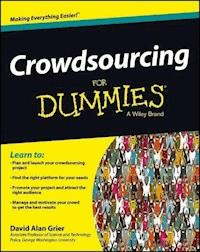
Give your business the edge with crowd-power!
Crowdsourcing is an innovative way of outsourcing tasks, problems or requests to a group or community online. There are lots of ways business can use crowdsourcing to their advantage: be it crowdsourcing product ideas and development, design tasks, market research, testing, capturing or analyzing data, and even raising funds. It offers access to a wide pool of talent and ideas, and is an exciting way to engage the public with your business.
Crowdsourcing For Dummies is your plain-English guide to making crowdsourcing, crowdfunding and open innovation work for you. It gives step-by-step advice on how to plan, start and manage a crowdsourcing project, where to crowdsource, how to find the perfect audience, how best to motivate your crowd, and tips for troubleshooting.
Sie lesen das E-Book in den Legimi-Apps auf:
Seitenzahl: 645
Veröffentlichungsjahr: 2013
Ähnliche



















Crowdsourcing For Dummies®
Published by: John Wiley & Sons, Ltd., The Atrium, Southern Gate, Chichester, www.wiley.com
This edition first published 2013
© 2013 John Wiley & Sons, Ltd, Chichester, West Sussex.
Registered office
John Wiley & Sons Ltd, The Atrium, Southern Gate, Chichester, West Sussex, PO19 8SQ, United Kingdom
For details of our global editorial offices, for customer services and for information abouthow to apply for permission to reuse the copyright material in this book please see our website at www.wiley.com.
The right of the author to be identified as the author of this work has been asserted in accordance with the Copyright, Designs and Patents Act 1988.
All rights reserved. No part of this publication may be reproduced, stored in a retrieval system, or transmitted, in any form or by any means, electronic, mechanical, photocopying, recording or otherwise, except as permitted by the UK Copyright, Designs and Patents Act 1988, without the prior permission of the publisher.
Wiley publishes in a variety of print and electronic formats and by print-on-demand. Some material included with standard print versions of this book may not be included in e-books or in print-on-demand. If this book refers to media such as a CD or DVD that is not included in the version you purchased, you may download this material at http://booksupport.wiley.com. For more information about Wiley products, visit www.wiley.com.
Designations used by companies to distinguish their products are often claimed as trademarks. All brand names and product names used in this book are trade names, service marks, trademarks or registered trademarks of their respective owners. The publisher is not associated with any product or vendor mentioned in this book.
Limit of Liability/Disclaimer of Warranty: While the publisher and author have used their best efforts in preparing this book, they make no representations or warranties with the respect to the accuracy or completeness of the contents of this book and specifically disclaim any implied warranties of merchantability or fitness for a particular purpose. It is sold on the understanding that the publisher is not engaged in rendering professional services and neither the publisher nor the author shall be liable for damages arising herefrom. If professional advice or other expert assistance is required, the services of a competent professional should be sought.
For general information on our other products and services, please contact our Customer Care Department within the U.S. at 877-762-2974, outside the U.S. at (001) 317-572-3993, or fax 317-572-4002. For technical support, please visit www.wiley.com/techsupport.
For technical support, please visit www.wiley.com/techsupport.
A catalogue record for this book is available from the British Library.
ISBN 978-1-119-94040-1 (pbk), ISBN 978-1-119-94384-6 (ebk), ISBN 978-1-119-94386-0 (ebk), ISBN 978-1-119-94385-3 (ebk)
Printed in Great Britain by Bell & Bain Ltd, Glasgow
10 9 8 7 6 5 4 3 2 1
Crowdsourcing For Dummies®
Visit www.dummies.com/cheatsheet/crowdsourcinguk to view this book's cheat sheet.
Table of Contents
Introduction
About This Book
Conventions Used in This Book
What You’re Not to Read
Foolish Assumptions
How This Book Is Organised
Part I: Understanding Crowdsourcing Basics
Part II: Looking at the Different Forms of Crowdsourcing
Part III: Building Skill
Part IV: Getting All You Can Get from the Crowd
Part V: The Part of Tens
Icons Used in This Book
Where to Go from Here
Part I: Understanding Crowdsourcing Basics
Chapter 1: People Power: Getting a Feel for Crowdsourcing
What Is This Thing Called Crowdsourcing?
Seeing how crowdsourcing works
Looking at crowdsourcing forms
Considering Why People Crowdsource
Introducing three key strengths
Benefitting from crowdsourcing
Considering reliability
Being a Crowdworker
Becoming a Crowdsourcer
Chapter 2: Getting to Know the Forms of Crowdsourcing and Crowdmarkets
Harnessing the Power of Divided Labour
Keeping the job whole
Splitting the job into big pieces
Dividing the job as small as you can
Letting the crowd divide the job
Using crowdsourcing to raise money
Looking at the Rules that Govern How Crowdmarkets Work
Distinguishing between contract and contest markets
Understanding collaborative and independent crowdworking
Combining the two rules
Chapter 3: Infiltrating the Crowd
Following the Crowdworker’s Steps
Taking Lessons from Your Time as a Crowdworker
Lesson 1: Crowdworkers have names and reputations
Lesson 2: Crowds need training
Lesson 3: Crowds want clear instructions
Lesson 4: Crowds are free to move
Joining the Staff of Wikipedia
Registering as a worker
Choosing a task
Completing a task
Submitting a task
Leaping into the Market with Amazon’s Mechanical Turk
Registering as a worker
Selecting the task
Qualifying and completing the task
Donning the White Lab Coat: Zooniverse
Chapter 4: Joining the Crowdforce
Deciding to Join the Crowdforce
Considering Your Options
Looking at microtasks
Competing for the contest
Lining up for macrotasks
Wading into self-organised crowds
Searching for careers in crowdfunding
Getting Up and Running on a Macrotask Crowdmarket
Choosing a market
Setting yourself up on the market
Building your portfolio
Protecting Yourself as a Macrotasker
Making the Bid in Macrotasking
The proposal
The covering letter
The résumé
Setting the price
Learning from the process
Completing the Macrotask
Remembering the goal
Communicate, communicate, communicate
Working across cultures
Keeping good records
Getting an extra recommendation
Part II: Looking at the Different Forms of Crowdsourcing
Chapter 5: Creating Crowdcontests
Reaping the Benefits of Crowdcontests
Deepening understanding
Faster, better, cheaper
Understanding Types of Crowdcontest
Running a Crowdcontest
Stating the goal
Writing the rules
Publicising the results
Improving the Crowdcontest
Splitting the contest
Building a stronger crowd
Running a series of contests
Considering an Example: The Business Logo
Running a logo contest yourself
Using a contest service to run the contest for you
Chapter 6: Raising Money with Crowdfunding
Knowing the Basics of Crowdfunding
Seeing crowdfunding as a community activity
Using the crowdmarket
Deciding between all-or-nothing funding or partial funding
Understanding the fee
Running a Crowdfunding Project
Writing the budget
Describing your project
Setting a deadline for a decision
Contacting the crowd
Considering an Example: Creating a Playground
Building a budget
Writing a letter
Setting a timeline
Getting the crowd
Accumulating Equity for a Company
Making a pitch
Using a platform
Paying the fees and getting the funds
Attracting the crowd
Waiting for results
Examining the results
Using non-equity funding
Chapter 7: Making Use of Macrotasks
Getting to Grips with Macrotasking
Seeing the Benefits of Macrotasks
Identifying Macrotasks
Thinking process, not organisation
Identifying independent tasks
Choosing what’s important
Finding a fixed deadline
Requiring special skills
Preparing the Macrotask
Naming the manager
Putting together a statement of work for macrotask workers
Beginning the Macrotask
Choosing a site
Posting the project
Inviting workers to your job
Choosing a Macrotasker
Reading the covering letter
Reviewing the proposal
Assessing the portfolio
Checking the reputation
Judging qualifications
Interviewing
Making the selection
Managing the work
Protecting intellectual property
Ending the Macrotask
Paying the macrotasker and closing the books
Assessing the experience
Considering an Example: Creating an App
Checking that your task is a macrotask
Writing the statement of work
Posting the job
Hiring the macrotasker
Following the work
Ending the macrotask
Chapter 8: Managing with Microtasks
Identifying Tasks That You Can Microsource
Knowing How the Microtasking Process Works
Keeping tasks short and simple
Creating the basic task
Finding the basic data
Writing the instructions
Pricing the tasks
Training and validating workers
Checking the results
Assembling the work
Working through an Example with Mechanical Turk
Creating the task
Laying out the work
Starting with a test run
Reviewing the work and retrieving the results
Reviewing the prices of your microtasks
Chapter 9: Combining the Intelligence of Self-Organised Crowds
Getting to Grips with Self-Organised Crowds
Determining What You Need the Crowd to Do: Information Gathering and Decision Making
Gathering information
Making a decision
Gathering and deciding
Designing the Process
Finding the crowd
Preparing clear rules
Motivating the crowd
Looking at the results
Organising a Prediction Market
Finding prediction markets
Establishing the rules
Laying down the rules
Assessing the result
Part III: Building Skill
Chapter 10: Engaging the Crowd with Your Project
Getting Started with Crowdbuilding
Knowing what motivates the crowd
Identifying the talent and resources you need
Adapting your strategy for public and private crowds
Inviting People to Join Your Crowd
Seeding the crowd
Engaging on YouTube
Granting bragging rights
Fostering Community Spirit
Building an online base
Showing how tasks contribute to the overall goal
Identifying benefits
Updating the crowd on progress
Sustaining the Crowd’s Interest
Teaching and Training
Showing the outcome
Leading the crowd through the tasks
Engaging on YouTube (again)
Chapter 11: Instructing the Crowd
Preparing the Fundamental Message: Writing a Statement of Work
Structuring carefully
Making clarity your goal
Looking at an example statement of work
Connecting the Kneebone to the Thighbone: Creating Instructions
Thinking about who does what to what
Deciding the order of instructions
Getting Feedback on Your Guidance
Chapter 12: Crowdsourcing with Social Media
Knowing the Benefits and the Limitations of Social Media Crowdsourcing
Building a Private Crowd with Social Media
Doing Simple Crowdsourcing with Social Media
Crowdfunding: Fundraising with Facebook
Macrotasking: Looking for freelancers with LinkedIn
Crowdcontests: Turning to Twitter
Microtasking: Translating via a blog
Turning the Process Upside Down: Using a Crowdsourcing Tool
Crowdfunding: Going fundraising
Crowdcontests: Modifying marketing methods
Microtasking and crowdsurveys: Asking for Opinions on Facebook
Microtasking: Reading the tweet leaves
Recognising the Difference between Social Media and Social Research
Chapter 13: Picking Your Platform
Getting the Benefits of a Platform
Raising the crowd
Knowing what other people know
Using standardised crowdsourced services
Getting a helping hand with bookkeeping
Cutting the risk factor
Finding the Right Crowd
Reviewing products
Checking out individual portfolios
Looking for the Right Support
Guiding your project
Acting as mediator
Protecting intellectual property
Deciding How Much You Want to Do
Reading the Fine Print
Understanding the cost
Expecting a refund
Knowing your responsibilities
Doing a Little Comparison Shopping
Checking out the contest providers
Connecting with the macrotaskers
Looking at options for microtasking
Finding the best funders
Chapter 14: Managing Your Crowd
Starting with the Right Balance of Skills
Choosing the Right People
Managing the Crowd Through the Project
Using a consistent voice
Keeping in touch
Tracking milestones
Giving the crowd space to work
Respecting Workers’ Rights
Keeping on Top of the Details: Payroll and Accounting
Incentivising to Build Quality
Rewarding best practices
Taking inspiration from gamification
Recognising Trouble
Knowing your options
Computing the price of failure
Treating the cause, not the symptom
Stopping a Project
Exiting firmly and gracefully
Protecting your intellectual property
When Crowds Attack: Dealing with Angry Crowds
Assessing the situation
Handling a discontented worker
Recognising structural problems
Managing the public relations problem
Chapter 15: Learning on the Job
Following the Cycle of Continuous Improvement
Using the Cycle in Crowdsourcing
Anticipating trouble
Keeping an eye out for stumbling blocks
Reading the signs from the crowd
Handling the Unexpected
Accepting bad results
Stopping, revising and restarting
Demanding a refund
Paying and trashing
Lowering the Stakes with a Pilot Run
Adapting a Crowdfunding Campaign According to Results
Changing the means and the message
Changing your platform
Changing the goal
Part IV: Getting All You Can Get from the Crowd
Chapter 16: Combining Microtasks and Preparing Workflow
Discerning the Difference between Parallel and Serial Microtasks
Doing the job all at once: Parallel tasks
Putting one thing after another: Serial tasks
Minimising Error
Appreciating the value of serial tasks
Duplicating parallel tasks
Working through an Example: Devising Workflow and Making Decisions in Mechanical Turk
Starting with parallel tasks
Advancing to serial tasks
Combining parallel and serial tasks
Going for Gold: The Many Benefits of Workflow
Chapter 17: Crowd Reporting: Using the Crowd to Gather Information and News
Understanding Why People Use Crowd Reporting
Sorting Eight Billion Stories
Helping the crowd focus
Combining amateurs and experts
Gathering Information Geographically with Ushahidi
Rallying the crowd to Ushahidi
Deploying Ushahidi
Summarising the results
Getting the Benefits while Avoiding the Perils of Crowd Reporting
Understanding the nature of the crowd
Knowing who’s talking: The crowd effect
Knowing what the crowd believes: Gresham’s Law
Chapter 18: Initiating Innovation
Understanding the Forms of Innovation Crowdsourcing
Asking for a Little Insight: Classes of Innovation
Crowdsourcing for novelty
Crowdsourcing for improvement
Crowdsourcing for advantage
Planning for Innovation
Planning for new ideas
Bringing the unexpected into your plan with a crowdcontest
Running with the Right Crowd
Knowing the different types of crowd
Matching your plans with the best crowd
Building New Products and Services with Co-creation
Generating ideas and defining products
Designing with the crowd
Testing, testing, testing
Giving the product to the world
Considering an Example: Restructuring a Business with InnoCentive
Chapter 19: Preparing Your Organisation
Focusing on Crowdsourcing Elements of Processes
Planning for the Future
Navigating a Trial Run
Building Commitment
Knowing the Limits
Bracing for the Unknowns
Part V: The Part of Tens
Chapter 20: Following the Future of Crowdsourcing: Ten (Or So) Websites to Watch
Discovering the State of Crowdsourcing: Crowdsourcing.org
Reading the Morning News: Daily Crowdsource
Getting the European Perspective: crowdsourcingblog.de
Meeting the Leaders: CrowdConf and Crowdopolis
Tracking Equity Crowdfunding: Crowdcube and Indiegogo
Monitoring the Growth of the Global Crowd: Clickworker and Trabajo
Expanding the Scope of Crowdcontests: Kaggle
Promoting Innovation: AHHHA and Innovation Exchange
Building New Microtasking Platforms: MobileWorks and Tagasauris
Macrotasking in the Boardroom: 10EQS
Chapter 21: Ten Best Practices to Adopt
Doing Things Step by Step
Copying What Others Have Done
Paying Attention to the Price
Talking with Your Crowd
Listening to the Crowd
Using Social Media
Publicising Accomplishments
Bringing the Crowd into the Decisions
Doing the Same Job Two Ways
Giving a Gift to the Crowd
Chapter 22: Ten Success Stories
Creating the SXSW Festival T-shirt
Developing Smith & Kraus’s Mobile App
Spending Time with Mr Bentham
Generating a New Movie Recommendation Method for Netflix
Building a National Treasure Trove
Running a Video Campaign for Audio-Technica
Getting USA Today on Mobile Phones
Analysing Viruses with Foldit
Writing Descriptions for Magnum Photos
Setting Up Coffee Joulie with the Crowd’s Backing
Chapter 23: Ten Crowdsourcing Blunders to Avoid
Thinking Crowdsourcing Is Easy
Failing to Review the Work of the Crowd
Not Knowing Who’s in the Crowd
Failing to Do a Trial Run
Putting the Crowdsourcing Ahead of the Job
Losing Your Reputation
Hiding from the Crowd
Assuming That All Crowdworkers Understand
Having Too Much Faith in the Market
Introduction
Crowdsourcing is the latest revolution wrought by the technologies of computing and communication – a revolution that brings people together and harnesses their collective intelligence. The power of crowdsourcing is such that it’s created political revolutions and toppled governments. At turbulent times, crowdsourcing has deployed the crowd – the group of people who actually do the work required – as a collective witness to follow the actions of governments, record speeches and monitor elections. And yet, at a more modest level in everyday life, crowdsourcing can still revolutionise the way you go about things. Crowdsourcing enables you to work with people who have specialised skills, to engage massive groups of workers, to collect data that you couldn’t have gathered previously and to offer advice that’s far beyond experience.
Crowdsourcing can change your life. It connects you to a massive crowd of people who can bring their skill, experience and knowledge to everything you do in your business, your non-profit organisation and even in your daily life. When you work with the crowd, you no longer work alone. You have the power of the crowd behind you, a crowd that will change the way you work, the way you plan and even the very way you think.
About This Book
Crowdsourcing For Dummies is here to help you become a crowdsourcer – a person who manages the crowdsourcing process, whether in a business, a non-profit organisation or just in everyday life. This book gives you the tools you need for each stage of the crowdsourcing process. I show you:
How to identify the activities you currently undertake that may benefit from crowdsourcing
How to determine the best form of crowdsourcing to use for your project
How to engage the crowd
How to get started, see a project through to completion and start again with a new project
In this book, I give you a broad perspective on crowdsourcing. I look at the common forms of crowdsourcing, such as crowdfunding and crowdcontests, as well as the lesser-known forms, such as self-organised crowds, so that you can think about different approaches to using the crowd and the ways in which you can best use crowdsourcing to suit your own needs or those of your organisation.
This book is also here to help you understand the information about crowdsourcing that you can find on the Internet. The Internet is constantly producing new information about crowdsourcing and is an important source of reference, but this book puts that information into context.
Conventions Used in This Book
To help you navigate your way through this book, I’ve set up a few straightforward conventions:
I use italics for emphasis and to highlight new words or define terms.
I use bold to indicate the key concepts in a list.
I alternate between male and female pronouns in the chapters to be fair to both genders.
What You’re Not to Read
You’re undoubtedly a wise and experienced individual who can identify the pieces of the book that you should read and the pieces that you can ignore. And although I like to think that you’ll be hanging on my every word, I know that you may not want to read the whole book. If you skip bits of it, you won’t hurt my feelings.
There are sections of the book that you can skip or put aside for later. Sidebars, for example. I love the sidebars, although they usually contain historical or contextual information that’s completely and utterly fascinating but, I admit, not especially useful. Don’t you want to know that many basic forms of crowdsourcing were developed in the American Works Progress Administration during the Great Depression? I certainly enjoy knowing that titbit of info, but you may be able to live without it. Certainly you can be a great crowdsourcer without knowing it. That’s why such stories are in sidebars. You can skip them if want.
Paragraphs marked with the Technical Stuff icon in the margin are also things you can skip if you want to. This icon marks specialised material that you may not need to know. You can do a lot of crowdsourcing without knowing much about technology. You don’t have to make yourself unnecessarily anxious by reading these sections.
One final note: if you’re anxious about technical issues, you can completely skip Chapter 16, about workflow, without feeling bad. The ground I cover in this chapter is fascinating but is really useful only to people who are doing cutting-edge microtasking.
Foolish Assumptions
In writing this book, I made the following assumptions about you, the reader:
You know something about the current state of the Internet and social media. Certainly, you know about email and probably know something about sites such as Facebook, LinkedIn, PayPal and Twitter. You may not use these sites much – I’m okay with that – but you know that they exist and you know what they do.
You know something about work and how you organise tasks. You may work in an office – large or small – or be part of a non-profit organisation, or you may work for yourself. However, you know how to take a job, think about the resources that you need to do it and then actually do the job.
You know a little bit about economics. You don’t have to know much, but you do have to know the basic ideas of supply and demand. Check yourself on this little example. If you want to hire someone for a job, you’ll get more people applying for the position if you offer a high wage for the work than if you offer a low wage. You understand that, right? Good. Then you’re fine with this book.
I had wanted to assume that you were deeply interested in the historical and cultural influences on crowdsourcing and how crowdsourcing is part of the great trends of industrial society. My editor, however, convinced me that I was misguided to make that assumption, so I didn’t. (However, if you are interested in historical and cultural influences, there’s a lovely book on the subject called When Computers Were Human,by yours truly. It’s a great read, but it won’t help you become a great crowdsourcer.)
How This Book Is Organised
Because crowdsourcing is a way of organising people, this book is organised in a way that helps you build your organising skill. It moves from simple ideas to the more complex. The book is split into five parts, and each contains several chapters on the part’s theme. Here is an overview of the parts.
Part I: Understanding Crowdsourcing Basics
Do you know what crowdsourcing is? Do you know how it differs from using social media? Or mob rule? To help, the first two chapters of Part I give you an overview of the material in the rest of Crowdsourcing For Dummies. Chapter 1 gives you an introduction to crowdsourcing and helps you understand the potential benefits of crowdsourcing to you, to your work and to any organisation that may want to use crowdsourcing. Chapter 2 guides you into the rest of the book. It offers an introduction to the different forms of crowdsourcing and then points you to the parts of the book that will be of most use to you.
I also include chapters on how to be a crowdworker. Being a working member of the crowd for a while is a great way to learn more about crowdsourcing – and you can earn money while you do it, too.
Part II: Looking at the Different Forms of Crowdsourcing
Part II divides crowdsourcing into its five basic forms – crowdcontests, crowdfunding, macrotasking, microtasking and self-organised crowds – and provides a thorough introduction to each. Each chapter includes a detailed description of one type of crowdsourcing along with examples that illustrate how to apply it. You may only read one or two of these chapters, because you may want to use only one or two forms of crowdsourcing.
Part III: Building Skill
Part III helps you to develop your skills as a crowdsourcer. It offers a chapter on each of the steps you need to take in order to crowdsource. You may not need to read all of these chapters thoroughly, because you may already possess some of these skills, but you can use them to ensure that you have the basic skills to be a good crowdsourcer.
Chapter 14 is an important chapter, because it deals with the basic ideas for managing crowdsourcing. And in Chapter 15, I look at the idea of continuous improvement, where you always try to identify the weak parts of your work and take steps to make them better in future.
Part IV: Getting All You Can Get from the Crowd
Part IV presents some advanced topics, such as microtask workflow, large-scale data gathering, prediction markets, election monitoring and innovation crowdsourcing. Many of these topics are becoming more and more common and are increasingly easy to do.
Part V: The Part of Tens
The Part of Tens illustrates the current state of crowdsourcing. It presents innovative crowdsourcing platforms, best practices, success stories and worst practices. The chapters in this part are filled with stories about crowdsourcing. Some will be familiar. Some will be new to you. They’re all here to help you understand both the strengths and weaknesses of crowdsourcing, the techniques that work well and those that don’t.
Icons Used in This Book
To help you understand crowdsourcing better and to guide you along the way, this book contains icons in the margins that flag different pieces of information:
This icon identifies suggestions and tips that make crowdsourcing easier.
When you see this icon, expect issues that need special attention, or problems that can easily get you into trouble. You ignore them at your own risk.
I use this icon to identify an important point that’s worth remembering.
This icon highlights stories that illustrate the ideas in each chapter and demonstrate how you can use them. All examples are based on real stories of real people who use crowdsourcing. Some people have allowed me to use their name and the name of their company. You can identify these by the fact that they have full names and real URLs associated with them. For others, I’ve camouflaged the source of the example. If an example begins ‘Emily started crowdsourcing when she ran a flower shop in Livosk’, you can be sure that the source of this story is not named Emily, she doesn’t sell flowers and has never been to Livosk.
Paragraphs with this icon are intended for people with experience in IT. You can skip the information and still understand the basic ideas of crowdsourcing.
This icon marks sections that deal with material that’s used only for the form of crowdsourcing called microtasking. You can skip the paragraph if you’re doing some other form of crowdsourcing, such as crowdcontests.
Where to Go from Here
Chapter 1 is a must-read to get a basic grasp of what crowdsourcing is all about, and Chapter 2 gives you an overview of the different forms of crowdsourcing. From there, you can jump to Part II, where you find detailed descriptions of these different forms. The chapters in that part give you more information about becoming a crowdsourcer.
After you’ve identified the form of crowdsourcing that you’re going to do, head to Part III. There, chapters give you the information that you need to design the job, get it posted and running, and evaluate the results.
Alternatively, you can jump around the book as you like, reading whatever chapter appeals. Use the table of contents to help you navigate your own path. Alongside your reading, I recommend browsing some crowdsourcing websites – you can find examples in Chapter 13.
If you think that you’re ready to become a crowdsourcer, take the next step. Turn the page, and start the journey.
Part I
Understanding Crowdsourcing Basics
For Dummies can help you get started with lots of subjects. Visit www.dummies.com to learn more and do more with For Dummies.
In this part . . .
Bone up on the basics and benefits of crowdsourcing to see what it could do for you and your organisation.
Meet the five different types of crowdsourcing and understand the rules that govern how they operate.
See the inside view on crowdsourcing and gain valuable experience by becoming a working member of the crowd.
Enjoy working in the crowd? Fancy joining a crowdmarket? Want to consider the options open to you? Get the lowdown here on crowdsourcing careers.
Chapter 1
People Power: Getting a Feel for Crowdsourcing
In This Chapter
Understanding the basics of crowdsourcing
Seeing the benefits of crowdsourcing
Joining the crowd as a crowdworker
Following the steps to being a crowdsourcer
You’ve probably heard about crowdsourcing. If you haven’t, you probably won’t be leafing through the pages of this book. However, you may not be aware of the many ways in which you can use crowdsourcing to your advantage or of how crowdsourcing is a powerful way of doing work, organising people, gathering information and raising money.
Many people – the unconverted – think that crowdsourcing is nothing more than putting a question on Facebook and waiting for your friends to answer. Yet it’s much more than that – and much more powerful.
Lesen Sie weiter in der vollständigen Ausgabe!
Lesen Sie weiter in der vollständigen Ausgabe!
Lesen Sie weiter in der vollständigen Ausgabe!
Lesen Sie weiter in der vollständigen Ausgabe!
Lesen Sie weiter in der vollständigen Ausgabe!
Lesen Sie weiter in der vollständigen Ausgabe!
Lesen Sie weiter in der vollständigen Ausgabe!
Lesen Sie weiter in der vollständigen Ausgabe!
Lesen Sie weiter in der vollständigen Ausgabe!
Lesen Sie weiter in der vollständigen Ausgabe!
Lesen Sie weiter in der vollständigen Ausgabe!
Lesen Sie weiter in der vollständigen Ausgabe!
Lesen Sie weiter in der vollständigen Ausgabe!
Lesen Sie weiter in der vollständigen Ausgabe!
Lesen Sie weiter in der vollständigen Ausgabe!
Lesen Sie weiter in der vollständigen Ausgabe!
Lesen Sie weiter in der vollständigen Ausgabe!
Lesen Sie weiter in der vollständigen Ausgabe!
Lesen Sie weiter in der vollständigen Ausgabe!
Lesen Sie weiter in der vollständigen Ausgabe!
Lesen Sie weiter in der vollständigen Ausgabe!
Lesen Sie weiter in der vollständigen Ausgabe!
Lesen Sie weiter in der vollständigen Ausgabe!
Lesen Sie weiter in der vollständigen Ausgabe!
Lesen Sie weiter in der vollständigen Ausgabe!
Lesen Sie weiter in der vollständigen Ausgabe!
Lesen Sie weiter in der vollständigen Ausgabe!
Lesen Sie weiter in der vollständigen Ausgabe!




