


Erhalten Sie Zugang zu diesem und mehr als 300000 Büchern ab EUR 5,99 monatlich.
- Herausgeber: Birlinn
- Kategorie: Geisteswissenschaft
- Sprache: Englisch
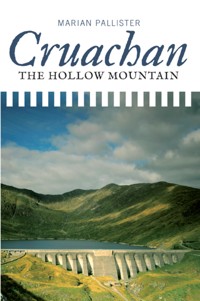
'Cruachan!' was the battle cry of the Campbells. In the early 1960s, the invasion of the 3,000 men who hollowed out Argyll's noblest and highest mountain as part of a massive hydroelectric project could have annihilated the local community. Instead, the people of Loch Awe, Dalmally and Taynuilt welcomed the invaders, embraced the project and emerged the winners. Fifty years on, an integrated community still lives under the Hollow Mountain, and the cry 'Cruachan!' signifies a Scottish success story. In this book, based on interviews, media reports, court reports and film archive material, Marian Pallister tells the story of the project - featuring the extraordinary experience of those who worked on the mountain as well as the effects on the local community of one of the biggest civil engineering projects ever to have been undertaken in Scotland. She also considers the long-term effects of the project, looking at how the community was changed by the experience.
Sie lesen das E-Book in den Legimi-Apps auf:
Seitenzahl: 323
Veröffentlichungsjahr: 2015
Das E-Book (TTS) können Sie hören im Abo „Legimi Premium” in Legimi-Apps auf:
Ähnliche



















CRUACHAN
MARIAN PALLISTER has worked as a features writer and commentator covering social issues in Scotland and round the world, particularly in disaster and war zones. She previously taught journalism at Napier University and is currently tutor in English subjects at Argyll College. Her other books include Lost Argyll, Argyll Curiosities, Villages of Southern Argyll and Nelson Mandela: Robben Island to Rainbow Nation.
First published in 2015 byBirlinn LimitedWest Newington House10 Newington RoadEdinburghEH9 1QS
www.birlinn.co.uk
Copyright © Marian Pallister 2015
The moral right of Marian Pallister to be identified as the author of this work have been asserted by her in accordance with the Copyright, Designs and Patents Act 1988.
All rights reserved.No part of this publication may be reproduced, stored or transmitted in any form without the express written permission of the publisher.
ISBN: 978 1 78027 220 7eISBN: 978 0 85790 861 2
British Library Cataloguing-in-Publication DataA catalogue record for this book is available from the British Library
Typeset by Iolaire Typesetting, NewtonmorePrinted and bound by Bell & Bain Ltd, Glasgow
To the memory ofTOM JOHNSTON(2 November 1881–5 September 1965)A politician true to his beliefsandTo everyone in the Cruachan community who gave of theirtime and memories, with grateful thanks.
Contents
List of IllustrationsMapPrologue 1.
Tackling a mess
2.Moving a mountain, changing lives
3.The welcoming party
4.Cultural change to a rural world
5.Life goes on
6.Grabbing opportunities
7.Nannying and policing
8.The price of fish
9.Other industries change
10.Living under threat
11.Reversing the trends
12.A life lived under Ben Cruachan
13.An end, a beginning
14.The opening
15.Cruachan, comparisons and custard
16.Changing Cruachan in a changing world
17.Some ghosts
18.‘Never tranquil’
19.Some promises
20.Another Cruachan life
21.A discreet source of power
22.The ripples of change
23.Juggling with nature and populations
24.Cry Cruachan! A proclamation of Scotland’s future
25.A life that flourished in the wake of the hydro scheme
26.Tom Johnston – Voice of the disenfranchised Highlands
27.New life under Cruachan
28.Laying down memories for the future
29.Cruachan: An invitation not to be refused
Bibliography
List of Illustrations
The 4th Earl of Breadalbane laid out the township of Stronmilchan with 52 crofts in the 1790s to move tenants away from land to be used more profitably for shooting and timber. In the 1960s, 1,000 workers were based here. (Dalmally Historical Association collection)
For millennia, Loch Awe was a crossroad for travellers, pilgrims, and armies. The mighty Ben Cruachan was their guiding landmark. (Dalmally Historical Association collection)
The Inverawe Ferry across Loch Etive, seen from Taynuilt and dominated by Ben Cruachan. Lord Cockburn crossed on his circuit journeys in the 1840s. It closed in 1966, as the Cruachan hydro project came to fruition. (John Macfarlane collection)
The circuit judge Lord Cockburn loved the peace and beauty of Dalmally in the mid 19th century. In the 1960s, the revving of buses and the clatter of a thousand boots woke the village each morning as the ‘Tunnel Tigers’ went to work on the Cruachan project. (Courtesy Argyll and Bute Library Services)
MacNab’s Cottage in Glenstrae, Dalmally, and other crofts became the site of construction workers’ caravans. Some crofters took workers as lodgers and rent for land or bed and board increased local incomes. (Courtesy Argyll and Bute Library Services)
The arable land on the shores of Loch Etive was little disturbed by agricultural advances even in the mid-20th century. Irish Gaels working on the hydro project found Scottish Gaelic still spoken and friendships grew from the shared linguistic heritage. (Courtesy Argyll and Bute Library Services)
The village of Taynuilt could take the building of a massive hydro project in its stride – with roots in pre-history, it was the seat of the Bishop of Argyll in the 13th century, shipped cannon balls to fight Napoleon from the iron foundry at Bonawe, and hosted the ‘huntin’, shootin’ and fishin’’ set from the mid 19th century. (Courtesy Argyll and Bute Library Services)
Rural activities were never interrupted during the building of the hydro project. Record numbers attended Taynuilt and Dalmally agricultural shows, record prices were recorded at cattle and lamb sales, and men like John Spalding carried out his work shearing throughout the area. (Dalmally Historical Association collection)
The magnificent 75-bedroom Loch Awe Hotel, with its lift to take passengers and luggage from the Loch Awe steamers, had been host to royalty, lairds and actresses, and ran its own steamers on Loch Awe. It shared in some of the celebrations as the hydro project progressed. (David McLeod collection)
The thousands of men who worked on the project stayed in camps, in caravans, and in digs. Lochawe House is now home to Inverawe Smoke-houses and once was owned by a heroic 16th century laird. The North of Scotland Hydro Electric Board commandeered the estate as its project HQ and a massive camp was erected in the ground. (Author’s own collection)
Once a battle site, the Pass of Brander was the scene of the Cruachan scheme’s opening ceremony on June 25, 1959. This workman’s cottage was demolished to build a barrage, and in time, the spoil from the mountain transformed this road. (David McLeod collection)
On the surface of Cruachan, a road was constructed and a massive damn was built. Despite a handful of objections that the project would ruin ‘the amenities’, the road and damn today draw tourists from around the world. (The Herald picture library)
Health and safety were not priorities in the 1960s. Few pictures of the Cruachan project workers show hard hats, safety boots, or ‘hi-viz’ jackets. Some smoked while laying dynamite. Others drilled the hard granite without ear protection. (The Herald Picture Library)
The men who created the ‘Hollow Mountain’ have rightly been lauded as heroes – the Tunnel Tigers. This book is about the communities that hosted them during the years they created one of the world’s finest hydro engineering projects. (The Herald Picture Library)
On October 15, 1965, Her Majesty Queen Elizabeth officially declared the Cruachan project open for business. She made her speech from a rickety platform inside the Hollow Mountain, while electricity began to flow from this magnificent feat of engineering. (Dalmally Historical Association collection).
London artist Elizabeth Faulkner created a marquetry panel for the great hall inside the mountain where the turbines sit. It depicts the history of the area, and commemorates the lives of those workers who died during the construction of the Cruachan hydro project. (Maria Fusco collection)
Prologue
My mother inherited some cottages in the 1950s in an area considered remote enough to create a reservoir without it really mattering to anyone. Homes were ‘drowned’. The community disappeared and the landscape was irrevocably changed.
In the 1970s, when a gas pipeline was installed across stretches of Perthshire and Stirlingshire, workers invaded our village pub every night, winning at darts, exacerbating a macho drinking culture and altering the natural dynamic of relationships in the area.
These fragments from my own past served to create some preconceptions of what life must have been like before, during and after the Cruachan hydro-electricity project was constructed in a corridor stretching from Dalmally to Taynuilt.
What sort of community existed in the shadow of the mighty Ben Cruachan before 1959? What effect did playing host to up to 3,000 workers for more than half a decade have on the necklace of crofts, villages, pubs and rural industries strung along the gnarled features of Argyll’s highest mountain? And what happened after the children had waved their flags for the Queen, when the diggers fell idle, the men moved on to their next adventure, and the innovative pumped-storage hydroelectric dam and power station were in operation, carrying power to the city of Glasgow some 80 miles distant?
Surely a massive workforce being imposed on a rural area could have only a negative impact? To have diggers and dumper trucks and drilling and blasting as a constant backdrop to life for six years would surely only prove to be debilitating and disruptive at best – destructive of a way of life at worst?
Ben Cruachan’s mythology suggests that disapproval might have rumbled first from the mountain itself before ever the community’s voice was heard.
The Munro, 3,694 feet high, is formed from black granite, which changes to phyllite on its south-facing slopes. It is part of the Cruachan Horseshoe that was to surround the hydro project dam, but in its proud past it was the mountain that gave its name as the battle cry of the Campbells and MacIntyres – and in Celtic mythology it was the site of the well of youth.
The goddess Bheithir guarded the well, and its magic water kept her young and beautiful throughout eons.
Sadly, Bheithir became complacent and careless, and one night left the cover off the well when she went to bed. Her beauty product gushed away and she woke to find that the squandered waters had formed Loch Awe at the bottom of the mountain, and her good looks and youth had gone forever. Now she was to be known as Cailleach nan Cruachan (the old wife of Cruachan) or the Hag of Winter, presiding over darkness and death.
Would she countenance the hollowing out of her mountain? Would she allow the harnessing of the waters that had been the source of her once eternal youth?
The older members of the post-war community living around Loch Awe and Loch Etive at the foot of Ben Cruachan may well have held on to a belief in the old myths. Many were Gaelic speakers, working the land, grounded in that Celtic conundrum of deep Christian faith combined with a conviction that the Little People could influence weather, crops and romantic relationships.
Like so many areas of Scotland regarded elsewhere as ‘remote’, the whole area around Ben Cruachan had been inhabited for millennia, sometimes heavily populated, sometimes less so.
According to the Statistical Account for 1834–45, there were ‘several Druidical circles, more or less perfect’ in the parish of Muckairn, which would suggest occupation from at least around 6,000 years ago. The Bronze Age came to Britain some 4,000 years ago, bringing agriculturists who built houses, wore kilt-like garments and began to cultivate the land. A cremation cemetery, assumed to be Bronze Age by the Royal Commission on the Ancient and Historical Monuments of Scotland, was identified at Crunachy farm in 2008, suggesting a long-settled agricultural area.
These incomers would have arrived in the area by boat and, of course, those waters spilt from the fountain of youth increased in their strategic importance in the following centuries. Lochs and mountains became defining territorial borders; mountain passes were crucial to defending domains.
As the clan system developed, power struggles gave us today’s picturesque landmarks – although the forts and castles had, of course, proliferated to defend rather than enhance the scenery. By the beginning of the complicated fourteenth century, Edward II of England had lost many of his allies among the Scottish clan chiefs and Robert the Bruce was attempting to subjugate those who still held out a friendly hand towards England.
At the Pass of Brander, where Loch Awe narrows into a bleak, stony corridor disgorging the River Awe on its journey towards Loch Etive and the sea, the MacDougalls of Lorne, supporters of the Comyn faction that was in cahoots with the English, set a trap for Bruce. Bruce outsmarted them and their defeat quieted other clans that had snapped at his heels like so many angry terriers. This decisive battle in 1308 allowed Bruce to give all his attention to the English threat to the south.
There were, of course, less militant men (and women) traversing these hills and glens. In the first Christian millennium, missionaries from Ireland and newly converted monks made their mark here, and Loch Awe was on the route to the east from Iona. The parish church at Taynuilt on the River Nant, where it flows into Loch Etive, incorporates ruins of Killespickerill, built in 1228 as the seat of the Bishop of Argyll. On the north shore of Loch Etive stood Ardchattan Priory, where in 1308 the last Scottish Parliament conducted only in Gaelic was held.
A backwater this has never been, and nor was it a stranger to trade and industry on an international level.
The 1707 Union opened up trade with not only England but also England’s partners in trade overseas – and introduced some stringent anti-smuggling laws that must have compromised the business status of a number of people around the Loch Etive area.
In 1728, the year that the Royal Bank of Scotland invented the overdraft, the Lochetty Company was formed, with Duncan Campbell of Lochawe, John Campbell of Lossit and John Campbell of Barcaldine signing up as partners to the established trader Colin Campbell of Inversragan. They were all big landowners and they had been given mineral and timber concessions in the 1720s. An iron foundry was set up at Glen Kinglas. Trading posts that they owned at Bonawe, Dunstaffnage Bay and on the island of Kererra were developing nicely.
Despite the disastrous Darien venture at the end of the seventeenth century, fortunes were already being made in Glasgow in the first decades of the new century. The legendary ‘tobacco barons’ took advantage first of the new trading freedoms provided by the Union and then exploited the fact that it took just 20 days for tobacco to arrive from Virginia in Glasgow, creating a gateway for tobacco into the rest of Europe that put them ahead of rival British cities.
The Lochetty Company suddenly found itself trading in tobacco after a Glasgow merchant, William Fogo, bought out Barcaldine’s share and encouraged the other partners to scramble onto this lucrative bandwagon (by the late 1720s, the excise duties alone paid at Greenock on tobacco entering the country legally amounted to £3,000, or around £270,000 at today’s values).
Fogo encouraged the company to set up tobacco mills at Inversragan on Loch Etive in 1730 and at Oban in 1735. Perhaps not the best partner to have become involved with (Fogo was involved in some shady dealing in wines, spirits and tobacco), the Lochetty Company business nonetheless impacted on local people in Dalmally and the surrounding area who made their living as packmen – travelling salesmen. They bought their goods from the company, and the company made a packet from it.
The Dalmally Historical Association has records of a packman called Patrick Campbell who owed the company £1.2s.8d (around £90 at today’s value) in 1732. The Lochetty Company would have paid threepence a pound for tobacco. A duty of fourpence halfpenny should have been added to that. Patrick would have paid the company tenpence a pound, buying the tobacco in rolls of 10–15 pounds. Then he had to sell it.
Packhorses were hired from Kilmaronaig, Connel and Bonawe, and the clip-clop of hooves through Dalmally on the way south to sell on the tobacco and tea, with perhaps illegal spirit hidden under the other more mundane goods, was the soundtrack to daily life in the village.
Mouth music of the day suggests that the tobacco was sold on at 24 or 25 times the cost price – but it’s not clear who got the profit. Was it the smugglers? Was it the Lochetty Company? Was it the packmen? It probably wasn’t the latter, as the poor packmen always seemed to be in debt.
O tha’n tombacca daor,O tha’n tombacca gini,O tha’n tombacca doar,B’fhearr leam gu robh e tuilleadhGini air a huile punnd,Punnd air a huile gini,Tha e gini air a phunndAgus punnd air a gini
O the tobacco is dearO the tobacco costs a guineaO the tobacco is dearI only wish it cost moreA guinea for every poundA pound for every guineaIt costs a guinea for every pound,And you get a pound for every guinea.
Taynuilt became a crossing place (for legal and illegal activities) to Bonawe, where in 1753 the Bonawe iron furnace was established. Trees from miles around were reduced to charcoal (600 charcoal burners operated around Glen Nant and other woodlands) to feed the furnaces that smelted iron ore brought by boat from England.
When in 1769 Thomas Pennant published thoughts on his tour of Scotland, his fear was that the ‘considerable iron foundry’ at Bonawe ‘… will soon devour the beautiful woods of the country’.
It was not an entirely accurate prediction, although many woodlands as distant as Loch Melfort were ‘devoured’ by the iron works.
This was a major industry of its day, though even during its most productive era the iron works employed just 600 workers, who were largely local – certainly not anything like the mainly migrant population of 3,000 workers who would be involved in creating the Cruachan project two centuries later.
While other roads in the Highlands were built in the eighteenth century to help quell Stuart support, the road through the Pass of Brander and Bridge of Awe was constructed for quite modern infrastructural reasons of industry – although the fact that cannonballs were a high priority in the second half of the century as relations with France deteriorated meant this road was also a military life-line. It is recorded that 42,000 cannonballs were produced at Bonawe in 1781 – and their manufacture and shipment must have impacted on the local community, as would the transportation of the 700 tons of pig iron annually smelted outwith the war effort.
A century later, the iron works was closed, but by 1880 the Callander to Oban railway was being constructed and a station was opened at Taynuilt.
Dalmally had been the end of the line in 1877 because land slips along the north shore of Loch Awe caused engineering problems, hampering the development of the track to Oban and to Connel. But before long, there was a burgeoning tourist industry and the majestic Loch Awe Hotel was built. The hotel even had its own steamers: the Countess of Breadalbane, from 1882 to 1922 – a whopping 99-foot white beauty – and the Growley, which ran from 1900 to 1936.
Inns such as the one at Portsonachan had been staging posts in the past, or waiting places for passengers on the many ferry points across Loch Awe. They had been rough-and-ready places, as travellers such as circuit judge Lord Cockburn testified in his journals.
When William Wordsworth and his sister Dorothy toured Scotland, they were directed to ‘a little public house … without a signboard’ at Cladich, on the shores of the loch. Porridge was the only food on the menu and Dorothy’s eyes ‘smarted exceedingly’ from the smoke from the fire in the centre of the ‘… rude Highland hut, unadulterated by Lowland fashions’ (Recollection of a Tour made in Scotland by Dorothy Wordsworth, 1803).
This new hotel, however, was worthy of the guests of local landed gentry, including the Malcolms of Poltalloch, whose house guests were transported by steamer from Loch Awe down the loch, to be picked up in a shooting brake at Ford and taken to the Malcolm mansion in Mid Argyll. Aristocracy, entertainers and businessmen would have been waited upon in the hotel by staff recruited from that corridor between Dalmally and Taynuilt.
There were a number of wealthy landowners along the length of Loch Awe, and both private and public steamers plied the loch. The last public ferry was still sailing in 1952.
The local community in the late 1950s, therefore, was not an isolated one. Over the centuries it had been exposed to saints and sinners, bishops and warriors, parliamentarians and industrialists. It was on a railway line, and although the main road from Glasgow to Oban became challenging round about the Dalmally area to anyone prone to travel sickness, it did offer links to the outside world that other areas in Argyll and the islands did not enjoy.
Was it ready, however, for the innovative plans the North of Scotland Hydro-Electric Board had for it?
The installation of hydro-electricity schemes throughout the Highlands was seen as a way forward for Scotland in the post-war years. This particular scheme was special in its design and would harness mountains, rivers and lochs to create power for the industries that still dominated the central belt.
Much has been written – quite rightly so – of the ‘Tunnel Tigers’ who did the drilling and blasting, who drove the dumper trucks and operated the diggers to create the massive dam high on the mountain and to carve out the heart of the mountain itself.
In the main, they were men who moved where the work was. Some were highly skilled. Others were willing to provide a shoulder to support a drill that bit into the black granite of Cruachan for a wage four times that of a secondary school teacher.
They risked their hearing, their joints, and even their lives, to create an engineering masterpiece that lit up that distant city almost unknown to much of the local community. They worked in, on and around the mountain. They altered Loch Awe, noised up Glen Nant and sullied the peace of Stronmilchan.
They lived in temporary camps, rented cottages and caravans, and made money hand over fist. Some spent it as fast as they earned it; others sent wages home to families throughout Scotland, in Ireland, England and even Poland.
They were lauded as heroes. They were heroes, bringing Scotland’s infrastructure into the twentieth century at often great personal cost: 36 men would die in the execution of the project.
Scotland would not have made progress without the foresight and persistence of politician Tom Johnston; the genius of Sir Edward MacColl, engineer and pioneer of hydro-electricity in Scotland; and the labour of teams such as those who transformed a mountain and a loch into the world’s first high head reversible pumped-storage hydro scheme.
But this award-winning enterprise (in 2012, the Cruachan project won an Institution of Mechanical Engineers’ Engineering Heritage Award) needed the support of the local community, and the chapters that follow presume to speak on behalf of that community – to put the community back into the equation as we approach the 50th anniversary of the project’s completion.
Will that anniversary in October 2015 be the occasion of celebration – or of mourning for the loss of a lifestyle that was uniquely West Highland?
It is a question I have put to people who, half a century on, still live in the shadow of one of Scotland’s – no, one of the world’s – most celebrated mountains and most exciting engineering projects.
1
Tackling a mess
He was born on 2 November 1881, and for some he is still the best prime minister Scotland never had. Tom Johnston was a socialist, a Red Clydesider, a man whose life was devoted to the well-being of the working man and of Scotland. Secretary of State for Scotland in Winston Churchill’s wartime coalition government, he set up the Scottish Council on Industry and then in 1943 the North of Scotland Hydro-Electric Board. His intention was threefold: more employment, better social conditions and new industries. He was the board’s chairman from 1945 to 1959, the year that Cruachan, biggest and best of the schemes, was begun.
Tom Johnston would have liked to achieve home rule for Scotland. Instead, he had to be content with creating an impressive range of initiatives that brought 700 new industries to Scotland and created over 90,000 new jobs. He tackled social and economic issues with gusto (and no little success), but it was his hydroelectric scheme for the Highlands that was most successful and will be his, and Scotland’s, lasting legacy.
Having stood down from the NSHE Board the year that the Cruachan plan was given the go-ahead, Johnston died on 5 September 1965, just one month before the Queen officially opened the project.
The other driving force behind the Cruachan plan was engineer Sir Edward MacColl. And if Tom Johnston was the political giant in the equation, the title of Norrie Fraser’s biography of Sir Edward MacColl defines the engineer: A Maker of Modern Scotland.
Sir Edward was a pioneer in his field. In the 1920s, he was the first to use run-of-the-river technology in a development at the Falls of Clyde.
Tom Johnston made him his deputy at the Hydro Board and they were a formidable team who attracted worldwide attention. MacColl’s design for Cruachan was no less ground-breaking than his first Falls of Clyde project. This was the first reversible pumped-storage system in the world, reducing the need for multiple dams across a catchment by having two reservoirs, one above the other. At Cruachan, water is pumped back through reversible turbine generators to the upper reservoir during off-peak hours, ready for use again at peak load.
James Williamson & Company of Glasgow was the civil engineering company on the project and Edmund Nuttall of Camberley and William Tawse of Aberdeen were the main construction contractors. Other companies were brought in during the years of the project.
So it was to be not only an innovative project but a top-quality job in terms of the companies involved. And over the planned six-year construction period, the promise was a reduction in unemployment not only in the local area but rippling out to the Western Isles.
In the twenty-first-century atmosphere of protest, compensation and litigation, it is easy to assume that there was some objection to this massive project that would affect over 300 square miles of mountain and waterway.
Today, wind farms and fracking are targeted on social, environmental and economic grounds; in 2011, there was an objection on heritage grounds to a hydro project in Glen Lyon in Perthshire because of the local legendary cailleach and the curse that would trouble anyone who touched her ancient carved stones. However, the only arguments against the Cruachan project came from local landlords who feared for their shooting rights and the effects on the fish stocks in their rivers.
Were they right to worry? The reservoir was to be bound to the south-west by a buttressed concrete gravity dam 1,036 feet long, sited 1,299 feet up the mountainside. Its catchment area was to cover 5,683 acres, and a network of 19 tunnels would divert water from surrounding streams into the catchment.
There were, however, to be environmental restrictions on the dam design, which meant that all its operational equipment would be hidden inside the dam wall.
In the House of Lords on 14 May 1959, Robert Samuel Theodore Chorley, who had been raised to the peerage in 1945 as the 1st Baron Chorley, did raise some questions about the proposed project. Lord Strathclyde (who would take on Tom Johnston’s role as chair of the Hydro Board) replied as follows:
I was rather surprised by some of the remarks made by the noble Lord, Lord Chorley. He told us about this corrie in Ben Cruachan. I have lived for months at a time under the shadow of Ben Cruachan, and I have climbed the mountain. I would agree with him that if you have a great deal of water running away it does not leave a very nice spectacle, but when one considers the matter from every point of view, I wonder how many people in any year visit that corrie? Very few, I should say. As for doing anything whatsoever to spoil the beauty of the Pass of Brander, I do not understand how that would arise. I do not know whether the noble Lord has looked at the photographs. If he has, he will find difficulty in informing me how that would happen.
The people who lived in the ‘catchment’ area that this adventurous scheme would cover – local people such as Mabel Grieves, now McNulty, who had grown up in the area and made her living in it, from the crofting community of Stronmilchan – were as sanguine as Lord Strathclyde. They knew what was coming.
Mabel, who was in her teens when the project was mooted, and now lives in Dalmally, said, ‘They had already built the Glen Lyon project at Killin, so people knew about it. The Glen Shira project had also been built, so there was experience of that type of scheme.’
The so-called Breadalbane project, incorporating seven power stations, including one at Killin, would come on-stream in 1961 and the Glen Shira project had been completed in 1957.
Mabel thinks that perhaps some of the older generation may have worried about the effect of so many workers coming to the area, and about the changes to landscape, but once the road was made up to the dam and shafts were built from the top into the mountain, ‘we weren’t really seeing a lot’. Such fears as there might have been were dispelled.
Eleanor Bain, whose husband was the doctor in Taynuilt during the building of the scheme, said, ‘Objections weren’t thought of in the same way as today. It was just something that came.’
In later years Sandy Dawson would set up one of Oban’s most successful estate agencies, but in 1959 his home was Crunachy House (now Brander Lodge Hotel). His father had turned the property into a hotel and, according to Sandy, he had imagined it would be a ‘genteel establishment’. That was before the plans for the Cruachan project were announced.
Sandy said: ‘You could put up barriers, or suffer it and make the most of it.’
Like most people in the area, the Dawsons made the most of it. They had to.
Tom Johnston wasn’t pushing all these hydro schemes through for self-glory. The post-war years were grim, with unemployment in Scotland reaching 5.4 per cent in 1959 – higher than in England – and for school leavers the outlook was particularly bleak. For every three youngsters entering the job market, there was just one vacancy.
On 28 April 1959, Emrys Hughes MP asked Prime Minister Harold Macmillan, during a parliamentary debate on unemployment in Scotland, whether he would meet with leaders of the Scottish Trades Union Congress to discuss the ‘serious state of unemployment in Scotland’ and, indeed, if he did not ‘think that it would be a very good thing if he went personally to acquaint himself with the very serious position in the West of Scotland’.
The Prime Minister said he was ready to meet a deputation ‘from this Congress’ and that he had the advice of ‘all my colleagues concerned, especially the Secretary of State’.
The reality for many, particularly in rural areas, was low or no wages. A linesman’s mate working with the Hydro Board in Lochaber earned four shillings an hour, with eight shillings and threepence a week ‘productivity allowance’.
There was little spare money for many of the people of Dalmally, Taynuilt or Glen Nant to hop on a bus to Oban to see Laurence Harvey and Julie Harris in The Truth About Women at the Playhouse cinema. Instead, entertainment was more likely to be Old Mother Hubbard staged by Taynuilt Amateur Dramatic Society (TADS), who played to a capacity audience in the village hall in the winter of 1958; that year’s Christmas party for the Dalmally children came courtesy of the Scottish Women’s Rural Institute (SWRI), with games and dancing and Gregor Campbell in a Santa suit. The adults enjoyed a dance afterwards, with music provided by Matheson’s Band, but, with a Ford Zephyr priced at £845, few would have driven home.
The Conservative and Unionist Party was apparently trying to address the problems, according to the Hansard exchanges. Reginald Maudling, the Paymaster General of the Westminster Government, had pushed for the borrowing limit of the North of Scotland Hydro-Electric Board to be raised from £200 million to £300 million, so that the industry would be able to ‘meet the demands of the electricity consumers – domestic, industrial, commercial and the rest’.
And there were, in fact, a number of new industrial projects afoot. In the Oban Times of 28 February 1959, headlined ‘New Employment Prospects for Argyll’, Michael Noble, the MP for Argyll, was reported announcing four new schemes.
Not before time. An industry that had been seen as a saviour for the Highlands was British Aluminium. Instead, British Aluminium workers had been laid off in Fort William and Kinlochleven because of a winter drought that led to water shortages disastrous to the industry’s operations. Now, four new projects were in the pipeline that would offer work over the next three years.
Mr Noble had made his announcement at an Argyll Unionist Association whist drive at Taynuilt. He told his constituents (as if they didn’t know) that unemployment was ‘the one big problem of today’. The four schemes he listed were: an extension to a dry cleaning and tailoring business in Dunoon, a distillery in Jura, a new industry to be set up in the Lochgilphead/Ardrishaig area, and Dickie’s boatyard in Tarbert (although this was a spin on an already-known development).
None of these sounds capable of addressing the county’s unemployment problems, and the fact that the Oban Times buried in paragraph six the ‘prospect of two new hydro schemes within the county, one in the Mid Argyll area and another in the Taynuilt district’, is either a reminder that this was a generation or two before the existence of the now ubiquitous spin doctor, or that Mr Noble was hoping the Taynuilt Unionists wouldn’t complain about this project on their doorstep.
Or perhaps it was simply that the deal wasn’t yet done and he didn’t want to tempt fate. Just a couple of weeks later, however, the ‘Awe scheme’ was referred to by the Secretary of State for Scotland, John Scott Maclay, and on 4 April 1959 the Oban Times was able to announce:
Big Hydro Electric Project to Start this SummerLoch Awe Scheme May Solve Oban’s Workless Problem
Mr Hendry, manager of Oban’s labour exchange, was ‘confident’ that the scheme would ‘wipe out’ Oban’s unemployment problem and provide full employment for the next four or five years.
He had good reason to be hopeful.
This was not any old hydro scheme: it was to cost £24.5 million (around £484 million today), and workers would be needed to build one barrage, two dams, thirteen aqueducts and three generating stations, with a capacity of around 450,000 kilowatts.
There was to be a reservoir 13,000 feet up in the corrie of Ben Cruachan. Nant, Cruachan and Inverawe were to be created as inter-dependent sections. The generating station was to be built underground on the banks of Loch Awe. A loop diversion of the Oban–Glasgow road would have to be built, and there would be a tunnel from the barrage in the Pass of Brander to Inverawe power station. A fish pass would be constructed. A dam would be built to raise Loch Nant’s level.
What not to get excited about if you were one of Oban’s 121 unemployed men and women, or the 16 youngsters who had never had a job since leaving school?
And as the work would last until the middle of the following decade, this was something that would also address the increasing problem of school leavers. By 1962, it was estimated that there would be 50 per cent more of them than there had been in 1947. The Baby Boomers were already causing problems.
But what were they saying under the shadow of Ben Cruachan?
Bill Dawson, Sandy’s father, who had the licensed guest house and farm at Crunachy, said: ‘There is no doubt that the scheme will increase my business and, if necessary, I shall make plans to extend the existing accommodation. The contractors might also ask me to make ground available for the building of camp sites.’
Mr Lockerbie, the manager of Cooper’s in Oban (the nearest thing to a supermarket the town had yet experienced), echoed Dawson’s optimism. He had, he said, already the know-how of providing civil engineering projects at Kilmelford and Gallenach with groceries and he would be ‘delighted’ to supply the Cruachan project camps with ‘victuals’.
Liptons’ branch in Oban was also in the queue to provide food to the workers, and Alexander’s of Falkirk, a major bus company, jostled for a contract, saying they had the licences necessary for the job, not to mention 45 buses in a depot a Grangemouth. By May 1959, William Low – rising star in Scotland’s supermarket firmament – had shrewdly moved into Oban to stake its claim in this coming bonanza.
There was irony in the situation, too. From mid- to late May, while everyone was enthusing about this great new project on Oban’s doorstep, the town itself suffered a blackout. There were no streetlights for two weeks and the local paper, not usually given to overstating the case, dramatically reported on this ‘blanket of darkness’. What must the sophisticated crew of A Touch of Larceny have thought as they filmed scenes at Ganavan and on the Firth of Lorne? Did Peter Finch and Peter O’Toole, stars of the Walt Disney version of Kidnapped, think they had actually stepped back into Robert Louis Stevenson’s world when they knocked off from acting on Loch Linnhe and went in search of a bar in the pitch black of Oban?
And there is always a note of caution when a bonanza is predicted.
In this case it came from Mid Argyll, where the Glashan hydro scheme was also under way. An Argyll councillor warned, ‘On some of these schemes quite a number of the workers, in my opinion, spend far too much time in the pubs, which I think is very unfortunate, and while I would welcome these people in the district I would welcome even more some person who could look after their financial interests and see to it when the job is finished that they have a substantial sum to take home. It is also such a pity that they should waste so much of their hard-earned money drinking.’
Too many folk in the pub or not, these hydro schemes were going to help to drag Scotland into the twentieth century – thousands were living without any power at all, let alone suffering a lack of street lights for a fortnight. Oban itself had only got television the previous year.




