


24,30 €
Mehr erfahren.
- Herausgeber: John Wiley & Sons
- Kategorie: Geisteswissenschaft
- Sprache: Englisch
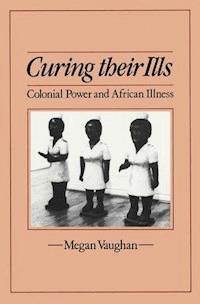
Curing their Ills traces the history of encounters between European medicine and African societies in the nineteenth and twentieth centuries. Vaughan's detailed examination of medical discourse of the period reveals its shifting and fragmented nature, highlights its use in the creation of the colonial subject in Africa, and explores the conflict between its pretensions to scientific neutrality and its political and cultural motivations.
The book includes chapters on the history of psychiatry in Africa, on the treatment of venereal diseases, on the memoirs of European 'Jungle Doctors', and on mission medicine. In exploring the representations of disease as well as medical practice, Curing their Ills makes a fascinating and original contribution to both medical history and the social history of Africa.
Sie lesen das E-Book in den Legimi-Apps auf:
Seitenzahl: 478
Veröffentlichungsjahr: 2013
Ähnliche




















Curing their Ills
Colonial Power and African Illness
Megan Vaughan
Polity Press
Copyright © Megan Vaughan 1991
Megan Vaughan is hereby identified as author of this work in accordance with Section 77 of the Copyright, Designs and Patents Act 1988.
First published in 1991 by Polity Press in association with Basil Blackwell
Reprinted 2004, 2007
Polity Press65 Bridge StreetCambridge CB2 1UR, UK
Polity Press350 Main StreetMalden, MA 02148, USA
All rights reserved. Except for the quotation of short passages for the purposes of criticism and review, no part of this publication may be reproduced, stored in a retrieval system, or transmitted, in any form or by any means, electronic, mechanical, photocopying, recording or otherwise, without the prior permission of the publisher.
Except in the United States of America, this book is sold subject to the condition that it shall not, by way of trade or otherwise, be lent, resold, hired out, or otherwise circulated without the publisher’s prior consent in any form of binding or cover other than that in which it is published and without a similar condition including this condition being imposed on the subsequent purchaser.
ISBN: 978-0-7456-6894-9 (Multi-user ebook)
British Library Cataloguing in Publication DataA CIP catalogue record for this book is available from the British Library.
Typeset in 10 on 12 pt Palatinoby Graphicraft Typesetters Ltd., Hong KongPrinted and bound in Great Britain by Marston Book Services Limited, Oxford
This book is printed on acid-free paper.
For further information on Polity, visit our website: www.polity.co.uk
To my parents
Zomba Maternity Ward (Two Decades After)
By Jack Mapanje
I was out of bounds, they said. Outside,the corrugated iron roofing is crumblingunder rotting mlombwa leaves, the greenpaint peeling to the rust of two decadesof dead dust. The windows are covered inshreds of matting (to stop the scorpionpneumonia of June!) Inside, some thirty beds,a hundred pregnant women, top and tail on owncellophanes; thirty others with babies arecluttered on the cold cement, a family undereach bed, some in between. A fresh smellingbabe in the corner grinds; the mother suckleshim, labouring her tattered chitenje cloth. Onthe floor, a tin plate with a piece of tripeshe could not chew.
No one is fightingthe desert war here. These are refugees onlyfrom child spacing, atoning for the ghost revolttwenty years ago, repaired in this shrinkinghospital God knows how. And I gather, the doctorswho toil twenty-four hours (without drugs, withblunt needles) offered to extend this wing, butthere was the usual hiccup about getting officialclearance. Yet this was the rallying cry ofthe dais once. And when the authorities visitthe sick this Christmas, these women will bejostled into neat lines, clapping their praises.The floor will have been scrubbed brighter,there will be one patient to each bed: anotherdream done! But I hear, I was out of bounds.
NOTE: Dr Mapanje was still in prison at the time of going to press. This may not be the final version of his poem.
Contents
List of Illustrations
Preface
1 Introduction: Discourse, Subjectivity and Differences
2 Rats’ Tails and Trypanosomes: Nature and Culture in Early Colonial Medicine
3 The Great Dispensary in the Sky: Mission Medicine
4 Without the Camp: Institutions and Identities in the Colonial History of Leprosy
5 The Madman and the Medicine Men: Colonial Psychiatry and the Theory of Deculturation
6 Syphilis and Sexuality: the Limits of Colonial Medical Power
7 Hippo Happenings: Jungle Doctors, Children and Animals
8 ‘Seeing is Believing’: Colonial Health Education Films and the Question of Identity
9 Conclusion: The Changing Nature of Biomedical Discourse on Africa
Bibliography
Index
Illustrations
1 Dr Hugh Stannus at his microscope. Hugh Stannus papers (Mr Robert Hugh Stannus Robertson and Rhodes House Library, Oxford)
2 Photograph from Hugh Stannus’s collection. Hugh Stannus papers (Mr Robert Hugh Stannus Robertson and Rhodes House Library, Oxford)
3 Layout of working place of yaws eradication team, Nigeria, 1956. A Zahra, ‘A Yaws Eradication Campaign in Eastern Nigeria’, Bulletin of the World Health Organisation, vol. 15 (1956) (World Health Organisation, Geneva)
4 ‘A Congo Child’s Appeal’. The Medical Missionary, vol. 8, no. 9 (1909) (Bodleian Library, Oxford)
5 Some of a group of fifteen hundred lepers waiting to be examined in the Sudan. Leprosy Review, vol. II, no. 1 (1931) (the editor of Leprosy Review and the Bodleian Library, Oxford)
6 Leprosy patients applying hydnocarpus oil to each other at Itu settlement, Nigeria. Leprosy Review, vol. XI, no. 1 (1940) (the editor of Leprosy Review and the Bodleian Library, Oxford)
7 Scenes from the Fiwila Village of Mercy, Northern Rhodesia. Leprosy Review, vol. VIII, no. 4 (1937) (the editor of Leprosy Review and the Bodleian Library, Oxford)
8 Dr Paul White and the Rev. Dan Mbogoni (Daudi of the Jungle Doctor books) in 1967 (Dr Paul White)
9 Illustration from Dr Paul White’s autobiography, Alias Jungle Doctor, captioned ‘The funniest thing I’ve read since Darwin’ (Dr Paul White)
Preface
When teaching at the University of Malawi in the early 1980s and researching on Malawian social and economic history, I became interested in the history of insanity, and, more especially, the history of the local mental hospital, founded early in the colonial period, before schools or hospitals for Africans served more than a minute proportion of the population. I was curious as to why the colonial administration had felt the need to define and confine the ‘lunatic’. I think I was hoping for the colonial equivalent of what Foucault called the ‘great confinement’, a colonial story of massive institutionalization for the purposes of maintaining social control. I was to be disappointed in this, since the few dusty and depressing record books of the asylum which are kept in the National Archives show it to have always been a small and underfunded institution, populated by a few unfortunate individuals. If there was no ‘great confinement’ to be found in the records, there was, however, much of interest in the court records which provided a glimpse at the process of defining insanity in a colonial state. This process seemed to me to say a great deal about British colonialism in Africa. These courtroom dramas were presided over by a British district official, often under-informed and confused on legal matters, and understandably baffled by the problem of defining insanity in another culture. Often the evidence he heard seemed to be completely off the point – perhaps no-one really understood why they were there at all? Frequently he turned to African court assessors for a linguistic and cultural translation, which often muddied the waters further, making the often bizarre statements of the ‘alleged lunatic’ appear only normally strange and disconnected.
This book represents a development of the issues which emerged from thinking about those courtroom dramas. It is not a conventional history of medicine in colonial Africa, though I hope that I have provided a reasonably accurate account of some aspects of that history. My central interest has been not in weighing up the costs and benefits of biomedicine for Africa, but rather in examining the ways in which biomedicine as a cultural system constructed ‘the African’. This has involved examining a disparate range of materials, from technical articles in medical journals to cartoon books on ‘jungle doctors’. Despite the sometimes unorthodox nature of the sources, I have tried throughout to examine biomedicine seriously. Though I have sometimes been critical of its role in the creation of negative images of ‘the African’, I have been concerned to examine it with the same respect as is now commonly accorded by Africanist scholars to ‘indigenous’ healing systems. Biomedicine, like other healing systems, is comprised of a complex set of ideas and practices which need to be examined in their own right.
If this is not a history of medicine in Africa, still less is this a history of healing. There is now a large anthropological and historical literature on African healing systems. Any account of the history of healing in Africa would have to place at its centre the ideas, practices and discourses of these many systems. This study does not attempt to do that, but rather concentrates on providing for biomedicine the kind of account that is normally reserved for ‘indigenous’ healing systems. I hope that, incomplete as this account is, it might at least make the point that biomedical practices can be as ritualised and ‘exotic’ as any other healing practices.
In examining the biomedical discourse on Africa, I have tried to locate this within a specific set of historical circumstances. This is not a study based on detailed examination of any one African archive, but the vast majority of sources I have used refer to British dependencies in East and Central Africa in the period 1890–1950. The development of the biomedical discourse which I describe in this book seems to me to be firmly located within these particular geographical and political boundaries. Since the nature of colonial rule, and of the development of capitalism, were very different elsewhere in Africa, I would not expect the history of biomedical discourse to be the same outside my area of study. The history of biomedical discourse and practice in South Africa, for example, is rather different to that I have described, and those of French and Belgian colonial Africa are very different indeed. When I have ventured outside British East and Central Africa in order to draw out a comparison, I have done so hesitantly.
My concern to locate this study in specific historical circumstances is, in part, a concern to explore the limitations of a Foucauldian account of ‘bio-power’. I have attempted, in this book, to examine how far colonial power, and colonial medical power in particular, was different from that described by Foucault for post-Enlightenment Europe. In order to answer this question it seems to me necessary to say something not only about the discourse of biomedicine which was produced through the colonial encounter in Africa but also about how this discourse and the practices associated with it were experienced by Africans. In this I have been continually aware of the limitations of my method. I can say nothing conclusive on the question of colonial subjectivity, but I hope that this study might at least stimulate further discussion on that issue.
I have been aware of many pitfalls in the course of writing this book. I have probably dived blindly into many others. One that I have recognized and have tried to avoid, but doubt if I could have avoided completely, is that by writing an account of colonial discourses and practices I might simply reinforce and reinscribe them in an academic discourse. This seems to me to be a particularly acute problem when dealing with the sometimes humiliating and dehumanizing rituals of biomedicine. I hope that I have avoided the worst kinds of prurience, and that my efforts to describe and analyse the representations which form the core of this book do not further dehumanize.
A great many individuals and institutions have contributed to my writing of this book. My first debt must be to my friends, students and former colleagues at the University of Malawi, and to the staff of the National Archives of Malawi. I owe a similar debt to many librarians and archivists in the National Archives of Zambia, Rhodes House (Oxford), the Bodleian Library (Oxford), the Radcliffe Science Library (Oxford), the London School of Hygiene and Tropical Medicine, and Nuffield College Library. The staff of the National Film Archive, London, were endlessly helpful, and amongst them I owe particular thanks to Fiona O’Brien. Tony Muscat of the Overseas Film and Television Service also kindly uncovered and screened a number of films for me.
I have been struggling with the substance of this book for several years and have benefited from the contributions of many students and colleagues at seminars in the Universities of Oxford, London, Cambridge, Sussex, at Columbia University, New York, and at conferences in Berlin and Maputo. I am particularly grateful to the organisers of the conference on health in southern Africa, held in Maputo in April 1990, for allowing me to present my ideas to a group of health workers from southern Africa who not only study biomedicine but are committed to creating better biomedical practices.
A number of individuals generously shared ideas and material with me. Luise White kindly allowed me to use her notes from files in the Kenyan Archives, and Richard Davenport-Hines sent me proofs of his book prior to publication. Dr Paul White and Mr Robert Hugh Stannus Robertson were generous with material. David Arnold shared his knowledge of the medical history of India with me, and Charles Webster helped me to situate the African material within a wider context of the evolution of biomedicine. Karen Jochelson and I have discussed the history of sexually transmitted diseases in Africa at length, and I have gained a great deal from her work. Richard Rathbone encouraged me in the study of colonial madness when I was beginning to have doubts about the sanity of this enterprise, and bombarded me with references. I have also benefited over a long period from the work and insights of Shula Marks, Maryinez Lyons and Marcia Wright. More generally I owe an enormous intellectual debt to Ann Whitehead, who got me thinking about colonial history in a different way and whose insights have been invaluable to me. Henrietta Moore read the entire text and has managed always to couch her sharpest criticisms in the kindest terms. Elaine Herman gave me invaluable help in producing the manuscript. My daughter, Anna, encouraged me to keep writing despite the disruption this always causes to our household, and the friendship of my colleague Stanley Trapido has made Oxford a congenital place for me. David Held of Polity Press encouraged me to write this book in the first instance, and remained unfailingly supportive throughout its production. I also owe thanks to Pam Thomas of Polity Press for her calm and friendly efficiency.
Lastly, I would like to mention my ex-colleague from the University of Malawi, Dr Jack Mapanje. When I first began work on this book he and I wrote to each other on the subject of hospitals. Jack’s final contribution to this correspondence, before he was arrested and imprisoned, came in the form of a poem entitled ‘Zomba Maternity Ward (Two Decades After)’. In this poem he gently reminded me that it is poverty and repression, as much as ‘bio-power’ which is responsible for dehumanization and degradation in modern Africa. On completing this book I am reminded of how much I, and very many others, miss Jack’s combination of warmth and incisiveness.
Megan VaughanUniversity of Oxford
NOTE
An earlier version of the material in Chapter 6 appears in ‘Syphilis in Colonial Africa: the Social Construction of an Epidemic’, in T. O. Ranger and P. Slack eds, Epidemics and Ideas (Cambridge, 1991). Some material in Chapter 5 is contained in ‘Idioms of Madness: Zomba Lunatic Asylum in the Colonial Period’, Journal of Southern African Studies, vol. 9 (1983) and an earlier formulation of the general argument of this book can be found in ‘Health and Hegemony in Colonial Africa’, in D. Engels and S. Marks, eds, Hegemony and Society in the British Empire (Oxford, 1991).
1 Introduction: Discourse, Subjectivity and Differences
Alone I walk the quiet wardWhere shaded lamps long shadows cast,No noonday bustle – noonday sun,No noise of speech from anyone.Outside, the Stars of AfricaTwinkle around the Southern Cross.The wards beyond may suffer loss –But mine is gain, as when I tend the cordAnd welcome into the nightA dark-skinned babe whose palms are white.
(P. G. Adams, ‘Night Duty: African Hospital’)1
Alone at night in the hushed wards of a colonial African hospital, the young white doctor contemplates questions of life and death. Dark shadows are cast over the death-filled wards, but from the window he catches a glimpse of a brilliant star-filled African night sky. The birth of a baby interrupts a night of death, and as he ‘tends the cord’, his eyes fall on the unexpectedly white palms of the black baby’s hands.
In the late twentieth century, as in the late nineteenth, the European imagination is easily captured by the image of the white doctor in a dark Africa. In the nineteenth century this encounter would probably have been framed in a jungle-like setting, as in many pictorial representations of David Livingstone. The white doctor stands confronting both the ‘nature’ and the ‘culture’ of the dark continent, the boundaries between which are disturbingly ill-defined. Armed only with his faith and his medicine, he is stalked both by the animals of the bush and by men in animal skins. By the mid twentieth century the scene of the encounter has moved indoors to the hospital ward. Here the constant play of light and dark, lamplight and shadows, hope and fear, is used to inscribe the encounter. The wild Africa is still there, to be glimpsed through the window as something both beautiful and deadly, whilst inside the hospital the encounter with the other Africa goes on in struggles with disease and death. But, we are reminded, there is also hope – not so much in the birth of a black baby but in the miracle of its white palms.
The western medical discourse on Africa, as this example indicates, is not always marked by its subtlety. In the post-Enlightenment European mind Africa, it seems, has been created as a unique space, as a repository of death, disease, and degeneration, inscribed through a set of recurring and simple dualisms – black and white, good and evil, light and dark.2
In his book on Difference and Pathology (1985), Sander Gilman has described western discourses on sexuality, race and madness from the eighteenth century onwards.3 His book is about objectification, and his framework a psychoanalytic one. All human beings, he argues, create stereotypes, and none of us can function in the world without them. The creation of stereotypes begins in childhood. The child can grow into an individual only through articulating a sense of difference between her or himself and the rest of the world. The development of a ‘normal’ personality, Gilman argues, involves the objectification and distancing of that part of the self which individuals are unable to control and through which they are exposed to anxiety. This part of the self, the ‘bad’ self, is distanced by being identified with some external, ‘bad’ object. Herein, he argues, lie the ontological origins of the development of stereotypes.
Lesen Sie weiter in der vollständigen Ausgabe!
Lesen Sie weiter in der vollständigen Ausgabe!
Lesen Sie weiter in der vollständigen Ausgabe!
Lesen Sie weiter in der vollständigen Ausgabe!
Lesen Sie weiter in der vollständigen Ausgabe!
Lesen Sie weiter in der vollständigen Ausgabe!
Lesen Sie weiter in der vollständigen Ausgabe!
Lesen Sie weiter in der vollständigen Ausgabe!
Lesen Sie weiter in der vollständigen Ausgabe!
Lesen Sie weiter in der vollständigen Ausgabe!




