


0,99 €
Mehr erfahren.
- Herausgeber: Deanna Muller
- Kategorie: Geisteswissenschaft
- Sprache: Englisch
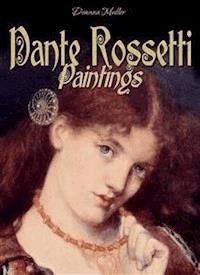
English writer and visual artist Gabriel Charles Dante Rossetti had a marked tendency for mysticism in a range of forms. He founded the Pre-Raphaelite Brotherhood in 1848 with William Holman Hunt and John Everett Millais, and was later to be the main inspiration for a second generation of artists and writers influenced by the movement, most notably William Morris and Edward Burne-Jones. His work also influenced the European Symbolists and was a major precursor of the Aesthetic movement. A faith in the option of communicating with the dead may have provoked him on his wife's death to have several of his love poems enclosed in her coffin. No matter what the fact of his poetry, it is by his painting quite than by his poems that Rossetti has a position as a enormous mystic, for despite his fondness for precise handling, most of his pictures are substantially of a mystical personality. They represent the scenes and incidents be said in dreams in a way comparable to the art of William Blake.
Das E-Book können Sie in Legimi-Apps oder einer beliebigen App lesen, die das folgende Format unterstützen:
Veröffentlichungsjahr: 2015
Ähnliche
















Dante Rossetti:Paintings
ByDeanna Muller
First Edition
Copyright © 2015 by Deanna Muller
*****
Dante Rossetti: Paintings
*****
Foreword
English writer and visual artist Gabriel Charles Dante Rossetti, usually recognized as Dante Gabriel Rossetti, was born inLondon. His father was an Italian who had established inEngland.
Even as a child, Rossetti showed imaginative ability, and in view of that was sent to learn drawing under John Sell Cotman, Soon later he entered the Royal Academy and in 1848, commenced working in the studio of Ford Madox Brown, for the duration of which time he began to demonstrate himself a painter of distinctive personality, while at the same time he complete his first essays in translating Italian writing into English and became well-known among his friends as a bard of extraordinary promise.
For the meantime, on the other hand, Rossetti was actually more involved in painting quite than writing, and shortly after leaving Brown's studio he brought about a outstanding event in the history of English painting by start the Pre-Raphaelite Brotherhood, a organization consisting of seven members, whose essential intend was to give exactly and accurately every separate thing figured in their pictures. Leaving his father's home in 1849, Rossetti went to reside atChatham PlaceinLondon, and throughout the next ten years his activity as a painter was colossal.
The year 1860 was outstanding one in his career, as it marked his marriage ceremony to Eleanor Siddal. The love between the couple was unusually obsessive. Nevertheless, Eleanor Siddal died in 1862. The loss of his wife preyed upon him steadily; he was suffering by sleeplessness and, in result, began to take sporadic doses of the drug chloral. Step by step, this practice developed into a habit, and it before long became clear that his death was about to happen unless he gave up his dependence to the drug.
He died April 9, 1882, and was interred in the cemetery there.
Rossetti had a marked tendency for mysticism in a range of forms. A faith in the option of communicating with the dead may have provoked him on his wife's death to have several of his love poems enclosed in her coffin. No matter what the fact of his poetry, it is by his painting quite than by his poems that Rossetti has a position as a enormous mystic, for despite his fondness for precise handling, most of his pictures are substantially of a mystical personality. They represent the scenes and incidents be said in dreams in a way comparable to the art of William Blake.
Paintings
The lady at the window, 1879, oil on canvas




