


9,99 €
Mehr erfahren.
- Herausgeber: 50Minutes.com
- Kategorie: Ratgeber
- Serie: Health & Wellbeing
- Sprache: Englisch
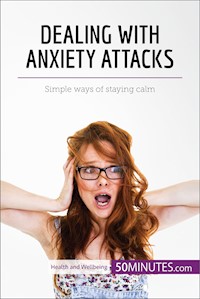
Change is only 50 minutes away! Find out everything you need to know about dealing with anxiety attacks with this straightforward guide.
Between 4 and 7% of the population suffers from anxiety, meaning a generalised sense of fear and nervousness that can lead to anxiety attacks if the sufferer is exposed to a particularly stressful situation. These attacks are characterised by a spiralling sensation of panic and impending doom, and leave victims feeling emotionally, mentally and physically exhausted. This guide provides a clear, simple explanation of a range of techniques that can reduce general levels of anxiety, thus making a fully-fledged anxiety attack less likely, as well as an introduction to a number of breathing exercises that can help you break out of an ongoing anxiety attack.
In just 50 minutes you will be able to:
• Understand the nature of anxiety attacks
• Identify the symptoms and causes of anxiety
• Discover ways you can alleviate anxiety and cut anxiety attacks short
ABOUT 50MINUTES.COM | HEALTH AND WELLBEING
The Health and Wellbeing series from the 50Minutes collection is perfect for anyone looking to be healthier and happier in their personal life. Our guides cover a range of topics, from social anxiety to getting ready for a new baby, and provide simple, practical advice and suggestions to allow you to reduce stress, strengthen your relationships and increase your wellbeing.
Das E-Book können Sie in Legimi-Apps oder einer beliebigen App lesen, die das folgende Format unterstützen:
Seitenzahl: 26
Veröffentlichungsjahr: 2018
Ähnliche












DEALING WITH ANXIETY ATTACKS
SIMPLE WAYS TO STAY CALM
Problem: anxiety attacks can arise unexpectedly, leaving their victim feeling paralysed. If they recur frequently, they can represent a serious problem.Aims: to reduce general anxiety levels and prevent anxiety attacks.FAQs:How can I help someone who is having an anxiety attack?Are stress and anxiety the same thing?Can anxiety be cured?How can anxiety affect our behaviour?Is avoiding situations that might trigger an anxiety attack a viable solution?What is the best way to combat anxiety attacks?Can anxiety be treated with medication?Anxiety should not be confused with stress, which usually stems from a specific source (an upcoming exam, a job interview, etc.), or temporary worries such as a minor illness. On the contrary, anxiety is a persistent, intense feeling of unease which may even feel like a physical weight lodged in your stomach or chest, and in extreme cases can cause anxiety attacks or panic attacks. It is generally defined as a generalised, irrational sense of fear. Anxiety attacks are a serious psychological ailment and can be treated in a number of different ways, depending on the individual in question and the severity of their condition.
People who suffer from anxiety experience irrational fear in the form of a general sense of unease. This condition affects between 4 and 7% of the population, but it is particularly difficult to diagnose due to the wide range of symptoms associated with it. In addition, certain symptoms of anxiety, such as stomach pains, breathing difficulties and attacks of tachycardia, can easily be mistaken for signs of a physical ailment. For this reason, in some cases it can take months or even years after the first symptoms appear for anxiety to be diagnosed correctly.
Anxiety attacks can prove life-ruining, as those who suffer from them often live in a permanent state of fear, constantly dreading the onset of another attack. Indeed, they often begin avoiding situations that could trigger an anxiety attack, and get trapped in a vicious circle wherein their attempts to avoid inducing a panic attack lead them to isolate themselves socially, which often causes them to fall into depression.
WHAT IS ANXIETY?
THE SYMPTOMS OF AN ANXIETY ATTACK
The first step in treating anxiety is to become aware of it, recognise the warning signs and identify the symptoms. It is also crucial to differentiate between stress, which is temporary, and anxiety, which is more permanent. While stress is generally caused by exceptional circumstances, anxiety is triggered by situations that we deal with on a regular basis. For this reason, it is important to be aware of the risk factors and situations which contribute to anxiety.
There are many different symptoms of anxiety, including heart palpitations, an accelerated heart rate, chest pains, breathing difficulties, hyperventilation, neck pains, headaches, dizziness, fainting spells, muscle tension, insomnia, restless sleep, nightmares, exhaustion, a dry mouth, the feeling of a heavy weight in your stomach or a lump in your throat, indigestion and reduced libido.




