


14,99 €
Mehr erfahren.
- Herausgeber: John Wiley & Sons
- Kategorie: Geisteswissenschaft
- Serie: Decolonizing the Curriculum
- Sprache: Englisch
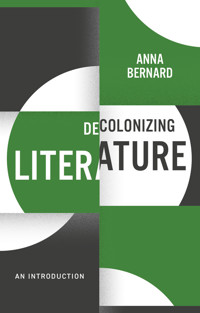
Recent efforts to diversify and decentre the literary canon taught at universities have been moderately successful. Yet this expansion of our reading lists is only the start of a broader decolonization of literary studies as a discipline; there is much left to be done. How can students and educators best participate in this urgent intellectual and political project? Anna Bernard argues that the decolonization of literary studies requires a change to not only what, but how, we read. In lively prose, she explores work that has already been done, both within and beyond the academy, and challenges readers to think about where we go from here. She suggests ways to recognize and respond to the political work that texts do, considering questions of language and translation, comparative reading, ideological argument, and genre in relation to the history of anticolonial struggle. Above all, Bernard shows that although we still have far to go, the work of decolonizing literary studies is already under way. Decolonizing Literature is a must-have resource for all those concerned by the development and future of the field.
Sie lesen das E-Book in den Legimi-Apps auf:
Seitenzahl: 326
Veröffentlichungsjahr: 2023
Ähnliche



















Table of Contents
Cover
Series Title
Title Page
Copyright Page
Acknowledgements
Introduction
Notes
1 Decolonization and Literature: A History
English literature’s imperial history
Postcolonial literary studies
Literature and decolonization
2 Unfinished Business: How Do We Decolonize Literature?
The changing canon and its limits
Where do we go from here?
Notes
3 Language and Translation: What Is ‘English’ Literature?
‘A new English’?: Anglophone literature in Africa and South Asia
‘I have no mother tongue’: anglophone literature in the Caribbean
Reading in translation: limitations and possibilities
Notes
4 ‘A Comparative Literature of Imperialism’: Reading Colonial and Anticolonial Texts Together
Writing back, writing forward
Contrapuntal reading
Notes
5 Telling a Collective Story: Literature and Anticolonial Struggle
Liberation struggles of the 1960s and 1970s: women’s autobiographies
Writing from contemporary social movements: renewing resistance in the twenty-first century
Notes
6 Decolonizing Genre: Anticolonial Understandings of Literary Craft
Genre, tradition, resistance
‘Language disassembled into glittering shards’: genre, experiment, and anticolonial critique
Notes
Conclusion
Notes
References
Index
End User License Agreement
Guide
Cover
Table of Contents
Begin Reading
Pages
ii
iii
iv
vi
vii
viii
1
2
3
4
5
6
7
8
9
10
11
12
13
14
15
16
17
18
19
20
21
22
23
24
25
26
27
28
29
30
31
32
33
34
35
36
37
38
39
40
41
42
43
44
45
46
47
48
49
50
51
52
53
54
55
56
57
58
59
60
61
62
63
64
65
66
67
68
69
70
71
72
73
74
75
76
76
77
78
79
80
81
82
83
84
85
86
87
88
89
90
91
92
93
94
95
96
97
98
99
100
101
102
103
104
105
106
107
108
109
110
111
112
113
114
115
116
117
118
119
120
121
122
123
124
125
126
127
128
129
130
131
132
133
134
135
136
137
138
139
140
141
142
143
144
145
146
147
148
149
150
151
152
153
154
155
160
161
162
163
164
165
166
167
168
169
170
171
172
173
174
175
176
177
178
179
180
181
182
183
184
185
186
187
188
189
190
191
192
193
194
195
196
197
198
Series Title
Decolonizing the Curriculum
Anna Bernard,
Decolonizing Literature
Ali Meghji,
Decolonizing Sociology
Robbie Shilliam,
Decolonizing Politics
Sarah A. Radcliffe,
Decolonizing Geography
Decolonizing Literature
An Introduction
Anna Bernard
polity
Copyright Page
Copyright © Anna Bernard 2023
The right of Anna Bernard to be identified as Author of this Work has been asserted in accordance with the UK Copyright, Designs and Patents Act 1988.
First published in 2023 by Polity Press
Polity Press
65 Bridge Street
Cambridge CB2 1UR, UK
Polity Press
111 River Street
Hoboken, NJ 07030, USA
All rights reserved. Except for the quotation of short passages for the purpose of criticism and review, no part of this publication may be reproduced, stored in a retrieval system or transmitted, in any form or by any means, electronic, mechanical, photocopying, recording or otherwise, without the prior permission of the publisher.
ISBN-13: 978-1-5095-4462-2
ISBN-13: 978-1-5095-4463-9 (pb)
A catalogue record for this book is available from the British Library.
Library of Congress Control Number: 2022951512
by Fakenham Prepress Solutions, Fakenham, Norfolk NR21 8NL
The publisher has used its best endeavours to ensure that the URLs for external websites referred to in this book are correct and active at the time of going to press. However, the publisher has no responsibility for the websites and can make no guarantee that a site will remain live or that the content is or will remain appropriate.
Every effort has been made to trace all copyright holders, but if any have been overlooked the publisher will be pleased to include any necessary credits in any subsequent reprint or edition.
For further information on Polity, visit our website: politybooks.com
Acknowledgements
I wrote this book during the global disaster of the COVID-19 pandemic and the personal adventure of the early years of my daughter’s life. It would never have been finished without the support of my brilliant and generous colleagues, students, friends, and family. Much of it began life in the classroom, and I’m especially grateful to my students in the Departments of Comparative Literature and English at King’s College London and the Department of English and Related Literature at the University of York, as well as to colleagues I’ve taught alongside, including Derek Attridge, David Attwell, Jane Elliott, Ziad Elmarsafy, Anup Grewal, Michelle Kelly, Tom Langley, Caroline Laurent, Justine McConnell, Javed Majeed, Sara Marzagora, Sebastian Matzner, Emilie Morin, Zoe Norridge, Ruvani Ranasinha, and Claire Westall. The members of the King’s Decolonising Working Group have been an enormous inspiration, especially Malak Abdelkhalek, Sudi Ali, Lily Beckett, Nicole Bilan, Nicholas Chua Bingkai, Kal Harris, Yawen Li, Sara Marzagora, Ishat Mirza, John Narayan, Lucia Pradella, AbdoolKarim Vakil, and Rebecca Walker. Special thanks also to my past and present doctoral students Haya Alfarhan, Dalal Alomair, Hannah Boast, Leila Essa, Isabelle Hesse, Faten Hussein, Lya Morales Hernández, Sinéad Murphy, Shadya Radhi, Nicola Robinson, Haifa Al-Rumaih, Michal Shalev, and Sutida Wimuttikosol, who are all doing their own superb work of decolonizing literature and other kinds of institutions.
Sincere thanks to Anthony Alessandrini, Amy De’Ath, Charles Forsdick, Madhu Krishnan, Omid Tofighian, and Jonathan Ward for sharing their work and ideas with me for this book. My thinking about how the work of decolonizing literary studies relates to collective struggles past and present has been invigorated by the commitment and insight of the members of the International Solidarity Action Research Network (isarn.org), especially Anthony Alessandrini and Jessica Stites Mor, and the Internationalism, Cosmopolitanism and the Politics of Solidarity research group at the London School of Economics, especially Ayça Çubukçu and Vidya Kumar. The scholarship of Timothy Brennan, Joe Cleary, Sharae Deckard, Ben Etherington, Priyamvada Gopal, Karima Laachir, Neil Lazarus, Caroline Rooney, Lyndsey Stonebridge, Jarad Zimbler, and the much-missed Barbara Harlow and Benita Parry has shaped how I think about the political work of literature.
I’m grateful to the Parents’ and Carers’ Fund at King’s College London for giving me the space I needed to start work on this book when I returned from parental leave, and to Marie Berry, Stephanie Mannion, Dot Pearce, and Paul Readman for making it possible for me to do the rest of my job and still keep my spirits up. At Polity, Ellen MacDonald-Kramer, Ian Malcolm, and Pascal Porcheron provided excellent editorial guidance and support, and the anonymous reviewers helped make this a better book. Last but most of all, thanks to my wonderful family: Jim Bernard, Susan Lacy, Sara Bernard, and especially Mervyn, Gina, and Sam Love, who are everything.
Introduction
Decolonization must offer a language of possibility, a way out of colonialism.
Linda Tuhiwai Smith (2012 [1999])
Decolonising the curriculum is a hot topic now, so for now, we have the moment. The moment is ours if we hold our nerve, but if we falter, the moment is lost, as are we.
Foluke Adebisi (2019)
In April 2015, after a month of demonstrations, the University of Cape Town gave in to its students’ demands and removed a statue of the British colonial administrator Cecil Rhodes from the campus. The visibility and success of this campaign – which also took place online, using the hashtag #RhodesMustFall – inspired student activists across South Africa and beyond, including at the University of Oxford, where students began a similarly high-profile campaign to remove another Rhodes statue from Oriel College. As Achille Mbembe observed at the time, the UCT activists focused on the Rhodes statue as an emblem of the racist violence and destructiveness of British colonial rule:
Cecil Rhodes belonged to the race of men who were convinced that to be black is a liability. During his time and life in Southern Africa, he used his considerable power – political and financial – to make black people all over Southern Africa pay a bloody price for his beliefs. … [B]ringing Rhodes’ statue down is one of the many legitimate ways in which we can, today in South Africa, demythologize that history and put it to rest. (2015, pp. 2–3)
Mbembe, like the student activists and the contemporary Black Lives Matter movement, is making the point that statues, street names, and commemorative plaques are not innocuous traces of a long-vanished empire. They represent a system of institutionalized white supremacy that took hold during centuries of European colonial rule in Africa, Asia, and the Americas and that continues to structure our economic, social, political, and cultural lives. These movements are united in their belief that the removal of such symbols is only the first step in a much longer and more difficult process of decolonization, which demands that the formal and informal structures that maintain the dominance of the former colonial powers and the prestige of whiteness are abolished, wherever they are found.
The recent student movements have also called for the decolonization of the curriculum, which is a key form in which colonial structures of thought are perpetuated in universities. While this means different things in different disciplines, there is a broad consensus among the students and teachers who are involved in this effort that, in order to begin to decolonize our curricula, we must identify and undo the colonial ideas and assumptions that underpin our fields. This means uncovering the colonial history of our disciplines and confronting the Eurocentrism of our methodologies, objects of study, citation practices, programme structures, and syllabi. Literature students have been some of the most vocal participants in these campaigns. These students’ demands are not limited to the inclusion of more Black, Brown, Indigenous, women, LGBTQ+, disabled, and working-class authors on their reading lists; they also seek fundamental changes to how literature students are taught to read and what they are encouraged to value. As Cambridge English students put it in an open letter to their faculty, this ‘means challenging the pervasive notion that reading texts in the light of gender, race, ability, class and so on is to crush them under the weight of subjectivity, dismantling the idea that white and male is the norm, unmarked by identity’ (Fly Cambridge, 2017).
Decolonizing Literature takes its cue from such interventions, arguing that the decolonization of literary studies requires a change to not only what, but how, we read. Along with the decentring of historically dominant perspectives, this might mean a renewed attention to authors’ efforts to document socio-economic conditions or persuade the reader of a particular point of view; a broader definition of literary experimentation, beyond its tacit identification with Western modernism and postmodernism; more developed strategies for reading texts in translation or in postcolonial and regional versions of European imperial languages; and more in-depth analysis of works that explicitly align themselves with anticolonial political movements or seek to imagine genuinely postcolonial futures. This book offers literature students and educators some suggestions for beginning to read in these ways, and thus to unlearn the still prevalent belief that a text’s aesthetic properties can be considered separately from its politics (Jameson, 1986; Bernard, 2013, pp. 22–8).
Literature is already a high-profile site of debate about disciplinary decolonization, and some important gains have been made in the last few decades. This is due mainly to the influence of postcolonial studies, which gained an institutional footing in English literature departments in the 1980s and 1990s, as I discuss in chapter 1. Scholars aligned with this field set out to expose the imperial foundations of the idea of ‘English literature’ and to demonstrate its historical role in legitimizing the British empire. They also sought to remake the English literary canon by turning to texts written in English by authors from former British colonies and from metropolitan ethnic minority backgrounds. (By ‘metropolitan’, I mean countries that were imperial centres and still command disproportionate wealth and power, such as Britain and France, or the United States, whose ongoing global dominance means it is better described as a neo-imperial centre.) Over time, this challenge to the traditional canon has expanded to include literature in translation from other languages and from the rest of the formerly colonized world, including the Middle East/North Africa and Latin America, leading to postcolonial literature’s reformulation as ‘world literature’ and increasingly blurring the lines between English departments and departments of comparative literature and modern languages. Meanwhile, similar attempts to interrogate the origins of the discipline and tackle its Eurocentrism have taken place in European literature studies, particularly in French departments, and in Black, Asian (especially Asian-American), Latinx, and Indigenous studies.
These efforts to diversify and decentre the canon have been moderately successful. As Neil Lazarus argued two decades ago, ‘[t]oday courses in post-1945 “English” literature that ignore “minority” or “postcolonial” writers and the issues of decolonization, migration, and diaspora are simply anachronistic’ (2004, p. 14). In metropolitan anglophone universities, there are now very few literature departments that do not include at least one specialist in postcolonial or world literature, and most literature students will encounter some work by non-European or metropolitan ethnic minority writers and be encouraged to read canonical texts in relation to the history of empire. In some institutions, particularly in the United States, this transformation has gone even further, so that, in the post-1945 curriculum, modules that focus on texts by writers of colour, women, and/or queer writers are now in the majority. (For more discussion of current trends in university English literature teaching, see chapter 2.) But this does not mean that literary studies has been decolonized. Conventional historical periodization and ‘great authors’ courses continue to underpin the curriculum in many departments, even those with more diverse post-1945 coverage. Domestic ethnic minority writing is also far better represented in most English departments than writing from the rest of the world, which tends to be reserved for the fewer, smaller, and less well-resourced comparative literature and modern languages departments. Moreover, despite increased attention to the relationship between literature and political movements, modules that use words such as ‘justice’, ‘protest’, ‘solidarity’, or ‘decolonization’ in their titles or descriptions remain rare in comparison to modules organized according to group identity (African-American writing, Australian Indigenous writing, etc.). The limitations of such reforms have led scholars such as Claire Westall (2015, p. 18) to argue that postcolonial criticism allowed the wider discipline of literary studies to rehabilitate itself as a post-imperial and multicultural discipline simply by incorporating a restricted amount of ‘new’ material, without having to significantly change the makeup of the ‘core’ canon or the assumptions brought to bear on literary texts (see also Etherington and Zimbler, 2021, p. 228).
As Kavita Bhanot reminds us, such ‘quick-fixes to the “diversity” problem … ensur[e] that literature remains in the same circles of power, within one class and caste … [W]hite literature is held up as the “real” literature that we all need to aspire towards’ (2015). Bhanot is referring to the treatment of British Black and Asian writers in the British publishing industry, but her critique also applies to university literature education and research. Like the removal of the Rhodes statues, diversification of our reading lists is the start of decolonizing our discipline, not its end point. Indeed, to describe this work as decolonizing is to name decolonization as an unfinished project: it is ‘not a destination’ but ‘a way of being’ (Adebisi, 2019). We may not yet be able to envision a decolonized world, but we can develop ways of reading and thinking that help us imagine a ‘way out of colonialism’, as Linda Tuhiwai Smith puts it in the first epigraph to this chapter. Literature students and scholars are well placed for this task, since literary texts play a crucial role in imaginatively connecting geographically and historically distant struggles and in witnessing, instigating, and envisioning historical change (Forsdick, 2018, pp. 701–3). As readers and critics, we must take these properties of our object of study seriously and bring them to bear on what we decide to read as well as how we interpret it.
In keeping with an understanding of decolonization as an ‘unfulfilled promise’ and a ‘utopian aspiration’ (Wenzel, 2017), this book defines decolonization as both a historical phenomenon and a political practice.1 Although I discuss texts that have emerged from a range of twentieth- and twenty-first-century contexts, my key point of reference is the great wave of mid-twentieth-century struggles in Asia and Africa for independence from European rule. The national liberation movements of this period saw themselves as engaged in a common political project, as their efforts to develop a ‘Third World’ alternative to Euro–US imperialism and the Soviet Union show (Lee, 2010, p. 15). Today, that historical moment of decolonization seems distant: the imperial restoration of the 1970s and 1980s, facilitated by US military interventions against resistant postcolonial states, has made it hard to imagine the outcome of anticolonial revolution as anything but tragic (Lazarus, 2013, pp. 327–8; Scott, 2004). However, the idea of decolonization retains its urgency as a political outlook that takes inspiration from these struggles and seeks to continue the work they started. Ongoing practices of military invasion, economic exploitation, environmental destruction, land seizure, and political marginalization of one group or state by another are just some of the ways in which the ‘unbroken history’ of capitalist imperialism continues in the present. Crucially, however, the ‘counter-history of resistance’ to these violent appropriations continues alongside it (Lazarus, 2013, p. 337).
This understanding of decolonization as carrying on from the work of previous anticolonial resistance movements is distinct from the influential notion of the ‘decolonial’ as a challenge to the epistemology of Western colonial modernity. The concept of decoloniality comes from Latin American studies, particularly the work of the Argentinian theorist Walter Mignolo (2011; Mignolo and Walsh, 2018), who draws on the idea of the ‘coloniality of power’ proposed by the Peruvian sociologist Aníbal Quijano (2000). This approach emphasizes the inseparability of capitalist modernity from colonialism and Eurocentrism. In response, decolonial scholarship seeks to challenge the ongoing privileging of European knowledge and recover non-European intellectual and cultural histories and experience, moving beyond the anticolonial movements’ perceived emphasis on political independence as the end point of decolonization.
The ideas and aims of decolonial scholarship are in keeping with much of my argument in this book. However, I do not see ‘decoloniality’ and ‘decolonization’ as synonymous. As Priyamvada Gopal and Stefan Helgesson both argue, Mignolo’s concept of decoloniality problematically posits a radical difference between European and non-European ‘categories of thought’, ahistorically construing these formations as static and discrete instead of evolving and entangled (Gopal, 2019, pp. 79–85; Helgesson, 2022, pp. 166–70). It also overlooks anticolonial liberation thinkers’ own emphases on the unfulfilled revolutionary promises of liberalism and socialism (Gopal, 2019, p. 83) and their ‘complex dialogue’ with ‘“Western” thinking’ (Helgesson, 2022, p. 4). Far from repudiating ideas of universality or human commonality as intrinsically ‘European’, members of many anticolonial movements fought to expand and reimagine these concepts (Gopal, 2019, pp. 83–4; see also Rivera Cusicanqui, 2020; Getachew and Mantena, 2021, p. 371). Like Gopal, instead of ‘decolonial’ I prefer the term ‘anticolonial’, which for me indicates the aspiration towards a common anti-imperial liberationist project carried out across many different sites of resistance, including the metropolitan centres.2 The oppositional emphasis of the term ‘anticolonial’ also foregrounds the need to take sides in an ongoing struggle.
For those who benefit from the current system by occupying a position of racial, national, class, gender, and/or other form of privilege within it, it is essential to unlearn this privilege to take part in the work of decolonization. (The need to unlearn pertains in a different way to those without such privilege whose education has nevertheless promoted an internalized white supremacy, as Ngũgĩ wa Thiong’o argues in his celebrated book Decolonising the Mind, discussed in chapters 1 and 3.) Decolonizing Literature takes the position that this unlearning – figured, like decolonizing, as an ongoing project – requires us to consider how we know what we know, how we learned it, and how we might challenge or undo it. It also requires that we read the work of writers and thinkers who have opposed capitalist imperialism and sought to represent the worldviews and lived realities of its victims and adversaries. As Ariella Azoulay puts it, ‘Unlearning with companions means no longer privileging the accounts of imperial agents, scholars included, and instead retrieving other modalities of sharing the world’ (2019, p. 16). Decolonizing Literature suggests ways that literature students and scholars might embark on this project of unlearning by laying out some of the work that has already been done and asking readers to think about where we go from here.
Chapter 1 summarizes colonialism’s impact on the discipline and outlines the work of key figures in postcolonial literary studies. Alongside this institutional history, the chapter also introduces landmark interventions in the decolonization of literary studies by explicitly anticolonial writers and scholars. Chapter 2 encourages readers to reflect on their own experiences of literary study and to think about how they might continue the work of decolonizing the university literature curriculum. Chapters 3 to 6 introduce four key ways of decolonizing literary studies – attention to language, comparative and contrapuntal reading, reading for political argument, and attention to genre – accompanied by discussions of literary and critical texts that illustrate and support each idea. The conclusion reiterates the need to transform both what and how we read, connecting this demand to current global crises and to the reader’s own responsibilities as a reader and critic.
The selection of texts and themes is most directly relevant to the decolonization of English literature departments in the metropolitan anglophone academy, reflecting my own academic formation and my institutional location in English and Comparative Literature departments in a British university. However, the alternative principles for choosing and interpreting texts that I suggest challenge more widely held assumptions about the work of literature and literary critics, which is why the book’s title refers to ‘literature’ rather than ‘English literature’. The coverage is far from comprehensive: Caribbean, African, and Arab writers are better represented than writers from the rest of the world, and I pay more attention to issues of race, nation, and political belief than class, gender, sexuality, or disability. I also engage much more with texts in English and English translation than in other languages, though where possible I have consulted the original versions of texts first published in Spanish, French, or Arabic. I hope that the book will encourage readers with interests in other literatures, languages, and topics to think about approaches that might be most relevant for their areas of focus.
As I wrote this book, the risk of co-opting the struggle to decolonize was always on my mind. The idea of decolonization has acquired considerable market value in recent years, as the profusion of academic books with ‘decolonizing’ in the title (including this one) suggests. As Madhu Krishnan (2019) has observed, the cachet that is now associated with this term has allowed it to be appropriated by those who seek to maintain their own institutional standing while silencing the voices of those who have been on the front lines of decolonizing work, who are often Black or Brown, women, and/or precariously employed academics and students. As a white academic with an open-ended university position, I am keenly aware that I benefit from the structures that this book seeks to dislodge. I have sought throughout to foreground the work of writers and thinkers who have led the way in political and cultural decolonization struggles, many of them from Black, Indigenous, Arab, Latinx, and Asian metropolitan and non-metropolitan backgrounds. The book thus seeks to respond to Foluke Adebisi’s invitation, in the second epigraph to this chapter, to use decolonization’s current status as a ‘hot topic’ to help make the changes that we want to see in our institutions and our disciplines. In order to decolonize literary studies, I contend, we must take the political work of literature seriously. We must grapple with texts that overtly challenge imperialism and capitalism and reject the artificial separation of aesthetics from politics in our interpretations of all texts. We must also remember that decolonization is not a top-down initiative but a collaborative process. This work begins by putting our own locations and sources of knowledge into dialogue with others and by ensuring that everything is up for debate, especially the question of what makes a ‘good’ work of literature. My hope is that this book will give its readers some resources and ideas for participating in this urgent intellectual and political project.
Notes
1
This is a more expansive definition than Tuck and Yang’s influential – and controversial – proposal that the term ‘decolonization’ refers only to the return of colonized land, and that it should not be used as a ‘metaphor’ for any other social justice projects (2012, pp. 1–10). Gopal (2021, p. 885) rightly points out that their intervention applies specifically to North American settler-colonial contexts but is less helpful for confronting other sites of colonization.
2
In this book, I use both ‘imperialism’ and ‘colonialism’ to name formal practices of European rule over non-European locations, and both ‘anti-imperialism’ and ‘anticolonialism’ to name theories and practices of resistance to it. It can be useful to think of ‘colonialism’ as describing the practice of political and military domination and ‘imperialism’ as the expansionist – and, in the modern period, capitalist – ideology that underpins it.
1 Decolonization and Literature: A History
This chapter outlines the disciplinary history of English literature, setting the key ideas of postcolonial literary studies alongside other critical histories of the discipline. It begins with a summary of English literature’s imperial-nationalist origins, drawing on accounts by Gauri Viswanathan and Terry Eagleton. It then offers a brief overview of the contributions of the figures who are most closely associated with the early years of postcolonial studies – Edward Said, Gayatri Chakravorty Spivak, and Homi Bhabha – as well as subsequent developments and critiques. Alongside this institutional history, the chapter introduces landmark interventions in the decolonization of literary studies by the explicitly anticolonial theorists Aimé Césaire, Frantz Fanon, Ngũgĩ wa Thiong’o, and Barbara Harlow. It focuses on the ways in which these thinkers help conceive the inseparability of what and how we read, as well as their claims for how literature can help us to imagine a decolonized future.
English literature’s imperial history
The history of the discipline of English literature cannot be studied in isolation from the history of the British empire. Gauri Viswanathan, in her path-breaking book Masks of Conquest (first published 1989), makes this claim explicit. She contends that, rather than being exported from Britain to its colonies, in fact English literature was first institutionalized as an academic subject in nineteenth-century British colonial India, at a time when the literary curriculum in England was still focused on classical Greece and Rome (Viswanathan, 2014 [1989], p. 3). This development came about because British colonial administrators were deeply concerned about the prospect of rebellion by the colonized Indian population, and they saw literature as a means of imaginative and social control that was more effective than direct military force (ibid., pp. 10–11). By presenting English literature as a superior source of knowledge, civilization, and authority, the British colonial education system not only construed Indian culture and knowledge as inferior; it also masked the ‘sordid history’ of British colonial rule, transforming the imagined figure of the Englishman from ‘the rapacious, exploitative, and ruthless actor of history into the reflective subject of literature’ (ibid., pp. 20–1). When English literature subsequently became established as a discipline in Britain, it similarly masked the violent and unequal incorporation of Scotland, Wales, and Ireland (later Northern Ireland) within the United Kingdom and promoted the idea of Britain as an imperial nation. As Michael Gardiner has argued, in the absence of a formal UK constitution, English literature was ‘charged with the ideological task of describing a common ground for the “nation”, understood in terms of ethnicity and empire’ (2013, p. 2; see also Court, 1992, p. 14). The discipline bolstered the equation of Englishness with whiteness; erased Britain’s own cultural heterogeneity and multi-national character; and obscured English literature’s interdependence and exchange with literatures from across the world, including the rest of Europe and the British colonies.
Even if English literature instruction was not as homogeneous or effective in disseminating these ideologies as some of its practitioners imagined (cf. Court, 1992, pp. 14–15; Graff, 2007, pp. 12–13; Knights, 2017, p. 35), the discipline cannot be divorced from this history. Even today, ideas of British sovereignty and cultural superiority continue to influence English literary education, at both school and university. For example, at the time of writing, UK government guidance for the General Certificate of Secondary Education (GCSE) English Literature examination – which is compulsory for the majority of secondary school students in England, Wales, and Northern Ireland – requires that students learn to ‘appreciate the depth and power of the English literary heritage’ (AQA Education, 2021, p. 15). Preparation for the exam must include Shakespeare, a ‘19th century novel’, and one of twelve set works of modern drama and prose (the current list includes only two texts by British writers of colour, Kazuo Ishiguro and Meera Syal). Students’ literary education is thus restricted to texts written in English in Britain and to a particular list of canonized writers and forms, described as ‘the best that has been thought and written’ (ibid., p. 15). There is no requirement that students read texts by Black or other authors of colour or from the rest of the world (cf. Sundorph, 2020), and no justification is given for the selection of these particular texts; the idea of ‘English literary heritage’ is presented as self-explanatory.
The discipline’s imperial legacy also persists in less obvious ways. For instance, a longstanding principle of English literary studies is the notion of aesthetic autonomy, which can be summarized as the idea that the formal and stylistic qualities of a work reflect the artistic innovations of its creator, rather than the historical context in which it was produced or the author’s own background or politics. This idea remains so ingrained in the discipline (despite repeated challenges from Marxist, historicist, and postcolonial critics) that it seems like common sense to many readers. However, in his 1983 work Literary Theory: An Introduction, Terry Eagleton argues that the idea of aesthetic autonomy has a history: it can be traced to the eighteenth-century British Romantics’ critical response to the rise of industrial capitalism, which was made possible by Britain’s appropriation of raw materials and cheap labour – including enslaved labour – from its colonies. The Romantics presented the creative imagination as a form of resistance to the utilitarianism of the market and art as a radical political force. Yet, by emphasizing art’s autonomy from market forces, the Romantics perhaps inadvertently facilitated the idea of a divide between aesthetics and politics, relinquishing the social role of art in favour of the notion of the freedom of the imagination. The association of art with individual freedom and creativity gained ground in the nineteenth and early twentieth centuries. In literary studies and popular literary culture, this gave rise to the idea that literature is an expression of ‘universal’ human values (narrowly imagined) rather than being profoundly entwined with the historical and political circumstances in which it is written (Eagleton, 1996, pp. 16–23).
The English literary canon that is outlined in the British GCSE curriculum, and that still comprises the ‘core’ curriculum in some university English literature departments, is underpinned by these contradictory claims to national representativeness and universal relevance. (Readers are encouraged to engage further with the idea of the canon in chapter 2.) The curriculum established by F. R. and Q. D. Leavis at the University of Cambridge in the 1930s includes names that remain familiar to many English literature students: Chaucer, Shakespeare, Blake, Wordsworth, Keats, Austen, Henry James, T. S. Eliot, D. H. Lawrence. The Leavises saw these figures as essentially English writers (even though James and Eliot grew up in the United States) whose work was also universally significant, because it transmitted a ‘sensibility’ that represented the highest expression of human ingenuity and artistic freedom (Eagleton, 1996, pp. 28–32).
It would be bad enough if this depoliticized and parochial understanding of what counts as good literature were restricted to literary education in Britain. But, as Ngũgĩ wa Thiong’o points out in his account of university literature education in post-Second World War Kenya, the colonial education system promoted this narrow view far more widely:
These writers, who had the sharpest and most penetrating observations on the European bourgeois culture, were often taught as if their only concern was with the universal themes of love, fear, birth and death. Sometimes their greatness was presented as one more English gift to the world alongside the bible and the needle. … The ‘Great Tradition’ of English literature was the great tradition of ‘literature’! (Ngũgĩ, 1986, p. 91)
Ngũgĩ’s critique recalls and extends Viswanathan’s history of the discipline. If English literature was first developed as an academic subject to maintain social control in nineteenth-century colonial India, it was then exported to educational settings in other British colonies to play a similar role, and it persisted in this role even after British imperialism had formally ended.
Ngũgĩ is not suggesting that Kenyan readers have no use for Chaucer and Eliot; rather, he is making the point that these writers emerged from a particular historical context and should be read accordingly. Part of that context is their use within Britain’s imperial apparatus. As Viswanathan puts it:
I am not advocating that today’s students must close their English books without further ado because those works were instrumental in holding others in subjugation … [However,] we can no longer afford to regard the uses to which texts were put in the service of British imperialism as extraneous to the ways these texts are to be read. (2014, p. 169)
The decolonization of literary studies must include a full awareness and reckoning with this disciplinary history. This does not mean that we should stop reading texts from the traditional English (or European) canon altogether, not least because to do so would mean skipping over a crucial stage of the work of decolonizing. But we must situate these texts in relation to their historical contexts and not automatically privilege them over other texts in judgements of value or importance. Decolonizing our discipline also requires that we challenge our assumptions about what makes a work of literature ‘great’ and familiarize ourselves with a wide range of literary traditions and approaches to literary criticism.
Summary
The discipline of English literature was part of the British imperial effort to ensure social control and political hegemony in the colonies and Britain itself in the nineteenth and twentieth centuries (Viswanathan, 2014; Gardiner, 2013).The texts that make up the traditional English literary canon, as well as conventional critical approaches to these works, continue to influence the way that literature is studied in many schools and universities. For instance, the notion of ‘English literary heritage’ and the idea of aesthetic autonomy (Eagleton, 1996) are bound up in English literature’s imperial history.The impact of the British colonial education system persisted even after the formal end of British colonialism, when the English literary canon continued to be taught as the sum total of ‘great literature’ (Ngũgĩ, 1986).A commitment to decolonizing literary studies does not mean that we must stop reading the English literary canon. However, it does mean that we must read canonical texts in relation to their use in the service of British imperialism, and also that we read widely in other literary and critical traditions.Postcolonial literary studies
The scholarship I have been discussing was first published in the 1980s, when postcolonial studies was just starting to gain a foothold in English literature departments. As I observed in the Introduction, the emergence of this field has had a significant impact on the way that literature is studied and taught, especially in metropolitan anglophone universities but also in schools and universities across the world. Much of what Viswanathan, Eagleton, and Ngũgĩ argue no longer seems controversial to most literature students and scholars. Writers such as Jane Austen and Charles Dickens are regularly read in relation to the history of slavery, colonial settlement, and imperial ideology, and courses in postcolonial or world literature, though not always compulsory, are part of nearly every undergraduate literature curriculum, not only in English departments but also in French and other historically European literature programmes. The history of this field should therefore be understood as an important, if incomplete, effort to decolonize literary studies.
The three scholars that are most closely associated with the rise of postcolonial literary studies are Edward Said, Gayatri Chakravorty Spivak, and Homi Bhabha. These figures share a number of biographical details: they were born in former British colonies (in Jerusalem, Calcutta, and Bombay, respectively) in the 1930s and 1940s; they spent most of their careers in prestigious literature departments in the United States (Said died in 2003, but at the time of writing Spivak and Bhabha still teach at Columbia and Harvard, respectively); and they wrote from the 1970s onwards about literary criticism’s shortcomings and blind spots in relation to the history of empire. However, while the work of these three figures has indisputably been extremely influential in this field, there are some significant differences between their interventions.
Edward Said’s Orientalism




