


45,99 €
Mehr erfahren.
- Herausgeber: John Wiley & Sons
- Kategorie: Fachliteratur
- Serie: At a Glance (Dentistry)
- Sprache: Englisch
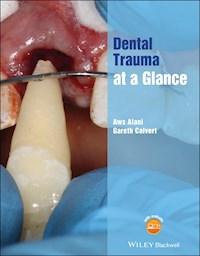
Dental Trauma at a Glance
The market‐leading at a Glance series is popular among students and newly qualified practitioners for its concise and simple approach and excellent illustrations.
Each bite‐sized chapter is covered in a double‐page spread with clear, easy‐to‐follow diagrams, supported by succinct explanatory text.
Covering a wide range of topics, books in the at a Glance series are ideal as introductory texts for teaching, learning and revision and are useful throughout university and beyond.
Everything you need to know about Dental Trauma … at a Glance!
Written in a short and concise manner, Dental Trauma at a Glance is a practical reference that contains essential information on the safe and effective clinical management of acute adult dental trauma injuries.
The book addresses the numerous types of adult dental injuries and contains guidance on how the correct identification and treatment of these injuries can be time sensitive. Filled with helpful illustrations and photographs, the text is formatted in a step-by-step manner for the reader to arrive at the correct diagnosis and the most up-to-date management for safe and optimum patient care.
- Provides the most contemporary must-have information for the clinical management of acute adult dental trauma
- Its format is quick and easy to use
- Offers a highly illustrated text with quality clinical photographs to aid with learning and revision
- Provides an understanding of traumatic adult dental injuries, their healing and an insight into their longer-term sequelae
A new addition to the popular at a Glance series, Dental Trauma at a Glance is an indispensable hands-on guide for dental students and general dental practitioners.
Accompanied by a companion website at www.wiley.com/go/alani/dental_trauma featuring:
- Multiple-choice questions to aid learning
- All figures from the book as downloadable PowerPoint slides
Sie lesen das E-Book in den Legimi-Apps auf:
Seitenzahl: 195
Veröffentlichungsjahr: 2021
Ähnliche



















Table of Contents
Cover
Title Page
Copyright Page
Dedication Page
Foreword
Preface
About the companion website
1 Risk factors for dental trauma
Introduction
Oral predisposing factors
Unintentional traumatic dental injuries
Socioeconomic factors
Human behaviour
Learning difficulties or physical limitations
Intentional traumatic dental injuries
Iatrogenic injuries
Road traffic accidents
2 Prevention of dental trauma
Introduction
Mouth guards
Helmet
Seat belts
Overjet reduction
Past experience
3 Essential armamentarium
Introduction
Team approach
Equipment for diagnosis
Equipment for repositioning teeth
Equipment for tooth stabilisation
Equipment for tooth restoration
Equipment for pulp management
Equipment for endodontic treatment
Equipment for review and splint removal
4 Examination of dental trauma
Introduction
Questions to ask
Clinical examination
Clinical tests
Pulp testing
Radiographic examination
Photographs
Signs and symptoms that warrant a referral to a maxillofacial unit
5 Infraction
Definition
Aetiology
Clinical examination
Pulp test findings
Radiographic findings
Implications
Management
Follow‐up
Prognosis
6 Enamel fracture
Definition
Aetiology
Clinical examination
Pulp test findings
Radiographic findings
Implications
Management options
Follow‐up
Prognosis
7 Enamel–dentine fracture
Definition
Aetiology
Clinical examination
Pulp test findings
Radiographic findings
Implications
Management options
Follow‐up
Prognosis
8 Enamel–dentine–pulp fracture
Definition
Aetiology
Clinical examination
Pulp test findings
Radiographic findings
Implications
Management
Follow‐up
Prognosis
9 Crown–root fracture
Definition
Aetiology
Clinical examination
Pulp test findings
Radiographic findings
Implications
Emergency management
Definitive treatment options
Follow‐up
Prognosis at one year
10 Crown–root fracture with pulp involvement
Definition
Aetiology
Clinical examination
Pulp test findings
Radiographic findings
Implications
Emergency management
Follow‐up
Definitive treatment options
Prognosis at one year
11 Root fracture
Definition
Aetiology
Clinical examination
Pulp test findings
Radiographic findings
Implications
Management options
Follow‐up
Prognosis at one year
12 Alveolar process fracture
Definition
Aetiology
Clinical examination
Pulp test findings
Radiographic findings
Implications
Management options
Complications
Follow‐up
Prognosis at one year
13 Concussion
Definition
Aetiology
Clinical examination
Pulp test findings
Radiographic findings
Implications
Management
Follow‐up
Prognosis at one year
14 Subluxation
Definition
Aetiology
Clinical examination
Pulp test findings
Radiographic findings
Implications
Management
Follow‐up
Prognosis at one year
15 Extrusive luxation
Definition
Aetiology
Clinical examination
Pulp test findings
Radiographic findings
Implications
Management
Follow‐up
Future management
Prognosis at one year
16 Intrusive luxation
Definition
Aetiology
Clinical examination
Pulp test findings
Radiographic findings
Implications
Follow‐up
Future management
Prognosis at one year
17 Lateral luxation
Definition
Aetiology
Clinical examination
Pulp test findings
Radiographic findings
Implications
Management
Follow‐up
Prognosis at one year
18 Features of luxation injuries and principles of repositioning
Features of a luxation injury
Crushing injuries
Separation injuries
Management
Repositioning
Sequalae
19 Avulsion of a tooth with a closed apex
Definition
Aetiology
Implications
Emergency advice for patients
Clinical examination
Radiographic findings
Management options
Post‐operative care
Follow up
Prognosis at one year with extra alveolar dry time less than 60 minutes
20 Principles of splinting
Indications for splinting
Contraindications
Ideal properties of a flexible splint
Alternatives
Complications of splinting
Step‐by‐step guide to splinting
21 Post‐operative instructions
Pain relief
Swelling
Soft diet
Oral hygiene
Lip balm
Antibiotics
Tetanus
Splint loosening
Prevention
Follow up
22 Follow‐up and splint removal
Follow‐up
Clinical examination
Pulp testing
Radiographic examination
Splint removal
Pulp healing
Periodontal healing
Alveolar healing
23 Indications for endodontic treatment
Definition
Symptoms
Clinical examination
Special tests
Radiographs
Reaching a diagnosis
Special considerations
24 Sclerosis
Definition
Aetiology
Prevalence
Clinical examination
Pulp test findings
Radiographic findings
Implications
Management
Prognosis
25 Discolouration
Definition
Aetiology
Intrinsic
Extrinsic
Implications
26 Management of the immature root
Acute management
Delayed management
Clinical examination
Radiographic examination
Establishment of the working length
Preparation of the open apex
Canal dressing
Obturation
27 Root resorption – external replacement
Definition
Aetiology
Prevalence
Clinical examination
Pulp test findings
Radiographic findings
Implications
Management
Follow‐up
Prognosis
28 Root resorption – external cervical
Definition
Aetiology
Prevalence
Clinical examination
Pulp test findings
Radiographic findings
Implications
Management options
Follow up
Prognosis
29 Root resorption – internal inflammatory
Definition
Aetiology
Prevalence
Clinical examination
Pulp test findings
Radiographic findings
Implications
Management options
Follow up
Prognosis
30 Tooth replacement options
Space closure
Factors to consider for a removable prosthesis
Factors to consider for resin bonded bridge provision
Factors to consider for implant placement
Ongoing maintenance
31 Autotransplantation
Definition
Indication
Benefits
Multidisciplinary team approach
Assessment
Predictive factors
Unfavourable outcomes
Maintenance of the autotransplanted tooth
32 The role of orthodontics
Immediate post dental trauma
Definitive treatment options
Risks associated with orthodontics
Appendix A: Splinting times and follow up intervals for fracture and displacement injuries in the adult dentition
Appendix B: Management of dental trauma in the primary dentition
References
Index
End User License Agreement
List of Illustrations
Chapter 1
Figure 1.1 Demonstration of a 6mm overjet.
Figure 1.2 Lower lip trapped behind the maxillary incisor.
Figure 1.3 A heavily restored dentition following dental trauma with numerou...
Figure 1.4 Dental trauma caused by sporting activities, in this case boxing....
Figure 1.5 Dental trauma caused by a road traffic accident presenting 2 year...
Chapter 2
Figure 2.1 An example of a ‘boil in the bag’ mouth guard.
Figure 2.2 A correctly extended maxillary mouth guard covering the teeth and...
Figure 2.3 An incorrectly extended maxillary mouth guard not covering the so...
Figure 2.4 Helmets for bike travel can reduce injury severity.
Figure 2.5 Orthodontics reducing an increased overjet.
Chapter 3
Figure 3.1 Radiograph (phosphor plates) sizes for dental trauma.
Figure 3.2 Basic equipment for repositioning and splinting traumatised teeth...
Figure 3.3 Extended range of dental equipment for splinting and endodontics....
Figure 3.4 Pulp testing equipment. (a) Electric pulp test (b) Cold test.
Figure 3.5 Tungsten carbide bur for removing composite during splint removal...
Chapter 4
Figure 4.1 Extra oral examination noting (a) bilateral swelling and bruising...
Figure 4.2 (a) Soft tissue trauma of the upper lip and palate (b) exposed bo...
Figure 4.3 Palpation over the apex of the intruded lateral incisor would ide...
Figure 4.4 Palatally displaced maxillary incisors resulting in open bite on ...
Figure 4.5 (a) Periapical radiograph of the maxillary left central incisor s...
Chapter 5
Figure 5.1 Illustration of an infraction injury.
Figure 5.2 Clinical appearance of infraction or craze lines in the enamel (a...
Figure 5.3 (a) Light cure illumination of an infraction injury to the maxill...
Figure 5.4 Periapical radiograph of an infraction injury.
Figure 5.5 Infraction lines with lower left lateral incisor but associated e...
Chapter 6
Figure 6.1 Illustration of an enamel fracture.
Figure 6.2 Clinical appearance of an enamel fracture of the maxillary left c...
Figure 6.3 Periapical radiograph showing an enamel fracture of the (a) maxil...
Figure 6.4 Clinical appearance of an enamel fracture of the mandibular left ...
Figure 6.5 (a) Clinical appearance of a maxillary right central incisor enam...
Chapter 7
Figure 7.1 Illustration of an enamel‐dentine fracture.
Figure 7.2 (a) Clinical appearance of an enamel‐dentine fracture. (b) Note t...
Figure 7.3 (a) Periapical and (b) occlusal radiograph showing an enamel dent...
Figure 7.4 Clinical appearance of an enamel‐dentine fragment retrieved from ...
Figure 7.5 (a) Clinical appearance of a direct composite resin restoration u...
Chapter 8
Figure 8.1 Illustration of an enamel‐dentine‐pulp fracture.
Figure 8.2 (a) Clinical appearance of an enamel‐dentine‐pulp fracture. (b) N...
Figure 8.3 (a) Periapical radiograph showing the enamel‐dentine‐pulp fractur...
Figure 8.4 Clinical appearance of an enamel‐dentine‐pulp fragment.
Figure 8.5 (a) Clinical appearance of an enamel‐dentine‐pulp (complicated) f...
Chapter 9
Figure 9.1 Illustration of a crown‐root fracture that does not involve the p...
Figure 9.2 Clinical appearance of a maxillary lateral incisor with a crown‐r...
Figure 9.3 Periapical radiograph of a maxillary right central incisor with a...
Chapter 10
Figure 10.1 Illustration of a crown‐root fracture involving the pulp.
Figure 10.2 Clinical appearance of a crown‐root fracture including the pulp ...
Figure 10.3 (a) Periapical radiograph of a crown‐root fracture including the...
Figure 10.4 (a) A clinical example of a fracture extending palatally involvi...
Figure 10.5 Maxillary left canine fractured tooth portion removed. In this i...
Figure 10.6 (a) Surgical crown lengthening of the maxillary left central inc...
Chapter 11
Figure 11.1 Illustration of a root fracture. This can happen at the cervical...
Figure 11.2 Clinical appearance of both maxillary central incisors that have...
Figure 11.3 Periapical radiograph showing the middle third root fractures of...
Figure 11.4 An occlusal radiograph showing the same maxillary central inciso...
Figure 11.5 An off‐centre periapical radiograph showing subtle signs of a ma...
Figure 11.6 Cone beam CT image clearly showing a horizontal root fracture.
Figure 11.7 Factors associated with a poor prognosis include (a) periodontal...
Figure 11.8 Splinting of the maxillary central incisors due to a middle root...
Figure 11.9 (a) This maxillary right central incisor presented with a cervic...
Chapter 12
Figure 12.1 Illustration of an alveolar process fracture, note the fracture ...
Figure 12.2 Clinical appearance of (a) an alveolar process fracture of the m...
Figure 12.3 (a) periapical radiograph illustrating the faint outline of the ...
Figure 12.4 Cone beam CT images of an alveolar process fracture in (a) axial...
Figure 12.5 (a) Clinical appearance of the mandibular incisors repositioned ...
Chapter 13
Figure 13.1 Illustration of a concussion injury.
Figure 13.2 (a) Clinical appearance of a concussion injury of the maxillary ...
Figure 13.3 Occlusal radiographic appearance of a concussion injury of the m...
Chapter 14
Figure 14.1 Illustration of a subluxation injury.
Figure 14.2 Clinical appearance of a subluxation injury to the lower left la...
Figure 14.3 (a) Periapical radiograph of a subluxation injury to the mandibu...
Figure 14.4 Occlusal radiograph of a subluxation injury to the left maxillar...
Chapter 15
Figure 15.1 Illustration of an extrusion injury.
Figure 15.2 Clinical appearance of an extrusion injury of the maxillary righ...
Figure 15.3 Occlusal radiograph of the maxillary anterior teeth illustrating...
Figure 15.4 Clinical appearance of the repositioned maxillary right central ...
Figure 15.5 Periapical radiograph of the maxillary right central incisor cor...
Chapter 16
Figure 16.1 Illustration of an intrusion injury.
Figure 16.2 (a) Clinical appearance of a severe intrusion injury of the maxi...
Figure 16.3 (a) Periapical and (b) occlusal radiographic appearance of the m...
Figure 16.4 Clinical appearance of forceps being used to reposition the intr...
Figure 16.5 Clinical appearance of the the maxillary right central incisor s...
Figure 16.6 Clinical appearance of the intruded maxillary right central inci...
Chapter 17
Figure 17.1 Illustration of a lateral luxation injury.
Figure 17.2 Clinical appearance of the laterally luxated maxillary left cent...
Figure 17.3 Clinical appearance of the maxillary central incisors palatally ...
Figure 17.4 (a) Periapical radiograph of the palatally luxated maxillary cen...
Figure 17.5 Clinical appearance of how to reposition luxated teeth. Grasp th...
Figure 17.6 Clinical appearance of the now repositioned maxillary central in...
Figure 17.7 Clinical appearance of the now repositioned laterally luxated ma...
Chapter 18
Figure 18.1 Illustration of a luxation injury. Note the displaced root apex ...
Figure 18.2 (a) Periapical and (b) occlusal radiograph showing a luxated max...
Figure 18.3 Illustration of how to disimpact the apex of a luxated tooth by ...
Figure 18.4 Illustration of the dis‐impacted apex.
Figure 18.5 Illustration of repositioning the luxated tooth.
Figure 18.6 Historical luxation injury of the maxillary right lateral inciso...
Figure 18.7 (a) Historical palatal luxation injury to the maxillary central ...
Chapter 19
Figure 19.1 Illustration of an avulsion injury.
Figure 19.2 Example of a tooth transported in milk.
Figure 19.3 Illustration of an avulsed maxillary right central incisor.
Figure 19.4 Occlusal radiograph demonstrating the small fractures in the buc...
Figure 19.5 Hold the tooth by the crown only.
Figure 19.6 Socket irrigation with saline.
Figure 19.7 (a) Endodontic treatment completed outside the mouth by a second...
Chapter 20
Figure 20.1 An example of 0.4mm round stainless steel orthodontic wire for f...
Figure 20.2 An example of a portion of paper clip being used as a composite ...
Figure 20.3 An example of a composite fibre splint for the management of tra...
Figure 20.4 An example of a titanium mesh trauma splint. These are very easy...
Figure 20.5 example of (a) cutting and (b) bending the orthodontic stainless...
Figure 20.6 (a) application of etch to the traumatised maxillary left centra...
Figure 20.7 (a) composite placed on top of the stainless wire to secure it. ...
Chapter 22
Figure 22.1 Clinical appearance of a laceration healing with sutures still i...
Figure 22.2 Cold test Endo‐Frost
TM
(Coltene) during follow up for the maxill...
Figure 22.3 Electric pulp tester during follow up for the maxillary left cen...
Figure 22.4 Periapical radiograph of the maxillary right central incisor wit...
Figure 22.5 Occlusal radiograph showing marginal alveolar breakdown of the m...
Figure 22.6 (a) Periapical radiograph showing a mid third horizontal root fr...
Figure 22.7 (a) Clinical appearance of the mandibular splint at review. (b) ...
Chapter 23
Figure 23.1 (a) Healing soft tissue laceration that was mistaken for a sinus...
Figure 23.2 (a) A PCP‐12 periodontal probe locating an isolated periodontal ...
Figure 23.3 (a) Periapical radiograph showing an enamel‐dentine crown fractu...
Figure 23.4 (a) Occlusal radiograph showing a middle third root fracture of ...
Figure 23.5 (a) Clinical appearance of a maxillary right central incisor wit...
Figure 23.6 A clinical example of carrying out endodontic treatment of an av...
Chapter 24
Figure 24.1 Clinical examples of teeth discoloured by sclerosis (a) maxillar...
Figure 24.2 Periapical radiograph of a maxillary left central incisor showin...
Figure 24.3 Cone beam CT image of sclerosed maxillary right lateral and left...
Figure 24.4 Periapical radiograph of a sclerosed maxillary left lateral inci...
Figure 24.5 Clinical appearance of (a) a sclerosed maxillary right central i...
Chapter 25
Figure 25.1 Clinical example of sclerosis (pulp canal obliteration) (a) pre ...
Figure 25.2 Clinical example of a reddish discolouration of the (a) maxillar...
Figure 25.3 Clinical example of pink discolouration from external cervical r...
Figure 25.4 Clinical example of (a) the maxillary right canine discoloured f...
Figure 25.5 (a) Clinical example of a discoloured maxillary left central inc...
Figure 25.6 This upper left central incisor suffered trauma resulting in int...
Chapter 26
Figure 26.1 (a) Incidental finding of a maxillary right central incisor with...
Figure 26.2 Periapical radiograph of a maxillary left lateral incisor with a...
Figure 26.3 Clinical example of a maxillary central incisor with an open ape...
Figure 26.4 Clinical example of a side venting luer lock syringe being measu...
Figure 26.5 Clinical example of a plugger measured to the canal confirmed wo...
Figure 26.6 Clinical example of the obturation process. (a) MTA being placed...
Figure 26.7 Periapical radiographs showing (a) pre and (b) post operative MT...
Chapter 27
Figure 27.1 Periapical radiograph of a maxillary right incisor that was (a) ...
Figure 27.2 (a) Clinical appearance of an infra occluded maxillary left cent...
Figure 27.3 (a and b) Periapical radiographs of maxillary right central and ...
Figure 27.4 (a) Clinical appearance of a maxillary left central incisor with...
Figure 27.5 (a) Clinical appearance of a previously injured maxillary right ...
Chapter 28
Figure 28.1 Variations in clinical appearance of external cervical resorptio...
Figure 28.2 Illustration describing the radiographic appearance of external ...
Figure 28.3 Radiographic appearance of various external cervical resorption ...
Figure 28.4 Clinical appearance of (a) external cervical root resorption und...
Figure 28.5 (a) Clinical appearance of a maxillary right central incisor dec...
Chapter 29
Figure 29.1 (a) This crowned maxillary right central incisor revealed the pr...
Figure 29.2 (a) Clinically normal appearance of the maxillary left central i...
Figure 29.3 (a) Clinically normal appearance of the mandibular central incis...
Figure 29.4 Clinical appearance of (a) the necrotic coronal pulp tissue, (b)...
Chapter 30
Figure 30.1 (a) Clinical appearance of the traumatic loss of a maxillary rig...
Figure 30.2 (a) Extra oral view of reduced maxillary lip support due to the...
Figure 30.3 (a) Clinical appearance follow dental trauma to the maxillary i...
Figure 30.4 (a) Clinical appearance of a narrow mandibular ridge subsequent...
Figure 30.5 (a) Clinical appearance of a previously traumatised maxillary r...
Figure 30.6 Clinical appearance of donor sites (a) mandibular symphysis and...
Chapter 31
Figure 31.1 Clinical appearance of (a) two premolars transplanted into the m...
Figure 31.2 (a) Periapical radiograph of a transplanted premolar unit to the...
Chapter 32
Figure 32.1 (a) Pre and (b) post operative lateral views of a large overjet ...
Figure 32.2 (a) Clinical appearance of a traumatically extruded maxillary ce...
Figure 32.3 Periapical radiograph of intruded maxillary (a) right and (b) le...
Figure 32.4 (a) Avulsion of the upper right central incisor without adequate...
Figure 32.5 (a) Extra oral view of historic traumatic loss of the maxillary ...
Guide
Cover Page
Dental Trauma at a Glance
Copyright
Dedication
Foreword
Preface
About the companion website
Table of Contents
Begin Reading
Appendix A : Splinting times and follow up intervals for fracture and displacement injuries in the adult dentition
Appendix B: Management of dental trauma in the primary dentition
References
Index
WILEY END USER LICENSE AGREEMENT
Pages
iii
iv
v
viii
ix
x
2
3
4
5
6
7
8
9
10
11
12
13
14
15
16
17
18
19
20
21
22
23
24
25
26
27
28
29
30
31
32
33
34
35
36
37
38
39
40
41
42
44
45
46
47
48
49
50
51
52
53
54
55
56
57
58
59
60
61
62
63
64
65
66
67
68
69
70
71
72
73
74
75
76
77
Dental Trauma at a Glance
Aws Alani
BDS, MFDS, MSc, FDS, LLM, MFDT
Specialist in Restorative Dentistry, Endodontics and Prosthodontics
London, UK
Gareth Calvert
BDS (Glas), MRes, MFDS, FDS Rest Dent RCPS (Glas)
Consultant in Restorative Dentistry and Honorary Clinical Senior Lecturer
Glasgow Dental Hospital and School
Glasgow, UK
This edition first published 2021© 2021 John Wiley & Sons Ltd
All rights reserved. No part of this publication may be reproduced, stored in a retrieval system, or transmitted, in any form or by any means, electronic, mechanical, photocopying, recording or otherwise, except as permitted by law. Advice on how to obtain permission to reuse material from this title is available at http://www.wiley.com/go/permissions.
The right of Aws Alani and Gareth Calvert to be identified as the authors of this work has been asserted in accordance with law.
Registered OfficesJohn Wiley & Sons, Inc., 111 River Street, Hoboken, NJ 07030, USAJohn Wiley & Sons Ltd, The Atrium, Southern Gate, Chichester, West Sussex, PO19 8SQ, UK
Editorial Office9600 Garsington Road, Oxford, OX4 2DQ, UK
For details of our global editorial offices, customer services, and more information about Wiley products visit us at www.wiley.com.
Wiley also publishes its books in a variety of electronic formats and by print‐on‐demand. Some content that appears in standard print versions of this book may not be available in other formats.
Limit of Liability/Disclaimer of Warranty




