


160,99 €
Mehr erfahren.
- Herausgeber: John Wiley & Sons
- Kategorie: Fachliteratur
- Sprache: Englisch
The first book focusing specifically on frequent and frequently disabling side effects involving the skin, hair and nails in cancer patients
According to the World Health Organization, there are approximately thirty million people living with a diagnosis of cancer – the majority of whom will receive surgery, systemic therapy, and/or radiation, and who will suffer from dermatologic adverse events. Dermatologists and oncologists are only beginning to grapple with these events, which pose serious quality-of-life issues with so many patients, and will become more prevalent as survival rates improve, thanks in part to new cancer treatments and drug regimens.
Concentrating on a topic that has only been briefly touched upon by other texts, this book offers a focused perspective on the clinical presentation, underlying pathophysiologic mechanisms, and management of skin, hair, and nail conditions for oncologists, dermatologists, and allied practitioners.
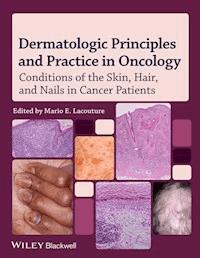
Dermatologic Principles and Practice in Oncology: Conditions of the Skin, Hair, and Nails in Cancer Patients:
• Covers in detail the dermatologic adverse events of oncologic therapies, clinical presentations, and treatment recommendations
• Enables dermatologists and other practitioners to significantly improve the care of patients with cancer
• Addresses the dermatologic adverse events of cancer therapies used globally, of which a large number are found in developing countries
• Emphasizes prophylactic measures – based on treatments used and type of cancer – to prevent the appearance of adverse events
• Provides built-in discussions on patient education for practical counseling during therapies
• Offers rapid-reference sections on topical dermatology drugs
The first book to present dermatologic conditions in cancer patients and survivors in a uniform and in-depth manner, Dermatologic Principles and Practice in Oncology is ideal for oncologists, oncology nurses, and dermatologists who wish to take better care of those with adverse skin, hair, and nail conditions.
Sie lesen das E-Book in den Legimi-Apps auf:
Seitenzahl: 1209
Veröffentlichungsjahr: 2013
Ähnliche



















Table of Contents
Title page
Copyright page
List of Contributors
Preface
Acknowledgment
1: Dermatology and Oncology
1: Epidemiology and Burden of Disease
Introduction
Dermatologic health in cancer patients and survivors
Financial burden
Health-related quality of life
Dosing of chemotherapy
Conclusions
Appendix 1.1 Anticancer agents and associated adverse events affecting the skin, mucosa, hair, and nails. Based on data from Litt JZ, 2009 [8].
2: The History of Supportive Oncodermatology
Evolution of anticancer therapeutics
Spectrum of dermatologic adverse events stemming from conventional cytotoxic chemotherapy agents
Radiation and surgery-induced mucocutaneous toxicities
Mucocutaneous toxicities induced by novel targeted agents
Emergence of supportive oncodermatology and future directions
3: Structure and Function of the Integumentary System and the Dermatology Lexicon
Introduction
Skin
Appendages
Hair
Nails
Morphology
Raised lesions
Depressed lesions
Flat lesions
Fluid-filled lesions
Surface changes
Purpura and vascular lesions
Shape, configuration, arrangement, and distribution of lesions
Conclusions
4: Types of Dermatologic Reactions
Exanthematous eruptions
Urticarial eruptions
Lichenoid eruptions
Acneiform eruptions
Pustular eruptions (acute generalized exanthematous pustulosis)
Bullous eruptions
Drug-induced vasculitis
Erythroderma
Approach to patients with suspected drug eruption
Conclusions
5: Grading Dermatologic Adverse Events in Clinical Trials Using CTCAE v4.0
Common Terminology Criteria for Adverse Events
CTCAE grade scale
Changes in CTCAE V4.0
Refined grading to correlate with clinical management
Split of embedded terms
New adverse events
Moved to different SOC
CTCAE vs. MESTT
Conclusions
Appendix 5.1 Refined grading to correlate with clinical presentation and management.
Appendix 5.2 New adverse events in CTCAE v4.0 for the Skin and subcutaneous tissue disorders section.
6: Psychosocial Issues in Oncology: Clinical Management of Psychosocial Distress, Health-Related Quality of Life, and Special Considerations in Dermatologic Oncology
Psychosocial distress
Distress among dermatologic samples
Dermatologic AEs from cancer treatment
Risk factors for distress
Clinical management of distress
Measuring distress and health-related quality of life in dermatologic oncology
Psychosocial interventions in oncodermatology
Conclusions
7: Dermatopathology
Introduction
Mucocutaneous neoplasms
Inflammatory dermatoses
Conclusions
2: Cancer-Related Dermatologic Disorders
8: Paraneoplastic, Inherited Cancer Syndrome, and Environmental Carcinogen-Related Dermatoses
Paraneoplastic disorders
Inherited syndromes with increased cancer risk and skin effects
Environmental carcinogens with increased cancer risk and skin effects
3: Dermatologic Conditions During Cancer Therapy
9: Oral Mucosal Complications of Cancer Therapy
Introduction
Mucosal injury attributable to cytotoxic therapy
Clinical features and course of mucositis
Mucositis scoring
Impact of mucositis
Pathobiology of mucositis
Risk factors for mucositis
The oral environment and mucositis
Status of the development of therapies for mucositis
Mucosal changes associated with targeted therapies
Conclusions
10: Hair Disorders Associated with Anticancer Agents
Introduction
Basic hair anatomy and function
Types of chemotherapy-induced hair loss/alopecia
Permanent chemotherapy-induced alopecia
Grading scales utilized for determining degree of hair loss or regrowth
Potential treatments for chemotherapy-induced alopecia
Conclusions
11: Nail Abnormalities in Oncology Practice
Introduction
Drugs
Symptoms
Classification
Treatment
Prevention
Conclusions
12: Pruritus
Introduction
Clinical findings
Management
Physical treatments
Bio-behavioral therapy
Conclusions
13: Management Options for Hot Flashes in Cancer Patients
Introduction
Grading of hot flashes
Treatment of hot flashes
Conclusions and recommendations
4: Skin Toxicities to Chemotherapy
14: Alkylating Agents
Introduction
Nitrogen mustards
Aziridines and epoxides
Alkyl sulfonates
Nitrosoureas
Hydrazines and triazine derivatives
Hydroxurea
15: Antimetabolite Reactions
Introduction
Methotrexate
Pemetrexed
Capecitabine
Cytarabine
Gemcitabine
Mercaptopurine
Thioguanine
Fludarabine
Cladribine
16: Topoisomerase-Interacting Agents
Introduction
Topoisomerase I inhibitors
Topoisomerase II inhibitors
Alopecia
Hand-foot syndrome
Hyperpigmentation
Intertrigo
Nail changes
Extravasation of topoisomerase inhibitors
Stevens–Johnson syndrome
Mucositis
Radiation recall
Appendix 16.1 Dermatologic adverse event of topoisomerase inhibitors.
17: Epidermal Growth Factor Receptor Inhibitor Reactions
Introduction
Epidermal growth factor receptor inhibitors
Dermatologic adverse events of EGFRIs
Interaction of EGFRIs with conventional cytotoxic chemotherapy and radiotherapy
Conclusions
18: Small Molecule Multikinase Inhibitors
Introduction
Kit, PDGFR and bcr-abl inhibitors: imatinib, nilotinib, dasatinib
Antiangiogenic agents: sorafenib, sunitinib axitinib, regorafenib, and pazopanib
mTOR inhibitors: everolimus and temsirolimus
Conclusions
19: Antimicrotubule Agents
Introduction
Taxanes
Vinca alkaloids
Estramustine phosphate sodium
20: Histone Deacetylase Inhibitors, Proteasome Inhibitors, Demethylating Agents, Arsenicals, and Retinoids
Histone deacetylase inhibitors
Proteasome inhibitors
Demethylating agents
Arsenicals
Retinoids
21: Miscellaneous Reactions
Introduction
l-Asparaginase
Bleomycin
Thalidomide
Lenalidomide
Appendix 21.1 Incidence of dermatologic adverse events to miscellaneous agents (l-asparaginase, bleomycin, thalidomide, lenalidomide).
22: Skin Toxicities due to Biotherapy
Interferon α
Interleukins
Appendix 22.1 Incidence of dermatologic adverse events to biotherapies (interferon-a2a, interferon-a2b, interleukin 2).
23: Monoclonal Antibodies
Introduction
Effects linked to the nature of the mAbs
AEs caused by the function of the mAb
Anti-CTLA-4 antibody: Ipilimumab
Conclusions
24: Endocrine Agents
Introduction
Selective estrogen receptor modulators
Estrogen receptor downregulators
Aromatase inhibitors
Luteinizing hormone-releasing hormone agonist
Antiandrogens
Androgens
Estrogen
Progestational agents
Somatostatin analog
Conclusions
Appendix 24.1 Incidence of dermatologic adverse events to endocrine therapies.
25: Agents for the Management of Hematologic Reactions
Introduction
Erythropoietic growth factors: epotein alfa and darbopoetin alfa
Granulocyte colony-stimulating factors and granulocyte–macrophage colony-stimulating factors
Platelet growth factors
Anticoagulation agents
26: Radiation-Induced Skin Reactions
Introduction
Clinical features and pathophysiology
Modulating factors for acute radiation dermatitis
Management
Prevention
Systemic therapy
Treatment
Conclusions
Appendix 26.1 Summary of prophylactic and treatment randomized trials.
27: Hematopoietic Stem Cell Transplantation and Graft Versus Host Disease
Introduction
Indications for and methods of hematopoietic stem cell transplantation
Complications of HSCT
28: Extravasation Reactions
Introduction
Risk factors
Clinical features
Pathophysiology and dermatopathology
Treatment
Antidotes in chemotherapeutic drug extravasations
Aftercare
29: Topical Anticancer Therapies
Topical chemotherapy
Retinoids
Biologic response modifiers
Corticosteroids
Conclusions
30: Life-threatening (Serious) Dermatologic Adverse Events
Stevens–Johnson syndrome and toxic epidermal necrolysis
Hypersensitivity reactions
Drug rash with eosinophilia and systemic symptoms
Conclusions
31: Dermatologic Infections
Introduction
Bacterial infections
Fungal infections
Viral infections
Parasitic infections
Infections attributable to specific anticancer treatment modalities or their sequelae
Conclusions
Appendix 31.1 Recommendations for treatment of specific microorganisms.
5: Late Cutaneous Events from Cancer Treatment
32: Late Dermatologic Conditions
Introduction
Secondary skin neoplasms
Cutaneous metastases
Chronic radiation dermatitis and other cutaneous radiation effects
6: Dermatologic Practice in Oncology
33: Management Algorithms for Dermatologic Adverse Events
34: Dermatologic Therapeutics and Formulations
Introduction
Moisturizing therapy
Keratolytic therapy
Sunscreens
Insect repellants
Local anesthetic and analgesic therapy
Antiviral therapy
Antifungal therapy
Steroid therapy
Antipruritic therapy
Retinoid therapy
35: Dermatologic Techniques and Procedures
Introduction
Preoperative evaluation
Antiseptics
Local anesthetic and technique
Hemostasis
Wound dressings
Skin biopsy
Nail plate avulsion and chemical cauterization
Skin cultures
Diagnosis of fungal infection
Atypical mycobacterial and deep fungal culture
Management of common cutaneous neoplasms
Conclusions
Acknowledgments
36: Appearance-Related Concerns in the Cancer Patient
Introduction
Scarring from cancer-related surgery
Radiation tattoos
Areola tattoos
Hypertrichosis resulting from epidermal growth factor receptor inhibitors
Sensitive skin from chemotherapy
Bruising (purpura)
Radiation-induced telangiectasias
Hyperpigmentation from therapy
Conclusions
Index
Copyright © 2014 by John Wiley & Sons, Inc. All rights reserved
Published by John Wiley & Sons, Inc., Hoboken, New Jersey
Published simultaneously in Canada
No part of this publication may be reproduced, stored in a retrieval system, or transmitted in any form or by any means, electronic, mechanical, photocopying, recording, scanning, or otherwise, except as permitted under Section 107 or 108 of the 1976 United States Copyright Act, without either the prior written permission of the Publisher, or authorization through payment of the appropriate per-copy fee to the Copyright Clearance Center, Inc., 222 Rosewood Drive, Danvers, MA 01923, (978) 750-8400, fax (978) 750-4470, or on the web at www.copyright.com. Requests to the Publisher for permission should be addressed to the Permissions Department, John Wiley & Sons, Inc., 111 River Street, Hoboken, NJ 07030, (201) 748-6011, fax (201) 748-6008, or online at http://www.wiley.com/go/permissions.
The contents of this work are intended to further general scientific research, understanding, and discussion only and are not intended and should not be relied upon as recommending or promoting a specific method, diagnosis, or treatment by health science practitioners for any particular patient. The publisher and the author make no representations or warranties with respect to the accuracy or completeness of the contents of this work and specifically disclaim all warranties, including without limitation any implied warranties of fitness for a particular purpose. In view of ongoing research, equipment modifications, changes in governmental regulations, and the constant flow of information relating to the use of medicines, equipment, and devices, the reader is urged to review and evaluate the information provided in the package insert or instructions for each medicine, equipment, or device for, among other things, any changes in the instructions or indication of usage and for added warnings and precautions. Readers should consult with a specialist where appropriate. The fact that an organization or Website is referred to in this work as a citation and/or a potential source of further information does not mean that the author or the publisher endorses the information the organization or Website may provide or recommendations it may make. Further, readers should be aware that Internet Websites listed in this work may have changed or disappeared between when this work was written and when it is read. No warranty may be created or extended by any promotional statements for this work. Neither the publisher nor the author shall be liable for any damages arising herefrom.
For general information on our other products and services or for technical support, please contact our Customer Care Department within the United States at (800) 762-2974, outside the United States at (317) 572-3993 or fax (317) 572-4002.
Wiley also publishes its books in a variety of electronic formats. Some content that appears in print may not be available in electronic formats. For more information about Wiley products, visit our web site at www.wiley.com.
Library of Congress Cataloging-in-Publication Data
Dermatologic principles and practice in oncology : conditions of the skin, hair, and nails in cancer patients / [edited by] Mario E. Lacouture.
p. ; cm.
Includes bibliographical references and index.
ISBN 978-0-470-62188-2 (hardback : alk. paper) – ISBN 978-1-118-59060-7 – ISBN 978-1-118-59061-4 – ISBN 978-1-118-59062-1 – ISBN 978-1-118-59063-8
I. Lacouture, Mario E.
[DNLM: 1. Skin Diseases–etiology. 2. Skin Diseases–psychology. 3. Antineoplastic Agents–adverse events. 4. Neoplasms–complications. 5. Skin Care–nursing. 6. Skin Manifestations. WR 140]
RC280.S5
616.99'477–dc23
2013013054
Cover image: © authors and editor, middle image: istockphoto.com
Cover design by Matt Kuhns
List of Contributors
Asha Acharya PhD
Technical Resources International, Inc.
Bethesda, MD, USA
Najla Al-Dawsari MD, FAAD
Consultant Dermatologist
Dhahran Health Center
Saudi Aramco Medical Service Organization
Saudi Arabia
Raed O. Alhusayen MBBS, MSCE, FRCPC
Clinical Associate
Division of Dermatology
Sunnybrook Health Sciences Centre
Toronto, Canada
Iris Amitay-Laish MD
Dermatologist
Department of Dermatology
Rabin Medical Center, Beilinson Hospital
Petah Tikva, Israel
Milan J. Anadkat MD
Associate Professor
Division of Dermatology
Center for Advanced Medicine
Washington University School of Medicine
St. Louis, MO, USA
Yevgeniy Balagula MD
Clinical Research Fellow
Dermatology Service
Memorial Sloan-Kettering Cancer Center
New York, NY, USA
Robert Baran MD
Honorary Professor of the University of Franche-Comté
Nail Disease Center
Cannes, France;
Consultant Dermatologist
Cancer Institute Gustave Roussy
Villejuif, France
Christine B. Boers-Doets MSc
Department of Clinical Oncology
Leiden University Medical Center
Leiden, The Netherlands
Judy H. Borovicka MD
Clinical Research Fellow
Northwestern University Feinberg School of Medicine
Chicago, IL, USA
Jeffrey P. Callen MD
Professor of Medicine (Dermatology)
Chief, Division of Dermatology
University of Louisville School of Medicine
Louisville, KY, USA
David Cella PhD
Professor and Chair, Department of Medical Social Sciences
Northwestern University Feinberg School of Medicine
Robert H. Lurie Comprehensive Cancer Center of Northwestern University
Chicago, IL, USA
Alice Chen MD, FACP
Senior Investigator
Cancer Therapy Evaluation Program
National Cancer Institute
Rockville, MD, USA
Jennifer Nam Choi MD
Assistant Professor, Department of Dermatology,
Yale University School of Medicine
New Haven, CT, USA
Emily Y. Chu MD, PhD
Staff Clinician
Dermatology Branch, Center for Cancer Research
National Cancer Institute, National Institutes of Health
Bethesda, MD, USA
Kathryn T. Ciccolini RN, BSN, OCN
Office Practice Nurse
Dermatology Service
Memorial Sloan-Kettering Cancer Center
New York, NY, USA
Jonathan Cotliar MD
Associate Professor
Departments of Dermatology and Medicine
Robert H. Lurie Comprehensive Cancer Center
Northwestern University Feinberg School of Medicine
Chicago, IL, USA
Amy J. Derick MD
Clinical Instructor of Dermatology
Northwestern University Feinberg School of Medicine
Chicago, IL, USA;
Derick Dermatology LLC
Barrington, IL, USA
Maura Dickler MD
Associate Member
Breast Cancer Medicine Service
Department of Medicine
Memorial Sloan-Kettering Cancer Center
New York, NY, USA
Reinhard Dummer MD
Vice-Chairman
Department of Dermatology
University Hospital Zurich
Zurich, Switzerland
Robert Eilers Jr. MD
Resident Physician
Department of Dermatology
University of Michigan
Ann Arbor, MI, USA
Bernard Fouilloux MD
Consultant Dermatologist (Oncology Section)
Hôpital Nord
Saint-Etienne, France
Francine Foss MD
Professor of Medicine and Dermatology
Yale University School of Medicine
New Haven, CT, USA
Consultant Dermatologist
Dhahran Health Center
Saudi Aramco Medical Service Organization
Saudi Arabia
Claus Garbe MD
Professor of Dermatology
Head, Division of Dermatooncology
Department of Dermatology
University Medical Center
Tuebingen, Germany
Amit Garg MD
Hofstra School of Medicine and North Shore-LIJ Health System
Manhasset, New York, USA
Jennifer R.S. Gordon MD
Clinical Research Fellow
Northwestern University Feinberg School of Medicine
Chicago, IL, USA
Emmy Graber MD
Assistant Professor of Dermatology;
Director, Cosmetic and Laser Center
Boston University School of Medicine
Boston, MA, USA
Ann Cameron Haley MMS, PA-C
Clinical Research Assistant
Northwestern University Feinberg School of Medicine
Chicago, ILUSA
Axel Hauschild MD
Department of Dermatology
University Hospital Schleswig-Holstein Campus
Kiel, Germany
Molly A. Hinshaw MD
Dermatopathologist
Troy and Associates, Brookfield, WI, USA;
Associate Clinical Professor of Dermatology
University of Wisconsin School of Medicine and Public Health
Wisconsin, WI, USA
Stephanie W. Hu MD
Dermatology Resident
Ronald O. Perelman Department of Dermatology
New York University School of Medicine
New York, NY, USA
James I. Ito MD
Professor and Chief
Division of Infectious Diseases
City of Hope Comprehensive Cancer Center
Duarte, CA, USA
Katharina C. Kaehler MD
Senior Consultant Dermatooncology
Department of Dermatology
University Hospital Schleswig-Holstein Campus
Kiel, Germany
Zahra Kassam MBBS, FRCR (UK), FRCP(C), MSc
Staff Radiation Oncologist
Stronach Regional Cancer Centre
Southlake Regional Health Centre;
Princess Margaret Cancer Center
Toronto, ON, Canada
Caroline C. Kim MD
Assistant Professor, Harvard Medical School;
Director, Pigmented Lesion Clinic;
Associate Director, Cutaneous Oncology Program, Department of Dermatology
Beth Israel Deaconess Medical Center
Boston, MA, USA
Sandra R. Knowles BScPhm
Assistant Professor
University of Toronto, Toronto, Canada;
Sunnybrook Health Sciences Centre
Toronto, Canada
Heidi H. Kong MD, MHSc
Investigator and Head, Clinical Research Section
Dermatology Branch, Center for Cancer Research
National Cancer Institute, National Institutes of Health
Bethesda, MD, USA
Mario E. Lacouture MD
Associate Member
Dermatology Service
Memorial Sloan-Kettering Cancer Center;
Associate Professor
Department of Dermatology
Cornell University
New York, NY, USA
Nicole E. Larsen
Northwestern University Feinberg School of Medicine
Robert H. Lurie Comprehensive Cancer Center of Northwestern University
Chicago, IL, USA
Seppo W. Langer MD, PhD
Head, Thoracic and Neuroendocrine Section
Department of Oncology
Copenhagen University Hospital – Rigshospitalet
Copenhagen, Denmark
Erica H. Lee MD
Assistant Attending
Dermatology Service
Memorial Sloan-Kettering Cancer Center
New York, NY, USA
Mee-young Lee MSN
Nurse Practitioner
Cutaneous Oncology Program
Department of Hematology Oncology
Beth Israel Deaconess Medical Center
Boston, MA, USA
Larissa Leister MD
Attending Physician
Department of Dermatology
University Hospital Essen
Essen, Germany
Elisabeth Livingstone MD
Attending Physician
Department of Dermatology
University Hospital Essen
Essen, Germany
Charles L. Loprinzi MD
Regis Professor of Breast Cancer Research
Mayo Clinic
Rochester, MN, USA
Katherine Szyfelbein Masterpol MD
Department of Dermatology
Assistant Professor in Dermatology
Boston University School of Medicine
Boston, MA, USA
Christine Mateus MD
Cancer Institute Gustave Roussy
Villejuif, France
Beth N. McLellan MD
Assistant Professor of Dermatology
The Ronald O. Perelman Department of Dermatology
New York University School of Medicine
New York, NY, USA
Roger von Moos MD
Associate Professor of Oncology
University of Zurich
Zurich, Switzerland
Amanda R. Moraska MD
Anesthesiology Institute
Cleveland Clinic
Cleveland, OH, USA
Patricia L. Myskowski MD
Attending Physician, Dermatology Service
Memorial Sloan-Kettering Cancer Center;
Professor of Dermatology
Weill Cornell Medical College
New York, NY, USA
Kishwer S. Nehal MD
Director of Mohs Surgery
Dermatology Service
Memorial Sloan-Kettering Cancer Center
New York, NY, USA
Elise A. Olsen MD
Professor of Dermatology and Medicine
Duke University Medical Center
Durham, NC, USA
Cindy England Owen MD
Assistant Professor of Medicine (Dermatology)
University of Louisville School of Medicine
Louisville, KY, USA
Devika Patel MD
Resident in Dermatology
Department of Dermatology
Henry Ford Hospital
Detroit, MI, USA
Tejesh Patel MD
Assistant Professor
Department of Dermatology
University of Tennessee Health Science Center
Memphis, TN, USA
Caroline Robert MD, PhD
Chief of Dermatology Department
Cancer Institute Gustave Roussy
Villejuif, France
Alyx Rosen MD
Clinical Research Fellow
Dermatology Service
Memorial Sloan-Kettering Cancer Center
New York, NY, USA
Steven T. Rosen MD
Division of Hematology/Oncology
Northwestern University Feinberg School of Medicine;
Robert H. Lurie Comprehensive Cancer Center of Northwestern University
Chicago, IL, USA
Dirk Schadendorf MD
Full Professor of Dermatology, Director and Chair of Department of Dermatology
University Hospital Essen
Essen, Germany
Ann Setser
Setser Health Consulting LLC
Chesterfield, MO, USA
Neil H. Shear MD, FRCPC
Professor of Medicine (Dermatology, Clinical Pharmacology) and Pharmacology
University of Toronto
Toronto, Canada
Vincent Sibaud MD
Department of Oncodermatology and Clinical Research Unit
Claudius Regaud Institute
Cancer Comprehensive Center
Toulouse, France
Tomas Skacel MD, PhD
Lecturer in Oncology
1st Dept Medicine, 1st Medical Faculty
Charles University Prague
Czech Republic
Stephen T. Sonis DMD, DMSc
Senior Surgeon Brigham and Women's Hospital and the Dana-Farber Cancer Institute;
Clinical Professor of Oral Medicine
Harvard School of Dental Medicine
Boston, MA, USA
Shannon C. Trotter
Assistant Clinical Professor
Director, Pigmented Lesion Clinic
Division of Dermatology
Ohio State University
Columbus, OH, USA
James L. Troy MD
Clinical Professor of Dermatology and Director of Dermatopathology
Dermatology Medical College of Wisconsin
Milwaukee, WI, USA
Lynne I. Wagner PhD
Associate Professor
Department of Medical Social Sciences
Northwestern University Feinberg School of Medicine;
Robert H. Lurie Comprehensive Cancer Center of Northwestern University
Chicago, IL, USA
Dennis P. West PhD, FCCP, CIP
Professor in Dermatology and Pediatrics
Northwestern University Feinberg School of Medicine
Robert H. Lurie Comprehensive Cancer Center of Northwestern University
Chicago, IL, USA
Rebecca K.S. Wong MB, ChB, MSc, FRCP
Professor
Department of Radiation Oncology
University of Toronto, Princess Margaret Hospital
University Health Network
Toronto, Canada
Caroline Yeager AB
Department of Dermatology
Duke University Medical Center
Durham, NC, USA
Gil Yosipovitch MD
Professor of Dermatology Neurobiology and Anatomy
Wake Forest University Health Sciences
Winston-Salem, NC, USA
Lisa Zimmer MD
Senior Attending Physician
Department of Dermatology
University Hospital Essen
Essen, Germany
Preface
This book is intended for oncology, nursing, and dermatology students, educators, and practitioners. Any of the modalities used against cancer: surgery, radiation, medical therapies, or therapeutic transplants, may have an effect on skin and its appendages, which can not only affect quality of life, health, but may also impact cost and dose intensity of therapy, all of which may affect clinical outcome. Although the focus is mainly on dermatologic adverse events of medical therapy, the effects of radiation, transplants, and surgeries will also be explored, with an emphasis on accurate diagnosis and effective management. In addition, basic dermatologic nomenclature, pathology, and adverse event grading will be included for readers who have not had these as part of their curriculum or training. As dermatologic conditions may appear before or after the diagnosis of cancer, paraneoplastic conditions that may herald an underlying malignancy, as well as late effects of therapy, respectively, are also described herein by leaders in the field.
The skin is the human body's largest organ, a self-renewing tissue whose functions include thermoregulation, sensation, immunity, fluid and organ preservation, and vitamin D synthesis. These various functions, along with its multiple layers and the formation of appendages, such as hair and nails, allows for a complexity that is nowhere more manifest than in the oncology setting. Contributing authors have a unique expertise in the diagnosis and treatment of dermatologic conditions in people living with cancer. This vast expertise will undoubtedly assist in mitigating the various untoward events that can affect cancer patients and survivors, both physically and psychosocially.
In order to make this book rapidly accessible whenever a patient presents with a dermatologic condition, chapters have principally been divided into the mechanism of action of medical therapies, when appropriate. In addition, cutaneous structures have also been taken into consideration, with a separate chapter for hair, nails, and mucosae. Basic dermatologic procedures and appearance-related interventions have also been included, to expand the therapeutic options that may improve the quality of life and cutaneous health of our patients. The ultimate goal of this book is to help optimize the treatment of cancer, by minimizing the effects of dermatologic conditions on quality of life and maximizing therapeutic consistency.
Acknowledgment
We are very grateful to cancer patients, survivors, and their families, who have generously donated their time, thoughts, and have allowed us to photograph and discuss their symptoms them at a difficult time in their lives. We are privileged to have participated in their care. We are grateful to the support staff who enable us to deliver care to people touched by cancer. And we thank the readers for allowing us to participate in the care and understanding of their patients' dermatologic conditions.
Mario E. Lacouture MD
Associate Member
Department of Medicine
Memorial Sloan-Kettering Cancer Center
New York, NY, USA
1
Dermatology and Oncology
1
Epidemiology and Burden of Disease
Beth N. McLellan1, Devika Patel2 and Mario E. Lacouture3,4
1The Ronald O. Perelman Department of Dermatology, New York University School of Medicine, New York, NY, USA
2Department of Dermatology, Henry Ford Hospital, Detroit, MI, USA
3Dermatology Service, Memorial Sloan-Kettering Cancer Center, New York, NY, USA
4Department of Dermatology, Cornell University, New York, NY, USA
Introduction
Due to recent advances in cancer therapies, patients are now living longer than ever before. For all diagnosed cancers, the 5-year relative survival has increased from 50% in 1975–1977 to 66% in 1996–2004 [1]. From 1990 to 2003, all-site cancer deaths in the United States decreased by 1% per year and these declines were especially pronounced for some of the most common malignancies including breast, prostate, colorectal, and lung cancers [2]. In the United States in 2009, there were 1 479 350 new cancers expected to be diagnosed [1], of which 52–87% were treated with surgery, 24–35% with chemotherapy, and 47–51% with radiation therapy (based on 2002 data for breast, lung, and colorectal cancers) [3]. Fifty to sixty thousand hematopoietic stem cell transplants are performed worldwide per year [4].
The large number of people being diagnosed with cancer in combination with increased survival rates have led to an increased number of patients living with a history of cancer, estimated to be 11.1 million in 2005 in the United States [1], of which 270 000 are survivors of pediatric cancers [5]. The increased number of patients living with and after cancer has revealed a number of dermatologic issues specific to this population: affecting cutaneous health, causing a financial burden, decreasing health-related quality of life, and impairing consistent drug dosing.
Dermatologic health in cancer patients and survivors
The relationship between the skin, hair, and nails and internal malignancies is manifested in various ways and in all phases of a patient's experience with cancer (Figure 1.1) . Even before a diagnosis of cancer is made, the skin may be affected by genetic syndromes with an increased cancer risk, environmental carcinogens leading to both skin conditions and internal malignancies, or paraneoplastic syndromes. Before treatment begins, patients can be affected by a number of dermatologic problems, most commonly tinea pedis/onychomycosis, pruritus, and xerosis [6]. After the diagnosis of cancer is made, cancer treatments (systemic agents, radiation, therapeutic transplants, and surgeries) can result in a number of skin, hair, and nail adverse events (AEs) that develop either as a result of idiosyncratic reactions or as an effect on rapidly proliferating cells (of which the skin, hair, and nails are prototypical structures).
Lesen Sie weiter in der vollständigen Ausgabe!
Lesen Sie weiter in der vollständigen Ausgabe!
Lesen Sie weiter in der vollständigen Ausgabe!
Lesen Sie weiter in der vollständigen Ausgabe!
Lesen Sie weiter in der vollständigen Ausgabe!
Lesen Sie weiter in der vollständigen Ausgabe!
Lesen Sie weiter in der vollständigen Ausgabe!
Lesen Sie weiter in der vollständigen Ausgabe!
Lesen Sie weiter in der vollständigen Ausgabe!
Lesen Sie weiter in der vollständigen Ausgabe!
Lesen Sie weiter in der vollständigen Ausgabe!
Lesen Sie weiter in der vollständigen Ausgabe!
Lesen Sie weiter in der vollständigen Ausgabe!
Lesen Sie weiter in der vollständigen Ausgabe!
Lesen Sie weiter in der vollständigen Ausgabe!
Lesen Sie weiter in der vollständigen Ausgabe!
Lesen Sie weiter in der vollständigen Ausgabe!
Lesen Sie weiter in der vollständigen Ausgabe!
Lesen Sie weiter in der vollständigen Ausgabe!
Lesen Sie weiter in der vollständigen Ausgabe!
Lesen Sie weiter in der vollständigen Ausgabe!
Lesen Sie weiter in der vollständigen Ausgabe!
Lesen Sie weiter in der vollständigen Ausgabe!
Lesen Sie weiter in der vollständigen Ausgabe!
Lesen Sie weiter in der vollständigen Ausgabe!
Lesen Sie weiter in der vollständigen Ausgabe!
Lesen Sie weiter in der vollständigen Ausgabe!
Lesen Sie weiter in der vollständigen Ausgabe!
Lesen Sie weiter in der vollständigen Ausgabe!
Lesen Sie weiter in der vollständigen Ausgabe!
Lesen Sie weiter in der vollständigen Ausgabe!
Lesen Sie weiter in der vollständigen Ausgabe!
Lesen Sie weiter in der vollständigen Ausgabe!
Lesen Sie weiter in der vollständigen Ausgabe!
Lesen Sie weiter in der vollständigen Ausgabe!
Lesen Sie weiter in der vollständigen Ausgabe!
Lesen Sie weiter in der vollständigen Ausgabe!
Lesen Sie weiter in der vollständigen Ausgabe!
Lesen Sie weiter in der vollständigen Ausgabe!
Lesen Sie weiter in der vollständigen Ausgabe!
Lesen Sie weiter in der vollständigen Ausgabe!




