


68,99 €
Mehr erfahren.
- Herausgeber: John Wiley & Sons
- Kategorie: Geisteswissenschaft
- Sprache: Englisch
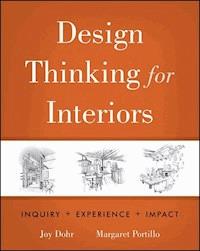
Take a holistic approach to contemporary interior design. The interior design process is changing. In order to create truly engaging work, designers are developing a deeper and broader understanding of how design theory, research, and existing practice can help them make better decisions. This inquiry provides answers on how design is experienced, and its impact over time. At the same time, the profession is becoming increasingly collaborative. Designers today work closely with other professionals--such as architects, landscape designers, product designers, anthropologists, and business consultants--in new ways, engaging an expanding network of experts in the design process more than ever before. Written by renowned scholars Joy Dohr and Margaret Portillo, the book brings interior design theory and research to life utilizing a narrative inquiry approach that offers highly accessible coverage of the interior design world as it exists today. By looking at real-life stories that demonstrate what makes a memorable design, coupled with photographs and drawings to further illustrate these concepts, this book is a must-read for anyone interested in keeping abreast of interior design in the twenty-first century.
Sie lesen das E-Book in den Legimi-Apps auf:
Seitenzahl: 591
Veröffentlichungsjahr: 2011
Ähnliche




















Contents
Preface
Acknowledgments
List of Narratives
Chapter 1: Introduction to Design Engagement
A Starting Point
Design Engagement Framework
Schools of Thought
Looking Back . . . Looking Forward
Summary
Chapter 2: Why Narrative Inquiry?
Arriving at Narrative
Holistic Systems Approach
Supporting Evidence-Based Design
Premises of Design Narratives
Types of Design Narratives
Narrative Inquiry for Design Learning, Research, and Practice
Summary
Chapter 3: Impact Marker: Process of Engagement
Engaging the Self
Ways of Design Thinking
Visualizing, Forming, and Construction
Engaging as a Design Team
Summary
Chapter 4: Impact Marker: Contextual Civility
Introducing Contextual Civility
Related Themes from the Literature
Security and Safety
Community Service, Nonprofits, and Service Learning
Final Thoughts on Contextual Civility
Summary
Chapter 5: Impact Marker: Empathy
Origins of Empathy
Related Themes from the Literature
Design Sensibilities
Final Thoughts on Empathy
Summary
Chapter 6: Impact Marker: Place Identity
Exploring Place Identity
Range of Authenticity
Vernacular Design
Related Themes from the Literature
Place Identity beyond Geographic Context
Exploring Historically Significant Places
Place Identity in Thematic Design
Summary
Chapter 7: Impact Marker: Innovation
Exploring Innovation
Related Themes from the Literature
Leaps and Adaptations
Forms of Creative Engagement
Summary
Chapter 8: Impact Marker: Maturation
Origins of Design Maturation
Users and Public Influence
Developmental Issues for Beginning Designers
Summary
Chapter 9: An Epilogue Integrating Impact Markers
Where Do We Go from Here?
Summing Up Impact Markers
Achieving Balance while Embracing Opposites
Emerging Issues and Gaps
Summing Up Design Thinking
Ten Ways of Advancing the Discipline
Summary
Chapter 10: Using a Narrative Approach
Review of Narrative Types
Finding a Topic
Criteria for Case Selection
Employing Mixed Methods
Crafting Well-Grounded Narratives
Critically Engaging the Literature
Summary
Endnotes
Bibliography
Index
Copyright © 2011 by John Wiley & Sons, Inc. All rights reserved.
Published by John Wiley & Sons, Inc., Hoboken, New Jersey.
Published simultaneously in Canada.
No part of this publication may be reproduced, stored in a retrieval system, or transmitted in any form or by any means, electronic, mechanical, photocopying, recording, scanning, or otherwise, except as permitted under Section 107 or 108 of the 1976 United States Copyright Act, without either the prior written permission of the Publisher, or authorization through payment of the appropriate per-copy fee to the Copyright Clearance Center, Inc., 222 Rosewood Drive, Danvers, MA 01923, 978-750-8400, fax 978-646-8600, or on the web at www.copyright.com. Requests to the Publisher for permission should be addressed to the Permissions Department, John Wiley & Sons, Inc., 111 River Street, Hoboken, NJ 07030, 201-748-6011, fax 201-748-6008, or online at http://www.wiley.com/go/permissions.
Limit of Liability/Disclaimer of Warranty: While the publisher and author have used their best efforts in preparing this book, they make no representations or warranties with respect to the accuracy or completeness of the contents of this book and specifically disclaim any implied warranties of merchantability or fitness for a particular purpose. No warranty may be created or extended by sales representatives or written sales materials. The advice and strategies contained herein may not be suitable for your situation. You should consult with a professional where appropriate. Neither the publisher nor author shall be liable for any loss of profit or any other commercial damages, including but not limited to special, incidental, consequential, or other damages.
For general information on our other products and services, or technical support, please contact our Customer Care Department within the United States at 800-762-2974, outside the United States at 317-572-3993 or fax 317-572-4002.
Wiley also publishes its books in a variety of electronic formats. Some content that appears in print may not be available in electronic books.
For more information about Wiley products, visit our Web site at http://www.wiley.com.
Library of Congress Cataloging-in-Publication Data:
Dohr, Joy Hook.
Design thinking for interiors: inquiry, experience, impact / Joy Dohr and Margaret Portillo.
p. cm.
Includes bibliographical references and index.
ISBN 978-0-470-56901-6 (cloth); ISBN 978-1-118-02877-3 (ebk); ISBN 978-1-118-02878-0 (ebk); ISBN 978-1-118-03051-6 (ebk); ISBN 978-1-118-03052-3 (ebk); ISBN 978-1-118-03053-0 (ebk)
1. Interior decoration—Practice. I. Portillo, Margaret, 1962- II. Title.
NK2116.D55 2011
747—dc22
2010047230
Preface
Design thinking for interiors shares practice processes, design development, and experience in interiors. It’s the journey in living design. In today’s world, design thinking has a global or holistic connotation. Designers work in an environment that addresses large and complex issues and work in collaborative settings. Such an expansive context demands interplay of critical and creative thinking, entailing inquiry with consequential interpretation. Depth in design aligns substantive ideas and know-how with socially pertinent development and ultimately environments meaningful to individuals. In this milieu, designers ask, “What is best in design?” “What is memorable?” They want to articulate how design matters and how it is experienced. Additionally, we see a need to delve more deeply into the mind of the designer to uncover strategic thinking and imaginative solutions necessary for the world in which we live.
Narrative inquiry offers a method to tap this reality and reveals markers of what is memorable to the journey and interior experience. As authors, we discuss six impact markers through true accounts of designers, clients, users, and projects that strengthen and deepen conventional expectations of design excellence. We have identified these markers as: process of engagement, contextual civility, empathy, place identity, innovation, and maturation. Exploring each marker, in turn, provides the content for six of the chapters.
This book explores design as experience and process. Progressive ideas, revealed though narratives, bring into sharp relief the complex nature of design work as a whole. All address realities of a progressive professional practice and offer definitive points for teaching and learning. New expanded services may come to mind as well. It shows research-based design and narrative design inquiry in action.
Our Journey in Arriving Here . . .
In many experiences of life, individuals find themselves at threshold moments—a place in time where someone or something will either move forward, stay in place, or retreat. These often are the moments vividly remembered from the broad strokes to fine details. We, the authors, share a time that was a threshold to our writing this book and tributes our collaborators.
Late in the last decade, six members of the FIDER Research Councili were at a threshold point. The FIDER leadership had challenged the council to propose a study to gauge the pulse of the profession in ways that would hold meaning for the field and ultimately could help direct education. The council took this challenge very seriously. The group spent weeks reading and considering ways to study interior design holistically with a vitality fitting the dynamic nature of the field. The Chair of the council, faculty members, a practitioner and principal of an international architecture and design firm, and an associate dean and FIDER board member traveled from different parts of the country to gather in Lexington, Kentucky, to face the task at hand.ii All six were recognized in the field for their leadership in research and scholarship, having presented and written about key issues in field. All were committed to closing alleged gaps between education and practice, particularly as they relate to future interior design accreditation standards for higher education.
Others in interior design had been conscious of a gap and the need to bring industry, practice, and education into better alignment since the 1970siii This was a fact true for other professional fields such as education, medicine, engineering, and business as well.
With this overarching situation in mind, the six asked:
How can our research contributions build on findings of the Future of Interior Designiv (a study previously completed for FIDER) and explore trends identified such as:
New ways of networking and collaborating in education and practiceCustom designGlobal knowledgeEcological concernsInnovation and creativityTechnologyHow might these findings be further explored in a specific context and mined for detailed information?
In what way will continued exploration of trends inform accreditation standards and advance education?
Thus, the starting point for a new study was guided by earlier findings on trends in the field’s future as authored by Dr. Mary Joyce Hasell and Dr. Suzanne Scott. Their purpose for doing the Future’s study initially and our purpose for the subsequent work were to anticipate and inform the educational milieu for the future of the field. The Research Council of six also brought understanding of the complexity of interior design and complicating factors in studying it. They identified objectives to deepen knowledge about given trends and to provide clear, vivid understandings of a trend as acted upon and engaged in education and practice. They wanted constituents to universally know innovation or technology or collaboration in action and through a workplace project and its design.
In preparation, conference calls commenced and meetings were held at FIDER headquarters and member’s offices. After posing more questions, conversing, and sharing articles and readings, we began to focus on the topic. One paper, in particular, from the Harvard Business Review, on the use of stories to capture corporate vision resonated strongly with the group, who after some deliberation committed to using a narrative inquiry approach to explore leading practices in workplace design. Thus, was born the study “Strategic Stories.”
The gathering in Lexington was a professional workshop, arranged by the Chair, and included an outside expert. The invited expert was experienced in narrative inquiry, having completed several major studies using this approach and having published a book on this topic as well.
The preparation and training session ensured consistency as council members selected cases of excellence to study, gathered data, and then reassembled to analyze their work eight months later. Given the expertise on the council, a decision was made to focus the study on three trends from the Futures study: innovation and creativity in the field, design leadership, and technology. They conceived the narrative approach contributed to understanding the trend of new ways of networking and collaborating given holistic experiences of practitioners and educators and cooperative internships in education as well.
To examine these issues, the narrative approach appeared promising to all as a framework for inquiry and a method of analysis. After his introduction to narrative methods while on the council, the practitioner began incorporating narratives into the mixed method approach he was using in several client projects and found the approach particularly effective for disclosing client/user values and tensions, augmenting quantitative information normally gathered by designers during programming. Equally, all six became familiar with the growing literature on narratives from other professions, such as medicine and law. In addition, they examined models of narrative inquiry that had been accepted and used in the arts and humanities and in the social sciences.
They had also used multiple information-gathering techniques to uncover general findings in design studies or in programming, while also being sensitive to the voices of clients, users, and place. They brought experience in research and research-based practice to the table. All saw a real potential in tapping into strategic thinking through this method. Designers must analyze information as they bring disparate elements together in a new physical structure and form. A seamless fit appeared between the content of interior design and a process of inquiry.
Studies were completed and a special issue on narrative inquiry in 2000 appeared in the Journal of Interior Design. The issue shared papers on design leadership, technology, and innovation from Strategic Stories, as well as focus reports on narrative applications in practice and co-op experiences.
Over time, the initial effort of the council did indeed prove to be the threshold for moving forward. It propelled the group and other interested practitioners and faculty to new studies, to new work with graduate students, to new workshops and ways of teaching interior design studios and survey classes, to new features in marketing and predesign research with clients, and ultimately to uncovering deeper meanings of interior design.
i. FIDER is the acronym for the Foundation for Interior Design Education Research. It was the former name of the current Council for Interior Design Accreditation (CIDA). It is a regulatory nonprofit agency that sets standards for higher education in the field.
ii. Council members: Ann Black, Christopher Budd, Sheila Danko, Joan McLain-Kark; Chair: Margaret Portillo, and FIDER board liaison Joy Dohr.
iii. Articles on accreditation, evaluation, NCIDQ, as well as articles by D. Fowles, A. Carll-White, A. Dickson, the Polsky Forum, D. Guerin, J. Thompson, B. Harwood, M.J. Hasell, P. Eshelman, and other scholar/educators document the interest.
iv. Mary Joyce Hasell and Suzanne Scott, The Future Is Now: FIDER Futures Report; also “Interior Design Visionaries’ Exploration of Emerging Trends.”
Throughout the book, subject matter of design thinking, inquiry, and experience in interiors interconnect, as they do in our Journey Story. Any reader may enter the story: the possibilities appear boundless. With the fusion of design thinking, inquiry, and experience comes new themes of understanding. Specific to this writing are the understandings about key characteristics leading to memorable design experiences that we call markers of impact.
Those markers and themes crossing the narratives shared in this book, in turn, are examined collectively in the epilogue to explore additional design topics related to thinking and experience. The last chapter leaves the reader with a protocol for applying narratives in research, education, and practice.
Objectives for the book intend:
To add insight and clarity to design thinking in interiors, clarifying global views, creativity and innovation, and community building and service among other standards that advance the fieldTo add insight and clarity to understand the experience of design from the stance of different stakeholders, including clients, end users, designers, students, and the public, and to even give voice to place and setting itselfTo add insight and clarity to see the potential of narrative through our framework for design engagement that can guide design thinking and problem solvingThe book’s content reflects the dynamic and multidimensional factors of design and interiors over time. Stories disclose discoveries about interior spaces that people seek out, make, live and work in, and love. Some stories feature the designer’s voice in shaping the interior; other stories feature clients’ or users’ experience with interiors, while yet other stories feature the place itself or those whose voice sometimes goes unheard. All stories are interpreted visually through the work of five different design illustrators, who skillfully capture, through their own unique styles, the identity and emotionality of designed place. Equally, the narrative lessons draw from a wide range of literature and theory in the field. Some of the scholarship cited are classic readings well known and used the past four decades; other recent narratives from research studies are being published the first time in this book.
The combination of unique and valid perspectives captures values and larger ideas behind the nature of design processes, place, and experience. They make us think anew. . . .
Acknowledgments
To a person who sees a mountain and climbs it; To those persons who see a mountain and create a path for others to climb; To those persons preparing to climb the mountain; All love the mountain.
—jhd
I extend my deepest appreciation to colleagues in Design Studies and related departments at the University of Wisconsin-Madison, as well as many friends and associates in our international design community. They questioned. They listened. They inspired. They reviewed ideas and offered suggestions that I took to heart. Collectively, they contributed to shaping Design Thinking For Interiors: Inquiry + Experience + Impact. These individuals represent a core surrounded by rings of wonderful graduate students, inspiring undergraduate students, and practitioners and industry leaders who assisted over the years.
Specifically I acknowledge and thank my co-author, Margaret Portillo. We’ve worked together for two decades and with compatibility that makes each endeavor a beautiful experience. I thank four members of the Strategic Stories project, Sheila Danko, Christopher Budd, Ann Black, and Joan McClain-Kark, who gave energy and commitment to narrative inquiry even before the text took shape. Equally, I so appreciate the authors and featured clients, users and designers of the book’s stories whose names follow in the List of Narratives. Their voices and their design experiences are invaluable. These individuals permitted us to speak and to question in ways that hopefully the reader will find as beneficial. The illustrators, Brooke Godfrey, Jihyun Song, Siriporn Kobnithikulwong, Candy Carmel-Gilfilen, and Anderson Illustration Associates put image to story that celebrates an integral power of inquiry and impact in the field. They share in our aspiration to give a vividness and clarity to what design thinking and experience offers society.
The suggestions from the initial reviewers of John Wiley & Sons gave necessary direction from the start. Thank you. During the journey of writing, readers and responders Cynthia Milota, Suzanne Scott, and those associated with the featured narratives confirmed and added. And I most heartily appreciate Debra McFarlane for her arrival at my door and her expert assistance when technical details of a manuscript were before me.
I am grateful for the guidance and interests of Editor Paul Drougas and Senior Production Editor Nancy Cintron of John Wiley & Sons and to Production Manager Kerstin Nasdeo and team. These individuals gave word and visual image another look with fresh sets of eyes and expectations; the matters of publication are well placed in their hands. It has been my privilege to work with them.
Lastly, but always first, is Peter, who not only tested my clarity of voice, but gave daily support at all costs to complete the work. And with Peter come Deborah and Paul, Julie and Mark, Ray and Amy, plus their shiny young ones who really make my day and keep me in tune with the importance of play.
This book, in my reality, is a model of life’s bounty and grace.
—JHD
Working on this manuscript with Joy Dohr represents a culmination of years of collaboration—mentor, colleague, treasured friend—what a privilege it is to have you in my life. I second Joy in my appreciation of Paul Drougas, Nancy Cintron, and the entire Wiley team. Throughout this book journey, my husband, Norman, centered me with a sense of calm and perspective. He really knows how to live life right as do my lively children, Maxim and Ellie, and my ever supportive parents, Arnold and Shirley Peterson. Other colleagues and friends contributed to the foundation of this book by introducing me to narrative inquiry: Joan Mazur, by recognizing the potential of narratives in the field of interior design; Kayem Dunn, by advancing the discipline with her leadership; Sheila Danko, a colleague and friend whose thinking and work in narratives of social entrepreneurship inspires all. I also recognize the many voices of thoughtful and thought-provoking individuals who share their stories and experiences in this book, those known from birth, Amy Milani, to more recent acquaintances: students, graduates, trusted colleagues, wise practitioners, and insightful reviewers. To the artists and designers whose drawings and graphics brought the narratives of the book to life: I thank you. And to all those who appreciate, study, and practice around the world . . . this is your story too.
—MBP
List of Narratives
Title: Matthew’s Restaurant
By Margaret Portillo featuring Larry Wilson
Situation/setting: Design team and client design process in Jacksonville, Florida
Who is telling story: Design practitioner and client voices
Type of project: Hospitality
Content focus: Design process, client-designer relations, conflict resolution, artwork, and place identity
Title: Charles’ Story
By J. H. Dohr with Charles Gandy
Situation/setting: Continuing Education Workshop in Atlanta, Georgia
Who is telling story: Design practitioner
Type of project: Client retreat near Seattle, Washington
Content focus: Design process, collaboration and innovation, fabrication of materials, and application
Title: No Room for Auditors
By Jacquelyn Purintun
Situation/setting: Mobile worker office experience in the Midwest
Who is telling story: Accounting auditor
Type of project: Workplace—master’s thesis
Content focus: hoteling, technology, sense of place, mobile workers, physical and social attributes of place
Title: Orchestrating Change
By Laura Busse
Situation/setting: Company headquarters in Lexington, Kentucky
Who is telling story: Designer, client, and employees
Type of project: Workplace—master’s thesis
Content focus: Client-designer relations, color decision making, social attributes
Title: Seeing the Future
By J. H. Dohr featuring David Csont and Anderson Illustration Associates
Situation/setting: Campus sports facility in Madison, Wisconsin
Who is telling story: Environmental design illustrator
Type of project: Design-build project; Illustrations per contract with client, Office of Planning and Construction of the university
Content focus: Visually capturing design decision-making process involving a multidisciplinary team; envisioning facility using illustration as story
Title: Habitually Fresh
By Margaret Portillo from Strategic Stories Research
Reprinted with permission of the Journal of Interior Design, Wiley-Blackwell
Situation/setting: Eva Maddox Associates Office and DuPont Antron Showroom in Chicago, Illinois
Who is telling story: Eileen Jones, principal and clients
Type of project: NeoCon Showroom/Educational Center
Content focus: Design process, creative fluency, strategic thinking, concept focus, client values
Title: Sometimes Designers Fail
By: Anonymous student featured in a focus report by Ann Black
Reprinted with permission of the Journal of Interior Design, Wiley-Blackwell
Situation/Setting: Design Firm Office in San Francisco, California
Who is telling story: Design intern
Type of project: Design proposal to secure contract
Content focus: Design process; teamwork, conflict, client-design firm relations
Title: Engaging Nontraditional Stakeholders
By J. H. Dohr featuring Karen Dettinger and design professor (pseudonym)
Situation/setting: Predesign process for Engineering College Building
Who is telling story: Engineering researcher and assistant to the dean and a design professor
Type of project: User program for campus learning environments
Content focus: Teamwork; innovation in planning and programming; engagement of nontraditional audience—future learners; research and building relations
Title: A New Vision
By Margaret Portillo from Strategic Stories Research
Situation/setting: Dreamworks Campus, Glendale, California
Who is telling story: End user, producer
Type of project: Entertainment, workplace
Content focus: Strategic thinking, recruiting and retaining, campus environment, social attributes
Title: (Re)interpreting the Hull House
By Erin Cunningham PhD
Situation/setting: Preservation of the Hull Settlement House on the University of Illinois at Chicago (UIC) Campus
Who is telling story: Design researcher
Type of project: Restoration and historic preservation, doctoral dissertation
Content focus: Restoration and interpretation, stakeholder conflicts, politics of design, research and information gathering methods, historical social attributes, design dialogue and debate
Title: Redefining Contemporary Color
By Laura Busse
Situation/setting: Office headquarters for Steelcase dealership, Louisville, Kentucky
Who is telling story: Design practitioner, team members, and client
Type of project: Workplace; master’s thesis
Content focus: Design process and teamwork, color decision making, collaboration, adaptive reuse
Title: Synchronizing Sustainability: Practice, Classroom Learning, and Research
By Sandy Gordon
Situation/setting: Problem solving related to sustainability
Who is telling story: Fellow and LEED AP Interior Designer, who is also the instructor and graduate student
Type of project: Design class on sustainability
Content focus: Daily routine of designer; future thinking of designer; impact of sustainability on practice, teaching, and research
Titles: Thrill of the Steal: Inside the Mind of an Expert Shoplifter, and Something for Nothing: Insights into a Spontaneous Steal
By Candy Carmel-Gilfilen
Situation/setting: Retail facility
Who is telling story: Two different types of thieves (users of retail settings)
Type of project: Design research on security in retail environments
Content focus: Interior security features, retail display and layout; environmental cueing
Title: Mozell’s Perfect Space
By Katharine M. Sharpee
Situation/setting: Design-build house for Auburn’s Rural Studio, Alabama
Who is telling story: Interior designer, who at the time was graduate student and member of team.
Type of project: Community and Service Learning Work
Content focus: Design planning, construction and installation process, innovation with available materials, community relations, social attributes, client/user impact
Title: A Story of Hospice Told in Three Parts
By J. H. Dohr featuring Susan Phillips (CEO) and Stephen (hospice patient)
Situation/setting: HospiceCare, Inc. foundation dinner and facility in Dane County, Wisconsin
Who is telling story: Susan Phillips, CEO and president; former employee of Stephen’s firm and firm associates
Type of project: Healthcare Design
Content focus: Integration of agency mission, program delivery, and environmental design; circulation patterns, architectural details, furnishings, corporate art collection, senses
Title: Sitting on the Porch at Dorothy Phillips’s House: 222 North Beach Boulevard
By Morris Hylton III
Situation/setting: Restoration of a historically significant residence, Bay St. Louis, Mississippi
Who is telling story: Faculty member in interior design and historic preservation
Type of project: Restoration after Hurricane Katrina
Content focus: Preservation pilot program, community service in design, designer-client relations, project time line, politics of design
Title: Drawing Metaphorical Meaning from Southwestern Design
By Amy Milani, PhD
Situation/setting: Albuquerque, New Mexico
Who is telling story: Design researcher
Type of project: Regional design—master’s thesis
Content focus: Design research methods and discovery, environmental cueing and attributes of meaning from place and from people, authenticity in design, culture, geography, historical references
Title: Dragon Wood
By Margaret Portillo featuring Larry Wilson
Situation/setting: Condominium model, Jacksonville, Florida
Who is telling story: Design practitioner and artist
Type of project: Site-specific wall sculpture
Content focus: Design process; place identity; artwork and interior architecture; designing form, lighting, materiality, and color
Title: The Great Debate: Authenticity in the Viennese Coffeehouse
By Amy Milani, PhD
Situation/setting: Vienna, Austria
Who is telling story: Design researcher and two preservation experts
Type of project: Doctoral research, authenticity of place
Content focus: Design research methods; restoration, preservation, and conservation; historical and place identity features; ritual and meaning; design dialogue and debate
Title: Underwater World
By Julia Sexton
Situation/setting: Georgia Aquarium, Atlanta, Georgia
Who is telling story: Senior interior design student
Type of project: Thematic design
Content focus: Place identity, student viewpoint, design process, designing form, lighting, color, and materiality
Title: PUSHing Boundaries of Work and Play
By Alexandra Miller
Situation/setting: Marketing agency in Orlando, Florida
Who is telling story: Executives of PUSH company
Type of project: Proposal presentation efforts
Content focus: Creative process, teamwork, tensions, client-firm relations, unique approach, creative environment, fun in workplace, open office, shaping of space
Title: New Mental Models in the Workplace
By Christopher Budd
Reprinted with permission of the Journal of Interior Design, Wiley-Blackwell
Situation/setting: Predesign research phase for two clients (pseudonyms)
Who is telling story: Design practitioner
Type of project: Workplace design, design research
Content focus: Research-based practice, strategic thinking, teamwork, client information gathering techniques, complexity of interior design
Title: A Measure of Innovation
By Margaret Portillo from Strategic Stories Research
Situation/setting: Dreamworks Campus, Glendale, California
Who is telling story: Facilities and operations vice president; Gensler project manager
Type of project: Workplace, entertainment
Content focus: Recruiting and retention of artists, strategic thinking, campus workplace environment
Title: A Paradigm Shift at the Pentagon
By Margaret Portillo featuring Christopher Budd
Situation/setting: Pentagon, Arlington, Virginia
Who is telling story: Design practitioner
Type of project: Workplace and infrastructure
Content focus: Design competitions, multi-team work, client/user changes and developments, infrastructure of space, space analysis and cost analysis, long-term design decisions, credits, and intellectual property
Title: An Antron Postscript: A Designer Reflects
By J. H. Dohr featuring Eileen Jones
Situation/setting: Interview; Perkins + Will Office, Chicago Illinois
Who is telling story: Interviewer and Eileen Jones
Type of project: Design work pathways
Content focus: Client-design firm relations, strategic thinking, change and constancy over time, development of client needs and expectations
Title: Evolving Legal and Design Services: A Client Reflects
By Senior Partner of a Midwest Law Firm (anonymous)
Situation/setting: Interior design, awards ceremony, Chicago, Illinois
Who is telling story: Client and attorney
Type of project: Changes in design service work
Content focus: Client-design firm relations, shifts in platforms of design work, changes in work patterns and expectations over time
Title: Public Art as Place Making: Festival Brings New Life to Sculpture
By Jennifer Geigel Mikulay
Situation/setting: Festival event at the Calder Plaza, Grand Rapids, Michigan
Who is telling story: Visual culture researcher
Type of project: Doctoral dissertation
Content focus: Public art, community processes, evolving meanings of public places
Title: Sara’s Story
By Margaret Portillo featuring an interior design graduate student (pseudonym)
Situation/setting: Master’s program on a university campus
Who is telling story: Student
Type of project: n/a
Content focus: Individual and professional development and maturation
Chapter 1
Introduction to Design Engagement
Reflect for a moment on when you first decided to learn more about design. Did this interest begin at an early age or did it surface after taking an introductory design class? Or did the calling come well into adulthood when at a crossroad you considered a new career path? After that interest began taking root, did you start observing the world around you in different ways? Did this coincide with looking more critically at interiors and considering alternative ways of designing spaces? Did your curiosity lead to questions? “I wonder what that is made of?” “How was that built?” Did a specific interior designer or design instructor inspire you to come into the field? While everyone’s story is unique, someone or something ignited your interest in the field. And this new focus, in turn, motivated new learning—and you began developing further than you thought possible.
A Starting Point
The starting point for learning anything begins with a question. Curiosity leads to questions. A search for information and a way to gain skills begins. Such a starting point falls anywhere along a continuum of knowledge, from a beginner’s understanding to advanced expertise. Even though an initial interest might be personal, as knowledge grows, so does the potential for creative thinking and design contributions. A comprehensive understanding of design allows development to progress on solid footing.
Lesen Sie weiter in der vollständigen Ausgabe!
Lesen Sie weiter in der vollständigen Ausgabe!
Lesen Sie weiter in der vollständigen Ausgabe!
Lesen Sie weiter in der vollständigen Ausgabe!
Lesen Sie weiter in der vollständigen Ausgabe!
Lesen Sie weiter in der vollständigen Ausgabe!
Lesen Sie weiter in der vollständigen Ausgabe!
Lesen Sie weiter in der vollständigen Ausgabe!
Lesen Sie weiter in der vollständigen Ausgabe!
Lesen Sie weiter in der vollständigen Ausgabe!
Lesen Sie weiter in der vollständigen Ausgabe!
Lesen Sie weiter in der vollständigen Ausgabe!




