


55,99 €
Mehr erfahren.
- Herausgeber: John Wiley & Sons
- Kategorie: Fachliteratur
- Sprache: Englisch
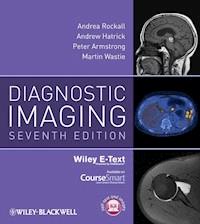
Diagnostic Imaging will help medical students, junior doctors, residents and trainee radiologists understand the principles behind interpreting all forms of imaging. Providing a balanced account of all the imaging modalities available – including plain film, ultrasound, computed tomography, magnetic resonance imaging, radionuclide imaging and interventional radiology – it explains the techniques used and the indications for their use.
Organised by body system, it covers all anatomical regions. In each region the authors discuss the most suitable imaging technique and provide guidelines for interpretation, illustrating clinical problems with normal and abnormal images.
Diagnostic Imaging is extensively illustrated throughout, featuring high quality full-colour images and more than 600 photographs. The images are downloadable in PowerPoint format from the brand new companion website at www.wileydiagnosticimaging.com, which also has over 100 interactive MCQs, to aid learning and teaching.
When you purchase the book you also receive access to the Wiley E-Text: Powered by VitalSource. This is an interactive digital version of the book, featuring downloadable text and images, highlighting and note-taking facilities, bookmarking, cross-referencing, in-text searching, and linking to references and abbreviations. Diagnostic Imaging is also available on CourseSmart, offering extra functionality as well as an immediate way to access the book. For more details, see www.coursesmart.com or ‘The Anytime, Anywhere Textbook ’ section.
Sie lesen das E-Book in den Legimi-Apps auf:
Seitenzahl: 627
Veröffentlichungsjahr: 2013
Ähnliche



















Table of Contents
Companion website
Title page
Copyright page
Preface
Acknowledgements
List of Abbreviations
The Anytime, Anywhere Textbook
To access your Wiley E-Text: Powered by VitalSource:
Instructors . . . receive your own digital desk copies!
1 Technical Considerations
Use of the imaging department
Conventional radiography
Computed tomography
Contrast agents in conventional radiography and computed tomography
Ultrasound
Radionuclide imaging
Magnetic resonance imaging
Picture archiving and communication systems
Radiation hazards
2 Chest
THORACIC DISEASE
Imaging techniques
Diseases of the chest with a normal chest radiograph
Abnormal chest signs
Radiological signs of lung disease
PLEURA
Pleural effusion
Mediastinum
Hilar enlargement
Diaphragm
SPECIFIC DISORDERS
Bacterial pneumonia
Viral and mycoplasma pneumonia
Lung abscess
Pulmonary tuberculosis
Fungal and parasitic diseases
Pneumonia in the immunocompromised host
Sarcoidosis
Diffuse interstitial pulmonary fibrosis
Radiation pneumonitis
Collagen vascular diseases
Pneumoconiosis
Diseases of the airways
Cystic fibrosis
Respiratory distress in the newborn
Adult respiratory distress syndrome
Pulmonary emboli and infarction
Trauma to the chest
Carcinoma of the bronchus
Metastatic neoplasms
Lymphoma
3 Cardiac Disorders
Imaging techniques
Specific cardiac diseases
4 Breast Imaging
Mammography
Breast ultrasound
Breast magnetic resonance imaging
Breast screening
5 Plain Abdomen
Intestinal gas pattern
Dilatation of the bowel
Pneumoperitoneum
Ascites
Abdominal calcification
Liver and spleen
Abdominal and pelvic masses
6 Gastrointestinal Tract
Imaging techniques: general principles
OESOPHAGUS
Imaging techniques
Oesophageal abnormalities
STOMACH AND DUODENUM
Imaging techniques
Specific diseases of the stomach and duodenum
SMALL INTESTINE
Imaging techniques
Normal appearances of the small bowel
Imaging signs of disease of the small intestine
Specific diseases of the small intestine
LARGE INTESTINE
Imaging techniques
Normal appearance of the colon
Imaging signs of disease of the large intestine
Specific diseases of the colon
SPECIFIC USES OF IMAGING IN THE GASTROINTESTINAL TRACT
Imaging investigation of the acute abdomen
Imaging investigation of acute bleeding from the gastrointestinal tract
Imaging investigation of abdominal trauma
7 Hepatobiliary System, Spleen and Pancreas
LIVER
Imaging techniques
Liver masses
Liver abscesses
Cirrhosis of the liver and portal hypertension
Liver trauma
Fatty infiltration of the liver
BILIARY SYSTEM
Imaging techniques
Gall stones and cholecystitis
Jaundice
PANCREAS
Pancreatic masses
Acute pancreatitis
Chronic pancreatitis
Pancreatic trauma
SPLEEN
Splenic trauma
8 Urinary Tract
Imaging techniques
Urinary tract disorders
Bladder disorders
Prostate and urethra disorders
Scrotum and testes disorders
9 Female Genital Tract
Normal appearances
Gynaecological pathology
Hysterosalpingography
Obstetric ultrasound
Ectopic pregnancy
10 Peritoneal Cavity and Retroperitoneum
PERITONEAL CAVITY
Peritoneal cavity disorders
RETROPERITONEUM
Imaging techniques
Retroperitoneal disorders
11 Bones
Imaging techniques
Bone disease diagnosis
Solitary lesions
Multiple focal lesions
Generalized decrease in bone density (osteopenia)
Generalized increase in bone density
Alteration of trabecular pattern and change in shape
Changes in bone shape
12 Joints
Imaging techniques
Arthritis
Joint infections
Avascular (aseptic) necrosis
Internal derangement of the knee
Shoulder and rotator cuff disorders
Miscellaneous joint conditions
13 Spine
Imaging techniques
Radiographic signs of spinal abnormality
Spinal abnormalities
14 Skeletal Trauma
Imaging techniques
Specific injuries
15 Brain
Imaging techniques
Specific brain disorders
Head injury
16 Orbits, Head and Neck
Sinuses
Nasopharynx
Orbits
Salivary glands
Neck
17 Vascular and Interventional Radiology
Diagnostic vascular angiography
Interventional radiology
Appendix: Computed Tomography Anatomy of the Abdomen
Index
This new edition is also available as an e-book.
For more details, please see
www.wiley.com/buy/9780470658901
or scan this QR code:
This edition first published 2013 © 2013 by A. Rockall, A. Hatrick, P. Armstrong, M. Wastie.
Previous editions published 1981 (as X-ray Diagnosis), 1987, 1992, 1998, 2004, 2009
Wiley-Blackwell is an imprint of John Wiley & Sons, formed by the merger of Wiley’s global Scientific, Technical and Medical business with Blackwell Publishing.
Registered office: John Wiley & Sons, Ltd, The Atrium, Southern Gate, Chichester, West Sussex, PO19 8SQ, UK
Editorial offices: 9600 Garsington Road, Oxford, OX4 2DQ, UK
The Atrium, Southern Gate, Chichester, West Sussex, PO19 8SQ, UK
111 River Street, Hoboken, NJ 07030-5774, USA
For details of our global editorial offices, for customer services and for information about how to apply for permission to reuse the copyright material in this book please see our website at www.wiley.com/wiley-blackwell.
The right of the author to be identified as the author of this work has been asserted in accordance with the UK Copyright, Designs and Patents Act 1988.
All rights reserved. No part of this publication may be reproduced, stored in a retrieval system, or transmitted, in any form or by any means, electronic, mechanical, photocopying, recording or otherwise, except as permitted by the UK Copyright, Designs and Patents Act 1988, without the prior permission of the publisher.
Designations used by companies to distinguish their products are often claimed as trademarks. All brand names and product names used in this book are trade names, service marks, trademarks or registered trademarks of their respective owners. The publisher is not associated with any product or vendor mentioned in this book. This publication is designed to provide accurate and authoritative information in regard to the subject matter covered. It is sold on the understanding that the publisher is not engaged in rendering professional services. If professional advice or other expert assistance is required, the services of a competent professional should be sought.
Library of Congress Cataloging-in-Publication Data
Diagnostic imaging. — 7th ed. / Andrea G. Rockall ... [et al.].
p. ; cm.
Rev. ed. of: Diagnostic imaging / Peter Armstrong, Martin L. Wastie, Andrea G. Rockall. 6th ed. 2009.
Includes bibliographical references and index.
ISBN 978-0-470-65890-1 (pbk. : alk. paper)
I. Rockall, Andrea G. II. Armstrong, Peter, 1940– Diagnostic imaging.
[DNLM: 1. Diagnostic Imaging. WN 180]
616.07'54–dc23
201203
A catalogue record for this book is available from the British Library.
Wiley also publishes its books in a variety of electronic formats. Some content that appears in print may not be available in electronic books.
Cover image: © Andrea Rockall, Andrew Hatrick, Peter Armstrong, Martin Wastie
Cover design by Jim Smith
Preface
Medical imaging is central to many aspects of patient management. Medical students and junior doctors can be forgiven their bewilderment when faced with the daunting array of information which goes under the heading ‘Diagnostic imaging’. Plain film examinations remain the most frequently requested imaging investigations that non-radiologists may be called on to interpret and we continue to give them due emphasis. However, the use of cross-sectional imaging techniques continues to increase and, in some situations, has taken over from the plain film. The growing use of ultrasound, computed tomography (CT), magnetic resonance imaging (MRI), radionuclide imaging, including positron emission tomography (PET), and interventional radiology is reflected in the new edition.
With the widespread availability of most of the various imaging techniques, there are often several ways of investigating the same condition. We have avoided being too prescriptive as practice varies depending on the available equipment as well as the preferences of the clinicians and radiologists. It is important, however, to appreciate not only the advantages but also the limitations of modern medical imaging.
We have continued to try to meet the needs of the medical student and doctors in training by explaining the techniques used in diagnostic imaging and the indications for their use. We aim to help the reader understand the principles of interpretation of imaging investigations. New for this edition is the availability of online material, including multiple choice questions for each chapter, allowing readers to test their knowledge.
It is beyond the scope of a small book such as this one to describe fully the pathology responsible for the various imaging appearances and the role of imaging in clinical management. Consequently, we encourage our readers to study this book in association with the study of these other subjects.
Andrea RockallAndrew HatrickPeter ArmstrongMartin Wastie
Acknowledgements
It would not have been possible to prepare this edition without the help of the many radiologists who have given ideas, valuable comments and inspiration. We would like to thank particularly the staff of the Radiology Departments at St Bartholomew’s Hospital, London, Frimley Park NHS Trust, University Hospital, Nottingham, University of Malaya Medical Centre, Kuala Lumpur and County Hospital, Lincoln for this and past edition illustrations. Our special thanks go to those radiologists who gave us their expert assistance, including Dr Rob Barker, Dr Francesca Pugliese, Dr Sarah Vinnicombe, Dr Muaaze Ahmad, Dr Polly Richards and Dr Kasthoori Jayarani.
The following kindly provided illustrations for this and previous editions: Lorenzo Biassoni, Nishat Bharwani, John Bowe, Paul Clark, Siew Chen Chua, Peter Jackson, Jill Jacobs, Ranjit Kaur, Priya Narayanan, Steven Oscroft, Niall Power, Shaun Preston, Ian Rothwell, Peter Twining, Caroline Westerhout and Bob Wilcox.
We would like to thank Julie Jessop for her superb secretarial help and we would like to express our gratitude to the staff of Wiley-Blackwell.
List of Abbreviations
ADC
apparent diffusion coefficient
AIDS
acquired immune deficiency syndrome
ALARA
‘as low as reasonably achievable’ principle
AP
anteroposterior
ARDS
adult respiratory distress syndrome
AVM
arteriovenous malformation
BBB
blood–brain barrier
CFA
cryptogenic fibrosing alveolitis
CPPD
calcium pyrophosphate dihydrate
CSF
cerebrospinal fluid
CT KUB
non-contrast computed tomography of the kidneys, ureters and bladder
CT
computed tomography
CTR
cardiothoracic ratio
CXR
chest radiograph
3D
three-dimensional
DCE-MRI
dynamic contrast-enhanced magnetic resonance imaging
DEXA
dual-energy x-ray absorption
DMSA
dimercaptosuccinic acid
DTPA
diethylene triamine pentacetic acid
DWI
diffusion-weighted imaging
ERCP
endoscopic retrograde cholangiopancreatography
EUS
endoscopic ultrasound
EVAR
endovascular aneurysm repair
FAST
focused assessment with sonography for trauma
FDG
F-18 fluorodeoxyglucose
FDG-PET
fluorodeoxyglucose positron emission tomography
FLAIR
fluid attenuated inversion recovery
FNA
fine needle aspiration
GI
gastrointestinal
GIST
gastrointestinal stromal tumour
HCC
hepatocellular carcinoma
HMPAO
hexamethylpropyleneamine oxime
HOCM
hypertrophic obstructive cardiomyopathy
HRCT
high resolution computed tomography
123
I
iodine-123
131
I
iodine-131
IPF
idiopathic pulmonary fibrosis
IUCD
intrauterine contraceptive device
IVC
inferior vena cava
IVU
intravenous urography
81m
Kr
krypton-81m
MAG-3
mercaptoacetyl triglycine
MDCT
multidetector CT
MEN
multiple endocrine neoplasia
MIBG
meta-iodobenzylguanidine
MIP
maximum intensity projection
MRA
magnetic resonance angiography
MRCP
magnetic resonance cholangiopancreatography
MRI
magnetic resonance imaging
NHS
National Health Service
PA
posteroanterior
PEG
percutaneous endoscopic gastrostomy
PET
positron emission tomography
PTC
percutaneous transhepatic cholangiogram
PUJ
pelviureteric junction
RIG
radiologically inserted gastrostomy
SCIWORA
spinal cord injury without radiological abnormality
SPECT
single photon emission computed tomography
99m
Tc
technetium-99m
TCC
transitional cell carcinoma
TIPSS
transjugular intrahepatic portosystemic shunt
TRUS
transrectal ultrasound
UIP
interstitial pneumonia
The Anytime, Anywhere Textbook
For the first time, your textbook comes with free access to a Wiley E-Text: Powered by VitalSource – a digital, interactive version of this textbook which you own as soon as you download it.
Your Wiley E-Text: Powered by VitalSource allows you to:
Search: Save time by finding terms and topics instantly in your book, your notes, even your whole library (once you’ve downloaded more textbooks)
Note and Highlight: Colour code, highlight and make digital notes right in the text so you can find them quickly and easily
Organize: Keep books, notes and class materials organized in folders inside the application
Share: Exchange notes and highlights with friends, classmates and study groups
Upgrade: Your textbook can be transferred when you need to change or upgrade computers
Link: Link directly from the page of your interactive textbook to all of the material contained on the companion website
To Access Your Wiley E-Text: Powered by VitalSource:
Find the redemption code on the inside front cover of this book and carefully scratch away the top coating of the label. Visit
www.vitalsource.com/software/bookshelf/downloads
to download the Bookshelf application to your computer, laptop or mobile device.
If you have purchased this title as an e-book, access to your
Wiley E-Text: Powered by VitalSource
is available with proof of purchase within 90 days. Visit
http://support.wiley.com
to request a redemption code via the ‘Live Chat’ or ‘Ask A Question’ tabs.
Open the Bookshelf application on your computer and register for an account.
Follow the registration process and enter your redemption code to download your digital book.
For full access instructions, visit
www.wileydiagnosticimaging.com
.
CourseSmart gives you instant access (via computer or mobile device) to this Wiley-Blackwell eTextbook and its extra electronic functionality, at 40% off the recommended retail print price. See all the benefits at www.coursesmart.com/students.
Instructors … Receive Your Own Digital Desk Copies!
It also offers instructors an immediate, efficient and environmentally-friendly way to review this textbook for your course.
For more information visit www.coursesmart.com/instructors.
With CourseSmart, you can create lecture notes quickly with copy and paste, and share pages and notes with your students. Access your Wiley CourseSmart digital textbook from your computer or mobile device instantly for evaluation, class preparation and as a teaching tool in the classroom.
Simply sign in at http://instructors.coursesmart.com/bookshelf to download your Bookshelf and get started. To request your desk copy, hit ‘Request Online Copy’ on your search results or book product page.
1
Technical Considerations
Use of the Imaging Department
Good communication between clinicians and radiologists is vital because the radiology department needs to understand the clinical problem in order to carry out appropriate tests and to interpret the results in a meaningful way. Also, clinicians need to understand the strengths and limitations of the answers provided.
Sensible selection of imaging investigations is of great importance. There are two opposing philosophies. One approach is to request a battery of investigations, aimed in the direction of the patient’s symptoms, in the hope that something will turn up. The other approach is ‘trial and error’: decide one or two likely diagnoses and carry out the appropriate test to support or refute these possibilities. We favour the selective approach as there is little doubt that the answers are usually obtained less expensively and with less distress to the patient. This approach depends on critical clinical evaluation; the more experienced the doctor, the more accurate he or she becomes in choosing appropriate tests.
Laying down precise guidelines for requesting imaging examinations is difficult because patients are managed differently in different centres. Box 1.1 provides important points when requesting imaging investigations.
Conventional Radiography
X-rays are absorbed to a variable extent as they pass through the body. The visibility of both normal structures and disease depends on this differential absorption. With conventional radiography there are four basic densities – gas, fat, all other soft tissues and calcified structures. X-rays that pass through air are least absorbed and, therefore, cause the most blackening of the radiograph, whereas calcium absorbs the most and so the bones and other calcified structures appear virtually white. The soft tissues, with the exception of fat, e.g. the solid viscera, muscle, blood, a variety of fluids, bowel wall, etc., all have similar absorptive capacity and appear the same shade of grey on conventional radiographs. Fat absorbs slightly fewer x-rays and, therefore, appears a little blacker than the other soft tissues. Traditionally, images were produced using a silver-based photographic emulsion but now they are recorded digitally and viewed on computer screens in most centres.
Projections are usually described by the path of the x-ray beam. Thus, the term PA (posteroanterior) view designates that the beam passes from the back to the front, the standard projection for a routine chest film. An AP (anteroposterior) view is taken from the front. The term ‘frontal’ refers to either PA or AP projection. The image on an x-ray film is two-dimensional. All the structures along the path of the beam are projected on to the same portion of the film. Therefore, it is often necessary to take at least two views to gain information about the third dimension. These two views are usually at right angles to one another, e.g. the PA and lateral chest film. Sometimes two views at right angles are not appropriate and oblique views are substituted.
Portable x-ray machines can be used to take films of patients on the ward or in the operating theatre. Such machines have limitations on the exposures they can achieve. This usually means longer exposure times and poorer quality films. The positioning and radiation protection of patients in bed is often inferior to that which can be achieved within the x-ray department. Consequently, portable films should only be requested when the patient cannot be moved safely to the x-ray department.
Computed Tomography
Computed tomography (CT) also relies on x-rays transmitted through the body. It differs from conventional radiography in that a more sensitive x-ray detection system is used, the images consist of sections (slices) through the body, and the data are manipulated by a computer. The x-ray tube and detectors rotate around the patient (). The outstanding feature of CT is that very small differences in x-ray absorption values can be visualized. Compared with conventional radiography, the range of densities recorded is increased approximately ten-fold. Not only can fat be distinguished from other soft tissues, but also gradations of density within soft tissues can be recognized, e.g. brain substance from cerebrospinal fluid, or tumour from surrounding normal tissues.
Lesen Sie weiter in der vollständigen Ausgabe!
Lesen Sie weiter in der vollständigen Ausgabe!
Lesen Sie weiter in der vollständigen Ausgabe!
Lesen Sie weiter in der vollständigen Ausgabe!
Lesen Sie weiter in der vollständigen Ausgabe!
Lesen Sie weiter in der vollständigen Ausgabe!
Lesen Sie weiter in der vollständigen Ausgabe!
Lesen Sie weiter in der vollständigen Ausgabe!
Lesen Sie weiter in der vollständigen Ausgabe!
Lesen Sie weiter in der vollständigen Ausgabe!
Lesen Sie weiter in der vollständigen Ausgabe!
Lesen Sie weiter in der vollständigen Ausgabe!
Lesen Sie weiter in der vollständigen Ausgabe!
Lesen Sie weiter in der vollständigen Ausgabe!
Lesen Sie weiter in der vollständigen Ausgabe!
Lesen Sie weiter in der vollständigen Ausgabe!
Lesen Sie weiter in der vollständigen Ausgabe!
Lesen Sie weiter in der vollständigen Ausgabe!




