


17,99 €
Mehr erfahren.
- Herausgeber: John Wiley & Sons
- Kategorie: Fachliteratur
- Serie: PRS - Polity Resources series
- Sprache: Englisch
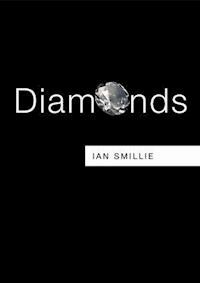
Diamonds are a multi-billion dollar business involving some of the world’s largest mining companies, a million and a half artisanal diggers, more than a million cutters and polishers and a huge retail jewellery sector. But behind the sparkle of the diamond lies a murkier story, in which rebel armies in Angola, Sierra Leone and the Congo turned to diamonds to finance their wars. Completely unregulated, so-called blood diamonds became the perfect tool for money laundering, tax evasion, drug-running and weapons-trafficking.
Diamonds brings together for the first time all aspects of the diamond industry. In it, Ian Smillie, former UN Security Council investigator and leading figure in the blood diamonds campaign, offers a comprehensive analysis of the history and structure of today’s diamond trade, the struggle for effective regulation and the challenges ahead. There is, he argues, greater diversification and competition than ever before, but thanks to the success of the Kimberley Process, this coveted and prestigious gem now represents a fragile but renewed opportunity for development in some of the world’s poorest nations. This part of the diamond story has rarely been told.
Sie lesen das E-Book in den Legimi-Apps auf:
Seitenzahl: 288
Veröffentlichungsjahr: 2014
Ähnliche



















Diamonds
Resources Series
Gavin Bridge & Philippe Le Billon, Oil
Jennifer Clapp, Food
Peter Dauvergne & Jane Lister, Timber
Elizabeth R. DeSombre & J. Samuel Barkin, Fish
David Lewis Feldman, Water
Derek Hall, Land
Michael Nest, Coltan
Diamonds
IAN SMILLIE
polity
Copyright © Ian Smillie 2014
The right of Ian Smillie to be identified as Author of this Work has been asserted in accordance with the UK Copyright, Designs and Patents Act 1988.
First published in 2014 by Polity Press
Polity Press 65 Bridge Street Cambridge CB2 1UR, UK
Polity Press 350 Main Street Malden, MA 02148, USA
All rights reserved. Except for the quotation of short passages for the purpose of criticism and review, no part of this publication may be reproduced, stored in a retrieval system, or transmitted, in any form or by any means, electronic, mechanical, photocopying, recording or otherwise, without the prior permission of the publisher.
ISBN-13: 978-0-7456-8280-8
A catalogue record for this book is available from the British Library.
The publisher has used its best endeavors to ensure that the URLs for external websites referred to in this book are correct and active at the time of going to press. However, the publisher has no responsibility for the websites and can make no guarantee that a site will remain live or that the content is or will remain appropriate.
Every effort has been made to trace all copyright holders, but if any have been inadvertently overlooked the publisher will be pleased to include any necessary credits in any subsequent reprint or edition.
For further information on Polity, visit our website: www.politybooks.com.
Contents
Abbreviations page
Introduction
1. The Geology and History of Diamonds
2. Supply and Demand – The Business of Diamonds
3. Blood Diamonds
4. Activism
5. Regulation
6. Power and Politics
7. Development
8. Loose Ends
Notes
Selected readings
Index
Abbreviation
AFDL
Alliance of Democratic Forces for the Liberation of Congo-Zaire (Alliance des forces démocratiques pour la libération du Congo)
CAR
Central African Republic
CSR
corporate social responsibility
DDI
Diamond Development Initiative
DNPM
National Department of Mineral Production (Departamento Nacional de Produção Mineral)
DRC
Democratic Republic of Congo
DRI
Directorate of Revenue Intelligence
DTC
Diamond Trading Company
FNLA
National Liberation Front of Angola (Frente Nacional de Libertação de Angola)
GATT
General Agreement on Tariffs and Trade
HRD
Diamond High Council (Hoge Raad voor Diamant)
IBA
impact benefit agreement
IDSO
International Diamond Security Organisation
JRC
Responsible Jewellery Council
KP
Kimberley Process
KPCS
Kimberley Process Certification Scheme
LAICPMS
laser ablation inductively coupled plasma mass spectrometry
LVMH
Louis Vuitton Moët Hennessy
MIBA
Société Minière de Bakwanga
MLC
Congolese Liberation Movement (Mouvement de libération du Congo)
MONUA
UN Observer Mission in Angola
MONUSCO
United Nations Stabilization Mission in the Democratic Republic of Congo (Mission de l’Organisation des Nations Unies pour la stabilisation en République démocratique du Congo)
MPLA
Popular Movement for the Liberation of Angola (Movimento Popular de Libertação de Angola)
NDMC
National Diamond Mining Company
NGO
non-governmental organization
NPLF
National Patriotic Liberation Front
OFAC
Office of Foreign Assets Control
OSLEG
Operation Sovereign Legitimacy
PAC
Partnership Africa Canada
ROC
Republic of Congo
RUF
Revolutionary United Front
SLST
Sierra Leone Selection Trust
UAE
United Arab Emirates
UNAVEM
United Nations Angola Verification Mission
UNGA
United Nations General Assembly
UNITA
Union for the Total Independence of Angola (União para la Indepêndencia Total de Angola
UNMIL
United Nations Mission in Liberia
UNOCI
United Nations Operation in Côte d’Ivoire (Opération des Nations Unies en Côte d’Ivoire
UNSC
United Nations Security Council
WDC
World Diamond Council
WTO
World Trade Organization
ZANU-PF
Zimbabwe African National Union-Patriotic Front
Introduction
I first encountered diamonds in 1967 when, fresh out of university, I went to Sierra Leone to teach at a small secondary school in the heart of the country’s remote diamond district. Koidu was a wild and lawless place – not, perhaps, unlike Dawson City at the height of the Yukon gold rush. But without snow.
After my time in Koidu, I didn’t give diamonds much thought, going on to work elsewhere in Africa and Asia as a development practitioner and later as an aid administrator, consultant and sometime writer. Then, during the late 1990s, as Sierra Leone descended into one of the world’s most horrific humanitarian crises, diamonds came into focus again when I joined an effort to understand how the war was being financed. My colleagues and I learned that diamonds were also fueling conflict in other countries. In 2000, as Sierra Leone’s war entered its ninth year, I was appointed to a UN Security Council Expert Panel to examine the connection between diamonds and weapons. I traveled extensively to the diamond capitals of the world: Antwerp, London, New York, Tel Aviv; and to Freetown, Monrovia, Conakry, and Johannesburg – places where diamonds began their journey through a secretive underground network that ran from rebel armies to the fingers of brides in waiting.
I took part in the “blood diamond” campaign and I par-ticipated in negotiations that led to the creation in 2003 of the first-ever international certification system for rough diamonds. In 2008 I was the first witness at the war crimes trial in The Hague of former Liberian President and warlord, Charles Taylor, where I spoke about his role in the illicit diamond trade. I helped to start an organization called the Diamond Development Initiative that works on the problems of Africa’s many artisanal diamond diggers. And in 2010 I wrote a book about diamonds called Blood on the Stone: Greed, Corruption and War in the Global Diamond Trade.
I will explain below why the content of this book is different from that one, but first a note on style. Rather than write this book entirely in the third person, I have been encouraged by Polity Press to describe in the first person some of the events in which I played a direct role. I hope the approach will make the book readable and a little more genuine than if I were to feign distance and complete impartiality.
There are several compelling reasons for a new book about diamonds, one that brings together for the first time three aspects of the diamond industry: the diamond mystique, born of geology, history, and commercialization; blood diamonds; and the development potential in very poor countries of a mineral sold on the basis of love, prestige, and wealth.
The diamond “industry” involves some of the world’s largest mining companies (De Beers, Rio Tinto, Anglo American); millions of artisanal diggers, cutters, and polishers; and a $70 billion retail jewelry business. Polished diamonds are India’s largest export, rough diamonds are the largest export from the Democratic Republic of Congo, and diamonds represent significant elements in the economies of Australia, Belgium, Botswana, Canada, Israel, Russia, and South Africa. The irony in the numbers is that the sole use of gem diamonds is for decoration. They have no other purpose. Their mystique has deep historical roots, but it is today a product more of Hollywood, advertising, and market management than it is of reality, or even scarcity.
Because of their great value, diamonds have always been of interest to thieves, smugglers, and the entertainment industry. This aspect alone makes them worthy of study, and over the years several popular books have been written about diamonds: Edward Jay Epstein’s 1982 The Rise and Fall of Diamonds: The Shattering of a Brilliant Illusion; The Last Empire: De Beers, Diamonds and the World, by Stefan Kanfer (1993); Diamond: A Journey to the Heart of an Obsession by Matthew Hart (2001). Diamonds have been a plot device and the leitmotif for novelists from Rider Haggard to Graham Greene and Ian Fleming, and songwriters from Jule Styne to Kanye West.
There is much more than this to the diamond story, however. During the 1990s, rebel armies in Angola, Sierra Leone, and the Democratic Republic of Congo – bereft of Cold War financial support – turned to the exploitation of natural resources to finance their wars. Diamonds soon became the most expedient vehicle for purchasing illicit weapons in a post-Cold War world awash in cheap AK-47s. “Blood diamonds” fueled wars that took the lives of hundreds of thousands of Africans, eventually becoming the focus of attention for humanitarian organizations, campaigning non-governmental organizations (NGOs), governments, and the UN Security Council. This aspect of the industry also became a subject of popular novels and films, including the Hollywood thrillers Die Another Day (2002), Lord of War (2005), and Blood Diamond (2006). Serious books were written on the subject as well, among them Blood Diamonds (Greg Campbell, 2002, updated in 2012) Blood from Stones (Douglas Farah, 2004), and Tom Zoellner’s The Heartless Stone (2006).
The campaign to curtail the trade in conflict diamonds is of interest for several reasons. First, it involves the hard work by dedicated NGOs, journalists, politicians, business leaders, and civil servants to create a regulatory system in an industry that had successfully defied US anti-trust legislation and government controls right through a century that included two world wars, the Cold War, and the end of colonialism. The second theme has to do with regulation. Completely unregulated before 2003, diamonds had become the perfect tool for money laundering, tax evasion, drug-running, and weapons-trafficking. The regulatory system that was eventually initiated in 2003 is of interest because of the negotiations that brought industry, civil society, and 81 governments together at the same table.1 It is important because the Kimberley Process Certification Scheme was viewed as a possible model for the regulation of other minerals that have fallen prey to rebel armies in Africa – gold, tungsten, tantalum, and tin. Third, the Kimberley Process is of continuing interest because, despite its initial promise, it has foundered on political and commercial shoals that have, astonishingly, and despite the best efforts of some participating governments and NGOs, seen it condone corruption, human rights abuse, smuggling, and violence. This aspect of the diamond story is very much alive and current, but it is rarely examined outside the gray literature produced by interested NGOs and industry. The implications of a failed Kimberley Process are, for African producing countries and the industry, enormous.
These represent three aspects of the diamond story, but there is a fourth that has rarely been examined: the role and potential of diamonds as a generator of development in some of the world’s poorest countries. Geology has scattered diamonds in a very democratic manner. By volume, Australia has in recent decades been the world’s largest producer. Some of the most valuable mines are found in Russia and Canada. India, the sole source of diamonds in ancient times, is today home to – by some estimates – almost a million diamond cutters and polishers. Brazil, Venezuela, and Guyana host small but not unimportant diamond operations. But more than half of the world’s diamonds, by value, are produced in Africa. Botswana is by far the largest producer, and diamonds have played a major role in South Africa and Namibia. They represent key elements in the economies of 13 other African countries, among them the poorest in the world. But diamonds, which seemed to hold great promise during the first half of the twentieth century, were whisked away under the noses of colonial governments willing to settle for a pittance of their value in royalties. The independence movement and its outcome in many countries led diamonds into darker paths of corruption, theft, money laundering, and eventually violence.
Today, things have changed. Despite its failings, the Kimberley Process has turned a bright light on diamonds. There is much greater transparency. And an industry once insulated by a cartel and its compliant customers has been obliged to do business differently. The same is true of certain African elites who once saw diamonds as their private milch cow. In many developing countries, diamonds were at the best of times, economically speaking, a zero-sum game, and at the worst of times the center of cataclysmic violence. Today, they represent a fragile but renewed opportunity for development. This part of the diamond story has rarely been told.
I am very grateful for the helpful comments of people who read an early draft: Dorothée Gizenga who has a development perspective on the diamond industry, Alan Martin who has advocacy experience, and Matt Runci, a long-time industry insider with an ethical perspective on the long haul. Shawn Blore, diamond investigator par excellence, dug up much of the detail on which this book is based and persuaded me to toughen up the parts of chapter 6 where I might have been going soft.
Ian SmillieOttawa
CHAPTER ONE
The Geology and History of Diamonds
Geology
The geology of diamonds is important to an understanding of how the industry has developed, why blood diamonds became so ubiquitous, why some mines require hundreds of millions of dollars in capital investment, and why in other places diamonds can be mined with little more than a shovel, a sieve, and a strong back.
Most of the diamonds mined today were formed more than 100 million years ago, some perhaps 3 billion years ago, long before the dinosaurs, long before single-cell organisms began to turn themselves into what we would recognize today as animal life. Diamonds formed in the upper mantle of the earth, some 150 kilometers below the surface, between its core and its crust. The right combination of minerals, heat, and pressure formed the crystals, and volcanic eruptions through the crust brought them to the surface, embedded in what has become known as kimberlite magma. Some of these “pipes” exploded into the atmosphere, scattering magma and diamonds across vast areas. Others never made it to the surface, leaking into horizontal “dykes,” sometimes a kilometer or more in length. Yet others saw daylight and then sank back, soon enough covered – in the millennial sense of the term “soon enough” – in silt and debris, hidden from view.
Lesen Sie weiter in der vollständigen Ausgabe!
Lesen Sie weiter in der vollständigen Ausgabe!
Lesen Sie weiter in der vollständigen Ausgabe!
Lesen Sie weiter in der vollständigen Ausgabe!
Lesen Sie weiter in der vollständigen Ausgabe!
Lesen Sie weiter in der vollständigen Ausgabe!
Lesen Sie weiter in der vollständigen Ausgabe!
Lesen Sie weiter in der vollständigen Ausgabe!
Lesen Sie weiter in der vollständigen Ausgabe!
Lesen Sie weiter in der vollständigen Ausgabe!




