


16,99 €
Mehr erfahren.
- Herausgeber: John Wiley & Sons
- Kategorie: Geisteswissenschaft
- Sprache: Englisch
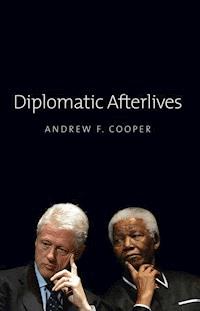
No longer content to fade away into comfortable retirement, a growing number of former political leaders have pursued diplomatic afterlives. From Nelson Mandela to Jimmy Carter, and Bill Clinton, to Tony Blair and Mikhail Gorbachev, this set of highly-empowered individuals increasingly try to make a difference on the global stage by capitalizing on their free-lance celebrity status while at the same time building on their embedded ?club? attributes and connections.
In this fascinating book, Andrew F. Cooper provides the first in-depth study of the motivations, methods, and contributions made by these former leaders as they take on new responsibilities beyond service to their national states. While this growing trend may be open to accusations of mixing public goods with private material gain, or personal quests to rehabilitate political image, it must ? he argues ? be taken seriously as a compelling indication of the political climate, in which powerful individuals can operate outside of established state structures. As Cooper ably shows, there are benefits to be reaped from this new normative entrepreneurism, but its range and impact nonetheless raise legitimate concerns about the privileging of unaccountable authority.
Mixing big picture context and illustrative snapshots, Diplomatic Afterlives offers an illuminating analysis of the influence and the pitfalls of this highly visible but under-scrutinized phenomenon in world politics.
Sie lesen das E-Book in den Legimi-Apps auf:
Seitenzahl: 319
Veröffentlichungsjahr: 2014
Ähnliche




















Copyright © Andrew F. Cooper 2015
The right of Andrew Cooper to be identified as Author of this Work has been asserted in accordance with the UK Copyright, Designs and Patents Act 1988.
First published in 2015 by Polity Press
Polity Press
65 Bridge Street
Cambridge CB2 1UR, UK
Polity Press
350 Main Street
Malden, MA 02148, USA
All rights reserved. Except for the quotation of short passages for the purpose of criticism and review, no part of this publication may be reproduced, stored in a retrieval system, or transmitted, in any form or by any means, electronic, mechanical, photocopying, recording or otherwise, without the prior permission of the publisher.
ISBN-13: 978-0-7456-6198-8
ISBN-13: 978-0-7456-6199-5 (pb)
ISBN-13: 978-0-7456-8738-4 (epub)
ISBN-13: 978-0-7456-8737-7 (mobi)
A catalogue record for this book is available from the British Library.
Library of Congress Cataloging-in-Publication Data
Cooper, Andrew Fenton, 1950-
Diplomatic afterlives / Andrew F. Cooper.
pages cm
ISBN 978-0-7456-6198-8 (hardback) – ISBN 978-0-7456-6199-5 (paperback) – ISBN 0-7456-6198-X (hardcover) 1. Heads of state. 2. Diplomacy. 3. Leadership. 4. International relations. 5. Peaceful change (International relations) 6. World politics. I. Title.
JF251.C66 2014
327.2–dc23
2014019491
The publisher has used its best endeavors to ensure that the URLs for external websites referred to in this book are correct and active at the time of going to press. However, the publisher has no responsibility for the websites and can make no guarantee that a site will remain live or that the content is or will remain appropriate.
Every effort has been made to trace all copyright holders, but if any have been inadvertently overlooked the publisher will be pleased to include any necessary credits in any subsequent reprint or edition.
For further information on Polity, visit our website: politybooks.com
Preface
An increasing number of former leaders have demonstrated that they both seek and possess extended diplomatic afterlives. Breaking free of an exclusive association with the statecentric system, a hybrid form of actor – both insider and freelance diplomat – has emerged. From Nelson Mandela to Jimmy Carter and Bill Clinton, to Tony Blair and Mikhail Gorbachev, these highly empowered individuals increasingly work to make a difference on the global stage by capitalizing on their celebrity status while building on their embedded club attributes and connections.
The methods deployed through their initiatives may still be hierarchical but are more inclusive as well as harmonious with the increasingly dispersed nature of authority. The agenda privileged by these networks covers an extended domain, including poverty alleviation, health and disease control, and crisis prevention; much of the work involved has shifted beyond the recognized power centers.
The concept grounding this book is that the contributions of these former leaders need to be recognized and examined seriously as operational boundary-spanners. The growing literature on ideational and policy networks highlights the contribution of nongovernmental organizations, especially functions taken on by civil-society organizations and business groups. The role of hyper-empowered individuals generally, and former leaders more specifically, however, remains unexamined, notwithstanding their unique set of advantages in terms of global projection.
If this innovative cluster has taken on numerous new roles and responsibilities in the twenty-first century, however, their activities are not uncontested. Ex-leaders use their diplomatic afterlife as a form of rehabilitation or compensation for political unpopularity and policy failure when they were in office. Moreover, some major former leaders can be criticized for mixing public goods and private material benefits. The image of policy-directed and norm entrepreneurism in the international arena blends with the perception that this form of activity can be both opportunistic and lacking accountability in practice.
The course from the initial idea to the completion of this book spanned two visiting appointments, my selection as Canada–US Fulbright Research Chair, Center on Public Diplomacy, Annenberg School for Communication and Journalism, University of Southern California, Los Angeles in 2009 and my appointment as Senior Fellow, Centre for Global Cooperation Research (CGCR), Duisburg, Germany in 2014. My research as Fulbright Chair related to the role of norm entrepreneurs, and my focus at CGCR dealt with the ascendancy of informality in global governance: topics that underscored the wider context of the Diplomatic Afterlives project. My targeted focus on the connections/disconnects between conventional and unconventional diplomacy was stimulated by my time as Associate Director and Distinguished Fellow at the Centre for International Governance Innovation (CIGI). This interest was embellished in turn by my academic activities at the Department of Political Science, University of Waterloo and the Balsillie School of International Affairs.
In my attempt to forge a nexus between intellectual analysis and global practice, I have benefited from a highly stimulating and productive relationship with Jorge Heine and Ramesh Thakur, with whom I co-edited the ambitious Oxford Handbook of Modern Diplomacy in 2013, after four and a half years of sustained research. Among the larger group of scholars and practitioners I have benefited from interacting with over the years have been Brian Hocking, Iver Neumann, Vincent Pouliot, Sharon Pardo, Michael Hawes, Geoff Pigman, Bill Maley, Sir Nicholas Bayne, John Kirton, Daniel Drache, Greg Chin, and Alan Alexandroff.
Eric Helleiner, Gerry Boychuk, Will Coleman, and Bessma Momani, to name just a few, have made the Department of Political Science a congenial academic home. I benefited from interacting with, among others, Geoff Wiseman at USC, and Dirk Messner, Silke Weinlich, Markus Böckenförde, and Abou Jeng at CGCR.
Throughout the research and writing process I am grateful to have worked with a number of talented research assistants. At USC, where I taught a course on unconventional diplomacy, Danielle Kelton did some first-rate preliminary research. At CIGI and BSIA, Tahnee Prior supplemented this research process in an impressive fashion, as did Andy Chater, Dan Herman, Asif Farooq, Amanda Sadowski, Ryan Hilimoniuk, and Jasmine Bélanger-Gulick at the University of Waterloo.
The catalyst for this book has been Louise Knight at Polity Press, who enthusiastically championed this project from the outset. I have very much appreciated her work in guiding the book to completion, along with the editorial team with David Winters initially and then Pascal Porcheron managing the project.
My final thanks, as in my entire repertoire of writings, are to my partner Sarah Maddocks. Although always interested in where my intellectual enthusiasms are taking me, she made sure that a balance existed between thinking about Diplomatic Afterlives and the practice of everyday life. It is to her I dedicate this book.
“I got out of politics early enough to have a second act in life. Why shouldn't a politician be able to do that?”
Tony Blair, December 2009, in an interview with the Sunday Times.
1Former Leaders on the Global Stage
The recognition that leaders have an exceptional status in public affairs is far from novel. What is new is the manner by which leaders extend the global span of their influence after their term of office is over. Traditionally, if leaders had an “afterlife,” it was animated in one of two ways. In the public sphere, former leaders guided national debate over strategic purpose as wise counselors. Lee Kuan Yew, the architect of the dynamic modern Singaporean state, served as an exemplar of this approach.1 But across a wide variety of countries, both democratic and nondemocratic, the phenomenon of former leaders playing formidable behind-the-scenes roles is widely embedded. Some perform this role as quintessential insiders, influencing big moments of national transition. Contradicting the image of whole-scale generational change at the Chinese Communist Party's Eighteenth National Congress held in Beijing during November 2012 was the visible presence of Jiang Zemin, the former General Secretary of the Communist Party (1989–2002). Others such as Margaret Thatcher devoted their post-leadership years to acting as robust if awkward defenders of their own ideological legacies, uniting their loyalists but dividing their parties. From the time she left office in November 1990, Thatcher was a polarizing figure in the Conservative party: “While declaring repeatedly that she wants to do nothing to make [her successor's] life miserable, she has done nothing but that.”2
In the private sphere, a number of former leaders have concentrated on enhancing their own material positions. The phrase “dash for cash” was coined to describe the actions of Bob Hawke, the Australian Prime Minister (1983–1991), who focused exclusively in his post-political years to building up the wealth that was not available to him as either a trade union leader or Labor party politician.3 Indeed, Hawke's commercially oriented consulting activities proved extremely lucrative, especially those focused on building economic connections to China. Although considered a path-breaker as a go-between for entrepreneurs, Hawke was far from alone. A cluster of former leaders had formal associations with The Carlyle Group, the high-profile global asset management firm specializing in private equity dealmaking. George H. W. Bush is the best known of this group, serving as Senior Advisor to the Carlyle Asia Advisory Board from April 1998 to October 2003. The global reach of this pattern of engagement, however, was extended through the connections built up by John Major, the former British Prime Minister, who acted as Chair, Carlyle Europe in the period from 2001–4, as well as Anand Panyarachun and Thaksin Shinawatra, former Prime Ministers of Thailand, and Fidel Ramos, former Prime Minister of the Philippines, all members of the Carlyle Asia Advisory Board until it was disbanded in 2004.
If still meriting notice, this kind of engagement has a backward-looking, restrictive feel, evoking an accentuated concentric ring of activity. Although their post-retirement endeavors contained a significant international reach, the former leaders in the policy influencer segment remained trapped by the state-centric system in which they had been pivotal players.4 Their frame of reference was and continued to be the national interest of their particular countries. They were thoroughly embedded in the traditional “club” system in which communication and other forms of interaction remained targeted exclusively on members of their successor peer group. They predictably clung to state-based privileges. After stepping down as prime minister Lee Kuan Yew served as Senior Minister from 1990 to 2004. Thatcher used the House of Lords as a formidable bully pulpit.
The materially driven were different not so much in motivation but in terms of scale of reward and projection from a wide number of antecedents. A small number of ex–US presidents tried to cash in on their fame even before the late twentieth century. Ulysses Grant, after embarking on a two-year global tour, became a principal in the establishment of the newly formed Mexican Southern Railroad Co., an enterprise that eventually failed. He then resorted to writing a memoir, as other civil war generals had done. In a similar vein Calvin Coolidge was appointed to a directorship on the board of the New York Life Insurance Company.5
What makes the extended reach of former leaders more fascinating and salient, albeit also more ambiguous, is the reinvention of the approach through a different style and substantive way of doing things. Through such a shape-shifting, the top tier of this newer, more dynamic wave has taken on hybrid personae, situated in the nexus between traditional club membership and transnational diplomacy. The core members of this twenty-first century wave – mega-individuals such as Jimmy Carter, Bill Clinton, Mikhail Gorbachev, Tony Blair, and, up to his death in 2013, the iconic Nelson Mandela – retain many of the characteristics of privileged members of the state-centric circle. No less than Lee Kuan Yew or Margaret Thatcher, they retained access to their successor peer group in office as well as other important decision-makers entrenched within the extended state apparatus. Yet, released from the restrictions of a closed culture dominated by hierarchy and imperatives of secrecy, these same individuals tapped into a much larger network of actors with different modes of representation and identity definition.
In terms of purpose, these former leaders stepped beyond the narrow confines of interest-based decision-making to a more ambitious and open-ended ideational/normative approach based on a project of advancing tenets of transnational social purpose. They could lever their state-based connections though various forms of troubleshooting diplomacy, via mediation and election monitoring. Isolation in an exclusive political culture is replaced by some components of a globally oriented project via the delivery of select public goods.
To signal the magnitude of this break is not to suggest that it took place as a decisive rupture rather than an incremental process of change. Some signs of a different configuration, a reinvented brand for ex-leaders, predated the rise of the newer, more dynamic and inter-connected cluster. It is striking that the most commercially oriented former leaders sought to offset the instrumental image by directing attention to work they did for the advancement of international cooperation. Bob Hawke, looking beyond his years in politics, pointed to his contribution to the establishment of the Boao Forum as an Asian equivalent to the Davos World Economic Forum (WEF), as an endorsement of his commitment to social purpose. Gerhard Schröder, the former German Chancellor, more cumbersomely sought to compensate for his own controversial tilt toward the dash for cash by references to his performance as a statesman who stood up to George W. Bush during the 2003 Iraq invasion. In adopting such a counternarrative he brought to the fore the sharp juxtaposition between his longstanding reputation as a principled politician and the opprobrium attaching to an ex-leader dismissed by the chair of the US House Committee on Foreign Affairs as a “political prostitute” for his willingness to sell his services to the Russian state company Gazprom as head of the shareholders' committee of Nord Stream.6
Other policy influencers also signaled that they could combine conviction politics and dash-for-cash practices. As a harbinger of what was to come in the afterlives of Bill Clinton, Tony Blair, and Mikhail Gorbachev, Margaret Thatcher broke new ground not only in creating the first personal foundation created by an ex-leader (the Margaret Thatcher Foundation, to promote the ideals of the former prime minister)7 but in the size of the fees that she was able to extract for her speaking tours and royalties. The publication rights for her memoirs brought between $2.5 and $3 million, and she commanded $50,000 an hour for speeches.8 On both counts she stands out as the precursor of the other piece of the duality captured in the activity to follow: the blend of a global conviction trajectory with material self-enhancement.
The extended approach transcended the attributes and persona of the first disjointed cluster. Not only were there a much larger number of engaged former leaders, they were far more willing to go beyond the gatekeeper model of diplomatic activity. One difference was simply the number of former leaders who took on this hybrid status. The policy influencers in the first cluster, as mentioned, stayed firmly entrenched in their national institutions. In doing so, they continued to be connected to the dominant club culture. Yet, as seen in the activities of Margaret Thatcher, attempts to juggle the defense of an ideological/political legacy with the extraction of material resources proved awkward when framed in the context of national interest. By contrast, the embrace of the global provided some degree of legitimacy for the approach, with a demonstration effect for other former leaders to become involved.
Another point of divergence is the nature of their public personalities. The big individuals of the traditional cluster certainly held some core elements of celebrity status, but it was a status that was based narrowly (albeit impressively) on national political leadership. In some cases, it adhered tightly to a framework of achievement in which celebrity status is earned by doing, through the projection of ample amounts of skill and talent. The members of the new wave retained this achievement component, but embellished it via the addition of an emphasis on the projection of a transnational public image. Within the framework of the hybrid approach, authority derived from state-based experience and then combined with public admiration derived from a global projection of fame.9
Concentration on the ascriptive connotation provides some advantages post-power, with the focus on diplomatic social purpose. With the focus of attention channeled exclusively through serious media outlets, the activities of the former leaders of the first cluster are treated substantively, with a high degree of gravitas cum contestation. The only time that members of this cluster grabbed attention in the popular media was when they – or their family members or close circle – got caught up in some sensitive life situation. The asymmetrical nature of this scrutiny was evident in the case of Margaret Thatcher, when her son was arrested in South Africa in 2004 for allegedly planning a coup in Equatorial Guinea; or when her daughter Carol released two books, the first of which (in 1996) criticized Thatcher's skills as a mother and the second (in 2008, with some of the themes that came out in the movie, The Iron Lady) confirming that she suffered from dementia.
The personae of the former leaders at the core of the new approach, however, correspond to the image of celebrities more generically, both users of and targets for an abundance of continuous attention from a wide variety of media sources. Unlike the traditional cluster, who were tied to the statecentric club culture as a barometer for their sense of identity, authority, and legitimacy, the reconfigured approach was linked to a sense of credibility beyond the state. What stands out is the appreciation of the integral connection between their instrumental activities in the afterlife with their ability to deliver spectacle in the performance of global star turns. A codependency developed between the nature of their performances and the nature of their image as mega-individuals.
The stretched-out sense of hybridity between what can be termed (to build on Thomas Friedman's label) super- or hyper-empowered individualism, building on the personalism of the older cohort, but interjecting a focus on the ability “to act much more directly and much more powerfully” on the world stage at the heart of the reinvented model.10 Building on but extending the model of country-specific or localistic leadership, a great deal of emphasis on the hyper-empowered individualism component centered on the extended transformation of an upwardly mobile aspirant to the “extraordinary” persona positioned in the transnational public sphere. Here references to Jimmy Carter as the peanut farmer from Plains, Georgia; Bill Clinton, as the boy from Hope, Arkansas; and Tony Blair as “a regular guy” with lots of interests outside of politics,11 maintain their relevance. What is different in the reconfigured approach of former leaders' activity is that these personal attributes are married in varied formats to strong and sustained network power.
Given their entrapment within national institutional structures, the traditional cohort had no incentive to break out into freelance transnational activity. Externally Lee Kuan Yew was able to exert considerable leverage post–formal retirement from the US (meeting and counseling every president from Richard Nixon to Barack Obama) to China. Internally, with the accolade of “Minister Mentor” accorded to him by his son Lee Hsien Loong when the latter became Singapore's third prime minister in 2004, Lee Kuan Yew extended his links with the state. Nor could this older expression of ex-leader activity mesh easily with the network age. Here the experience of the Margaret Thatcher Foundation is an illuminating illustration. Instead of building a professional operation, the foundation retained a family–based structure. Margaret Thatcher's son Mark played an active role and a year after its opening the foundation was still without permanent staff or headquarters. In such an atmosphere the ambitious plans, most notably for commissioned research and distribution of educational grants, and assistance to the former Communist states of central and Eastern Europe, stalled. By the end of 1994 the foundation had given away just 10 percent of monies collected.12
By contrast, the authority and legitimacy of the hyper-empowered individuals at the core of the reinvented approach were leveraged after their formal retirement by the image of them as both insiders and outsiders with huge organizational capacity and well-established sets of contacts and resources outside as well as inside the state system. Instead of restricting their activities to the stereotypes of what former leaders might be expected to do – symbolic meetings with current leaders and the production of policy advice either publically (via op eds) or privately (through privileged access) – this new cluster wanted to deliver tangible results across a wider array of geographic and functional domains.
In putting this script into operation, the hyper-empowered individuals at the core of the reconfigured approach have carved out, in mediation, a distinctive but derivative niche. Again, there are elements of continuity in this form of activity. Teddy Roosevelt intervened to find an end to the 1905 war between Russia and Japan – and won the Nobel Peace Prize for attaining this goal via the Treaty of Portsmouth. Prominent business leaders such as Armand Hammer, the CEO of Occidental Petroleum Co., acted as go-betweens in the Cold War era – although the impact of such figures is debated. And specific conflicts have seen the mobilization of a wide range of mediators, state and nonstate, ranging from trusted personal advisors of leaders, ambassadors at large, and respected academics, as well as UN special representatives. What is new is the scale and geographic scope of this form of activity.
Former leaders mix the traditional role for mega-individuals with an innovative mode of operation as norm and policy entrepreneurs. In terms of extended hybridity, they straddle not only the closed world of the diplomatic club culture but the diverse worlds of nonstate actors. They replicate the trajectory in the world of business: “Entrepreneurs may act individually, but often they create organizations or networks for propagating their ideas.”13
The twist in the mode of operation by former leaders is that unlike many other norm and policy entrepreneurs the top-tier former leaders were not molded by the structure of the organization that they were part of, with the organization providing a platform for the individual entrepreneurs by prescribing a certain way of using information, knowledge, and expertise.14 Indeed, this is a key source of difference as well between the freelance orientation of Carter, Clinton, Gorbachev, Blair, and Mandela and a wider subset of other former leaders that embraced more formal means of global animation. In contrast to the mode of activity adopted by these other clusters, the former leaders at the core of this book created organizations designed to enhance their personal imprint in terms of agency, to give them day-to-day control over all of the workings of their personalized foundations.
Conceptually as well as operationally, the top-tier cluster of former leaders can be depicted as bridging the spectrum between the worlds of public and private authority. Research on the expanding influence of private authority has focused almost uniformly on the link between this phenomenon and the extension of organizational complexity as located in business, civil society, and especially regulatory bodies.15 Such a perspective, nonetheless, forms only part of the analysis. Big individual actors must be interjected into the structure, as they have the ability to shape some aspects of global affairs according to their own preferences. In terms of agency the new cluster of former leaders have the advantage of access not at the domestic level but at an accentuated transnational level. Moreover they have a greater ability to transcend complexity through the impact of spectacle.16 That is to say, the reconfigured approach is premised on the fact that the top-tier former leaders can leverage substantive advantages not only because they have insider status in terms of elite policy but because they have a high degree of attention-grabbing status among the wider public, a combination unavailable to other actors.
Setting the Context for Bringing Former Leaders In
The orthodox International Relations literature has severely neglected if not shut out completely the role of individuals, the so-called first image of international politics. Structure trumps agency generally and individual agency in particular. This neglect is most explicit in the parsimony associated with the “black box” treatment of state actors so vital in neorealism.17 But other schools of thought also downplay the role of the individual, though perhaps not as rigidly. Liberal institutionalists emphasize the salience of state preferences.18 Unlike in formal economics, individuals are in the mix – commonly as actors that shape preferences – but they are not given extensive, nuanced expression. Even social constructivists who privilege the creation of norms – or the reconstruction of norms – through a recognition of the creative nature of human agency have put the onus on transnational advocacy networks without much consideration of the individual dimension.
The exceptions to this rule are those studies that locate leaders at the apex of authority in either national state settings or as heads of formal institutions. A huge literature exists concerning the psychological as well as the social characteristics of leaders in a statecentric context, with a bias toward those in command and control positions in large powerful countries.19 Integrating work that links ideas and institutional change has also become available, with an appreciation of the role of key individuals at key moments of transformation, such as the Gorbachev factor in the reconfiguration of the Soviet Union.20
Leaders – and leadership qualities – also grab notice in the context of multimember international institutions across the board from the United Nations to the World Bank, the International Monetary Fund, and the General Agreement on Tariffs and Trade / World Trade Organization (GATT / WTO). Heads of international organizations are deemed worthy of study in part because of the means by which these leaders are brought into office. Also relevant is that these institutions are viewed as possessing important autonomous international personalities in their own right, with social forms that exhibit distinctive forms of authority, power, goals, and behavior.21
While important in mitigating the bias against individuals, these counterexamples of scholarly interest in isolation signal as much about the limitations as the opportunities of this avenue of exploration. The study of national political leaders, when located through conventional modes of interpretation, accents the degree to which they remain trapped in a culture of statecentric sovereignty. These limitations are at odds with many of the seismic trends driving change in international relations. In terms of global governance, what is missing is an awareness of the greater privileging of moral or normative claims in the shaping of solutions to transnational problems. As opposed to the rigid concentration on “high” issues to do with interstate war and peace through the Cold War period, the problems that cross borders have now come under greater scrutiny. These include issues extending into the social arena, including development, health, and the environment. Such a transformed setting brings with it a heightened awareness of the potential impact of norm and policy entrepreneurs, with a remobilization of awareness around the need for “more eclectic, fluid, issue specific and personality-bound forms of political recognition and engagement.”22
In terms of diplomacy, the established modes of analysis lack a sensibility that admits a pluralistic dimension. Driven by conceptual concerns that are not entrapped by the statecentric international relations literature, diplomacy has evolved and been reconfigured to mesh with the space that has come open for transnational nonstate actors and practices.23 While diplomacy may have at one time represented an elite practice of communication and negotiation between nation-state representatives, diplomacy now connotes something “more inclusive and ubiquitous.”24 Geoffrey Wiseman, for example, has pushed for the recognition of the concept of “polylateralism” with respect to diplomacy; this approach takes into account a wider set of relationships involving not only disparate organizations but individuals “with global interests.”25
Paradoxically, one consequence of these expanded sites of operation has been a heightened sensitivity to the importance of leaders and key advisors in driving institutional reform. A classic case of this subordination effect can be witnessed in the rise of informal bodies such as the G20 and BRICS (the grouping of big emerging countries encompassing Brazil, Russia, India, China, and South Africa). On the one hand, leaders themselves have expanded their purview over crisis management in the aftermath of the 2008 financial crisis. Leaders, it was acknowledged to an exaggerated degree, are different from ministers and bureaucrats. They alone through their “organized performances” send the right psychological/symbolic signals to citizens.26 Only they, from a substantive perspective, could animate a comprehensive design to crisis busting. On the other hand, the rise of the G20 has also demonstrated the key role for technical experts such as central bank governors and networks encompassing the Financial Stability Board and the Basel Agreement.27
Yet, accompanying this preoccupation with the economic main game, the room for an expanded ambit and forms of agency by other actors stands out as well. If the state has made a vigorous return in many components of political economy since 2008, in other areas it has let responsibilities go. This retreat is especially evident in the areas encompassing global public goods: a trend that has exacerbated the pattern of disintermediation between institutions and citizens in sensitive areas of transnational diplomacy. As development, global health, environmental agencies, and programs are cut back, other entities can step in, either due to issue-specific outsourcing or a more systematic offloading of responsibilities.
These trends in combination provide the foundations that give the role of hyper-empowered individuals generally, and former leaders more specifically, their heightened relevance in global politics. If, as Sharp contends, diplomacy is laden with a kind of “talismanic” quality,28 then many if not all of the main actors in the new cluster of former leaders have this quality in abundance.
Certainly former leaders are not unique in their ability to provide norm- and policy-directed entrepreneurism. In terms of form, scope, and intensity of activities this cluster of hyper-empowered – and hybrid – individuals compete and overlap cooperatively with an often even better resourced and larger set of actors, above all NGOs / civil society groups but also philanthropic foundations and think tanks. In terms of diversity of voice opportunities, scale of enterprise, and organizational capacity, these other actors retain some clear advantages. Many NGOs also can claim, as groupings entirely removed from connections with the statecentric club culture, that they have greater operational legitimacy.
What provides former leaders with some comparative and compensating advantages is the possession of name recognition and, in a number of cases, celebrity status. Smaller NGOs in particular struggle for notice in a crowded field. Although possessing strong organizational or brand appeal, even major NGOs lack the type of visible, charismatic type of leadership offered by the hyper-empowered individuals located in the cluster of former leaders.
This ingredient of public visibility is missed in the literature that embraces the agency of a new set of actors and attempts to use it to animate social purpose. While the idea of a transnational norm, social, or policy entrepreneur is well-developed thanks to the examination of numerous case studies, the practices engaged in by individuals as opposed to NGOs or social movements in this category remains underdeveloped. There is a thin number of key individuals such as Henry Dunant, the Swiss banker who founded the International Red Cross; Jody Williams, in her leadership role of the land-mines campaign; and Muhammad Yunus, the Bangladeshi economist who with the foundation of the Grameen Bank provided a model for replication in other parts of the global south. Aside from this type of notable exception, all of whom used a bottom-up mobilization approach, the scrutiny of social and policy entrepreneurs is conducted academically without detailed reference to specific individuals.
In practice, it is much harder for NGOs to straddle the line between an organization with an insider orientation and one with an outsider orientation. Because of their hybridity, former leaders have greater – albeit not complete – ability to play this boundary-blurring role. Free from office, and the responsibilities of power, they have some ability and incentive to play a more autonomous role. While efforts to name and shame a current government, or to play an activist freelance role, on a transnational basis are not without risks, the rewards both in terms of kudos and material benefits are augmented.
As former heads of government, however, these new hyper-empowered individuals retain also the attributes attached to their club status, with considerable ability to leverage state-based connections. Significantly, their mode of networking is very different from the operational model described in the last book by James Rosenau, People Count!, which relates the rise of “networked Individuals” to the context of a shrinking, complex world.29 While the openings in the historically fixed systems that Rosenau describes, with the concomitant release of autonomy, can also be seen as catalyst for the reconfigured model of activity by former leaders, the effect is quite different. In comparison to the “ordinary” citizens that Rosenau focused on, former leaders retain entrenched elite characteristics. Even when compared to other categories of hyper-empowered individuals whose influence has been elevated30 – whether celebrities from the domain of entertainment such as Bono, Angelina Jolie, and George Clooney, or philanthropists among the super-rich such as Bill Gates and Warren Buffett – former leaders retain a state-based standing that is not only more elevated than these other groups but earned by past performance and application of authority.
These former leaders' practice of their roles may be seriously contested both normatively and operationally. Still, unlike the ascriptive categories of celebrities, they do not face the hurdle of authenticity in entering the domain of public policy in their afterlife. They match the elevated level of visibility associated with other categories of actors intruding into global affairs, but unlike celebrities in the entertainment business they possess ample authenticity in the domain of achievement. Their “first lives” contain various forms of political baggage, but all have substantive records as public policy makers at the apex of power at the national level before going global after leaving office.
Putting Former Leaders in the Forefront of Analysis
Having established some claims concerning both the generic and unique qualities for the role of former leaders as a distinctive cluster of hyper-empowered individuals, the constructed limitations on this role must be laid out as well. As rehearsed above, the core group of this category is taken to be quite small and geographically confined. Such a narrow purview leads naturally to the criticism that the wave of former leaders going global in such a hybrid (club/network) manner is another area of global activity that showcases the structural “exceptionalism” of US ex-leaders specifically and English-speaking ex-leaders more generally.




