


27,99 €
Mehr erfahren.
- Herausgeber: John Wiley & Sons
- Kategorie: Geisteswissenschaft
- Sprache: Englisch
A solid foundation for improving your drawing skills
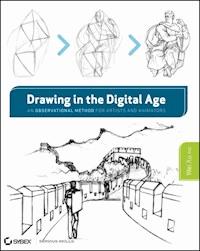
Teaching a new observational method based on math and computer graphics principles, this book offers an innovative approach that shows you how to use both sides of your brain to make drawing easier and more accurate. Author Wei Xu, PhD, walks you through his method, which consists of scientific theories and principles to deliver real-world techniques that will improve your drawing skills. Xu's pioneering approach offers a solid foundation for both traditional and CG artists.
- Encourages you to use both sides of your brain for drawing with the highest efficiency possible
- Introduces an innovative method invented by the author for improving your drawing skills
If you are eager to learn how to draw, then this book is a must read.
Das E-Book können Sie in Legimi-Apps oder einer beliebigen App lesen, die das folgende Format unterstützen:
Seitenzahl: 360
Veröffentlichungsjahr: 2012
Ähnliche




















Table of Contents
Cover
Title Page
Copyright
Publisher's Note
Dedication
Acknowledgments
About the Author
Introduction
Why I Wrote This Book
Who Should Read This Book
What You Will Learn
Pretest
How to Contact the Author
Chapter 1: Understanding the Relationship between Math and Art
Understanding How Math and Art Differ
Understanding How Math and Art Are Similar
Using Math to Create Digital Art
Using Math in Traditional Drawing
Using Math to Help You Draw
Examining Existing Drawing Methods
Stop Separating Math from Art
Chapter 2: Extracting Graphical Structures—A Scientific Point of View
Introducing CG Concepts and Principles
Unifying 2D and 3D Cases
Understanding the Properties of Basic Shapes
Understanding Graphical Structures
Extracting GSs with Triangulation
Chapter 3: Drawing with the ABC Method
Meeting the Criteria for a New Drawing Method
Introducing the ABC Method
Chapter 4: Drawing Simple Objects
Preparing to Draw
Extracting Basic Information
Demonstrations of 3D Objects
Demonstrations of 2D Images
Exercises
Chapter 5: Drawing Complicated Objects
Breaking Down Complexity
Demonstrations
Exercises
Chapter 6: Drawing Complicated Scenes
Introducing Techniques for Merging Objects
Demonstrations
Exercises
Chapter 7: Using Advanced Techniques
Working with Curved Triangles and Polygons
Drawing a Group of Ovals
Using Shadow Maps
Using Rhythms for Partitioning
Exploring Trade-Offs between Accuracy and Speed
Demonstrations
Summary
Exercises
Chapter 8: Using Special Techniques for Drawing Human Bodies
General Tips
Tips for Drawing Faces
Tips for Quick Life Sketches
Demonstrations
Summary
Exercises
Post-Test: Drawing Van Gogh
Index
Development Editor: Gary Schwartz
Technical Editor: James Haldy
Production Editor: Eric Charbonneau
Copy Editor: Sharon Wilkey
Editorial Manager: Pete Gaughan
Production Manager: Tim Tate
Vice President and Executive Group Publisher: Richard Swadley
Vice President and Publisher: Neil Edde
Book Designer: Caryl Gorska
Compositor: Maureen Forys, Happenstance Type-O-Rama
Proofreader: Kim Wimpsett
Indexer: Ted Laux
Project Coordinator, Cover: Katherine Crocker
Cover Designer: Ryan Sneed
Cover Images: Wei Xu, PhD
Copyright © 2012 by John Wiley & Sons, Inc., Indianapolis, Indiana
Published simultaneously in Canada
ISBN: 978-1-118-17650-4 (pbk.)
ISBN: 978-1-118-22716-9 (ebk)
ISBN: 978-1-118-23315-3 (ebk)
ISBN: 978-1-118-26479-9 (ebk)
No part of this publication may be reproduced, stored in a retrieval system or transmitted in any form or by any means, electronic, mechanical, photocopying, recording, scanning or otherwise, except as permitted under Sections 107 or 108 of the 1976 United States Copyright Act, without either the prior written permission of the Publisher, or authorization through payment of the appropriate per-copy fee to the Copyright Clearance Center, 222 Rosewood Drive, Danvers, MA 01923, (978) 750-8400, fax (978) 646-8600. Requests to the Publisher for permission should be addressed to the Permissions Department, John Wiley & Sons, Inc., 111 River Street, Hoboken, NJ 07030, (201) 748-6011, fax (201) 748-6008, or online at http://www.wiley.com/go/permissions.
Limit of Liability/Disclaimer of Warranty: The publisher and the author make no representations or warranties with respect to the accuracy or completeness of the contents of this work and specifically disclaim all warranties, including without limitation warranties of fitness for a particular purpose. No warranty may be created or extended by sales or promotional materials. The advice and strategies contained herein may not be suitable for every situation. This work is sold with the understanding that the publisher is not engaged in rendering legal, accounting, or other professional services. If professional assistance is required, the services of a competent professional person should be sought. Neither the publisher nor the author shall be liable for damages arising herefrom. The fact that an organization or Web site is referred to in this work as a citation and/or a potential source of further information does not mean that the author or the publisher endorses the information the organization or Web site may provide or recommendations it may make. Further, readers should be aware that Internet Web sites listed in this work may have changed or disappeared between when this work was written and when it is read.
For general information on our other products and services or to obtain technical support, please contact our Customer Care Department within the U.S. at (877) 762-2974, outside the U.S. at (317) 572-3993 or fax (317) 572-4002.
Wiley also publishes its books in a variety of electronic formats and by print-on-demand. Not all content that is available in standard print versions of this book may appear or be packaged in all book formats. If you have purchased a version of this book that did not include media that is referenced by or accompanies a standard print version, you may request this media by visiting http://booksupport.wiley.com. For more information about Wiley products, visit us at www.wiley.com.
Library of Congress Control Number: 2011945578
TRADEMARKS: Wiley, the Wiley logo, and the Sybex logo are trademarks or registered trademarks of John Wiley & Sons, Inc. and/or its affiliates, in the United States and other countries, and may not be used without written permission. All other trademarks are the property of their respective owners. John Wiley & Sons, Inc. is not associated with any product or vendor mentioned in this book.
10 9 8 7 6 5 4 3 2 1
Dear Reader,
Thank you for choosing Drawing in the Digital Age: An Observational Method for Artists and Animators. This book is part of a family of premium-quality Sybex books, all of which are written by outstanding authors who combine practical experience with a gift for teaching.
Sybex was founded in 1976. More than 30 years later, we’re still committed to producing consistently exceptional books. With each of our titles, we’re working hard to set a new standard for the industry. From the paper we print on to the authors we work with, our goal is to bring you the best books available.
I hope you see all that reflected in these pages. I’d be very interested to hear your comments and get your feedback on how we’re doing. Feel free to let me know what you think about this or any other Sybex book by sending me an email at [email protected]. If you think you’ve found a technical error in this book, please visit http://sybex.custhelp.com. Customer feedback is critical to our efforts at Sybex.
Best regards,
Neil Edde
Vice President and Publisher
Sybex, an Imprint of Wiley
To my parents and family
Acknowledgments
First and foremost, I would like to thank my parents for fostering my artistic dreams when I was a little child. This book originated from those small dreams.
I am grateful to my wife, Lin, for her continuous support for this book project.
Thanks also go to my lovely daughter, Alicia, and my clever son, Daniel, for being the first users of the new method I describe in this book. Their initial learning success validated that my method is easy to learn, and even kids can pick it up without difficulty.
I offer profound thanks to the wonderful team at Wiley, especially Mariann Barsolo and Jenni Housh for establishing the book project and working on the contract quickly, Gary Schwartz for polishing my scripts as well as turning my “Chinenglish” into English, James Haldy for spotting and fixing technical issues, Pete Gaughan for solving template issues, and Eric Charbonneau for making the book ready for publication. Also contributing to the book you now hold were copy editor Sharon Wilkey, proofreader Kim Wimpsett, and compositor Maureen Forys. Thanks again to all for a job exceptionally well done.
This book is the product of years of research and art learning. I’d like to thank members of the faculty and staff of the Art Institute of California at San Diego for their assistance in my art education and writing about art, particularly the following individuals (in alphabetical order): Jack Beduhn, Christian Bradley, Rebecca Browning, Dr. Alicia Butters, Elizabeth Erickson, Harry Hamernik, Jason Katsoff, Wattana Khommarath, Jack Madi, Dr. Mary McDermott, Dzu Nguyen, Lena Pham, Grace Piano, Dr. Kim Varey, and Grady Williams.
I also want to thank the students at the Art Institute of California at San Diego for attending my workshops and giving me positive feedback over the past two years. Without their involvement, my method could still be in the research stage instead of being a published book. Special thanks go to my students Alvin Revilas and Blake Fox for their proofreading of my research articles related to this book.
Of course, I cannot forget to thank Susan Varnum, Dr. Edward Abeyta, and Robin Wittman of the University of California San Diego Extension for their efforts to set up a new art class to teach my method in the winter of 2012.
I owe debts of gratitude to faculty, staff, and students at Zhejiang University, especially Dr. Weidong Geng and Ms. Xiao Li for inviting me to lecture their multimedia students on my drawing method in the summer of 2011.
I’d like to thank Alex Reed for her language assistance in preparing the first draft of this book.
Finally, I want to thank you, the reader, for picking up this book and taking an exciting drawing journey with me!
About the Author
Wei Xu, PhD, is a computer scientist, mathematician, and artist. Currently, he serves as faculty or adjunct/visiting faculty at several universities including the Art Institute of California at San Diego, the University of California San Diego Extension, and Zhejiang University (China). He is also the president and cofounder of Geomy Entertainment, a video game consulting and mobile app development firm.
Being a computer scientist and video game veteran, Dr. Xu offers a wide range of video game production classes for college students and technical training for game companies. As an artist, he has been hosting drawing workshops at the Art Institute of California at San Diego since 2009. Starting January 2012, he will officially offer drawing classes to teach his new drawing system, the ABC method, at both the Art Institute of California at San Diego and the University of California San Diego Extension.
Dr. Xu obtained his doctoral degree in computer graphics and applied mathematics from the University of Texas at Austin. He also holds an MS degree in applied math and computer graphics from ZheJiang University, China, and a BS in computational mathematics from Fudan University, China. He has served as the lead engineer for game technology R&D at Sony Computer Entertainment America, San Diego. Prior to joining Sony, he was a senior computer graphics software engineer at the Schlumberger Austin Technology Center.
Introduction
If there’s a book you really want to read, but it hasn’t been written yet, then you must write it.
—Toni Morrison, writer and Nobel Prize winner
Why I Wrote This Book
Up until five years ago, I honestly had never thought about writing an art book in my entire life. As a mathematician and computer graphics scientist, it seemed that I should have a million reasons to write a 3D math or mobile-game programming book before I would even think about writing a book about drawing. Also, you would not have expected a drawing book to be written by a person who does not have an official art degree. But everything has its explainable and logical reasons.
My Lost Dream
I was born and raised in a small town on the east coast of China. Because the region was so underdeveloped, I did not have a chance to get any art training beyond the school’s limited art classes when I was a child. After entering middle school, I received some special attention from my school’s art teacher. He taught me the grid method—a fancy method I had never used before. I was immediately addicted to this “magic” method because my drawing improved in no time. I practiced it a lot, until a year later when I sadly learned that I couldn’t draw anything without a grid! With my mother’s advice, I stopped using the method immediately, but it still took me more than a year to recover my freehand drawing skill. Learning the wrong drawing method was a big lesson! I considered myself a self-taught amateur because most of my time after that incident was spent on drawing without instruction. Becoming an artist was my dream since childhood, but the dream never materialized in China. When I graduated from high school, I couldn’t go to any art school because of their extremely limited enrollment size. Instead, I ended up as a math major at Fudan University, a top university in China known for its math education department. Eventually, I became a mathematician and computer graphics scientist after graduate studies in both China and the United States. I rarely drew after I started college, and my artistic dream was set aside for many years.
Lesen Sie weiter in der vollständigen Ausgabe!
Lesen Sie weiter in der vollständigen Ausgabe!
Lesen Sie weiter in der vollständigen Ausgabe!
Lesen Sie weiter in der vollständigen Ausgabe!
Lesen Sie weiter in der vollständigen Ausgabe!
Lesen Sie weiter in der vollständigen Ausgabe!
Lesen Sie weiter in der vollständigen Ausgabe!
Lesen Sie weiter in der vollständigen Ausgabe!
Lesen Sie weiter in der vollständigen Ausgabe!




