


132,99 €
Mehr erfahren.
- Herausgeber: John Wiley & Sons
- Kategorie: Fachliteratur
- Serie: Wiley-Society for Biomaterials
- Sprache: Englisch
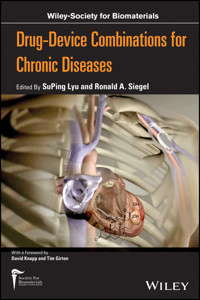
This book covers two areas, the first detailing the concepts and technologies of drug-device combination products. The second area includes case studies of important products that either significantly shape our technologies and thinking, or contribute to current healthcare practice. The book: * Discusses where drugs and devices work, where they fail, and when they need to work with each other * Reviews interactions between human bodies and the drug-device combination products the measurements of these interactions * Covers how a drug-device combination product is developed, tested, and regulated * Includes case studies of steroid releasing leads, AOA treated tissue heart valves, intrathecal drug delivery pumps, infuse bone grafts, drug eluting stents, and antimicrobial meshes
Sie lesen das E-Book in den Legimi-Apps auf:
Seitenzahl: 546
Veröffentlichungsjahr: 2015
Ähnliche



















CONTENTS
Cover
Wiley – Society for Biomaterials Series
Title Page
Copyright
Foreword
Preface
Part I: Backgrounds
Chapter 1: Addressing Medical Device Challenges With Drug–Device Combinations
1.1 Introduction
1.2 The Host Foreign Body Reaction
1.3 Device-Based Thrombosis
1.4 Biomaterials-Associated Infection
1.5 Combination Medical Devices
1.6 Future Directions
Acknowledgment
References
Chapter 2: Historical Survey of Drug Delivery Devices
2.1 Introduction
2.2 The Origins of Drug Delivery Devices
2.3 Classification of Drug Delivery Devices
2.4 An Early Example of Designed Drug Delivery Systems: Osmotic Drug Delivery Systems
2.5 Another Early Delivery System Based on Membrane-Controlled Release: Ocular Delivery Systems
2.6 Early Successes in the Use of Membrane and Hybrid Systems: Transdermal Patches
2.7 Early Efforts to Target Drug Delivery: Mucoadhesive Drug Delivery Systems
2.8 Drug Delivery in Combination Products: Drug-Eluting Stents
2.9 The Advent of Microfabricated Drug Delivery Devices
2.10 Conclusions and Directions
References
Chapter 3: Development of Combination Product Drug Delivery Systems
3.1 Introduction
3.2 Oral Delivery
3.3 Dermal Delivery
3.4 Implantable Delivery
3.5 Conclusions
Acknowledgments
References
Chapter 4: Drug–Material Interactions, Materials Selection, and Manufacturing Methods
4.1 Introduction
4.2 Drug–Device Interactions and Tests
4.3 Material Selection and Development
4.4 Manufacturing Methods for Combining Drugs into Devices
4.5 Summary
References
Part II: Products
Chapter 5: Steroid-Releasing Lead
5.1 Introduction
5.2 Background
5.3 The Quest for Low-Threshold Leads
5.4 The Evolution of Steroid-Eluting Electrodes
5.5 Inflammation Mechanisms and the Effects of Steroid Elution
5.6 The Mechanism of Chronic Steroid Elution: Does the Steroid Run Out?
5.7 Other Possible Drug Elution Systems
5.8 Summary
References
Chapter 6: Thromboresistant Vascular Graft
6.1 Introduction
6.2 Vascular Grafting for Peripheral Arterial Reconstruction
6.3 ePTFE Vascular Grafts
6.4 Early Heparin Surfaces
6.5 Carmeda Bioactive Surface Technology
6.6 Understanding CBAS Surface Hemocompatibility
6.7 Early Clinical Experience With CBAS Surface
6.8 Product Development
6.9 Clinical Performance, Clinical Usefulness, and Clinical Challenges
6.10 Heparin-Induced Thrombocytopenia
6.11 Working Hypothesis
6.12 Summary
References
Chapter 7: Device-Enabled Drug Infusion Therapies
7.1 Introduction
7.2 Basic Device Requirements and Routes of Infusion
7.3 Infusion Therapy Components and Functions
7.4 Clinical Applications
7.5 Advantages
7.6 Interactions
7.7 Challenges
7.8 Development and Regulatory Approval of New Infusion Therapies
7.9 New Indications in Development
7.10 Future Possibilities for Infusion Technology
References
Chapter 8: Promus Element™ Plus
®
: A Drug-Eluting Stent
8.1 Introduction
8.2 Stent
8.3 Drug Coating Matrix
8.4 Drug Release Kinetics
8.5 Local and Vascular Pharmacokinetics
8.6 Pharmacodynamics: Vascular Response
8.7 Clinical
8.8 Conclusion
Acknowledgments
References
Chapter 9: Infuse
®
Bone Graft
9.1 Introduction
9.2 Conclusion
References
Index
End User License Agreement
List of Tables
TABLE 1.1
TABLE 4.1
TABLE 4.2
TABLE 4.3
TABLE 5.1
TABLE 6.1
TABLE 6.2
TABLE 6.3
TABLE 6.4
TABLE 8.1
TABLE 8.2
TABLE 8.3
TABLE 9.1
List of Illustrations
FIGURE 1.1
FIGURE 1.2
FIGURE 1.3
FIGURE 1.4
FIGURE 1.5
FIGURE 2.1
FIGURE 2.2
FIGURE 2.3
FIGURE 2.4
FIGURE 2.5
FIGURE 2.6
FIGURE 2.7
FIGURE 2.8
FIGURE 3.1
FIGURE 3.2
FIGURE 3.3
FIGURE 3.4
FIGURE 3.5
FIGURE 3.6
FIGURE 3.7
FIGURE 3.8
FIGURE 3.9
FIGURE 4.1
FIGURE 4.2
FIGURE 4.3
FIGURE 5.1
FIGURE 5.2
FIGURE 5.3
FIGURE 5.4
FIGURE 5.5
FIGURE 5.6
FIGURE 5.7
FIGURE 5.8
FIGURE 5.9
FIGURE 5.10
FIGURE 5.11
FIGURE 5.12
FIGURE 5.13
FIGURE 5.14
FIGURE 5.15
FIGURE 5.16
FIGURE 5.17
FIGURE 5.18
FIGURE 6.1
FIGURE 6.2
FIGURE 6.3
FIGURE 6.4
FIGURE 6.5
FIGURE 6.6
FIGURE 6.7
FIGURE 7.1
FIGURE 7.2
FIGURE 7.3
FIGURE 7.4
FIGURE 7.5
FIGURE 7.6
FIGURE 7.7
FIGURE 7.8
FIGURE 8.1
FIGURE 8.2
FIGURE 8.3
FIGURE 8.4
FIGURE 8.5
FIGURE 8.6
FIGURE 8.7
FIGURE 8.8
FIGURE 8.9
FIGURE 8.10
FIGURE 8.11
FIGURE 8.12
FIGURE 8.13
FIGURE 8.14
FIGURE 8.15
FIGURE 8.16
FIGURE 8.17
FIGURE 8.18
FIGURE 8.19
FIGURE 8.20
FIGURE 8.21
FIGURE 8.22
FIGURE 8.23
FIGURE 8.24
FIGURE 8.25
FIGURE 9.1
FIGURE 9.2
FIGURE 9.3
FIGURE 9.4
FIGURE 9.5
FIGURE 9.6
Guide
Cover
Table of Contents
Begin Reading
Part 1
Chapter 1
Pages
i
ii
iii
iv
vii
viii
ix
x
xi
xii
xiii
xiv
1
2
3
4
5
6
7
8
9
10
11
12
13
14
15
16
17
18
19
20
21
22
23
24
25
26
27
28
29
30
31
32
33
34
35
36
37
38
39
40
41
42
43
44
45
46
47
48
49
50
51
52
53
54
55
56
57
58
59
60
61
62
63
64
65
66
67
68
69
70
71
72
73
74
75
76
77
78
79
80
81
82
83
84
85
86
87
88
89
90
91
92
93
94
95
96
97
98
99
100
101
102
103
104
105
106
107
108
109
110
111
112
113
114
115
116
117
118
119
120
121
122
123
124
125
126
127
128
129
130
131
132
133
134
135
136
137
138
139
140
141
142
143
144
145
146
147
148
149
150
151
152
153
154
155
156
157
158
159
160
161
162
163
164
165
166
167
168
169
170
171
172
173
174
175
176
177
178
179
180
181
182
183
184
185
186
187
188
189
190
191
192
193
194
195
196
197
198
199
200
201
202
203
204
205
206
207
208
209
210
211
212
213
214
215
216
217
218
219
220
221
222
223
224
225
226
227
228
229
230
231
232
233
234
235
236
237
238
239
240
241
242
243
244
245
246
247
248
249
250
251
252
253
254
255
256
257
258
259
260
261
262
263
264
265
266
Wiley – Society for Biomaterials Series
Bio-Inspired Materials for Biomedical Engineering• Anthony B. Brennan and Chelsea M. Kirschner Drug–Device Combinations for Chronic Diseases• SuPing Lyu and Ronald Siegel
Drug–device Combinations for Chronic Diseases
Edited by
Suping LYU, Ph.D.
Ronald A. Siegel, SC.D.
Wiley-Society for Biomaterials
Copyright © 2016 by John Wiley & Sons, Inc. All rights reserved
Published by John Wiley & Sons, Inc., Hoboken, New JerseyPublished simultaneously in Canada
No part of this publication may be reproduced, stored in a retrieval system, or transmitted in any form or by any means, electronic, mechanical, photocopying, recording, scanning, or otherwise, except as permitted under Section 107 or 108 of the 1976 United States Copyright Act, without either the prior written permission of the Publisher, or authorization through payment of the appropriate per-copy fee to the Copyright Clearance Center, Inc., 222 Rosewood Drive, Danvers, MA 01923, (978) 750-8400, fax (978) 750-4470, or on the web at www.copyright.com. Requests to the Publisher for permission should be addressed to the Permissions Department, John Wiley & Sons, Inc., 111 River Street, Hoboken, NJ 07030, (201) 748-6011, fax (201) 748-6008, or online at http://www.wiley.com/go/permission.
Limit of Liability/Disclaimer of Warranty: While the publisher and author have used their best efforts in preparing this book, they make no representations or warranties with respect to the accuracy or completeness of the contents of this book and specifically disclaim any implied warranties of merchantability or fitness for a particular purpose. No warranty may be created or extended by sales representatives or written sales materials. The advice and strategies contained herein may not be suitable for your situation. You should consult with a professional where appropriate. Neither the publisher nor author shall be liable for any loss of profit or any other commercial damages, including but not limited to special, incidental, consequential, or other damages.
For general information on our other products and services or for technical support, please contact our Customer Care Department within the United States at (800) 762-2974, outside the United States at (317) 572-3993 or fax (317) 572-4002.
Wiley also publishes its books in a variety of electronic formats. Some content that appears in print may not be available in electronic formats. For more information about Wiley products, visit our web site at www.wiley.com.
Library of Congress Cataloging-in-Publication Data
Drug-device combinations for chronic diseases / edited by SuPing Lyu, Ronald Siegel.
p. ; cm.
Includes bibliographical references and index.
ISBN 978-1-118-12000-2 (cloth)
I. Lyu, SuPing, editor. II. Siegel, Ronald Alan, editor.
[DNLM: 1. Chronic Disease–drug therapy. 2. Drug Delivery Systems–instrumentation. WT 500]
RS199.5
615′.6–dc23
2015024258
ISBN: 9781118120002
Foreword
Realization of the promise of drug–device combinations has been long in coming. Following the rapid expansion of pharmaceutical and biological research and development in the twentieth century leading to a host of new diagnostics and therapies, methods of their administration improved in tandem. Meanwhile, the effectiveness of drugs and largely mechanically based medical devices improved as the underlying mechanisms of disease were uncovered, increasingly allowing researchers to address the root cause of illness. However, the classes of drugs, devices, and biologics remained largely separate from one another until the 1970s from a commercial and regulatory perspective.
While the benefits of local administration of energy from medical devices in increasingly complex medical devices such as pacemakers, implantable defibrillators, radiation therapy, ablation devices, and diagnostics were recognized earlier, administration of drugs and biologics locally to minimize side effects resulting from systemic exposure took longer to be translated. The convergence of advances in the fields of polymer science, biochemistry, analytical chemistry, and controlled release of small and large molecules from matrices has more recently allowed for early applications of drug–device combinations to emerge as significant advances for patient care and commercial successes. Prominent examples include drug-eluting pacemaker leads, drug infusion pumps, and antirestenotic drug-eluting stents that deliver significant advances in efficacy and ease-of-use for those therapies.
While these and other advances have led to therapies that address acute needs that used to be largely fatal for patients, it has also resulted in an increasing number of patients living in the aftermath with the effects of chronic disease. The resulting shift in obvious clinical need toward chronic disease represents an opportunity for researchers in academia and industry to collaborate in new ways to address these problems. Recent advances in regenerative medicine, including the use of stem cells, improvements in understanding of the underlying mechanism of cell–matrix interactions, genomics, and minimally invasive delivery technologies, promise to disrupt our current treatment modalities. In addition, as we uncover the mechanism and role of the nervous system in modulating the body's response to a diverse range of disease states, the local delivery of energy and drugs by devices via neuromodulation promises to be one of the most exciting tools to address chronic disease.
We believe that we have only scratched the surface of applications in which local applications of pharmaceuticals or biologics, in combination with mechanical action or energy input, can result in significant improvement in patient outcomes. The contributions in this volume represent a cross section of the academic researchers who have devoted their lives to understanding and translating the enabling technologies, as well as the industrial leaders who have commercialized them and made them available to patients globally. Our hope is that the energy and discourse ignited by the discussion in this book, which accounts for some of the successes and challenges presented in research and development of drug–device combinations, will lead to wider understanding of the very real challenges, scientific or otherwise, for advancing this concept to new, unimagined applications.
David KnappVice President, Corporate Research
Tim GirtonVice President, Interventional Cardiology R&DBoston Scientific Corporation
Preface
Ask not only what devices can do for drugs or what drugs can do for devices; ask also what new things that drugs and devices can do together.
Drugs treat diseases through chemical reactions. Devices treat diseases through physical actions. The differing technical challenges in developing molecules and macroscale devices are obvious. As such, drugs and medical devices have traditionally been developed and used separately. Pharmaceutical companies and device manufacturers operate in different markets and with different goals and business models. Whereas drug companies tend to focus on blockbuster products that are administered repetitively to patients, many medical devices, especially implants, involve long-term use of a single unit. Pharmaceutical companies can expect a relatively long period of profit from a successful drug, as there are few ways to “upgrade” therapy based on a particular molecule, and it is difficult to predict the success of related molecules. Generally speaking, all drugs must go through the same discovery, development, and approval process. Devices, on the other hand, either must undergo a full cycle of research, development, and approval if they are the first of their kind on the market, or they represent incremental changes to predicate products. It is a constant effort for devices to remain at the cutting edge, and many products can only maintain their market share for relatively short periods.
The regulatory paths for the two kinds of therapies have traditionally been separate, with differing sets of hurdles to overcome. Whereas any new drug must be considered on its own, and undergo an exacting and expensive set of phases of study, the path for approval of a device is somewhat less arduous if it is shown to be related to similar products that are already on the market. Original devices, especially those that could have impacts on patients' safety, however, require thorough studies to be performed to win premarket approval. Devices often have numerous components, all of which are subject to extensive studies in order to control and minimize possible mechanical, biocompatibility, electrical, or chemical failure modes following implantation.
Recently, there has been a trend toward drug–device convergence. A number of drug–device combination products have been developed to enable or enhance each other's functions and achieve improved or even new therapies. During 2008–2012, over 1000 new applications of combination products were submitted to U.S. FDA for review, all having drug or biological delivery components. Currently, these types of products represent a market of tens of billions of dollars. However, the definition of drug–device combination products has not been clear. Typically, it refers to products containing both drug and device components that act in concert to achieve functions that otherwise are difficult or impossible to achieve by either component alone. Such synergy is needed to justify the effort in producing combination products.
Drug–device combination products are recent innovation, but drug delivery products can be tracked back to tablet, capsules, and syringes that have long been used and may be considered as early “devices.” While these products are still dominant as means for administering drugs, their utility, if not their design, is rather straightforward. Advanced drug delivery for improved efficacy, low toxicity, and convenient uses started in the 1960s. With advances in bioanalytical chemistry and the mathematical and physiological understanding of pharmacokinetics and pharmacodynamics, and the recognition of localized receptors as sites for drug action, it became clear that targeted delivery of drugs could improve therapy and reduce unwanted side effects. Of particular interest was control of the rate and locale of drug release. Rate control could smooth the concentration profile of drug in the blood over time, maintaining drug concentration within its “therapeutic window,” wherein the drug is efficacious and nontoxic. On the other hand, release rate could be modulated by need, as in the case of insulin, which should be delivered in concert with intake of carbohydrate. By controlling the location of delivery, the drug could be focused at the site of action and hopefully avoid issues associated with toxicity. Moreover, direct delivery could lessen drug degradation that occurs as it passes through the harsh environment of the gastrointestinal tract and the liver (first pass metabolism).
Based on these considerations, devices designed specifically for drug delivery were developed. Such devices include implantable and externally worn drug pumps, transdermal patches, implantable drug-loaded tubes or rods, injectable drug depots, implantable and resorbable drug-loaded polymer wafers, drug-eluting eye inserts and intrauterine devices, devices for intranasal and inhalation delivery of liquids and dry powders, and a diverse collection of pen injectors, microneedle arrays, and buccal patches. Besides these innovative methods of delivery, there has been a steady improvement in traditional drug delivery devices. For example, syringe needles are now so sharp that they are much less painful, and extended release tablets, capsules, and other oral drug delivery “devices” such as osmotic pumps have stabilized and improved the therapeutic value of drugs. IV catheters can be directed to very specific sites, such as the loci of embolisms, where local administration of streptokinase or tissue plasminogen activator can dissolve the clots.
A more recent development has been the utilization of drugs to improve the function of implanted devices. The “trivial” way to do this is to administer drugs systemically, including antibiotics, blood thinners, and anti-inflammatories, following implantation. However, systemic administration leads to systemic effects, which are often undesirable. By localizing the drug delivery to the site of implantation, these systemic effects can often be reduced or eliminated. By incorporating the drug as a component of the device, not only can such localized delivery be achieved, but also delivery can be controlled in concert with the device's action to achieve synergistic therapeutic outcomes. Steroid-releasing cardiac pacing leads, heparin-coated vascular grafts, drug-eluting stents, antimicrobial pouches, and so on are a few successful examples.
The aim of this book is to summarize general principles surrounding synergistic combination of drugs and devices, to improve the performance of either the drug or the device. Emphasis is placed on the recognition of unmet needs that motivate the development of combination systems, the research and development required to introduce specific products, including recognition of special issues that arise when combining drugs and devices, and in certain cases the special regulatory hurdles that need to be overcome.
An overview of the general issues surrounding the development of drug–device combinations is provided by Avula and Grainger in Chapter 1. This chapter also summarizes progress in particular classes of devices, “case studies” of which are presented in later chapters. In Chapter 2, Peppas et al. provide a historical review of drug delivery devices, with emphasis on general principles and applications. This chapter shows the remarkable progress that has been made in the past 50 years, and demonstrates the ingenuity involved in combining physics, chemistry, engineering, and understanding of anatomy and physiology to create a vast variety of devices for drug delivery. The field has seen a rapid evolution from the relatively crude devices of the 1960s to present systems whose manufacture requires advanced techniques. Many of the latter devices are described in Chapter 3 by Stevenson and Langer.
Chapter 4 by Lyu and Siegel discusses practical aspects of developing and manufacturing drug–device combination products. The chapter starts with a discussion of tests required for combination products that go beyond those needed for simple devices and pharmaceutical products, due to possible interactions between the drug and the device. Selection of materials for combination products is then considered, first in general, and then specifically for drug delivery coatings and catheters. Several physical and chemical interactions between the drug and the device, which play a major role in a products' performance, are then identified. Finally, commonly used technologies for manufacturing combination products are reviewed, including dip coating, spray coating, impregnation, extrusion, molding, powder molding, and reservoir filling.
Chapter 5 by McVenes and Stokes reviews steroid-releasing cardiac pacing leads, which lower the pacing threshold, increasing the safety margin and the battery life of the pacemaker devices. The first such product received FDA approval in 1983. A historical trail describing how engineers and scientists learned that inflammatory reactions result in pacing threshold increase, and how they solved the problem, is presented, including a description of a large animal study to screen drugs for reducing pacing threshold. The chapter also presents the results of studies of steroid release over 7 years. These studies are important since the long-term release of steroid is necessary for certain patient populations.
Chapter 6 by Begovac et al. describes the development of the PROPATEN® Vascular Graft, which is composed of an expanded PTFE vascular graft functionalized with a heparin surface coating. The heparin coating improves blood compatibility of the ePTFE graft, particularly thromboresistance. The chapter starts with a discussion of the recognized needs for thromboresistive vascular grafts, and then presents the steps taken in developing PROPATEN®. The mechanism of action of heparin is discussed, along with the strategy of chemically grafting heparin to a layer-by-layer composite structure formed by cationic and anionic polymers. Product development is discussed in detail, including design requirements, prototyping, manufacturing, quality control, packaging, sterilization, and regulatory standards and pathways. The results of clinical studies are then presented. Challenges as well as potential side effects such as thrombocytopenia (HIT) are identified at the end of the chapter.
Chapter 7 by Hildebrand focuses on pump-based infusion systems and therapies. These systems can be transcutaneous, such as the most currently available insulin delivery pumps, or implantable, such as those used to deliver neurally active drugs such as baclofen and morphine sulfate to the intrathecal space. Pump-based systems can infuse therapeutic agents over days to years. The chapter reviews the basic components, including a pump, a catheter, the therapeutic agent, and accessories such as a digital pump controller, and analyzes the clinical uses of pump-based therapies. Bypass of GI tract and programmable delivery of continuous and bolus doses are shown to provide great advantages over conventional drug administration methods. Potential interactions among pump components, the drugs, and the patient, which impinge on product safety, are also discussed.
Chapter 8 by Chen and Roberson reviews the research and development that was undertaken for the PROMUS Element Plus® drug-eluting stent. The chapter describes the stent, the drug coating, and the delivery technology. Why certain things worked and others did not is discussed in detail from the standpoint of mechanical, medical, and deployment objectives. Of particular interest is the mathematical modeling that was performed to understand drug release kinetics in vitro and in vivo, distribution into proximal and distal tissues, and pharmacokinetics in the systemic circulation. Pharmacodynamics is also described with emphasis on stent coverage by neointima as a function of time after deployment of the stents. The chapter concludes by describing the results of clinical studies. Safety and efficacy of the PROMUS Element were demonstrated in terms of the 12-month target lesion failure rate.
Chapter 9 by Peckham et al. describes the development of the INFUSE® Bone Graft product, which consists of a pack of recombinant human bone morphogenic protein 2 (hrBMP2) and a sheet of absorbable collagen sponge (ACS) as the drug carrier. A solution of hrBMP2 is reconstituted and loaded into the ACS onsite in the operating room, and the combination is implanted. The chapter reviews the historical and biological background, manufacturing, pharmacological tests, preclinical tests, postclinical studies, and regulatory path. The authors emphasize on how key questions were identified through extensive conversation between the manufacturer and the regulatory agents during the precombination product era, when neither the manufacturer nor the regulatory agent had experience. Insightful discussions are presented to describe how studies were designed and performed to address the scientific and clinical questions.
The research and development pathways for drugs and medical devices are “mature” in the sense that those who wish to develop new products have a clear path. A broad range of manufacturing technologies are available, and the regulatory pathways are well laid out. Drug–device combination, however, is a relatively new area considering almost the entire path from research, development, clinical study, and regulatory approval through postmarket surveillance. The complexity involved is both additive and multiplicative. The establishment of the Office of Combination Products at FDA allows regulators to consider such complexities.
There are several basic questions that presently have no general answers or even methods for study. For example, what is the best information that can be gathered regarding the effect and toxicity of a drug that is released locally? How does one characterize or at least predict local and systemic drug disposition in humans in a way that can be predictive of success or failure? How does the response of tissues to the device affect the drug's pharmacokinetics and pharmacodynamics? Does the drug affect tissue behavior such that its response to the device changes? These questions are specific and fundamental to drug–device combination products. Efforts to addressing these questions and those related to product development path should represent a significant part of academic and industrial efforts to drive maturation of the technologies in the years to come.
The advent of advanced drug–device combination products is relatively recent. As often occurs with new technologies in the biomedical arena, initial fervor is supplanted by a latent period in which unanswered (and sometimes unanticipated) questions need to be explored. Recent examples of this phenomenon include genetically engineered protein drugs, gene therapies, and stem cell-based therapies. Compared to the number of devices and drugs that are on the market, there are relatively few drug–device combinations. However, where drugs and devices can be combined so that one component enables or enhances the function of the other, we expect that there will be continued motivation to advance the science and technological development to further develop such combination products.
SuPing LyuMedtronic plc., Minneapolis, MN, USA
Ronald A. SiegelUniversity of Minnesota, Minneapolis, MN, USA
Part IBackgrounds
1Addressing Medical Device Challenges With Drug–Device Combinations
Mahender N. Avula1 and David W. Grainger1,2
1Department of Bioengineering, University of Utah, Salt Lake City, UT 84112, USA
2Department of Pharmaceutics and Pharmaceutical Chemistry, University of Utah, Salt Lake City, UT 84112-5820, USA
1.1 Introduction
Implanted medical devices (IMDs) comprising synthetic biomaterials have seen exponential growth in their applications and clinical use over the past five decades [1]. The scope and fields of use for IMDs have increased multifold with the advent of new technologies, innovation, and improved understanding of human physiology and its underlying problems. Increasing rates of medical device adoption can be attributed to various factors, including aging median populations worldwide [2], innovations in design and function that increase performance and reliability, rising standards of living among patients in developing nations, and noted improvements in patient quality of life offered by the devices. New IMDs continue to offer improved treatment alternatives for cardiovascular, orthopedic, oncologic, and many other diseases [3]. Given these factors, the global medical device market is expected to continue growing, reaching approximately US$302 billion in 2017 with an annual growth rate of ∼6% over the next 6 years (2011–2017) [4]. Tens of millions of people in the United States alone have some kind of IMD in their body. Despite enhanced safety and efficacy, new device design strategies are required to understand and address complex human factors affecting device performance . Innovations in design, biomaterials, surface modifications and biocompatible coatings, and device-based onboard drug delivery mechanisms are among strategies employed to improve clinical IMD performance.
Lesen Sie weiter in der vollständigen Ausgabe!
Lesen Sie weiter in der vollständigen Ausgabe!
Lesen Sie weiter in der vollständigen Ausgabe!
Lesen Sie weiter in der vollständigen Ausgabe!
Lesen Sie weiter in der vollständigen Ausgabe!
Lesen Sie weiter in der vollständigen Ausgabe!
Lesen Sie weiter in der vollständigen Ausgabe!
Lesen Sie weiter in der vollständigen Ausgabe!
Lesen Sie weiter in der vollständigen Ausgabe!
Lesen Sie weiter in der vollständigen Ausgabe!
Lesen Sie weiter in der vollständigen Ausgabe!




