


209,99 €
Mehr erfahren.
- Herausgeber: John Wiley & Sons
- Kategorie: Fachliteratur
- Sprache: Englisch
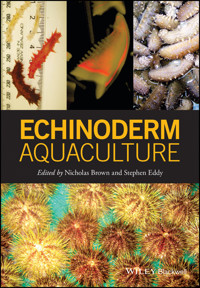
Sea urchins and sea cucumbers are highly sought after delicacies growing in popularity globally. The demand for these species is rapidly outpacing natural stocks, and researchers and seafood industry personnel are now looking towards aquaculture as a means of providing a sustainable supply of these organism. Echinoderm Aquaculture is a practical reference on the basic biology and current culture practices for a wide range of geographically diverse echinoderm species.
Echinoderm Aquaculture begins by examining the basic ecology and biology of sea urchins and sea cucumbers as well as the breadth of uses of these organisms as a source of food and bioactive compound. Subsequent chapters delineate the specific species of interest invarious geographic regions from around the world. Together, chapters provide a comprehensive coverage of culture practices.
Echinoderm Aquaculture is a practical reference for researchers and industry personnel, and will serve as an invaluable resource to this rapidly growing segment of the aquaculture industry.
Sie lesen das E-Book in den Legimi-Apps auf:
Seitenzahl: 867
Veröffentlichungsjahr: 2015
Ähnliche



















Table of Contents
Title Page
Copyright
List of Contributors
Part I: Biology and Exploitation of Echinoderms
Chapter 1: Sea Urchin Ecology and Biology
Introduction
Natural History and Ecology
Biology and Physiology
Summary
References
Chapter 2: Use and Exploitation of Sea Urchins
Urchin Consumption around the World
Global Supply and Demand of Sea Urchins
Global Trade
North American Market: the United States and Canada
US Domestic and International Marketing Channels for Gulf of Maine Sea Urchins
Acknowledgements
References
Chapter 3: Sea Cucumber Biology and Ecology
Holothuroidea
Aspidochirote Biology
References
Chapter 4: Use and Exploitation of Sea Cucumbers
Introduction
Sea Cucumbers as Food
Sea Cucumbers as Medicine
Sea Cucumber Processing and Marketing
Trade and Grading
References
Part II: Sea Urchin Aquaculture
Chapter 5: Sea Urchin Aquaculture in Japan
Introduction: Sea Urchin Fisheries in Japan
Current Status of Sea Urchin Fisheries
Hatchery Technology (Production of Seed)
Reseeding of Sea Urchins in Japan
Land-based and Captive Sea-based Grow Out (Cultivation of Seed to Market Size)
Acknowledgments
References
Chapter 6: Sea Urchin Aquaculture in China
Introduction
Species Choices
History and Trends
Markets and Uses
Broodstock Management and Gamete Collection
Hatchery Technology
Land-Based Nursery Stage
Growout
References
Chapter 7: Sea Urchin Aquaculture in Norway
General Introduction
Sea Urchin Hatchery Technology
Manufactured Feed Development in Norway
Sea Urchin Grow-Out
Land-Based Sea Urchin Grow-Out and Roe Enhancement
Sea-Based Sea Urchin Grow-Out and Roe Enhancement
Sea Urchin Health Issues
Economics
Industry constraints and expectations
Acknowledgements
References
Chapter 8: Aquaculture of the Green Sea Urchin Strongylocentrotus droebachiensis in North America
Ecology and Fisheries
Hatchery Technology
Settlement and Nursery
Growout to Market
Health Issues
Future Prospects for Green Sea Urchin Aquaculture in the Gulf of Maine
Acknowledgements
References
Chapter 9: Sea Urchin Aquaculture in Scotland
Introduction
Broodstock Management and Gamete Collection
Hatchery Production
Nursery Culture
Grow out Systems: Integrated Aquaculture
Artificial Diets
Harvesting and Handling
Disease
Economics and Future Prospects
Acknowledgments
References
Chapter 10: Sea Urchin Aquaculture in Australia
Introduction
Species Choices
Acknowledgments
References
Chapter 11: Sea Urchin Aquaculture in New Zealand
Introduction
Broodstock Management and Gamete Collection
Hatchery Technology
Growout
Ranching
Sea urchin Health Issues
Economics
Industry Constraints and Expectations
References
Chapter 12: Enhancing the Commercial Quality of Edible Sea Urchin Gonads – Technologies Emphasizing Nutritive Phagocytes
Introduction
Sea Urchin Gonads as Edible Animal Products
Some Characteristics of High Quality, Commercial Grade Edible Sea Urchin Gonads (i.e., Roe or Uni) from Wild Populations
Gonad Enhancement (Bulking)
Novel Technologies for Gonad Enhancement Beyond Optimal Aquaculture
Acknowledgments
References
Part III: Sea Cucumber Aquaculture
Chapter 13: Sea Cucumber Farming in Japan
Species of Interest
Hatchery Techniques
Sea Cucumber Products
Sea Cucumber Market Trends in Japan
Economic and Technical Aspects
Concluding Remarks
Acknowledgments
References
Chapter 14: Sea Cucumber Aquaculture in China
Introduction
Hatchery Technology
Growout
References
Chapter 15: Sea Cucumber Farming in Southeast Asia (Malaysia, Philippines, Indonesia, Vietnam)
Introduction
Hatchery Techniques
Growout Techniques
Processing
Uses
Sea Cucumber Trade
Acknowledgments
References
Chapter 16: Sea Cucumber Aquaculture in New Zealand
Introduction
Hatchery Techniques
Farming/Sea Ranching Techniques
Economics
Acknowledgments
References
Index
End User License Agreement
Pages
vii
viii
ix
1
3
4
5
6
7
8
9
10
11
12
13
14
15
16
17
18
19
20
21
22
23
24
25
26
27
28
29
30
31
32
33
34
35
36
37
38
39
40
41
42
43
44
45
47
48
49
50
51
52
53
54
55
57
58
59
60
61
62
63
64
65
66
67
68
69
70
71
72
73
75
77
78
79
80
81
82
83
84
85
86
87
88
89
90
91
92
93
94
95
96
97
98
99
100
101
102
103
104
105
106
107
108
109
110
111
112
113
114
115
116
117
118
119
120
121
122
123
124
125
126
127
128
129
130
131
132
133
134
135
136
137
138
139
140
141
142
143
144
145
146
147
148
149
150
151
152
153
154
155
156
157
158
159
160
161
162
163
164
165
166
167
168
169
170
171
172
173
175
176
177
178
179
180
181
182
183
184
185
186
187
188
189
190
191
192
193
194
195
196
197
198
199
200
201
202
203
204
205
206
207
208
209
211
212
213
214
215
216
217
218
219
220
221
222
223
224
225
226
227
228
229
230
231
232
233
234
235
236
237
238
239
240
241
242
243
245
246
247
248
249
250
251
252
253
254
255
256
257
258
259
260
261
262
263
264
265
266
267
268
269
270
271
272
273
274
275
276
277
278
279
280
281
282
283
284
285
286
287
289
290
291
292
293
294
295
296
297
298
299
300
301
302
303
304
305
306
307
308
309
310
311
312
313
314
315
316
317
318
319
320
321
322
323
324
325
326
327
328
329
330
331
332
333
334
335
336
337
338
339
340
341
342
343
344
345
346
347
348
349
350
351
352
353
354
355
356
357
358
359
360
361
362
363
364
365
366
367
368
Guide
Table of Contents
Part I: Biology and Exploitation of Echinoderms
Begin Reading
List of Illustrations
Chapter 2: Use and Exploitation of Sea Urchins
Figure 2.1 Global sea urchin production (weight whole animals).
Figure 2.2 (a) Total production of the four major sea urchin product forms, converted to whole animal weight assuming a 10% yield factor. (b) Global production value by product form. (c) Prices in Japan by product form.
Figure 2.3 (a) Total supply of sea urchins (whole weight) in Japan by country of origin. (b) Global value of sea urchins in Japan by country of origin.
Figure 2.4 (a) Total value of Japanese imports of live sea urchins, by country of origin. (b) Total value of Japanese imports of fresh or chilled sea urchin roe, by country of origin. (c) Total value of Japanese imports of frozen sea urchin roe by, country of origin. (d) Total value of Japanese imports of dried/salted/brined sea urchin roe, by country of origin.
Figure 2.5 (a) Price paid in Japan for live sea urchins, by country of origin. (b) Price paid in Japan for imported fresh chilled urchin roe, by country of origin. (c) Price paid in Japan for imported frozen urchin roe, by country of origin. (d) Price paid in Japan for imported dried/salted/brined urchin roe, by country of origin.
Figure 2.6 Imports of sea urchin roe into the United States by country of origin.
Figure 2.7 (a) Total sea urchin landings, imports, and exports (whole weight) in the United States. (b) Prices paid for sea urchins in the United States.
Figure 2.8 (a) Urchin landings and exports (product weight) in Canada. (b) Canadian sea urchin export values by destination country. Total value in 2013 of Canadian sea urchin exports was US$23 million.
Figure 2.9 Live sea urchin imports to the United States by volume (a), total value (b), and price (c). Source: NOAA Office of Science and Technology.
Figure 2.10 Marketing flowchart for sea urchins in Japan.
Figure 2.11 Sea urchin roe (
uni
) in the Japanese marketplace.
Figure 2.12 Marketing channel and value-added margin of sea urchin markets among the United States, Canada, and Japan in 2012.
Chapter 3: Sea Cucumber Biology and Ecology
Figure 3.1 General aspidochirote anatomy. t, tentacle; cr, calcareous ring; m, madreporite; sc, stone canal; ta, tentacular ampulla; wr, circular water ring; g, gonad; Pv, Polian vesicle; s, Stomach; dv, dorsal intestinal haemal vessel; lt, left respiratory tree; li, large intestine; vv, ventral intestinal haemal vessel; rhp, respiratory-haemalplexus; si, Small intestine; cv, cross-ventral intestinal haemal vessel; rt, right respiratory tree; rw, radial water canal; lmb, long muscular band; cm, circular muscle; ct, common respiratory tree trunk; cl, cloaca; cs, Cloacal suspensors; a, anus; p, papilla.
Figure 3.2 Ossicles of sea cucumber. 1. Button, 2. button with nodules; 3. bar; 4. C-formed; 5. S-formed; 6. Table, 7.and 8. bar with branches, 9. branch, and 10 web-formed.
Figure 3.3 (a) symbiotic ciliate,
Boveria labialis
(Ikeda and Ozaki, 1918; scale bars: 20 mm.), (a, courtesy of Hong-an Long); (b) Boveria inside respiratory tree).
Chapter 4: Use and Exploitation of Sea Cucumbers
Figure 4.1 Se'a prepared for retail in Samoa.
Figure 4.2 Spiky freeze-dried sea cucumbers.
Chapter 5: Sea Urchin Aquaculture in Japan
Figure 5.1 Yearly variations in the annual catch of sea urchins in Japan.
Figure 5.2 Major sea urchin species harvested in Japanese fisheries. Test diameters are approximately 5 cm, except
H
.
pulcherrimus
, which is approximately 4 cm.
Figure 5.3 Two types of packaging for mid- to high-quality sea urchin roe. (a) Wooden tray package containing 120 g of
S
.
intermedius
roe. (b) Saltwater package containing 100 g of
S
.
intermedius
roe.
Figure 5.4 Auction of sea urchins at a fish market in Hokkaido. The two people on the platform are auctioneers; the others are brokers. The wooden trays of sea urchin roe are stacked on the platform.
Figure 5.5 Daily variation in the highest price for
Strongylocentrotus intermedius
and
S
.
nudus
packaged in large wooden trays (250–300 g) from an auction at the Tokyo Metropolitan Central Wholesale Market.
Figure 5.6 Variations in annual imports of whole sea urchins in Japan. Drawn from statistical data published by the Ministry of Finance, Japan. As original data are categorized as live urchins, fresh chilled roe, frozen roe, or salted roe, the latter three data categories have been converted to the whole urchins by assuming a yield rate as 15% and added to data for live urchins.
Figure 5.7 Equipment for larval rearing. TRT, temperature-regulating tank; LRT, larval rearing 1 m
3
tank; IFP, seawater in flow pipe; OFC, out flow filter covered with 100 µm mesh screen; OFP, out flow pipe.
Figure 5.8 Development of
S
.
intermedius
larvae. (a) Pyramid larvae, (b) four-armed pluteus, (c) six-armed pluteus, (d) eight-armed pluteus, (e) metamorphosing larva, and (f) metamorphosing larvae and settled juvenile.
Figure 5.9 Density of
C
.
gracilis
fed to larvae.
Figure 5.10 Larval development and growth of body, stomach, and echinus rudiment.
Figure 5.11 Postlarval rearing tank. Corrugated PVC plates coated with
Ulvella lens
are packed into holders and placed in the settlement tanks.
Figure 5.12 Growth of
S. intermedius
juveniles reared on the settlement plates.
Figure 5.13 Most important sea urchin-producing and reseeding prefectures in Japan.
Figure 5.14 Number of sea urchins (a)
Strongylocentrotus intermedius
and
S
.
nudus
and (b)
Pseudocentrotus depressus
,
Hemicentrotus pulcherrimus
,
Tripneustes gratilla
, and
Heliocidaris crassispina
reseeded by year for all prefectures.
Figure 5.15 Total number of sea urchins reseeded and total catch (tons) by year for all sea urchin species and prefectures.
Figure 5.16 Annual catch and reseeding levels for
S
.
intermedius
in Hokkaido from 1985 to 2009.
Figure 5.17 Catch and reseeding numbers for
P
.
depressus
in Nagasaki Prefecture, 1956–2009.
Figure 5.18 Location of sea urchin aquaculture farms in Japan, as described in Table 5.5
Figure 5.19 Changes in the test diameter of
Pseudocentrotus depressus
cultivated in a tank. The urchins, fertilized in October 1991 or October 1992, were reared on
Eisenia bicyclis
at ambient temperature (12–28 °C). Each value represents the mean ± SD (standard deviation) of approximately 50 individuals.
Figure 5.20 Longline system for sea-based aquaculture of shellfish. This system is applied for cultivation of various shellfish culture, including sea urchins.
Figure 5.21 A cage used for sea urchin and abalone aquaculture in Saga. A plastic lid is removed to feed the animals. This cage contains abalone and brown algae.
Figure 5.22 Procedure for cultivation of juvenile
Strongylocentrotus intermedius
to market size in Chirippu, east Hokkaido. Arrows represent the harvest season.
Figure 5.23 Cage design used for sea urchin aquaculture in Chirippu. To save expense, aquaculturists assemble the cages themselves based on this design, using materials sold at home centers.
Figure 5.24 Feeding sea urchins from the boat in Chirippu. (a) A cage is winched up to the sea surface. (b) Each compartment is filled with so much brown algae that sea urchins cannot be seen.
Figure 5.25 Land-based aquaculture facility in Mie. (a) Tanks used for polyculture of sea urchins, abalone and sea cucumbers. These tanks were previously used for flounder aquaculture. (b) To aid management, floating cages are housed in the tanks. Each cage contains sea urchins or abalone with brown algae. Sea cucumbers are directly housed in the tanks without cages to allow them to eat the feces of sea urchins and abalone, and decayed algae falling from the cages.
Figure 5.26 Changes in temperature of deep seawater and ambient seawater at Rausu in 2009.
Figure 5.27 Changes in the frequency of
Strongylocentrotus intermedius
at favorable maturity for food, reared in ambient seawater and deep seawater. Gonads at stage 1 (before gametogenesis), stage 2 (early gametogenesis) and stage 3 (mid-gametogenesis) according to Fuji (1960) were defined as favorable maturity for food products.
Chapter 6: Sea Urchin Aquaculture in China
Figure 6.1 Sea urchin production in China. FAO Fishstat for data 1986–2009, China Fishery Statistics Yearbook 2011, 2012 for data 2010–2011.
Figure 6.2 Plastic wave plates for settlement of urchin larvae, showing plastic frames.
Figure 6.3 Sea urchin raft culture and lantern net.
Figure 6.4 Cultured sea urchins
Strongylocentrotus nudus
, produced in Rongcheng, Shandong Province, 2009.
Chapter 7: Sea Urchin Aquaculture in Norway
Figure 7.1 ROV for harvesting sea urchins.
Figure 7.2 Broodstock chambers.
Figure 7.3 Effects of temperature on feed intake (per animal per day) of different size group of adult
S
.
droebachiensis
(small = 40 g, medium = 65 g, large = 100 g) in relation to different temperature.
Figure 7.4 Tipper tubs.
Figure 7.5 Specially designed boat with lifting apparatus for SeaNest system.
Figure 7.6 Schematic of SeaNest stacks and lifting apparatus.
Chapter 8: Aquaculture of the Green Sea Urchin Strongylocentrotus droebachiensis in North America
Figure 8.1 Historical green sea urchin landings and value for the State of Maine, USA.
Figure 8.2 Vessels used for egg incubation (left) and pluteus culture (right). (Photograph by Steve Eddy.)
Figure 8.3 Bio-barrels with juvenile sea urchins 3–4 months post-settlement. (Photograph by Steve Eddy.)
Figure 8.4 Hydroponic plant baskets used to hold juvenile
S
.
droebachiensis
. (Photograph by Steve Eddy.)
Figure 8.5 Submerged cage filled with shell hash and used as a sea-based nursery cage for juvenile
S
.
droebachiensis
. (Photograph by Larry Harris.)
Figure 8.6 V-trough tank culture system used at the CCAR for on-growing
S
.
droebachiensis
to market size.
Figure 8.7 Growth of green sea urchins of different size categories over an 11 month period when fed either the Nofima urchin diet or the Cargill catfish diet. Initial size: small = 10–18 mm, avg. 1.3 g; medium = 16–24 mm, avg. 3.4 g; large = 22–30 mm, avg. 7.1 g.
Figure 8.8 Specific growth rates (SGR) of
S
.
droebachiensis
of different size categories fed the Nofima diet at frequent (1x/3 days), weekly (1x/7 0days) and biweekly (1x/14 days) intervals. Initial size: small=30–34 mm; 12–15 g, medium = 35–40 mm;18–23 g, large greater than 40 mm; 28–61 g.
Figure 8.9 Feed conversion ratios (FCR) of
S
.
droebachiensis
of different size categories fed the Nofima diet at frequent (1x/3 days), weekly (1x/7 days) and fortnightly (1x/14 days) intervals. Initial size: small = 30–34 mm:12–15 g, medium = 35–40 mm:18–23 g, large = 40–55 mm:28–61 g.
Figure 8.10 Diver using sample quadrat during survey to estimate abundance and size of tagged hatchery origin
S
.
droebachiensis
released at an aquaculture lease.
Figure 8.11 Numbers of tagged hatchery origin
S
.
droebachiensis
recovered during six dive surveys from two release sites in Penobscot Bay, Maine.
Figure 8.12 Average test diameter of tagged hatchery origin
S
.
droebachiensis
recovered during six dive surveys from two release sites in Penobscot Bay, Maine and in tank culture at the CCAR. Error bars = ± 1 standard deviation from the mean.
Figure 8.13 Maximum test diameter of tagged hatchery origin
S
.
droebachiensis
recovered during six dive surveys from two release sites in Penobscot Bay, Maine.
Chapter 10: Sea Urchin Aquaculture in Australia
Figure 10.1 Side view (A) and cross-section (B) of the raceway rearing tanks. Growout tanks for juveniles to subadults (SA) were narrower in width than those for grow-out of subadults to adults (A).
Chapter 11: Sea Urchin Aquaculture in New Zealand
Figure 11.1
E. chloroticus
adult. (Photograph by Mike Barker.)
Figure 11.2 Gonads in 200 ml pottles prepared for sale showing the ungraded product. (Photograph by Mike Barker.)
Figure 11.3 PVC containers used to hold individual
E. chloroticus
in feeding experiments. Each chamber is supplied with a supply of fresh filtered seawater and 11 replicate containers are contained within a larger plastic tank.
Chapter 12: Enhancing the Commercial Quality of Edible Sea Urchin Gonads – Technologies Emphasizing Nutritive Phagocytes
Figure 12.1 Proposed model for nutritional role of MYP in female (A) and male (B) sea urchins (modified from Unuma
et al.
2003). MYP functions as a nutrient source in two different stages; for gametogenesis before spawning and for larval development after fertilization. (M) MYP; (NP) nutritive phagocyte; (circle) protein; hexagon) other molecule. Broken lines with arrows indicate the loss caused by metabolism as an energy source.
Figure 12.2
Results from Lee and Haard
(1982)
for wild collected green sea urchin gonadal amino acid values.
The inset is for the glycine, which is present in significantly higher quantities than any of the others. High-lighted in dark gray are the essential amino acids, in light gray are the semi-essential amino acids, all others are non-essential. Arrows indicate increases or decreases in amino acid concentrations at different times during the year; arrow indicates no change.
Figure 12.3
Free amino acid concentrations (%) of taste essential amino acids in sea urchin gonads
. This Figure combines the results of studies by Lee and Haard (1982), Fuke and Konosu (1991), and Liyana-Pathirana
et al.
(2002). Error bars show the standard error of the means from all three studies combined. * = pre-gametogenesis and best sensory scores (Lee and Haard 1982).
Figure 12.4
Two strategies for extending the season for harvesting high-quality gonads.
If growth of NPs is extended (A) or gametogenesis is suppressed (B), the season during which quality gonads containing fewer GC can be harvested is dramatically prolonged.
Figure 12.5
Combination yield of large sea urchin roe and high sensory scores
. Diets used in this trial (developed by Drs. S.A. Watts and A.L. Lawrence) were compared to the Wenger sea urchin diet (Wenger). Asterisks indicate roe of marketable size and sensory scores.
Figure 12.6
Generation of Triploid Sea Urchin Embryos:
(A) Two haploid green sea urchin ova fusing; (B) triploid prism stage embryo; (C) Karyotype of normal diploid blastula cells showing 42 chromosomes; (D) Karyotype of triploid blastula cells generated by our methods and showing 63 chromosomes.
Figure 12.7 Electron micrographs of autophagic vesicles (with multiple internal membrane bound vesicles) within the NPs of male (A) and female (B and C) green sea urchin gonads. Differentiating spermatozoa can be seen in the upper left corner of (A) and a large primary oocyte is evident in the lower right corner of (B). LC3 staining with a mammalian polyclonal antibody is illustrated in (C), smaller round vesicles staining on their outer membrane (see center of image), but not their inner membrane-bound vesicles.
Chapter 13: Sea Cucumber Farming in Japan
Figure 13.1 History of seed production. (A) Number of seeds production in Japan. (B) Number of
Apostichopus japonicus
hatcheries in Japan. Drawn from the statistical data published by Fisheries Agency, Fisheries Research Agency, and National Association for Promotion of Productive Seas.
Figure 13.2 Trepang of blue type animal landed at Hokkaido.
Figure 13.3 Time course of GSSL-induced egg maturation. An artificial GSSL peptide (P1) promotes the occurrence of GVBD among immature eggs at concentration of 30 µg/ml. FSW indicates filtered seawater as a control.
Figure 13.4 Test sample kits of GSSL-immunochromatography assay kit (GIM-Kit; Katow and Katow, 2014). (A) Five stripes of GIM-Kit (right) and the one encased for field use (left). (B) A GIM-Kit indicates positive signal with two lines (Control line and Positive line).
Figure 13.5 Breeding programs and broodstock selection. (A) A flowchart of seed production. (B) Broodstocks placed in 15 l containers for gamete releasing. (C) Broodstocks releasing eggs (a) and sperms (b). (D) Washing inseminated eggs in 45 µm mesh with filtered seawater.
Figure 13.6 Development of
Apostichopus japonicus
. (a) Unfertilized eggs and embryos in cleavage stage (arrow). (b) Gastrula. (c) Early auricularia. (d) Late auricularia. (e) Doliolaria. (f) Pentactula. (g) Settled juvenile. (h) Juveniles. Scale bar shows 100 µm.
Figure 13.7 Juvenile settlement. (A) PVC plates set in holders (a) and balled up polyethylene screen stuffed into the onion bags (b) as collector of juveniles in rearing tank. (B) Settled juveniles on the corrugated PVC plates. Inset shows high magnification image of settled juveniles indicated by a rectangle in mainframe.
Figure 13.8 Copepods extermination. (A) Development of
Tigriopus japonicus
. (a) Fertilized nauplius larva (arrows) and nauplius larva (encircled). (b) High magnification image of fertilized nauplius larva. (c) Copepodid stage larva. (d) Eggs in the sac. (e) Egg sac holding adult female. Scale bar shows 500 µm. (B) Eliminating
T. japonicus
from settlement plates by paralyzing with salt-enriched seawater. (a) Settlement plates immersed in salt-enriched seawater (about 50‰) in a 0.5 mm opening net-covered container. (b) Shaking off copepods from the plates after paralyzed in salt-enriched seawater. (c) Transfer the plates into new tank filled with filtered seawater. (d) Draw out the rearing seawater and collect juveniles at the drain with net (e). f: Juveniles filtered by 0.5 mm opening net to eliminate predatory copepods were transferred to new tanks. (C) Underwater pump to eliminate copepods in the rearing tank. (D) Rearing water draw into 45 µm opening net (
N
) and filter copepods in the pumped water.
Figure 13.9 Juvenile growth and final stages for releasing to fisheries. (A) Average body length of juveniles fed with LIVIC-BW. (B) Juveniles recovered from the plates. Recovered juveniles are kept in these baskets with enough seawater flow by the time of reseeding onto the fishery and/or intermediate cultures. (C) Juveniles packed in the plastic bags. (D) Intermediate culture in hanging bags. (a) Onion bags stuffed in the scallop culture cages hanged in sea. (b) Juveniles are stuffed in the onion bags that set in scallop culture cages. (E) Juvenile releasing onto reef by diver.
Figure 13.10 Sea cucumber showing a white spot disease focus on the shell.
Figure 13.11 A 1000 l tank used for spawning (Kitanihon Fishery Co. Ltd.).
Figure 13.12 Vinyl chloride pipe with plankton net of 40 µm mesh (Kitanihon Fishery Co. Ltd.). (A) Side view. (B) Bottom view.
Figure 13.13 Corrugated clear boards in holder (Kitanihon Fishery Co. Ltd.).
Figure 13.14 Copepod-removal equipment using a filtering technique (Developed by KM Giken Co. Ltd. and trialed at the Kitanihon Fishery Co. Ltd.).
Figure 13.15 (A) Japanese dried sea cucumber. (B) Export quantity and value of Japanese sea cucumbers.
Figure 13.16 (A) Changes in the catch at major producing centers in Japan. (B) Export shares of Japanese dried sea cucumber by country (2009).
Figure 13.17 Regional changes in the catch and value of sea cucumbers. (A) Hokkaido. (B) Aomori.
Chapter 14: Sea Cucumber Aquaculture in China
Figure 14.1 Dry sea cucumber (Beche-de-mer) imported from Japan (A) and for sale in China's market (B).
Figure 14.2 Life cycle of sea cucumber.
Figure 14.3 Starter culture in flasks (A) and mass culture of microalgae in polyethylene bag (B).
Figure 14.4 Gonad of female (a and c-top) and male (b and c-bottom) animals in mature stage.
Figure 14.5 Sea cucumbers releasing their gametes into seawater simultaneously.
Figure 14.6 Larval rearing tanks specially designed for sea cucumber hatchery.
Figure 14.7 Showing the individual differentiation in size within same batch of sea cucumbers.
Figure 14.8 Nursery tanks for sea cucumber juveniles.
Figure 14.9 Sea cucumber growout ponds with various substrates. (A) Stone, (B) Tile, (C) Concrete pipe ready for installation and (D) dragon cage.
Figure 14.10 Photographs showing cage system for sea cucumber growout. From left to right (a) a farmer is feeding the sea cucumber in a coop (b) close up of coop and (c) net cage.
Chapter 16: Sea Cucumber Aquaculture in New Zealand
Figure 16.1
A. mollis.
(Photo: D. Allen.)
Figure 16.2 Larval rearing tank (A) 1 µm cartridge filter, (B) inflow pipe, (C) open/close valve, (D) lid, (E) tank, (F) banjo sieve, (G) water outlet, (H) outflow pipe, (I) 20 l bucket with holes, (J) 55 µm sieve, (K) tank stand, (L)open/close valve, (M) air hose, and (N) air bubbles.
Figure 16.3 Juvenile
A. mollis
at approximately 1 year post settlement.
List of Tables
Chapter 5: Sea Urchin Aquaculture in Japan
Table 5.1 How sea urchins are consumed in Japan (Kochi 1992; Inui 2008c)
Table 5.2 Japanese imports of sea urchins 2010 (million yen)
Table 5.3 Sea urchin species preferred for the seed production in Japan with its commercial value and biological characteristics
Table 5.4 Hatchery of origin, number of release sites, and production numbers for the five most important species are shown for 2009
Table 5.5 Aquaculture and reseeding of sea urchins in Japan
Chapter 6: Sea Urchin Aquaculture in China
Table 6.1 Sea urchins with commercial interest found in China (Liu
et al
., 2010, Liao, 2001, Liu, 2001)
Table 6.2 Development of fertilized eggs and larvae of
S
.
nudus
(Gao
et al
. 1990),
S
.
intermedius
(Wang and Chang 1997), and
H
.
crassispina
(Feng
et al
. 2006; Sun
et al
. 1989)
Chapter 7: Sea Urchin Aquaculture in Norway
Table 7.1 Proximate composition (%) and energy content (given as MJ/kg) of the Nofima manufactured sea urchin feed
Table 7.2 Recommended water flow requirement (l/min/kg urchins) for three different size groups (40, 60, and 100 g) for adult
S
.
droebachiensis
at six different temperatures (4–14°C)
Chapter 9: Sea Urchin Aquaculture in Scotland
Table 9.1 Example feeding regime for larval sea urchins. Cell numbers describe algal cell density in the larval culture
Chapter 10: Sea Urchin Aquaculture in Australia
Table 10.1 Characteristics of rearing baskets. SA-type baskets are used to grow juveniles to subadults (10–30 mm TD); A-type baskets are used to either grow subadults to adults (30–60 mm TD) or to condition the roe prior to processing and marketing
Chapter 12: Enhancing the Commercial Quality of Edible Sea Urchin Gonads – Technologies Emphasizing Nutritive Phagocytes
Table 12.1 Stages in the gametogenesis for
S. droebachiensis
Chapter 13: Sea Cucumber Farming in Japan
Table 13.1 Spawning seasons of
A. japonicus
in Japan
Table 13.2 Proper amount of LIVIC during the post-larval rearing period
Table 13.3 Prices of Japanese dried sea cumbers in Hong Kong
Chapter 14: Sea Cucumber Aquaculture in China
Table 14.1 Salinity tolerance of
A. japonicus
at different stages (authors' unpublished data)
Table 14.2 Oxygen consumption rate of
A. japonicus
juveniles (body weight: 1.06 g ± 0.02) at different salinities
Table 14.3 Feeding regime for sea cucumber larval stages (Jia and Chen, 2001)
Table 14.4 Oxygen consumption at different body weights and temperatures (mg O
2
/g body weight · h, authors' unpublished data)
Chapter 16: Sea Cucumber Aquaculture in New Zealand
Table 16.1
A. mollis
larval development rate at 18
o
C. (Stenton-Dozey and Heath 2009)
Echinoderm Aquaculture
Edited by
Nicholas P. Brown and Stephen D. Eddy
Copyright © 2015 by Wiley-Blackwell. All rights reserved
Published by John Wiley & Sons, Inc., Hoboken, New Jersey
Published simultaneously in Canada
No part of this publication may be reproduced, stored in a retrieval system, or transmitted in any form or by any means, electronic, mechanical, photocopying, recording, scanning, or otherwise, except as permitted under Section 107 or 108 of the 1976 United States Copyright Act, without either the prior written permission of the Publisher, or authorization through payment of the appropriate per-copy fee to the Copyright Clearance Center, Inc., 222 Rosewood Drive, Danvers, MA 01923, (978) 750-8400, fax (978) 750-4470, or on the web at www.copyright.com. Requests to the Publisher for permission should be addressed to the Permissions Department, John Wiley & Sons, Inc., 111 River Street, Hoboken, NJ 07030, (201) 748-6011, fax (201) 748-6008, or online at http://www.wiley.com/go/permission.
Limit of Liability/Disclaimer of Warranty: While the publisher and author have used their best efforts in preparing this book, they make no representations or warranties with respect to the accuracy or completeness of the contents of this book and specifically disclaim any implied warranties of merchantability or fitness for a particular purpose. No warranty may be created or extended by sales representatives or written sales materials. The advice and strategies contained herein may not be suitable for your situation. You should consult with a professional where appropriate. Neither the publisher nor author shall be liable for any loss of profit or any other commercial damages, including but not limited to special, incidental, consequential, or other damages.
For general information on our other products and services or for technical support, please contact our Customer Care Department within the United States at (800) 762-2974, outside the United States at (317) 572-3993 or fax (317) 572-4002.
Wiley also publishes its books in a variety of electronic formats. Some content that appears in print may not be available in electronic formats. For more information about Wiley products, visit our web site at www.wiley.com.
Library of Congress Cataloging-in-Publication Data:
Sea urchin and sea cucumber aquaculture / edited by Nicholas P. Brown and Stephen D. Eddy.
pages cm
Includes index.
ISBN 978-0-470-96038-7 (cloth)
1. Sea urchin culture. 2. Sea cucumbers--Cultures and culture media. 3. Aquaculture. I. Brown,
Nicholas P., (Nicholas Philip), editor. II. Eddy, Stephen D., editor.
SH399.S32S43 2015
639′.7—dc23
2015006612
List of Contributors
Yukio Agatsuma
Tohoku University, Japan
M. F. Barker
Department of Marine Science, University of Otago, Dunedin, New Zealand
S. A. Böttger
Department of Biology, West Chester University, West Chester, PA, USA
Nicholas P. Brown
Center for Cooperative Aquaculture Research, University of Maine, Franklin, ME, USA
Stefano Carboni
Ardtoe Marine Laboratory, Argyll, UK
Ya-qing Chang
Key Laboratory of Mariculture and Stock Enhancement in North China's Sea, Ministry of Agriculture, Dalian Ocean University, Dalian, China
Jiaxin Chen
Yellow Sea Fisheries Research Institute, Chinese Academy of Fishery Sciences, Beijing, Fishery College of Wuxi, Agriculture University of Nanjing, Beijing, China
Fu-Sung Chiang
Institute of Applied Economics, National Taiwan Ocean University, Keelung, Taiwan
Elizabeth Cook
Scottish Association for Marine Science, Oban, UK
Stephen D. Eddy
Center for Cooperative Aquaculture Research, University of Maine, Franklin, ME, USA
Larry G. Harris
Department of Biological Sciences, University of New Hampshire, Durham, NH, USA
P. Heath
National Institute for Water and Atmospheric Research Ltd, Wanganui, New Zealand
Adam Hughes
Scottish Association for Marine Science, Oban, UK
P. James
Nofima - Norwegian Institute of Food, Fisheries and Aquaculture Research, Tromsø, Norway
A. Jeffs
Department of Marine Science, University of Auckland, Auckland, New Zealand
H. Katow
Research Center for Marine Biology, Tohoku University, Asamushi, Aomori, Japan
Takaaki Kayaba
Kushiro Fisheries Research Institute, Hokkaido Research Organization, Kushiro, Hokkaido, Japan
Maeve Kelly
Scottish Association for Marine Science, Oban, UK
Addison L. Lawrence
Texas AgriLife Research Mariculture Laboratory, Texas A&M University System, Port Aransas, TX, USA
Hui Liu
Yellow Sea Fisheries Research Institute, Chinese Academy of Fishery Sciences, Beijing, China
A. Mortensen
Nofima - Norwegian Institute of Food, Fisheries and Aquaculture Research, Tromsø, Norway
S. Okumura
School of Marine Biosciences, Kitasato University, Kitasato, Kanagawa, Japan
Yuichi Sakai
Mariculture Fisheries Research Institute, Hokkaido Research Organization, Muroran, Hokkaido, Japan
C. Shibuya
Faculty of Agriculture and Life Science, Hirosaki University, Hirosaki, Aomori, Japan
S.I. Siikavuopio
Nofima - Norwegian Institute of Food, Fisheries and Aquaculture Research, Tromsø, Norway
Matthew Slater
Aquaculture Research Group, Knowledge and Technology Transfer, Alfred-Wegener-Institut Helmholtz Center for Polar and Marine Research,Bremerhaven, Germany
J. Stenton Dozey
National Institute for Water and Atmospheric Research Ltd, Wanganui, New Zealand
Jenny Sun
Senior Marine Research Institute, Gulf of Maine Research Institute, Portland, ME, USA
Joeharnani Tresnati
Fisheries Department, Faculty of Marine Science and Fisheries, Hasanuddin University, South Sulawesi, Indonesia
Ambo Tuwo
Marine Science Department, Faculty of Marine Science and Fisheries, Hasanuddin University, South Sulawesi, Indonesia
Tatsuya Unuma
Hokkaido National Fisheries Research Institute, Fisheries Research Agency, Kushiro, Hokkaido, Japan
Charles W. Walker
Molecular, Cellular and Biomedical Sciences, Center for Marine Biology and Marine Biomedical Research Unit, University of New Hampshire, Durham, NH, USA
Stephen A. Watts
Department of Biology, University of Alabama at Birmingham, Birmingham, AL, USA
Jane E. Williamson
Marine Ecology Group, Department of Biological Sciences, Macquarie University, Sydney, Australia
Part IBiology and Exploitation of Echinoderms
Chapter 1Sea Urchin Ecology and Biology
Larry G. Harris and Stephen D. Eddy
Introduction
Sea urchins are widely distributed in polar, temperate, and tropical oceans, where they are conspicuous members of most benthic marine communities. They play an important ecological role as herbivorous grazers, and their ability to alter algal community states has made them the subject of numerous ecological studies (e.g., Elner and Vadas 1990; Tegner and Dayton 2000; Witman and Dayton 2001; Uthicke et al. 2009). Sea urchins are also used as a model organism in developmental studies and in schools to demonstrate cell division and early development; the purple urchin, Strongylocentrotus purpuratus, was one of the first animal species to have its entire genome sequenced (Sea Urchin Genome Sequencing Consortium 2006). There are about 850 living species of sea urchins, and at least 17 of these are commercially valued as food (), leading to significant sea urchin fisheries in many regions (Andrew . 2002; Lawrence and Guzman 2004). Because sea urchins often form dense aggregations when their populations increase, they are very vulnerable to overharvesting. Wild stocks in most regions where they are fished are greatly diminished and aquaculture has been proposed as a means to supply the continued market demand, most of which comes from Japan. The first section of this chapter discusses some of the ecological factors that affect sea urchin abundance, distribution, and vulnerability to overfishing. The second section discusses biological and physiological considerations that may be of interest to sea urchin aquaculturists, such as feeding, growth, reproductive control, and physiological adaptations relevant to intensive culture.
Lesen Sie weiter in der vollständigen Ausgabe!
Lesen Sie weiter in der vollständigen Ausgabe!
Lesen Sie weiter in der vollständigen Ausgabe!
Lesen Sie weiter in der vollständigen Ausgabe!
Lesen Sie weiter in der vollständigen Ausgabe!
Lesen Sie weiter in der vollständigen Ausgabe!
Lesen Sie weiter in der vollständigen Ausgabe!
Lesen Sie weiter in der vollständigen Ausgabe!
Lesen Sie weiter in der vollständigen Ausgabe!
Lesen Sie weiter in der vollständigen Ausgabe!
Lesen Sie weiter in der vollständigen Ausgabe!
Lesen Sie weiter in der vollständigen Ausgabe!
Lesen Sie weiter in der vollständigen Ausgabe!
Lesen Sie weiter in der vollständigen Ausgabe!
Lesen Sie weiter in der vollständigen Ausgabe!
Lesen Sie weiter in der vollständigen Ausgabe!
Lesen Sie weiter in der vollständigen Ausgabe!
Lesen Sie weiter in der vollständigen Ausgabe!
Lesen Sie weiter in der vollständigen Ausgabe!




