


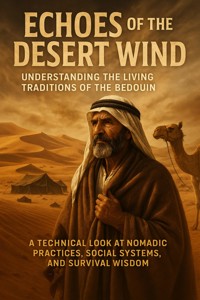
Echoes of the Desert Wind: Understanding the Living Traditions of the Bedouin E-Book
Patrick Simmons
Erhalten Sie Zugang zu diesem und mehr als 300000 Büchern ab EUR 5,99 monatlich.
- Herausgeber: epubli
- Kategorie: Geisteswissenschaft
- Sprache: Englisch
For centuries, the Bedouin have navigated some of the harshest landscapes on Earth with remarkable adaptability, social harmony, and cultural resilience. Echoes of the Desert Wind offers teachers a structured, technical exploration of Bedouin traditions—unpacking the systems, customs, and environmental knowledge that sustained nomadic life across Arabia, the Levant, and North Africa. This detailed account examines the logistical realities of desert navigation, camel husbandry, water sourcing, tent construction, clan leadership structures, and the poetic oral traditions that preserved history across generations. Each chapter breaks complex systems down into teachable components, helping students understand how environmental demands shaped Bedouin technology, social organization, and moral codes. The book also analyzes hospitality practices, trade routes, conflict mediation, marriage customs, and the interplay between tribal identity and regional politics. Drawing upon ethnographic studies, historical documents, and contemporary field research, it offers a precise and classroom-ready framework for explaining how nomadic groups adapted with ingenuity and discipline. For educators seeking a technically grounded portrayal of Bedouin life, this guide provides clarity, cultural depth, and practical insights into a civilization shaped by the desert's uncompromising rhythms.
Sie lesen das E-Book in den Legimi-Apps auf:
Seitenzahl: 217
Veröffentlichungsjahr: 2025
Das E-Book (TTS) können Sie hören im Abo „Legimi Premium” in Legimi-Apps auf:
Ähnliche




















Table of Contents
Chapter 1: The Bedouin Landscape: A Contextual Overview
The Geography of the Bedouin Lands
The Role of Water Sources
Navigational Expertise in the Desert
Social Structures and Clan Dynamics
Cultural Practices and Oral Traditions
Chapter 2: Navigating the Desert: Techniques of Orientation
The Role of Celestial Navigation
Landmark Recognition and Usage
Environmental Cues in Navigation
The Art of Wayfinding
Chapter 3: Camel Husbandry: The Backbone of Bedouin Life
The Importance of the Camel
Camel Husbandry Practices
Training and Working with Camels
Camels and Water Needs
Chapter 4: Water Sourcing: The Lifeblood of Survival
Importance of Water in Transient Cultures
Identifying Natural Water Sources
Well Construction and Maintenance
Innovative Water Conservation Techniques
Social and Cultural Practices Around Water
Impact of Modern Changes on Water Sourcing
Chapter 5: Tent Construction: A Moving Home
Historical Overview of Bedouin Tents
Materials and Techniques
Social Significance of Tent Design
The Role of the Tent in Daily Life
Adaptation to the Environment
Tents and Cultural Identity
Chapter 6: Clan Leadership: Structure and Authority
Understanding Clan Structure
Roles of Leaders within Clans
Decision-Making Processes
Conflict Resolution within Clans
Chapter 7: Oral Traditions: Preserving History and Culture
The Importance of Oral Traditions
The Craft of Storytelling
Themes of Bedouin Oral Traditions
The Role of Women in Oral Traditions
Chapter 8: Hospitality Practices: The Heart of Bedouin Culture
The Importance of Hospitality in Bedouin Culture
Rituals of Offering Food and Drink
The Moral Codes of Hospitality
Hospitality and Community Relationships
Chapter 9: Trade Routes: Commerce in the Desert
Historical Trade Routes
Types of Goods Traded
Role of Caravans
Trade's Influence on Social Relations
Contemporary Trade Practices
Chapter 10: Conflict Mediation: Maintaining Peace in the Desert
Understanding Conflict in Bedouin Society
The Role of the Mediator
Negotiation Practices
Traditional Wisdom in Conflict Resolution
Chapter 11: Marriage Customs: Alliances and Social Structure
The Role of Marriage in Bedouin Society
Pre-Marital Rituals and Courtship
Marriage Practices and Rituals
Marriage Alliances and Tribal Politics
Gender Roles in Marriage
Impact of Modernity on Marriage Customs
Chapter 12: Tribal Identity and Regional Politics: A Broader Context
Understanding Bedouin Tribal Identity
External Influences on Bedouin Communities
The Balance Between Tradition and Modernity
The Role of Clan Leadership in Politics
Hospitality as a Cultural and Political Tool
Marriages and Alliances: A Sociopolitical Perspective
Chapter 13: Adapting to Change: Modern Influences on Nomadic Practices
The Impact of Urbanization
Globalization and Cultural Exchange
Climate Change Challenges
The Role of Education
Chapter 14: Educational Practices: Passing Down Knowledge
The Role of Elders in Education
Experiential Learning in Bedouin Education
Integration of Cultural Values in Education
Modern Challenges to Traditional Education
Chapter 15: Environmental Wisdom: Lessons from the Desert
Understanding Desert Flora
Desert Fauna: Wildlife Knowledge
Weather Patterns and Navigation
Techniques for Water Sourcing
Ecological Conservation Traditions
Chapter 16: The Future of Bedouin Life: Challenges and Prospects
The Impact of Globalization on Bedouin Culture
Environmental Changes and Their Effects
Preserving Cultural Heritage
Traditional Knowledge and Sustainable Development
Future Prospects for Bedouin Communities
Chapter 1: The Bedouin Landscape: A Contextual Overview
In this chapter, we will explore the unique landscapes that define the Bedouin way of life. From the arid expanses of the Arabian desert to the rugged terrain of the Levant, the natural environment plays a crucial role in shaping social systems, survival strategies, and cultural practices. Understanding these landscapes is key to grasping how Bedouin communities adapted and thrived over centuries.
The Geography of the Bedouin Lands
This section highlights the geographical features of the regions inhabited by the Bedouin, emphasizing how these landscapes influenced their lifestyle and survival strategies.
Extensive Desert Coverage
The Arabian Desert is one of the largest deserts in the world, encompassing vast stretches of arid land that shape the Bedouin way of life. This expansive environment, characterized by its sandy dunes, rocky plateaus, and scarce vegetation, creates unique challenges and opportunities for survival. The Bedouin have developed intricate knowledge about this terrain, mastering the art of navigation through its often featureless landscapes.
Adaptability is a core tenet of Bedouin culture, as communities rely on specific routes that connect water sources and grazing grounds. Seasonal migration patterns are crucial; these allow for the efficient use of sparse resources. Moreover, the desert's extreme climate necessitates specialized skills in camel husbandry, water conservation, and shelter construction. Each aspect of their nomadic lifestyle reflects a profound understanding of the desert’s rhythms, illustrating their resilience in an environment that demands continuous adaptation.
Rugged Levantine Terrain
The Levant region features a diverse landscape comprised of mountains, valleys, and plateaus, which distinctly impacts Bedouin mobility and resource access. This rugged terrain presents both obstacles and advantages for nomadic tribes. The elevation differences and complex geography necessitate strategic planning for travel, as well as resource management tailored to local conditions.
The Bedouin have historically adapted their social structures around these geographical features, fostering clan alliances that allow for more efficient sharing of resources across different groups. Access to mountainous areas often provides rich grazing grounds during specific seasons, while valleys may offer temporary water sources. Understanding these geographical nuances is critical for appreciating how Bedouin practices, such as trade and familial relationships, evolve from their surroundings.
Impact of Climatic Variability
Climatic variability is a defining factor in Bedouin survival strategies. The seasonal changes in temperature and precipitation significantly affect water availability and the growth of vegetation, both of which are vital for sustaining livestock and human populations. Bedouin communities are highly attuned to these fluctuations, demonstrating extraordinary flexibility in their ways of life.
During periods of drought, for example, the Bedouin may shift their grazing patterns and migrate towards areas where water sources are reliably available. This adaptability extends to their social structures; kinship ties become crucial as families collaborate to secure resources during challenging times. By closely observing climatic patterns, the Bedouin enhance their survival, illustrating the profound interconnection between environment and culture.
Ecological Zones
The various ecological zones within the Bedouin territories offer distinct resources that shape movement and settlement patterns. These zones include not only deserts but also semi-arid regions, cultivated lands, and oases. Each area provides different advantages, such as grazing opportunities or agricultural products, which influence where and how nomadic groups establish temporary camps.
The understanding of ecological diversity leads to sophisticated land use strategies among the Bedouin. They employ rotational grazing techniques and strategic water sourcing to optimize resource use across these zones. This ecological insight fosters sustainable practices that have allowed Bedouin communities to thrive and maintain a delicate balance with their environment through generations, underscoring their profound connection to the land they inhabit.
The Role of Water Sources
Water is a vital resource in the harsh desert environment. This section outlines the strategies employed by Bedouins to locate, conserve, and utilize water.
Traditional Water Finding Techniques
For Bedouins, locating water sources is an essential survival skill honed over generations. Traditional water-finding techniques rely on a deep understanding of environmental cues, such as changes in vegetation, animal behavior, and geological formations. Expert navigators observe specific signs, like the presence of certain plants that indicate proximity to water or wetlands.
Oral traditions play a crucial role in passing down this knowledge, with elders teaching younger generations the locations of wells and natural springs, which are often marked by unique landmarks. These techniques are not just instinctual; they are supported by a cultural framework that emphasizes respect for the land and its resources. The intertwining of lore with practical skills ensures continuity in these practices, allowing nomadic groups to thrive in harsh conditions.
Water Storage Solutions
Efficient water storage is critical in the desert environment, and Bedouins employ ingenious methods to minimize evaporation and maximize utilization. Traditional vessels, such as clay jars and animal skins, are designed for portability and insulation, reducing the risk of water loss under the intense desert sun.
Additionally, Bedouins often dig shallow pits to store water temporarily, using sand to insulate and maintain cooler temperatures. These practices reflect a profound understanding of both the physical properties of water and the climatic challenges of their surroundings. Such strategic storage solutions not only ensure access during dry spells but also facilitate sharing and responsible usage of this vital resource within the community.
Community Agreements on Water Use
Water scarcity compels Bedouin clans to form collaborative agreements regarding water resource management. These community-driven strategies are fundamental during periods of drought or water shortage. Tariffs based on traditional practices often dictate sharing arrangements, ensuring that all families can access water without conflict.
Such agreements foster a sense of unity and interdependence among clans, emphasizing the importance of cooperative survival in challenging circumstances. The negotiation processes are nuanced and reflect social hierarchies and relationships, showcasing how communal dialogue shapes resource management in their societies. This collaborative approach not only sustains individuals and families but reinforces the social fabric of Bedouin communities.
Rituals Surrounding Water
The significance of water in Bedouin culture transcends mere survival; it is intertwined with spirituality and community identity. Rituals surrounding water, such as purification rites and celebratory gatherings upon discovering a new source, honor the essential role water plays in life and sustenance.
These cultural practices not only reinforce community bonds but also act as a collective reminder of the environmental challenges the Bedouins face. Through songs, poetry, and communal gatherings, the stories of water as a life-giving force are passed down, enriching the cultural context of its importance. Adhering to these rituals underscores respect for the resource, further integrating the concept of water into the Bedouin moral and ethical framework.
Navigational Expertise in the Desert
Bedouins possess exceptional navigational skills essential for survival in unmarked terrains. This section explores how these skills are taught and transmitted.
Traditional Navigation Techniques
Bedouins possess a deep understanding of their harsh surroundings, relying on traditional navigation techniques that utilize natural landmarks and celestial cues. Key to their expertise are distinctive features in the landscape—such as mountains, rock formations, and vegetation—that are often memorized and passed on through generations. The oral history of each tribe includes specific names and stories associated with these landmarks, serving both as navigational aids and cultural touchstones.
Celestial navigation plays a pivotal role, particularly at night when the desert becomes especially disorienting. Bedouins are skilled in observing the stars, with knowledge of constellations that guide their movements. They can determine cardinal directions and measure distances by observing the position of the sun during the day and the moon at night. This dual approach fosters a holistic understanding of their environment, allowing Bedouins to traverse long stretches without marked paths.
The Role of Camels in Navigation
Camels hold a central place in Bedouin navigation, functioning as both a mode of transport and a reliable guide. Known for their ability to traverse rough terrains and their innate sense of direction, camels can help their owners find the most efficient routes through the desert. Bedouins often have a profound bond with their animals, observing their behavior, which provides clues about the environment.
For example, camels instinctively seek out water and shade, leading their handlers to essential resources through intricate desert paths. Moreover, the strong social relationship between Bedouins and their camels reinforces the significance of animal husbandry and training in enhancing navigational abilities, showcasing how intertwined the two aspects are in Bedouin life.
Teaching Navigational Skills
The transmission of navigational skills is an essential part of Bedouin education, often occurring through mentorship involving older community members guiding younger individuals. This hands-on training takes place during travel or while engaging in various activities across the landscape. Young Bedouins frequently accompany experienced navigators, absorbing practical knowledge and developing their skills through repetition and observation.
This mentorship is accompanied by storytelling, where navigational tips, past experiences, and important lessons are interconnected with cultural narratives. By fostering such experiential learning, Bedouins ensure that future generations inherit not only the practical skills of navigation but also a deep appreciation of their cultural heritage and relationship with the desert environment.
Storytelling as a Memory Tool
In Bedouin culture, storytelling serves as a pivotal mechanism for preserving navigational knowledge and community history. Oral traditions recount various journeys, significant landscapes, and the experiences of previous generations, effectively embedding critical information within captivating narratives. These stories are more than just tales; they are practical guides rich in detail about terrain features, routes, and seasonal changes.
Through these narratives, Bedouins reinforce collective memory, ensuring that the knowledge remains vibrant and accessible within the community. Storytelling is often performed during gatherings, where the younger audience listens attentively, fostering a sense of belonging and identity. This practice not only preserves navigational skills but also instills moral lessons and cultural values, thereby enriching Bedouin social cohesion amidst the vastness of the desert.
Social Structures and Clan Dynamics
The social fabric of Bedouin life is rooted in clan systems that dictate cooperation, leadership, and conflict resolution. This section examines the organization of Bedouin society.
Clan Leadership Principles
In Bedouin society, leadership is predominantly hereditary, which reinforces deep-rooted traditions of respect and loyalty within each clan. Leaders, often referred to as "sheikhs," are selected based on their lineage and demonstrated capabilities. This system ensures that leadership is not only a matter of birth but also of merit, as effective leaders must navigate the complexities of social relationships and resource management.
The role of a sheikh extends beyond mere authority; it encompasses the responsibility to maintain harmony within the clan and with neighboring families. Trust is a crucial component of leadership, as followers expect their leaders to act justly and prioritize communal welfare. This trust is cultivated through consistent demonstration of wisdom, integrity, and commitment to clan values.
Decision-Making Processes
Consensus is fundamental in the decision-making practices of Bedouin clans, reflecting the communal values that bind them together. When a critical issue arises—be it resource allocation, conflict resolution, or planning a migration—clan members gather to discuss and debate various perspectives. This process not only promotes inclusivity but also strengthens social bonds.
Decisions may take time, as the goal is to ensure that every voice is heard, fostering a sense of collective ownership over the outcomes. While the sheikh may facilitate these discussions, the emphasis is on shared responsibility. This method encourages participants to engage respectfully, thus underpinning the social fabric with mutual understanding and cooperative spirit.
Conflict Mediation Practices
Conflict mediation within Bedouin clans is guided by well-established protocols designed to maintain peace and address disputes in an equitable manner. When conflicts arise—whether over resources, honor, or interpersonal relationships—the affected parties often seek out respected elders or neutral third parties to facilitate dialogue.
The mediation process typically involves storytelling and the recounting of shared heritage to remind participants of their interconnectedness. The aim is to address grievances without resorting to violence, thereby preserving long-term relationships. This preference for negotiation over aggression reinforces the importance of bonds within and among clans, allowing for cohesive interactions in the harsh desert environment.
Gender Roles in Society
In Bedouin society, gender roles are distinctly defined, with each sex playing complementary roles that ensure the clan's survival and success. Men typically assume responsibilities for herding, security, and decision-making within the clan. Their roles as providers and protectors contribute significantly to clan stability and economic viability.
Women, while often managing household duties, also hold essential functions in social organization. They are pivotal in nurturing children, preserving cultural traditions, and making crucial decisions related to family welfare. Importantly, women participate in community gatherings and have a voice in discussions, particularly concerning social and family matters, reflecting a nuanced balance of power that supports the clan’s overall functioning.
Cultural Practices and Oral Traditions
Oral traditions play a critical role in preserving Bedouin history and wisdom. This section explores the significance of storytelling and cultural expressions.
Storytelling as an Educational Tool
Storytelling is a foundational aspect of Bedouin culture, serving as a vital educational tool that transmits knowledge and values from one generation to the next. Through engaging narratives, Bedouins impart crucial lessons about survival in the harsh desert environment, emphasizing the importance of adaptability, resilience, and community collaboration. These stories are not mere tales; they encapsulate the essence of Bedouin identity and serve as mnemonic devices that aid in remembering historical events and social norms.
Moreover, storytelling fosters a sense of belonging and community. Children learn about their lineage, the significance of their tribal affiliations, and the shared struggles faced by their ancestors. This oral exchange reinforces cultural cohesion, ensuring that each generation remains connected to its roots. By framing lessons within stories, the Bedouins effectively meld entertainment with education, transforming what could be mundane instruction into vibrant community engagement.
Poetry and Music in Daily Life
In Bedouin culture, poetry and music are not only forms of artistic expression but also integral to the everyday social fabric. The rhythmic cadence of poetry allows for the emotional articulation of experiences, encapsulating the sentiments of joy, sorrow, love, and loss. These poetic expressions often recount historical events or celebrate significant life milestones, offering insights into the Bedouin way of life and their interactions with the surrounding environment.
Music accompanies many aspects of daily life, from work to social gatherings, reinforcing community ties and enhancing the emotional resonance of poetry. Traditional songs often serve dual purposes, acting as historical records while also providing entertainment. The blending of music and poetry fosters a rich cultural atmosphere that not only preserves history but also encourages a sense of pride and identity among Bedouins.
Cultural Rituals and Events
Cultural rituals and events are pivotal to the Bedouin way of life, serving as expressions of identity and cohesion among community members. Festivals such as weddings, harvest celebrations, and religious observances are marked by communal participation, reinforcing social bonds and shared values. These gatherings provide opportunities for storytelling, poetry recitals, and traditional music, all of which contribute to a profound sense of belonging.
Beyond mere celebration, these events facilitate the transmission of cultural knowledge, allowing younger generations to witness and participate in age-old practices. They help to perpetuate traditions in a dynamic manner, where the past meets the present. In this way, Bedouin cultural events cultivate a living heritage that evolves while maintaining its core identity. Such rituals are essential in preserving the social fabric of Bedouin communities.
The Role of Elders in Tradition
Elders occupy a revered position in Bedouin society as the custodians of culture and tradition. Their life experiences and wisdom make them invaluable resources for younger generations. Through storytelling and personal anecdotes, elders impart essential values and cultural practices, shaping the moral compass of their community. They play a critical role in maintaining the continuity of traditions, ensuring that historical narratives and social norms are preserved.
Furthermore, elders often mediate conflicts and guide community decisions, drawing on collective memories and historical context to navigate contemporary challenges. Their leadership fosters respect and unity, allowing for a cohesive social structure where wisdom is honored. As cultural transmitters, elders ensure that the rich tapestry of Bedouin heritage is not only remembered but also adapted to meet the evolving needs of the community.
Chapter 2: Navigating the Desert: Techniques of Orientation
Effective navigation is essential in the desert, where traditional maps are often irrelevant. This chapter examines the techniques and tools Bedouins employ for orientation, including the use of stars, landmarks, and environmental cues. We will highlight the practical skills involved in desert navigation and how these practices have been passed down through generations.
The Role of Celestial Navigation
For Bedouins, the night sky serves as a vital compass. This section explores how celestial bodies guide their paths and our understanding of these star-based navigation systems.
Understanding the Stars
For Bedouins, the knowledge of the stars transcends mere observation; it is an intricate skill essential for survival in the vast deserts. Key constellations, such as the Great Bear and the Pleiades, serve as reference points for navigation. The North Star is especially vital, acting as a reliable indicator of true north. Bedouins have an intimate understanding of these celestial bodies, learning to recognize them by their seasonal appearance and movements.
This astronomical familiarity is not only technical but also spiritual. Stars help Bedouins forge a connection with their environment, weaving their identities into the fabric of the cosmos. For educators, illustrating how Bedouins engage with the night sky enriches students' understanding of how indigenous cultures perceive and interact with their surroundings, providing a profound context for discussing navigation techniques.
The Significance of Moon Phases
The moon's phases play a critical role in Bedouin navigation and daily life. This natural cycle provides a temporal guide, influencing not only travel plans but also agricultural activities. Full moons illuminate the desert, offering enhanced visibility for nocturnal travel, while the waxing and waning phases assist in tracking time over longer journeys.
By aligning their travels with the lunar calendar, Bedouins can optimize their movements, ensuring safety and efficiency. This understanding of lunar cycles reflects a deeper synchrony with nature that is crucial for survival. Educators can illustrate this relationship between lunar phases and Bedouin practices, showcasing how environmental rhythms are woven into cultural narratives.
Cultural Stories and Star Navigation
The rich oral traditions of the Bedouin provide essential insights into their star navigation methods. Stories passed down through generations often embed practical lessons about celestial paths and seasonal changes. Each star may have a specific significance, linked to historical events, family lineages, or moral teachings.
These narratives not only serve as educational tools for navigation but also strengthen community bonds by fostering a shared heritage. For teachers, integrating these stories into lessons can engage students and establish a cultural connection, highlighting how oral traditions maintain practical knowledge in a rapidly changing world.
Practical Application in Travel
The techniques of celestial navigation are honed through years of experience and are fundamental to safe travel across the desert. Bedouin travelers often utilize a combination of observational skills, memorization of star patterns, and environmental cues to navigate vast, featureless landscapes. This practical knowledge is frequently shared within families and communities, ensuring the continuity of these vital skills.
Understanding the application of these techniques is critical for educators seeking to impart practical knowledge about nomadic survival strategies. By exploring real-world scenarios where celestial navigation is applied, students can appreciate the resilience and adaptability of Bedouin people in their harsh environment.
Landmark Recognition and Usage
In regions where the landscape is constantly shifting, understanding and recognizing landmarks is critical. This section discusses how Bedouins utilize geographical features for effective navigation.
Natural Landmarks
In the expansive desert, where the horizon stretches endlessly, natural landmarks serve as critical navigational aids for the Bedouins. Prominent mountains, distinctive rock formations, and oases are more than mere features; they are deeply embedded in the Bedouin's geographical knowledge. These natural formations are often uniquely shaped or positioned, making them easily recognizable even from long distances.
For the Bedouin, these landmarks aren't just points on a map; they are vital reference points that can guide them through the harsh, shifting sands. Each landmark has its significance, often tied to historical events or the stories of ancestors. This intimate knowledge of the landscape allows for effective navigation, providing assurance in a seemingly desolate environment. The Bedouins' understanding of these natural markers reflects their adaptive ingenuity, enabling them to traverse the desert's vastness securely.
Human-Made Structures
Human-made structures such as ruins, wells, and old fortresses also play a crucial role in Bedouin navigation. These markers offer a sense of direction and safety as they dot the desert landscape. As Bedouins travel across familiar territories, they rely on these artifacts of civilization, which serve as beacons guiding them towards essential resources like water and shelter.
Wells, in particular, are vital, as they signal not just hydration opportunities but also potential meeting points for travelers and caravans. The presence of these structures often dictates trade routes and social interactions. As such, the well-versed Bedouins share knowledge about the location, depth, and condition of these wells, emphasizing the vital connection between human ingenuity and survival in the desert.
Mental Mapping Techniques
Bedouins possess an exceptional ability to create and utilize mental maps based on their personal experiences and community knowledge. These cognitive maps allow them to navigate even the most featureless terrains effectively. Each person's mental map is unique, shaped by their travels, interactions, and environmental observations over time.
When traveling, Bedouins assess subtle environmental cues such as wind direction, the patterns of sand dunes, and the behavior of wildlife to orient themselves. This process reflects deep-seated experiential learning, where stories and lessons from previous journeys are shared and play a significant role in reinforcing navigational skills for future generations. Such mental mapping underscores the sophistication of Bedouin navigation, drawing on both memory and environmental familiarity.
Integration with Oral Traditions
Landmarks in the desert embody more than geographic significance; they are intertwined with the oral traditions of the Bedouin people. Each landmark holds narratives that are shared through storytelling, enriching the navigation experience with cultural depth. These stories often describe historical events, ancestral connections, and moral lessons, making the navigation process a communal endeavor steeped in tradition.
This integration of landmarks and storytelling fosters a collective memory, enhancing communal identity while teaching navigation. Young Bedouins learn not only how to find their way using landmarks but also the stories associated with them, deepening their understanding of their heritage. Through oral traditions, the landscapes are animated with meaning, ensuring that both navigation skills and cultural values are preserved across generations.
Environmental Cues in Navigation
Natural signs in the environment provide essential information for Bedouin travelers. This section highlights how weather patterns and animal behavior influence navigation decisions.
Weather Patterns
Understanding weather patterns is critical for Bedouins as they navigate the vast arid landscapes. Wind direction can indicate forthcoming changes in weather, such as the approach of a storm or a shift towards more favorable conditions. For instance, a southwesterly wind is often seen as a sign of rain in certain regions, and Bedouins have learned to read these cues over generations.
Cloud formations are another vital aspect of weather interpretation. Bedouins regularly observe the type and movement of clouds to forecast rain or clear skies, which directly impacts their travel plans. Mastery of these cues allows for safer journeys, as they can avoid braving unpredictable weather conditions that could pose dangers during travel.




