


Erhalten Sie Zugang zu diesem und mehr als 300000 Büchern ab EUR 5,99 monatlich.
- Herausgeber: epubli
- Kategorie: Geisteswissenschaft
- Sprache: Englisch
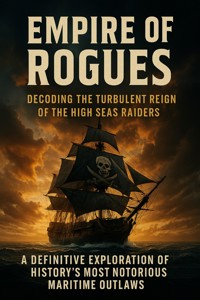
Between the late 1600s and early 1700s, the world's oceans erupted into a chaotic arena of rebellion, violence, and astonishing opportunity. Empire of Rogues delivers a penetrating, expert-level examination of the Golden Age of Piracy—a brief but explosive era that forever reshaped maritime law, global trade, and naval warfare. Designed for professionals, historians, and serious enthusiasts, this book dismantles popular myths to reveal the strategic, economic, and political forces that produced figures such as Blackbeard, Charles Vane, and Anne Bonny. Explore how privateering collapsed, how pirate havens formed intricate shadow economies, and how naval powers responded with evolving tactics and legal innovations. Drawing from archival records, court transcripts, ship logs, and recent scholarship, the narrative reconstructs the true operational methods of pirate crews—their governance structures, weaponry, navigation, and brutal codes of discipline. This informative and authoritative account reveals not only how pirates disrupted empires but how their actions accelerated reforms in global maritime systems. Step into a world where rebellion met opportunity, and learn why this turbulent age still influences maritime security today.
Sie lesen das E-Book in den Legimi-Apps auf:
Seitenzahl: 223
Veröffentlichungsjahr: 2025
Das E-Book (TTS) können Sie hören im Abo „Legimi Premium” in Legimi-Apps auf:
Ähnliche




















Table of Contents
Chapter 1: The Birth of the Golden Age of Piracy
The Decay of Traditional Naval Power
The Rise of Colonial Aspirations
Oceans as Both Refuge and Battleground
The Allure of the High Seas
Chapter 2: Privateering: The Thin Line Between Pirates and Privateers
The Origins of Privateering
The Economic Incentives Behind Privateering
The Legal Framework and Governance
The Transition from Privateering to Piracy
The Role of Naval Powers in Privateering
Chapter 3: Blackbeard: The Infamous Symbol of Piracy
Early Life and Background
Rise to Notoriety
Leadership and Crew Dynamics
The Fall of Blackbeard
Cultural Impact and Legacy
Analysis of Piracy's Role in Maritime History
Chapter 4: Female Pirates: Challenging Gender Norms at Sea
Women in a Man's World
Anne Bonny: The Fierce Buccaneer
Mary Read: The Nautical Warrior
Gender and Pirate Codes
The Social and Economic Impact of Female Pirates
Chapter 5: The Pirate Code: Rules of the High Seas
The Origins of the Pirate Code
Structure and Content of Pirate Codes
Famous Pirate Codes
The Role of the Pirate Code in Crew Dynamics
The Legacy of Pirate Codes
Chapter 6: Pirate Havens: The Birth of Shadow Economies
Introduction to Pirate Havens
The Economic Significance of Havens
Governance and Community Structures
Impact on Global Trade and Maritime Law
The Cultural Legacy of Pirate Havens
Chapter 7: Pirate Ships: The Vessels of Rebellion
The Anatomy of Pirate Ships
Comparing Pirate Ships and Merchant Vessels
Crew Composition and Roles on Pirate Ships
Armament and Tactical Innovations
Chapter 8: The Golden Age’s Most Notorious Pirates
Charles Vane: The Rebellious Buccaneer
Bartholomew Roberts: The Gentleman Pirate
Anne Bonny: The Femme Fatale of Piracy
Blackbeard: The Living Legend
Chapter 9: Life at Sea: Daily Realities for the Pirate Crew
Daily Life and Routine Aboard Pirate Ships
Hardships and Risks of Life at Sea
Governance and Crew Dynamics
Community and Brotherhood Aboard
The Concept of Freedom and Adventure
Chapter 10: Naval Warfare and the Response to Piracy
The Emergence of Naval Countermeasures
Technological Innovations in Naval Warfare
The Role of Privateers in the Anti-Piracy Campaign
International Coalitions Against Piracy
Chapter 11: The End of the Golden Age: Factors Leading to Decline
Increased Naval Patrols
Legislative Changes
Shifting Economic Landscapes
The Rise of Nationalism
Chapter 12: The Legacy of Piracy in Modern Maritime Law
Historical Context of Piracy Legislation
Development of Modern Maritime Law
Impact on Global Trade Regulations
Modern-day Maritime Security Policies
Chapter 13: Pirates in Literature and Popular Culture
The Origins of Pirate Mythology
Piracy in Classic Literature
Pirates in Film and Television
The Romanticization of Pirates
The Legacy of Pirates in Modern Culture
Chapter 14: The Sociology of Piracy: A Group of Outlaws
The Diversity of Pirate Crews
Leadership and Governance on the High Seas
Camaraderie and Social Bonds
Conflicts Within Pirate Crews
Chapter 15: Modern Maritime Security and the Ghosts of Piracy
The Legacy of Historical Piracy
Current Hotspots of Maritime Piracy
International Naval Strategies Against Piracy
The Role of Technology in Maritime Security
The Economics of Modern Piracy
Future Directions in Maritime Security
Chapter 16: Conclusion: The Enduring Fascination with Maritime Outlaws
The Legacy of Maritime Outlaws
Evolution of the Pirate Image
Modern-Day Pirates and Security Issues
Reflection on Cultural Impact
Conclusion: Charting the Course Forward
Chapter 1: The Birth of the Golden Age of Piracy
The Golden Age of Piracy, stretching roughly from the late 1600s to the early 1700s, marks a fascinating period defined by lawlessness and rebellion on the high seas. This chapter explores the socio-economic and political conditions that set the stage for this remarkable era, examining the decline of traditional naval powers, the rise of colonial aspirations, and the allure of the ocean as both a refuge and a battleground. We'll look into how global trade networks created opportunities for ambitious individuals to seize power and fortune through piracy.
The Decay of Traditional Naval Power
The decline of established naval powers paved the way for piracy to flourish. This section examines the factors contributing to the weakening of traditional fleets, focusing on the geopolitical changes that altered the balance of maritime control.
Impact of the Thirty Years' War
The Thirty Years' War, lasting from 1618 to 1648, profoundly depleted European nations, especially in terms of naval capability. Resources that would normally be allocated to maintaining and expanding naval fleets were redirected to land campaigns. This diversion left the seas in a state of relative neglect, fostering an environment ripe for piracy.
The war's toll included a significant loss of personnel, ships, and finances, creating gaps in maritime security. As traditional naval powers struggled to recover, the oceans became increasingly lawless. Pirates exploited this vacuum, targeting both merchant vessels and weak naval escorts. With fewer naval vessels patrolling the global trade routes, pirates found ample opportunity to thrive, often operating with impunity.
Shift in Power Dynamics
The decline of established empires such as Spain and the Holy Roman Empire in the late 17th century coincided with the rise of burgeoning colonial nations like England and France. As these new powers sought to expand their influence, a complex web of conflicts erupted, leading to enhanced opportunities for piracy.
The changing geopolitical landscape meant that territorial waters were less uniformly controlled. Competitors often engaged in skirmishes over control of trade routes and colonies. In the chaos, pirates frequently aligned themselves with one side or another, securing protection or even legitimacy in return for their services. The ensuing atmosphere of rivalry and competition enabled these maritime outlaws to flourish in the absence of a dominant naval power.
Technological Advances
The late 17th century marked a significant period of technological innovation that transformed maritime warfare. Advancements in shipbuilding and weaponry allowed smaller, more maneuverable vessels, such as sloops and cutters, to emerge. These vessels were not only faster but also better armed than their larger counterparts, allowing them to challenge traditional naval ships effectively.
The ability to swiftly attack and retreat proved invaluable for pirate crews. Armed with cannons and small arms, these raiders could strike merchant ships before their larger adversaries could respond. The combination of speed and firepower revolutionized piracy, empowering rogue crews to seize wealth from unsuspecting vessels amidst the backdrop of a weakened naval presence.
Privatization of Warfare
The late 17th century saw a profound shift in the nature of naval engagements with the increasing use of privateers by national governments. These privately owned vessels were equipped and authorized to attack enemy ships, a practice that blurred the lines between legitimate warfare and piracy. As governments outsourced naval power to private enterprises, privateers became a common feature of maritime conflict.
This privatization of warfare diminished the distinction between state-sanctioned actions and acts of piracy. Many individuals found fortune in privateering, leading to an influx of those who resorted to outright piracy when the opportunities provided by privateering waned. The result was a conflated perception of legality in seafaring, where pirates could often claim to be acting under a legitimate banner, complicating the legal landscape for maritime law enforcement.
The Rise of Colonial Aspirations
Colonial expansion fueled the desires of many to seek wealth on the high seas. This section explores how the drive for land and riches intensified piracy during this period.
Competition for Colonies
The late 17th and early 18th centuries witnessed an intense struggle among European powers for dominion over colonial territories in the Americas. Nations such as England, France, Spain, and the Netherlands aimed to expand their empires, resulting in a surge of maritime traffic across the Atlantic. This influx of vessels created a host of vulnerabilities, as trading ships ventured into unpatrolled waters, often laden with valuable goods.
The competition for colonies not only heightened tensions between these nations but also laid the groundwork for increased acts of piracy. Pirate crews capitalized on the growing number of merchant vessels, viewing them as ripe targets. With empires vying for supremacy, the seas became chaotic, with pirates exploiting the gaps in naval defenses. This volatile environment would encourage a generation of outlaws to take to the high seas, pursuing not only wealth but also a level of notoriety previously unseen.
Resource Extraction
The colonial appetite for precious metals and resources significantly contributed to the allure of piracy. European nations sought gold, silver, and other commodities from the New World, which were imperative for their economies. Consequently, shipping routes became increasingly lucrative, yet perilous, as large amounts of valuable cargo were transported across the Atlantic.
This situation attracted both legitimate traders and pirates, creating a dangerous intersection of ambition and lawlessness. Ships brimming with wealth became prime targets, leading to a surge in piratical activities as outlaws aimed to intercept these vessels. The desire for quick riches through illicit means transformed piracy from mere criminal opportunism into a strategic undertaking that would challenge the very structures of colonial maritime trade.
Economic Incentives
Colonial economies were bustling with activity and demand for goods, fueling a thriving marketplace that pirates eagerly sought to exploit. As European powers established trade networks for commodities like sugar, tobacco, and rum, the potential for profit attracted individuals with less regard for legality. Pirates recognized that disrupting these networks could yield substantial returns.
The increasing demand for goods provided pirates with a clear incentive to capture merchant ships. Moreover, the chaotic nature of colonial trading routes often meant that pirates faced minimal repercussions for their actions. Consequently, the economic landscape became a breeding ground for piracy, as outlaws capitalized on the lucrative opportunities abound in the increasingly interconnected world of colonial commerce.
Social Mobility
Piracy emerged as a unique avenue for social ascent during the Golden Age, particularly for marginalized individuals seeking fortune and status. In an era where social hierarchy was rigidly defined, many turned to the high seas for the chance to alter their fortunes. The prospect of immense wealth made piracy an enticing choice for those disillusioned with their societal positions.
This allure appealed predominantly to the disenfranchised—individuals who had been denied opportunities in traditional society. Pirate crews often valued contributions over class, offering a meritocratic structure where skills and bravery dictated one’s place aboard a ship. In this way, piracy became not just a form of rebellion against oppressive systems but also a means for individuals to carve out new identities and reshape their destinies during a time of turmoil.
Oceans as Both Refuge and Battleground
The oceans in this era served dual purposes: providing respite for those fleeing authority and becoming the stage for fierce maritime conflict. This section investigates the duality of the sea as a haven and a theater of war.
Sanctuaries for Outlaws
The seas of the late 17th century were dotted with remote islands and coastal outposts that offered a sanctuary to those who sought refuge from authoritative powers. Locations such as Tortuga and Nassau emerged as notorious havens for pirates, allowing them to regroup, repair their ships, and share in the spoils of their plundering. These sanctuaries provided a sense of security and community, enabling pirates to live outside the strictures of colonial governments.
Under the cover of dense jungles and isolated coves, these outlaw havens fostered a unique social structure. They were places where pirates created informal codes of conduct, distributing their ill-gotten gains in a more equitable manner among the crew. This redistribution was not simply a plunder-focused endeavor; it established a sense of camaraderie and allegiance, which would prove crucial for their survival against naval pursuits. Thus, these sanctuaries were vital for maintaining the operational capacity of pirate crews and solidifying their presence on the high seas.
Naval Conflict Escalation
The rise of piracy during the Golden Age prompted an escalated response from European naval powers, transforming the seas into a battleground. Traditional naval practices were strained under the prevalence of piracy, as privateers and rogue pirate fleets disrupted lucrative trade routes. The increased aggression from navies such as the British, French, and Spanish was characterized by intensified patrol missions across the Atlantic and Caribbean waters.
Navies adapted quickly to the threat posed by pirates, often employing advanced naval strategies and technologies to recapture control of maritime trade. The deployment of warships specifically tasked to hunt pirates transformed the oceans into an arena of relentless conflict. This escalation not only led to numerous bloody naval engagements but also prompted legal and tactical adaptations that shaped modern naval warfare approaches. Consequently, the high seas became synonymous with both freedom and violent confrontation, where control over maritime routes was hotly contested.
Cultural Blend in Pirate Havens
Places like Nassau became melting pots for a diverse array of cultures, as pirates from different regions and backgrounds converged in these hubs of lawlessness. This unique blend was the result of long-standing maritime traditions that saw an influx of sailors, traders, and adventurers from various ethnicities and nations seeking prosperity away from the constraints of colonial rule.
The interactions within these pirate havens led to a vibrant cultural exchange, where languages, customs, and social practices mingled. This blending fostered a sense of community among those who embraced the pirate lifestyle, creating distinctive social norms and artistic expressions. The cultural tapestry formed in places like Nassau not only symbolized defiance against imperial authority but created a unique identity among pirates, reflecting the complexities of their existence at sea during a tumultuous era in history.
Strategic Use of the Environment
Pirates were astute navigators, leveraging their profound understanding of the marine environment to evade capture and conduct successful raids. Their expertise in local geography, including knowledge of hidden coves and shallow waters, allowed them to utilize the landscape to their advantage. They planned attacks at strategic locations, where naval vessels could be ambushed or trade ships caught unawares.
Additionally, pirates harnessed their comprehension of tides and weather patterns, timing their movements to coincide with favorable conditions. Such strategic use of environmental factors not only increased their chances of successful ventures but also minimized the risk of confrontation with the more powerful navies. Consequently, their ability to navigate and exploit the seas contributed significantly to their operational success, marking them as formidable opponents on the battlefield of the high seas.
The Allure of the High Seas
The ocean's mysteries and dangers drew many to seek their fortunes through piracy. This section explores the romanticized view of piracy and its impact on recruitment.
Glorification of the Pirate Life
The romanticized image of piracy has captivated many throughout history, portraying an existence characterized by adventure and unbridled freedom. This glorification of the pirate life emerged from the tales spun by sailors and novelists, depicting swashbuckling heroes clad in flamboyant attire, sailing the high seas in pursuit of treasure. Young men, often disillusioned by the mundane prospects of their current lives, were drawn to these alluring narratives that promised excitement beyond their imaginations.
Moreover, piracy was not merely an escapist fantasy; it presented a tangible path to wealth and fame. The lure of gold, silver, and exotic goods, often framed within the context of a dangerous adventure, appealed to their desire for fortune and glory. As stories of notorious pirates like Blackbeard and Bartholomew Roberts spread, they fueled the dreams of many would-be sailors, shaping a culture that celebrated the audacity and rebelliousness associated with life on the high seas.
Recruitment Strategies
Pirate captains employed a variety of recruitment strategies to bolster their crews, ensuring they had the manpower necessary for raids. Many of these leaders painted a vivid picture of the life of a pirate filled with wealth and camaraderie, utilizing both persuasion and coercion to entice men to join their ranks. Tales of captured treasure and the prospect of a carefree existence appealed to young men seeking an escape from the hardships of land life.
In some instances, captains would deliberately target sailors in ports or aboard merchant ships, crafting their recruitment pitches to highlight not only the riches awaiting them but also the sense of belonging they could find among fellow pirates. The romantic allure of the pirate's life was often juxtaposed with threats of violence or forced enlistment, leading to a mix of enthusiastic volunteers and reluctant participants, each sharing a desire—be it for fortune, adventure, or rebellion—against the constrictions of society.
Social Structures Onboard
Unlike the rigid hierarchies that dominated naval fleets and land societies, many pirate crews practiced informal democratic principles that fostered a sense of equality among their members. Decision-making was often collective, with captains elected by their crews and significant matters subjected to crew votes. This structure resonated with those who felt marginalized or oppressed by traditional societal norms.
Pirates established codes of conduct that outlined the rights and responsibilities of crew members, granting them a level of autonomy not found in conventional maritime life. These practices created a unique culture onboard, fostering camaraderie and loyalty. The allure of these social structures attracted many who sought not only adventure and wealth but also a more equitable and liberated existence in the anarchic atmosphere of piracy.
The Role of Myth and Media
The development of print media and popular literature during the Golden Age of Piracy played a crucial role in romanticizing the pirate lifestyle. Tales from the sea, published in broadsheets or novels, enthralled the public and created a larger-than-life image of pirates as audacious and charismatic figures. Writers like Daniel Defoe, who authored "Robinson Crusoe," contributed to this burgeoning genre, shaping perception through thrilling narratives that celebrated rebelliousness and adventure.
These stories often exaggerated the luxuries and escapades associated with piracy, contrasting sharply with the harsh realities faced by seafarers. However, this myth-making had a profound impact on recruitment, as it painted piratical life as an enticing opportunity for adventure and riches. Many aspiring sailors, influenced by these sensational accounts, decided to abandon their former lives in pursuit of the legendary and exhilarating world depicted in literature, further fueling the recruitment process on the high seas.
Chapter 2: Privateering: The Thin Line Between Pirates and Privateers
Privateering served as a legal facade for many maritime outlaws during the Golden Age. In this chapter, we analyze the complex relationship between state-sponsored privateers and outright pirates. Understanding this distinction is crucial as we uncover the motivations that drove individuals to transition from legitimized warfare to the perilous life of a pirate, and how the political and military landscape facilitated these shifting alliances.
The Origins of Privateering
The practice of privateering emerged as a sanctioned means of maritime warfare, providing states with a cost-effective way to pursue their military objectives. Understanding its origins illuminates the blurred lines between legal privateers and criminal pirates.
The historical roots of privateering date back to the medieval period, where states authorized ships to attack enemies during wartime.
The practice of privateering has its origins in the medieval period, where the concept of militarized commerce began to take form. During this time, sovereign states faced the challenge of pursuing military objectives without the financial burden of maintaining large fleets. Consequently, they turned to civilian shipowners, granting them the right to act on behalf of the state. This arrangement allowed for the capture of enemy vessels under the pretense of patriotic duty.
Medieval monarchs recognized that by sanctioning private individuals to engage in maritime warfare, they could effectively bolster their naval capabilities. These early privateers were not merely pirates in disguise; they were legitimized agents of war. Their operations were formally regulated by letters of marque, documents issued by the state that authorized them to attack designated enemy ships. Thus, the lines between state-sanctioned warfare and piracy began to blur, setting the stage for the complex relationship that would develop between privateers and outright pirates in the coming centuries.
Letters of marque were granted by governments, allowing privateers to legally capture enemy vessels and claim a share of the spoils.
Central to the operations of privateers were the letters of marque granted by governments. These documents served as legal protections and endorsements, allowing privateers to engage in actions that would otherwise be deemed unlawful. By receiving a letter of marque, a ship and its captain were empowered to attack enemy merchant vessels, establishing a semblance of legality in their pursuits.
The spoils captured during these raids were a significant incentive; privateers could retain a substantial portion of the profits from their captures. This financial motivation aligned with both personal gain and national interests, creating a compelling narrative for many who found themselves drawn to privateering. The system was so lucrative that it effectively transformed entrepreneurship on the high seas into a state-approved form of warfare, further complicating the boundaries that separated privateers from pirates.
Privateering became especially popular during conflicts such as the Anglo-Spanish War and the Anglo-Dutch Wars, as nations sought to weaken rivals without the expense of a standing navy.
The notion of privateering gained significant traction during key historical conflicts, most notably the Anglo-Spanish War and the Anglo-Dutch Wars. These wars stimulated a burgeoning demand for naval action, yet the costs associated with maintaining a full-time naval fleet proved prohibitive for many nations. Instead, governments turned to privateers, harnessing their vessels to disrupt enemy trade and exert naval power without incurring the expenses of a standing navy.
The outcome of such conflicts benefited markedly from the efforts of privateers, who executed raids that targeted enemy supply lines, commerce, and naval resources. This strategy allowed nations to inflict damage on their adversaries while conserving their military budgets, demonstrating the effectiveness and necessity of privateering as a wartime practice. As these unauthorized naval engagements took place under the guise of legality, the blurred line between privateering and piracy became a defining characteristic of maritime warfare during this tumultuous era.
The motivations for privateers often aligned with national interests, placing them in a legitimate role compared to their outlaw counterparts.
Privateers were often seen as legitimate warriors with a shared national interest that set them apart from outright pirates. Their operations were directly aligned with the military and economic objectives of their governments, which portrayed them as heroes of the state rather than common criminals. This legitimacy, stemming from their official letters of marque, allowed privateers to function within a societal framework that supported their actions.
Many individuals became privateers out of patriotic duty, motivated by the thrill of adventure and the prospect of wealth that came from successful engagements. This sense of purpose contributed to a deeply ingrained belief that their actions, while perilous, were ultimately sanctioned by the sovereign regimes they served. Consequently, privateers often enjoyed a level of social acceptance and respect that sharply contrasted with the perception of pirates, whose lawlessness rendered them outlaws in the eyes of both their contemporaries and history.
The Economic Incentives Behind Privateering
Privateering was driven by substantial economic benefits, attracting individuals from various backgrounds. The lure of wealth was a powerful motivator that underpinned many seafarers' choice to become privateers.
Privateers could obtain significant financial gains, as successful raids often resulted in treasure and cargo that were independently profited from.
The allure of financial gain was one of the most compelling reasons for individuals to embrace privateering. When privateers successfully raided enemy ships, they were allowed to keep their prize—be it gold, silver, or valuable cargo. This extraordinary opportunity to amass wealth was often more lucrative than traditional employment, particularly for those in dire financial circumstances.
Successful raids could transform a humble sailor into a wealthy individual almost overnight, leading to a proliferation of captains and crew willing to risk the dangers of combat at sea. The spoils of successful missions contributed not just to individual fortunes, but often invigorated local economies through the influx of wealth. Thus, privateering was not merely about legal plunder; it was a path to economic stability and opportunity.
The potential for prize money created a volatile marketplace of crews eager to take to the seas under the banner of privateering.
The promise of prize money fostered competition among privateers, leading to a volatile marketplace for crews. As more individuals sought to become part of this lucrative endeavor, the number of ships engaged in privateering surged dramatically. This competition intensified, compelling untested crews to take on increasingly perilous missions in pursuit of fortune.
Notably, those who successfully captured enemy vessels often found camaraderie and a sense of legitimacy within their ranks, reinforced by the idea that their actions were sanctioned by their governments. However, this very competition and the nature of prize distribution sometimes led to conflicts among privateering crews, as rivalries developed over anticipated rewards and territorial claims.
Trade routes became targets for privateers, which destabilized commerce while proving lucrative for those involved.
Privateers often targeted the well-established trade routes of rival nations, quickly transforming these thriving economic arteries into treacherous waters. The destabilization caused by such attacks had profound implications for global commerce. As privateers disrupted supply chains and captured merchant vessels, the economic repercussions rippled through nations, affecting prices and availability of goods.
For privateers, these trade routes represented not only strategic military objectives but also treasure troves filled with valuable goods. Successful raids on merchant ships provided significant financial returns, drawing in more privateers eager to claim their share of the spoils. This shift in focus disrupted traditional maritime practices and forced nations to rethink their naval strategies in safeguarding trade.
As a result, societies increasingly accepted the role of privateering in the economic tapestry of naval warfare.
With the economic benefits of privateering becoming increasingly evident, societies began to weave this practice into the fabric of naval warfare. Much like legalized piracy, privateering found a space that was socially acceptable and economically beneficial. In many instances, governments actively encouraged privateering as a means to bolster their navies while simultaneously weakening rivals.
This evolving acceptance shifted perceptions, blurring the lines between legitimate warfare and outright piracy. As royal chartered ships became part of the privateering fleet, public sentiment grew more favorable towards these seafarers, viewing them as protectors of national interests rather than mere outlaws. Through this lens, privateering emerged not only as a profitable venture but also as a critical component of national maritime strategy.
The Legal Framework and Governance
The legal implications of privateering established a framework that differed significantly from piracy. This section examines the regulations that governed privateering actions.
Privateers operated under a regulatory system that allowed governments to claim partial responsibility for their actions, blurring accountability lines.
Privateering was established as a legal means for nations to wage war against rival powers without the direct costs associated with maintaining a full navy. By issuing letters of marque, governments authorized private vessels to capture enemy ships, effectively outsourcing military efforts. This relationship blurred the lines of accountability; when privateers engaged in acts that might be considered piracy, nations could distance themselves from those actions, asserting plausible deniability.
This strategic separation allowed states to benefit from the economic gains of privateering while minimizing their liability for the potential violence and chaos that accompanied these actions. Consequently, privateers could operate with a degree of impunity, knowing that while their engagements were sanctioned by their home country, any fallout could be justified as independent action taken for personal gain.




