


Erhalten Sie Zugang zu diesem und mehr als 300000 Büchern ab EUR 5,99 monatlich.
- Herausgeber: IVP Academic
- Kategorie: Religion und Spiritualität
- Sprache: Englisch
Unemployment. Environmental damage. Poverty.Economists Victor Claar and Robin Klay critically engage mainstream economic theory and policy recommendations to provide guidance for faithfully and responsibly addressing these and other important economic issues. Affirming that a just and prosperous society depends for its continued success on maintaining the right balance of power among three principal spheres--democratic governments, market-organized economies, and strong moral and cultural institutions--Claar and Klay demonstrate how Christian principles and values guide and undergird a flourishing and just economy.This text is for use in any course needing a survey of the principles of economics.
Sie lesen das E-Book in den Legimi-Apps auf:
Seitenzahl: 487
Veröffentlichungsjahr: 2015
Das E-Book (TTS) können Sie hören im Abo „Legimi Premium” in Legimi-Apps auf:
Ähnliche







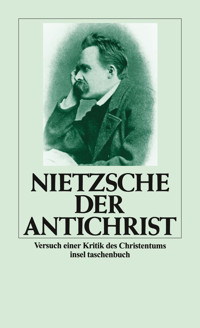











ECONOMICSIN CHRISTIANPERSPECTIVE
Theory, Policy and Life Choices
For my parents.V. V. C.To my father, for the example of his life as a lawyer—practicing justice and mercy—and to my son, Nathan,for his tremendous personal supportand attentive reading of our book.R. J. K.
Preface
This book addresses issues of economic policy, not only from a Christian perspective but also from the perspective of its authors—two mainstream economists who are also Christians. While several currently available books approach economic issues from a Christian perspective, most are unconcerned with basic notions of economic theory. Often written by noneconomists, such books consider no framework for thought beyond a particular Christian perspective. Economic theory does not inform their writing. As a result, their authors often make radical recommendations for policy based on their particular viewpoints. Unfortunately, due to their failure to consider economic theory and evidence, their policy recommendations are sometimes dramatically inconsistent with the essential, orthodox principles of economics.
We hope that this book will be of use to anyone who would like to know more about how economics can inform the views of Christians on major economic issues. Any Christian interested in thinking about issues of economic policy should learn at least a bit of economics along the way. This does not mean that our book contains dozens of supply-demand diagrams. The book does, however, provide the interested reader with a clear presentation of the principles fundamental to economic analysis of any issue or problem.
Therefore, we do the following:
Distill the basic facts of each economic issue considered. We include diagrammatic illustrations wherever possible. For example, we illustrate our macro chapters with graphs of unemployment and inflation rates. We also illustrate our chapter on the environment with figures showing recent environmental trends. We want our readers to have a very clear view of each issue considered, since it is easy to be misled by those who unfairly minimize or overdramatize such problems.
Explain the mainstream views in economics of the nature of each problem and its corresponding policy prescription.
Critically evaluate, from a Christian perspective, the views and recommendations of mainstream economists on each issue. Whenever possible, we use Scripture to inform our evaluation, meaningfully and faithfully. We also challenge our readers to apply the conclusions in the pursuit of their individual callings and vocations.
Our guiding conviction is that Christians who are serious about problems like environmental damage, unemployment and poverty cannot afford to ignore the achievements that economists are making with these issues. Mainstream economics helps Christians understand economic problems and respond as good stewards of God’s creation. Moreover, Christian economists like us can serve as guides for Christians who are wary of the policy recommendations of mainstream economists. Hence, we have tried to write a book that is accessible to anyone, faithful to Christian teaching and responsible to our academic discipline.
The opening chapter alerts readers to the approach we take throughout the book, as we make connections between economics—theory, policy and life choices—and living out the Christian faith. A just and prosperous society depends for its continued success on maintaining the right balance of power and responsibility among three principle spheres: democratic governments, market-organized economies, and strong moral and cultural institutions. Thus the guidance we offer for addressing economic problems flows from identifying points at which markets, governments and institutions (like churches) are especially apt to make a difference for good or ill. We articulate a set of Christian principles and values needed to undergird economic and social action in order to produce a just and prosperous society anywhere in the world.
Chapter two describes how markets function in societies like ours. Unique to our book is clear exposition—using familiar examples, without graphs—to build a case for consumers, workers and producers exercising Christian values in all sorts of markets. We show that markets neither require selfishness nor cause materialism. Instead, they offer unique opportunities for Christians to apply their talents and values in ways that benefit people around the world, while also caring for their own families and communities. Furthermore, we illustrate how the perpetual change that characterizes markets need not threaten our values or livelihoods.
In the first two chapters, we make the case that the role of government should be a limited one. Nevertheless, there is a proper role for government in the economy. We need government. Chapter three considers, from both Christian and economic perspectives, the ways in which government can help to improve on the outcomes we would observe if unbridled market interaction were the only available avenue for the provision of goods and services in a society. We provide a careful discussion of cost-benefit analysis: how the proposed benefits of any project must be weighed against the alternative possible uses of the resources that are consumed in pursuit of the project.
In three of the four Gospel accounts Christ teaches us how to respond to the authority of government; we are to give to Caesar what belongs to him, and give to God what belongs to him. But what exactly belongs to Caesar has varied widely across time and place. Even in the United States, the tax burden of the average American has risen from about 10 percent of his or her salary to over 30 percent during the last seventy years. In fact, many economists have compared the government to the Old Testament Leviathan—an insatiable serpent. We use chapter four to consider the ways government may exercise good stewardship in tax-policy design. We also discuss whether the biblical injunction to tithe is affected, now that government performs so many of the tasks traditionally undertaken by the early church (caring for the poor and sick, etc.).
Many environmentalists hate Christianity. In a 1967 article published in Science, Lynn White stated, “By destroying pagan animism, Christianity made it possible to exploit nature. . . . [W]e shall continue to have a worsening ecologic crisis until we reject the Christian axiom that nature has no reason for existence save to serve man.” In chapter five we dismiss White’s claim that God’s plan for the relationship of humans to nature necessarily leads to environmental degradation. Instead, we assert that Christians, called to be good stewards of all of God’s creation, must exercise caution and wisdom in the pursuit of environmental goals. Further, we show that modern economics has much to say about responsible care for and cleanup of the environment.
In chapter six we consider the ways our federal government can influence our macroeconomy—our overall national economy and its interactions with the still-larger global economy. Unemployment rates, inflation rates and national income: these are all macroeconomic issues because we do not normally evaluate them at the local level. Instead, we account for them at the larger, national level. We consider four variables and measures that policymakers have used—both officially and unofficially—as goals of macroeconomic policy: (1) the growth of national income per capita, (2) unemployment rates, (3) inflation rates and (4) stock market values. We include several diagrams, reflecting where the economy has been, is now and may be headed in the future. We also discuss the limits of each of these as measures of overall societal well-being.
In chapter seven we summarize the current state of macroeconomic knowledge today. In particular we discuss the ways the discipline has evolved since the Keynesian economic revolution of the 1930s. Macroeconomic understanding since Keynes has evolved in such a way that Keynes’s prescriptions for active policy have become less and less credible. Instead, it appears that a steady, deliberate, less reactive approach to economic policy may lead to the best, overall, long-term path for the economy. Attempts to use discretionary monetary or fiscal policy actions to stabilize the economy may, instead, be destabilizing—and even deceitful. Indeed, Adam Smith’s invisible hand may be just as powerful in the macroeconomic realm as in individual markets for particular goods and services.
Chapter eight addresses seductive myths about globalization that plague many popular discussions regarding the moral aspects of trade. We start with a case that pits well-meaning Californians, concerned for the environment, against poor Montanans, planning to commercialize new oil fields. Similarly, well-meaning but misguided Westerners often insist on trade restrictions to “protect” poor foreigners from being exploited in world trade. From there, we consider the changes needed for Third World countries to grow their economies and thereby reduce poverty. Finally, we discuss ways that Christians—as individuals, churches and members of secular organizations—can work alongside Third World people to reduce barriers to higher living standards. We continue to urge intellectual and spiritual discipline in the practice of “reasoned hope”—a virtue identified in earlier chapters—which requires long-term commitments and strong faith in God’s active involvement.
In chapter nine we present a biblical and theological basis for the Christian conviction that work is meant to be both a blessing and a means by which God’s gifts to each person are “called out” to meet their own needs and those of the wider community. Labor markets serve as effective channels through which this happens. We use examples that illustrate how earnings differences among persons, across professions and over time reflect decisions people make about training, job risk, location, responsibility and so on. We emphasize that such decisions involve much more than monetary rewards.
Chapter ten undertakes a special challenge by investigating whether current income gaps ought to concern Christians. Is it only absolute poverty that Christians are called to mitigate, or must they also decry the high pay top executives receive? What is the nature of male-female wage gaps and black-white income gaps? To the extent that persistent gaps result from a mixture of personal choices (about education, family, etc.), the regulatory environment and changing markets, what can be done to ensure more equal opportunity? Is it possible for governments to take actions in this regard without unduly interfering with the ability of competitive markets to produce widespread abundance, and while preserving the freedom of choice markets afford?
Since the time of Adam Smith, and especially over the past two decades, a strong case has been made for the importance of moral values and institutions to every country’s economic success. Obviously, where moral values are relatively widespread and influence most members of society (even those who are not associated with any religious tradition), the benefits to society are tremendous. They include the greater likelihood that employees will put an effort into all their tasks, even when supervisors are not likely to monitor them; that companies will more often serve customers than cheat them; and that citizens will buy more things than they steal and pay taxes rather than hiding their lights and incomes under bushels. In chapter eleven we discuss the means by which societies can invest in building more social capital as well as roles played by churches in this endeavor.
To close the book with something very practical, we present “Nine Big Ideas from Economics That Can Help You Be a Good Steward Every Day,” culled from lessons presented throughout the book. This brief section serves as a reminder that we can all honor God while practicing good economics.
There is a crucial need for conversation about economic policy in which moral concerns are introduced along with sound economic analysis, whether the ethics arise from religious or secular perspectives. Indeed, the authors’ development of the subject is open to application and adaptation by non- Christian and secular individuals and groups. For example, Muslim and Jewish scriptures also give prominence to caring for the poor and strangers. Furthermore, commitments to such values as honesty, dedication to community well-being, and work—all key to the quality of life and material abundance in any economy—spread beyond the boundaries of traditional religions. Although the reference point for much of this book’s discussion is explicitly Christian, the authors hope to inform non-Christian readers and to inspire other economists to show the many useful connections between economic policy and moral values emphasized in other religious and secular traditions.
To aid in the clarification of the book’s presentation, we enlisted the help of our students at Hope College as readers and critics of the completed chapters. Our readers have included students who have taken no economics, some who are majoring in economics and others who lie in between. This strategy has provided useful feedback from students who differ widely in their exposure to the study of economics.
We are thankful for the help and support of our friends, families and colleagues as the project progressed. It was a delight to work with the experts at InterVarsity Press, including Gary Deddo, Elaina Whittenhall, Taryn Bullis, Jeff Crosby and Ruth Curphey. At American University Armenia, Anna Hakobyan, Varduhi Hyusisyan, Armen Petrosyan, Astghik Melikyan, Edouard Antonian, Lilit Vardanyan and Lucig Danielian provided pivotal assistance during Claar’s Fulbright year there. We appreciate Julia Hollenberg, at Hope College, for her help with editing. Careful and extensive comments from reviewers Tom Head at George Fox University and Stephen L. S. Smith at Gordon College improved the final product. We especially thank Rowene Beals for her patient reading and editing of the initial manuscript. She was our perfect “interested reader,” as we tested out ideas and honed themes for greater clarity and impact. In addition, Ro fielded pieces of data coming at her from at least three directions with accuracy and grace. We could not have done this project without her support and encouragement throughout the three years in its making.
1
Christian Faith in Relationship to Economic Activity
Framing the Issues
Christians are commanded to conduct every aspect of their lives in response to the call and grace of God in Christ. Clearly, many dimensions of their lives are interwoven with markets. As a result, Christians seek to buy and sell, and to save and invest, in the light of gospel values. They must do so with an awareness of their own limitations, trusting that God will bless and use their lives. Though their ultimate motivations may differ from those of non- Christians, Christians must deal with the same physical, psychological and economic realities as everyone else. Throughout this book we intend for our examination of economic forces and moral values to also engage those outside the Christian tradition.
One of the fundamental assumptions economists make about human activity is that we are limited in our choices by scarce time, resources and knowledge. Christians acknowledge that reality. Like others, they cannot be in two places at once, know the price of everything or provide for themselves and their families without working, saving and carefully considering their budgets (e.g., how much and what to purchase, in keeping with their values). Furthermore, although Christians are called to have “faith that can move mountains,” they are taught not to defy gravity or tempt God by jumping from rooftops (recall Jesus’ refusal of that temptation [Mt 4:5-7]). Likewise, they would court physical and spiritual danger if they ignored real limits to their material and financial resources.
While painfully aware of their human limitations, and recognizing the pervasiveness of sin, Christians maintain reasoned hope for themselves and for the world. Securely founded on the life, death and resurrection of Jesus Christ, their hope transcends the evil they encounter. Their hope ultimately transcends material scarcity, but they live without any pretensions of treading somewhere above the earth-bound paths of non-Christians. They trust in God’s promises of blessings on earth and in the completion of his perfect love in the kingdom of God, which is already here yet still to come in fullness.
Throughout this book we propose to equip readers with an understanding of the economy within which they make dozens of daily choices, and to affirm the spiritual values required to live out their decisions about work, as well as buying and saving, in ways that please God. We do not presume to map out precisely how every Christian or group of Christians should deal with all economic matters. We make use of different traditions for their useful insights regarding how Christian values can be put to work in the economy.
We emphasize the points at which reflection on Christian truths and values is most appropriate and useful for illuminating economic activities. We show how Christians can faithfully interact within the market system without caving in to materialism (see chap. 2 for the development of this point). We also acknowledge that the very limitations of markets open up places for collective action, organized in the private sector, by churches and other associations. We discuss the roles of governments at all levels, which constitute another key realm of human social activity. We show governments acting in ways that may either enhance the creative energies and expertise within the other two realms or weaken their capacity to address big social questions.
The Pillars of a Just and Abundant Society
Traditional economic textbooks portray economies along a continuum, in order to illustrate various degrees of government power relative to the market. Thus, at the far left is a combination of central economic planning and government ownership of all property—best illustrated by the former Soviet Union, present-day Cuba and North Korea. At the far right is minimal government and freedom for markets to deliver any goods and services people are willing to pay for (including morally inferior products, like pornography). Hong Kong is the best example. At this same right-hand end of the spectrum, governments are expected to avoid trying to reduce income disparities between the rich and poor, because it is assumed that the primary social value to be defended is freedom of individual choice, not equality.
Today, nations are located at various points along the left-right spectrum. Thus, to the left of the mid-point is democratic socialism (represented by Sweden and several other countries in Western Europe), a system in which markets play the key roles in production (i.e., there are few state-owned enterprises). Nevertheless, their governments are expected to deliver health care and education, and to lower poverty levels by taxing high incomes and spending on many public services. To the right of center are large and small countries, like the United States and New Zealand. New Zealand maintains a very limited role for government. By comparison, the size and activities of government in the United States are large and extensive—putting the United States to the left of New Zealand. However, compared to most nations in Western Europe, the U.S. government plays a more restricted role in the economic sphere—as evidenced by a largely private health care system, lower spending on poverty programs and unemployment benefits, and lower tax rates that are intended to encourage investment and entrepreneurship.
In this book we discuss relationships between governments and markets (at local and national levels) that conform to Christian teaching and respect economic insights about such things as improving efficiency. We emphasize relationships that do not require a prominent role for churches in promoting legislation and shaping policy. Instead, we describe a third realm of social power and influence: institutions of private, collective action (like churches, schools and museums) that are free to fund, teach and exercise their values for the benefit of society. We picture society as a tripod, supported by three poles, each of which must have the size and integrity to enable people and their communities to thrive. These poles are democratic government, the market economy, and strong religious and cultural institutions. Novak (1982) masterfully develops this theme.
We propose to illustrate how societies that are based on healthy relationships among the three poles produce a rich variety of solutions to meet social, economic and spiritual needs, even as these needs evolve over time. In small and poor societies, for example, families are the main source of education and health care as well as the chief “employers.” In other societies, religious associations—like mosques or churches—provide most education. In richer and more diverse societies, pre-university education takes place mainly in government-funded schools, while spiritual needs are addressed by religious organizations.
To remain healthy, societies must be vigilant regarding the rights and responsibilities of the three sectors—governments, markets and private/voluntary organizations—so that none unduly encroaches on the domain and responsibilities of another. During the second half of the twentieth century, in Europe and the United States, governments grew to meet new social expectations, such as provisions for unemployed workers and retirees. In later chapters we examine what economic theory and Christian teaching have to say about how expansion of some government responsibilities and budgets can impair the ability of markets and private voluntary organizations to perform their functions well.
Recognition of problems in the regulatory role of government has prompted waves of deregulation throughout the industrialized world over the last three decades (in banking, transportation, etc.). More recent efforts to expand collaboration between governments and private voluntary organizations (e.g., via President George W. Bush’s faith and community-based initiative) require careful study. It is still an open question whether such partnerships, using tax money, can achieve the desired social outcomes without violating basic church-state separation or compromising the holistic missions of religious organizations (see chap. 11).
In modern societies a balanced relationship among governments, private voluntary organizations and markets leaves individual and group participants in each realm relatively free to exercise their unique talents, insights, resources and values. Thus, for example, we point out the relative advantage to society of governments setting out minimal standards for environmental health, but doing so in ways that preserve access to resources and relatively free choice by individuals, businesses and private voluntary groups regarding their use of water, air and land (see chap. 5). Such economic freedoms, we argue, are absolutely essential for a majority of people to utilize and develop fully their talents and other resources for the sake of personal, social and even spiritual good.
The choice a society makes is, however, not between government action (based on a specific set of moral principles) and completely free, individual action disregarding social benefits and moral values. Even with democratic governments, free markets and strong private voluntary associations in place, the ultimate course of any society depends on the continual exercise of personal responsibility in commitments shared with others and based on fundamental values. Christians would add that the future course of any society also depends on effective Christian witness. Spirit-empowered witness and the resulting deep religious conversions, alone, have the power to infuse the realms of government, markets and private voluntary institutions with godly motives, and to guide their activities in the light of truly great visions for life on earth.
One of the reasons we emphasize the crucial roles of moral and cultural institutions is that when they are strong (partly as a result of being given legal stature), such institutions are able to undertake a huge variety of tasks by making use of voluntary contributions of time and money. If, instead, governments assume primary responsibility for providing education, arts, health care and help for needy people, their control results in too little innovation and too many one-size-fits-all public services. One reaction to this inherent problem in education has been the creation of charter schools and support for school vouchers. Both reflect a keen interest by many people to see educational innovation benefit from vigorous competition among many different models, so that excellence builds in places where it has sadly lagged (e.g., especially in poor urban neighborhoods, but also in the whole U.S. public school system).
Finally, in countries where the only funds to support public services come from tax revenues, much less can be achieved. Many citizens of such countries consider their primary duty to society to be fully exercised by paying their taxes or by engaging in political activism on behalf of tax fairness and particular government spending priorities. By comparison with Americans, for example, the French expect much more of government and less of the private voluntary sector. Measured in terms of employment, the U.S. private voluntary sector is almost twice that of France (3.7 percent of the population versus 2 percent in the mid-1990s) (CIVICUS 1997, pp. 49, 150). An interesting comparison can be made between France and the United States regarding the respective roles of private and government sectors in their aid to Third World countries. In 2002, U.S. citizens privately donated on average five cents per person to Third World assistance, and thirteen cents through their government. On the other hand, French citizens privately donated an average of one cent per person, but twenty-five cents per person through their government (Foreign Policy 2004). The Center for Global Development publishes a weighted Commitment to Development Index (CDI). Besides aid, other factors affecting international rankings include trade policy and investment. France and the United States shared seventh place in the 2004 rankings of twenty-one nations, with the Netherlands and Denmark in first place, Australia, the United Kingdom and Canada just ahead of the United States and France (also tied with Germany and Norway for seventh place out of twenty-one countries), and Japan in last place.
Concentration of social goals in the domain of government, especially when undertaken by national governments, can have the unintended side effect of undermining personal moral action and leaving untapped the skills and community resources that could be used to meet crying social needs. Chapter four presents a careful consideration of the domains in which governments can be expected to enhance public welfare, and of the economic principles that suggest appropriate boundaries around that sphere of public life.
The histories of Western societies differ with respect to the relative powers and responsibilities of governments, markets and private/voluntary organizations. A comparison of France and the United States provides an example, but does not explain how or why those differences occurred. After his visit to America in the early 1800s, Alexis de Tocqueville wrote Democracy in America, in which he marveled at the ways that Americans organized themselves in every town and hamlet to deal locally with problems they identified—rather than expecting governments to assume primary responsibility for their solution. This, he thought, was the reason why democracy worked in America. By contrast, the French government actually prohibited private organizations from providing services to meet social needs until the law was changed at the end of the nineteenth century. The state was to be the sole provider.
Some of those who have supported recent efforts in the United States and elsewhere to constrain government powers, in favor of markets and private/voluntary organizations, argue that governments gradually took over many functions that could be performed better by the other two sectors. Those who continue to favor a large government role in the provision of social services, including education, health care and retirement benefits, argue that government is the only sector capable of coordinating services and distributing them fairly, because markets (they believe) undermine communal responsibility.
On the other hand, some religious leaders insist that governments have stepped into social gaps because moral values—such as personal and communal responsibility, charity and love—were being eroded by materialism and other secular values. They often argue that the first line of religious offense against social ills is spiritual and moral renewal. Only then are people and communities empowered to change their social environments through loving service. Throughout this book we discuss all of these possibilities, beginning in chapter two, where we examine the claim that free markets promote increased materialism.
In addition to the otherwise untapped resources made available to society through the work of moral and cultural institutions, those same institutions often have an advantage over governments in meeting local and individual needs. Many are grassroots organizations by virtue of their proximity and experience, who understand unique local situations and make intelligent use of local networks (sometimes relying on subsidies from public funds). For a parallel reason John Stuart Mill’s ([1859] 1974) influential essay On Liberty, as well as recent governmental reforms around the world, highlights the benefits of allowing as much state and local autonomy as possible in the design and delivery of public services. (See chapter 8 regarding the importance of political and economic reforms in the Third World.)
Christian Principles and Values Undergird a Flourishing and Just Economy
It is hard to think of any Christian principle or value that is irrelevant to economic activity. Consider teachings on the importance of prayer and how best to pray; or contemplate God’s invitation to each person to entrust themselves to Christ—as their Savior, friend and Lord. If somehow such practices and commitments were strictly spiritual, they would have no connection to the economy. However, the Bible and the church consistently teach that attempts to love and pray to God are meaningless unless they cause Christians to behave differently in the “real world” than they would without spiritual moorings.
James wrote in his epistle that “faith by itself isn’t enough. Unless it produces good deeds [expressed in love for neighbors and strangers], it is dead and useless” (Jas 2:17). Furthermore, the first petition in the Lord’s Prayer—“may your Kingdom come soon” (Mt 6:10)—cannot be realized without collaboration among “little Christs” (from which we get the word Christians) and with Jesus Christ, whose life on earth demonstrated how to live fully. Likewise, the petition to “give us today the food we need” (Mt 6:11) is rightly understood to entail both human work and God’s blessing of the earth, with all its potential to bring forth plenty. It is also a prayer for spiritual food, without which work cannot achieve its full potential for people and their communities (for more on this, see chap. 9 about work and vocation).
Although some biblical teachings may be a step removed from direct economic application, the themes that most relate to the economy can be gathered under five broad headings. We offer these without extensive justification in the form of biblical texts or theological writings, although we will provide abundant suggestions for further reading. Most principles appearing below are discussed in Donald Hay’s (1991) book Economics Today: A Christian Critique. With some modification we make use of his choices because they reflect both Catholic and Protestant thinking about these matters, and they do so with clarity and brevity. The basic Christian principles on which economic life should be organized are revealed by certain attitudes and actions in response to God’s creation and gifts to each person and community, namely, delight and gratitude, stewardship and work, creativity and caring.
God provides an abundant and dynamic creation, over which humans are given the calling and responsibility of stewardship. Stewardship extends to the use of individual talents (witness the parable of the talents [Mt 25:14-30]). The responsibility of stewards is to manage resources, over which each has been given oversight, in the best interest of the owner (in this case, God) and in service to others.
Humans are created to enjoy creation and to show gratitude for it, as many of the psalms beautifully illustrate. We are to respect God for the gifts of creation by avoiding careless waste or plunder (see Deut 20:19) of resources. (In chap. 5, dedicated to environmental issues, some care will be given to define waste relative to efficiency and in the light of noneconomic goals.)
Biblical sources describing proper human relationships to creation can be found throughout Scripture. The Garden of Eden portrays the abundance of creation. God presents creation as a gift of plants and animals, over which humans are given the responsibility of stewardship (see Gen 1:28-31). Men and women are to continually give thanks to God for his gifts in the created world (see Ps 95). They are to share the produce of the land (their “incomes”) with those in need, as prescribed in the Old Testament tithe. Indeed, one part of the tithe was meant to provide food and wine for rejoicing in God’s presence at the temple in Jerusalem; another part was meant for the support of widows, orphans and strangers; and the rest was devoted to the support of priests (see Deut 14:22-29).
Human beings have an obligation to work, and their societies must afford them many opportunities to do so, since work is the principle means for exercising stewardship. The importance of work in Scripture is evidenced by proverbs that commend it (see Prov 10:3-4) and by the apostle Paul’s insistence that Christians must work if they intend to eat (see 2 Thess 3:10). Work is more than a job or profession, however. It is a calling in which men and women apply and expand their God-given talents, thereby reflecting the image of God (who was at “work” in creation). Through work, people have an opportunity to meet their personal and family needs as well as those of the community. Through work, we collaborate with each other in the stewardly production and use of resources. Indeed, the writer of Ecclesiasticus (38:39, Latin Vulgate) says that our work is our prayer. (Chap. 9 expands on the sense of work as a calling.)
Personally and collectively, society must make provision for the poor (as well as the sick, orphans and those otherwise severely disadvantaged)—people who are unable to take care of their basic needs through their work. The Old Testament tithes were a kind of communal tax meant to care for the poor in their midst—both Jews and foreigners. God’s concern to prevent intergenerational poverty is evident in the Old Testament law, which provided for land to be redistributed back to the original families every fifty years (the Jubilee). Furthermore, farmers were to leave fallen grain for the poor to glean in their fields (recall the story of Ruth). Some laws were aimed at protecting poor people from scandalous exploitation by those who would extract high interest—even on loans of food. Other laws called on employers to pay their workers every evening (see Lev 19:13), so that they could buy their daily bread.
In the New Testament, Jesus taught his followers to serve the needy as they would serve their Lord (e.g., Mt 25:31-46). Early church leaders assigned deacons and took special collections to provide for poor believers in their midst as well as others in the Jerusalem church (see Acts 6:1-4; 1 Cor 16:1-4). Throughout the Bible, care for the poor is the premier sign of gratitude to God, who led Israel out of slavery (Deut 8:11-18) and who gave his Son to free all from bondage to sin (Gal 4:3-7).
Women and men are made in the image of God (Gen 1:27). Aspects of that image include the capacity, vision and passion to create new things, to uncover new possibilities, and to explore new dimensions. Because God continuously sustains and unfolds new potential in creation, the gift of human creativity is essential for society to thrive, especially in the presence of continuous change. In their exercise of stewardship, human beings are called to develop resources and apply their talents. Consider all the shepherds commended in Scripture, as well as those who worked in bronze and iron (see Gen 4:20-22), in weaving (see the famous wife, mother and business person described in Prov 31), and creating music (recall kings Saul and David).
The Foundations of a Society Based on Biblical Principles in a Market Economy
Based on the biblical principles previously described, certain requirements must be met in any society. In social, political and economic dealings, societies must protect the freedom of individuals and communities to choose among a vast array of possibilities regarding their consumption, production and sharing. Without freedom, there is no responsibility. Furthermore, without freedom, human beings are not accorded their essential status as creatures “made in God’s image.” They are unable to fully explore partially hidden (and everchanging) callings within their families, work environments and communal relationships.
Societies built on a foundation of political democracy, free markets and strong moral and cultural institutions respect the freedom of human agency and provide an especially fertile environment for human flourishing under God’s care. They also imbed certain social values, like civility and fairness. None of these ways of organizing political, economic and social relations by itself guarantees that the values of the kingdom of God are advanced in human history. However, together they enable Christians to practice and share their faith and love, as God guides them. This balanced tripod of social spheres (recall the three-poled model on p. 17) also ensures that non-Christians are accorded the same freedoms and dignity as everyone else.
First, consider government. The pioneers of democratic government believed that listening to the voices of all citizens was key to a well-run government. Collectively, citizen participation was regarded as a source of wisdom that could not be duplicated by any would-be benevolent dictator. Furthermore, founders of the American republic saw the need to provide for competition (both through elections and in the form of institutional checks and balances) so that any proposals for government action would be tested and constrained at various levels. They did this to frustrate potential tyranny by elites or majorities.
Of course, no such complex system would be needed if each citizen could be counted on to act always with perfect wisdom, knowledge and consideration for others. The Christian view of individual calling and responsibility, along with a keen awareness of sin and human capacity for evil, accords well with various forms of democracy that preserve widespread freedom within certain constraints.
Is it also the case that relatively free markets complement Christian respect for individual callings and stewardship? We believe so. While competition is useful in political democracy, it is even more pervasive and fruitful in free- market economies. Producers compete with each other to meet consumers’ demands. Workers compete with each other to get and keep jobs that meet their own objectives for income, opportunity, collegiality and fulfillment of calling—as well as safety, access to transportation and flexibility in hours. Financial institutions compete with each other to provide savers with a choice of financial instruments representing various combinations of safety and good returns. They also compete with each other to earn profits through their charges (interest payments and fees) on loans to individuals and enterprises, determined after careful assessment of borrowers’ abilities to put the money to productive use. Finally, owners of resources—land, minerals, machines and patents—compete with each other, either to get the best possible prices when selling them, or to earn the greatest income streams possible from their ongoing use.
Within and among all economic entities, competition ensures individuals and groups the widest possible opportunities to make choices based on their own values. However, no market economy magically ensures adequate competition and fairness in all dealings. As a consequence, governments can contribute to the health of an economy, in large part, by establishing fundamental rights and rules that promote both competition and fairness. Thus the protection of private property rights and the enforcement of contracts are essential government tasks. Legislatures, police, courts and prisons are all involved in defining and defending the rights of persons over themselves and their property.
There are other potentially useful roles for governments to play in an economy, which we describe and evaluate in upcoming chapters. For example, we consider the need for a government role in protecting the environment and in providing certain public services that individuals and communities might have difficulty producing for themselves.
Clearly, free markets alone are not sufficient for humans to flourish. While markets do generally provide growing opportunities for the exercise of professional callings, they do not directly fund callings to the ministry or support soup kitchens. Nevertheless, free markets and democratic societies make it legal and possible for people who earn incomes in the for-profit sector to pay the salaries of missionaries and to fund religious retreat centers and camps. Furthermore, free markets enable churches, museums, orchestras and schools to buy the materials vital to producing the services they sell either at reduced prices or give away.
Finally, strong moral institutions, like churches and families, are essential to the functioning of a healthy society. Without strong moral convictions, even normally law-abiding people sometimes cheat when they are unlikely to be caught (consider music “sharing” through Internet sites). They use time at work for personal purposes; they hide defects in the cars they offer for resale; they cheat their families of the time and attention needed to raise the next generation; they spend most income on themselves, leaving few funds or productive resources for the future; and they weaken their communities by not offering their time and money to support and equip people who lack strong families and adequate resources.
Christians are painfully aware that they fail their communities and their Lord in many of the ways just mentioned. By themselves, they cannot triumph over sin. Along with all humanity—no matter the education level, culture, economic or religious status—they are subject to sin. As producers, government officials and consumers, their motives, actions and justifications are tainted. Confession, forgiveness and restoration—provided by Christ through the church—constitute spiritual remedies.
However, given the way that sin (even forgiven sin) can leave permanent scars on lives, people who acknowledge the great potential for evil usually favor a three-pole system of democratic government, market economy and strong religious/cultural institutions. Each of these spheres operates by rules aimed at providing equal rights and responsibilities under the law—for the citizens, who vote, buy and sell, maintain families, worship and play. Furthermore, competition within and among these spheres sets some limits on the ability of any one person, self-righteous group, government leader or firm to abuse its power.
Societies lacking strong moral and cultural foundations are forced to devote scarce resources to police officers at every corner, soldiers along every border. By contrast, people living in societies that are strong in terms of democracy, markets and morals are freer to use their finite resources for better things than huge police and military forces—like food, medicine, entertainment and even church services. When Christians in any society act out their collective calling to be the “salt of the earth,” they help preserve their societies and continually open them to receive new life, by God’s grace.
For Further Reading
Bandow, Doug, and Schindler, David L., eds. 2003. Wealth, poverty, and human destiny. Wilmington, Del.: ISI Books. A collaborative effort between the Intercollegiate Studies Institute and the John Templeton Foundation, the purpose of this edited volume is to consider whether (1) market forces are mostly good and rarely bad, or (2) market forces engender in everyone a tendency toward individualistic behavior that leads away from relationships held in community with others. To promote balance in the presentation, the commissioners recruited two editors, one to represent each point of view.
Britton, Andrew, and Sedgwick, Peter. 2003. Economic theory and Christian belief. Bern: Peter Lang. Organized around the outline of an introductory principles of economics course, Britton and Sedgwick have designed a book that will help economists understand better—for each major topic—what Christianity has to say, and help theologians understand better what economics has to say. Each of the first ten chapters consists of two major sections: economic theory and Christian belief. Following a brief introduction the economic theory section of each chapter provides a whirlwind tour of the basic economic concepts relevant to that chapter’s topic. The Christian belief section spells out for the laity some primary scriptural insights relevant to the topic at hand. Each chapter concludes with a brief summary and discussion section of the preceding two sections.
Hay, Donald A., and Kreider, Alan, eds. 2001. Christianity and the culture of economics. Cardiff: University of Wales Press. This volume considers whether markets are a net plus or minus. On one hand, it is possible that markets reward selfish behavior and over time elicit it. Alternatively, markets may merely be a neutral tool that delivers the goods a society desires. In the final chapter, Hay discusses the role of a Christian economist.
Novak, Michael. 1982. The spirit of democratic capitalism. New York: Simon & Schuster. This is a classic that should be read by anyone wanting to understand the genius of capitalism, not as a matter of market power but as a dynamic system with great creative power. Better than anyone else, Novak explains why the Christian understanding of God, human beings and God’s purposes in the world fits best with free markets. He also shows the danger of governments, markets or moral/cultural institutions trying to usurp power from the others, since each has a distinct role to play in society.
2
Markets
Mechanisms for Creating Good and Exercising Christian Responsibility
In later chapters of this book we carefully consider limitations to markets and ways that governments and moral/cultural institutions can complement markets without impairing their capacity to allocate resources and produce abundance. Here our first task is to understand what markets accomplish that cannot be done well by any substitute, such as an elite group of economists, senators or church leaders. Alternative economic systems fail on the grounds of inefficiency, restricted freedom of choice for groups and individuals, and relatively poor living standards. In this chapter we not only describe what markets accomplish and how, but also show that they are not primarily vehicles for rampant materialism. In fact, they support the highest forms of cultural and spiritual expression.
Consider the marvel of a beehive, with all its complex social organization, signaling dances and triangulated maps pointing toward the nearest source of nectar. Contemplate the adaptations by species to changing conditions and the systematic ways that tropical floras organize themselves in order to get access to light. Meditate on the place that both microscopic entities and moving heavenly bodies have in the dynamics of the universe. Marvel at what joins the tectonic movements of eons past with spaces occupied and resources used by all life on earth today.
Some early scientists who were Christians, like Johannes Kepler (1571-1630), broke into song in the middle of their treatises because they saw natural wonders as products of the mind of God. You will search high and low, however, to find an economist (even a Christian economist) breaking out in psalms of praise while describing how markets work to meet human needs, to direct human potential and to serve human goals that range from the simple to the profound. Their professional reserve and lack of training as poets may hold economists back. Although they understand and even marvel at the work of markets in the service of humanity, economists find it difficult to convey this to the general public—especially to moral critics who advocate some alternative. We invite our readers to join us on a trip to discover and marvel at markets, and to discern responsible Christian interaction within them, especially as consumers.
Scarcity—A Product of Sin or an Opportunity for Careful Choices About Consumption?
Let us begin with a visit to a small farm community in Iowa, where the dark, overturned soil smells fertile. The farmers work hard, manage carefully and assume the risks of entrepreneurship whenever they invest their savings in new buildings and equipment to raise productivity on their farms. By contrast with similar communities in parts of the Third World, these Iowa farmers and the local town are not poor. However, they too face the inevitable scarcity that underlies the human condition everywhere. They cannot spend any given hour twice—first on their family and second on planting. They cannot buy the latest air-conditioned combines at a time when farm incomes are low. And they cannot go to Florida in the winter if it would mean failing to make payments on their production loans.
Economists often say that scarcity is the fundamental fact of human life with which their discipline deals. Thus they model the behavior of consumers and producers as one of deciding how to use limited (hence the word scarce) resources like time, money and land. Such models illustrate the case of Tim, a college student setting out to buy some shirts. He is guided in his choice among stores and brands by their prices and quality as well as by his style preferences. Because his income is limited he cannot buy twenty cool shirts. Furthermore, Tim must consider the time he has available to shop around, since he could do other valuable things with that hour and might be inclined to save time by buying online (even at the risk of a poor fit).
Tim must be careful and thoughtful about his shopping because his resources are limited. He may be pictured as trying either to get as many nice shirts as possible with the $100 he has apportioned to the summer clothes budget, or as trying to get the three shirts he needs at the lowest cost (so that he can take his kid brother out to a movie with what he saves by shopping carefully). Clearly, Tim is guided by his self-interest, but he is not selfish. After all, he thinks not only of his brother but also about what shirts would be appropriate for church on Sundays in the summer heat.
So the first stops on our journey—in Iowa and with Tim—serve to illustrate how producers and consumers make choices in light of comparatively scarce means, and that they do so by consulting their self-interest. However, their self-interest does not generally entail selfishness. Instead, it includes careful regard for family, work needs, appropriate dress for worship and the desire to avoid falling asleep during long sermons.
The scarcity that all individuals and groups must take into account when using markets to meet their needs, and to reach certain goals, does not result primarily from sinful decisions. This seems obvious in our examples. Nevertheless, many Christian writers have concluded that market behavior is so inextricably mixed with the sin of selfishness that the only way to address the scarcity resulting from sin is to practice simple living and to share all surpluses with others.
Scarcity, in its economic sense (namely, limits on financial and other means that require careful consumer and producer choices), is not something that can be solved by simple living and generosity. Quite the contrary, the Swarts, a Christian family living simply on an organic farm near Las Vegas, may be stretched even to give a tithe to their church, since the local market for organic fruits and vegetables is quite limited. The Christian love they show others has to take alternative forms, such as inviting urban kids to spend time on a real farm.
Like everyone else, the Swart family has to make careful decisions about how to use their time and money, even to meet quite ordinary needs. For example, should they sew their own clothes, or buy them, and can their own fruit? No one but this family (prayerfully attending to God’s leading and perhaps in consultation with other like-minded Christians) can make such decisions. None of the above choices is obviously selfish or less Christian than others—neither was their choice to farm, despite the fact that both parents are college graduates.
Those who disparage consumer and producer decisions that are based, in part, on the individual’s (or family’s or church’s) consideration of self-interest misunderstand the Swarts’ story. When critics assess markets, they usually do so detached from the millions of individual choices that are routinely informed both by self-interest and concern for others—as close as one’s family or as far away as the Haitian village where a mission helps people start up small businesses.
Furthermore, personal acts of kindness, the creation of beauty and the search for wisdom—all of which transcend material motives—nonetheless depend for much of their success on very material industries. Catholic economist Peter Danner (1995) writes that
[those industries] require high labor skills, enormous investments, and ever developing technology . . . [including] a vast education program, serving untold millions, a flood of books, plays, and musical compositions, and architectural temples both to commerce and divinity. (p. 30)
Moreover, markets cater to a wide range of both virtuous and vicious motives:
Social impulses like friendship, compassion and understanding; and oppositely, enmity, envy and indifference motivate much buying and selling. Life goals of power, popularity, prestige, and the intense desire for truth, beauty and the divine are strong spiritual motives which affect mightily what is produced, exchanged, consumed. (p. 30)
Although it is clear that consumer choices expressed through markets are informed by self-interest (though they need not be selfish), Christians must bring their moral and spiritual values with them into markets. For example, those values exclude the purchase of pornography (whose definition is subject to personal judgment and informed by Christian teaching). They preclude rampant materialism—which often entails an emphasis on showy things, instead of helping others or making purchases that advance intellectual, artistic and spiritual purposes. As an example, most Christians gladly include books, tuition fees, art and spiritual retreats in their spending, but would likely counsel a church family against spending all their discretionary income on the latest home entertainment systems.
In the early twentieth century Thorstein Veblen, a decidedly non-Christian economist, critiqued some consumer habits. He coined the expression “conspicuous consumption” to capture the habits of people who buy the most expensive and flashy products in order to advertise their wealth and attract the admiration or envy of others. Clearly, that is the spirit of the “sinful nature” run amuck (Gal 5:19-21)!
Christianity is not a “Lone Ranger” religion. It depends on vibrant personal faith, love of strangers and deep connections within the Christian community. Even though markets are not themselves the cause of selfishness, they respond as readily to consumers whose motives are morally suspect as to those who carefully consider God’s will as they spend, save and give. Christians are not immune to temptations offered by the smorgasbord spread out before them by markets. As a result, they do well not only to pray and gather for regular worship but also to uphold each other as they ponder how to honor God in their purchases, as in every other area of their lives.
The Church of the Savior in Washington, D.C., lay religious orders and Richard Foster’s (1998) book Celebration of Discipline have something in common. They all offer Christian teaching and communal support for those who understand their personal callings to include a simple lifestyle, closely shared with the needy. Such a life is not every Christian’s calling, but it certainly deserves their prayerful consideration and perhaps their financial support.1 Others serve God best by making music in Carnegie Hall (like Marian Anderson and Wynton Marsalis) or by building a successful company (like Max De Pree of Herman Miller Furniture or Francois Michelin of Group Michelin).
In Michelin’s (2003) book And Why Not? Michelin shows how business is one of the highest callings. The mystery of God’s collaboration with human beings in the business world lies behind the scenes. Corporations are nothing less than the dynamic creations of employees, shareholders and customers working together in concrete ways to make goods and services. But their creation has a deeper meaning, as innovation “frees the imagination and encourages risk-taking—going to the limits in order to see what happens” (Couretas 2003).
Furthermore, it is possible for Christians to commit themselves together (sometimes with non-Christians) to purchase products and services that show regard for humanity and its diversity. For example, a group of Christians might decide to frequent Dave’s Digs—a restaurant providing a few quiet corners for the hearing impaired—even though they themselves have hearing as acute as dolphins. Although Dave’s Digs supporters have a modest preference for the prices or menu next door, they patronize Dave’s just so that there is a pleasant, public place for people living with hearing loss.
Having visited some Iowa farmers, college student Tim and the Swarts living just outside Las Vegas, we are ready to stop by Uncle Don’s apartment in a New Haven Christian retirement center. For Don, and everyone else, markets “work” because they produce prices and generate income opportunities that signal those who own resources to produce valued products and services. For example, most senior citizens who show up at the local drug store demonstrate their willingness and ability (with insurance) to buy the latest drugs to treat their ailments. A few years ago, some ailments—like prostate cancer or impotency—simply would have had to be endured.
This is a good place to take note of how markets inform (but do not dictate) decisions by Christian consumers trying to exercise good stewardship of their money and other resources. If you brought a gift for your Uncle Don, you probably did not buy a Western string “bolo” tie, even though it was on sale, because nobody born after 1935 would wear one! That would be cheap, but still wasteful, because even Uncle Don would not wear the tie. Neither did you bring him a new computerized toilet that washes and dries off the user (only in Japan are these toilets standard in homes) with the push of a few buttons. Good stewardship of your uncle’s resources (for whom you are the designated trustee) suggests that you wait a few years until market competition has cut their price in half. After all, Uncle Don is still a spry seventy-year-old.
For Don and others with good medical insurance, drug companies meet their needs for medicine because their purchases are sufficiently large to encourage pharmaceutical companies to develop drugs targeted to treat thousands of ailments. New drugs and medical procedures can also extend the years of full marital intimacy and enhance the appearance of older persons. For this reason Christian economists do not casually accept accusations that for-profit drug companies are failing to meet health needs. Obviously, they are satisfying a vast array of the public’s health needs.




