


22,99 €
Mehr erfahren.
- Herausgeber: John Wiley & Sons
- Kategorie: Fachliteratur
- Sprache: Englisch
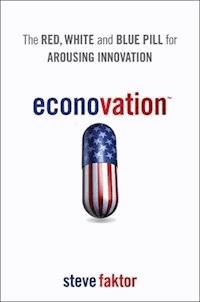
Over the last 20 years, China fed our zombie-like appetite for iPhones, Prada and Snuggies. At the same time, its biggest customer, the US, found itself in debt, under-educated, and covered with recreational tattoos. So now what? Will America wallow in mediocrity like Greece or some C-list celebrity? Or, will our legendary ingenuity save us from Tweeting...and eating our way to irrelevance? Econovation is a bold, witty response to those questions that doesn't rely on miracles or government for answers. It challenges business leaders to think differently about the next decade of the US economy and respond with big, sustainable innovations. Written by Steve Faktor, former Vice President of Growth & Innovation and head of the Chairman's Innovation Fund at American Express, Econovation is a trends book on steroids. It's bursting with practical, thought-provoking ideas no executive, entrepreneur or Fed Chairman can afford to miss. Most importantly, Econovation envisions a very different future. It's one ruled by "producerism", not consumerism. It's a future in which real innovators must do more than slide a greasy finger over the screen of an iPad. Econovation uncovers opportunities in unexpected places. You'll learn how to: * Capitalize on a market that will go from making nothing to making everything...for China. * Use psychological pricing and some crafty tricks from Google to reduce reliance on tapped-out consumers * Sell to consumers whose new identities will be based on what they create, not what they buy, click or super-size * Seduce a desperate government to finance your business, then feed you pancakes in the morning * Motivate tomorrow's employee with social currency instead of the green, depreciating kind * Upgrade your business and your kids with a little help from Mormons and kindergartners with hacksaws Econovation is a fresh perspective on a future we've taken for granted. It empowers readers to think big, dream big, and conquer economic conditions that will paralyze others. With a hefty dose of data, humor, and actionable ideas, Econovation offers insight and amusement in one, convenient place - a rare treat for a business book.
Sie lesen das E-Book in den Legimi-Apps auf:
Seitenzahl: 323
Veröffentlichungsjahr: 2011
Ähnliche



















Table of Contents
Cover
Title page
Copyright page
Dedication
Acknowledgments
INTRODUCTION: What Is Econovation?
Why Me? Why Now?
The Next 100 Years
Coming Up in Econovation
CHAPTER 1 Indulgence in an Age of Constraint
The Way We Were
Right Now
So What?
CHAPTER 2 Tawdry Tales of a Service Economy
Botox and Other Services
Haves versus Have-Nots
Fossils and Fledglings
The Power of Intangibles
So What?
CHAPTER 3 The Next Decade
A Rebalancing: What’s Likely, Possible, and Remote
A Shift in Power, Capital, and Priorities
So What?
CHAPTER 4 Sell Actualization
The Seven Economic Identities
Get Your Free Labor Here!
What Minimum Wage? Tiny Jobs for Tiny Pay
Social Identity as Economic Leverage
Secure Future
So What?
CHAPTER 5 Build a Capital Magnet
Sell to China, India, and Brazil
Change the Model
Become a Foreign Capital Magnet
What U.S. Companies Can Make in the Next Decade
So What?
CHAPTER 6 Make Makers
Education Complications
Fix the Core
Automate: Rise of the Machines
Repair School Financing
Empower Makers
So What?
CHAPTER 7 Liberate Micropreneurs
Splice Entrepreneurship into Education
Gain Access to Capital
Close the Confidence and Knowledge Gaps
Disneyfication for Micropreneurs
So What?
CHAPTER 8 Build an “Incentive Nation”
Touched by the Hand of Go . . . vernment
Price, Love, and Understanding
Pricing and Incentive Models with a Future
The End of Money
So What?
CHAPTER 9 Unfinished Business
The Missing Link
Nobody’s Bitch
APPENDIX: Applying Econovation
Approach
Hindsight to Foresight
All Together Now
About the Author
Index
Copyright © 2012 by Steve Faktor. All rights reserved.
Published by John Wiley & Sons, Inc., Hoboken, New Jersey.
Published simultaneously in Canada.
No part of this publication may be reproduced, stored in a retrieval system, or transmitted in any form or by any means, electronic, mechanical, photocopying, recording, scanning, or otherwise, except as permitted under Section 107 or 108 of the 1976 United States Copyright Act, without either the prior written permission of the Publisher, or authorization through payment of the appropriate per-copy fee to the Copyright Clearance Center, Inc., 222 Rosewood Drive, Danvers, MA 01923, (978) 750-8400, fax (978) 646-8600, or on the Web at www.copyright.com. Requests to the Publisher for permission should be addressed to the Permissions Department, John Wiley & Sons, Inc., 111 River Street, Hoboken, NJ 07030, (201) 748-6011, fax (201) 748-6008, or online at http://www.wiley.com/go/permissions.
Limit of Liability/Disclaimer of Warranty: While the publisher and author have used their best efforts in preparing this book, they make no representations or warranties with respect to the accuracy or completeness of the contents of this book and specifically disclaim any implied warranties of merchantability or fitness for a particular purpose. No warranty may be created or extended by sales representatives or written sales materials. The advice and strategies contained herein may not be suitable for your situation. You should consult with a professional where appropriate. Neither the publisher nor author shall be liable for any loss of profit or any other commercial damages, including but not limited to special, incidental, consequential, or other damages.
For general information on our other products and services or for technical support, please contact our Customer Care Department within the United States at (800) 762-2974, outside the United States at (317) 572-3993 or fax (317) 572-4002.
Wiley also publishes its books in a variety of electronic formats. Some content that appears in print may not be available in electronic books. For more information about Wiley products, visit our web site at www.wiley.com.
Library of Congress Cataloging-in-Publication Data:
Faktor, Steve, 1973-
Econovation : the red, white, and blue pill for arousing innovation / Steve Faktor.
p. cm.
Includes index.
ISBN 978-1-118-05400-0 (hardback)
1. United States–Economic conditions–2009- 2. United States–Economic policy–2009- 3. Technological innovations–Economic aspects–United States. I. Title.
HC106.84.F35 2012
658.4'063–dc23
2011037183
ISBN 978-1-118-18244-4 (epdf)
ISBN 978-1-118-18243-7 (epub)
ISBN 978-1-118-18242-0 (mobi)
To my wonderful parents
for taking the ultimate risk to bring us to this amazing country;
at the age of six,
I was in no condition to escape the Soviet Union on my own!
Acknowledgments
My deepest gratitude goes to Deborah and Heyden for consuming every imperfect morsel of my early draft and giving me the kind of honest feedback and encouragement that could only come from true friends. Alex, you came along at exactly the right time to help me refocus on what really mattered, thank you, really. Yoav, I’m grateful for all your thoughtful advice and no, I’m not running for office, but the fact that you asked let me know I was on the right track. A special thanks to my friends Alison, Jon, Suparna, and Judith for inspiring me during this fun and challenging ride. Simran, I know I tortured you with lots of spreadsheets, but you did terrific work and I know you’ll do amazing things in the future! To my editors Susan and Jennifer at John Wiley & Sons, I’m incredibly grateful to you for being so supportive of this project from the very beginning and for your kind patience as I did my best to juggle work, life, and writing deadlines.
INTRODUCTION What Is Econovation?
From the ashes of the Great Recession rises a great nation. That nation is China. How did this happen? Is the beacon for capitalism finally dimming? Is America destined to wallow in debt like Greece or some C-list celebrity? Or, will our legendary ingenuity save us from tweeting and eating our way to irrelevance? Econovation is a bold, witty response to those questions that doesn’t rely on miracles or government for answers. It explores what the next decade of the U.S. economy will bring and the opportunities it will create. Think of Econovation as a trends book on steroids. It’s bursting with practical, thought-provoking ideas no executive, entrepreneur, or Fed chairman can afford to miss.
In the past 30 years, the U.S. economy has ignited and extinguished more opportunities than any other force, with the possible exception of Oprah. In that time, China and India used their labor surpluses to feed the West’s zombie-like appetite for iPhones, Prada, and Snuggies. That lifted millions out of poverty while their biggest customer, the United States, found itself in debt, undereducated, and covered with recreational tattoos. The situation feels unfamiliar, but clues to our future abound. The math points to another crisis or decade of tough, but cathartic choices to stave off irrelevance—or worse, the rise of a scarier, twitchier Coffee Party.
Today, it’s become virtually impossible to see where government ends and business begins. The government is a huge buyer that can move markets or make rules that can sprout or kill industries. Low-income home loans, tax preparation, health insurance, farming, and several other industries mostly exist because of government. Others like energy trading, coal mining, marijuana (medicinal, of course), charter schools, cigarettes, liquor, and gambling are like veal—only allowed to grow to the size of the government’s cage. Ironically, some of the most regulated industries now need innovation most. As public resources shrivel, economic policy and innovation will have to adapt.
I can’t say that what policymakers have done so far is inspiring. If this were a game of Supermarket Sweep, where you have one minute to fill your cart with a year’s worth of groceries, ours would be filled with Kit Kats, Twinkies, and Dr. Pepper. Short-term stimulus, health care reform, and cash for clunkers were loaded with empty calories. Not a single can of green beans in that cart. Without a major growth spurt, 70 percent tax rates, or big spending cuts, our $15 trillion debt could make U.S. dollars as useful as they are delicious. Speaking of dollars, we are still one of the only countries that can print its own money to trade for tangible goods, from oil to salami. That power opens a fleeting window of opportunity to create the next boom in efficiency-oriented technology, exports, and employment.
Employment is a recurring theme in Econovation. As with anything in life, it was only once jobs disappeared that people realized how much of their identity was based on them. Even those still employed felt a sudden emptiness. For a while, shopping and materialism defined them. But with the loans gone, everyone from executives to administrators suddenly hungered for meaning and purpose. As both people and country search for their next identity, Econovation offers tactical ways to reinvent consumerism and profitably rebuild the American identity.
This book is not a how-to book; it’s a what-to. My goal is to help executives, entrepreneurs, and academics think differently about building sustainable innovations for the next decade. Using clues from our past, Econovation offers a new perspective on a future we’ve taken for granted. Even on a 12-step program, our economy can perform miracles that would have required an ark thousands of years ago. I’m not saying that innovation happens because of economics. I am saying that the success of what’s invented will be determined by economic conditions. Anticipating those conditions can help businesses know where to look for opportunities, inefficiencies, and ideas.
By the time you’re done reading Econovation, I hope it’s well past the bookstore’s return policy. More importantly, I expect you’ll agree that opportunistic economics, the core of Econovation, should be wired into every business function—from strategy to product development to marketing. It can play a dominant role in the portfolio of trends that affect your business, consumers, employees, suppliers, and investors. I know this can be a heavy subject, so I did my best to put it on a diet. With a healthy mix of big ideas, data, and humor, I wouldn’t be surprised if you bought a fresh copy of Econovation for every room in the house.
Why Me? Why Now?
Not long ago, I was a bleary-eyed student, trying to unravel the mysteries of some musty economics textbook. Those were innocent times. Books had all the answers. It took years for my swagger to turn into a limp when the recession hit. Economics turned out to be nothing more than a Pandora’s box of human fear and frailty. The economy is an uncontrollable force dressed up in math, which makes you feel like you’re in control when clearly you are not.
Though I have an economics degree from New York University, my career has been dedicated to creating and bringing innovations to market. Working with C-level executives at Fortune 500 companies, I’ve created multiple $100-million-plus businesses, deployed three enterprise-level innovation programs, and brought numerous products and services to market. My many creations (children?) live in stores and wallets worldwide. In recent years, I’ve also become a popular keynote speaker on the future of business and my 4Cs of Innovation™ methodology. I also muse poetically … and sometimes prophetically, about big ideas and ways to implement them at ideafaktory.com.
Yes, it was quite a ride … until 2008. For someone who makes a living from creativity, optimism, and building things that employ people, 2008 was a rude awakening. When the recession hit, a good chunk of my $50 million Chairman’s Innovation Fund budget disappeared, as did a third of my personal savings. Entire industries buckled. Friends, colleagues, and countless others were left jobless. For the first time in my career, I had to lay people off and send them off into a cold, uncertain world. It was sobering. It felt like some cultish apocalypse, minus the Kool-Aid. I found myself on unfamiliar ground—fortunate to have a job, but with a little extra time on my hands. Instead of using that time to mourn losses in my portfolio, I became obsessed with trying to piece together what went wrong.
I tore through thousands of articles, historical examples, and expert predictions. It all became clear to me—I needed a more cheerful hobby! I was awed and humbled by the conspicuous piles of incompetence, shortsightedness, and outright criminality I found. Experts had no excuse not to see this coming or prevent something this preventable. Mostly, I was mad at myself for getting lulled into complacency given the sad state of global finance. Instead of wallowing in past mistakes or discovering medical marijuana, I decided to finally put a perfectly good economics degree to use. No challenge ever fazed me, so cracking the code on macroeconomics would be no exception.
In 2008, at the height of uncertainty, I put together a series of talks called “Recessionomics—A Path to Recovery.” It was my chance to shine a light on what was happening in our economy and help others prepare for what might come next. These became so popular I ended up doing over a dozen sessions for hundreds of executives and staff across American Express. So many of them thanked me for helping soothe their incredible anxiety about what was happening. I was just happy when nobody cried! Their positivity was gratifying, but something was missing. People craved guidance—they wanted a way to apply Recessionomics to their personal and business lives. Though my prognosis wasn’t full of rainbows and marshmallows, I had plenty of ideas. So I challenged myself to apply innovation principles to what was happening in the world. I wanted to translate turmoil into opportunity. I called this witches’ brew Econovation™.
Since 2009, I have presented various flavors of Econovation at over half a dozen conferences. Attendees have consistently ranked me as a top keynote speaker. Maybe some of that was for my tasteful wardrobe and meticulous hygiene. More likely, it was for the deeply resonant subject matter. After every presentation, executives approached me with compliments, questions about the future, and invitations to speak at their companies. Some even asked me what career their son or daughter should pursue.
As Econovation evolved and I gathered insights and reactions from business leaders, I knew it was time to share my ideas in full bloom. So here we are. You hold in your hand the sum of three and a half years of my toil. It’s an innovator’s take on an economy gone wild and what to do about it—a melding of two very different worlds. This copy of Econovation might make me $1 richer, but I expect you’ll gain far more … so feel free to include me in your will.
One More Thing
More than anything, I am a patriot. At the age of six, I immigrated to the United States from the Soviet Union. By the time my parents took that brave, fateful gamble, I’d already learned a lot of tough lessons. I learned the hard way that the Pravda newspaper was nowhere near as quilted as Charmin (I only wish that were a joke). I knew what it was like to wait in long lines for scarce resources dished out by unmotivated slugs. To my parents and their friends, the United States was a mythical land of endless possibilities, almost like Oz (think Emerald City, not the HBO prison show). America beckoned with hope, opportunity, and Cheetos. My parents left good jobs as a music teacher and an engineer to start from scratch in the most foreign of lands: Brooklyn, New York. Growing up wearing hand-me-downs and shopping for irregular underwear at the 99-cent store can be pretty humbling. It’s not unlike what millions of Americans are experiencing now. I took it as a challenge to be that much smarter, more resourceful, and hard-working to make up the difference. That’s the spirit in which this book is written. I feel a deep sense of obligation and gratitude to this tarnished but still great nation. If I contribute, even in a small way to its revival, I promise never to write anything this melodramatic ever again.
Don’t get me wrong; I’m not mistaking this book for altruism or charity. To me, helping a business to grow, make products people want, and employ people is the ultimate sustainable charity. In turn, those employees can afford to send their kids to school, support their communities, and pay taxes. Trust me, we’ll need every penny. And why do we still mint pennies?
The Next 100 Years
In terms of Econovation, it’s hard to discuss the near future without at least considering the distant one. Clues to the next 100 years stretch from pyramids in Mexico to iPhones in Dubai. From the moment our furry ancestors discovered how to smash open coconuts with rocks, we haven’t looked back. Every invention—shoes, the wheel, clocks, electricity, assembly lines, cars, and computers—made life on earth a little more bearable. Farmers in Vietnam can do more with a rake than their ancestors could with bare hands. The ones with tractors are on easy street. The spread of technology made it possible to sustain larger populations, trade globally, and communicate in ways that make the deck of the Starship Enterprise look like a finished basement from the 1970s.
In economic terms, we are part of a massive shift from labor to capital. Advanced countries like Germany build machines that run factories, seed crops, and transport energy. Others, like the United States, don’t make much anymore. We left slaving over hot assembly lines to developing nations. Today, those with college degrees are hyperconnected cubicle dwellers. Their clicks, tweets, and “Likes” are shouts of a plump nation rejoicing in victory.
Like it or not, we are on a trajectory. Our future is digital. Power shifted to Droids, bloggers, and doughy MIT brainiacs faster than anyone could imagine. Just as in Terminator, The Matrix, or any self-respecting sci-fi dystopia, we are pulling away from the mundane limitations of the physical world toward the limitless possibilities of the digital one. In that future, machines make machines, not factories full of workers. Machines will grow genetically engineered, supercrops that feed billions. Those who have the skills will design, engineer, and program that future. They, and the companies they work for, will either build our digital realm or make our rare trips out of the house at least as enjoyable as Second Life on Xbox.
As everything hurdles toward automation, there can only be so many jobs dusting Donald Trump’s garish furniture. That leaves one important question: What will the rest of the population do?
Employment wouldn’t be as big a problem if the United States had managed its money at least as well as an entry-level accountant. The country that invented or perfected electricity, mass production, flight, cars, and the Internet should be filthy rich. Everyone in the U.S. should live like an oil sheikh—sitting on billions, looking for new investments and deciding which headdress to wear. Unfortunately, that’s not how things turned out. Not only are we not rich, many people and our government are massively in debt. Adding insult to injury, we’ve surrendered our engines of growth, production, and employment to other countries in exchange for some cheap, lousy T-shirts. So now what?
The world’s trajectory doesn’t change. One way or another, we are all being drawn into The Matrix. I can’t say I’m thrilled about it, but the United States, like other countries, must find its place in getting us there. The challenge we face is how to retool a large nation to make up for our financial missteps. Otherwise, we risk creating economic conditions that even our best innovators can’t overcome. I know that sounds like government work, but that’s what got us to the brink in the first place.
Coming Up in Econovation
In this flavor of Econovation, I focus on the world as it will be, not as it should be. That means offering businesses and individuals new ways to capitalize on the trajectory of this strange and disobedient economy. Here’s a quick description of what you are getting yourself into, in the pages that follow:
Chapter 1—Indulgence in an Age of Constraint
Chapter 2—Tawdry Tales of a Service Economy
Chapter 3—The Next Decade
Chapter 4—Sell Actualization
Chapter 5—Build a Capital Magnet
Chapter 6—Make Makers
Chapter 7—Liberate Micropreneurs
Chapter 8—Build an “Incentive Nation”
Chapter 9—Unfinished Business
Appendix—Applying Econovation: How the Sausage Was Made
Looking at the flow of this book, I’m reminded of Charles Dickens’ A Christmas Carol. Just think of the next chapter as a visit from the Ghosts of Economics Past and Present (played by me, though Jake Gyllenhaal almost got the part).
CHAPTER 1
Indulgence in an Age of Constraint
Do you ever drive an air-conditioned sedan to your suburban home, stare at your flat screen and GE appliances and think, “Oh my God, I’m rich!”? Many Americans don’t. A lot has to do with the bills that come at the end of each month. It’s gotten hard to tell which things you own and which ones own you. In the last 30 years both the U.S. government and its citizens plunged into this raging sea of contradictions. Consider the following:
Lesen Sie weiter in der vollständigen Ausgabe!
Lesen Sie weiter in der vollständigen Ausgabe!
Lesen Sie weiter in der vollständigen Ausgabe!
Lesen Sie weiter in der vollständigen Ausgabe!
Lesen Sie weiter in der vollständigen Ausgabe!
Lesen Sie weiter in der vollständigen Ausgabe!
Lesen Sie weiter in der vollständigen Ausgabe!
Lesen Sie weiter in der vollständigen Ausgabe!
Lesen Sie weiter in der vollständigen Ausgabe!
Lesen Sie weiter in der vollständigen Ausgabe!
Lesen Sie weiter in der vollständigen Ausgabe!




