


1,49 €
Mehr erfahren.
- Herausgeber: Maria Tsaneva
- Kategorie: Geisteswissenschaft
- Sprache: Englisch
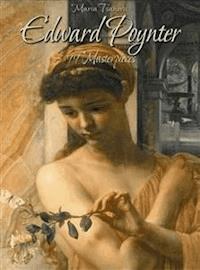
Sir Edward John Poynter was an English painter, designer, and draughtsman. He became best known for his large historical paintings such as Israel in Egypt (1867), followed by St George for England (1869), a mosaic for the Central Lobby of the Palace of Westminster, depicting St George and the Dragon. Visit of the Queen of Sheba (1871–75) and King Solomon (1890). From the turn of the century Poynter's paintings declined both in numbers and standard, his main priority being the running of the Academy. He lived to see the death of classicism, and the total eclipse of his own artistic standards, and those of his contemporaries. He adopted the approach of ignoring new developments of which he did not approve. Poynter held a number of official posts and became a Royal Academician in 1876. In 1896, on the death of Sir John Millais, Poynter was elected President of the Royal Academy. He received a knighthood in the same year and an honorary degree from Cambridge University in 1898.
Das E-Book können Sie in Legimi-Apps oder einer beliebigen App lesen, die das folgende Format unterstützen:
Veröffentlichungsjahr: 2014
Ähnliche


Edward Poynter: 99Masterpieces
By Maria Tsaneva
First Edition
Copyright © 2014 by Maria Tsaneva
*****
Edward Poynter: 99Masterpieces
*****
Foreword
Sir Edward John Poynter (1836 –1919) was an English painter, designer, and draughtsman.He became best known for his large historical paintings such as Israel in Egypt (1867), followed by St George for England (1869), a mosaic for the Central Lobby of the Palace of Westminster, depicting St George and the Dragon. Visit of the Queen of Sheba (1871–75) and King Solomon (1890). Poynter held a number of official posts: he was the first Slade Professor at University College London from 1871 to 1875, principal of the National Art Training School from 1875 to 1881 and director of the National Gallery from 1894 to 1904. He became a Royal Academician in 1876. In 1896, on the death of Sir John Millais, Poynter was elected President of the Royal Academy. He received a knighthood in the same year and an honorary degree from Cambridge University in 1898. He was made a baronet in 1902.
He was born in Paris, though his parents returned to Britain soon after. Early in his career Poynter studied in Rome, where he met Frederic Leighton, his greatest single artistic influence. He then moved to Paris in 1855. On returning to London, he became involved on book illustration. In 1865 he produced his first really successful picture, Faithful unto Death, a Roman sentry staying at his post in Pompeii as Vesuvius overwhelmed the city. This dramatic painting was probably never bettered by Poynter throughout his whole long career.
In 1866 Poynter married the famous beauty Agnes MacDonald, and they had three children. Her sister Georgiana married the artist Edward Burne-Jones; her sister Alice was the mother of writer Rudyard Kipling; and her sister Louisa was the mother of three-times-Prime Minister of the United Kingdom Stanley Baldwin.
From the turn of the century Poynter's paintings declined both in numbers and standard, his main priority being the running of the Academy. He lived to see the death of classicism, and the total eclipse of his own artistic standards, and those of his contemporaries. He adopted the approach of ignoring new developments of which he did not approve.
Paintings and Drawings
Lesbia and her Sparrow
1907, oil on canvas
Detail
Detail
The Violinist (1891)
Oil on canvas
Detail
Cave of the Storm Nymphs (1903)
Oil on canvas, private collection




