


0,99 €
Mehr erfahren.
- Herausgeber: Maria Tsaneva
- Kategorie: Geisteswissenschaft
- Sprache: Englisch
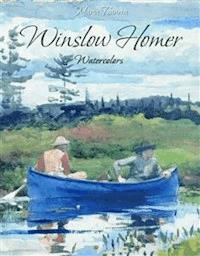
Winslow Homer was American painter, illustrator and etcher, one of the two most admired American late 19th-century artists and is considered to be the greatest pictorial poet of outdoor life in the United States and its greatest watercolorist. Nominally a landscape painter, in a sense carrying on Hudson River school attitudes, Homer was an artist of power and individuality whose images are metaphors for the relationship of Man and Nature. A careful observer of visual reality, he was at the same time alive to the purely physical properties of pigment and colour, of line and form, and of the patterns they create. His work is characterized by bold, fluid brushwork, strong draughtsmanship and composition, and particularly by a lack of sentimentality. Although Homer excelled above all as a watercolorist, his oils and watercolours alike are characterized by directness, realism, objectivity, and splendid colour. His powerful and dramatic interpretations of the sea in watercolour have never been surpassed and hold a unique place in American art. They are in leading museums throughout the United States.
Das E-Book können Sie in Legimi-Apps oder einer beliebigen App lesen, die das folgende Format unterstützen:
Veröffentlichungsjahr: 2015
Ähnliche




Winslow Homer:
Watercolors
By Maria Tsaneva
––––––––
First Edition
*****
Winslow Homer: Watercolors
*****
Copyright © 2015 by Maria Tsaneva
Table of Contents
Title Page
Copyright Page
Foreword
Watercolors
Foreword
––––––––
Winslow Homer was American painter, illustrator and etcher. He was born in Boston, Massachusetts, in 1836, the second of the three children, all sons, of Henrietta Benson and Charles Savage Homer. His artistic education consisted chiefly of his apprenticeship to the Boston commercial lithographer John H. Bufford, and a few lessons in painting from Frédéric Rondel after that. Following his apprenticeship, Homer worked as a free-lance illustrator for such magazines as Harper's Weekly.
In 1859 he moved to New York City, where began his career as a painter.In 1861 Homer was sent to the Civil War battlefront as correspondent for Harper's Weekly, his work winning international acclaim. Many of his studies of everyday life, such as Snap the Whip (1872, Metropolitan Museum of Art, New York), date from the postwar period, during which he was a popular magazine illustrator.
In 1876, Homer abandoned illustration to devote himself to painting. He found his inspiration in the American scene and, eventually, in the sea, which he painted at Prouts Neck, Maine, in the summer and in Key West, Fla., or the Bahamas in the winter. After 1884 he lived the life of a loner. Homer died in his Prout's Neck studio on September 30, 1910.
Although Homer excelled above all as a watercolourist, his oils and watercolours alike are characterized by directness, realism, objectivity, and splendid colour. His powerful and dramatic interpretations of the sea in watercolour have never been surpassed and hold a unique place in American art. They are in leading museums throughout the United States.
Homer was one of the two most admired American late 19th-century artists and is considered to be the greatest pictorial poet of outdoor life in the Unated States and its greatest watercolourist. Nominally a landscape painter, in a sense carrying on Hudson River school attitudes, Homer was an artist of power and individuality whose images are metaphors for the relationship of Man and Nature. A careful observer of visual reality, he was at the same time alive to the purely physical properties of pigment and colour, of line and form, and of the patterns they create. His work is characterized by bold, fluid brushwork, strong draughtsmanship and composition, and particularly by a lack of sentimentality.
Watercolors
The Garden Wall
1880, Watercolor
In the summer of 1878, Homer enjoyed a lengthy stay at Houghton Farm, the country property of his patron Lawson Valentine in Mountainville, New York. While there, he created a large number of watercolors that depicted youthful farm boys and girls at work and leisure in the fields and orchards.
The Garden Wall, though completed in 1880, is related to a sketch Homer did in 1878, which was most likely done at Houghton Farm. His strong sense of design is clearly evidenced in the placement of the figure among the bold diagonal lines that divide the picture. His self-assured drawing skills are effectively utilized in the scene and his thin color washes are applied with great confidence. The muted colors mark this as a transitional work that is more in keeping with his work as an illustrator rather than the bold expressionistic watercolors of his later years.
Detail




