


1,49 €
Mehr erfahren.
- Herausgeber: Maria Tsaneva
- Kategorie: Geisteswissenschaft
- Sprache: Englisch
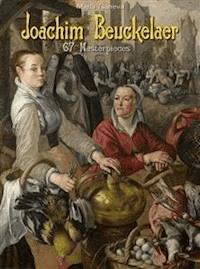
Joachim Beuckelaer was a Flemish painter specialising in market and kitchen scenes with elaborate displays of food and household equipment. He learned to paint in the workshop of his uncle, Pieter Aertsen, who had married his aunt. Aertsen and Beuckelaer gradually developed images that detached the world of produce from the religious content of their earlier hybrid images. These later works depict either kitchens or markets and the persons associated with those activities, more often women than men. The later paintings by Beuckelaer show a greater profusion of foodstuffs in the market scenes, together with a more prominent foregrounding of female peasants immersed within these sales items. Beuckelaer also produced several images of fish stalls, often with background religious scenes, but sometimes completely separated from any additional narrative or reference. His work was influential on painters in Northern Italy, particularly Vincenzo Campi.
Das E-Book können Sie in Legimi-Apps oder einer beliebigen App lesen, die das folgende Format unterstützen:
Veröffentlichungsjahr: 2014
Ähnliche

Joachim Beuckelaer: 67Masterpieces
By Maria Tsaneva
First Edition
Copyright © 2014 by Maria Tsaneva
*****
Joachim Beuckelaer: 67Masterpieces
*****
Foreword
Joachim Beuckelaer (1533–1574) was a Flemish painter specialising in market and kitchen scenes with elaborate displays of food and household equipment.Beuckelaer was born in Antwerp and learned to paint in the workshop of his uncle, Pieter Aertsen, who had married his aunt. Aertsen was best known for his market and kitchen scenes, genres which Beuckelaer continued to paint when he established himself as an independent master in 1560.His market scenes, like Aertsen's, often incorporate biblical episodes into the background.Both Aertsen and Beuckelaer gradually developed images that detached the world of produce from the religious content of their earlier hybrid images. These later works depict either kitchens or markets and the persons associated with those activities, more often women than men. The later paintings by Beuckelaer show a greater profusion of foodstuffs in the market scenes, together with a more prominent foregrounding of female peasants immersed within these sales items. Beuckelaer also produced several images of fish stalls, often with background religious scenes, but sometimes completely separated from any additional narrative or reference.
During the 1560s, especially during the early part of the decade, Beuckelaer painted some purely religious works, for which, unlike the kitchen and market scenes, drawings are known. In this period he also made designs for stained glass.
Beuckelaer was also employed painting the figures into the work of other artists such as Anthonis Mor. The artist was only able to sell his paintings at low prices, and that they only became prized after his death. However, the large size of his later works and the number of workshop variants produced has been taken as an indication of a degree of success at least towards the end of his life.
Research into the technique underlying Beuckelaer’s canvases has shown that he often recycled compositions of his produce from one image to the next. He employed patterns of clustered items through tracings to compose new pictures with apparent variety. This kind of technique allowed him to increase production efficiency and cut costs in time and effort.
His work was influential on painters in Northern Italy, particularly Vincenzo Campi.
Paintings
The Four Elements: Air, 1570
Oil on canvas, 157 x 214 cm
National Gallery, London
Detail
Detail
Detail




