


1,99 €
Mehr erfahren.
- Herausgeber: Publisher s13381
- Kategorie: Geisteswissenschaft
- Sprache: Englisch
Sir Edwin Henry Landseer RA (1802 – 1873) was an English painter and sculptor, well known for his paintings of animals—particularly horses, dogs and stags. However, his best known works are the lion sculptures in Trafalgar Square.Landseer was born in London, the son of the engraver John Landseer A.R.A. He was something of a prodigy whose artistic talents were recognized early on. He studied under several artists, including his father, and the history painter Benjamin Robert Haydon, who encouraged the young Landseer to perform dissections in order to fully understand animal musculature and skeletal structure. Landseer's life was entwined with the Royal Academy. At the age of just 13, in 1815, he exhibited works there. He was elected an Associate at the age of 24, and an Academician five years later in 1831. He was knighted in 1850, and although elected President in 1866 he declined the invitation.In his late 30s Landseer suffered what is now believed to be a substantial nervous breakdown, and for the rest of his life was troubled by recurring bouts of melancholy, hypochondria, and depression, often aggravated by alcohol and drug use. In the last few years of his life Landseer's mental stability was problematic, and at the request of his family he was declared insane in July 1872.
Das E-Book können Sie in Legimi-Apps oder einer beliebigen App lesen, die das folgende Format unterstützen:
Veröffentlichungsjahr: 2017
Ähnliche




















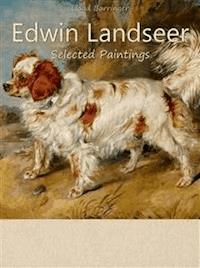
Edwin Landseer
Selected Paintings
By Lloyd Barringer
––––––––
First Edition
*****
Copyright © 2017 by Lloyd Barringer
Table of Contents
Title Page
Copyright Page
Foreword
Paintings
Foreword
Sir Edwin Henry Landseer RA (1802 – 1873) was an English painter and sculptor, well known for his paintings of animals—particularly horses, dogs and stags. However, his best known works are the lion sculptures in Trafalgar Square.
Landseer was born in London, the son of the engraver John Landseer A.R.A. He was something of a prodigy whose artistic talents were recognized early on. He studied under several artists, including his father, and the history painter Benjamin Robert Haydon, who encouraged the young Landseer to perform dissections in order to fully understand animal musculature and skeletal structure. Landseer's life was entwined with the Royal Academy. At the age of just 13, in 1815, he exhibited works there. He was elected an Associate at the age of 24, and an Academician five years later in 1831. He was knighted in 1850, and although elected President in 1866 he declined the invitation.
In his late 30s Landseer suffered what is now believed to be a substantial nervous breakdown, and for the rest of his life was troubled by recurring bouts of melancholy, hypochondria, and depression, often aggravated by alcohol and drug use. In the last few years of his life Landseer's mental stability was problematic, and at the request of his family he was declared insane in July 1872.
Landseer's popularity in Victorian Britain was considerable, and his reputation as an animal painter was unrivalled. Much of his fame—and his income—was generated by the publication of engravings of his work, many of them by his brother Thomas.
His appeal crossed class boundaries: reproductions of his works were common in middle-class homes, while he was also popular with the aristocracy. Queen Victoria commissioned numerous pictures from the artist. Initially asked to paint various royal pets, he then moved on to portraits of ghillies and gamekeepers, Then, in the year before her marriage, the queen commissioned a portrait of herself, as a present for Prince Albert. He taught both Victoria and Albert to etch, and made portraits of Victoria's children as babies, usually in the company of a dog. He also made two portraits of Victoria and Albert dressed for costume balls, at which he was a guest himself.
So popular and influential were Landseer's paintings of dogs in the service of humanity that the name Landseer came to be the official name for the variety of Newfoundland dog that, rather than being black or mostly black, features a mix of both black and white. It was this variety Landseer popularized in his paintings celebrating Newfoundlands as water rescue dogs, most notably Off to the Rescue (1827), A Distinguished Member of the Humane Society (1838), and Saved (1856).




