


25,99 €
Mehr erfahren.
- Herausgeber: John Wiley & Sons
- Kategorie: Fachliteratur
- Sprache: Englisch
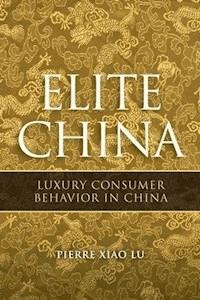
A ground-breaking exploration of the Chinese elite's consumption of luxury products and their attitudes toward luxury goods. Elite China identifies the Chinese luxury product consumers and the characteristics of their luxury consumption, explains the implications for luxury firms and marketers and most importantly, spells out strategies for international luxury brands and Chinese luxury brands to succeed in Chinese market.
Sie lesen das E-Book in den Legimi-Apps auf:
Seitenzahl: 283
Veröffentlichungsjahr: 2011
Ähnliche



















CONTENTS
Acknowledgments
Foreword
Introduction: Understand China’s Elite, Understand China’s Future
Chapter 1: Luxury Consumption and China’s Elite
Luxury consumption and Chinese elite in ancient times
Demography of consumer generations and social classes
Emerging upper-middle class and super-rich: The Chinese elite
Chapter 2: The Confused Concept of “Luxury”
The concept of luxury in Western cultures
The meaning of luxury products in Asian countries
The connotations of luxury and its negative impacts on luxury consumption
Chapter 3: Consumer Value Systems in 21st-century China
Luxury attitudes studies
Epstein’s Cognitive-Experiential Self Theory
Attitudes and values
Melting-pot value system in transitional China
The persistence of traditional values
New ideological values
Confidence
Western values influence people to express their personal tastes
Chapter 4: A Typology of Chinese Luxury Consumers
Methodologies
The luxury consumption of China’s elite
Psychographic traits, consumer process, and the meaning of luxury products
Chapter 5: Habits, Lifestyles, Locations
Brand loyalty and new luxury brands
Post-purchase guilt and repetitive purchase
Geographic locations: Beijing/Shanghai/Guangzhou/Chengdu
Counterfeit luxury products
Unfulfilled needs, wants, and desires
From unfulfilled need to final purchase
Chapter 6: Opportunities for Chinese Luxury Brands
Three strategies to develop a Chinese luxury brand
The ambivalence of the Chinese elite toward Western luxury
Conclusion
Appendix
Index
Copyright © 2008 John Wiley & Sons (Asia) Pte. Ltd.
Published in 2008 by John Wiley & Sons (Asia) Pte. Ltd.
2 Clementi Loop, #02–10, Singapore 129809
All rights reserved.
No part of this publication may be reproduced, stored in a retrieval system, or transmitted in any form or by any means, electronic, mechanical, photocopying, recording, scanning, or otherwise, except as expressly permitted by law, without either the prior written permission of the Publisher, or authorization through payment of the appropriate photocopy fee to the Copyright Clearance Center. Requests for permission should be addressed to the Publisher, John Wiley & Sons (Asia) Pte. Ltd., 2 Clementi Loop, #02–01, Singapore 129809, tel: 65–6463–2400, fax: 65–6463–4605, e-mail: [email protected].
This publication is designed to provide accurate and authoritative information with regard to the subject matter covered. It is sold with the understanding that the Publisher is not engaged in rendering professional services. If professional advice or other expert assistance is required, the services of a competent professional person should be sought.
Other Wiley Editorial Offices
John Wiley & Sons, Inc., 111 River Street, Hoboken, NJ 07030, USA
John Wiley & Sons Ltd, The Atrium, Southern Gate, Chichester PO19 BSQ, England
John Wiley & Sons (Canada) Ltd, 5353 Dundas Street West, Suite 400, Toronto, Ontario M9B 6H8, Canada
John Wiley & Sons Australia Ltd, 42 McDougall Street, Milton, Queensland 4064, Australia
Wiley-VCH, Boschstrasse 12, D-69469 Weinheim, Germany
Library of Congress Cataloging-in-Publication Data:
978-0-470-82267-8
Cover design and page layout by Alicia Beebe
To my wife, Qianqian
ACKNOWLEDGMENTS
I WOULD LIKE to thank the following wonderful people who have given me enormous help in my research and without whom this book would not have been possible: Bernard Pras, André Fourçans, Dominique Xardel, Christian Koenig, Thierry Schwartz, Simon Nyeck, Michel Phan, Concetta Lanciaux, Emanuelle Le Nagard-Assayag, Hellmut Schütte, Denis Darpy, Christian Pinson, Raymond-Alain Thietart, Michel Chevalier, Michelle Chen, Lydie Liu, Hélène Zhang, Bei Zhang, Ming Zhao, and CJ Hwu.
FOREWORD
The past 25 years spent in assisting Bernard Arnault, CEO of LVMH, in the construction of the Group have given me a very special point of observation on the renewal of the luxury industry that has taken place in that period.
Indeed, in 1985, when we started integrating medium-sized luxury companies, mainly still held by families, luxury was moving from product to brand. Our task was to build local products into global brands.
Our focus was on enhancing the brands, rejuvenating them through the injection of global designers, and building an organization of excellence aligned with the quality, heritage and creativity of those brands.
During the first 15 years there was little concentration on customers in the luxury industry, since the accent was on creating desirability. However, thanks to the global retail networks, we have made luxury brands accessible to consumers as never before. And customers have become ultra-sophisticated, discerning, to the point where they are now at the center of the luxury industry and will remain there for years to come.
For this reason, Pierre Xiao Lu’s book on Chinese consumer behavior is fundamental, because it challenges and overrides the perception that Chinese customers seek only the status aspect of luxury. As they become reacquainted with their refined luxury roots, Chinese consumers will embrace luxury as an entry to culture, to beauty, to the refined lifestyle they once had.
Modern Chinese elite is the core client of luxury. It is crucial to understand their value systems. Scanning their values from ancient China to today’s communist planned market economy, Pierre Xiao-Lu presents an effective typology of Chinese luxury consumers, with characteristics of consumption for each segment: the luxury lovers, followers, intellectuals and laggards. Each segment has a different attitude toward brand loyalty, product innovation, and motivation to buy.
Pierre Xiao-Lu explores the geographical diversity that has an impact on consumer’s behaviour. Being aware of the different approaches to luxury consumers in Beijing as opposed to Shanghai or other areas of China will give competitive advantage to a commercial strategy. He gives a striking demonstration of why and how Chinese luxury brands will be created for success, as Chinese are fast recuperating their ancient Chinese tradition of fine arts and craftsmanship.
Pierre Xiao Lu’s vision is the one I had when I came to China in 1994 and fell in love with the evidence of its luxury tradition that I could still glimpse even then in busy Shanghai.
This book makes an important contribution to making China’s past an integral part of building a future that remembers its luxury roots.
Concetta Lanciaux, PhD
Strategy Luxury Advisor, Paris
INTRODUCTION
Understand China’s Elite, Understand China’s Future
In recent times, there has been a great deal of media coverage of the “luxury fever” that is gripping China and how to sell luxury to the Chinese. But how well do you really understand Chinese luxury consumers?
Look closely at the photo of the Boutique Mont Blanc in the Champs-Elysees (see photo section). It shows a window display featuring Chinese-style decoration and calligraphy—a Chinese traditional stele with calligraphy against a golden background and two Chinese blue-and-white porcelains, sumptuously displayed with modern writing instruments made by Mont Blanc: a perfect combination of tradition and modernity the Occidental and the Oriental.
Now look again. Can you see anything wrong in the picture? Perhaps not; but to anyone with a little understanding of Chinese language and culture the mistake will be obvious and a cause of undoubted mirth. The Chinese stele carefully fixed in the middle of the window was hung vertically rather than horizontally and thus unreadable.
The four Chinese characters (, wu shi qi chang) mean the prosperity of five generations. The style of calligraphy is very forceful and solid, the gold indicating its origins in royal families or among aristocratic scholar-bureaucrats. (In imperial China, as in ancient Rome or ancient Egypt, the right to use this color in daily life was denied to ordinary people.)
Mont Blanc corrected the mistake very quickly. It has learned from this lesson and has gone on to develop a wonderful business in China’s luxury market. And there is a lesson in this for everyone who wishes to do business in China: to be successful and to make your targeted Chinese clients happy requires some effort to get to know the market and the people living there. For most with such aspirations, their knowledge of the country is currently very limited; far less than they need. Many American and European companies, attracted by the country’s rapid economic development and vast potential, have rushed in without taking the time to understand the market and are unprepared for what they find there. Access to the wallets of China’s consumers is much harder to achieve than they think, especially for luxury brands.
The modern elite class in China has certain similar characteristics to those of its ancestors—the scholar-bureaucrats of ancient China. In this book, we set out to provide a clear guide to who they are, what they think, how they behave, what their attitudes toward luxury and luxury brands are, and the various differences among them.
In seeking to gain an understanding of the modern elite, we will examine aspects of luxury culture in ancient China and the social evolutions of Chinese society, addressing such issues as how a communist country has been so successful in developing a market-oriented economy and why the marketing and management of luxury have been remarkably effective here. In the process, we look at the relationships between social morality and the concept of luxury in modern China.
After clarifying these questions, we will focus on consumer value systems in today’s China, which are crucial to an understanding of how to sell high-involvement products—in this case, fashion and luxury goods—in a market with such a strong cultural background. This, I hope, will help you to integrate all of this market knowledge into your branding strategy, consumer segmentation, selective retailing and merchandising, integrated marketing communication, and direct marketing, so that you can avoid mistakes and fit well in the market.
Then we go further to look closely at our luxury consumers. An effective typology of Chinese luxury consumers is introduced, with a detailed explanation of the characteristics of consumption of each segment, their value orientations and product design preferences, their geographic distribution, and suitable communication strategies to target the different segments. Some success stories are also discussed along the way.
In order to gain a more detailed picture of the whole Chinese market, we will take a business trip together to the main economic centers in the north, south, east, and central part of China to do some market visits. A profile of each of the main cities—its lifestyle, prevailing attitudes toward luxury, and all information necessary for conducting luxury business there—is presented and discussed.
The final chapter focuses on a very special issue: marketing strategies of Chinese luxury brands. In the first chapter, the reasons why there are no Chinese luxury brands in the booming Chinese luxury market are explained. This chapter introduces some step-by-step strategies for starting and developing brands, and illustrates these with case studies featuring successful Chinese or Chinese-related brands.
Finally, we integrate all that we have looked at to date into 10 marketing strategies which can be applied by both international and Chinese luxury brands in helping them to succeed in the Chinese market.
With the globalization of the world economy, the Chinese market is becoming of increasing strategic importance to multinational companies to ensure their long-term development. Economic development and internal changes in Chinese society are making people think and act differently from their predecessors. It is vital, therefore, for any company targeting affluent Chinese consumers to have a deeper understanding of the behavior of the Chinese elite, the leaders of Chinese society, who will shape the future of China. I believe that this book will help toward gaining that understanding.
“Love”, 2007 Spring-Summer Collection of NE Tiger, a Chinese fashion brand.
© NE Tiger
Window display of Boutique Mont Blanc - Champs-Elysees, Paris, January 2004.
© Pierre Xiao Lu
Scholar-bureaucrats playing polo with the emperor, Tang dynasty
Polo as a luxury leisure and sports activity was very popular among the aristocrats and military generals in Tang, Song and Yuan dynasties. Many emperors and ministers were very good at this elite sport. It combines intelligence, techniques and strength.
Hunting as portrayed in “The Dream of The Red Chamber” by Cao Xueqin
Hunting was a way of leisure for the elite class of ancient Chinese society and reserved only for the aristocrat and scholar-bureaucrats. This young aristocrat is hunting to show that he has reached his manhood and can take on the responsibilities of working for the country.
Ladies (partial), Zhou Fang, Tang dynasty
The luxury and elegance can be clearly seen from the clothing and accessories of the lady in the painting. Her hair was carefully combed and sophisticatedly decorated with adornments and a fresh lotus. Her dress was very suitable and comfortable with pure cotton and high quality silks embroidered with colorful flowers. The exaggeration of the hairstyle and adornment showed the pursuit of extreme beauty and the fine art of life.
Xu Jinglei, actress and film director (left); Zhang Ziyi, actress
© Ports International
Portrait reflecting 21st-century value systems in China
© Pierre Xiao Lu
A dinner party at a trendy Western-style restaurant in Beijing, 2006.
© Pierre Xiao Lu
A Internet Commercial of M-Zone, a Service of China Mobile Targeting Young People, 2007
© China Mobile
(Clockwise) A Chinese lady sporting a Rolex watch, relaxing at the Café de la Pais, Paris (2006); a Chinese skier in Chamonix, France (2007); a Chinese socialite dressed in Agnes B and wearing Chanel cosmetics, holidaying at Cote d’Azur, France (2007); a Chinese client being measured for an Italian suit at Ports 1961 in Beijing (2007).
Main regional cities of China
Peninsula Palace Hotel, Beijing
© Pierre Xiao Lu
Seasons Place with Louis Vuitton store under construction (2007)
© Pierre Xiao Lu
Plaza 66, Nanjing West Road, Shanghai
© Pierre Xiao Lu
No. 18 and No. 3 on the Bund in Shanghai
© Pierre Xiao Lu
Kate Moss with Ports International
© Ports International
CHAPTER 1
Luxury Consumption and China’s Elite
All are past and gone!
For truly great men
Look to this age alone
Mao Zedong,Snow
Luxury consumption and Chinese elite in ancient times
Statistics show that China has become the fourth-largest consumer for Louis Vuitton, the fifth for Gucci, the third for Mont Blanc, and the tenth for Swiss-made watches (it is, in fact, the #1 market for the Swatch Group). Without doubt, the Chinese market is one of the biggest markets for all luxury brands and has tremendous potential. In the next 10 years, affluent Chinese consumers, with their enormous purchasing power and trend defining lifestyles, will reshape the luxury market like never before.
Lesen Sie weiter in der vollständigen Ausgabe!
Lesen Sie weiter in der vollständigen Ausgabe!
Lesen Sie weiter in der vollständigen Ausgabe!
Lesen Sie weiter in der vollständigen Ausgabe!
Lesen Sie weiter in der vollständigen Ausgabe!
Lesen Sie weiter in der vollständigen Ausgabe!
Lesen Sie weiter in der vollständigen Ausgabe!
Lesen Sie weiter in der vollständigen Ausgabe!




