


12,99 €
Mehr erfahren.
- Herausgeber: John Wiley & Sons
- Kategorie: Geisteswissenschaft
- Sprache: Englisch
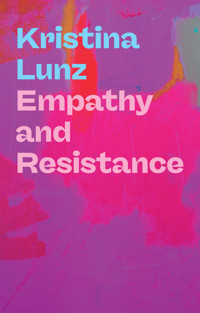
When the world is in crisis, having a clear moral compass and unwavering values is crucial, but so too is a willingness to listen to others. Feminist entrepreneur and policy expert Kristina Lunz argues that empathy and resistance are indispensable for defining our political stance, demonstrating our humanity and driving meaningful change. Although they may appear to be opposed to one another, these elements in fact harmonize perfectly in challenging times, unlocking progress across social, cultural and political spheres, and are vital for activism and political action.
Drawing on a wide range of personal experience, research on empathy, and knowledge passed down from feminist peacebuilders worldwide, Lunz develops a convincing account of why we need to reach out to others, listen to them and work together without prejudice. She emphasizes the importance of developing a political stance and remaining steadfast in the face of adversity, while also encouraging openness and a willingness to change our views when compelling arguments arise, for true conviction lies in value-based decisions rather than the rigid adherence to ideology.
This passionately argued book by a leading feminist author and activist will appeal to anyone interested in the task of creating a fairer, kinder world.
Sie lesen das E-Book in den Legimi-Apps auf:
Seitenzahl: 197
Veröffentlichungsjahr: 2025
Ähnliche



















CONTENTS
Cover
Table of Contents
Title Page
Copyright
Acknowledgments
1 How I found my compass
Notes
2 Empathy
Empathy is not a cure-all
Openness, not judgement and condemnation
Humanity
Growth
Peacebuilding
Notes
3 Resistance
Sisterhood
Deconstructing is important, but constructing is even better
Non-ideological action
The activist’s dilemma
Cynicism as ostensible resistance and intellectual laziness
Notes
4 The tools for empathy and resistance
Hope
Knowledge
Networks
Notes
5 My compass in tempestuous times
Empathy is not a zero-sum game
Constructive impatience
Difficult women
The significance of utopias
Power and the law
The noise out there
Notes
6 Women of empathy and resistance
Ailbhe Smyth: the legalization of abortion in Ireland
Beatrice Fihn: the path to nuclear disarmament
Düzen Tekkal: groundbreaking recognition of a genocide
Stellah Bosire: advancing health justice and dignity in Kenya
Gloria Steinem: feminist revolution through storytelling and solidarity
Notes
7 Why empathy and resistance are so important now
Notes
End User License Agreement
Guide
Cover
Table of Contents
Title Page
Copyright
Acknowledgments
Begin Reading
End User License Agreement
Pages
iii
iv
vii
viii
1
2
3
4
5
6
7
8
9
10
11
12
13
14
15
16
17
18
19
20
21
22
23
24
25
26
27
28
29
30
31
32
33
34
35
36
37
38
39
40
41
42
43
44
45
46
47
48
49
50
51
52
53
54
55
56
57
58
59
60
61
62
63
64
65
66
67
68
69
70
71
72
73
74
75
76
77
78
79
80
81
82
83
84
85
86
87
88
89
90
91
92
93
94
95
96
97
98
99
100
101
102
103
104
105
106
107
108
109
110
111
112
113
114
115
116
117
118
127
Empathy and Resistance
KRISTINA LUNZ
Translated by Nicola Barfoot
polity
Originally published in German as Empathie und Widerstand © by Ullstein Buchverlage GmbH, Berlin. Published in 2024 by Ullstein Verlag
This English translation © Polity Press, 2026
The translation of this book was supported by a grant from the Goethe-Institut.
Polity Press65 Bridge StreetCambridge CB2 1UR, UK
Polity Press111 River StreetHoboken, NJ 07030, USA
All rights reserved. Except for the quotation of short passages for the purpose of criticism and review, no part of this publication may be reproduced, stored in a retrieval system or transmitted, in any form or by any means, electronic, mechanical, photocopying, recording or otherwise, without the prior permission of the publisher.
ISBN-13: 978-1-5095-7034-8
A catalogue record for this book is available from the British Library.
Library of Congress Control Number: 2025937029
The publisher has used its best endeavours to ensure that the URLs for external websites referred to in this book are correct and active at the time of going to press. However, the publisher has no responsibility for the websites and can make no guarantee that a site will remain live or that the content is or will remain appropriate.
Every effort has been made to trace all copyright holders, but if any have been overlooked the publisher will be pleased to include any necessary credits in any subsequent reprint or edition.
For further information on Polity, visit our website:politybooks.com
Acknowledgements
Many people have contributed their understanding, knowledge, expertise and passion to bring this book into existence in its present form. I am deeply grateful to them.
My greatest thanks go to my two editors, Silvie Horch and Heike Wolter. Thank you for helping me to give birth to this book. Having the chance to work with you again has not only given me a great deal of joy but has also allowed me to grow. I look forward to many more joint projects in future! Thanks also to Nathanael Stute for your valuable support in the editing process. And thank you to my publisher, Ullstein, and the fantastic team I’ve had the privilege of working with.
I would like to extend my sincere thanks to my British publisher, Polity Press, for bringing the English edition of this book to life. A special thank you to John Thompson and Elise Heslinga, as well as to Nicola Barfoot, who did a fantastic job translating the book.
Huge thanks to the following people who have, in very different ways, supported me and the development of the book – be it with valuable ideas, proofreading of the manuscript or allowing me to include their portraits: Ailbhe Smyth, Beatrice Fihn, Beggymaus Seemann, Bianca Praetorins, Düzen Tekkal, Enissa Amani, Gloria Steinem, Ijad Madisch, Janina Hell, Jutta von Falkenhausen, Laura Fischer, Luisa Neubauer, Navid Norouzi (love you <3), Nina Bernarding, Stellah Bosire, Thomas Grischko and Yara Hoffmann. I thank you all from the bottom of my heart.
1How I found my compass
When Putin put his nuclear forces on high alert, Anne Hathaway was waiting for us. It was February 2022, and the Oscar-winning US actor had a front-row seat at the fashion show of a famous Italian designer. I’d been invited to Milan by the same fashion label, as one of twelve ambitious, independent women from all over the world chosen to front a campaign for female empowerment.
The other women and I were meeting Hathaway in the hotel bar before the show. The plan was to walk to the fashion show together, through streets lined with paparazzi, photographers, fans and onlookers. It was Fashion Week, and the Italian metropolis was pulsating with life and glamour. But I arrived at the meeting point late, with traces of tears on my face. One of the label’s managers noticed immediately and gave me a sceptical look. ‘Are you excited to be walking to the show with Hathaway and the others?’ she asked. My voice trembled as I explained: ‘Putin has just put his nuclear forces on high alert.’
It was a Sunday afternoon, the weekend after 24 February 2022, the date when the Russian leader had given the order to launch a large-scale attack on Ukraine. As a direct reaction to this, at a special session of the German parliament, Chancellor Olaf Scholz had announced a Zeitenwende (a new epoch or turning point) and a special fund of 100 billion euros for the German armed forces.*
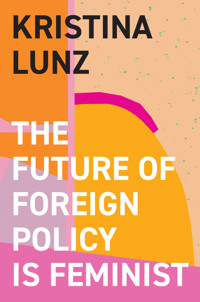
My own personal state of emergency was exacerbated by the fact that my first book, The Future of Foreign Policy Is Feminist, had just been published. And of all the dates that could have happened it had to be that fateful 24 February, the day of Putin’s invasion. In response I was subjected to antifeminist and misogynist insults, defamation and derision. The general tenor was ‘What can feminism do to stop Putin’s weapons?’ I was also deeply shaken by Russia’s violence and the fear of escalation – and now I found myself sitting in front of the catwalk in ridiculously expensive (borrowed) clothes. To make matters worse, I made myself unpopular by refusing to pose for a photo with the other women and the famous fashion designer. It was a ‘once-in-a-lifetime’ event, but with my emotional state mirroring the state of the world, I just couldn’t.
Two years later, in summer 2024, a woman stood up next to me. She took the microphone and said: ‘I went into the jungle to meet the tigers. Because if you want peace, you have to hold the enemy’s hand.’ She spoke as the mother of a Sri Lankan soldier who had been kidnapped during the country’s decadeslong civil war. The ‘tigers’ were the paramilitary Tamil Tigers, fighting for the independence of the Tamil-dominated north and east of Sri Lanka. Her son was fighting against them.
I was in Tirana, the capital of Albania, with around a hundred women from all over the world – Syria, Yemen, Egypt, Liberia, Colombia and Afghanistan, to name but a few – for a peacebuilding conference. The work on peace and security was our common denominator. It was brutally and painfully underlined by the presence and the testimony of the Palestinian participants, who were – and still are – affected by war and displacement.
A few days later I was invited to the German–Israeli programme of a German foundation. The participants from both nations came from business, politics and NGOs. During our one-week stay in Berlin we came to trust each other, especially as we shared personal stories – both descriptions of the terrible attack by Hamas on 7 October 2023, from the Israeli perspective, and accounts of Israel’s subsequent operations in the Gaza Strip.
In Israel men are generally required to do three years of compulsory military service, and women two years. Reservists – including some of the participants in the exchange programme – are then deployed in times of crisis and war.
My everyday life is marked by contrasting worlds, contradictions and conflicting perspectives. I’ve described my experiences in Milan, Tirana and Berlin to give an impression of these contrasts. In the morning I go to meetings with the German armed forces or at the Chancellery in Berlin, where the importance of increased armament* is invariably emphasized (with no mention of a long-term, non-reactive strategy). In the afternoon I talk about human security with groups of international experts, who observe the global arms race with growing concern.
It’s a huge challenge to maintain my openness towards different perspectives, experiences and needs, while drawing my own red lines – on the violation of human rights, for example – more and more clearly. For me, this describes the balancing act between empathy and resistance, a dance between different, sometimes contradictory perspectives and clearly defined boundaries. Sometimes I dance with self-confidence, but at other times I’m still a learner and unsure of my steps.
In this ongoing process my aim is always to retain a little of this uncertainty and never be completely confident about my own attitude. This enables me to keep learning and developing. In my view, maintaining a degree of doubt about your own opinion and repeatedly questioning your own position is the highest form of personal maturity – especially if you can still stand up for the things you believe in.
In this dance between empathy and resistance, in the attempt to make our society more just, it’s helpful to remember that politics is largely a matter of psychology. Politics arises in the process of negotiation between different emotions and needs, and has much less to do with rational behaviour than you might think. Maren Urner, a German neuroscientist and the author of Radikal emotional – Wie Gefühle Politik machen (Radically emotional: how feelings make politics), writes that humans are always emotional and that emotions are always political: ‘Everything that defines our coexistence and thus the political sphere, which […] is present always and everywhere, is shaped by emotions.’1
This also applies to political action in exceptional circumstances. From a historical perspective, wars are usually nothing but immature reactions by hyperemotional, aggressive men with too much power and too little emotional control. So wars have nothing to do with strength, but are a sign of emotional immaturity and weakness of character.
I gained my first insights into the importance of psychology for politics in 2013, when I took part in a three-week summer school on political psychology at Stanford University. I listened to lectures about what impedes successful peace negotiations, how social influence affects decision-making, and what conditions are needed for cooperation. I heard about predictors of collective violence and protest, learned useful facts about group dynamics, and studied the impact of media reporting on voting behaviour. Not only did I feel, for the first time, that it made sense to be doing a master’s degree in international politics after my bachelor’s in psychology; I also learned that emotions determine our politics.
Everything I’ve learned so far about communication, emotion and human interaction – especially in my years of work with my psychological coach – helps me to cope with the turbulent times we live in. The art of good communication is based on openness, attentiveness and understanding, the basic ingredients for empathy. These tools have helped me to de-escalate almost any conflict without having to give up my position or accept injustices.
When societies are in flux, the world is full of challenges and humanity faces a multitude of unresolved questions, it is essential to be able to tolerate different feelings and conditions simultaneously. Psychologists have a term for this ability to manoeuvre in a complex word: ambiguity tolerance. The key is not just to live with (or at best accept) the existence of many different and even contradictory views; it is to recognize that this diversity is not threatening, but enriching.
In a complex world there are no simple answers. Some people try to persuade us that these simple answers do exist. But these are populists – on both sides of the political spectrum. They lack ambiguity tolerance. In a book entitled Dummheit (Stupidity) the Austrian psychiatrist Heidi Kastner puts it as follows: ‘Tolerating ambivalence and inconsistency is one of the essential developmental tasks in the process of maturation, a process that many people, to all appearances, have not gone through.’2
In this book I focus on nuances. This is about different feelings and truths which must be tolerated simultaneously, even those that initially seem contradictory, such as anger and optimism. For me, these two feelings are the foundation for empathy and resistance, the core elements that make up my (socio-)political stance.
This world full of complexity and challenges is quite different from the one I grew up in. I had a very sheltered childhood in a small village – fewer than a hundred inhabitants – in northern Bavaria. Both families of grandparents were farmers; my grandmother (who still lives in the village, along with other family members) actually has the surname ‘Bauer’, meaning farmer. Growing up in our village of farmers (as my family used to describe it) was a very special and wonderful experience, full of nature and love. I looked after my cat, my pygmy rabbit and our other rabbits. We were always thrilled to discover baby rabbits in the hutch. Their eyes still closed at first, they snuggled together in their nest of straw and hay, mixed with fur plucked from the mother rabbit’s own body. I was even more delighted when we heard the mewling of kittens in the barn in spring and autumn and, following the sound, found the babies of the stray village cats in the hay. My childhood memories include fields and woods, the brook, the stable, meadows and animals. Politics meant nothing to me then. It was a lovely, free childhood. Often my twin brother and I went out with the other village kids, spent the day roaming the woods and meadows, and didn’t come home until early evening.
But from my teens on I felt increasingly uncomfortable. I struggled with the norms of my little world, such as the idea that men should – and did – call the shots. The mayor, the priest, the master baker and the school principal, the pub owner and the head of the village council, the fire chief and the head of the sports club – every single position of power was filled by men. At the Sunday match the whole community cheered for the men’s football team. All the admiration and respect went to the men, while women carried out unpaid care work at home, looking after the children and running the household.
This respect was so strong that some of these men felt they could overstep women’s and girls’ boundaries with impunity. Such incidents might happen in the driving instructor’s car or at village festivals and sports days. At some point I wasn’t prepared to accept this any more. I wanted to resist. I wanted to get away, and university offered me the escape route I needed, even if I initially found it hard to imagine a world outside my village. I studied psychology for my bachelor’s degree, then secured scholarships that enabled me to complete two master’s programmes, one in London and one in Oxford.
And suddenly I found myself caught between two worlds. One was my home, my Bavarian village; the other was this increasingly international, sometimes elitist world where, time and time again, I was made to feel that I didn’t really belong. I wore the wrong clothes, I hadn’t read enough books, I just didn’t quite fit in. My experiences suddenly became political, and I began to write about what it was like to come to Oxford as a working-class country girl. I realized that the elites needed to become more diverse.3
As these worlds collided, I came to question the traditional, supposedly natural rules more and more. I became a feminist and an activist. I was driven by a mixture of empathy and resistance to blatant injustices. I empathized with those who were marginalized or suffered from unjust structures. And my rage gave me the energy to rebel against these structures. Rather than wallowing in my anger, I wanted to use it constructively. ‘Anger at injustice and inequality is in many ways exactly like fuel,’ writes Rebecca Traister in Good and Mad: The Revolutionary Power of Women’s Anger.4 Traister shows how women’s anger releases transformative energy, from the suffragettes to the legendary Black civil rights campaigner Rosa Parks, and from #MeToo to the 2017 Women’s March in Washington, DC.
In summer 2014 I was full of anger. I was no longer prepared to accept what was then seen as normality: the daily sexualization and degradation of women in what was, at the time, Europe’s biggest-selling newspaper. The specific trigger was a front page of Bild, the German equivalent of The Sun. It showed photos of the cleavage of successful, famous women and invited readers to vote for the ‘best bosom on German TV’. Disgusted by the degrading treatment of these celebrities and of women in general, I responded with a campaign against Bild. Over 60,000 people signed my petition, demanding that ‘It’s time all people were treated with the same respect in Bild and bild.de: women are not society’s sex objects!’ Suddenly I was giving interviews and getting up on stage to speak about my campaign. In 2018 the ‘Bild girl’, the equivalent of The Sun’s ‘Page 3 girl’, was discontinued. The tabloid’s explanation was that ‘many women see these pictures as offensive and degrading, both in our editorial team and among our female readers’.5 Various media outlets saw a connection to my campaign.
A year after my petition there was a mass outbreak of sexualized assaults against women by men on the night of New Year’s Eve 2015 in Cologne. I felt strongly that – whatever the specific events of that night – it was wrong and hypocritical to claim that it was only the ‘other’ men, those of non-white skin colour and non-German origin, who were guilty of sexual violence in Germany. This is a global problem, so it’s a German problem too. It’s a problem that exists in every country in the world that has men in it – in villages, in cities, everywhere.
Working with twenty other women and non-binary activists, I launched the campaign ‘Against sexualized violence and racism. Always. Anywhere. #Ausnahmslos’ (‘NoExcuses’). We formulated fourteen demands for politicians, society and the media. We wrote: ‘It is harmful for all of us if feminism is exploited by extremists to incite against certain ethnicities, as is currently being done in the discussion surrounding the incidents in Cologne. It is wrong to highlight sexualised violence only when the perpetrators are allegedly the perceived “others.”’6 We were not prepared to let the racist and populist positions of the AfD (Alternative for Germany, parts of which have been officially designated as far-right extremist) go uncontested. Our demands made it onto the online front pages of major German news media, and we received the Clara Zetkin Prize for political intervention, awarded by the German Left Party and named after a famous early twentieth-century communist, pacifist and feminist. It was the first big campaign by intersectional feminists in Germany to attract serious media attention. We were just twenty-one women who refused to keep quiet any longer, and we made feminist history.
One thing I learned during this campaign was that, in Germany at the beginning of 2016, a woman’s ‘no’ was not enough to justify a prosecution for rape. Scandalous. Until 1997, men had been legally permitted to rape their wives. Until 2016, a rape victim – a woman, in more than 90 per cent of cases – had to prove that she had resisted her rapist physically.
I worked with UN Women Germany on a voluntary basis, helping to develop their ‘No Means No’ campaign. Many other women’s rights organizations had also been fighting for years to change the law on sexual offences. We joined forces, wrote articles and commentaries, lobbied members of parliament, drew up reports, gave interviews. In March 2016, in an article for Zeit Online, I wrote: ‘No means no – it’s high time. There is no rational argument against it, except the desperate attempt to uphold a system in which the rights of men count more than those of women.’7 Law professors and lawyers intimated that I should hold my tongue; as a person with no legal training, I clearly had no idea what I was talking about. I was, they suggested, trying to turn the bedroom into a crime scene. As if it hadn’t been exactly that for many women, for centuries! The statements of those law experts showed me what happens when only the male point of view is regarded as relevant, as has been the case since time immemorial. Despite all these attempts at intimidation, we won: the law on sexual offences was changed in July 2016, and no now means no.
Strengthened by my experiences, I began an international career, working in Bogotá in Colombia, in New York and in Yangon, the former capital of Myanmar. I worked for various organizations, including the United Nations, in the areas of peacebuilding and women’s and human rights. Here too, I found myself questioning the narratives, modes of action and priorities of actors in diplomacy and foreign policy. I found it strange and surprising that economic interests were often given more weight than human rights, and that weapons of mass destruction were regarded as guarantors of security. How was it possible that, despite widening international conflicts and wars and the increasing militarization of international spending, virtually no one was willing to acknowledge the empirically proven connection between more militarization, more wars and more victims?
So I gathered all my expertise and my courage and in 2018, Nina Bernarding and I founded the non-profit enterprise Centre for Feminist Foreign Policy (CFFP) in Berlin. I wrote the first book on the subject to be published worldwide, the above-mentioned The Future of Foreign Policy Is Feminist




