


18,99 €
Mehr erfahren.
- Herausgeber: John Wiley & Sons
- Kategorie: Fachliteratur
- Sprache: Englisch
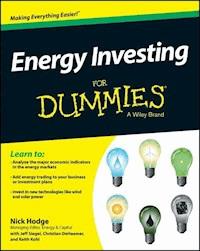
The fast and easy way to grasp energy sectors and their place in the global economy
With timely, substantial information about energy stocks, Energy Investing For Dummies teaches the ins and outs of energy sectors and how to incorporate them into business and investment plans. As a savvy investor and business manager you will find the important information and advice you need to incorporate these growth areas into your investment portfolio.
In Energy Investing For Dummies, you'll find important information on the big-three markets of electricity, natural gas, and oil; growing markets for liquefied natural gas, emissions, coal, and alternative energy; primers on advanced topics like storage, wheeling, load forecasting, and pipeline transportation; tips on investing in and trading energy stocks, ETFs, dividends, and derivatives; and much more.
- Includes examples of ways to invest in wind power, carbon emissions, thermal solar power, and other new markets
- Packed with the latest information on energy investing
- Shows you how to incorporate energy investing into your investment plans
Energy Investing For Dummies is your friendly, un-intimidating guide to this hot topic in business and investment trading.
Das E-Book können Sie in Legimi-Apps oder einer beliebigen App lesen, die das folgende Format unterstützen:
Seitenzahl: 441
Veröffentlichungsjahr: 2013
Ähnliche



















Energy Investing For Dummies®
Published by: John Wiley & Sons, Inc., 111 River Street, Hoboken, NJ 07030-5774, www.wiley.com
Copyright © 2013 by John Wiley & Sons, Inc., Hoboken, New Jersey
Published simultaneously in Canada
No part of this publication may be reproduced, stored in a retrieval system or transmitted in any form or by any means, electronic, mechanical, photocopying, recording, scanning or otherwise, except as permitted under Sections 107 or 108 of the 1976 United States Copyright Act, without the prior written permission of the Publisher. Requests to the Publisher for permission should be addressed to the Permissions Department, John Wiley & Sons, Inc., 111 River Street, Hoboken, NJ 07030, (201) 748-6011, fax (201) 748-6008, or online at http://www.wiley.com/go/permissions.
Trademarks: Wiley, For Dummies, the Dummies Man logo, Dummies.com, Making Everything Easier, and related trade dress are trademarks or registered trademarks of John Wiley & Sons, Inc., and may not be used without written permission. All other trademarks are the property of their respective owners. John Wiley & Sons, Inc., is not associated with any product or vendor mentioned in this book.
Limit of Liability/Disclaimer of Warranty: while the publisher and author have used their best efforts in preparing this book, they make no representations or warranties with respect to the accuracy or completeness of the contents of this book and specifically disclaim any implied warranties of merchantability or fitness for a particular purpose. no warranty may be created or extended by sales representatives or written sales materials. The advice and strategies contained herein may not be suitable for your situation. you should consult with a professional where appropriate. neither the publisher nor the author shall be liable for damages arising herefrom.
For general information on our other products and services, please contact our Customer Care Department within the U.S. at 877-762-2974, outside the U.S. at 317-572-3993, or fax 317-572-4002. For technical support, please visit www.wiley.com/techsupport.
Wiley publishes in a variety of print and electronic formats and by print-on-demand. Some material included with standard print versions of this book may not be included in e-books or in print-on-demand. If this book refers to media such as a CD or DVD that is not included in the version you purchased, you may download this material at http://booksupport.wiley.com. For more information about Wiley products, visit www.wiley.com.
Library of Congress Control Number: 2013942774
ISBN 978-1-118-11641-8 (pbk); ISBN 978-1-118-22430-4 (ebk); ISBN 978-1-118-26254-2 (ebk); ISBN 978-1-118-23323-8 (ebk)
Manufactured in the United States of America
10 9 8 7 6 5 4 3 2 1
Energy Investing For Dummies®
Visit www.dummies.com/cheatsheet/energyinvesting to view this book's cheat sheet.
Table of Contents
Introduction
About This Book
Foolish Assumptions
Icons Used in This Book
Beyond the Book
Where to Go from Here
Part I: Getting Started with Energy Investing
Chapter 1: Powering Your Portfolio: Energy in Brief
What Is Energy?
Why Energy Investing?
Fears, Risks, and Politics
Ways to Play
Chapter 2: Making a Connection
Early Energy Sources
Water and wind
Full steam ahead
Leaving the horse behind
Fossilizing the future
A Light Bulb Goes Off
Harnessing electricity
The first utility
War of the currents
Barons to Barrels
Oil investment past to present
Carving up the future: The breakup of Standard Oil
Everyday Energy
Cheap energy: The key to modern life
Food production
Tracking Trends in Energy Use
Watching your own energy use
Keeping an eye on prices
Looking for new energy uses
A future electric
Global green movement
Sneaky sustainability
Bloated with natural gas
Chapter 3: A Bright Investment: Running the World Takes a Lot of Energy
Energy Sectors and Markets
Oil
Natural gas
Coal
Nuclear
Hydroelectricity and other renewables
Major markets
Demand: The World Always Needs More
Historic performance
Demand in the future
Trillions of Reasons to Invest
A huge global investment opportunity
The water-energy nexus
Constant Innovation and Nontraditional Energy
Addicted to energy
Fossils get modern
A peak at the future
Chapter 4: Getting Ready: The Nuts and Bolts of Energy Investing
Investing with or without a Broker
Investing on your own
Starting with a budget
Setting up your accounts
Investing beyond stocks
Ways to Play
Commodities
Equities
Indexes
Exchange-traded funds and mutual funds
Preparing for Your First Energy Investment
Getting familiar with important terms
Going long or short
Chapter 5: Risks and Rewards of Energy Investing
Watch Your Step: Getting Familiar with the Risks
Laws and policies
International energy agendas
Technology
Geopolitics
Speculation
Doing Due Diligence to Manage Risk
Energy commodity futures
Energy mutual funds
Energy companies
Diversification
The Rewards of Energy Investing
Reaping above-average returns
Serving a purpose
Getting an education
Part II: Oil and Gas Investments: Greasing the Global Economy
Chapter 6: The Crude Basics
The Complex Landscape of the Oil Market
Where the Oil Is: Reserves by Country
Proven reserves
Unproven reserves
Getting accurate data
Oil Production and Pricing: It’s All about Supply and Demand
The Consumption Junction: Global Oil Demand Numbers
Growing demand in emerging markets
Heading here and there: Imports and exports
OPEC and Geopolitics
Conventional and Unconventional Oil
Sweet and sour, heavy and light
Major oil fields
Offshore oil
Hydraulic fracturing
Chapter 7: Grasping Gas
Considering the Gas Basics
Moving from the wellhead to your doorstep
Knowing major gas drivers
Taking into account natural gas supply and demand
Eyeing the importance of imports and exports
Knowing Where the Gas Is
Who’s got gas?
Fracking: It’s shale, dummy!
Forecasting the future
Burn It if You Got It: Examining How Gas Is Used
Electricity generation
Transportation
Chapter 8: Buying the Barrel, Trading the Therm
The Basics of Oil and Gas Futures
Traders and hedgers
Inside the futures contract
Futures Broker: Best Friend or Worst Enemy
Choosing an individual broker
Opening an account
Understanding orders
Watching the margin
Doing some homework before you trade
Factors Affecting Futures
Over the barrel
Geopolitical mess
Gambling on gas
Chapter 9: Drilling Down, Extracting Profits: Investing in Oil and Gas Companies
Evaluating Oil and Gas Stocks
Size matters
Putting it all together
National Oil Companies (NOCs): Puppet Masters Pulling Supply Strings
Discussing OPEC: Inside an oil cartel
Buying your way into state-owned profits
Non-NOC Oil and Gas Companies: Fighting over Scraps
Integrated oil companies
Playing the independent field
Chapter 10: Investing in Oil and Gas Indexes and Funds
A Fund for Any Occasion
Mutual feelings, mutual profits
The dawn of ETFs
Mutual funds for the oil and gas sector
Dipping into oil and gas ETFs
Oil and Gas Price-Tracking Funds
Part III: Investing in Coal
Chapter 11: Coal: Still the King
Discovering the Coal Basics
Considering major coal drivers
Digging up the coal
Grouping types of coal
Studying coal’s uses
Looking at supply and demand
Knowing the Location of the World’s Coal
Being Aware of the War on Coal
The decline of the U.S. coal industry
Coal’s destructive effects on the environment
Chapter 12: The Future of Coal
Coal and the Climate
Developed and developing
Considering the possibility of cleaner coal
Gas and Liquid: Coal Gets a Makeover
King Coal’s Reign Continues
Producing the world’s electricity
Demand forecasts
Chapter 13: Coal: Mining for Profits
Turning Fundamentals into Decisions
Identifying and Evaluating Major Coal Miners
United States
China
Russia
Investing in Coal Funds
Coal master limited partnerships (MLPs)
Coal exchange-traded fund(s)
Investing in Coal Futures
Part IV: The Nuclear Option
Chapter 14: Nuclear Energy Basics
Nuclear Fundamentals
Percent of electricity generation
Countries with reactors
Constant Debate
Future Plans
Chapter 15: Uranium in Your Cranium
Explaining Uranium
Circling around the uranium fuel cycle
Gathering information on reserves and production
Turning Russian warheads into fuel
Mining Uranium
Mulling over milling, enrichment, and fuel fabrication
Poring over uranium production figures
Looking ahead to new mines
Chapter 16: Harnessing Nuclear Power for Profit
Investing in Uranium
Exchanges
Markets and pricing
Checking Out Uranium Mining Companies
Considering Uranium Waste and Reprocessing
Getting a Reaction: Investing in Nuclear Power Plants
Nuclear construction plays
Major nuclear utilities
Nuclear Indexes and Funds
Part V: Investing in the Future: Modern Energy
Chapter 17: Solar Investing: It’s Raining Electrons
The Three Types of Solar Technology
Examining the photovoltaic solution
Evaluating solar photovoltaic companies
Considering specific solar photovoltaic stocks
Going thermal with solar heating and cooling
Concentrating on concentrating solar power
The Future Is Organic: Organic Photovoltaics
Installation Nation
Leasing profits
Trying the Mosaic model
Chapter 18: When the Winds Change Direction
The Rise of Wind: Evaluating Wind Turbine Manufacturing Companies
First mover advantage
Technological superiority
Diversification
Going Offshore
Evaluating offshore wind turbine manufacturers
Additional offshore wind opportunities
Wind Farm Developers
Winds of Change: The Future of Wind Energy
Floating turbines
Direct-drive turbines
New designs
Chapter 19: Geothermal: The Devil’s Hot Tub
Drilling for Heat, Drilling for Profits
Considering geothermal-based electricity production
Evaluating geothermal-based electricity production companies
Geothermal electricity production companies
Enhancing the Heat: The Future of Geothermal
Chapter 20: Transportation:Plugged-In and Corn-Fed
Investing in the Electric Car
Electric vehicle technologies
Electric vehicle investments
Sugar in Your Gas Tank: Investing in Biofuels
Identifying biofuels
Evaluating biofuel investment opportunities
Chapter 21: Efficiency: Doing More with Less
High-Performance Building Fundamentals and Investments
Lighting
Windows
Motors
Energy management systems
Design
Transportation Efficiency
Personal transportation and conventional vehicle efficiency
National fuel economy standards
Mass transit
Chapter 22: Investing in Modern Energy
Funding the Modern Energy Revolution
Modern Energy Developers
Funds for Modern Energy
Modern energy mutual funds
Modern energy ETFs
Part VI: The Part of Tens
Chapter 23: Top Ten Energy Investment Resources
Energy & Capital
Energy Information Administration
International Energy Agency
The CME Group
The Oil Drum
Greentech Media
Gregor.us
Bloomberg
Oil & Gas Journal
Yahoo! Finance
Chapter 24: Top Ten Energy Data to Track
Crude Oil Prices
Natural Gas Prices
EIA Reports
World Energy Mix
OPEC Production
Gross Domestic Product
U.S. Dollar
Levelized Cost of New Electricity Generation
Forecast Growth Rates
Your Utility Bill
Chapter 25: Top Ten Energy ETFs
Energy Select Sector SPDR
Vanguard Energy
PowerShares Dynamic Energy Sector
iShares S&P Global Energy Sector
Market Vectors Uranium+Nuclear Energy
Market Vectors Coal
PowerShares DB Energy
PowerShares Global Clean Energy
Alerian MLP
Guggenheim S&P Global Water
Chapter 26: Top Ten Energy Developments on the Horizon
Demand Growth
Continued Fracking Expansion
Methane Hydrates
Natural Gas Vehicles
Energy Independence of the United States
Grid Parity
Vehicle-to-Grid Technology
Next-Gen Nuclear Reactors
Graphene
Hydrogen
About the Authors
Cheat Sheet
Connecting with Dummies
Introduction
Energy affects every single human endeavor. It’s at the heart of everything people do. From wood to whale oil to the modern forms of energy you see today, each generation has needed more energy and looked for new ways to get it. Today, supplying energy to a growing global population is one of the largest and most valuable industries in the world. Valued at around $7 trillion, the global energy industry is responsible for 10 percent of the world’s annual gross domestic product (GDP).
Energy powers your car, your house, and your phone. It moves people and goods across oceans and continents. It has created cartels, started wars, and produced family fortunes. No person or company is isolated from energy implications.
Because of constant and growing demand, energy makes for a great investment. It historically outperforms the market. Over the past 15 years, for example, a well-managed, broad-based energy fund returned 400 percent more than the Dow Jones Industrial Average. Energy prices haven’t slouched, either, as you undoubtedly see at every gas station marquee. For these reasons, retail investors have taken an extremely strong interest in energy investing.
But the energy market is complex and has many levels. It encompasses multiple fuel sources, commodities, companies, and funds. The goal of Energy Investing For Dummies is to help you understand and successfully invest in all the various parts of this market.
According to the International Energy Agency, the world needs to cumulatively invest $37 trillion in the global energy supply system to replace aging infrastructure and keep pace with rapidly growing energy demands. Using this book, you’ll prepare yourself to maximize the investment potential of this massive industry while avoiding its pitfalls and discovering how all its parts work together.
About This Book
My goal in writing Energy Investing For Dummies is to present you with an all-encompassing guide to the world’s energy markets and to give you the data and tools you need to profitably invest in them. You don’t have to speculate on crude oil prices to be an energy investor. Today, thanks to easy retail access to the market and exchange-traded funds (ETFs), investing in niche sectors of the energy market is easier than ever. You can buy individual companies, funds that hold groups of companies, or tradable instruments that represent a commodity’s price. And you can do this across multiple types of energy sources, from oil and gas to solar and wind, and everything in between. My aim is to give you a foundation of knowledge to feel confident investing in all of them while using simple language and real-world examples to demystify what can certainly be viewed as a mystifying topic.
Anyone who has tried to deconstruct the energy industry on his own realizes how many variables there are. Terms like barrels, therms, kilowatt-hours, reserves, capacities, and more can frighten off or confuse even seasoned investors. This book explains all these terms and more in simple language so you can feel confident in your understanding and ability to invest in all energy sectors.
Here are some of the energy investment concepts, techniques, and strategies you find in this book:
Getting in tune with the crude oil market: Oil prices have vast implications for everyone. But what drives them? Knowing where the world’s oil comes from, which countries use the most of it, how to get it, and how the industry is adapting to continually harder-to-get resources is critical to being able to gauge what makes oil prices tick and how to know when they’re over- or undervalued. See how all these pieces come together in Chapter 6.
Capitalizing on commodities without contracts: You no longer need a broker to profit from moves in commodity prices. Until recently, the only way to invest in commodity prices directly was to buy contracts on a futures exchange. For oil, this requires buying at least 1,000 barrels at a time. Today, exchange-traded funds (ETFs) track the price of commodities. You can buy and sell these funds just like a stock to profit from moves in the price of crude oil. I cover how it’s done in Chapter 10.
Realizing that traditional fuels encompass a global market: You’ve probably heard that there’s a “war on coal,” but this really only applies to the developed nations of North America and Europe. Emerging markets, especially in Asia, will continue to rely on coal as a primary energy source for decades to come. In 2035, the world will still be getting one-third of its energy from coal, though there will be a shift in which countries use the most of it. You can find out how to use coal’s continued dominance and shifting demographics for profit in Chapter 13.
This book has a few typographical conventions you should be aware of:
Italic is used for emphasis and to highlight new words or terms.
Boldface text is used to indicate key words in bulleted lists or the action parts of numbered steps.
Monofont is used to make web addresses stand out.
Foolish Assumptions
To avoid writing a how-to guide in basic investing, I had to assume certain things about you. Rest assured, I explain all jargon and adequately define all necessary terms, but I don’t provide entry-level investing information (although I do support and reinforce it). Here’s what I’ve assumed about you:
You’re not brand-new to investing. You’ve bought and sold stocks, and maybe even a few funds. You understand basic concepts like being long or being short. And you know stocks and funds trade on various exchanges and that each stock or fund has a ticker.
You’re looking to expand this basic investment knowledge to capitalize on different sectors of the market.
You understand that energy is a far-reaching and complex topic, and you want to gain a better understanding of its inner-workings.
You’re aware that more than just supply and demand determine energy prices. Weather, politics, macroeconomics, and random one-time events all have an impact. You want to know how to successfully incorporate these things into your investment strategy.
You know that emerging economies like those in Brazil, China, and India will require vast amounts of energy. You want to see how this is affecting and will affect the global energy picture and put that knowledge to use in your portfolio.
You’ve noticed that gasoline prices have averaged more than $3 per gallon for the past few years, and you want to know what is causing this or how you can benefit from it.
You’re aware that renewable energy is becoming a more important source of global energy. You want to see what types of renewables there are and what ways you can invest in them.
You’ve come across bits and pieces of information regarding a certain energy sector and want to know more about it.
You’ve seen sensationalized stories about energy relating to things like peak oil, fracking, or nuclear disasters, and you want some straightforward information on these topics and what they mean for your investments.
You know that a book like this is the perfect place to gain broad-based knowledge and trading skills for the energy market, but you’re also aware that a constantly evolving market like energy requires further reading and changes to your investment strategy to remain up-do-date and successful.
Icons Used in This Book
All For Dummies books use special icons to flag important pieces of information and make them easy to find. Here are the icons used in this book.
I use this icon to highlight information you’ll need to frequently recall when investing in energy or info that’s important to remember because it’s referenced in other parts of the book.
Whenever you see the bull’s-eye, pay special attention to the related text, as it offers actionable investment advice or explains how to execute a particular strategy.
Jargon inevitably appears when discussing investments in global energy markets. This icon denotes paragraphs you can skip over if you’re simply looking for an overview of energy investing. But be sure to read them for a deeper understanding of the industry or before you make any serious investments.
All investments carry risks. Make sure you fully understand them as they relate to energy investing by reading the paragraphs accompanied by this icon.
Beyond the Book
You got more than you bargained for when you bought this book. To accompany this fine text, additional information is hosted on Dummies.com:
You can download the book's Cheat Sheet at www.dummies.com/cheatsheet/energyinvesting. It's a handy resource to keep on your computer, tablet, or smartphone.
You can read interesting companion articles that supplement the book's content at www.dummies.com/extras/energyinvesting. I've even written an extra top-ten list, which ForDummies readers seem to love.
Where to Go from Here
For Dummies books are organized to be modular in nature, meaning that though you can read this book from front to back like any other, doing so isn’t entirely necessary. If you’re looking for information about one energy sector in particular, you can simply skip directly to that section. However, if you’re a true beginner, I recommend reading Part I carefully before skipping ahead.
Part I
Getting Started with Energy Investing
Visit www.dummies.com for great Dummies content online.
In this part . . .
Get a brief history of energy development and investments.
Examine the data to see how the need for energy is constantly growing.
Discover how energy is used, even in hidden ways, all around you.
Learn what you need to make your first energy investment.
Identify the risks and rewards of energy investing.
Chapter 1
Powering Your Portfolio: Energy in Brief
In This Chapter
Defining energy
Understanding why energy makes for a great investment
Knowing the risks
Identifying the various ways to invest in energy
Energy is the most vital industry the world has ever seen. It generates the most revenue and it’s a foundational requirement for all other industries. Apple needs energy to make its computers and run its warehouses full of servers. Walmart needs energy to transport its goods and keep the lights on at its thousands of retail locations. As such, the energy market is fertile ground for investment.
But where does one start? With so many sources of energy and companies to choose from, a beginner can become overwhelmed very quickly. Unlike other sectors of the market, like restaurants or retail, for example, investing in energy is about much more than just individual companies with a singular goal. Energy crosses borders, both geographically and in the way it upends the traditional approach of categorizing companies with neat and tidy labels.
Lesen Sie weiter in der vollständigen Ausgabe!
Lesen Sie weiter in der vollständigen Ausgabe!
Lesen Sie weiter in der vollständigen Ausgabe!
Lesen Sie weiter in der vollständigen Ausgabe!
Lesen Sie weiter in der vollständigen Ausgabe!
Lesen Sie weiter in der vollständigen Ausgabe!
Lesen Sie weiter in der vollständigen Ausgabe!
Lesen Sie weiter in der vollständigen Ausgabe!
Lesen Sie weiter in der vollständigen Ausgabe!
Lesen Sie weiter in der vollständigen Ausgabe!
Lesen Sie weiter in der vollständigen Ausgabe!
Lesen Sie weiter in der vollständigen Ausgabe!
Lesen Sie weiter in der vollständigen Ausgabe!
Lesen Sie weiter in der vollständigen Ausgabe!
Lesen Sie weiter in der vollständigen Ausgabe!
Lesen Sie weiter in der vollständigen Ausgabe!
Lesen Sie weiter in der vollständigen Ausgabe!
Lesen Sie weiter in der vollständigen Ausgabe!
Lesen Sie weiter in der vollständigen Ausgabe!
Lesen Sie weiter in der vollständigen Ausgabe!
Lesen Sie weiter in der vollständigen Ausgabe!
Lesen Sie weiter in der vollständigen Ausgabe!
Lesen Sie weiter in der vollständigen Ausgabe!
Lesen Sie weiter in der vollständigen Ausgabe!
Lesen Sie weiter in der vollständigen Ausgabe!
Lesen Sie weiter in der vollständigen Ausgabe!
Lesen Sie weiter in der vollständigen Ausgabe!
Lesen Sie weiter in der vollständigen Ausgabe!
Lesen Sie weiter in der vollständigen Ausgabe!
Lesen Sie weiter in der vollständigen Ausgabe!
Lesen Sie weiter in der vollständigen Ausgabe!
Lesen Sie weiter in der vollständigen Ausgabe!
Lesen Sie weiter in der vollständigen Ausgabe!




