


Erhalten Sie Zugang zu diesem und mehr als 300000 Büchern ab EUR 5,99 monatlich.
- Herausgeber: Phillimore & Co Ltd
- Kategorie: Fachliteratur
- Sprache: Englisch
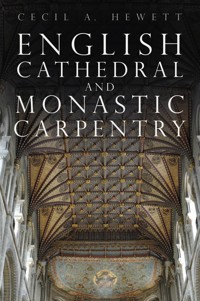
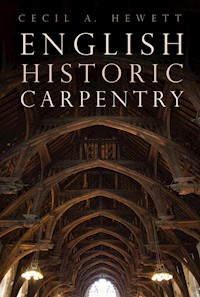
Well over a hundred great churches were built in the cathedral tradition in the Middle Ages. They are our most important group of historical monuments and embody the finest craftwork of medieval architecture. Despite a great mass of specialist literature and research on other aspects, it was not until Cecil A. Hewett's work over the past three decades that any serious attention was paid to their functional carpentry or, indeed, to their decorative timberwork. Examining the entire range of 'great' churches, Hewett's carefully reasoned and well-organised text covers all areas of monastic and cathedral carpentry, classifying roof structures, towers and spires in chronological order, while an important section deals with the surviving examples of hoisting machinery still in situ, some from a very early date. In English Cathedral and Monastic Carpentry, he relates the physical evidence to the documentary record supported with over 300 of his own magnificent drawings. In this, Hewett provides both a work of reference and a stimulating analysis of the evolution of the craft.
Sie lesen das E-Book in den Legimi-Apps auf:
Seitenzahl: 217
Veröffentlichungsjahr: 2023
Das E-Book (TTS) können Sie hören im Abo „Legimi Premium” in Legimi-Apps auf:
Ähnliche


















Ely Cathedral, the framing of the lantern.
Front cover image: Peterborough Cathedral. (Colin Underhill/Alamy Stock Photo)
First published in 1999 by Sutton Publishing
This paperback edition published in 2023
The History Press
97 St George’s Place, Cheltenham,
Gloucestershire, GL50 3QB
www.thehistorypress.co.uk
© Cecil A. Hewett, 1999, 2023
The right of Cecil A. Hewett to be identified as the Author of this work has been asserted in accordance with the Copyright, Designs and Patents Act 1988.
All rights reserved. No part of this book may be reprinted or reproduced or utilised in any form or by any electronic, mechanical or other means, now known or hereafter invented, including photocopying and recording, or in any information storage or retrieval system, without the permission in writing from the Publishers.
British Library Cataloguing in Publication Data.
A catalogue record for this book is available from the British Library.
ISBN 978 1 80399 480 2
Typesetting and origination by The History Press
Printed and bound in Great Britain by TJ Books Limited, Padstow, Cornwall.
eBook converted by Geethik Technologies
CONTENTS
List of Plates
List of Figures
Bibliography
Introduction
Ridged Main-span Roofs
Lean-to Roofs
Roofs of Polygonal Plan
Crossings and Returns
Towers and Spires
Doors
Hoisting Machinery
Joints – Lap Joints
Joints – Other Carpentry Joints
Mouldings and Ornaments
Tables
Glossary
LIST OF PLATES
1. The spire of Salisbury Cathedral
2. From Rayleigh Castle, Essex, a post excavated in 1910
3. A notched lap joint of archaic profile from the belfry of Navestock church, Essex
4. A secret notched lap joint without refined profile from Romsey Abbey, Hampshire
5. Portrait of Adam Lock, master mason, from Wells Cathedral
6. An open notched lap joint of refined profile, from Wells Cathedral
7. Woodcut, c.1515, showing two types of axes in use at that time
8. Mortise joint from the Barley Barn, Cressing Temple, Essex
9. An oblique mortise from the Barley Barn, Cressing Temple, Essex
10. The timber roof over the Chapter House, Wells Cathedral
LIST OF FIGURES
1. Peterborough Cathedral precinct, roof of the Norman Hall
2. Waltham Abbey, reconstruction of the nave roof
3. Peterborough Cathedral, roof of the north-west portico
4. Wells Cathedral, high-roof of the nave east of the ‘break’
5. Lincoln Cathedral, high-roof of St Hugh’s Choir
6. Lincoln Cathedral, high-roof of the north choir transept
7. Lincoln Cathedral, high-roof of the south choir transept
8. Wells Cathedral, high-roof of the nave west of the ‘break’
9. Hereford Cathedral, roof of the Lady Chapel
10. Coggeshall Abbey, roof of the capella extra portas
11. Chichester Cathedral, high-roof of the nave
12. Lincoln Cathedral, roof of the Morning Chapel
13. Lincoln Cathedral, plan of the high-roof of the Morning Chapel
14. Lincoln Cathedral, roof of the chapter house vestibule
15. Lincoln Cathedral, plan of the high-roof of the Consistory Court
16. Lincoln Cathedral, high-roof of the Consistory Court
17. Lincoln Cathedral, high-roof of the Consistory Court
18. Lincoln Cathedral, long section of the high-roof of the Consistory Court
19. Lincoln Cathedral, high-roof of the Consistory Court
20. Salisbury Cathedral, high-roof of the north-east transept
21. Boxgrove Priory, Sussex, eastern bay of the high-roof
22. Romsey Abbey, Hampshire, rafter-couple of the roof of the refectory
23. Lincoln Cathedral, high-roof of the nave
24. Beverley Minster, high-roof of the nave
25. Greyfriars, Lincoln, the eastern part of the nave roof
26. Westminster Abbey, high-roof of the north transept
27. Salisbury Cathedral, roof of the north porch
28. Lincoln Cathedral, high-roof of the Angel Choir
29. Lincoln Cathedral, high-roof of the Angel Choir
30. Greyfriars, Lincoln, the western part of the roof
31. Wells Cathedral, high-roof of the choir
32. Salisbury, the Old Deanery
33. Tewkesbury Abbey, high-roof of the north transept
34. Gloucester, Blackfriars, roof of the nave
35. Bushmead Priory, Bedfordshire
36. Bisham Abbey, Berkshire, roof of the hall
37. Exeter Cathedral, high-roof of the presbytery
38. Winchester Cathedral, high-roof of the nave
39. Winchester Cathedral, high-roof of the south transept
40. Wells Cathedral, roof of the south choir transept
41. Roof of The Chequers, Vicars’ Close, Wells
42. Exeter Cathedral, high-roof of the nave
43. Exeter Cathedral, high-roofs of the transepts
44. Bristol Cathedral, high-roof of the choir
45. Bisham Abbey, Berkshire, roof of the east range
46. Wells Cathedral precinct, roof of No. 22, Vicars’ Close
47. Winchester Cathedral, high-roof of the presbytery
48. Winchester Cathedral, high-roof of the north transept
49. Carlisle Cathedral choir, one rafter couple
50. Worcester Cathedral, high-roof of the nave
51. Durham Cathedral, roof of the monks’ dormitory
52. Beeleigh Abbey, Essex, roof of the dormitory
53. Canterbury Cathedral, high-roof of the north-west transept
54. Peterborough Cathedral precinct, the roof of Table Hall
55. Hereford Cathedral, roof of the Vicars’ Cloister
56. Bath Abbey, roof of the choir
57. Roof of King’s College Chapel, Cambridge
58. Bath Abbey, roof of the nave
59. Abbey Dore, Herefordshire, roof of the nave
60. Wells Cathedral, high-roof of the north transept
61. Lichfield Cathedral, high-roof of the south transept
62. Sherborne Abbey, Dorset, roof frame from the nave
63. Tewkesbury Abbey, high-roof of the nave
64. St Paul’s Cathedral, high-roof of the nave
65. St Paul’s Cathedral, high-roof of the west portico
66. Durham Cathedral, high-roof of the choir
67. Winchester Cathedral, high-roof of the eastern nave
68. Worcester Cathedral, high-roof of the choir
69. Lincoln Cathedral, high-roof of the great south transept
70. Lincoln Cathedral, high-roof of the great north transept
71. Beverley Minster, high-roof of the great south transept
72. Ely Cathedral, high-roof of the choir
73. York Minster, high-roof and vault of the south main transept
74. Canterbury Cathedral, high-roof of the south-east transept
75. Rochester Cathedral, high-roof of the great north transept
76. York Minster, high-roof of the choir
77. York Minster, high-roof of the nave
78. Sherborne Abbey, Dorset, the high-roof of the choir
79. Rochester Cathedral, high-roof of the choir
80. Ripon Cathedral, high-roof of the choir
81. Wells Cathedral, roof of the north nave triforium
82. Salisbury Cathedral, roof of the north choir triforium
83. Lincoln Cathedral, roof of the north choir triforium
84. York Minster, roof of the north transept triforium
85. Rochester Cathedral, roof and timber vault of the south choir aisle
86. Wells Cathedral, roof of the north choir aisle
87. Cartmel Priory, Lancashire, roof of the south choir aisle
88. York Minster, roof of the nave aisle
89. Carlisle Cathedral, roof of the north aisle triforium
90. Canterbury Cathedral, roof of the nave aisle
91. Norwich Cathedral, former roof of the north nave triforium
92. Malmesbury Abbey, Wiltshire, roof of the south triforium
93. St Paul’s Cathedral, a triforium roof
94. Lincoln Cathedral, roof of the north nave triforium
95. Salisbury Cathedral, roof of the south nave triforium
96. York Minster, west triforium roof of the south transept
97. Ely Cathedral, triforium roof of the north transept
98. Westminster Abbey, high-roof of the eastern apse
99. St Albans Cathedral, timber vault of the presbytery
100. Salisbury Cathedral, roof of the vestry
101. Wells Cathedral, high-roof of the Lady Chapel
102. Salisbury Cathedral, roof of the chapter house
103. York Minster, plan of the chapter house spire at base
104. York chapter house spire, the pattern of the vault ribs
105. Perspective of the York chapter house spire framing
106. Wells Cathedral, high-roof of the chapter house
107. Wells Cathedral, roof of the retro-choir
108. Exeter Cathedral, timber vault of the south transept
109. Ely Cathedral, angle post of the lantern
110. Ely Cathedral, plan of the floor of the octagon
111. Ely Cathedral, assembly of the inner sill of the octagon
112. Ely Cathedral, assembly of the vault
113. Ely Cathedral, sector of the ‘floor’ of the octagon
114. Ely Cathedral, vault and ‘floor’ of the octagon, assembled
115. Ely Cathedral, framing of the lantern
116. Ely Cathedral, plan of the ‘floor’ showing angle post division
117. Ely Cathedral, pattern of vault ribs in the upper and lower systems
118. Worcester Cathedral, the high-roof of the chapter house
119. Lichfield Cathedral, roof of the Lady Chapel
120. Westminster Abbey, roof of the south-east transept
121. Pershore Abbey, Worcestershire, roof of the apse
122. Lincoln Cathedral, chapter house spire
123. Lincoln Cathedral, assembly of the ring-beam of the chapter house spire
124. Southwell Minster, roof of the chapter house
125. Salisbury Cathedral, return of the north porch and north aisle
126. Salisbury Cathedral, return of the north choir triforium and the eastern triforium of the great transept
127. Lincoln Cathedral, roof of the choir crossing
128. York Minster, roof of the chapter house vestibule
129. St Mary, Ottery, Devon, nave transepts
130. St Mary, Ottery, Devon, nave transepts
131. Chichester Cathedral, cloister roof
132. Salisbury Cathedral, roof of the choir crossing
133. Canterbury Cathedral, south-east spirelet
134. Salisbury Cathedral spire, floor over the crossing vault
135. Salisbury Cathedral spire, gallery
136. Salisbury Cathedral spire, system of iron ties
137. Salisbury Cathedral spire, floor above the gallery
138. Salisbury Cathedral, spire scaffold above parapet level
139. Salisbury Cathedral spire, the next three stages and the remains of the ironwork from which the scaffold was suspended
140. Lincoln Cathedral, base of the former spire
141. Lincoln Cathedral tower, stone squint arches and timber structure
142. Winchester Cathedral, roof of the crossing
143. Pershore Abbey, Worcestershire, roof of the tower
144. Gloucester Cathedral, floor in the central tower
145. Canterbury Cathedral, original roof of the Bell Harry Tower
146. Norwich Cathedral, inner frame of the spire
147. Southwell Minster, base of a spire
148. St Paul’s Cathedral, framing of the dome
149. Westminster Abbey, the door called ‘Pyx’
150. Durham Cathedral, north doors
151. Durham Cathedral, south-west doors
152. Selby Abbey, west doors
153. Peterborough Cathedral, central west doors
154. Peterborough Cathedral, south-west door
155. Peterborough Cathedral, west doors of the precinct
156. Ely Cathedral, great west doors
157. Waltham Abbey, Essex
158. Wells Cathedral, north doors
159. Wells Cathedral, door in the cloister
160. Lincoln Cathedral, door of the north transept
161. Wells Cathedral, west central door
162. Salisbury Cathedral, west doors
163. Salisbury Cathedral, vestry doors
164. Wells Cathedral, door of the chapter house crypt
165. Abbey Dore, Herefordshire, north door
166. York Minster, door of the chapter house
167. Ripon Cathedral, door of the north choir aisle
168. Wells Cathedral, door of the chapter house
169. Westminster Abbey, door to the treasury
170. Southwell Minster, north door of the nave
171. Worcester Cathedral, gate of the Edgar Tower
172. St Albans Cathedral, Abbot’s door
173. Wells Cathedral, doors of the south aisle screen
174. Winchester College, Middle Gate
175. Winchester College, Outer Gate
176. Winchester, gates of the Beaufort Tower
177. Canterbury Cathedral, west doors
178. Hereford Cathedral, cloister door
179. Gloucester Cathedral, doors to the cloister
180. York Minster, main door of the south transept
181. Norwich Cathedral, doors of St Martin’s Palace gatehouse
182. Norwich Cathedral, central doors
183. King’s College Chapel, Cambridge, north doors
184. Westminster Abbey, west doors
185. Wells Cathedral, gates of the north porch
186. The windlass at Tewkesbury Abbey
187. The windlass at Durham Cathedral
188. The windlass at Peterborough Cathedral
189. The windlass at Salisbury Cathedral
190. The ‘faucon’ at King’s College, Cambridge
191. The ‘faucon’ at Canterbury Cathedral
192. The treadwheel windlass at Beverley Minster
193. The treadwheel windlass at Canterbury Cathedral
194. The windlass at Norwich Cathedral
195. The capstan at Durham Cathedral
196. Clasp-arm wheel illustrated by Villard de Honnecourt
197. Sub-structure of the round table, Winchester Castle
198. The windlass in the Byward Tower, Tower of London
199. From St Mary, Sompting, Sussex
200. From St Mary, Sompting, Sussex
201. From the barn of Paul’s Hall, Belchamp St Paul, Essex
202. From Moyses Hall, Bury St Edmunds, Suffolk
203. From the Norman Hall, Peterborough
204. From Waltham Abbey, Essex
205. From the nave roof of Peterborough Cathedral
206. From Abbey Dore, Herefordshire
207. a From the north triforium, Wells Cathedral
207. b From the south triforium, Wells Cathedral
208. From the roof of St Hugh’s Choir, Lincoln Cathedral
209. a and b From the barn, Grange Farm, Coggeshall, Essex
210. From the south-east spirelet, Canterbury Cathedral
211. From the Barley Barn, Cressing Temple, Essex
212. From Wells Cathedral
213. From Worcester Cathedral
214. From Lincoln Cathedral
215. From Wells Cathedral
216. From Salisbury Cathedral
217. From Romsey Abbey
218. From the Wheat Barn, Cressing Temple, Essex
219. From a barn at Whepstead, Suffolk
220. From the eastern apse, Westminster Abbey
221. From a barn at Parkbury Farm, Radlett, Hertfordshire
222. From the south transeptal roof, Exeter Cathedral
223. From the south choir transept, Wells Cathedral
224. From Chipping Ongar church, Essex
225. From the church of Bradwell-juxta-Coggeshall, Essex
226. From the great west doors, Ely Cathedral
227. From the north triforium of the choir, Lincoln Cathedral
228. From the north triforium, Salisbury Cathedral
229. From the Greyfriars Church, Lincoln
230. From the Angel Choir, Lincoln Cathedral
231. From the Angel Choir, Lincoln Cathedral
232. a From the great transept, Salisbury Cathedral
232. b Rear view of the same assembly
233. From the spire, Salisbury Cathedral
234. From the Old Deanery, Salisbury
235. From St Mary’s Hospital, Chichester, Sussex
236. From the chapter house, Salisbury Cathedral
237. From the chapter house, Salisbury Cathedral
238. From Place House, Ware, Hertfordshire
239. a From the chapter house, York Minster
239. b From the spire-mast, York Minster
240. From the chapter house, York Minster
241. From the chapter house, Wells Cathedral
242. From the choir, Wells Cathedral
243. From the nave aisles, York Minster
244. a and b From the north transept, Tewkesbury Abbey, Gloucestershire
245. From the roof of No. 22, Vicars’ Close, Wells
246. From the high-roof of the choir, Carlisle Cathedral
247. From the south-east transept, Hereford Cathedral
248. From the presbytery, Winchester Cathedral
249. From the nave, Winchester Cathedral
250. From the Vicars’ Treasury, Wells Cathedral
251. From the library, Wells Cathedral
252. From the north-west transept, Canterbury Cathedral
253. From the north nave triforium, Norwich Cathedral
254. From King’s College Chapel, Cambridge
255. From King’s College Chapel, Cambridge
256. From King’s College Chapel, Cambridge
257. From Lichfield Cathedral
258. From Lichfield Cathedral
259. From the south-east triforium, Westminster Abbey
260. From the west end of the nave, Winchester Cathedral
261. From St Paul’s Cathedral
262. From St Paul’s Cathedral
263. From the eastern arms, Worcester Cathedral
264. From the north nave triforium, Lincoln Cathedral
265. From the north nave triforium, Lincoln Cathedral
266. From the chapter house, Lincoln Cathedral
267. From the great north transept, Rochester Cathedral
268. From the choir roof, Sherborne Abbey
269. From the choir roof, Sherborne Abbey
270. From the transept of Winchester Cathedral
271. From Old Court House, Limpsfield, Surrey
272. From Peterborough Cathedral
273. From Salisbury Cathedral
274. From St Albans Cathedral
275. From Bushmead Priory, Bedfordshire
276. From Salisbury Cathedral
277. From Salisbury Cathedral
278. From Bisham Abbey, Berkshire
279. a, b and c From Prittlewell Priory, Essex
280. From Rochester Cathedral
281. From Rochester Cathedral
282. From Ely Cathedral, the octagon
283. From Ely Cathedral
284. From Cartmel Priory, Lancashire
285. From Gloucester Cathedral
286. From Winchester College, Middle Gate
287. From Wells Cathedral, Bishop Bubworth’s Library
288. From Durham Cathedral
289. From Norwich Cathedral
290. From Winchester, the Hospital of St Cross
291. From Abbey Dore, Herefordshire
292. From York Minster
293. From St Paul’s Cathedral
BIBLIOGRAPHY
Aylmer and Cant 1977: G. Aylmer and R. Cant, A History of York Minster (O.U.P., 1977).
Backinsell: W. G. C. Backinsell, ‘The Medieval Clock in Salisbury Cathedral’ (Historical Monograph 2, South Wiltshire Industrial Archaeology Society).
Banister Fletcher 1896: Sir F. Banister Fletcher, A History of Architecture (Batsford, 1896).
Berger and Libby 1967: R. Berger and W. F. Libby, ‘European Medieval Architecture Series’ (Radiocarbon 9, Yale 1967, pp. 486-90).
Bilson 1928: J. Bilson, ‘Notes on the Earlier Architectural History of Wells Cathedral’ (Archaeological Journal LXXXV, 1928, pp. 23-68).
Bony 1979: J. Bony, The English Decorated Style (Phaidon, 1979).
Bowie 1959: T. Bowie (ed.), The Sketchbook of Villard de Honnecourt (1959).
Britton 1821: J. Britton, The History and Antiquities of the Cathedral Church of Oxford (1821).
Chapman 1907: F. R. Chapman, The Sacrist Rolls of Ely (C.U.P., 1907).
Colchester and Harvey 1974: L. S. Colchester and J. H. Harvey, ‘Wells Cathedral’ (Archaeological Journal CXXXI, 1974, pp. 200-214).
Colvin 1948: H. M. Colvin, ‘Abbey Dore’ (Transactions of the Woolhope Naturalists’ Field Club XXXII, 1948, pp. 235-7).
Colvin 1963: H. M. Colvin (ed.), The History of the King’s Works (HMSO, 1963).
Colvin 1978: H. M. Colvin, A Biographical Dictionary of British Architects, 1600-1840 (Murray, 1978).
Davis 1966: R. H. C. Davis, ‘The Norman Conquest’ (History LI, 1966, pp. 279-286).
Dale 1956: A. Dale, James Wyatt (Blackwell, 1956).
Dickinson 1978: J. C. Dickinson, Cartmel Priory Church (1978).
Downes 1959: J. K. Downes, Hawksmoor (Zwemmer, 1959).
Drinkwater 1964: N. Drinkwater, ‘Old Deanery, Salisbury’ (Antiquaries Journal XLIV, 1964, pp. 41-59).
Dunlop 1972: D. C. Dunlop, Lincoln Cathedral (Pitkin, 1972).
Everett 1944: C. R. Everett, ‘Notes on the Decanal and other Houses in the Close of Sarum’ (Wiltshire Archaeological and Natural History Magazine, 50, 1944, pp. 425-445).
Fletcher and Haslop 1971: J. M. Fletcher and F. W. O. Haslop, ‘The West Range at Ely and Its Romanesque Roof ’ (Archaeological Journal CXXVI, 1971, pp. 171-6).
Fletcher and Hewett 1969: J. M. Fletcher and C. A. Hewett, ‘Medieval Timberwork at Bisham Abbey’ (Medieval Archaeology XIII, 1969, pp. 220-4).
Fletcher and Spokes 1964: J. M. Fletcher and P. S. Spokes, ‘The Origin and Development of Crown-Post Roofs’ (Medieval Archaeology VIII, 1964, pp. 153-83).
Focillon 1963: H. Focillon, The Art of the West (Phaidon, 1963).
Forrester 1972: H. Forrester, Medieval Gothic Mouldings (Phillimore, 1972).
Francis 1913: E. B. Francis, ‘Rayleigh Castle, new facts in its history and recent excavations on site’ (Transactions of the Essex Archaeological Society XII, n.s. 1913, pp. 147-61).
Gardner 1955: J. S. Gardner, ‘Coggeshall Abbey and its early brickwork’ ( Journal of the British Archaeological Association, 3rd series, XVIII, 1955, pp. 19-32).
Geddes 1982: J. Geddes, ‘The Construction of Medieval Doors, Woodworking Techniques before 1500’ (Archaeological Series 7, B.A.R. International Series 129, National Maritime Museum, Greenwich, 1982).
Gibson 1976: A. V. B. Gibson, ‘The Medieval Aisled Barn at Parkbury Farm, Radlett – Thirteenth century rafters re-used’ (Hertfordshire Archaeology 4, 1974-6, pp. 158-163).
Harvey 1974: J. H. Harvey, Cathedrals of England and Wales (Batsford, 1974).
Hewett 1968: C. A. Hewett, ‘Developments in Carpentry Illustrated by Essex Millwrighting’ (Art Bulletin L, 1968).
Hewett 1969: C. A. Hewett, The Development of Carpentry, 1200-1700, an Essex Study (David and Charles, 1969).
Hewett 1974: C. A. Hewett, English Cathedral Carpentry (Wayland, 1974).
Hewett 1977: C. A. Hewett, ‘Scarf Jointing during the later Thirteenth and Fourteenth Centuries, and a reappraisal of the Origin of Spurred Tenons’ (Archaeological Journal 134, 1977, pp. 287-296).
Hewett 1980: C. A. Hewett, English Historic Carpentry (Phillimore, 1980).
Hewett 1982: C. A. Hewett, Church Carpentry, A Study based on Essex Examples (Phillimore, 1982).
Hewett and Smith 1972: C. A. Hewett and J. R. Smith, ‘Faked Masonry of the Mid-13th Century in Navestock Church’ (Essex Journal, Autumn 1972, pp. 82-5).
Hewett and Tatton-Brown 1976: C. A. Hewett and T. Tatton-Brown, ‘New Structural Evidence regarding Bell Harry Tower and the South-east Spire at Canterbury’ (Archaeologia Cantiana XCII, 1976, pp. 129-136).
Hope 1900: W. H. St John Hope, The Architectural History of the Cathedral Church and Monastery of St Andrew at Rochester (London, 1900).
Lang 1956: J. Lang, Rebuilding St Paul’s after the Great Fire of London (O.U.P., 1956).
McDowall, Smith and Stell 1966: R. W. McDowall, J. T. Smith and C. F. Stell, ‘Westminster Abbey, the Timber Roofs of the Collegiate Church of St Peter at Westminster’ (Archaeologia C, 1966, pp. 155-74).
Macmahon 1970: K. A. Macmahon, The Pictorial History of Beverley Minster (Pitkin, 1970).
Marshall 1951: G. Marshall, Hereford Cathedral, its Evolution and Growth (Worcester Press, 1951).
Martin 1935: A. R. Martin, ‘The Greyfriars of Lincoln’ (Archaeological Journal, XCII, 1935, pp. 42-63).
Morgan 1967: F. C. Morgan, A Short Account of the Church of Abbey Dore (Leominster, 1967).
Parkin 1970: E. W. Parkin, ‘Cogan House, St Peter’s, Canterbury’ (Archaeologia Cantiana LXXXV, 1970, pp. 123-138).
Pevsner 1965: Sir N. Pevsner, The Buildings of England – Essex (Penguin, 1965).
Pevsner 1970: Sir N. Pevsner, The Buildings of England – Cambridgeshire (Penguin, 1970).
Pierce 1965: J. A. Repton, Norwich Cathedral at the end of the Eighteenth Century, ed. by R. S. Pierce (Gregg Press, 1965).
Powell 1974: A. C. Powell, The Hospital of the Blessed Mary, Chichester (Regnum Press, Chichester, 1974).
Price 1774: R. Price, A Description of that Admirable Structure, the Cathedral Church of Salisbury (London, 1774).
Rackham, Blair and Munby 1978: O. Rackham, W. J. Blair and J. T. Munby, ‘The Thirteenth Century Roofs and Floor of Blackfriars Priory at Gloucester’ (Medieval Archaeology XXII, 1978, pp. 105-22).
Rigold 1977: S. E. Rigold, ‘Romanesque Bases in and South-East of the Limestone Belt’ (Ancient Monuments and Their Interpretation, essays presented to A. J. Taylor, ed. by Apted, Gilyard-Beer and Saunders, Phillimore, 1977).
Rowe 1876: R. R. Rowe, ‘The Octagon and Lantern of Ely Cathedral’ (Trans. Royal Institute of British Architects, 1875-6, pp. 69-83).
St Albans 1952: St Albans Cathedral, Historical Monuments (HMSO, 1952).
Salzman 1952: L. F. Salzman, Building in England down to 1540, a documentary history (O.U.P., 1952).
Scott 1863: G. G. Scott, Gleanings from Westminster Abbey (1863).
Singer 1956: C. Singer (ed.), History of Technology (Oxford, 1956).
Steward 1875: D. J. Steward, ‘Notes on Norwich Cathedral’ (Archaeological Journal XXXII, 1875).
Stranks 1972: C. J. Stranks, Durham Cathedral (Pitkin, 1972).
Venables 1883: The Rev. Precentor Venables, ‘The Architectural History of Lincoln Cathedral’ (Archaeological Journal XL, 1883, pp. 159-92 and 377-418).
V.C.H. Berks.: The Victoria County History of Berkshire (1923).
V.C.H. Essex: The Victoria County History of Essex.
Wallis 1970: Canon J. E. W. Wallis, Lichfield Cathedral, revised and enlarged by O. Hedley (Pitkin, 1970).
Whitham 1982: J. A. Whitham, The Church of St Mary of Ottery (Gloucester, 1982).
Wood 1965: M. Wood, The English Mediaeval House (Dent, 1965).
INTRODUCTION
This collection of drawings comprises examples of carpentry mainly in English Cathedrals, Abbeys, Priories, and their precincts, which have received less attention than they deserve. In many cases it is known, and in others it can reasonably be conjectured that these buildings are by masters who are well known from their cathedral and royal works; consequently they are valuable for dating mouldings and carpentry technology. The text is an outline only, having been prepared before the author became seriously ill. There are many more drawings which could have been used, but this would have made the book twice as long; therefore only the most important ones are dealt with. For example, Boxgrove Priory is included for the importance of the crown post. It cannot at present be amplified, but it is hoped that the drawings, some of which are of recent date, will be of value to the student. Some information about certain cathedrals, in particular Lincoln and Wells, which was not available at the time of the publication of English Cathedral Carpentry, is included also.
The schools of architecture are not yet trained in the skills of carpentry and its tools; the author feels that unless and until architects working with our most valuable buildings consult with historians, we shall be left with nothing for future generations. Already there has been grievous loss of historic structures in the unnecessary replacement of roof timbers in Westminster Abbey and the cathedrals of Norwich and Worcester. It appears that money is available to ensure that this desecration of the ultimate art of carpentry can be continued.
There is very little time left, as from the conception of this book in 1970 to its present printing in 1985 we have lost much of value in three of our major national buildings. It is to be hoped that publication of the facts as to what may yet be saved may be useful in arousing sufficient interest in the subject to ensure the safety of the little that is left.
Mouldings are of particular interest to the author at present; a section of this book is devoted to the subject, and a detailed study is planned for the future.
RIDGED MAIN-SPAN ROOFS
Peterborough Cathedral Precinct, the ‘Norman Hall’ (Fig. 1)
This is probably the hall of the Norman infirmary built during the period of William Waterville, who was Abbot from 1155 to 1177. The apexes of the rafters are bridled and pegged, and the ends of both upper and lower collars are notch-lapped into the rafters. The tops of the ashlars are also notch-lapped, and the profiles of all the notched lap joints are of the ‘archaic’ type. The feet of the ashlars are fitted into housings that have sunken base abutments, and pegged – a device obviously calculated to ensure their stability in the vertical position necessary for the performance of their function. The feet of the rafters are tenoned into the outer ends of the sole-pieces. All the sole-pieces are trenched across their soffits in order that they may ‘house’ the wall-plate, which is of relatively small section and laid along the centre-line of the masonry. There were no tie-beams, as in Soignies Abbey, the chapel at Harlowbury, Essex (Hewett 1980, 47-8) and Chipping Ongar church, Essex (Hewett 1982, 3-4). It is remarkable that this roof has survived for so long. This must be largely due to the two tiebeams which have been inserted into it at some early and unknown date.
1. Peterborough Cathedral precinct, the roof of The Norman Hall.
Waltham Abbey, Essex, the Nave
The parish church of Waltham Abbey is the surviving part of Holy Cross, the nave once having formed a grand narthex to the Abbey church; this stage is not very clear. ‘As for dates, the earliest grooved columns seem to be those at Durham of c.1095-1100. Those at Norwich are datable before 1119. The plain, heavy, ground-floor capitals at Waltham Abbey look more 11th than 12th century. However, the arches have zigzag decoration from the beginning, and zigzag does not occur anywhere in England before c.1105-10, so that date may mark the beginning of the western part, including their gallery. The clerestory was then erected on the north side, then that on the south, and finally the eastern bays were tackled and erected, including their clerestory and the arches to the crossing and transept. They may well belong to the mid-12th century, or even a little later’ (Pevsner 1965, 403). Mr. S. E. Rigold dated it to the 1130s: ‘Waltham, Essex, where the piers are integral with the suppressed apse, recently excavated … consistent with the end of Henry I’s reign’ (Rigold 1977, 117).




