


40,99 €
Mehr erfahren.
- Herausgeber: John Wiley & Sons
- Kategorie: Fachliteratur
- Serie: Wiley Corporate F&A
- Sprache: Englisch
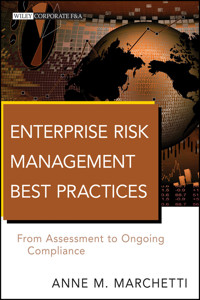
High-level guidance for implementing enterprise risk management in any organization
A Practical Guide to Risk Management shows organizations how to implement an effective ERM solution, starting with senior management and risk and compliance professionals working together to categorize and assess risks throughout the enterprise. Detailed guidance is provided on the key risk categories, including financial, operational, reputational, and strategic areas, along with practical tips on how to handle risks that overlap across categories.
- Provides high-level guidance on how to implement enterprise risk management across any organization
- Includes discussion of the latest trends and best practices
- Features the role of IT in ERM and the tools that are available in both assessment and on-going compliance
- Discusses the key challenges that need to be overcome for a successful ERM initiative
Walking readers through the creation of ERM architecture and setting up on-going monitoring and assessement processes, this is an essential book for every CFO, controller and IT manager.
Sie lesen das E-Book in den Legimi-Apps auf:
Seitenzahl: 241
Veröffentlichungsjahr: 2011
Ähnliche


















Contents
Cover
Endorsenment
Title Page
Copyright
Dedication
Preface
CHAPTER ONE: Overview of Enterprise Risk Management
ERM INTRODUCTION
GUIDANCE: HISTORY AND RELATIONSHIP
ORGANIZATION VIEW
ERM TODAY
INCREASED PRESSURE TO MANAGE RISK
ADDITIONAL EVIDENCE
PERCEIVED BARRIERS TO RISK MANAGEMENT
BUILDING THE BUSINESS CASE FOR ERM: VALUE AND BENEFITS
KEYS TO SUCCESS
SUMMARY
NOTES
CHAPTER TWO: Corporate Governance and Roles and Responsibilities
BOARD BEHAVIOR
CORPORATE CULTURE
ROLES AND RESPONSIBILITIES
SUMMARY
CHAPTER THREE: ERM Defined
DEFINITIONS AND CONCEPTS
RISK CATEGORIES
INTERNAL ENVIRONMENT
SUMMARY
NOTE
CHAPTER FOUR: The ERM Process: Step by Step
STEP 1: STRATEGY AND OBJECTIVE DEFINITION
STEP 2: EVENT IDENTIFICATION
STEP 3: RISK ASSESSMENT
STEP 4: RISK RESPONSE
STEP 5: COMMUNICATION
STEP 6: MONITORING
OVERSIGHT
SUMMARY
NOTES
CHAPTER FIVE: COSO Framework and Financial Controls
FOCUS ON FINANCIAL CONTROLS
CONTROL ENVIRONMENT
INTEGRITY AND ETHICAL VALUES
BOARD OF DIRECTORS
MANAGEMENT’s PHILOSOPHY AND OPERATING STYLE
ORGANIZATIONAL STRUCTURE
FINANCIAL REPORTING COMPETENCIES
AUTHORITY AND RESPONSIBILITY
HUMAN RESOURCES
SUMMARY
NOTES
APPENDIX FIVE A: Excerpt from a Code of Ethics Policy
OUR GUIDING PRINCIPLES AND VALUES
CONFLICTS OF INTEREST
CONFIDENTIAL INFORMATION; INTELLECTUAL PROPERTY
APPENDIX FIVE B: Whistleblower Program
REPORTS REGARDING ACCOUNTING MATTERS
INVESTIGATION OF SUSPECTED VIOLATIONS
DISCIPLINE FOR VIOLATIONS
APPENDIX FIVE C: Approval Policy and Procedures
POLICY
PURPOSE
SCOPE
APPROVALS/DOCUMENTATION
CHAPTER SIX: Financial Controls and Risk Assessment
RISK ASSESSMENT
FINANCIAL REPORTING OBJECTIVES
FINANCIAL REPORTING RISKS
FRAUD RISK
ENTITY-LEVEL CONTROLS
EXAMPLE: RISK ASSESSMENT AND FINANCIAL CONTROLS
EVALUATING DEFICIENCIES
SUMMARY
NOTES
APPENDIX SIX A: Entity-Level Control Assessment
CONTROL ASSESSMENT OVERVIEW
CONTROL ENVIRONMENT
OVERALL EVALUATION OF CONTROL ENVIRONMENT
RISK ASSESSMENT
OVERALL EVALUATION OF RISK ASSESSMENT
CONTROL ACTIVITIES
OVERALL EVALUATION OF CONTROL ACTIVITIES
INFORMATION AND COMMUNICATION
OVERALL EVALUATION OF INFORMATION AND COMMUNICATION
MONITORING
OVERALL EVALUATION OF MONITORING
SUMMARY ASSESSMENT
OVERALL ASSESSMENT OF INTERNAL CONTROLS
APPENDIX SIX B: Accounts Payable: Preliminary Controls Assessment Questionnaire
PURCHASING CONTROLS QUESTIONNAIRE
INTERNAL CONTROL ASSESSMENT
APPENDIX SIX C: Fraud Risk Factors: AU Section 316
RISK FACTORS RELATING TO MISSTATEMENTS ARISING FROM FRAUDULENT FINANCIAL REPORTING
CHAPTER SEVEN: Ongoing Compliance Overview
ORIGIN OF THE SARBANES-OXLEY ACT
GENERATING VALUE FROM COMPLIANCE
MOVING BEYOND INITIAL COMPLIANCE
REEVALUATING THE COMPLIANCE PROGRAM
SUMMARY
CHAPTER EIGHT: Ongoing Compliance Challenges
FUTURE STATE OPPORTUNITY: COMPLIANCE OPTIMIZATION
ISSUES TO CONSIDER WHEN OPTIMIZING COMPLIANCE
ONGOING COMPLIANCE PLAN
ROLE OF INTERNAL AUDIT: BALANCING THE COMPLIANCE AND AUDIT FUNCTIONS
EVOLVING ROLE OF THE AUDIT COMMITTEE
SUMMARY
CHAPTER NINE: Addressing Compliance and Risk Management Challenges through Automation
SOFTWARE CAN ADD VALUE BEYOND COMPLIANCE
MONITORING SOFTWARE
UTILIZATION OF CONTINUOUS MONITORING: CONTROL TESTING AND CONTROL AUTOMATION
BENEFITS OF CONTINUOUS MONITORING
CONTINUOUS MONITORING TOOL CONSIDERATIONS
CONTINUOUS MONITORING PROCESS
RISK MANAGEMENT SOFTWARE
UNIFYING FINANCIAL STATEMENTS, CLOSE TASKS, AND SOX CONTROLS
DETERMINING THE RIGHT SOLUTION
SUMMARY
NOTE
CHAPTER TEN: Ongoing Compliance and IFRS
INTERNATIONAL FINANCIAL REPORTING STANDARDS
COMMUNICATING THE IMPACT
PREPARING FOR IFRS
COMPREHENSIVE IFRS TRANSITION APPROACH
KEY ELEMENTS OF AN EFFECTIVE IFRS IMPLEMENTATION
SUMMARY
About the Author
Index
FOUNDED IN 1807, John Wiley & Sons is the oldest independent publishing company in the United States. With offices in North America, Europe, Asia, and Australia, Wiley is globally committed to developing and marketing print and electronic products and services for our customers- professional and personal knowledge and understanding.
The Wiley Corporate F&A series provides information, tools, and insights to corporate professionals responsible for issues affecting the profitability of their company, from accounting and finance to internal controls and performance management.
Copyright © 2012 by John Wiley & Sons, Inc. All rights reserved.
Published by John Wiley & Sons, Inc., Hoboken, New Jersey.
Published simultaneously in Canada.
No part of this publication may be reproduced, stored in a retrieval system, or transmitted in any form or by any means, electronic, mechanical, photocopying, recording, scanning, or otherwise, except as permitted under Section 107 or 108 of the 1976 United States Copyright Act, without either the prior written permission of the Publisher, or authorization through payment of the appropriate per-copy fee to the Copyright Clearance Center, Inc., 222 Rosewood Drive, Danvers, MA 01923, (978) 750-8400, fax (978) 646-8600, or on the Web at www.copyright.com. Requests to the Publisher for permission should be addressed to the Permissions Department, John Wiley & Sons, Inc., 111 River Street, Hoboken, NJ 07030, (201) 748-6011, fax (201) 748-6008, or online at www.wiley.com/go/permissions..
Limit of Liability/Disclaimer of Warranty: While the publisher and author have used their best efforts in preparing this book, they make no representations or warranties with respect to the accuracy or completeness of the contents of this book and specifically disclaim any implied warranties of merchantability or fitness for a particular purpose. No warranty may be created or extended by sales representatives or written sales materials. The advice and strategies contained herein may not be suitable for your situation. You should consult with a professional where appropriate. Neither the publisher nor author shall be liable for any loss of profit or any other commercial damages, including but not limited to special, incidental, consequential, or other damages.
For general information on our other products and services or for technical support, please contact our Customer Care Department within the United States at (800) 762-2974, outside the United States at (317) 572-3993 or fax (317) 572-4002.
Wiley also publishes its books in a variety of electronic formats. Some content that appears in print may not be available in electronic books. For more information about Wiley products, visit our web site at www.wiley.com.
Library of Congress Cataloging-in-Publication Data
Marchetti, Anne M. Enterprise risk management best practices : from assessment to ongoing compliance / Anne M. Marchetti. p. cm. - (Wiley corporate F&A) Includes index. ISBN 978-0-470-91740-4 (hardback); ISBN 978-1-118-14951-5 (ebk); ISBN 978-1-118-14952-2 (ebk); ISBN 978-1-118-14953-9 (ebk) 1. Risk management. I. Title. HD61.M2669 2012 658.15′5—dc23 2011023737
To my parents, Jim and Barbara Marchetti, to whom I owe all my love and gratitude.
Preface
MANY ORGANIZATIONS STRUGGLE with the development and implementation of an enterprise risk management (ERM) program. Most are overwhelmed by the task. They believe they do not possess the expertise, resources, time, and/or dollars required to effectively design and build an effective risk management program. In addition, there is minimal perceived value in this activity.
My objective for this book is to demystify ERM and the risk management process in order to eliminate implementation apprehension. The goal is to simplify the explanation of related concepts and provide guidance that demonstrates a practical, cost-effective process that can be utilized by any organization.
The material addresses the development of programs in two major areas: ERM and ongoing compliance. Chapters 1 through 3 provide an introduction and overview of ERM including important components of the process as well as a corporate governance/organizational framework and definitions of roles and responsibilities.
Chapter 4 provides a detailed description of the ERM process and includes suggestions regarding implementation. Chapters 5 and 6 present an in-depth review of financial controls, including an example of the application of the risk assessment process relative to this risk category.
Chapters 7 through 10 address ongoing compliance challenges and provide insight into cost minimization and control optimization including the effective use of technology as well as future International Financial Reporting Standards considerations and implications.
It is my hope that this consolidation of information will be a useful guide through the risk management process. In addition, it is my intention to provide explanations and the basis for a solid understanding of critical components of an effective ERM program that will assist with strategy execution and achievement of overall entity objectives.
CHAPTER ONE
Overview of Enterprise Risk Management
ERM INTRODUCTION
Enterprise risk management (ERM) includes the methods and processes used by organizations to minimize surprises and seize opportunities related to the achievement of their objectives.
ERM is an approach to aligning strategy, process, and knowledge in order to curtail surprises and losses as well as to capitalize on business opportunities. Many individuals associate risk with negative outcomes. However, there is a potential value component to risk assessment and management. Risk management is about balancing risk and reward. A well-designed risk management program encourages and allows an organization to take intelligent risks. It involves assessing quantitative factors and information as well as considering management experience and judgment. An effective risk management program entails balancing people and processes. Ultimately, an entity’s risk profile is affected by the actions and decisions of its board of directors, management, and employees.
Lesen Sie weiter in der vollständigen Ausgabe!
Lesen Sie weiter in der vollständigen Ausgabe!
Lesen Sie weiter in der vollständigen Ausgabe!
Lesen Sie weiter in der vollständigen Ausgabe!
Lesen Sie weiter in der vollständigen Ausgabe!
Lesen Sie weiter in der vollständigen Ausgabe!
Lesen Sie weiter in der vollständigen Ausgabe!
Lesen Sie weiter in der vollständigen Ausgabe!
Lesen Sie weiter in der vollständigen Ausgabe!
Lesen Sie weiter in der vollständigen Ausgabe!
Lesen Sie weiter in der vollständigen Ausgabe!
Lesen Sie weiter in der vollständigen Ausgabe!
Lesen Sie weiter in der vollständigen Ausgabe!
Lesen Sie weiter in der vollständigen Ausgabe!
Lesen Sie weiter in der vollständigen Ausgabe!
Lesen Sie weiter in der vollständigen Ausgabe!
Lesen Sie weiter in der vollständigen Ausgabe!




