


72,99 €
Mehr erfahren.
- Herausgeber: John Wiley & Sons
- Kategorie: Fachliteratur
- Serie: Public Health / Epidemiology and Biostatistics
- Sprache: Englisch
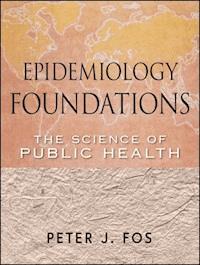
Written by Peter J. Fosan expert in epidemiology with more than twenty years teaching experienceEpidemiology Foundations offers an ideal introduction to the theory and practice of public health epidemiology. This important text discusses both the historical perspective and future trends of epidemiology, reviews health and disease, and explains how they are measured. The book's overview of epidemiological studies shows how they are used in practice. Epidemiology Foundations takes a social and community perspective and includes information about global diseases and epidemics.
Emphasis on concepts such as population health, social determinants, and global health make this book especially interesting and accessible to those new to the subject. Each chapter is supplemented with problem-solving exercises and research assignments to aid readers in understanding its epidemiology principles. Reflecting and expanding on recommendations of the Association of American Colleges and Universities, Epidemiology Foundations is the ideal text for any course introducing epidemiology in public health.
Sie lesen das E-Book in den Legimi-Apps auf:
Seitenzahl: 392
Veröffentlichungsjahr: 2010
Ähnliche



















Table of Contents
Cover
Title page
Copyright page
Dedication
FIGURES
TABLES
PREFACE
THE AUTHOR
CHAPTER 1 WHY EPIDEMIOLOGY?
Introduction
Public Health and Community Medicine
Definition of Epidemiology
Population Health
Population Trends
Health Costs
Global Health Threats
Summary
Key Terms
CHAPTER 2 HISTORY OF EPIDEMIOLOGY
Historical Perspectives
Uses of Epidemiology
Examples of Cohort Studies
Summary
Key Terms
CHAPTER 3 HEALTH AND DISEASE
Definitions
Distinction Between Health and Disease
Disease Progression
Cause and Effect
Summary
Key Terms
CHAPTER 4 DESCRIBING HEALTH AND DISEASE
Descriptive Epidemiology
Hypotheses
Descriptive Variables
Examples of Use of Descriptive Information
Summary
Key Terms
CHAPTER 5 MEASURING HEALTH AND DISEASE
Morbidity
Mortality
Other Measures
Graphing Health and Disease Measurements
Confounding
Summary
Key Terms
CHAPTER 6 EPIDEMIOLOGY STUDY DESIGNS: OBSERVATIONAL AND EXPERIMENTAL STUDIES
Definition of Observational Studies
Framework and Types of Observational Studies
Descriptive Studies
Analytical Studies
Examples of Observational Studies
Definition of Experimental Studies
Framework and Types of Experimental Studies
Clinical Trials
Bias and Validity
Examples of Experimental Studies
Summary
Key Terms
CHAPTER 7 USES OF EPIDEMIOLOGICAL STUDIES
Introduction
Observational Studies
Experimental Studies
Summary
Key Terms
CHAPTER 8 EPIDEMICS
Definition
Transmission
Response to Epidemics
Surveillance
Reportable Diseases
Examples
Summary
Key Terms
CHAPTER 9 EPIDEMIOLOGY AND SOCIETY
Introduction
Social Determinants
Socioeconomic Factors and Health
The Built Environment
Summary
Key Terms
CHAPTER 10 SCREENING FOR DISEASE
Prevention and Epidemiology
Screening
Accuracy of Screening Tests
Summary
Key Terms
CHAPTER 11 COMMUNITY PUBLIC HEALTH
Introduction
Community Health Workers
Community Level Planning and Evaluation
Examples
Public Health Programs
Public Health Agencies
Summary
Key Terms
CHAPTER 12 EPIDEMIOLOGY TODAY
Emergency Preparedness
Global Health
Emerging Diseases
Chronic Diseases
Summary
Key Terms
Index
Copyright © 2011 by John Wiley & Sons, Inc. All rights reserved.
Published by Jossey-Bass
A Wiley Imprint
989 Market Street, San Francisco, CA 94103-1741—www.josseybass.com
No part of this publication may be reproduced, stored in a retrieval system, or transmitted in any form or by any means, electronic, mechanical, photocopying, recording, scanning, or otherwise, except as permitted under Section 107 or 108 of the 1976 United States Copyright Act, without either the prior written permission of the publisher, or authorization through payment of the appropriate per-copy fee to the Copyright Clearance Center, Inc., 222 Rosewood Drive, Danvers, MA 01923, 978-750-8400, fax 978-646-8600, or on the Web at www.copyright.com. Requests to the publisher for permission should be addressed to the Permissions Department, John Wiley & Sons, Inc., 111 River Street, Hoboken, NJ 07030, 201-748-6011, fax 201-748-6008, or online at www.wiley.com/go/permissions.
Readers should be aware that Internet Web sites offered as citations and/or sources for further information may have changed or disappeared between the time this was written and when it is read.
Limit of Liability/Disclaimer of Warranty: While the publisher and author have used their best efforts in preparing this book, they make no representations or warranties with respect to the accuracy or completeness of the contents of this book and specifically disclaim any implied warranties of merchantability or fitness for a particular purpose. No warranty may be created or extended by sales representatives or written sales materials. The advice and strategies contained herein may not be suitable for your situation. You should consult with a professional where appropriate. Neither the publisher nor author shall be liable for any loss of profit or any other commercial damages, including but not limited to special, incidental, consequential, or other damages.
Jossey-Bass books and products are available through most bookstores. To contact Jossey-Bass directly call our Customer Care Department within the U.S. at 800-956-7739, outside the U.S. at 317-572-3986, or fax 317-572-4002.
Jossey-Bass also publishes its books in a variety of electronic formats. Some content that appears in print may not be available in electronic books.
Library of Congress Cataloging-in-Publication Data
Fos, Peter J.
Epidemiology foundations : the science of public health Peter J. Fos.—1st ed.
p. ; cm.
Includes bibliographical references and index.
ISBN 978-0-470-40289-4 (pbk.); ISBN 978-0-470-91070-2 (ebk.); ISBN 978-0-470-91071-9 (ebk.); ISBN 978-0-4709-1072-6 (ebk.)
1. Epidemiology. I. Title.
[DNLM: 1. Epidemiologic Methods. 2. Epidemiology. WA 950]
RA651.F647 2011
614.4—dc22
2010040026
For Dylan and Madison Rose
May your futures be bright
FIGURES
Figure 1.1: Cigarette smoking in the United States, 1965 to 2005 6
Figure 1.2: Leading causes of death, United States, 1950 to 2004 7
Figure 1.3: Projected population growth, 2010 to 2050, in the United States 11
Figure 1.4: Projected population percentage by race, 2010 to 2050, in the United States 12
Figure 1.5: Population growth in the United States, 2010 to 2050 12
Figure 1.6: Projected life expectancy in years by sex, United States, 2010 to 2050 13
Figure 1.7: Life expectancy from birth and at age 65 years by race and gender, United States, 1970 to 2005 14
Figure 1.8: Death rates of infants and newborns, United States, 1950 to 2005 15
Figure 1.9: Funding health care in the United States 16
Figure 1.10: Health insurance coverage among people younger than 65 years 16
Figure 3.1: Illness-disease matrix 37
Figure 3.2: Causation matrix 47
Figure 3.3: Web of causation 48
Figure 3.4: Epidemiologic triangle 49
Figure 3.5: Wheel of causation 49
Figure 4.1: Point-source epidemic 72
Figure 4.2: Propagated epidemic: estimated number of AIDS cases in adults and adolescents, United States, 1985 to 2006 72
Figure 4.3: Seasonal disease graph 74
Figure 4.4: Secular trend of hospitalizations associated with Clostridium difficile infection in Finland, 1996 to 2004 74
Figure 5.1: Period prevalence of overweight among children and teenagers by age group and selected period, United States, 1971 to 2002 89
Figure 5.2: Prevalence of diabetes in the United States, 2007, by age 103
Figure 5.3: AIDS rates by race or ethnic group, United States, 2006 104
Figure 5.4: Case-fatality rates for stroke per 100 people admitted to a hospital 104
Figure 5.5: Infant mortality and neonatal and postneonatal deaths in the United States, 2005 105
Figure 6.1: Framework of observational studies 115
Figure 6.2: Cross-sectional study 117
Figure 6.3: Prospective study 120
Figure 6.4: Retrospective study 122
Figure 6.5: Comparison of observational studies 125
Figure 6.6: Experimental studies 126
Figure 6.7: Framework for a randomized clinical trial 129
Figure 7.1: Relationship between risk factor and disease 140
Figure 7.2: Odds ratio calculation 145
Figure 8.1: Common-source epidemic 164
Figure 8.2: Propagated epidemic: Estimated number of AIDS cases in adults and adolescents, United States, 1985 to 2006 165
Figure 8.3: Legionnaires’ disease outbreak 168
Figure 9.1: U.S. poverty rates, 1966 to 2005 182
Figure 9.2: Prevalence rate of overweight and obesity, United States, 1960 to 2004 188
Figure 11.1: Basic logic model of resources, program activities, public health services, and expected changes in health 215
Figure 11.2: Logic model for program evaluation 216
Figure 11.3: Healthy People 2010 twenty-eight focus areas 221
Figure 11.4: Progress of objective 1–1 222
Figure 11.5: Rural Healthy People 2010 focus areas 224
Figure 12.1: Overweight and obesity prevalence trend, United States, 1960 to 2004 250
TABLES
Table 4.1: Limitation of Activity (Percentage) Caused by Chronic Conditions, United States, 2005 and 2006 57
Table 4.2: Death Rates from All Causes by Age, United States, 2002 to 2005 58
Table 4.3: Death Rates Caused by Diabetes Mellitus by Age, United States, 2002 to 2005 58
Table 4.4: Current Cigarette Smoking Among Adults, Estimated Percentage, by Sex, United States, 2006 59
Table 4.5: Rate of Vision and Hearing Problems Among People Older Than 18 Years, United States, Selected Years from 1997 to 2006, by Sex 59
Table 4.6: Percentage of Medicaid Coverage Among People Younger Than 65 Years, United States, Selected Years from 1984 to 2006, by Sex 60
Table 4.7: Rate of Hospital Stays in the Past Year, United States, Selected Years from 1997 to 2006, by Sex 60
Table 4.8: Age-Adjusted Death Rates by Race, United States, 2002 to 2005 61
Table 4.9: Rate of Emergency Room Visits in the Past Year for Persons Younger Than 18 Years, United States, Selected Years from 1997 to 2006, by Race 62
Table 4.10: Percentage of Teenaged Childbearing, United States, 2002 to 2006, by Race 63
Table 4.11: Percentage of People Older Than 18 Years with Vision and Hearing Problems, United States, Selected Years from 1997 to 2006, by Race 63
Table 4.12: Age-Adjusted Death Rates Among Persons Aged 25 to 64 Years by Educational Attainment, Selected States, 2001 to 2005 64
Table 4.13: Percentage of People Older Than 18 Years with Vision and Hearing Problems, United States, Selected Years from 1997 to 2006, by Educational Attainment 65
Table 4.14: Estimated TB Incidence Rate for Selected Countries, 2006 66
Table 4.15: Average Annual Age-Adjusted Death Rates, Regions of the United States, 2003 to 2005 67
Table 4.16: Average Annual Age-Adjusted Death Rates by Selected States, 2003 to 2005 67
Table 4.17: County-Level Estimated Diagnosed Diabetes, by Selected Counties in Mississippi, 2005 68
Table 4.18: Average Annual Age-Adjusted Death Rates, Urban and Rural Counties, United States, 1996–1998, 1999–2001, and 2003–2005 69
Table 5.1: AIDS Rates in the United States in 2006 by Race or Ethnic Group 81
Table 5.2: Cumulative Reported AIDS Cases Through 2006 in the United States 82
Table 5.3: Cumulative Reported AIDS Deaths Through 2006 in the United States 82
Table 5.4: Crude Invasive Cancer Incidence Rates by Primary Site and Race and Ethnicity, United States, 2004 84
Table 5.5: Incidence of Acute Hepatitis A by Selected States in the United States, 2002 to 2006 84
Table 5.6: Incidence Rates of Actual Viral Hepatitis by Type and Year, United States, 1997 to 2006 85
Table 5.7: Prevalence of Diabetes in the United States, 2007, by Age 87
Table 5.8: Prevalence of Obesity in Selected States, 2007 88
Table 5.9: Number of Deaths and Crude Death Rates for the 15 Leading Causes of Death, 2005 91
Table 5.10: Cause-Specific Death Rates by Age for the 15 Leading Causes of Death, United States, 2005, for Selected Age Categories 92
Table 5.11: Infant, Neonatal, and Postneonatal Mortality Rates in the United States, 2000 to 2005 94
Table 5.12: Infant, Neonatal, and Postneonatal Mortality Rates by Race of the Mother in the United States, 2000 to 2005 95
Table 5.13: Fetal Death Rates in the United States, 2000 to 2004 96
Table 5.14: PMR for Deaths in Infants Due to the Five Leading Causes of Death in the United States, 2004 97
Table 5.15: Five-Year Cancer Survival Rates for Selected Cancers by Race, 1987–1989 Through 1996–2003 98
Table 5.16: Estimated Vaccination Coverage (Percentage) Among Children Ages 19 to 35 Months, by Vaccine and Dosage, 2000 to 2004 99
Table 5.17: Estimated Fertility Rates in Selected Countries, 2008 100
Table 5.18: Self-Assessed Health Status, Poor or Fair, by Age, Sex, and Race in the United States, 2002 to 2006 101
Table 5.19: Potential Years of Life Lost (PYLL) Before Age 75, United States, 2005 102
Table 5.20: Age-Adjusted Invasive Cancer Incidence Rates by Primary Site and Race and Ethnicity in the United States, 2004 107
Table 5.21: Crude and Age-Adjusted Death Rates for Alcohol-Induced Causes, by Race, United States, 1999 to 2005 108
Table 7.1: Relative Risk 2 × 2 Contingency Table 141
Table 7.2: Relative Risk Calculation 142
Table 7.3: Relative Risk Calculation Example 1 143
Table 7.4: Relative Risk Calculation Example 2 144
Table 7.5: Odds Ratio 2 × 2 Contingency Table 146
Table 7.6: Calculation of Odds Ratio 147
Table 7.7: Odds Ratio Example 1 147
Table 7.8: Odds Ratio Example 2 148
Table 7.9: Odds Ratio Example 3 149
Table 7.10: Attributable Risk Table 150
Table 7.11: Attributable Risk Calculation 150
Table 7.12: Attributable Risk Calculation Example 1 151
Table 7.13: Lung Cancer and Alcohol Use 154
Table 7.14: Smoking Status Stratification for Lung Cancer 155
Table 8.1: Nationally Notifiable Diseases, 2009 172
Table 8.2: Diseases Under Surveillance by the World Health Organization, 2009 173
Table 8.3: West Nile Virus Cases, Selected States, 2008 175
Table 10.1: 2 × 2 Contingency Table 197
Table 10.2: Sensitivity: True-Positive Ratio 198
Table 10.3: Specificity: True-Negative Ratio 199
Table 10.4: False-Positive (FP) Ratio 199
Table 10.5: False-Negative (FN) Ratio 200
Table 10.6: Validity Calculation Example 200
Table 10.7: Validity Calculation Example: Sensitivity 201
Table 10.8: Validity Calculation Example: Specificity 201
Table 10.9: Validity Calculation Example: FN Ratio 202
Table 10.10: Validity Calculation Example: FP Ratio 202
Table 10.11: Predictive Value of a Positive Test Result (PV+) 203
Table 10.12: Predictive Value of a Negative Test Result (PV-) 203
Table 10.13: Validity Calculation Example: PV+ 204
Table 10.14: Validity Calculation Example: PV- 204
Table 10.15: Reliability Index 206
Table 10.16: Reliability Index Example 207
Table 10.17: ECG Results 208
Table 11.1: Diabetes Focus Area 223
Table 12.1: Global Summary of AIDS Epidemic, December 2007 233
Table 12.2: Estimated Number of People Receiving Antiretroviral Therapy, by Region, December 2003 to December 2007 233
Table 12.3: Cumulative Number of Confirmed Human Cases of Avian Influenza A (H5N1), 2003 to 2008 235
Table 12.4: Cumulative Number of Confirmed Human Deaths from Avian Influenza A (H5N1), 2003 to 2008 235
Table 12.5: West Nile Virus Activity, United States, 2008 237
Table 12.6: Emerging Infectious Diseases 238
Table 12.7: Obesity Prevalence Rates, United States, 2007 249
Table 12.8: Lifetime Asthma Population Estimates by Age, United States, 2006 253
Table 12.9: Current Asthma Estimates by Age, United States, 2006 254
Table 12.10: Current Asthma Prevalence Rates by Age, Sex, and Race, United States, 2006 254
Table 12.11: Age-Specific Prevalence Rate of Diagnosed Diabetes per 100 Population by Sex and Race or Ethnicity, 2005 255
Table 12.12: Number of Persons with Diagnosed Diabetes, in Millions, United States, 1990 to 2005 255
Table 12.13: Crude and Age-Adjusted Prevalence Rates of Diagnosed Diabetes per 100 Population, United States, 1990 to 2005 256
PREFACE
Epidemiology? Many people have heard the term, but few really understand what it is, what it does, and how it influences our daily lives. This book is intended to inform students and practitioners about the vital role of epidemiology in enhancing the health of individuals and communities, to understand how to read and interpret epidemiological studies to become more enlightened citizens, and to understand the global effects of epidemiological studies.
The motivation for this book has developed over the years from the influence of several factors. I have taught epidemiology to graduate students for more than twenty years and have written other textbooks aimed at illustrating the relevance and benefit of epidemiology for specialized uses in health care administration and population health management. Through my years of teaching and writing, I have seen the positive response from students and practitioners to the myriad applications of epidemiology to their respective fields and everyday life. With this in mind, it makes sense to expose young scholars to epidemiology earlier in their intellectual journey. The more people who understand and appreciate the uses of epidemiology, the better chance its application will improve the public’s health and well-being.
Another motivation for writing this book is the attention that epidemiology and public health education is receiving from national organizations. National public agencies have been warning that there is a crisis in the shortage of trained and qualified public health workers, especially epidemiologists.1 There is a movement, which is gaining momentum, to expand the public health education downward from graduate programs to undergraduates, especially into community colleges.2 This call to action must be met with innovative curricula and instructional resource materials.
Organization
Chapters One and Two lay the foundation to the course by discussing both the historical perspective and future trends of epidemiology. Chapter One, “Why Epidemiology?” introduces the reasons why epidemiology is an important foundation to public health. The chapter presents the role that epidemiology plays in public health. Current and future characteristics of the United States population and of global health threats are presented with an epidemiological perspective. Chapter Two, “History of Epidemiology,” continues to provide background information by presenting a historical perspective of the development of epidemiology as the basic science of public health. Past contributors and their influence on the science of epidemiology are discussed.
Chapters Three, Four, and Five discuss health and disease and how they are measured. Chapter Three, “Health and Disease,” begins the core discussion of epidemiological principles, along with the foundations of health and disease. The notion of disease causation is discussed and stressed throughout the text. Chapter Four, “Describing Health and Disease,” discusses descriptive epidemiology and its uses as an information source and as a precursor to further study and investigation. Emphasis is placed on descriptive variables that are used to explain differences in health and disease in populations. Chapter Five, “Measuring Health and Disease,” introduces morbidity and mortality measures. How these measures assist in interpreting disease information is discussed.
Chapters Six and Seven discuss epidemiological studies and how they are used. Chapter Six, “Epidemiological Study Designs: Observational and Experimental Studies,” presents study designs used to test hypotheses that result from descriptive information. Observation and experimental designs are introduced. Chapter Seven, “Uses of Epidemiological Studies,” covers the evaluation of cause-and-effect relationships between causal factors and diseases. Hypothesis testing and quantification of risk with epidemiological study designs are discussed.
Chapters Eight through Twelve discuss epidemiology from a social and community perspective and global diseases and epidemics. Chapter Eight, “Epidemics,” begins the section of the text that focuses on the use of epidemiological principles in everyday life. This chapter discusses epidemics and how they begin and spread. Modes of transmission of infectious agents are described as well as how public health agencies respond to epidemics. Disease surveillance methods, including reportable disease reporting, are presented. Chapter Nine, “Epidemiology and Society,” introduces one of the newer epidemiological disciplines. The influence of society and the neighborhoods in which people live on their health is the crux of social epidemiology. Chapter Ten, “Screening for Disease,” brings epidemiology to a personal level. Accuracy and precision of screening tests and the evaluation of their results are discussed. Chapter Eleven, “Community Public Health,” covers the link connecting epidemiology to improvements in daily life. Public health program planning, implementation, and evaluation are presented. The role of epidemiology in community public health is described through examples of public health programs. Chapter Twelve, “Epidemiology Today,” discusses current health and disease concerns, and the pending future impact of current health problems is portrayed from the epidemiological perspective.
Features
Each chapter is supplemented with exercises to aid in understanding the epidemiological principles. These chapter exercises consist of research assignments and problem solving. Most of these exercises are open-ended to challenge the reader to be creative and innovative. In addition, each chapter has a set of multiple-choice, true-or-false, and short-answer review questions. These chapter review questions are intended to provide immediate feedback.
Audience
I anticipate that the primary users of this textbook will be students in high school, community and junior colleges, and four-year colleges and universities. This book can serve as a first resource for students new to epidemiology. One objective is to engage young people in hopes that they will embrace epidemiology as a discipline in which they will continue their study and future work. My hope is that after reading and using this book, students will understand and appreciate the relevance and impact that epidemiology, as the basic science of public health, has on improving health and wellness.
Acknowledgments
This book is a product of more than thirty years of work and study of health and disease. My personal journey has been uncharted at times but thankfully has carried me in a positive and growing direction. I have had many mentors and supporters along the way. Their support has made this journey up to this point one characterized by more ups than downs. Included among my supporters are my students; they have been my true motivation and inspiration. I thank each and every one of you. Finally, I must thank and acknowledge my family. They have allowed me to pursue my career and intellectual pursuits with no complaints, despite the hardships they may have confronted. They have always been my greatest supporters. I must thank my colleagues who have helped me often during my journey, as well as with this book. David J. Fine first convinced me to write books for students. He has been there for me often and is a source of inspiration and encouragement. Peggy Honoré was my student many years ago and now is my friend and colleague. Her encouragement has been invaluable. Miguel Zuniga, also a former student, is now my friend and collaborator in many of my accomplishments. He is a source of technical knowledge and has kept me on task throughout the writing of this book.
Sandra Kiselica edited this book, and her help and recommendations have been invaluable. Her expertise can be seen throughout in the sections that read easiest.
Peter J. Fos
Notes
1. State Public Health Employee Workforce Shortage Report: A Civil Service Recruitment and Retention Crisis. Arlington, VA: Association of State and Territorial Health Officials; 2004.
2. Honoré PA, Graham G, Garcia J, and Morris W. A call to action: Public health and community college partnerships to educate the workforce and promote health equity. Journal of Public Health Management and Practice. 2008; 14(56) Suppl:S82–S84.
THE AUTHOR
Peter J. Fos is provost and professor of health sciences at the University of Texas at Tyler. He is an internationally known decision scientist and epidemiologist. He earned his doctorate in health care decision analysis from Tulane University Graduate School and his master of public health degree from Tulane University Health Sciences Center, following a career in clinical dentistry. He has spent more than twenty-five years at academic institutions, where he is active in curriculum development in application of epidemiology to management, the practice of managerial epidemiology, clinical effectiveness, public-health practice, health-outcomes research, and terrorism-preparedness planning. He served, briefly, as chief science officer of the Mississippi State Department of Health. He maintains adjunct faculty positions at the University of Southern Mississippi College of Health and the University of Alabama in Birmingham School of Health-Related Professions, and is a visiting scholar at the Medical University of South Carolina, College of Health Professions.
CHAPTER 1
WHY EPIDEMIOLOGY?
LEARNING OBJECTIVES
On completing this chapter, you will be able to
Define epidemiology
Discuss the concept of populations and population health
Describe population trends and characteristics
Describe global health threats
Discuss the relationship and distinction between public health and medicine
Introduction 2
Public Health and Community Medicine 2
Definition of Epidemiology 3
Population Health 9
Population Trends 10
Health Costs 15
Global Health Threats 17
Summary 17
Introduction
Epidemiology is, for most, a word that seems to be from another language. It is certainly not a word we use in everyday conversation. But epidemiology is a science that affects all of us every day of our lives. We shop for food each day with little regard to or worry about whether what we purchase and eat is unsafe. For many of us, smallpox, polio, plague, diphtheria, yellow fever, and cholera are diseases that either we have never heard of or we do not give much thought or attention to. Human immunodeficiency virus (HIV) infection and acquired immunodeficiency syndrome (AIDS) are diseases that are well known, but they are becoming less of a daily concern. New, so-called emerging diseases such as bird flu are now garnering a great deal of our attention.
Public Health and Community Medicine
Before continuing the discussion on “why epidemiology,” the concept of public health must be explained further. Public health is the science and practice of protecting and improving the health of a community. This can be done with preventive medicine, health education, the control of communicable diseases, the use of sanitary measures, and the monitoring of environmental conditions. Public health is concerned with the health of the community as a whole. In other words, public health and community health are synonymous.
Public health is focused on three areas: assessment and monitoring of health and disease, development of public health policies that assist in addressing health problems, and allowing for access to public health care services. These public health care services include disease prevention, health education, and health promotion. Often public health services are considered to be the same as medical care services because of the assumed similarities. The distinction is that public health services are focused on populations, not individuals. It is true that populations are made up of individuals, so public health acknowledges the importance of the welfare of individuals, but the focus of services is on larger populations. Public health services are centered on diagnosing and monitoring health issues and providing health education and health promotion services to communities.
An example of this communitywide perspective of public health is considered an accomplishment. Public health is concerned with immunization for preventable disease, such as smallpox, poliomyelitis, measles, rubella, tetanus, diphtheria, and Haemophilus influenzae type b. Since immunization programs (also referred to as vaccination programs) were established, smallpox has been eradicated, poliomyelitis has been eliminated in the United States, and the other diseases are now under control. Other infectious diseases (cholera, tuberculosis, and sexually transmitted diseases) also are under control, in part due to the efforts of public health agencies and programs.
Is public health the same as medicine? Despite the fact that medical and public health services both seek to improve health, they are not the same. Two easy-to-remember differences are (1) public health services are directed at populations, and medical services are focused on the individual; and (2) public health services are mostly concerned with the prevention of disease whereas medical services are concerned with the diagnosis and treatment of disease. Public health and medicine are different, but they have the same objective of improving health and eliminating disease.
Definition of Epidemiology
Epidemiology is a word with Greek origins: from the Greek prefix epi, meaning “on, upon, or befall”; the Greek root demos, meaning “the people”; and the Greek suffix logos,” meaning “the study of.” In other words, epidemiology studies that which befalls on people, which is disease. The word epidemiology was first used in the 1700s to describe the science and methods used to study epidemics. In the twentieth century, with the decline of infectious diseases, epidemiology expanded to study more than epidemics. This decline in infectious diseases can be attributed to improvements in nutrition, sanitation, and general living conditions that in part resulted from public health interventions. Of course, these public health interventions were established using information provided by epidemiology.
Given this new need for epidemiology, it has been defined as the study of the distribution and determinants of health-related states or events in specified populations and the application of this study to control health problems.1 This means that epidemiology is used to identify the diseases in a population and to understand why these diseases exist. Another often-used definition is that epidemiology is the study of the distribution and determinants of health-related states and events in defined populations and the application of this study to the control of health problems.2
The Greek root of epidemiology and the two definitions have a common theme, namely, the people. The people are considered as a group, which is referred to as a population. This population-centered nature of epidemiology leads to one of the differences between public health services and medical services. Populations are groups of people who share some common characteristics. These characteristics are personal (age, sex, race, health behaviors), geographical (live in the same neighborhood, city, region, country, continent), and time. Populations may be large groups of people (population of the United States) or small groups (people in a neighborhood or in a factory).
Epidemiology is the study of factors affecting the health and illness of populations. It serves as the foundation of interventions made in the interest of public health and preventive medicine. It is considered a cornerstone method of public health research and is highly regarded in medicine for identifying risk factors for disease and determining the best treatment approaches to clinical practice. Epidemiology is considered by many to be a critical branch of public health. In fact, it is often referred to as the basic science of public health.
Epidemiology provides a framework of methods and principles from which information can be reviewed and analyzed in a way that public health problems can be identified and addressed. The epidemiological methods allow for disease definition as well as classification, identification, and planning for disease control measures. Epidemiology also provides the way to understand the relationship between the presence of factors that cause disease, called causal factors, and the development of disease (for example, smoking and heart disease).
Epidemiologists are the people who work every day using epidemiological principles and methods to make our lives better. Epidemiologists identify, measure, count, and control diseases, injuries, and causes of death. They also look for connections between disease and genetic, environmental, and behavioral factors. Once these connections are established, epidemiologists plan and develop interventions to prevent disease and promote health. This process of identifying connections and developing interventions is how epidemiology touches our lives in a positive way every day.
Let’s discuss some specific examples of how epidemiology has affected public health. In general terms, most of the significant improvements in the health of the people in the United States can be traced to accomplishments of public health.
An example of how public health policy improved the health and well-being of large groups of people happened in the United States in 1955. At that time, results of field tests of the polio vaccine were announced indicating that an inactivated poliovirus could produce immunity. Within days of this announcement, a national vaccination program was implemented. Today, polio has been eradicated from the United States.
Another accomplishment of public health initiatives with long-term beneficial effects is the identification of the relationship between cigarette smoking and lung cancer and heart disease. Public health and epidemiological reports were instrumental in alerting people to the hazards of cigarette smoking, which led to the warning on cigarette packages from the U.S. Surgeon General. Public health, using epidemiological information as support, has worked hard in the past few decades to decrease the number of smokers in the United States. Figure 1.1 shows the results of this effort.
FIGURE 1.1: Cigarette smoking in the United States, 1965 to 2005
Source: CDC/NCHS, Health, United States, 2009, Figure 6. Data from the National Health Interview Survey and the Youth Risk Behavior Survey.
Figure 1.1 shows that the percentage of people who smoke has drastically decreased since 1965. This reduction has been most significant in men. In 1965 more than 50 percent of men in the United States were smokers. By 2005 the percentage dropped to less than 30 percent. Perhaps the best news is the decrease in the percentage of pregnant smokers. Smoking during pregnancy has been associated with infants with low birth weight and other associated health problems. Smoking among high school students is still a concern, but tobacco cessation efforts have targeted this group for the past few years.
It is interesting to note the decline in heart disease, which in part is due to smoking cessation programs. Figure 1.2 shows the leading causes of death from 1965 to 2006. Overall cancer rates have not changed since 1965, but lung cancer deaths have declined. Deaths due to stroke have decreased dramatically, which can be attributed to tobacco cessation programs. Also, because of public health awareness and legislation, unintentional motor vehicle injuries have decreased due to mandatory seat beat usage and protective restraints.
FIGURE 1.2: Leading causes of death, United States, 1950 to 2004
Source: CDC/NCHS, Health, United States, 2009, Figure 18. Data from the National Vital Statistics System.
Other accomplishments of public health include global eradication of smallpox and establishing the relationship between Reye’s syndrome and aspirin. The eradication of smallpox may be one of the greatest accomplishments of medicine and public health. Smallpox is a serious, contagious, and often fatal infectious disease. In the past, it killed almost 30 percent of infected people, and it left scars on the skin of those who survived. No vaccine or treatment existed until the end of the eighteenth century, when Edward Jenner introduced the smallpox vaccination. The last case of smallpox in the United States was in 1949, and the last naturally occurring case in the world was in Somalia in 1977.3
Reye’s syndrome is a disease that affects all organs of the body but is particularly damaging to the liver and brain. The exact cause of Reye’s syndrome is unknown, but it has been shown to be associated with aspirin usage. Cases are most often seen in January–March each year. An epidemic of flu or chickenpox is commonly followed by an increase in the number of cases of Reye’s syndrome.4
Epidemiology had a major role in the investigation of smallpox and Reye’s syndrome. In fact, epidemiology is responsible for discovering the cause, and for developing control measures for other diseases such as Legionnaire’s disease. Legionnaire’s disease acquired its name in July 1976 when an outbreak of pneumonia occurred among people attending a convention of the American Legion in Philadelphia. On January 18, 1977, the causative agent was identified as a previously unknown bacterium, subsequently named Legionella pneumophila. An estimated 8,000 to 18,000 people get legionellosis in the United States each year. Some people can be infected with the Legionella bacterium and have only mild symptoms or no illness at all. When outbreaks do occur, they are usually in the summer and early autumn, though cases may occur at any time of the year.5
Another well-known accomplishment of epidemiology and public health is the work with AIDS. AIDS is the final stage of HIV infection. HIV attacks the body’s immune system. Our bodies’ immune system fights infections. HIV finds and destroys a white blood cell (called a T-cell) that is important for the immune system to fight infections. For someone who has HIV infection, it can takes years before they have AIDS. AIDS is a disease in which a person has enough of a weakened immune system that the body has trouble fighting off infection. It was through the use of epidemiological methods that the HIV infection and AIDS were identified, along with the factors that were associated with a person’s susceptibility. These factors were found to include both behavioral and social causes.
Public health continues to make major improvements in health by controlling epidemics, providing safe water and food, and establishing maternal and child health services. As will be discussed throughout this book, public health, with the help of the science of epidemiology, has done such a remarkable job of preventing countless deaths and improving the quality of life that many of us take it for granted. One reason to study public health and epidemiology is to become aware of how our daily lives are affected by public health and epidemiology. According to the Institute of Medicine in the report, The Future of Public Health, “An impossible responsibility has been placed on America’s public health agencies: to serve as stewards of the basic health needs of entire populations, but at the same time avert impending disasters and provide personal health care to those rejected by the rest of the health system. The wonder is not that American public health has problems, but that so much has been done so well, and with so little.”6
Population Health
The health of a population is a prime focus of epidemiology and public health. The health of populations was first studied in the seventeenth century. A population is not a fixed, standard number of people but is a specific group under study because of some common traits. These traits are associated with disease exposures, including the effect of social conditions. Often when looking at a population, the total population is the target, but smaller parts of that population may be studied (these are called subpopulations). For example, the students in a school constitute a population whereas the students in a classroom are a subpopulation.
Usually populations are defined by geographical boundaries—for example, residents in a country, regions of a country, states, cities, and sections of a city. This is done because people in specific geographical locations have common traits, including age, sex, race, and other characteristics. Geographical populations are studied because it is easy to gather the necessary data about the populations. This is due, in part, to the fact that geographically defined areas are related to political and governmental units as well as public health agencies.
A goal of epidemiology is to identify and prevent factors that cause disease in populations. To do this, epidemiology starts its study at the population level and then addresses the identified determinants of health and disease at this level.7 Epidemiology studies populations that are made up of individuals, but the focus remains on the population.8 So it is important to understand the relationship between disease and its causal factors at both the population and individual person levels.9
It is also important to remember that populations differ. Populations can be divided into several subpopulations based on many factors, including demographics. These different subpopulations will have different health care needs and will use health care services in different ways.10
It is now known that social conditions, conditions that people live in, can affect a population’s health. Different socioenvironmental exposures are related to differing physical and mental health outcomes. Epidemiology studies the affect of social conditions in its branch science called social epidemiology. Social epidemiology studies how society and social organization influence the health and wellness of people in populations. Social epidemiology tries to explain the connection between exposure to social characteristics of the environment and its effects on health, with the hopeful result of a better understanding of how, where, and why social inequalities affect health.
Population Trends
Epidemiology is a science that studies populations. The makeup of a population directly affects health and disease. If you can understand characteristics of a population, and if the population is changing, then it becomes easier to plan for disease prevention and treatment.
The population of the United States has been increasing for the past few decades. This increase is expected to continue to at least the year 2050. Figure 1.3 shows the projected population growth from 2010 to 2050. Overall the population is expected to increase from just over 300 million people to almost 450 million. Growth is expected among all races—whites, blacks, American Indians and Alaska Natives, Asians, Native Hawaiians and Pacific Islanders.
FIGURE 1.3: Projected population growth, 2010 to 2050, in the United States
Source: U.S. Census Bureau, Population Division, Projection of the Population and Components of Change for the United States: 2010–2050.AIAN refers to American Indians and Alaska NativesNHPI refers to Native Hawaiians and Pacific Islanders
As the population grows over the next forty years, the age percentages will change slightly, with an obvious aging of the population. The percentage of people younger than forty-four years will decrease, and the percentage will increase for people aged forty-five years and older. The percentage of people younger than eighteen years will decrease from 28 percent to 23 percent. Among people aged eighteen to forty-four, the percentage will decrease from 40 percent to 34 percent. The percentage of people older than seventy-five years will more than double from 4 percent to 11 percent of the population (see Figure 1.4).
FIGURE 1.4: Projected population percentage by race, 2010 to 2050, in the United States
Source: CDC/NCHS, Health, United States, 2009, Figure 1B. Data from the U.S. Census Bureau.
Figure 1.5 presents the population growth and expected growth for a hundred-year period, 1950 to 2050, in different age categories. As was mentioned above, the total population will increase to almost 450 million people. It is interesting to see the growth since 1990 in the age groups sixty-five years and older and seventy-five years and older. These two age groups are contributing to the overall increase in the population because people are living longer.
FIGURE 1.5: Population growth in the United States, 2010 to 2050
Source: CDC/NCHS, Health, United States, 2009, Figure 1A. Data from the U.S. Census Bureau.
Population Characteristics
Other aspects of the U.S. population need to be presented to fully understand the dynamics and characteristics. The life expectancy of the population is an important concern of public health. Life expectancy indicates the health of the country and the quality of life of the population. Figure 1.6 presents the projected life expectancy in the United States by sex, from 2010 to 2050.
FIGURE 1.6: Projected life expectancy in years by sex, United States, 2010 to 2050
The projected life expectancy is expected to increase for both men and women over the next forty years. The projected increase will be greater for women than for men. By the year 2050, the gap between men and women will narrow, with women expected to live 4.6 years longer than men.
Figure 1.7 presents the projected life expectancy according to race and gender, at birth and after a person has reached sixty-five years of age. This shows how long someone is expected to live in total years from birth and how much longer someone should live past age sixty-five. White women have the highest life expectancy, closely followed by black women, from birth and at age sixty-five.
FIGURE 1.7: Life expectancy from birth and at age 65 years by race and gender, United States, 1970 to 2005
Source: CDC/NCHS, Health, United States, 2009, Figure 16. Data from the National Vital Statistics System.
The health of infants and newborns is an indicator of the overall health status of a population. The United States is seen as a world leader in many things, including health care services. However, the United States has a higher death rate among infants and newborns than many other industrialized countries. This will be discussed in more detail in Chapter Five.
On a positive note, the death rates from infants and newborns have drastically decreased in recent times. Figure 1.8 shows infant mortality, neonatal, and postneonatal mortality rates from 1950 to 2006. Each rate has decreased greatly during the fifty-four-year period. For example, the infant mortality rate (the measurement of the number of deaths before age one year) decreased from almost 30 deaths per 1,000 live births in 1950 to less than 10 deaths in 2006. This is an indication that social, medical, and educational interventions have been successful in reducing deaths of infants and newborns. Again this shows how epidemiology, in conjunction with public health programs, has made our lives better.
FIGURE 1.8: Death rates of infants and newborns, United States, 1950 to 2005
Source: CDC/NCHS, Health, United States, 2009, Figure 17. Data from the National Vital Statistics System.
Health Costs
It is interesting to note how much it costs for our health care, including public health services, each year in the United States. In 2007 the total health care costs were $1.9 trillion. Figure 1.9 shows how this money was spent for health care services and what were the sources of funding.
FIGURE 1.9: Funding health care in the United States
Source: CDC/NCHS, Health, United States, 2009, Figure 21. Data from the Centers for Medicare & Medicaid Services.
Looking at where the money is spent, the majority goes to hospitals and physicians. Other areas of spending are nursing home care and prescription drugs. It is also clear that most of the money for health care services comes from insurance, both private and federally funded. Some funds come from state and local programs, with the remainder paid by people who use the services.
With such a large health care industry and an equally large health insurance industry, it seems that all Americans should receive needed care. But this is not the case. Figure 1.10 shows the percentage of health insurance coverage for people younger than sixty-five years in the United States (Americans sixty-five years and older are eligible to receive Medicare benefits). The percentage of Americans who are uninsured has increased nearly 20 percent in the past twenty-five years. It is important to remember that the total population in the United States has significantly increased since 1984, so the number of uninsured Americans has drastically increased as well.
FIGURE 1.10: Health insurance coverage among people younger than 65 years
Source: CDC/NCHS, Health, United States, 2009, Figure 19. Data from the National Health Interview Survey.
Global Health Threats
Today, epidemiology and public health face many challenges such as chronic diseases, West Nile virus, AIDS, and the worry over pandemic flu. As the world is getting progressively smaller with rapid methods to travel, global health threats are occurring everywhere, including in the United States. According to the World Health Organization (WHO), by the year 2030, chronic and noncommunicable diseases will cause more than 75 percent of all deaths. Today 12 percent of all deaths worldwide are caused by heart disease whereas 3.5 percent of deaths are a result of HIV/AIDS. By 2030, more than 14 percent of deaths will be caused by heart disease, with HIV/AIDS deaths decreasing to 1.9 percent. Diseases and conditions that are receiving attention globally today include infant mortality, neonatal mortality, HIV/AIDS, malaria, effects of tobacco use, breast cancer, and disease outbreaks in developing countries.
When we talk about global health threats, we usually discuss possible pandemics of infectious diseases. However, our attention should shift to chronic and non-communicable diseases and conditions. Although infectious diseases are an immediate worry, more people today die from chronic diseases. The worry of infectious diseases is rooted in the unknown and unexpected effects of pandemics. The science of epidemiology can help us to sort real threats from unwarranted concerns.
Summary
In this chapter we introduced the science known as epidemiology and its role in public health. The ways in which our everyday lives are touched, whether we know it or not, by epidemiology and public health was described. In addition, examples of how public health and epidemiology have positively affected people’s lives were presented. The emphasis from infectious disease to chronic and infectious diseases was discussed.
Key Terms
Causal factors, 4
Life expectancy, 13
Public health, 9
Social epidemiology, 10
Chapter Exercise
1. Define epidemiology.
2. Compare and contrast medicine and public health.
3. Discuss in some detail one of the public health accomplishments that was mentioned in the chapter.
Chapter Review
1. Epidemiology has been defined as the
a. study of epidemic diseases.
b. study of clinical diseases.
c. study of the distribution and determinants of disease in human populations.
d. the basic service of health education.
2. Epidemiology is a branch of public health. True or False?
3. The leading cause of death in the United States is
a. cancer.
b. heart disease.
c. automobile accidents.
d. stroke.
4. The U.S. population is expected to increase for all races between 2010 and 2050. True or False?
5. The projected life expectancy in the United States in the year 2005 is greater for blacks than for all other races. True or False?
6. Neonatal mortality rates have increased from 1950 to 2004. True or False
7. The number of Americans who are uninsured has stayed the same since 1964. True or False?
8. Most money spent on health care goes for hospital and physician services. True or False?
9. In 2005 the federal government provided most of the funds for health care services in the United States. True or False?
10. By the year 2050, the percentage of whites in the United States will
a. increase.
b. remain the same.
c. decrease.
d. cannot be determined
Notes
1. Mausner JS and Kramer S. Epidemiology: An Introductory Text. 2nd ed. Philadelphia, Wiley; 1985.
2.




