


21,99 €
Mehr erfahren.
- Herausgeber: John Wiley & Sons
- Kategorie: Geisteswissenschaft
- Sprache: Englisch
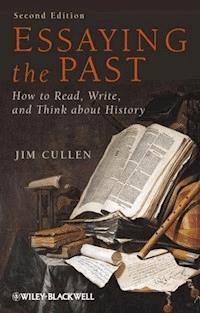
The second edition of Essaying the Past features a varietyof updates and enhancements to further its standing as anindispensible resource to all aspects of researching and writinghistorical essays. * Includes expert advice on writing about history, conductinggood research, and learning how to think analytically * Includes a new chapter addressing common situations thatrepresent steps in the transition from a rough first draft to afinal version * Covers important topics such as framing questions, developing astrong introduction and topic sentences, choosing good evidence,and the crucial role of revision * Includes an annotated case study that takes the reader throughone student's process of writing an essay, illustrating howstrategies in the text can be successfully implemented * New edition features updates to cultural references, a newlywritten preface, and reorganized table of contents
Sie lesen das E-Book in den Legimi-Apps auf:
Seitenzahl: 339
Veröffentlichungsjahr: 2012
Ähnliche


















Contents
Acknowledgments
Preface to the Second Edition
Introduction to the Student: Why Would You Look at a Book Like This?
Part I: Thinking and Reading About History
Chapter 1: History: It’s About Time
Living with the Past
Good History Gives You Hope
A Habit in Time
Chapter 2: What’s the Story with History?
Disciplinary Measures: A Profession Takes Shape
Plural Pasts
Chapter 3: The Sources of History
Primary and Secondary Sources
Obscure References, Maine Events
Scarcity and Plenty
Chapter 4: Good Answers Begin with Good Questions
Good Students Have Answers; Great Ones Have Questions
So What Do I Ask?
Chapter 5: Search Engines, Research Ingenuity
Net Gains – and Losses
Stacks of Possibilities
Going by the Book
Notable Discoveries
Chapter 6:: How to Read a Book without Ever Getting to Chapter One
Pressing Matters
Inside Information
Going Back, Going Forward
Topic-Sentence Hopping
Part II: Writing About History
Chapter 7: Analysis: The Intersection of Reading and Writing
Making Sense
The Choice Factor
Thinking with Your Heart
Chapter 8: Making a Case: An Argument in Three Parts
Reading Your Reader
Writing the Equation
Arguing About Time
Chapter 9: Defining Introductions
Introducing the Question
Introducing the Thesis (and Motive)
Introducing the Key Term
Introducing the Premise
Watch Your Language: Diction
Chapter 10: Strong Bodies (I): The Work of Topic Sentences
Inter- and Intra-paragraph Organization
Directing Topic Sentence Traffic: Double Signposts
Clues for the Clueless: Breaking Down the Thesis
Don’t Stick with the Facts
Chapter 11: Strong Bodies (II): Exposition and Evidence
Too Much of a Good Thing: Using Quotations Selectively
Seeing is Not Necessarily Believing
Beware of “Negroes” and “Orientals”
Lies, Damn Lies, and Statistics
Chapter 12: Strong Bodies (III): Counterargument and Counterevidence
Two Sides to Every Story – At a Minimum
Don’t Condescend
Show, Don’t Tell
Chapter 13: Surprising Conclusions
Motivated Conclusions
Taking the Long View
Chapter 14: Scaling the Summit: Crystallizing Your Argument
Booster-rocket Intros
Conclusion Pivots
Chapter 15: Writing is Rewriting: The Art of Revision
Conversation Counts
The Writer as Hotel Manager
Chapter 16: Putting It All Together: The Research Essay (A Case Study)
Katie’s Bibliography
Conclusion: The Love of History
Appendices
Appendix A: Writing an Essay: Ten Easy Steps in Review
Appendix B: Essay Varieties: DBQs, Reviews, and Comparison Assignments
Document-Based Questions (DBQs)
Book (or other) reviews
Comparison essays
Appendix C: Let’s Give a Hand: Bibliographies and Footnotes
1. Why cite my sources?
2. When and where do I cite sources?
3. How do I format a footnote?
4. How do I format a bibliography?
5. A final note
Appendix D: Credit Scams: The Dangers of Plagiarism
Five reasons not to cheat on an essay assignment
Appendix E: Web of Lies? Weighing the Internet
What’s the domain?
Who’s the publisher?
Free or subscription?
Is it updated?
Appendix F: A Glossary of Key Terms
Appendix G: More Reading About Writing
Index
Other Books by Jim Cullen
The Civil War in Popular Culture: A Reusable Past
The Art of Democracy: A Concise History of Popular Culturein the United States
Born in the U.S.A.: Bruce Springsteen and the American Tradition
Popular Culture in American History (editor)
Restless in the Promised Land: Catholics and the American Dream
The American Dream: A Short History of an Ideathat Shaped a Nation
The Fieldston Guide to American History for Cynical Beginners:Impractical Lessons for Everyday Life
The Civil War Era: An Anthology of Sources(editor, with Lyde Cullen Sizer)
Imperfect Presidents: Tales of Misadventure and Triumph
President Hanks (e-book)
Our Stars and Ourselves:Hollywood Actors and Historical Visions
This edition first published 2013© 2013 Jim Cullen
Wiley-Blackwell is an imprint of John Wiley & Sons, formed by the merger of Wiley’s global Scientific, Technical and Medical business with Blackwell Publishing.
Registered OfficeJohn Wiley & Sons, Ltd, The Atrium, Southern Gate, Chichester, West Sussex, PO19 8SQ, UK
Editorial Offices350 Main Street, Malden, MA 02148-5020, USA9600 Garsington Road, Oxford, OX4 2DQ, UKThe Atrium, Southern Gate, Chichester, West Sussex, PO19 8SQ, UK
For details of our global editorial offices, for customer services, and for information about how to apply for permission to reuse the copyright material in this book please see our website at www.wiley.com/wiley-blackwell.
The right of Jim Cullen to be identified as the author of this work has been asserted in accordance with the UK Copyright, Designs and Patents Act 1988.
All rights reserved. No part of this publication may be reproduced, stored in a retrieval system, or transmitted, in any form or by any means, electronic, mechanical, photocopying, recording or otherwise, except as permitted by the UK Copyright, Designs and Patents Act 1988, without the prior permission of the publisher.
Wiley also publishes its books in a variety of electronic formats. Some content that appears in print may not be available in electronic books.
Designations used by companies to distinguish their products are often claimed as trademarks. All brand names and product names used in this book are trade names, service marks, trademarks or registered trademarks of their respective owners. The publisher is not associated with any product or vendor mentioned in this book. This publication is designed to provide accurate and authoritative information in regard to the subject matter covered. It is sold on the understanding that the publisher is not engaged in rendering professional services. If professional advice or other expert assistance is required, the services of a competent professional should be sought.
Library of Congress Cataloging-in-Publication Data
Cullen, Jim, 1962– Essaying the past : how to read, write, and think about history / Jim Cullen. – 2nd ed. p. cm.Includes bibliographical references and index.
ISBN 978-1-4443-5140-8 (pbk. : alk. paper) 1. History–Methodology.2. Historiography. 3. Academic writing. I. Title.D16.C83 2012907.2–dc23
2011052859
A catalogue record for this book is available from the British Library.
For Nancy Sommers
Director, Expository Writing Program
Harvard University
1994–2007
Acknowledgments
It came as something of a surprise to me when I began working on this book that I’ve been a teacher of writing for two decades. Like a lot of people, I ended up with expertise in something I never expected and never quite actively sought. But I am lucky to have had the experiences I’ve had, and would like to take a moment to trace the origins of this project so that I can thank some of the people involved.
I date its beginnings to the fall of 1988, when, as required by my doctoral program in American Civilization at Brown University, I enrolled in a class in the English Department on writing instruction. Brown at the time was at the vanguard of universities that were beginning to realize that knowing something and teaching something at the college level were two very different things, and I’m grateful to have received some formal training. I’m also grateful to the still-vibrant Center for Teaching and Learning founded by (and now named for) the late Harriet Sheridan at Brown.
But the truly decisive moment in my academic career came in 1994, when, as a freshly minted Ph.D., I was hired to teach in the Expository Writing Program at Harvard by director Nancy Sommers. “Expos,” as it is known, founded in 1872, was in a transitional period, evolving from a somewhat eclectic mix of scholars and writers into a more professional program with a rigorous pedagogy advanced by Nancy and her lieutenant at the time, Gordon Harvey. These gifted teachers and administrators created a vibrant program that serves as an intellectual pillar of Harvard College (some form of expository writing is the only course required of every undergraduate). I am proud to be an alumnus, as it were, of Expos, and privileged to have worked with the gifted students who enrolled in my classes there and in the university’s Committee on Degrees in History and Literature, where I taught from 1994 to 1997.
In 2001, I left Harvard to join the faculty of the Ethical Culture Fieldston School, truly one of the formative experiences of my life. Here I have had the benefit of working with a brilliant array of colleagues, including some kind enough to read parts of the manuscript. In particular, I’d like to thank Andy Meyers, my colleague in the History Department, as well as Principal John Love and Dean of Faculty Hugo Mahabir, who allowed my work to circulate. I’d also like to thank the many Fieldston students who showed up for my classes and show up in these pages.
For many years now, my academic home away from home has been Sarah Lawrence College. Undergraduates as well as graduate students there read all or parts of the book and gave me valuable feedback. Alexandra Soiseth, Assistant Director of the MFA Writing Program at Sarah Lawrence, and my wife, Professor Lyde Cullen Sizer, were instrumental in these exchanges. Thanks also to my mother-in-law, Nancy Faust Sizer, a veteran history teacher and author in her own right, who read the manuscript with sensitivity and insight.
This book was acquired for Blackwell Publishers by Peter Coveney. He first approached me with the idea years before I realized that it truly was something I wanted to do, and once I did was exceptionally generous in allowing me to stumble my way into the fold. Once there, he gave routinely gave me excellent advice with a light touch. I’m indebted as well to his former assistant Deirdre Ilkson, as well as project editor Galen Smith, copy-editor Louise Spencely, and the production team at Wiley-Blackwell.
For reasons I don’t entirely understand, my agent, Alice Martell, has graced me with kindness I will literally never be able to repay. When I wandered obliviously into legally dicey territory, she stepped in and righted my course, smoothing the way for me to complete the book with the people and in a way I hoped I could. I still can’t quite believe my good fortune.
My greatest blessings are my wife and children. For many years now they have tolerated an endlessly distracted husband and father who has nevertheless always been grateful for the relief, comic and otherwise, they routinely afford him. With the passage of time I have gradually come to realize that the pleasure of their company and the collaborative dimensions of rearing children outstrip any book as sources of joy and accomplishment. They are sources of stories I will never tire of hearing.
Jim CullenHastings-on-Hudson, NYAugust 2008
Preface to the Second Edition
The fundamentals of good writing don’t change all that much from decade to decade, much less from year to year. Yet in re-reading Essaying the Past for the first time since its first publication in 2009, I’m surprised by the small but revealing ways it has already become dated. I say “surprised,” not so much because a great deal has happened – writing-intensive innovations like social networking, blogging, e-books, and the like were established realities at that point, and I myself had been using them – but because I had not fully absorbed such developments into my consciousness. As is so often the case, culture is slower to change than technology.
A small illustration of the point: In the last version of the chapter “Search Engines, Research Ingenuity,” I asserted, “Anybody can do research. And just about everybody does – looking up a number in a phone book or checking to see how a movie has been reviewed is nothing if not research.” Now, phone books are still being published in book form in some places. But most of the people who read this book, born in the Internet Age, are barely likely to recognize, much less use, what were once called “the yellow pages,” a staple of twentieth-century life. Of course, one reason young people would not use the yellow pages today is because they barely make phone calls any more. (They barely send e-mails any more, either.) And while young people are still watching movies and checking out sites like Rotten Tomatoes to see how they’ve been reviewed, I’ll confess that when I wrote that sentence, I visualized people trying to decide what to see at a multiplex. Movie theaters haven’t gone away (yet). But likely as not, a movie is something to be streamed, not rented at a video store, bought on DVD, or seen at a theater. Similarly, in the last edition of my chapter “The Sources of History,” I referred to reading about the results of a baseball game in the sports section of a newspaper. But most of the people who read this book would get now get such results from a website, not a paper.
These are trivial examples (though ones that engender historical consciousness, very much part of the agenda here). More relevant for your purposes is the steady growth of electronic publishing as a fact of academic life. Students and scholars have been citing web sources for about two decades now. In some cases, doing so has gotten simpler: you don’t need to provide a seemingly endless URL for something you got from the New York Times (or, for that matter, YouTube), since an interested party can find it pretty quickly from the home page of such sites. Less obvious are citations involving e-books, particularly since they don’t (yet?) usually have page numbers, though searching for key terms or strings of words can be a real asset. But citing things like blogs, or even comments from blogs, which barely existed a decade ago, requires a little more knowledge and savvy. These are all matters addressed in the updated appendix on bibliographies and footnotes.
Other revisions to this edition are less technology-driven. In some cases, they’re a matter of freshening the book with more contemporary illustrations – a former reference to Avril Levigne has been replaced with one to Taylor Swift (who, in my humble opinion, is a teen idol whose work is likely to last awhile). I’ve also added more recent examples of student work to illustrate some of the points I’m trying to make about problems, and solutions, in the writing process.
Still other changes represent evolutions in my thinking about the pedagogy of writing instruction. In chapter 6, “How to Read a Book without Ever Getting to Chapter One,” I talk about the importance of the table of contents in terms of getting clues about what really matters for a writer’s agenda. It’s in that spirit that I’ve revised the table of contents for this edition. Last time, I tried to divide the main body of the text into two evenly divided parts, “Reading to Get Writing,” and “Writing to be Read.” This time, I made the former smaller and the latter larger. I also changed the names of Part I and Part II, which are now “Thinking and Reading About History” and “Writing About History” respectively. Just looking at the table of contents now makes more clear that Part I is really more preliminary, and that Part II is the heart of the book.
Finally, I’ve added a new chapter and a substantially augmented appendix to Essaying the Past. The first, “Scaling the Summit” (Chapter 14), deals with common situations that arise in writing essays that can seem like problems when in fact they’re often important steps in the transition from a rough first draft to a polished final one. The revised appendix on essay assignments has been given a more prominent place and adds a new section on comparative essays, which are among the more common kind students are asked to write.
For their work on this edition, I would like to again extend my thanks to Peter Coveney of Wiley-Blackwell, as well as editorial assistant Allison Medoff. I am also indebted to production manager Janet Moth for her cheerful competence in shepherding the book back into print.
I’m grateful that thousands of readers have flipped through the pages of Essaying the Past since the publication of the first edition. I hope that this edition will provide additional help in the often vexing, but also often rewarding, process of writing about history.
J.C.February 2012
Introduction to the Student: Why Would You Look at a Book Like This?
Reading, writing, thinking: That’s what your education is about. That’s all your education has ever been about. In elementary school, it was a matter of preparing you to acquire these crucial skills. Later, you took classes in various subjects, but while the specific content may have varied – lab reports, equations, poems about the Middle Ages – it all came down to reading, writing, and thinking.
And that’s what it will continue to be about even after you finish taking the last class of your academic career. A radiologist poring over a magnetic resonance image (MRI); a government accountant preparing an annual budget; a sales representative sizing up a prospective customer on a golf course: for all these people, reading, writing, and thinking are the essence of their jobs (even if what they’re reading, writing, or thinking about happens to be numbers or faces rather than words). At any given moment one of these skills may matter more than the other, and any given person may be better at one than the others. But every educated person in modern society is going to have to be able to do all three. Indeed, that’s precisely what it to be educated in modern society. The faster and more gracefully you do these things in your chosen field, the more likely you are to reap the rewards it has to offer – and in some fields, the rewards are impressive indeed.
Lesen Sie weiter in der vollständigen Ausgabe!
Lesen Sie weiter in der vollständigen Ausgabe!
Lesen Sie weiter in der vollständigen Ausgabe!
Lesen Sie weiter in der vollständigen Ausgabe!
Lesen Sie weiter in der vollständigen Ausgabe!
Lesen Sie weiter in der vollständigen Ausgabe!
Lesen Sie weiter in der vollständigen Ausgabe!
Lesen Sie weiter in der vollständigen Ausgabe!
Lesen Sie weiter in der vollständigen Ausgabe!
Lesen Sie weiter in der vollständigen Ausgabe!
Lesen Sie weiter in der vollständigen Ausgabe!
Lesen Sie weiter in der vollständigen Ausgabe!
Lesen Sie weiter in der vollständigen Ausgabe!
Lesen Sie weiter in der vollständigen Ausgabe!
Lesen Sie weiter in der vollständigen Ausgabe!
Lesen Sie weiter in der vollständigen Ausgabe!
Lesen Sie weiter in der vollständigen Ausgabe!
Lesen Sie weiter in der vollständigen Ausgabe!
Lesen Sie weiter in der vollständigen Ausgabe!
Lesen Sie weiter in der vollständigen Ausgabe!
Lesen Sie weiter in der vollständigen Ausgabe!
Lesen Sie weiter in der vollständigen Ausgabe!
Lesen Sie weiter in der vollständigen Ausgabe!
Lesen Sie weiter in der vollständigen Ausgabe!
Lesen Sie weiter in der vollständigen Ausgabe!
Lesen Sie weiter in der vollständigen Ausgabe!
Lesen Sie weiter in der vollständigen Ausgabe!
Lesen Sie weiter in der vollständigen Ausgabe!




