


88,99 €
Mehr erfahren.
- Herausgeber: John Wiley & Sons
- Kategorie: Fachliteratur
- Sprache: Englisch
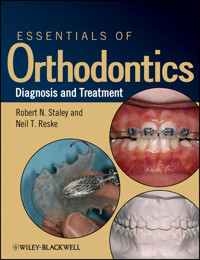
Essential Orthodontics: Diagnosis and Treatment is designed to help dental students, orthodontic residents, and general dentists understand the basic concepts and procedures essential to the diagnosis, treatment planning, and treatment of patients who have relatively simple malocclusion problems. The authors explain the steps of diagnosing basic orthodontic problems and analyzing dental radiographs and include many of the forms and charts dentists use for examination, diagnosis, and appliance design. Readers will learn about the mechanics of how appliances move teeth, the different types of appliances, and the orthodontic materials on the market. The authors also explain and demonstrate through color photos how to take dental impressions, create plaster casts, how to create the various fixed and removable appliances, and how to write a laboratory prescription for each appliance. A needed text for the dental student, it is also an excellent resource for dentists wanting to expand their services.
Sie lesen das E-Book in den Legimi-Apps auf:
Seitenzahl: 434
Veröffentlichungsjahr: 2010
Ähnliche



















Table of Contents
Cover
Table of Contents
Half title page
Title page
Copyright page
Dedication
Epigraph
Preface
Acknowledgments
Introduction
1 Orthodontic Diagnosis and Treatment Planning
Normal and Ideal Occlusion
Normal Occlusion in the Primary Dentition
Centric Occlusion and Centric Relation
Angle Classification of Malocclusion
Iowa Notation System for Angle Classification
Rules for Assigning Angle Classification
Rating the Severity of a Malocclusion
Orthodontic Records
Clinical Examination
Summary of Findings, Problem List, and Diagnosis
Consultation with Patient and/or Parent
2 Dental Impressions and Study Cast Trimming
Study Casts
Digital Casts
Alginate Impressions
Mandibular Impression
Maxillary Impression
Record of Centric Occlusion
Pouring of Plaster Study Casts
Study Cast Trimming
3 Dental Cast Analysis in Adults
Tooth Size–Arch Length Analysis
Comparison of TSALD Analysis and the Irregularity Index
Arch Width Measurements
Diagnostic Setup
Mandibular Crowding
Tooth Widths in Normal Occlusion
4 Dental Cast Analysis in the Mixed Dentition
Tooth Size–Arch Length Analysis
Prediction of the Widths of Nonerupted Canines and Premolars
Radiographic Enlargement of Nonerupted Canines and Premolars
Revised Hixon-Oldfather Prediction Method
Iowa Prediction Method for Both Arches
Radiograph Image Problems
Proportional Equation Prediction Method
Tanaka and Johnston Prediction Method
Measurement of Arch Lengths on Casts
Measurement Instruments and Guidelines
Factors that Influence a Mixed-Dentition Arch Length Analysis
Interpretation of a Mixed-Dentition Arch Length Analysis
5 Radiographic Analysis
Periapical Survey
Panoramic Radiograph
Occlusal Radiographs
Cone Beam Radiographs
Lateral Cephalometric Radiographs
Anatomic Landmarks
Cephalometric Landmarks
Cephalometric Point Locations
Cephalometric Planes
Cephalometric Angles and Distances
Skeletal Angles and Distance
Dental Angles
Distances of Incisors to Anterior Vertical Lines
Cephalometric Norms and Treatment Goals
Lateral Cephalometric Tracing
Posteroanterior Cephalometric Radiograph
Analog versus Digital Radiography
6 Lingual and Palatal Arches
Incisor Liability and Leeway Space
Passive Lower Lingual Holding Arch
Prevalence of Incisor Crowding
Premature Loss of a Primary Molar
Asymmetric Loss of a Primary Canine
Nance Holding Arch
Trans-palatal Arch
Insertion of a Passive Lingual or Palatal Arch
Fixed-Removable Lingual and Palatal Arches
Undesirable Side Effects of Passive and Active Lingual and Palatal Arches
Laboratory Prescription and Construction of a Lower Loop Lingual Arch
Failure of a Lower Lingual Arch
7 Management of Anterior Crossbites
Prevalence of Anterior Crossbite Malocclusions
Angle Classification
Centric Relation to Centric Occlusion Functional Shift on Closure
Overbite
Adequate Arch Length
Inclination of Maxillary Incisor Roots
Rotation of Tooth in Crossbite
Number of Teeth in Crossbite
Alignment of Lower Anterior Teeth
Treatment of Anterior Crossbites with Removable Appliances
Treatment of Anterior Crossbites with Fixed Appliances
Construction of a Removable Maxillary Appliance to Close a Diastema and Correct a Lateral Incisor in Crossbite
8 Management of Posterior Crossbites
Definition of Posterior Crossbite
Prevalence of Posterior Crossbite Malocclusions
Angle Classification
Intermolar Width Measurements
Age of Patient
Buccolingual Inclination of the Posterior Teeth
Etiology of Bilateral and Unilateral Posterior Crossbites
Vertical Dimension
Treatment of Posterior Crossbites
Correction of Posterior Crossbites with Removable Appliances
Correction of Posterior Crossbites with Fixed Expander Appliances
9 Management of Incisor Diastemas
Prevalence of Maxillary Diastemas
Etiologic Factors to Consider
Size of Teeth and Bolton Analysis
Arch Size
Maxillary Labial Frenum
Rotated Incisors
Thumb-Sucking Habit
Angle Classification
Management with Appliances
Treatment of a Diastema with a Removable Loop Spring Appliance
Treatment of a Diastema with a Finger Spring Removable Appliance
Treatment of a Diastema Caused by a Thumb Habit
Treatment of a Diastema with the Edgewise Fixed Appliance
10 Molar Uprighting and Space Regaining
Introduction
Ectopic Eruption of Permanent First Molars
Uprighting Molars in the Mixed Dentition
Ectopic Eruption of Upper First Molars
Ectopic Eruption and Tipping of Lower First Molars
Mesial Tipping of Permanent Molars after Loss of a First Molar
Prevention of Molar Tipping after the Loss of a First Molar
Impaction of Second Molars
Loss of Both First and Second Molars
T-Loop Uprighting Spring and Edgewise Fixed Appliance
Forces Generated by the T-loop Uprighting Spring
Patient Treated with a T-Loop Uprighting Spring
Helical Uprighting Spring
Forces Generated by the Helical Uprighting Spring
Patient Treated with a Helical Uprighting Spring
Other Appliances Used to Upright Molars
Repositioning of Teeth Prior to Prosthetic Restoration
11 Orthodontic Examination and Decision Making for the Family Dentist
Introduction
Orthodontic Screening
Guidelines for Orthodontic Decision Making
12 How Orthodontic Appliances Move Teeth
Introduction
Biomechanics
Newton’s First Law
Newton’s Second Law
Keys to Understanding the Delivery of Orthodontic Forces
General Displacements of Rigid Bodies: Euler and Chasles
Limitations of Illustrating Three-Dimensional Tooth Movements in Two-Dimensional Figures
Translation of a Tooth in the Edgewise Fixed Appliance
How a Tooth Is Translated in the Edgewise Fixed Appliance
Rotation of a Tooth in the Edgewise Fixed Appliance
Newton’s Third Law
13 The Edgewise Fixed Appliance
Introduction
The Edgewise Appliance
Arch Wires
Bands
Separators
Fitting a Band
Cementing a Band
Band Cements
Removal of Bands
Bonding of Brackets
Anatomic Considerations
The Straight Wire Appliance™
Bracket and Molar Tube Placement
Direct and Indirect Bonding
Removal of Brackets and Bonded Attachments from Teeth
Arch Form
14 Retention Appliances
Introduction
Fixed Retainers and Tooth Positioners
Invisible Retainers
Essix Retainers
Basic Retainer Design
Wire-Bending Skills
Acrylicing Retainers
Acrylic Finishing and Polishing
15 Orthodontic Materials
Introduction
Orthodontic Wires
Physical Properties of Orthodontic Wires
Wire Sizes
Electric Welding
Flame Soldering
Electric Soldering
Index
This edition first published 2011 © 2011 by Blackwell Publishing, Ltd.
Blackwell Publishing was acquired by John Wiley & Sons in February 2007. Blackwell’s publishing program has been merged with Wiley’s global Scientific, Technical and Medical business to form Wiley-Blackwell.
Registered office: John Wiley & Sons Ltd, The Atrium, Southern Gate, Chichester, West Sussex, PO19 8SQ, UK
Editorial offices: 2121 State Avenue, Ames, Iowa 50014-8300, USA
9600 Garsington Road, Oxford, OX4 2DQ, UK
For details of our global editorial offices, for customer services and for information about how to apply for permission to reuse the copyright material in this book please see our website at www.wiley.com/wiley-blackwell.
Authorization to photocopy items for internal or personal use, or the internal or personal use of specific clients, is granted by Blackwell Publishing, provided that the base fee is paid directly to the Copyright Clearance Center, 222 Rosewood Drive, Danvers, MA 01923. For those organizations that have been granted a photocopy license by CCC, a separate system of payments has been arranged. The fee codes for users of the Transactional Reporting Service are ISBN-13: 978-0-8138-0868-0/2011.
Designations used by companies to distinguish their products are often claimed as trademarks. All brand names and product names used in this book are trade names, service marks, trademarks or registered trademarks of their respective owners. The publisher is not associated with any product or vendor mentioned in this book. This publication is designed to provide accurate and authoritative information in regard to the subject matter covered. It is sold on the understanding that the publisher is not engaged in rendering professional services. If professional advice or other expert assistance is required, the services of a competent professional should be sought.
Library of Congress Cataloging-in-Publication Data
Staley, Robert N.
Essentials of orthodontics : diagnosis and treatment Robert N. Staley and Neil T. Reske.
p. ; cm.
Includes bibliographical references and index.
ISBN 978-0-8138-0868-0 (pbk. : alk. paper)
1. Orthodontics. I. Reske, Neil T. II. Title.
[DNLM: 1. Orthodontics–methods. 2. Malocclusion–diagnosis. 3. Malocclusion–therapy. 4. Orthodontic Appliances. WU 440]
RK521.S73 2011
617.6´43–dc22
2010028089
A catalogue record for this book is available from the British Library.
This book is published in the following electronic formats: eBook 9780470958414; ePub 9780470958476
Disclaimer
The publisher and the author make no representations or warranties with respect to the accuracy or completeness of the contents of this work and specifically disclaim all warranties, including without limitation warranties of fitness for a particular purpose. No warranty may be created or extended by sales or promotional materials. The advice and strategies contained herein may not be suitable for every situation. This work is sold with the understanding that the publisher is not engaged in rendering legal, accounting, or other professional services. If professional assistance is required, the services of a competent professional person should be sought. Neither the publisher nor the author shall be liable for damages arising herefrom. The fact that an organization or Website is referred to in this work as a citation and/or a potential source of further information does not mean that the author or the publisher endorses the information the organization or Website may provide or recommendations it may make. Further, readers should be aware that Internet Websites listed in this work may have changed or disappeared between when this work was written and when it is read.
Dedication
To: Kathleen H. Staley and Janet L. Reske
Epigraph
We can’t have full knowledge all at once. We must start by believing; then afterwards, we may be led on to master the evidence for ourselves.
Thomas Aquinas
Preface
This book is focused on teaching dental students, orthodontic and pediatric dentistry residents, and dentists the basic concepts and procedures of orthodontic diagnosis and treatment of patients who have simple malocclusion problems. The book is an outgrowth of our experiences in teaching dental students and specialty residents how to diagnose and treat malocclusions that require simple tooth movements. Many patients with the most common problems were followed from the beginning to the end of treatment to illustrate the role of diagnosis and treatment with a variety of appliances. The display of longitudinal records of patients is an important part of the teaching of beginners. The limitations of removable and simple fixed appliances and the problems best treated with one or the other appliance were discussed. We also attempted to help beginners differentiate patients who need simple tooth movements from those who appear to be simple but actually require more complex treatment.
Included are prescriptions and illustrations of the construction of orthodontic appliances used in the treatment of patients with simple tooth movement problems. This knowledge can be useful to laboratory personnel who construct appliances. The connection between fabrication and clinical use of appliances can be helpful to laboratory technicians and clinicians.
Patients with the following malocclusions are not considered as candidates for simple treatment: Class II, Class III, and Class I patients with complications involving severe crowding or extraction of teeth, excessive generalized spacing, severe openbites, deep overbites, and crossbites. The diagnosis and treatment of these patients are beyond the scope of this book.
This book is introductory to orthodontic diagnosis and treatment and is not a definitive source of information. We refer the beginner to the many excellent and more comprehensive books in print and the periodical literature that present in greater depth the concepts of orthodontic diagnosis and treatment.
Our foremost concern is for the welfare of the patient. This concern requires careful consideration before starting orthodontic treatment. Before clinicians move teeth, they must recognize malocclusions and their severity, gain the knowledge to correctly diagnose a malocclusion, and develop the skills to carry out the treatment of a patient.
Acknowledgments
We wish to express our appreciation to several persons who contributed to the preparation of this book. Robert Staley thanks orthodontic laboratory technician Mr. James P. Vance for providing valuable information about laboratory procedures. Neil Reske appreciates the guidance of mentor and friend Mr. Harold Gregorich and teacher Mr. Fred Ulmer, who were instrumental in building a foundation for his laboratory techniques. Mr. James D. Herd, Ms. Patricia J. Conrad, Mr. Ron Irvin, and Mr. Tom Weinsel drew illustrations for the book. Mrs. JoAnne B. Montgomery scanned and adjusted slides for most of the illustrations. We thank Mr. Richard A. Tack for his technical support. Mr. Eric M. Corbin took photographs of appliance construction. We thank Dr. Michael L. Swartz for permission to use orthoclipart illustrations used in Chapters 1 and 13. Dr. George F. Andreasen, former head of the Orthodontic Department, provided helpful suggestions for the discussions involving biomechanics. We thank numerous orthodontic and pediatric dentistry residents who participated in the treatment of several patients described herein. The following faculty of the Orthodontic Department provided radiographs or photographs of patients: Drs. Harold F. Bigelow, Samir E. Bishara, John S. Casko, Theresa L. Juhlin, Karin A. Southard, and Thomas E. Southard. We thank Dr. Thomas E. Southard, head of the Department of Orthodontics, for his support and encouragement of this publication. The following adjunct faculty of the Department of Orthodontics provided invaluable discussions on retention philosophy and laboratory appliance design: Drs. Charles C. Collins, Phillip M. Doster, Paul C. Hermanson, David D. Kinser, and Carney D. Loucks. We thank Dr. Tom M. Graber, who read an earlier edition of the book and provided helpful suggestions for revision. Robert Staley is grateful to Drs. John J. Cunat and Larry J. Green, who introduced him to the specialty of orthodontics at the State University of New York at Buffalo, and Dr. Albert A. Dahlberg, who encouraged him in the study of the biology of the human dentition at the University of Chicago. Dr. Christopher P. Evans proofread the text.
The authors accept full responsibility for the contents of this book.
Introduction
The gathering of information from the patient and steps leading to the development of a diagnosis are discussed in Chapters 1 through 5. Foremost in this section is the recognition of malocclusion, a chair-side skill that is essential for every dentist. Study casts are an important record that will sometime in the near future be obtained digitally from impressions. Dental cast analysis in adults and norms for overbite and overjet are discussed. Prediction of tooth size in the mixed dentition is discussed in Chapter 4. Radiographic and cephalometric analyses are presented in Chapter 5. Cephalometric norms are given for children and adults.
The diagnosis and treatment of commonly observed simple malocclusion problems are described in Chapters 6 through 10. Treatment with lingual arches and the construction of a lower loop lingual arch are included in Chapter 6. The management of anterior cross bites is described in Chapter 7. The construction of an appliance used to close a diastema and correct a crossbite is shown in this chapter. The management of patients with posterior crossbites is discussed and illustrated in Chapter 8. The construction of a removable expander is described in this chapter. The diagnosis and treatment of incisor diastemas are discussed in Chapter 9. The diagnosis and treatment involved with molar up righting and regaining of arch length are presented in Chapter 10. The chapter includes treatment of children and adults with these problems.
The guidelines for differentiating patients who need simple tooth movement from those who need comprehensive treatment are given in Chapter 11. This is a difficult skill to master. The guidelines will help a beginner to successfully choose those patients who have malocclusions appropriate for simple tooth movement.
Chapter 12 is an introduction to biomechanics. Chapter 13 describes the modern edgewise appliance that evolved from its original invention by Dr. Edward H. Angle. Chapter 14 illustrates the construction of removable appliances and retainers. Chapter 15 is a brief summary of materials used in orthodontic treatment.
1
Orthodontic Diagnosis and Treatment Planning
Normal and Ideal Occlusion
To recognize a malocclusion, a clinician needs to understand ideal and normal occlusions. People with ideal occlusions have all 32 adult teeth in superb relationships in all three planes of space. The tip of the mesiobuccal cusp of the upper first molar fits into the buccal groove of the lower first molar, and the tip of the upper canine crown fits into the embrasure between the lower canine and first premolar (Fig. 1.1, Class I ideal occlusion). Overbite, the extent that the upper central incisors overlap the lower central incisors in the vertical plane, is approximately 20%. Overjet, the distance along the anteroposterior plane between the labial surfaces of the lower central incisors and the labial surfaces of the upper central incisors, is approximately 1 to 2 mm. Teeth, moreover, are normally angled in the mesiodistal plane, normally inclined in the buccolingual plane, and aligned without being spaced, rotated, or crowded along the crests of the alveolar processes (Andrews 1972). Ideal occlusions are rare in the United States.
Figure 1.1.A, B, Ideal occlusion in the skeletal remains of a human adult. (Skull “secretum apertum,” courtesy of Dr. Richard Summa.)
Normal occlusions have minimal rotations, crowding, and/or spacing of the teeth. More variability is observed in overbite and overjet in normal occlusions (Fig. 1.2). Normal occlusions are much more frequently observed in the United States than are ideal occlusions.
Figure 1.2.A–E, Normal occlusion in a female adult.
Normal Occlusion in the Primary Dentition
As a child approaches the age when the normal primary dentition transitions into the mixed dentition, spaces develop between the incisors in both arches with growth of the maxilla and mandible (Fig. 1.3). The spacing of primary incisors is needed to accommodate the erupting permanent incisors that are much larger than their primary counterparts.
Figure 1.3.A–E, Normal occlusion in the primary dentition of a 5-year-old boy.
Centric Occlusion and Centric Relation
Occlusion is observed and classified when the teeth are in maximum intercuspation, the definition for centric occlusion. Centric relation is defined as the most retruded occlusal position of the mandible from which opening and lateral movements can be performed (Moyers 1973). Centric occlusion deviated on average 0.7 mm from centric relation in 18 Class I normal occlusion subjects, with a maximum of 2.5 mm; however, in 28 Class II patients, the discrepancy averaged 1.2 mm, with a maximum of 4 mm (Williamson, Caves, Edenfield, and Morse 1978).
Lesen Sie weiter in der vollständigen Ausgabe!
Lesen Sie weiter in der vollständigen Ausgabe!
Lesen Sie weiter in der vollständigen Ausgabe!
Lesen Sie weiter in der vollständigen Ausgabe!
Lesen Sie weiter in der vollständigen Ausgabe!
Lesen Sie weiter in der vollständigen Ausgabe!
Lesen Sie weiter in der vollständigen Ausgabe!
Lesen Sie weiter in der vollständigen Ausgabe!
Lesen Sie weiter in der vollständigen Ausgabe!
Lesen Sie weiter in der vollständigen Ausgabe!
Lesen Sie weiter in der vollständigen Ausgabe!
Lesen Sie weiter in der vollständigen Ausgabe!
Lesen Sie weiter in der vollständigen Ausgabe!
Lesen Sie weiter in der vollständigen Ausgabe!
Lesen Sie weiter in der vollständigen Ausgabe!




