


Erhalten Sie Zugang zu diesem und mehr als 300000 Büchern ab EUR 5,99 monatlich.
- Herausgeber: Quintessence Publishing Co, Inc
- Kategorie: Fachliteratur
- Sprache: Englisch
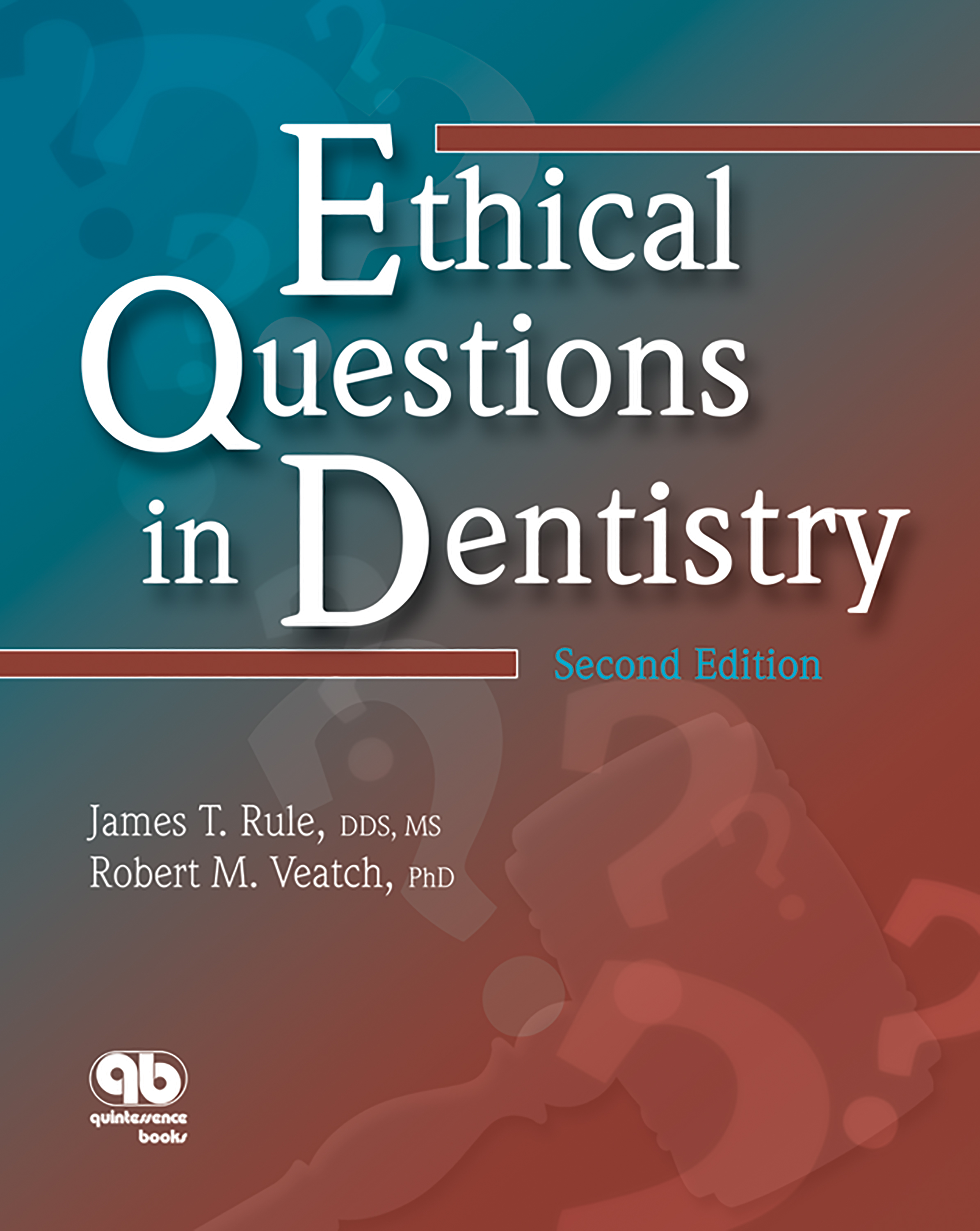
Updated to reflect the current ethical climate, this book presents clinical practice cases in which arguments can be made for differing courses of action or in which the obligations of the professional are in conflict; the reader is asked to determine the ethically correct response to such conflicts. In this revised edition, detailed background material has been added to many of the cases to foster more well-reasoned ethical decision making. In addition, cases on sexual harassment and advertising have been introduced, and those on financial and HIV issues have been updated. An entirely new chapter on the structure and obligations of the various professions has been added.
Sie lesen das E-Book in den Legimi-Apps auf:
Seitenzahl: 637
Veröffentlichungsjahr: 2019
Das E-Book (TTS) können Sie hören im Abo „Legimi Premium” in Legimi-Apps auf:
Ähnliche



















James T. Rule, DDS, MS
Professor Emeritus Department of Pediatric Dentistry Dental School University of Maryland Baltimore, Maryland
Robert M. Veatch, PhD
Professor of Medical Ethics The Kennedy Institute of Ethics Georgetown University Washington, DC
To My Son
Timothy Cornwall Rule
—JTR
To My Father
Cecil Ross Veatch September 19, 1905–May 6, 1977
—RMV
Library of Congress Cataloging-In-Publication Data
Rule, James T. Ethical questions in dentistry / James T. Rule, Robert M. Veatch.-- 2nd ed. p. ; cm. Includes bibliographical references. ISBN 0-86715-443-8 (softcover) eISBN 9780867159257 1. Dental ethics. 2. Dental ethics--Case studies. [DNLM: 1. Ethics, Dental--Case Reports. WU 50 R935e 2004] I. Veatch, Robert M. II. Title.
RK52.7.R85 2004 174.2'976--dc22
2004007472
5 4 3 2
© 2004 Quintessence Publishing Co, Inc
Quintessence Publishing Co, Inc 4350 Chandler Drive Hanover Park, IL 60133 www.quintpub.com
All rights reserved. This book or any part thereof may not be reproduced, stored in a retrieval system, or transmitted in any form or by any means, electronic, mechanical, photocopying, or otherwise, without prior written permission of the publisher.
Editors: Lisa C. Bywaters and Lindsay Harmon Cover and internal design: Dawn Hartman Production: Susan Robinson
Printed in the USA
Table of Contents
Preface to the Second Edition
Preface to the First Edition
Acknowledgments
Introduction
Part I Ethical Questions: Theory and Principles
1 An Overview of Ethics in Dentistry
• The Influence of Society and Medicine
• How Dentists Perceive Ethical Problems
• Ethical Issues Faced by Dentists
• Values in Clinical Dental Ethics
2 The Structure of Professions and the Responsibilities of Professionals
• A Brief History of Professions
• A More Complete Definition of a Profession
• Relationships with Patients: The Fiduciary Relation
• Characteristics of Professions
• Recent Criticism of the Professions
3 Basic Ethical Theory
• The Meaning of Morality
• Possible Grounding of Ethics
4 Ethical Principles
• Autonomy
• Nonmaleficence
• Beneficence
• Justice
• Other Ethical Principles
5 Format for Resolving Ethical Questions
• Protocol for Ethical Decision Making
• Analysis of the Case of the Suspicious Dentist
• Our View
Part II General Principles in Dental Ethics
6 Doing Good and Avoiding Harm
• The Relation of Benefits and Harms
• What Counts as a Dental Good
• Dental Good Versus Total Good
• The Duty to Benefit a Nonpatient
• Patient Welfare Versus Aggregate Welfare
7 Fidelity: Obligations of Trust and Confidentiality
• What Is Owed to the Patient
• Trust, Entrepreneurship, and Marketing
• Personal Relationships with Patients
• Loyalty to Colleagues
8 Autonomy and Informed Consent
• The Critical Concepts
• Consent and Competent Patients
• Autonomous Choices and Incompetent Patients
• Provider Autonomy
9 Dealing Honestly with Patients
• Bold-faced Lies
• Misleading and Limited Disclosure
10 Justice in Dentistry
• Macroallocation: Allocating Dental Benefit at the Societal Level
• Microallocation: Allocating Dental Resources in the Dentist’s Offlce
Part III Case Studies of Special Problems
11 Ethical Concerns in Schools of Dentistry
• Morality in Academic Life
• Protecting the Welfare of Clinic Patients
• Ethics in Dental School Administration
12 Ethical Issues in Third-Party Financing
• Disputes About Whether Procedures Are Beneficial
• Disputes About Marginally Beneficial but Expensive Care
• Disputes About Valued but Excluded Care
13 Ethical Issues Involving HIV and Other Bloodborne Diseases
• The Duty to Treat
• Disclosure of Patients’ HIV Status
• HIV-Infected Dental Health Care Providers
• Clinical Decisions Involving HIV-Infected Patients
• Ethics of the Cost of Care in HIV-Infected Patients
14 Incompetent, Dishonest, and Impaired Professionals
• Incompetent Dental Practice
• Fraudulent, Dishonest, and Illegal Practice
• Impaired Dentists
Appendix 1 Codes of Medical Ethics
Appendix 2 Informed Consent
Glossary
Cases
Case 1 Which Patient Benefits?
Case 2 The Case of the Suspicious Dentist
Case 3 The Patient Scares the Dentist
Case 4 A Choice Between High-Risk Surgery and Continued Disfigurement
Case 5 Agree to Disagree
Case 6 Interrupted Treatment
Case 7 Surgeon’s Dilemma
Case 8 Partial Refusal of Treatment
Case 9 Mrs Miller Wants Dentures
Case 10 Crown Versus Clothes
Case 11 Saturday Afternoon Toothache
Case 12 A Neighbor’s Toothache
Case 13 Why Not Restore the Incisors?
Case 14 Inflicting Pain in Research
Case 15 Obligations of Care During Research
Case 16 Redo the Case?
Case 17 The Dentist’s Obligations When the Patient Fails to Pay
Case 18 Confidentiality for a Pregnant Adolescent?
Case 19 A Wellness-Based Income Stream
Case 20 Style and Substance
Case 21 Advertising: An Outdated Issue?
Case 22 Corporate Funding of Orthodontic Programs
Case 23 Romantic Entanglement?
Case 24 The Dating Game
Case 25 Get Out of the Kitchen!
Case 26 Lack of Communication Between Dentists
Case 27 How Far Do Obligations Go?
Case 28 Informed Consent in Kotzebue
Case 29 What Counts as a Risk?
Case 30 Informing Patients About Who Will Perform Procedures
Case 31 Should the Sealants Be Done, Too?
Case 32 The Casa Pia Study of Dental Amalgam Health Effects on Children
Case 33 Surgery for a Jehovah’s Witness
Case 34 The Case of the Vacillating Parent
Case 35 Consent in a Problem of Legal Guardianship
Case 36 Voice Control in Research
Case 37 How Many Alternatives?
Case 38 The Patient Is in the Middle
Case 39 Lying to a Child to Avoid Producing Anxiety
Case 40 A Patient’s Request to Stretch the Truth
Case 41 A Complicated and Controversial Man
Case 42 Dentists Deceived
Case 43 Obligations When the Patient Fails to Disclose HIV Status
Case 44 Nondisclosure of Hepatitis
Case 45 The Wrong Prosthesis
Case 46 Dental Sealants on a Limited Budget
Case 47 Scale Back the Services?
Case 48 Children Versus Adults
Case 49 The Ethics of Licensure
Case 50 Importing Dentists for the Underserved: Two California Bills
Case 51 Pro Bono Care?
Case 52 Special Treatment for Medicaid Patients
Case 53 Compromise Care Based on Type of Insurance
Case 54 Borrowing a Friend’s Laboratory Work
Case 55 Problems with Cultural Diversity?
Case 56 Friendship Versus Obligations
Case 57 Judicial Board Dilemma
Case 58 No Choice for the Patient
Case 59 When Faculty Disagree, Student Adjusts
Case 60 Advancement Committee Blues
Case 61 Insurance Consultant Says No to Bioresorbable Membrane
Case 62 Obligations of an Insurance Consultant
Case 63 Insurance Coverage and Incomplete Treatment
Case 64 How Often Should Fluoride Treatments Be Given?
Case 65 Arbitrary Rejection
Case 66 A Closed-Panel Dilemma
Case 67 HIV Issues for a Periodontist
Case 68 Who Should Treat HIV-Infected Patients?
Case 69 Lied to Again
Case 70 Dentist and Physician Differ About an HIV Test
Case 71 The HIV-Positive Dental Student
Case 72 Should the Dentist Be Tested?
Case 73 Should a Biopsy Be Performed Despite an Extremely Low Platelet Count?
Case 74 Periodontal Therapy in a Patient with Idiopathic Thrombocytopenia?
Case 75 Informed Consent with No Options
Case 76 Crowns and Posts, but No Endodontics
Case 77 The Broken File
Case 78 Problems with an Orthodontic Transfer Patient
Case 79 The Crispy Tissue
Case 80 A Periodontist Sees Another Periodontist’s Patient
Case 81 Two Views of a Cracked Tooth
Case 82 Skip the Home Care Instructions
Case 83 Should the Surgeon Suggest an Implant?
Case 84 Competition for an Extraction Case
Case 85 Fraudulent Orthodontics
Case 86 A Request to Participate in a Fraud
Case 87 Should Referrals Stop?
Case 88 Dentist on Valium
Preface to the Second Edition
In the 11 years since the first edition of this book was published, much has happened in the field of dental ethics. An ethics curriculum is now required in all US dental schools. New books on dental ethics have been published, including several from other countries, and two in this country are now in their second editions. The American College of Dentists has published an ethics handbook for dentists and now includes a section on dental ethics in each issue of its journal. The membership of the US-based Professional Ethics in Dentistry Network has increased significantly, and an international dental ethics association has been formed called IDEALS—the International Dental Ethics and Law Society.
Even as recognition of the importance of dental ethics has grown, concerns about the ethical foundations of the profession may also have increased. There is some unease within the profession—possibly also reflected in public attitudes—about a tendency for increasing numbers of dentists to put their own interests above those of their patients.
The second edition of this book is designed to deal directly with issues such as this. Its goals are the same as those of the first edition: to help sensitize dental professionals to the important role of ethics in dentistry and to provide a general approach to ethical reasoning in dental-related problem solving. However, in order to better implement these goals, we have made several important changes, some of which were shaped by constructive criticism of the first edition.
As a frame of reference for the rest of the book, we have included an entirely new chapter on professions. Using frequent references to dentistry, it begins with a brief history of the development of professions that is essential to understanding their structure and function today. It presents both the traditional idealized perspective of professions and the views of their critics. For professionals, both outlooks are required reading.
Of special significance for newcomers to the discipline of ethics is the expansion and modification of the format of the case discussions. The discussions now contain an increased amount of relevant background material and additional guidance in the techniques of ethical problem solving.
To find space for these innovations, two adjustments were made. One was to eliminate the chapter on research. (A few of its cases were retained and moved to other chapters.) We also eliminated cases that we had reason to believe were not widely used for discussion by students and others. The first edition contained 111 cases; the second contains 88.
The final important change was the introduction of new and timely cases—12 of the 88 did not appear in the first edition. Unlike the cases in the first edition, which were presented from the perspective of the individual practitioner, many of the new cases invite discussion on ethical issues faced by the entire profession of dentistry—for example, access to care, licensure, and the corporate sponsorship of graduate education.
Preface to the First Edition
Every day of their professional lives, dentists face decisions that have ethical content. Most often the issues involve the utilization of complicated diagnostic or technical skills in the delivery of patient care. The way these skills are used is based on the values of both the dentist and the patient. Every recommendation by a dentist and acceptance by a patient has ethical substance, in its potential for patients to be helped or harmed or their wishes and values to be respected or ignored. Sometimes a practitioner’s recommendation may conflict with what the patient wants. Sometimes what the patient wants may sound foolish to the dentist. How the dentist responds to these problems and many others determines the character of a dentist’s practice.
Some situations occur so often that they may not even be recognized as having ethical content. Other times the circumstances are complex, and the answers are not readily apparent. However, in both situations a background in philosophical ethics can be helpful as support for making sound decisions. Unfortunately, while technological advances and changes in societal perspectives over the last 20 years have increased the ethical challenges inherent within dentistry, the response of dental schools has been relatively recent. Further, although at present 80% of all dental schools offer courses in ethics, the emphasis in many is on jurisprudence.
This does not mean that dentists are not interested in or disturbed about ethical issues. In recent years, published reports have shown concerns about poor quality of care, violations of public trust, flagrant advertising, self-regulation, informed consent, interactions with impaired or incompetent colleagues, financial interactions with patients and insurance companies, and several others. Dental practitioners have developed a variety of approaches, including the reliance on values instilled during dental school, discussions with colleagues and consideration of the ADA Code of Ethics, and their own personal standards, to resolve these problems. However, a general approach to ethical reasoning in dental-related problem solving has not been available to either the dental practitioner or the dental student. This book is intended to address that deficiency.
Acknowledgments
Of great importance in facilitating the completion of the second edition was James Rule’s opportunity to serve as a Senior Visiting Fellow at Creighton University’s Center for Health Policy and Ethics in Omaha, Nebraska in the autumn of 2003. The support of Center Director Ruth Purtilo, PhD, and each of the Center faculty, as well as the facilities of Creighton University were extremely valuable. Especially important was the generosity of Jos Welie, PhD, who freely offered his time and his perspectives in many discussions of ideas and issues related to this book. These discussions, among other benefits, contributed to the formulation of some of the new cases that appear in this edition. Dr Welie, along with Dr Ruth Purtilo and Dr Amy Haddad, also reviewed the chapter on professions and made valuable suggestions for its improvement.
As with the first edition of this book, Dr Rule also remains indebted to the University of Maryland for its sabbatical policies and its Department of Pediatric Dentistry for its many years of support. Both were essential contributions to this publication.
We are also grateful for discussions about ethical issues facing dentistry that were held with Dr Wayne Barkmeier, dean of Creighton University School of Dentistry and especially with Dr Richard R. Ranney, former dean of the University of Maryland, who made many important contributions to several of the cases. Once the decision was made to create space in the second edition for new material by eliminating some of the cases from the first edition, Dr Muriel Bebeau provided invaluable information in deciding which cases might be excluded. Dr Andrew E. Allen, Dr Margaret E. Wilson, and Dr Louis DePaola were helpful in updating clinical and scientific information or reviewing issues about old and new cases. Finally, Dr Richard Manski reviewed the chapter on ethical issues in third-party financing and made helpful contributions to the revision. John F. Rule’s editorial reviews were once again helpful, and Joanne Rule’s support was indispensable.
Introduction
Working through this text, you will find your own answers to ethical questions that dentists face every day. The following case is just one example of the issues to be discussed.
A third-year dental student who worked evenings as a dental assistant described to one of her professors this prototypical example of the kinds of ethical problems encountered in dentistry:
Case 1: Which Patient Benefits?
Ms Andrea Armstrong, aged 37, has been a patient in the practice of Dr Ted Davis for 4 years. She entered his practice seeking treatment for several missing teeth and significant periodontal disease. With unusual candor, she told Dr Davis that she had been an intravenous drug user several years prior to entering his practice. She attributed her deteriorated oral condition to the personal neglect that accompanied her active addiction. During that period she had lived with a man with whom she shared her habit. The relationship ended, and she subsequently received treatment for her addiction.
She is now drug free and involved in a healthy relationship with a man named John Ariana. They live together and plan to be married. But a serious problem has arisen as of her current recall visit: She has become HIV positive and believes she was infected by her former lover.
Dr Davis plans to continue to treat Ms Armstrong. However, he now faces a problem in relation to her fiancé, who recently entered Dr Davis’s practice at the suggestion of Ms Armstrong. Based on indirect and separate conversations with each patient, Dr Davis has become convinced that Ms Armstrong has not told her partner of her HIV status, and the idea gnaws at him. He feels that Ms Armstrong is clearly obligated to disclose her HIV conversion to her fiancé. He also feels that he has a duty to tell Mr Ariana. Compounding this dilemma is Dr Davis’ commitment to keep his patient’s confidences. He fears litigation should he fail to do so.
DISCUSSION:
How should Dr Davis handle these conflicting obligations? Does confidentiality for Ms Armstrong override the need to inform Mr Ariana? How does one approach this ethical dilemma, in which both disclosure and nondisclosure could possibly be justified? These questions will be explored in chapter 7 when we examine the ethics of confidentiality. But first, we must clarify exactly what ethics is and how ethical problems can be examined. Only then will we be in a position to provide a more detailed analysis of Dr Davis’ problem.
Like all professions, dentistry faces ethical situations on a daily basis. Some, such as the previous case, are similar to those encountered inmedicine. Many, however, are unique to the practice of dentistry. A few are encountered so often they may not even be recognized as having ethical content. Other cases, like that of Dr Davis, require some background in the discipline of ethics as support for making sound decisions.
Technological advances and a shift in attitudes within society have created more clinical situations that require ethical analysis. Texts such as this one and professional ethics programs in dental schools throughout the country have only begun to prepare their students to handle those situations.
Goals and Format
The primary goal of this book is to comprehensively present the ethical problems in dentistry and to suggest approaches to their resolution. The text is organized into three parts. Part I introduces the major ethical theories and principles and gives examples that encapsulate their application to dental practice. It also introduces a format for ethical case analysis that is illustrated using the case of a troublesome patient’s request for mood-altering drugs. Parts II and III consist exclusively of ethical analyses of cases. Most of the cases are based on actual events associated with patient care and were solicited from generalists and specialists in various parts of the country, thus providing a national picture of ethical issues in dentistry. Names and details have been modified to provide anonymity and clarity of the issues. A few cases were taken from published reports in dental literature and the public press, in which instances real names and details are provided. In addition, certain cases were written as ethical issues facing the profession at large, rather than an individual practitioner.
Part II discusses ethical principles by using case histories to illustrate the following: beneficence (acting to benefit the patient), nonmaleficence (avoiding harm), fidelity (obligations related to trust and confidentiality), autonomy (including problems of informed consent), veracity (truth-telling), and justice in the allocation of dental resources.
Part III rounds out the discussion with cases representing special topics such as ethical issues in dental schools; third-party financing; HIV-infected patients and dentists; and incompetent, dishonest, and impaired dentists.
Altogether, the organization and contents of this book give the reader both the basic fundamentals of ethics and a broad perspective of the types of ethical issues that dentists encounter. In addition, the examples of ethical reasoning illustrated in the case and analysis sections provide useful guidelines for the resolution of ethical problems encountered in professional life.
Part I Ethical Questions: Theory and Principles
An Overview of Ethics in Dentistry
In this chapter
• The Influence of Society and Medicine
• How Dentists Perceive Ethical Problems
• Ethical Issues Faced by Dentists
• Values in Clinical Dental Ethics
The Influence of Society and Medicine
Society’s Increasing Concern
Ethical standards in modern society are in a time of rapid flux and show the contradictions that characteristically attend such changes. This period of ethical re-evaluation received an abrupt stimulus in the 1960s from the great upheavals over civil rights and the Vietnam War. Contrasted with this is the current widespread concern about the behavior of public persons. A president has been impeached. Congressional ethics committees have taken aggressive action against colleagues. Distrust between political parties is increasingly problematic. Business leaders have been put on trial for deception and dishonesty. Public trust in institutions of all sorts, including most professions, has diminished.1 Consumers are better informed and demand more and better services, including those related to health care. On the other hand, strains of contradictory value systems run throughout society. Large segments of society are becoming more materialistic, more self-serving, less reflective, and less concerned for the welfare of the community.2
Despite these views, there is a growing advocacy for limiting what has been almost a century-long endorsement of unchecked “progress.” Significant portions of the population now feel that the world ecology is at risk, that resources are finite and must be guarded, that technology has created important ethical issues not previously recognized, and that there is something seriously wrong with our health care system, both its cost and its benefits.2
Upheaval in Medicine
Thirty years ago, there was little formal intellectual work that considered ethical questions in the health care professions. What ethical discussion existed was more or less limited to questions about physicians’ practices and how they were interrelated: Should physicians extend professional courtesy? Should they conceal from a patient their disagreement with a colleague’s diagnosis?
During the three intervening decades, medicine’s increased preoccupation with ethics has been phenomenal. The output of ethics literature was minimal in 1970. By 1980 the number of MEDLINE ethics references cited was 313. The number grew to 780 by 1989 and has continued to grow even more rapidly since then. Ethics consultants in hospitals are now commonplace, and most larger hospitals have ethics committees that offer a formal review of problems with ethical overtones.3 In addition, newspapers regularly feature stories illustrating ethical issues involving difficult decisions to be made at the end or the beginning of life.
One of the most important reasons for the growth in concerns over ethics is rooted in the tremendous technological advances that, at great cost, offer prolonged or improved life quality. With high-tech enhancements come questions about who gets the care, who pays for it, and how those decisions are made. Especially important are concerns over genetic engineering, reproduction, and termination of care.4,5
The huge increase in the cost of care is also of special concern. In 1960 the dollars spent on medical care were 5.9% of the gross national product. By 1990 the amount had risen to 12.2%6 and by 2001 to 14.1%.7 Considering the extent of the increase, it is natural to expect citizens to be concerned about ethics. This is especially true when the impact of the dollars spent is questionable. For example, the United States spends two and a half times as much money per capita on health care as does Britain, but life expectancy and other health parameters are quite similar.8
Consider, too, that most medical care is now covered, at least in part, by some form of health insurance. Health insurance in itself generates its own ethical issues. Traditional third-party payment systems encourage overtreatment and overutilization. Health maintenance organizations (HMOs) encourage undertreatment and underutilization.8
Several other factors have contributed to the increased attention or concern about ethical issues. Ethicists have branched out beyond their traditional roles in philosophy departments to enter the health care arena. Undergraduate courses in bioethics and concerns for the ability of future physicians to deal with the increasing complex ethical issues in medicine have set up demands for ethics courses in medical schools that previously had none. Practicing physicians, because of their lack of training in ethics, are often poorly prepared to deal with the ethical issues encountered in daily practice.4
Physicians also have nagging concerns about the desirability of medicine as a profession. Increasing controls by the federal government and by the insurance industry have decreased the time that physicians have available for patient contact. Public trust in physicians is of concern. The nature of medical practice is changing in that more doctors are being employed by organizations. Although physicians continue to control policies in these organizations, they perceive the trend toward “captive” physicians as being undesirable.1 Finally, since 1983, physicians’ incomes, while still very high, have started to decline for the first time.8 These factors, coupled with the decline in the college-age population and the increased attractiveness of other scientific, professional, and business occupations, have led to a decrease in the number of applicants to medical school. All of these factors form a context for the ethical issues that must be faced in today’s society.
Dentistry as a Reflection of Medicine
The recent growth of ethics literature in dentistry has been significant but is nearly 15 years behind medicine in terms of its analysis of dental-related ethical problems. Additionally, although a few books on dental ethics are available, the literature is almost exclusively limited to journal articles, whereas hundreds of books have been written on themes of medical ethics. Until 1993, when the first comprehensive books on dental ethics were published, the only applicable book available was limited to issues of informed consent.9
Still, there is a rising interest in ethics in dental education. The American Dental Association’s (ADA’s) Commission on Dental Education has set standards for ethics education and has made it a requirement for accreditation. In addition, all dental hygiene schools10 now have courses in professional ethics. However, the ability of these courses to stimulate valid ethical reasoning may be of concern because few of the faculty have formal training in ethics.
In clinical dentistry, the interest in ethics is considerably different from that of medicine. For example, there is nothing comparable to the ethics consultants or ethics committees that are becoming routine in the hospital practice of medicine. The main consideration in dentistry has not been about specific clinical issues such as that of the termination of care. Rather, it has focused on the ethical standards of the profession in the sense of concerns for excellence in the quality of care and the need to maintain public trust. The leadership in this regard has come from the American College of Dentists. The growing number of ethics-oriented continuing education courses is a reflection of those concerns.
Some of the ethical issues in clinical dentistry derive from technological advances that have somewhat paralleled those in medicine, although with fewer dollars at stake and less involvement in life-sustaining issues. Nevertheless, costly innovations such as computer-generated restorative procedures (ie, CAD/CAM), along with the increasing use of implants and lasers, not only serve to improve the quality of care but also make care more inaccessible to less affluent people.
The increases in costs of care in dentistry have been substantially less than those in medicine, but they still present ethical concerns in terms of the resulting benefits. In medicine the huge increase in costs has not improved morbidity or mortality statistics. In dentistry there has been a steady decline in caries rates in children and young adults over the last 40 years and a decline in periodontal disease as well. However, these improvements appear to be related less to patient care provided by dentists than to water fluoridation and the increased use of improved oral home care products, especially fluoride dentifrices and therapeutic mouthrinses.
In another parallel with medicine, the growth of dental health insurance has been significant. However, it has not reached the high level of coverage experienced for medical insurance. Statistics from 2000 show that 85.4% of the population had some form of general health insurance, whereas only 57.4% had some form of dental insurance coverage.11 Nevertheless, the entrance of insurance into dental practice has fostered significant ethical concerns about overtreatment and undertreatment, just as it has in medicine.
Medicine is becoming more concerned over its public image and its desirability as a profession. Dentistry, always sensitive to issues of public opinion and professional status, has also experienced some recent decline in that regard. The 2001 Gallup Poll on honesty and ethics in American professions placed dentistry eighth from the top, below nurses, pharmacists, veterinarians, physicians, grade-school and high-school teachers, and clergy, and immediately below college teachers.12 While eighth is not bad, it is several steps down from the top two or three rankings, where dentistry stood for decades. In one of his monthly commentaries in the Journal of the American Dental Association, Gordon Christensen offered five reasons why the public’s attitude toward dentistry may be changing. They include: “having a commercial, self-promotional orientation; planning and carrying out excessive treatment; charging high fees without justification; providing service only when it is convenient; refusing to accept responsibility when treatment fails prematurely.”13 Incomes of dentists, having declined over most of the 1980s, are now increasing once again. And although there is concern within dentistry about the trend for dentists to be employed by organizations rather than to be self-employed, the view of dentistry by dentists is improving.
How Dentists Perceive Ethical Problems
The Nature of Ethical Problems
What constitutes an ethical problem in contrast with a clinical, scientific, or legal problem? It might appear that some problems are purely clinical or scientific. However, such a view is illusory if by that we mean that clinical or scientific decisions can ever be made without some value judgment. Every clinical, scientific, or legal problem involves an evaluative component. Evaluations can often be identified when words of appraisal appear, such as good or bad, right or wrong, should, ought, or must. Sometimes the evaluative words are not as conspicuously evaluative, but they convey value judgments nonetheless. Claiming that an effect is a “benefit” or that a treatment is “indicated” conveys such a judgment, as does identifying an effect as a “harm” or a “side effect.”
Of course, not all evaluations are moral evaluations. Some value judgments are esthetic, cultural, or merely matters of personal taste. Certain evaluations, however, are indeed ethical. Most of us can rely on common sense to tell the difference between ethical and other kinds of evaluations. The formal criteria of ethical evaluations will be discussed in chapter 3. What is critical to know at this point is that all clinical or scientific decisions require evaluations. Decisions are easy when the difference between good and bad is clear-cut. In other situations, decisions are more difficult, and choices must be made between good and good or between two evils.
The use of local anesthetics for cavity preparation offers a good example of the role of values in decision making. Dentists are taught to use local anesthetics almost routinely in cavity preparations to maximize patient comfort. The use of local anesthetics may also reduce the stress felt by the dentist who then does not have to worry about hurting the patient. It can also result in better treatment because, for example, more thorough caries removal is possible under good local anesthesia. In general, dentists value these consequences of local anesthesia to the extent that they often use it routinely even though procedures may be possible without it. Sometimes dentists may value the benefits of local anesthesia so much that they may refuse to treat a patient who requests that no local anesthesia be given or may try to pressure a reluctant patient to accept it. The frequent use of local anesthesia is not a major value issue in dentistry, but it does show the value dentists place on their ability and desire to relieve pain. Patients may hold values that differ from the dentist’s and lead to rejecting local anesthesia. They may find the discomfort of the injection worse than that of the drilling or they may not want to experience the posttreatment feeling of anesthesia. There is nothing incorrect about these judgments; they are simply different from those that dentists often make. Failing to ask patients about their judgments may lead to treatment without adequate consent.
Evaluation may become an ethical issue when the dentist realizes that the evaluation involves a trade-off between the value of reducing pain and other values that the patient may affirm. For example, the patient may fear the side effects of the anesthetic, may object to its duration, or may simply have a psychological constitution that tolerates dental pain. It is clear that there is no definitively correct value judgment here. The value judgment of the dentist and the patient may conflict. The dentist who does what he or she thinks is best for the patient could end up violating the autonomy of the patient.
Ethical Versus Legal
People sometimes confuse ethical and legal problems. Both the ethical and the legal involve evaluations. Ethical evaluations, however, appeal to what is believed to be an ultimate standard of right and wrong. Legal evaluations appeal to the evaluations of a particular society. Moreover, they merely express the society’s minimal standards of behavior that can be enforced. Hence, it is possible that some behaviors could be legal, but still unethical. Alternatively, some behaviors that are illegal might nevertheless be ethical. This could occur if a society makes a value judgment that ultimately turns out to be wrong. Laws enforcing slavery are an extreme example where the legal and the ethical are not identical.
Changing attitudes within society about health care and the growing tendency toward initiating malpractice suits has stimulated attitudinal changes within the profession. Thus, instead of viewing the law as a guide for providing treatment that is in the interests of their patients, dentists often view the law as specifying the behavior necessary to avoid malpractice.14
As a result, differences between law and ethics must be noted as well as similarities. It may be legal for a general dentist to provide comprehensive orthodontic care without adequate training but unethical to do so. Conversely, a dentist may consider it ethically justifiable to correct a cross-bite for a patient on a state medical assistance program with a relatively expensive treatment not covered under the program and charge the program for a relatively less expensive but insurance-covered space maintainer. This action, however, is illegal because, in actuality, no space maintainer is required or placed.
In a 1988 study, Hasegawa et al15 presented a group of practitioners with a series of perplexing clinical ethical situations and asked them to identify whether they represented ethical or legal problems. Although the dentists generally tended to identify the problems as being primarily ethical in nature, younger dentists tended to view them as legal and older dentists tended to view them as neither ethical nor legal. In addition, issues of informed consent were identified by all groups predominantly as being legal rather than having to do with the ethical issue of patient autonomy. It is apparent that some confusion exists within the profession over the very nature of, and foundation for, the relationships between patient and dentist.
Ethical Issues Faced by Dentists
The clinical ethical situations referred to already were predominantly derived from work done by Bebeau and Speidel16 with a group of Minnesota dentists. Some of the situations came from cases gathered by Hasegawa himself.15 These examples, coupled with examples reported in a survey of Florida dentists by Holloway et al,17 form the main part of a compilation presented here of ethical problems as seen by practicing dentists. To these are added other individual contributions appearing in the published literature, along with a survey of issues presented by Dummett in the Encyclopedia of Bioethics.18
Quality of Care
One of the most frequent expressions of concern is for quality of care.19 Care might be deemed inadequate if it involves the delivery of substandard care without the patient’s knowledge, without consideration of the patient’s wishes, without justification by virtue of special circumstances, and motivated by financial gain. No data are available to show the prevalence of this sort of treatment, but it nevertheless has been a recurrent concern in dentistry. Quality of care issues are often linked with other factors.
Advertising
Advertising is one such factor linked with quality of care.17,18,20 Although in the past some dentists considered all advertising unprofessional, now the primary concern is dentists whose marketing and advertising activities are considered false or misleading. The ADA code of ethics states that “no dentists shall advertise or solicit patients in any form of communication in a manner that is false or misleading in any material respect.”21 Nevertheless, there is a widespread opinion among dentists that misrepresentation is only part of the problem. Many dentists believe that aggressive marketing practices such as discount ploys are not only in bad taste but also diminish the profession in the public eye and probably represent the activities of those who are more interested in profit than in the quality of service.
Self-regulation Practices/“Denturism”
Two other factors that concern dentists deal with the quality of care issue. One is the need to have adequate self-regulation and quality assurance practices, both to protect the public and to preserve the profession’s autonomy.18,22,23 The other is the movement toward “denturism,” which permits laboratory technicians to provide complete prosthetic services, including their clinical components. Dentists are widely opposed to this movement on the basis of concern for an increased risk of substandard and potentially harmful services to patients.18
Patient Autonomy
Another set of important issues involves patient autonomy. Issues of informed consent15,17,18,24,25 and the need to put the patient’s interest first17 are considered very important. Informed consent is a significant ethical challenge to the dentist because of the large number of different materials and different techniques available for the same or similar problems. Under such circumstances, how much information does the patient need to know to make an informed decision?
Conflicts with Patients
Considerable concern is expressed regarding dentist-patient conflicts and resolutions to such conflicts. One category of conflicts deals with those precipitated by the dentist. For example, consider the patient who is unable or unwilling to comply with the home care expectations of the dentist while the dentist wonders whether continuation of the treatment is justifiable.15 Another example is the management of the questionable child abuse case where the dentist’s actions could help the patient but harm the parent.26 Problems involving the use of potential aversive behavior control techniques in uncooperative children who require dental treatment are also sources of ethical conflict. A final example involves the question of how much training is necessary in a new technique such as implant placement prior to performing it on patients.15,19
Another category of conflicts with patients includes those precipitated by the patient. The most frequent situation is the patient who requests a procedure that is contrary to the training and standards of the dentist.15,17 An example is the request for complete-mouth extraction by a patient who has an essentially intact dentition that can easily be saved. Another example is the patient who requests sedatives or pain medication when the dentist is not sure of the necessity.
Justice
Several concerns are over issues of justice. What are the obligations regarding treatment for patients not of record who are in pain, for patients with AIDS,27 or for patients whose prior treatment has failed?15 Should the dentist discontinue treatment when the patient’s payment schedule is behind or has stopped altogether?15 Should the dentist become involved in treating special patients, including the handicapped, the aged, and those in nursing homes18,28,29 or other community programs when that involvement would intrude on a busy and prosperous practice?18 Is the dentist obligated to provide any free services? If so, for whom and to what extent?
Intraprofessional Relationships
The management of intraprofessional relationships is a major concern among dentists.15,17,18,28 Examples include the discovery of pathoses overlooked by a colleague when temporarily covering a colleague’s practice28 and other situations where communication with patients without criticizing colleagues is the norm. Referral practices that are based on factors other than the patient’s interest are also sources of concern. Among the most difficult problems are those where colleagues should be confronted with their incompetence or when incompetence should be reported.17
Financial Transactions
A final series of ethical issues concerns financial transactions pertaining to patients. Some of these issues involve direct transactions such as requests by patients to falsify billing (as in the predating of insurance claims),15,28 decisions on who pays when treatment fails,15 the charging of different fees for the same service under varying circumstances, charging but not providing services, and fee splitting.17
A more troublesome set of issues exists with respect to dental benefit plans.15–17,20,30,31 Dentists perceive these problems as involving issues of the waiving of co-payments and the temptation to tailor the treatment plans of patients to the type of coverage existing in the insurance plan. The latter category contains threats both to the autonomy of the profession (in terms of who controls the treatment) and to the appropriateness of care given to patients.
The types of problems cited have appeared in the literature but the ethical considerations involved in approaching these problems are not clearly defined. However, a report has been published that proposed and described values that are held by the profession of dentistry and are important foundations for ethical decision making. These will be discussed in the next section. Ethical decision making related to problems such as those previously mentioned can be assisted by considering the care-related values that are important to the profession. The next section will present a hierarchy of such values that has been proposed for dentistry.
Values in Clinical Dental Ethics
Ozar and Sokol’s Proposal for Six Values in Dentistry
Ozar and Sokol have published a compilation of six value categories purportedly recognized by the dental profession in its approaches to treatment. The authors also describe how values are important in clinical decision making and propose a ranking of the values to help clarify the decision-making process when values conflict.32 The values, in their hierarchical order, are as follows: (1) the patient’s life and general health, (2) the patient’s oral health, (3) the patient’s autonomy, (4) the dentist’s preferred practice values, (5) esthetic values, and (6) efficiency in the use of resources.
We include this account of the values of the profession because it is widely used by dental students and members of the profession to aid in resolving ethical issues in clinical practice. However, the very existence of these values as well as their ranking is controversial both within dentistry and outside it. In addition, this depiction of dentistry’s values has some important differences compared with an earlier version coauthored by Ozar in 1988,33 including the elimination of two of the original values and the addition of a new one. While changes in perspective are often helpful, for us it compounds the controversial aspects of this presentation. And for others who are newcomers to the field of dental ethics, it is important to present a balanced view of the role of values in ethical decision making. We wish that the Ozar-Sokol account could be as useful as it seems, but we believe that it primarily adds to the confusion. For now, however, it will be helpful to summarize their version of a possible list of values and to follow it with a critique that describes our concerns.
The Patient’s Life and General Health
The sustaining of life and the promotion of overall health is the central concern of all practitioners and patients. Under normal conditions, dentists should not undertake treatment that will significantly jeopardize the life or health of patients. For example, a man with malignant hyperthermia who received serious facial trauma would have risked death had he been given general anesthesia for corrective surgery. That risk was deemed to outweigh the expected esthetic improvement that could result from the enhanced working conditions permitted under general anesthesia. In this case the oral surgeon therefore used local anesthesia. If one believed that the patient’s life and general health always took precedence over other values, the only situation in which a dentist could take actions that risked the patient’s general health would be if the dental treatment were for a condition that adversely affected general health even more, so that on balance, its correction could contribute to the improvement of general health.
The Patient’s Oral Health
This value is invoked by dentists more frequently than any other and Ozar and Sokol believe it ranks next in line after the patient’s life and health. Oral health, for the purposes of this discussion, includes appropriate and pain-free oral functioning. What is appropriate functioning will depend on such factors as age, stage of development, general health, and the patient’s requirements for function. The concept of appropriate functioning, of course, requires subjective value judgments. The absence of pain is also an important aspect of the concept of oral health, even though the interpretation of pain is also subjective. Included as well are the basics of disease prevention and the maintenance of oral health. In the case of a patient with severe periodontal disease and poor past oral hygiene practices, it is valuable to stress the need for more strict home care standards before any treatment is started. In a patient who, for reasons of physical limitations, cannot possibly meet normal standards of cooperation, the dentist might conclude that it is unethical to begin any treatment whose success depends on patient cooperation. An example more directly related to oral function is one in which a patient requests fixed partial dentures involving teeth that are seriously compromised periodontally and are not expected to last more than a year or two. In such a case the dentist might consider it unethical to construct the restorations even though the patient might demand that it be done and be willing to pay.
The Patient’s Autonomy
A third concept that is valued by patients and dentists alike is autonomy or freedom. In the context of health care, autonomy refers to the ability of patients to make their own health care decisions that reflect their own values and goals. When patients refuse further treatment on teeth and request that they be extracted, they are expressing autonomy. In a typical case, the tooth in question has received several other procedures and now requires root canal treatment and a crown. The dentist believes the tooth can be saved and disagrees with the patient’s choice. In this situation, the tooth is already compromised, and although the dentist disagrees with the extraction, the request is reasonable and can be met. Many people find this ability to make autonomous (self-governing) choices valuable. Regardless of whether this capacity is valued, we shall see in Part II of this volume that many people hold to a moral principle that such autonomous choices must be respected.
On the other hand, Ozar and Sokol point out the complexity of respecting the autonomy of a patient.32 If a patient, for example, were to request treatment that would appreciably compromise oral health, “and if the dentist acted on the patient’s request out of respect for the patient’s autonomy and did the procedure, the dentist would be acting unprofessionally.”*
The Dentist’s Preferred Practice Values
During their formal education, dentists receive powerful messages regarding choices of treatment that often become incorporated in their values of preferred practice. Examples include the restoration rather than extraction of carious teeth (when possible), the use of crowns rather than amalgam restorations in compromised teeth, and the use of fixed restorations rather than partial dentures in situations where either is possible. In fact, some dentists place more value on their preferred practice values than on respecting patient autonomy. However, Ozar makes the point that the function of professions “is not to be measured by how attached a dentist might be to his or her patterns of practice, but rather by the benefits it secures to dentists and patients together.”32 If a dentist’s preference for certain procedures is the basis for recommending them, there is no particular reason to assume that the patient would share those value preferences.
That said, there are inevitably some situations where a dentist’s preferred practices contribute significantly to the patient’s well-being. And conversely, in many situations where the patient chooses a treatment not favored by the dentist, the preferred practice values of the dentist ought to lose out.
Esthetic Values
Dentists recognize that facial and intraoral appearance are important to patients, and they routinely consider esthetic factors in their treatment recommendations. On the other hand, dentists are not likely to place their patients’ concern for esthetics before considerations of pain-free oral functioning in the event of an incompatibility between the two. In addition, they understand that a patient’s ideas of what is esthetically pleasing may differ from their own, and in most cases acknowledge that the patient’s autonomy trumps their concept of esthetics. Even so, there are occasions where patients can make decisions about esthetic preferences that are terrible in everyone’s eyes but their own. In dealing with such situations, which can ultimately have an adverse psychological effect on the patient, dentists must carefully consider how to approach such patients. They need to realize that, since value rankings are subjective, people will differ. They also need to realize that, while they should not impose their value judgments on patients, they normally retain the right to choose who they will accept as a patient. Except in special circumstances, they have a right to withdraw from practitioner-patient relations if what the patient is requesting is significantly contrary to their idea of the way dentistry should be practiced.
Efficiency in the Use of Resources
Finally, Ozar and Sokol consider “efficiency” to be a value. Efficiency is something that virtually all dentists perceive as essential for operation of a successful practice. Furthermore, as Ozar and Sokol put it, “There is nothing unprofessional in a dentist’s working to control costs—in time, effort, or materials—provided the other central values are also given their due.”32 They think dentists should never be criticized for trying to improve efficiency. In addition, there are moral foundations for maintaining an efficient practice. With efficiency, one can do good and complicated things better, as well as faster. And with efficient use of resources, one can see more patients, which benefits the public at large. If efficiency can be accomplished without violating moral principles, it surely should be. But the interesting cases are those we will encounter in which, in order to maximize efficiency, some moral principle must be compromised. For example, it would often be more efficient to treat patients without taking the time to obtain an adequately informed consent, but consent is still an important moral requirement. Obtaining it may require sacrificing efficiency.
Critique and Commentary
Ozar and Sokol have provided the profession with a list of six values, hierarchically arranged, that are used as aids to clinical decision making. Their presentation, however, can be confusing and even misleading. It is not clear, for example, that all dentists follow the same ranking. It is not clear that they have to rank values similarly to practice good dentistry.
Do Dentists and Patients Rank Values Similarly?
One problem involves the perspective from which the values are viewed. Although we agree that it is important for professionals to understand the values that have influenced their concept of professionalism, they should also realize that some of these values may not be essential to promoting the welfare of patients. For example, preferred patterns of practice may not always serve the interests of patients.
The values of preferred patterns of practice are powerful influences on practice behavior that for some patients may be extremely beneficial, and for others inappropriate.
Moreover, even if it could be shown that dentists tend to rank values or the benefits of dentistry in a particular way, there is no reason to assume patients would use the same ranking. In fact, one should assume that dentists rank dental health differently than do laypeople—just as philosophers rank philosophizing more highly than others do. This does not make dentists or philosophers right in their value rankings. In fact, most probably—and naturally—dentists overvalue dental health in the way that philosophers overvalue philosophizing.
Is Efficiency a Value?
It is not even clear that all six items on the Ozar and Sokol list are really values. Values are “rational conceptions of the desirable.” Efficiency reflects the idea that, with the available resources, it is better to produce more of the desirable than less. From that standpoint, how can it be classified as an independent value? Imagine, for example, a dentist being asked, “Would you rather promote general health or efficiency?” Efficiency is a way one can go about trying to achieve valuable ends. That is, one can pursue general health (or dental health or preferred dental practices, etc.) efficiently or inefficiently. If one values any of these things, presumably one would rather have more than less, so one would normally prefer pursuing them efficiently. However, trying to rank efficiency among the other five values appears not to have any coherent meaning.
Can Values Be Ranked?
In addition, some people reject the very notion that values can be ranked. They believe that a large amount of any one value will (and should) outweigh smaller amounts of other values. For example, a certain minute risk of life is taken whenever local anesthesia is used in the name of pain-free dentistry, yet most dentists believe that the risk is justified. Others may place patient autonomy above general health and oral health. Patients may elevate external (nondental) factors above all other values listed. Furthermore, as we shall see in chapter 3, according to some ethical systems, many of these values need to be subordinated to other ethical concerns that have nothing to do with these values at all.
Problems in Defining the Values
Besides any inherent difficulties associated with the process of ranking, some of the confusion may be attributed to the definitions of the values themselves. The most striking example is that of oral health. There are many ways to think about the meaning of the term. Is it the complete absence of oral disease, or does it mean that there is no disease requiring treatment at the present? Could oral health only exist in the complete absence of risk factors? Does a person who has a high caries rate but who has all new lesions promptly restored possess good oral health? Is a woman who is told by her dentist during a routine prophylaxis that there is a spot on a tooth that bears watching in good dental health? Suppose she is told there is a pinhole-sized cavity that needs attention, but the cavity isn’t bothering her—does the absence of symptoms signify good oral health? Is a 70-year-old man who has had all of his mobile teeth extracted finally in good oral health, or does oral health require the restoration of function that could come with dentures? Which patient is in worse oral health: one with stained teeth that cause constant embarrassment or one with incipient periodontal disease that won’t cause trouble for years? Should the definition of oral health be left to the insurance companies that decide what kind of treatment their policies will cover?
How Healthy Ought One to Be?
A closely related problem is how good an oral health a person ought to pursue. Arguably, “perfect” oral health—for example, no incipient caries, no early gingivitis, not even any risk factors—is not a realistic goal. Think how much brushing and flossing and how many visits to the dentist for monthly prophylaxes that would require. Yet once one abandons the ideal of perfect teeth, how far can one back away without drawing on value judgments and alternative cost considerations about which a dentist has no expertise?
The Mental Component of Oral Health
Another angle to the “oral health” dispute is whether the mental suffering that comes from cosmetic problems counts as a deficiency in oral health. Why should the mental suffering that comes from having functional difficulties resulting from a missing tooth count more than the mental suffering that comes from embarrassment from discolored teeth? Dentists certainly have an idealized concept of what counts as “good dentition,” but identifying exactly what that is and whether patients should be pursuing that goal is more complicated than most dentists know.
One might think of these questions as being purely rhetorical. However, they make the point that the question of the meaning of oral health is complicated and that its answer is subjective. It is important to understand this complexity, because how we answer it affects how we practice dentistry. It can also affect the way we interact with patients who look at oral health differently than we do. It is much easier to deal with patients whose values are similar to one’s own. Regretfully, they are not always the ones who need help the most.
References
1. Freidson E. The future of the professions. J Dent Educ 1987;51:140–144.
2. Bok D. Ethics, the university, and society. Harv Mag 1988;91:39–50.
3. Ethics committees double since ’83 survey. Hospitals 1985;59:60–66.
4. Odom JG. Recognizing and resolving ethical dilemmas in dentistry. Med Law 1985;4:583–549.
5. Beauchamp TL, Walters L (eds). Contemporary Issues in Bioethics, ed 3. Belmont, CA: Wads-worth, 1982:655.
6. Levit KR, Lazenby HC, Cowan CA, Letsch SW. National health expenditures, 1990. Health Care Financ Rev 1991;13:29–54.
7. Levit K, Smith C, Cowan C, Lazenby H, Sensenig A, Catlin A. Trends in U.S. Health Care Spending, 2001. Available at: www.allhealth.org/recent/audio_03-17-03/TrendsHealthSpending.pdf/. Accessed 20 October 2003.
8. Stoline A, Weiner JR. The New Medical Market Place. Baltimore: John Hopkins Univ. Press, 1988:210.
9. Warner R, Segal H. Ethical Issues of Informed Consent In Dentistry. Chicago: Quintessence, 1980:115.
10. Jong A, Heine CS. The teaching of ethics in the dental hygiene curriculum. J Dent Educ 1982;46:699–702.
11. Health Insurance Association of America. Source Book of Health Insurance Data. Washington, DC: Health Insurance Association of America, 2002.
12. Gallup G. The Gallup Poll, Public Opinion, 2001.
13. Christensen GJ. The credibility of dentists. J Am Dent Assoc 2001;132:1163–1165.
14. McCullough LB. Ethical issues in dentistry. In: Clark’s Clinical Dentistry. Philadelphia: JB Lippin-cott, 1988:1–17.
15. Hasegawa TK, Lange B, Bower CF, Purtilo RB. Ethical or legal perceptions by dental practitioners. J Am Dent Assoc 1988;116:354–360.
16. Bebeau MJ, Speidel TM. Faculty and course development for a problem-oriented course in professional responsibility: Final report. Chicago: American Fund for Dental Health, 1983.
17. Holloway JA, McNeal DR, Lotzkar S. Ethical problems in dental practice. J Am Coll Dent 1985;52:12–16.
18. Dummett CO. Ethical issues in dentistry. In: Reich W (ed). Encyclopedia of Bioethics. New York: Free Press, 1987:312–314.
19. Devine JA. If you don’t care, who will? J Am Coll Dent 1984;51:8–11.
20. Cole LA. Dentistry and ethics: A call for attention. J Am Dent Assoc 1984;109:559–561.
21. American Dental Association Council on Ethics, Bylaws and Judicial Affairs. Principles of Ethics and Code of Professional Conduct, with official advisory opinions revised to January 2004. Chicago: American Dental Association, 2004.
22. American Dental Association, Office of Quality Assurance. Toward a broader understanding of ethics, self-regulation, and quality assurance. J Am Dent Assoc 1987;114:246–248.
23. Spaeth D. Dentist’s role in peer review takes open mind. ADA News 1989;Nov 20:24, 26.
24. Sadowsky D. Moral dilemmas of the multiple prescription in dentistry. J Am Coll Dent 1979;46: 245–248.
25. Hirsch A, Gert B. Ethics in dental practice. J Am Dent Assoc 1986;113:599–603.
26. Giangrego E. Child abuse: Recognition and reporting. Spec Care Dentist 1986;6:62–67.
27. Davis M. Dentistry and AIDS: An ethical opinion. J Am Dent Assoc 1989;19(suppl):9–11.
28. Bergamo FC. Ethics in the eighties. Spec Care Dentist 1985;5:204–205.
29. Wetle T. Ethical issues in geriatric dentistry. Gerodontology 1987;6:73–78.
30. Dunn WJ. Third-party coverage and ethical implications in dentistry. Compend Contin Educ Dent 1985;6:751–756.
31. Spaeth D. Dentists facing pressure. ADA News 1988;Sept 19:20–21.
32. Ozar DT, Sokol DJ. Dental Ethics at Chairside: Professional Principles and Practical Applications, ed 2. Washington, DC: Georgetown University Press, 2002:343.
33. Ozar DT, Schiedermayer DL, Siegler M. Value categories in clinical dental ethics. J Am Dent Assoc 1988;116:365–368.
*Most aspects of our critique will appear later in the chapter. However, it is important to raise the question now about what Ozar and Sokol mean when they use the words acting unprofessionally




