


14,99 €
Mehr erfahren.
- Herausgeber: John Wiley & Sons
- Kategorie: Geisteswissenschaft
- Sprache: Englisch
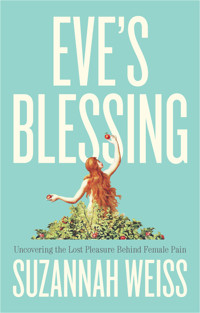
“In sorrow thou shalt bring forth children.” With these words, women fell into a world that saw them as cursed. They are still falling. Today, we define women by suffering: menstrual cramps, mood swings, excruciating childbirth, painful first-time sex. Femaleness itself has come to look like an illness, so now, women seeking solutions for their ailments are dismissed. And as our pain is sanctioned, our pleasure is deemed tricky, complicated, burdensome, elusive.
This reality is not our destiny. These myths are misreadings not just of ancient texts but of women’s bodies. Our pain is the product of oppression imposed for centuries. That’s the real curse. Yet amid this oppression, our pleasure has survived. Once we recover who we were before the fall, we can revel in the blessings of our bodies. Ecstatic births, positive periods, sublime sex, orgasmic lives — this is who we are behind the cultural curse we’ve been under.
Through inspiring stories from the author and a diverse group of blessed people, Eve’s Blessing charts many paths from pain to pleasure so that you can walk your own. If you’ve drifted away from paradise, this book will guide you back.
Sie lesen das E-Book in den Legimi-Apps auf:
Seitenzahl: 383
Veröffentlichungsjahr: 2025
Ähnliche



















Table of Contents
Cover
Praise for
Eve’s Blessing
Dedication
Title Page
Copyright Page
Content Note and Disclaimer
Introduction
Nurturing a Better Nature
The Path from Paradise to Pain … and Back
Welcome to a New Womanhood
Notes
Part I: The Fall
Notes
1 Curses Were Meant to Be Broken
The Fall from Equality to Oppression
Period Pain: Normal or Normalized?
A Cultural Curse
Feeling the World’s Pain
The Body of a Second-Class Citizen
Notes
2 Women’s Natural Defectiveness and Other Greek Myths
Eyeless Moles and Inverted Genitals
The Clitoris Is Hard to Find … in Books
Incomplete Education for Incomplete Men
Understudied, Undiagnosed, Untreated
“There’s Nothing We Can Do” – Or Is There?
Notes
3 From Stained Sheets to White Houses: The Painful Price of Pleasure
From Adam and Eve to T.I. and Vanessa Carlton
Vestiges of the Virgo Intacta
No Cause, or No Knowledge?
Too Young to Enjoy Sex … Then Too Old
The Painful Price of Sexual Shame
Notes
4 Men’s Bodies Are from Mars, Women’s Are from Venus
From One Sex to Two
“All Based in a Colonial Mindset”
The Invisibility of Body Diversity
How Many Sexes … and Genders?
The Myth of Male and Female Health Conditions
Toward a Multi-Sex Model
Notes
5 How the Female Orgasm Became Elusive
Anti-Feminist Backlash and the Demotion of Female Sexuality
Feminine Sexual Anesthesia: A Century-Old Spell
Female Pleasurelessness: Statistics or Society?
Why Women’s Orgasms Really Seem Elusive
Evening the (Already Even) Playing Field
All Because Eve Ate That Apple
Notes
6 PMS, from “a Raging Animal” to “Blood Coming Out of Her Wherever”
A Societal Syndrome
Is PMS Real?
Gaslighting Writ Large
On Estrogen and Emotionality
Reframing the Luteal Phase
Dismantling the Myth of Menstrual Irrationality
Notes
7 The Institutionalization of Sorrowful Childbirth
Thou Shalt Have Children in Fear
How Eve’s Fall Became Women’s Defectiveness
When Healing Does Harm
Putting Parents on Their Backs
The Cycle of Fear and Pain
How Social Injustice Spawns Sorrowful Childbirth
The Ultimate Gift
Notes
8 Trauma: An Assault on the Body
The Impact of Rape Culture, Down to Our Cells
Self-Protection and Sexual Shut-Down
Women: “Crazy” or Traumatized?
The Ultimate Invalidating Environment
The Female Body, Shaped by Trauma
Notes
9 Sexy But Not Sexual
“Any Hole Will Do”
“Just Get on the Pill”
Not Sexy Enough to Be Sexual
Sexuality Beyond Cultural Prescriptions of Sexiness
Notes
Part II: Paradise Gained
10 Womanhood Is Not an Illness
It’s Not Normal
WOMIs Supporting WOMIs
This Type of Body
Illness Isn’t Punishment
Notes
11 Period Pleasure
Periods Are Painful … Yay?
Breaking the Curse
Bloody Hot Sex
Period Neutrality
Period-less Pleasure
Notes
12 No Pleasure, No Gain
Without Pleasure, What’s Left Is Pain
Creating Positive Experiences Through Positive Words
Preventing Pain Pleasurably
Pain Is Not the Entrance Fee to Pleasure
Notes
13 In Joy Thou Shalt Bring Forth Children
Embodying Ecstasy
Blessing Births
Opening to Intensity
Birthing Joyful Lives
Discovering a Brand New Body
Reverent Pleasure in the Uprightness of Women
Notes
14 I Will Greatly Multiply Thy Orgasms
It’s Normal to Get Off Every Time
“Very Powerful But Barely Acknowledged”
It’s Raining Orgasms
“I Was Never Broken”
Notes
15 Living Life Orgasmically
Creating a Whole New Choice
“A Complete Metamorphosis of Embodying Pleasure”
The Tree of Knowledge of Good
Life as One Giant Orgasm
The Highly Orgasmic Woman
I Am Blessed
Dancing Pleasurably with Pain
Tending the Garden of Eden
Women’s Bodies, Rewritten
Notes
Epilogue: Original Virtue
Notes
Resource List
End User License Agreement
Guide
Cover
Table of Contents
Begin Reading
Pages
a
b
c
d
ii
iii
iv
vii
viii
1
2
3
4
5
6
7
8
9
10
11
12
13
14
15
16
17
18
19
20
21
22
23
24
25
26
27
28
29
30
31
32
33
34
35
36
37
38
39
40
41
42
43
44
45
46
47
48
49
50
51
52
53
54
55
56
57
58
59
60
61
62
63
64
65
66
67
68
69
70
71
72
73
74
75
76
77
78
79
80
81
82
83
84
85
86
87
88
89
90
91
92
93
94
95
96
97
98
99
100
101
102
103
104
105
106
107
108
109
110
111
112
113
114
115
116
117
118
119
120
121
122
123
124
125
126
127
128
129
130
131
132
133
134
135
136
137
138
139
140
141
142
143
144
145
146
147
148
149
150
151
152
153
154
155
156
157
158
159
160
161
162
163
164
165
166
167
168
169
170
171
172
173
174
175
176
177
178
179
180
181
182
183
184
185
186
187
188
189
190
191
192
193
194
195
196
197
198
199
200
201
Praise for Eve’s Blessing
“Suzannah Weiss is sounding the alarm with the devastating news about women when we are culturally asleep to Eve’s curse. Once awake, readers will be greatly relieved and delighted to find the doorway to experience Eve’s blessing of pleasure, health, and perhaps even reverence. And that blessing benefits all of us.”
Beverly Dale, founder of the Incarnation Institute for Sex & Faith and author ofWho Told You That You Were Naked? Meditations on the Sexual Body
“Eve’s Blessing offers a brilliant, sweeping indictment of a culture – and medical system – that treats women’s pain as natural and inevitable and points the way toward a future in which our bodily pleasure and power is a given.”
Maya Dusenbery, author ofDoing Harm: The Truth About How Bad Medicine and Lazy Science Leave Women Dismissed, Misdiagnosed, and Sick
“Suzannah Weiss has written an incredibly important book – one that is a must-read for women everywhere. And for men. And for the whole of the medical profession. As Suzannah says, ‘We’ve incorrectly diagnosed women as broken when they are showing us what is broken about the world.’ Eve’s Blessing shows what is broken about the world, and how brilliantly it can be mended. You’ll come away from this book refuting ‘no pain, no gain’ forever. Suzannah’s ‘no pleasure, no gain’ is the rallying cry of the future we all want to live in.”
Cindy Gallop, founder and CEO of MakeLoveNotPorn
“Another win from Weiss, Eve’s Blessing is the unrelenting truth-telling serum that our culture needs to take a look at itself and reevaluate the problematic, ignorant, and misogynist norms that still plague our society today. Thank you Weiss for your bravery, critical research, and strong storytelling ability!”
Madame Gandhi, musical artist and activist
“Eve’s Blessing offers an eye-opening look at women’s pain and pleasure. Written in an accessible style, Weiss weaves together history, psychology, science, and personal stories. An empowering and liberating read, this book shatters numerous myths and paves the path to a future with less pain and more pleasure.”
Justin Lehmiller, Kinsey Institute, author ofTell Me What You Wantand host of the Sex and Psychology Podcast
“The message of Eve’s Blessing is one every woman needs to hear: it is time we expect more pleasure from our lives – and stop expecting pain. Having worked with many women stuck in the mindset that being female means suffering through periods and PMS or not enjoying sex, I know this book will change lives. It raises the bar for how women, sex- and gender-nonconforming people, and men can feel in their bodies – and how we can all support one another to reach our full capacity for comfort and joy.”
Laurie Mintz, author ofA Tired Woman’s Guide to Passionate SexandBecoming Cliterate: Why Orgasm Equality Matters – And How to Get It
“Storytelling is powerful, especially when it comes to something as deeply personal as the body, pleasure, pain, and oppression. Eve’s Blessing offers exactly that – stories that illuminate, heal, and transform, guiding us toward reclaiming the joy and resilience that have always been ours. Eve’s Blessing weaves personal narratives and cultural insights to challenge the idea that suffering defines the female body, revealing a path back to joy, resilience, and the pleasure that ought to have always been ours to claim.”
Jessica O’Reilly, sex and relationship expert
“Eve’s Blessing is a gripping, transformative read that weaves the author’s personal journey with a profound exploration of history, culture, and the female experience. This book is a reclamation – a call to move beyond pain and shame into power and pleasure, celebrating women’s bodies, sexuality, and the full spectrum of their experiences. Suzannah brilliantly exposes how the world has normalized – and even created – women’s suffering, from menstrual cycles to sexual experiences and beyond. Eve’s Blessing is an invitation to break free, awaken your path to pleasure, and recognize its essential role in all aspects of life – including childbirth. Yes, it’s possible to have an orgasmic birth too! Prepare to reflect, to challenge what you’ve been taught, and to shed the layers of shame that have held you back. This book dares you to see what’s been hidden in plain sight and embrace the pleasure, power, and liberation that are your birthright. Grab a tissue, grab a notepad, and get ready to reclaim your body – and your joy.”
Debra Pascali-Bonaro, director ofOrgasmic Birth: The Best-Kept Secret, podcast host and international speaker
“Eve’s Blessing is digestible and gripping, telling a story any woman can relate to. What makes it unique is its interweaving of heartfelt personal journeys, playful deep-dives into history and religion, and indispensable information on health, wellness, and sexuality. This book can help us all create lives – and a world – with more pleasure and less pain.”
Tiffany Pham, artist, founder of Mogul and author ofYou Are a Mogul: How to Do the Impossible, Do It Yourself, and Do It Now
“Suzannah Weiss’s deep-dive into the worst ramifications of the gender binary – including centuries of pigheaded insistence on normalizing female pain – couldn’t be better timed. Holding space for sex and gender diversity as she makes sure to aim her ire where it belongs, this book is a shot across the bow of careless, sexist medical training – because Suzannah has seen the effects of that from the inside – and so much more everyday and state-sponsored misogyny and homo/nb/transphobia. The page decimating the toxic notion of ‘no pain, no gain’ is worth the price of admission! Voraciously researched, fierce, and clear, this book is a call to arms and a new feminist classic.”
Carol Queen, staff sexologist at Good Vibes and director of Center for Sex & Culture
“Eve’s Blessing is itself a forbidden fruit, full of forbidden knowledge about bodies and desires. Suzannah Weiss skillfully critiques the systems that have perpetuated pain and oppression, and she offers readers a pathway toward pleasure and liberation. Eat the apple.”
Eric Sprankle, Minnesota State University, Mankato, and author ofDIY: The Wonderfully Weird History and Science of Masturbation
“Astoundingly well-researched and illuminating, Eve’s Blessing is not just a must-have contemporary women’s sexual health resource, but a powerful sexual self-help book that uplifts and inspires. Author Suzannah Weiss takes readers on a triumphant journey of sexual healing that will leave you tingling joyously from head to toe.”
Hida Viloria, human rights activist and author ofBorn Both: An Intersex Life
“For millennia, women’s bodies have been synonymous with pain. Have you had enough? Eve’s Blessing shows you how to embrace your body’s potential for boundless pleasures.”
Lisa Wade, Tulane University, author ofAmerican Hookup
“Eve’s Blessing is for any woman who has felt her body let her down. Weiss writes with compassion for this experience while illuminating what’s available on the other side. The stories are captivating, and the insights gained from them are golden. You won’t be able to put this book down.”
Maitland Ward, actress and model
Dedication
Sisterhood and siblinghood enabled me to birth this book in pleasure, not in painful toil. So I dedicate this book to the cursed who blessed me. To the mysteriously ill, the frigid lovers, moody bitches, negative Nancies, nervous Nellies, and borderline babes. Those with blood coming out of their wherever, and those who don’t bleed but are still part of the siblinghood.
Eve’s Blessing
Uncovering the Lost Pleasure Behind Female Pain
SUZANNAH WEISS
polity
Copyright Page
Copyright © Suzannah Weiss 2025
The right of Suzannah Weiss to be identified as Author of this Work has been asserted in accordance with the UK Copyright, Designs and Patents Act 1988.
First published in 2025 by Polity Press
Polity Press
65 Bridge Street
Cambridge CB2 1UR, UK
Polity Press
111 River Street
Hoboken, NJ 07030, USA
All rights reserved. Except for the quotation of short passages for the purpose of criticism and review, no part of this publication may be reproduced, stored in a retrieval system or transmitted, in any form or by any means, electronic, mechanical, photocopying, recording or otherwise, without the prior permission of the publisher.
ISBN-13: 978-1-5095-6616-7
ISBN-13: 978-1-5095-6617-4 (pb)
A catalogue record for this book is available from the British Library.
Library of Congress Control Number: 2024952278
by Fakenham Prepress Solutions, Fakenham, Norfolk NR21 8NL
The publisher has used its best endeavours to ensure that the URLs for external websites referred to in this book are correct and active at the time of going to press. However, the publisher has no responsibility for the websites and can make no guarantee that a site will remain live or that the content is or will remain appropriate.
Every effort has been made to trace all copyright holders, but if any have been overlooked the publisher will be pleased to include any necessary credits in any subsequent reprint or edition.
For further information on Polity, visit our website: politybooks.com
Content Note and Disclaimer
This book contains stories involving medical and sexual trauma. If you’re sensitive to medical trauma, I’d recommend skipping chapter 7 or reading it in a safe space where you can access support. If you’re sensitive to sexual trauma, I’d recommend the same for chapter 8.
Eve’s Blessing shares several people’s chronic illness journeys, including my own. A few of these stories describe medical treatments, some conventional and others alternative. This book is not medical advice. I’m not advocating specific interventions but giving people a platform to share, in their own words and on their own terms, how they’ve learned to enjoy their bodies in a world working against their thriving. I recommend you ask a healthcare provider about anything shared that resonates with you, and see the resource list at the end for help.
Lastly, this book is less a critique of the Bible than a reimagining of it – one that honors all religions’ core teaching of uplifting the downtrodden. So whatever your religious background – or lack thereof – please stick around. There may be something here for you to sink your teeth into.
Introduction
One night at sleepaway camp, ten-year-old me lay in a bunk bed playing Mad Libs with my cabin-mates. From the other side of the cramped wooden room, one girl read out a prompt to describe “a bad day.” Another suggested, “the day before your period!”
“What’s a period?” I asked.
“It’s when your thing bleeds and you grow hair there,” she replied matter-of-factly, if not totally correctly. At the time, I didn’t know better. I was horrified to learn this bad day was in my future – and even more terrified to later realize it was not just a day. In health class that fall, I received more education about periods – and more miseducation. Warnings about cramps, PMS, and unplanned pregnancy dominated the female discussion. Then came the male lesson, which covered phenomena like erections and wet dreams that were physically, if not always psychologically, pleasurable.
As I wandered through my school’s moss green carpeted hallways, I fantasized that by some feat of magic, I could become a boy. That I could avoid the agonizing puberty awaiting girls. The expectation of female pain continued from high school whispers about first-time sex into my twenties and thirties, when healthcare providers shrugged off my sexual struggles and chronic illness symptoms. The message was clear: Women were cursed. Penises – conflated with men in my early education – were simple and easy and happy. Vulvas, vaginas, and uteruses were tricky, problem-prone, and burdensome.
Nurturing a Better Nature
Philosophers, theologians, and scientists alike have dubbed women deficient since the dawn of Western civilization, and the belief in women’s physical inferiority lingers. It lingers in doctors’ dismissal of women’s health complaints. It lingers in jokes about women’s premenstrual incompetence. It lingers in the very notion that men and women are the only people to exist – and exist as biological opposites. It lingers in the expectation that menstruation should hurt, that sex should hurt, that childbirth should hurt, that being a woman should hurt.
Today, actresses from Zooey Deschanel in New Girl to Natalie Portman in No Strings Attached are seen doubled over in pain and unable to function during their periods. Losing your virginity is dubbed “popping your cherry.” Articles lament the “elusive female orgasm.” The underlying assumptions are couched in biological arguments about the evolutionary role of PMS, the hymen, and anorgasmia. On the surface, statistics appear to support these hypotheses. Up to 91% of women suffer from period pain.1 One in thirteen currently experience pain during sex.2 Between 5 and 10% of women have never had an orgasm.3 Women report poorer physical health than men and are more often diagnosed with chronic pain, anxiety, and depression.4 Yet nothing about these disparities is inevitable. It is our continued reliance on ancient theories about the female body – not the body itself – that makes womanhood synonymous with pain. Media, politics, science, and medicine can make the fruits of oppression appear natural, neglecting that nurture shapes nature. That’s exactly what’s been done with women’s pain and pleasurelessness. The curse is not womanhood; it’s misogyny. It is a cultural curse we are under.
Imparting the stories of women and gender-diverse people who alchemized pain into pleasure, this book aims to give readers a new perception of their bodies – one that challenges the bleak messages around them. One that simultaneously acknowledges their pain and their capacity to move beyond it. One that proves we need not surmount our biology to attain equality. It’s inequality that flies in the face of our design. As I paint this large-scale picture, you’ll follow my own path from pain to pleasure – one full of sexual exploration, spiritual growth, and trying times as I mourned the curse seemingly on me and all women, then uncovered the blessings behind it.
Through my own transformation, I realized our views of women’s bodies have enormous stakes. If we deem some gender inequalities innate simply because they’re physiological – neglecting how inequality shapes physiology – societal problems from the orgasm gap to the female chronic illness epidemic seem like nature taking its course rather than injustices to be rectified. And so nobody takes a stand against them. More than that, women’s sense of confidence and competence is under siege. When women learn they are built for less pleasure and more pain than men, they accept lives where they experience just that. Feeling unequal on a biological level, they carry themselves with an air of inferiority. It follows them to work, into their relationships, everywhere. No matter how many feminists challenge stereotypes about women’s mental unfitness, the denigration of our physical and sexual selves continues to tarnish our views of gender in every arena.
The Path from Paradise to Pain … and Back
As a child, I was flooded with inaccurate, decontextualized, and downright frightening information about my body. I missed out on years I could have spent enjoying (or at least working toward) radiant health, relishing life-affirming sexual connections, and celebrating my body rather than feeling ashamed of it. But in the end, I found the resources to turn things around. Through the support of women around me, I learned to advocate for my right to respect from doctors, attention from sexual partners, and a life that’s not just comfortable but joyful. Some are denied these opportunities their whole lives due to gender, race, class, and ability barriers. Nobody teaches them anything other than that it is normal, acceptable, to suffer and forgo pleasure. That period pain, PMS, and painful sex are inevitable. That female arousal is finicky. That women are innately inferior. Yet when we dismantle this myth, a sense of innate equality takes its place. And with this sense of innate biological equality, women feel justified in fighting for social equality.
I’ll begin Eve’s Blessing by examining where the notion of female defectiveness comes from, starting with the Greek philosophers’ juxtapositions between the sexes and the Bible’s punishment of Eve, then making my way through history, from the superstitious virginity tests of medieval times to the early modern era’s marriage manuals. I’ll document how the Enlightenment-age gendering of bodies makes healthcare an uphill battle for sex and gender-diverse people, how Victorian purity ideals spawned a view of women as passionless, and how two murderers shaped popular discourse around PMS. These ideologies’ repercussions reverberate through hospitals and bedrooms alike, compounded by modern injustices like rape culture, media sexualization, and medical bias that keep women from enjoying their anatomy. We’ve incorrectly diagnosed women as broken when they’re showing us what’s broken about the world.
Nobody knows this better than those who have dealt with pain and pleasurelessness themselves – and been told by peers and professionals alike that their complaints are invalid. I have spoken to many such people and will weave them into the following chapters, showing how their stories have unfolded within a broader cultural crisis. Drawing on my expertise as a sexologist, psychotherapist, and birth doula while quoting experts from doctors to theologians, I’ll unveil the epidemic of female pain and pleasurelessness as symptomatic of a sick society. I’ll show how toxic consumerism contributes to period pain, how under-researched, underdiagnosed gynecological conditions cause painful sex, and how sexual violence spawns anxiety, depression, and chronic pain. Women struggling with their bodies are canaries in the coalmine, alerting us to the stress, disconnection, and exploitation endemic to Western culture. And certain populations like women of color and gender-diverse people are particularly vulnerable. While the ideas I’m critiquing conflate women and wombs – and I’ll sometimes do so for linguistic simplicity – I’ll examine how they can affect anyone who has a vulva, uterus, or female identity. In fact, the same stereotypes that spawn assumptions about female inferiority also erase those outside the gender binary. I’ll demonstrate how this plays out using interviews with intersex, two-spirit, trans, and non-binary people abused and neglected by the healthcare system.
Welcome to a New Womanhood
Despite the heavy subject matter, this book ends on a triumphant note, documenting how people are creating new bodily realities for themselves and others. I’ll chronicle how the early chapters’ characters realized their challenges reflected underlying problems – then solved them. Readers will find out how one woman learned her “normal” period pain stemmed from a common yet poorly grasped illness, how another invented a device to treat painful intercourse, and how one discovered her orgasmic capacity at a masturbation workshop. Though the last few millennia have devised a dismal definition of womanhood, a new narrative of our bodies is emerging, thanks to women like these. Forward-looking healthcare providers and entrepreneurs are combating period pain and PMS. Activists, artists, and academics are spreading awareness of what women need in bed – and giving them the confidence to attain it. Doulas and midwives are reclaiming childbirth as a positive experience. Sex educators are showing women their pleasure potential goes beyond what they imagined. Collectively, we are coming to see that vulvas, vaginas, and uteruses are not curses. They are blessings.
None of this means women’s pain is not real. I myself know that it is. My own path to pleasure was paved with pain: years of sexual numbness, compromised mental health, and a series of physical symptoms that went on for years like some sick joke. But the real sickness of the joke lay in its masking of the truth: that my body was functioning perfectly. It was launching a healthy response to an unhealthy world. Once you put down this book, you will be able to imagine a world that’s well. A world where women expect periods, first-time sex, and other “painful” experiences to be painless, expect sex to be pleasurable, and expect their bodies to be pleasant places to reside in. Though there are real obstacles to this goal right now, it will become clear that these impediments are cultural and therefore changeable. And in changing the culture, we can change our relationship to our bodies and ourselves. We can rewrite the ages-old script that says we must prove ourselves worthy of joy.
Many of us grew up believing we deserve displeasure. Whether or not we were raised religiously, Eve’s apple is baked into the culture we consume. We live under the subtle influence of a punishing God, learning that gain is only possible through pain. We are taught that we must work for the sustenance we earn, that hardship is the dues we pay for thriving. That too much fun is merely an indulgence. But what if pleasure were not a forbidden fruit? What if Adam and Eve’s sensuality and curiosity were worthy of reward? What if God’s so-called punishment – Eve must give birth in sorrow – is a metaphor for misogyny’s impact on our bodies? What if we have what it takes to return to paradise, and the curse was simply a gripping plot twist, a hurdle to overcome? And what if Adam’s curse – he must support himself through painful toil – was set up to be unwound along with Eve’s? As we challenge ideals of arduous labor – reproductive and economic – that are harming everyone’s health, we can rediscover that we were all born blessed.
My desire to write this book stems from the liberation I experienced in shattering myths about women’s bodies in my own wellness journey – and finding a delightful amount of pleasure where I expected pain. I’ve sprinkled in my own story to create a thread you can follow from beginning to end, making myself a guide through history, present times, and the lives of people who achieved victories for their health and sexuality. After savoring such victories myself, I believe the first step toward helping others attain the same is teaching them it’s possible. Discomfort and dissatisfaction aren’t natural after all. In fact, there’s an endless well of joy behind our sorrow, just waiting to be unlocked. That’s something I wish I’d been taught in school – and something we can all teach our children if we want them to live pleasurable, pain-free lives.
Notes
1.
Ju, H., Jones, M., & Mishra, G. (2013). The prevalence and risk factors of dysmenorrhea.
Epidemiologic Reviews
.
2.
Mitchell, K., Geary, R., Graham, C., Datta, J., Wellings, K., Sonnenberg, P., Field, N., Nunns, D., Bancroft, J., Jones, K., Johnson, A., & Mercer, C. (2017). Painful sex (dyspareunia) in women: prevalence and associated factors in a British population probability survey.
BJOG: An International Journal of Obstetrics & Gynaecology
.
3.
Lloyd, E. (2006).
The Case of the Female Orgasm
. Harvard University Press.
4.
Malmusi, D., Artazcoz, L., Benach, J., & Borrell, C. (2011). Perception or real illness? How chronic conditions contribute to gender inequalities in self-rated health.
The European Journal of Public Health
; Osborne, N. R. & Davis, K. D. (2022). Sex and gender differences in pain.
International Review of Neurobiology
; Remes, O., Brayne, C., van der Linde, R., & Lafortune, L. (2016). A systematic review of reviews on the prevalence of anxiety disorders in adult populations.
Brain and Behavior
; Albert, P. (2015). Why is depression more prevalent in women?
Journal of Psychiatry & Neuroscience
.
Part IThe Fall
Women are born with pain built in. It’s our physical destiny: period pains, sore boobs, childbirth, you know. We carry it within ourselves throughout our lives. Men don’t.
– Fleabag1
Countless women take this as a given, rarely questioning the pain that plagues them. When Abby developed debilitating period cramps as a preteen, she didn’t think to tell her doctor. Nor did Amanda when sex hurt, not just the first time but many times after. Celia mentioned her menstrual pain to doctors, but they simply told her to lose weight. Meg was on an emotional rollercoaster the week before her period, for which she only knew to pop Midol. When Tara told her gynecologist about the burning sensations sex caused her, he advised her to have a glass of wine. While Sarah was in the ER with severe constipation, a doctor reassured her this was “quite normal” since “51% of women complain of constipation.”2 And when America asked her urologist what treatment was available for her excruciating bladder illness, he replied, “none.”
Debra hid in a maternity ward bathroom during labor to escape staff who pushed medications on her. When Tanisha developed bladder spasms after childbirth, a staff member looked on, detached, declaring, “You would make an interesting paper.” Hida’s doctors harped on irrelevant questions like “do you feel more like a man or a woman?” and “has your clitoris always been this big?” Ed couldn’t get his PCOS treated until a gender identity clinic certified it was in his “psychiatric best interests.” Whenever Kuya had to check “male” or “female” on a medical form, it reminded them their culture, which has more than two genders, wasn’t valued. Up until her forties, Sammi had never had an orgasm; she blamed her small clitoris. Kaytlin blamed her difficulty orgasming with partners on the female body’s complexity.
Such struggles are valorized as an honor of womanhood, as if our strength stemmed from enduring pain – usually for the sake of children or partners. They are brushed off for those outside the gender binary, as if their bodies were broken to begin with. At best, they’re deemed yet another case of “life isn’t fair.” Yet these problems’ commonality does not make them normal or natural. While the status quo seems to paint a grim picture of the female body, the picture it paints is actually of Western culture. Women have spent millennia abused and discriminated against, and the price has been their physical health, comfort, and pleasure. Though patriarchy wants us to forget, our bodies remember. But the memories stored in our cells can be unwound and shed – and that’s already happening.
The idea that women and gender-diverse people’s lives could be as physically enjoyable as men’s was perhaps true only in theory a few years ago. Between medicine’s neglect for marginalized people and the political, cultural, and economic obstacles keeping us sick and unhappy, society was not set up for it. But today, women are forging their own paths out of pain that others can now travel – and what they’re finding on the other side is pleasure. They’re fighting to be heard in medical settings and spreading awareness of under-discussed health issues. They’re inventing their own solutions to painful periods and sex. And they’re having lots of orgasms – multiple orgasms, varied kinds of orgasms, and even orgasmic births. Why does it seem, then, that women are designed to endure less pleasant lives than men? Answering this question requires a journey back in time.
Notes
1.
Waller-Bridge, P. (Writer) & Bradbeer, H. (Director). (2019). Season 2, episode 3.
Fleabag
. Two Brothers Pictures.
2.
Ramey, S. (2021).
The Lady’s Handbook for Her Mysterious Illness
. Anchor Books.
Chapter 1Curses Were Meant to Be Broken
This story begins at its destination – paradise – with two people like you and me. You might’ve heard this part. Adam and Eve were luxuriating in the Garden of Eden, naked and unashamed, when a serpent made a scandalous suggestion: that Eve eat from the tree of knowledge of good and evil, something God forbade. She offered Adam some fruit too, and suddenly, they grew aware they were naked. In response, a displeased God told Eve: “I will make your pains in childbearing very severe; with painful labor you will give birth to children.” The first woman, who once lived in comfort, was now embarrassed of her body and at odds with it. The first man did not fare well either; he was told: “Cursed is the ground because of you; through painful toil you will eat food from it.”1 Both stood on cursed ground. The soil that once sprouted plentiful nourishment would require human strain to support survival. Both men and women, in their own ways, would spend their days in labor. In pain.
The Fall from Equality to Oppression
When I revisit this tale, I think of a passage from Sex at Dawn, an anthropological account of human sexuality. Authors Christopher Ryan and Cacilda Jethá write that humanity’s true “fall” was not from a garden but from a “jungle, forest, wild seashore, open savanna, [or] wind-blown tundra.” These prehistoric environments were home to nomadic hunter-gatherers who enjoyed privileges Adam and Eve did: “Their world provided what they needed: food, shelter, and companionship.” The small tribes were cooperative by necessity, they could build huts in minutes, meals were shared, and the pursuit of sexual pleasure – including women’s – was permitted. Then, as agriculture sprung up globally around 10,000 bc, the “low-stress, high-pleasure life of foragers” was usurped by “the dawn-to-dusk toil of a farmer.” Ryan and Jethá theorize that “the story of the fall gives narrative structure to the traumatic transition from the take-it-where-you-find-it hunter-gatherer existence to the arduous struggle of agriculturalists.”2 The plentiful Garden of Eden’s transformation into a stubborn field mirrors humanity’s move from forests full of fruits to land they had to fight to extract crops from.
That was Adam’s curse, but it led to Eve’s. Humanity’s transition from cooperative, egalitarian tribes to civilizations revolving around property set the stage for women to be property. Some anthropologists pinpoint the advent of agriculture as patriarchy’s harbinger.3 The plow encouraged gendered divisions of labor, with men seen as fit for plowing fields while women stayed home. Even today, societies descending from plow farmers display more gender disparities in work and politics.4 But something deeper was happening. Since agrarians stayed in one place and built houses, they formed nuclear family units. To track which children belonged to which fathers – and pass down real estate, crops, and animals accordingly – they restricted women’s sexuality and freedom. Without female monogamy, family lines were hard to trace.5 And so childbearing came under collective control, leading women to indeed bring forth children in pain. Emotional pain. Their procreation faced scrutiny; their autonomy was taken away. They were scorned for not having children or for having them outside marriage. Eve’s desire became shameful. She grew to recognize her nakedness. To restrain her corporeality, her passion, her power.
The apple didn’t fall far from the tree, and it was a poisonous one.6 While the world may have never been pure paradise, the fall from foraging to farming introduced new forms of pain: women’s painful labor and men’s painful toil. The parallel between Genesis and human history is more direct with Adam’s curse – men began working to eat – but the transition affected women just as much. It took them from equality and communal resource sharing to patriarchy and, eventually, capitalism. And patriarchy and capitalism have real, direct effects on women’s health and happiness. Women’s bodies bear the brunt of the fall, not just when giving birth but throughout their lives.
The burden women bear is compounded by the very belief that they are cursed – in more than one way. Though God’s curse on Eve most clearly references childbirth, periods are also called “the curse” in some religious communities.7 Not just Judeo-Christian ones. Eleven percent of women in Pakistan consider menstruation God’s way of punishing womankind, and 12% of girls in India see it as a disease or curse from God.8 The notion of the curse prevails in pop culture and everyday lingo. In the 1976 film Carrie, the protagonist’s mother exclaims upon her first period: “The Lord visited Eve with the curse, and the curse was the curse of blood. Oh, Lord! Help this sinning woman see the sin of her days and ways. Show her that if she had remained sinless, this curse of blood would never have come on her!”9 A 1948 study identified “curse” as the most common American period euphemism, and another from 1963 documented “curse,” “sickness,” and “unwell.”10 Even in 1994, nearly half of women in an Oregon study had used or heard the term “curse” for menstruation.11 Modern women are still believed to be paying for Eve’s sin. Even many who don’t deem periods a literal curse expect them to feel like one.
Period Pain: Normal or Normalized?
When Abby Norman got her first period at age twelve and a half, she was spending Thanksgiving with her family. But she didn’t enjoy much time with them, as she passed the whole day in the bathroom with cramps, diarrhea, nausea, and thigh pain. “I thought I was bleeding so much because it was my first period, but then they were always like that,” she recalls. “I always felt sick and had a lot of pain. I’ve never had a period that wasn’t painful. But I thought that was normal, and I never knew anything different.”
Celia similarly had “sickeningly unbearable” periods since age thirteen. “I vividly remember being in class and having to beg for a pain reliever,” she says. “I went to an all-girls’ high school, and thankfully, my mom was also a teacher. So she approved it, and then I had to just lay down in the nurse’s office until they kicked in. Usually, what would happen is the pain was so intense that by the time it was over, I was just so exhausted and I would fall asleep.” Yet this didn’t strike her as unusual. “As I got older and the pain got worse and more frequent, it continued,” she recounts. “Pain during sex? Oh yeah, that’s just a position that hurts. Everyone has that. Cramping after orgasm? Oh yeah, that’s normal, everyone has that.” Celia can’t remember where she learned this; she says “it’s always been there. Always.” But Abby can point to a few sources: “Pretty much every conversation I had with an older woman – or any book I read – said that cramps were normal and that I just had to put up with it. Every time someone got their period in a TV show or movie, it was always depicted that way.”
Menstrual pain is portrayed on screen for humor, masking its serious nature. In the sitcom New Girl, Zooey Deschanel’s character Jess declares, “It feels like a fat man is sitting on my uterus.”12 Such bleak depictions of menstruation ring true for many, but largely because of this very normalization. It’s a self-perpetuating cycle: Since women and their doctors don’t search for solutions to their pain, they suffer through it for years – sometimes for life. “Doctors certainly never seemed surprised that my periods hurt,” says Abby. “They also didn’t usually seem to bat an eye if I said I had pelvic pain at other times during my cycle.” It took her seven years to be diagnosed with endometriosis, a condition where tissue similar to the uterine lining grows outside the uterus. And she considers herself one of the “lucky ones”: Endometriosis takes ten years to diagnose on average.13 Black women with this illness have an even harder time getting diagnosed; doctors assume they have pelvic inflammatory disease, which is associated with sexually transmitted infections.14
For Celia, it was not just sexism and racism but fatphobia that kept her from a diagnosis for twenty-eight years. When she confided in healthcare providers about her painful periods and sex, she was told “losing weight will help” so many times she just dropped it. “I kind of shut myself off from asking about these things, both out of shame and out of the fact that I just didn’t want to be told again that I could somehow reverse this pain with weight loss,” she says. Doctors also made remarks about her facial hair, which felt like subtle jabs at her Lebanese heritage. Of course, when she lost weight, it didn’t alleviate the pain at all. “It’s hard when you’ve been dismissed for so long to keep bringing it up,” Celia says. “You just start to internalize that and think you are being dramatic; it must be normal because no one really seems to think it’s a big deal or an actual problem.”
Period pain appears normal. Studies have found that primary dysmenorrhea – menstrual pain unattributed to any illness – occurs in 60–91% of women globally.15 But given the prevalence of undiagnosed illnesses, many such women may have secondary dysmenorrhea – menstrual pain stemming from underlying health conditions.16 Many ailments that make periods unbearable, including endometriosis, fibroids, polycystic ovary syndrome (PCOS), and adenomyosis, go untreated for years because period pain is so normalized. Here we have a feedback loop: The sheer number of people living with these conditions makes their symptoms appear common and therefore normal, causing even more people to dismiss their own symptoms and live with them. But normal and common are not the same – and even commonplace pain reflects underlying problems. The issue is, many problems behind menstrual pain are not the type doctors are trained to diagnose. They are manifestations of larger-scale issues like misogyny and poverty. They are the fruits of the fall.
A Cultural Curse
Nicole endured debilitating period cramps for fifteen years and menstrual migraines for almost as long. They made her “feel like not being alive.” In the absence of a diagnosis, her doctor presented painkillers and birth control as her only options. “They told me I’d have this condition for life and it was unfortunate, but nothing could be done,” she remembers. This is a popular prognosis, as primary dysmenorrhea’s causes are unclear. Yet research is beginning to point toward a confluence of environmental, nutritional, chemical, and cultural factors that lurk, barely detectable, behind “normal” period pain.
During menstruation, lipid compounds in the body called prostaglandins make the uterus contract. Prostaglandin levels drop from the beginning to the end of your period, which is why people tend to feel more pain on their first few days of bleeding. The American College of Obstetricians and Gynecologists cites prostaglandins as the cause of primary dysmenorrhea.17 However, many medical professionals agree it is not ordinary prostaglandin activity but prostaglandin imbalances that lead to pain, says Mary Lou Ballweg, president of the Endometriosis Association. A 2015 paper in Human Reproduction Update, for instance, reads that “the most widely accepted explanation for the pathogenesis of primary dysmenorrhea is the overproduction of uterine PGs [prostaglandins].”18 When too many prostaglandins are released, this causes inflammation, an immune system response involving temperature increase, blood flow changes, pain, and/or swelling.19 High prostaglandin levels have been found in women with primary dysmenorrhea and endometriosis, and drugs that reduce prostaglandin production also reduce menstrual pain.20 A 2021 American Academy of Family Physicians paper states that primary dysmenorrhea is “mediated by elevated prostaglandin and leukotriene levels”; leukotrienes are also inflammatory.21 While some inflammation is necessary for the uterus to push out blood, the sheer prevalence of period pain indicates that many of our bodies are overly inflamed. And this excess of inflammation, prostaglandins, and pain reflects some of society’s biggest injustices.




