



9,99 €
Mehr erfahren.
- Herausgeber: Renard Press
- Kategorie: Gesellschafts- und Liebesromane
- Sprache: Englisch
'There's only control, control of ourselves and others. And you have to decide what part you play in that control.' Cast your eye over the comfortable north London home of a family of high ideals, radical politics and compassionate feelings. Julia, Paul and their two daughters, Olivia and Sophie, look to a better society, one they can effect through ORGAN:EYES, the campaigning group they fundraise for and march with, supporting various good causes. But is it all too good to be true? When the surface has been scratched and Paul's identity comes under the scrutiny of the press, a journey into the heart of the family begins. Who are these characters really? Are any of them the 'real' them at all? Every Trick in the Book is a genre-deconstructing novel that explodes the police procedural and undercover-cop story with nouveau romanish glee. Hood overturns the stone of our surveillance society to show what really lies beneath.
Das E-Book können Sie in Legimi-Apps oder einer beliebigen App lesen, die das folgende Format unterstützen:
Seitenzahl: 297
Veröffentlichungsjahr: 2022
Ähnliche

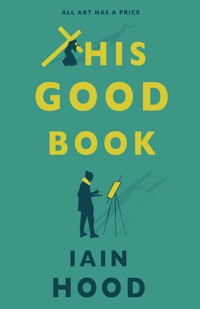


















Every Trick in the Book
iain hood
renard press
Renard Press Ltd
124 City Road
London EC1V 2NX
United Kingdom
020 8050 2928
www.renardpress.com
Every Trick in the Book first published by Renard Press Ltd in 2022
Text © Iain Hood, 2022
Cover design by Will Dady
Iain Hood asserts his moral right to be identified as the author of this work in accordance with the Copyright, Designs and Patents Act 1988.
This is a work of fiction. Any resemblance to actual persons, living or dead, is purely coincidental, or is used fictitiously.
Renard Press is proud to be a climate positive publisher, removing more carbon from the air than we emit and planting a small forest. For more information see renardpress.com/eco.
All rights reserved. This publication may not be reproduced, used to train artificial intelligence systems or models, stored in a retrieval system or transmitted, in any form or by any means – electronic, mechanical, photocopying, recording or otherwise – without the prior permission of the publisher.
EU Authorised Representative: Easy Access System Europe – Mustamäe tee 50, 10621 Tallinn, Estonia, [email protected].
This book has been checked by an insensitivity reader, to ensure the insensitivity of opinions expressed.
every trick in the book
Everything I’m about to tell really did happen, just not the way I’m telling you. And when I paint, I’m the narrator, you’re the reader, and everyone plays their part.
Kirov TzucanariNotebooks
Former Commissioner of Police of the Metropolis, Dame Cressida Dick
(at the time Assistant Commissioner
of Police of the Metropolis for
Specialist Operations)
1.1
On a first visit your eye couldn’t help but roam over the tastefully muted colours of the walls, of the skirting boards, of the large rug in the wide, short and low-ceilinged hall. On one side you’d note deep drawers, in dark-painted medium-density fibreboard, with handles ofdull chrome. Above these, paintings of the image of a horse, the Waverley ferry sailing ‘doon the watter’ of the Forth of Clyde and a lighthouse on Skye directs the eye to muslin voiles hanging on thin, white, dusty metal hooks, which would falteringly close only with a tug of the hands. You would see the rug and floorboards end and a terracotta tile floor begin, naked and buffed.
Now your eye would scan an open space of eight metres by three metres. To the right, in front of a disused chimney breast, would be two small armchairs of pristine white chenille and again medium-density fibreboard shelves holding ornaments carefully arranged and displayed. Over on the other wall there would be a small relief map of Scotland, too small to see the detail of from here. In front of you there would be a large, high-backed couch and a rough Bakhtiari Garden carpet on the floor, seemingly held in place by small white hooks like on the rail for the muslin voiles; two dark-red leather easy chairs, parallel to the couch; then a chunky set of mango-wood bookshelves in distressed white, neatly displaying books of all sorts: fiction and non-fiction; cooking and gardening; travel guides; a World Atlas of Wine; a Larousse; both old and new Vintage Classics, Pelicans; paperbacks and hardbacks; old and new first editions. In front of you here in a recess, piled one on top of the other are old tape cassettes and CDs, a CD player and an amp with, it might seem, too many buttons and lights; and on the floor, propped up against a wall, a colourful canvas capturing the moment of fireworks going off above the Edinburgh Military Tattoo. In a blocked-off wall space of bare brick, a sill still running along the bottom, there would be a picture of an empty rural scene. You would see a 1928 architect’s table in teak and a large metal stool, devoid of any drawing implements. Two mobile phones, seven various chargers, an uncountable tangle of in-ear headphones, a Samsung Galaxy Tab 7.0 and a Kindle DX International would sit on a shelf by the door. Below a window sits a square, tall set of free-standing shelves, painted a dull orange, holding sparsely spaced ceramic ornaments, to the side of a circular iroko worktop with a stainless-steel mounting and high stand, with four leather-topped stools arranged around it, bringing the eye again to the muslin voiles.
Colours of chestnut, reds, sky and baby blues – deep and rich, sometimes incongruous, almost seeming thrown together – would prevail, with dark hues creeping in elsewhere – a Joan Miró-inspired fabric pattern here, the colour-matched red-, orange- and blue-spined books there. At night, a space that is too dark and low-lit; in the morning and afternoon the windows of the Victorian shell of the house cause revealing shafts of unusual light. And in the summer, this effect – on ornaments, CD spines, high iroko worktop and stools, glints from the stainless steel, small pools of light, and thrown shadows on the floors and walls, the marble kitchen worktops, thin muslin, stainless steel, chenille – would make this seem like the beautiful life, the Sunday supplement life.
1.2
At last we reach the next room, which would again have wooden floorboards and rugs. A French queen-size would be here, near the door, and at each side, low and wide bedside cabinets with a comb on one and a watch and ring-holder holding three rings on the other, alarm clocks and small lamps on both, and then books lying here and there. Along one wall, freshly green-painted medium-density fibreboard doors would be built in, and a leather Eames recliner would be in front and just to the side of these. In the en suite you would see light dressing gowns; chrome fittings; our reflections – those people who are us staring back at us through a small, wall-mounted looking-glass. There’d be a Braun electric shaver and separate beard trimmer; toothbrushes; perfumes; deodorants; shampoos; conditioners; shower gels; bath gels; handwash and body washes; hair waxes and beard waxes. Simple emulsion whitewash and white eggshell skirting and woodwork; everywhere white Egyptian cotton for towels and sheets and duvet. Back in the room, on a set of shelves, sits a large sphere light, an old tape cassette-radio player and a Kindle 1. The bed’s headboard is solid, padded and plaid patterned. Light floods in from the street, and shadows are forming and lengthening. Under the bed are dust and books and a few forgotten things, and there in the en suite an unassuming, short, wide, colourful painting of a fish somehow seems too prosaic, informal and imperfect.
1.3
The next room is mostly empty. There are shelves, but these seem to serve no purpose. There are a few postcards – Susan Alison MacLeod’s The Mythopoeia of Christ, a detail from Christ of Saint John of the Cross, one of Escher’s never-ending staircases, a portrait by Jeremy Andrews, a Kandinsky sketch, a sepia-tint photograph of boys in Glasgow by Oscar Marzaroli, Jenners in Edinburgh, J.B. Yeats’ portrait of W.B. Yeats – Sellotaped or Blu-Tacked to the wall. Far off to the right is a short plastic set of drawers for holding stationery with a melted LP record moulded into a bowl shape on top next to an empty square plain white plastic lidded container. In front of a large window there’s a low-slung sofa. Yet the feeling of emptiness predominates. No objects that give away the purpose or function of this room. A desktop computer is present, but it is on the exposed floorboard floor, keyboard and mouse stacked up against the monitor, gathering dust. There’s a wide chair, right here in front of us, but you couldn’t sit down on it, as it is stacked high with patterned pillows and throws, designs by Miró, Mondrian, Kandinsky, Klee, Picasso, Matisse. Other plastic objects seem to have form but no function: art objects; perhaps the unrecognisable out-of-context bits and pieces of large- and medium-sized children’s toys. Upstairs are the children’s bedrooms and another bathroom. A lovely house, a pleasant home.
1.4
The beautiful life, the Sunday supplement life. A simple life, gratifying, satisfying. Deliveries of takeaways when cooking in the cramped, dark galley kitchenette, where there’s never enough storage or worktop space, could not be faced. In late June, in the evenings, is when the house is most alive.
1.5
After the school run they would potter and dawdle, smoking at the back door past the kitchen, or in the back yard. They would work from home for a while, then eat at home or go out for something to eat at a coffee shop, usually the independent one, but Starbucks when the independent one was closed.
Always neat but always informal, comfortable, liveable. It was just the way they lived, comfortably, creatively, thoughtfully. They would be on their laptops, listening to CDs, or just chatting quietly to each other. Dinner would be after the kids had eaten in front of their screens, having no interest, now, in sitting down with them. Sometimes they would all go out for pizza together.
A life like this could go on undisturbed, always neat, always comfortable, Sunday supplement photogenic, always beautiful, as though this life were made for them. Of course, they could walk away at any point, sell up and move anywhere, travel the world for a year or two, live near the beach in Costa Rica, perhaps, or visit Machu Picchu: their own family gap year. Anything would be possible. Free and in control; comfortable to go, comfortable to stay. A simple, beautiful life.
1.6
But if you were given more time to look around, having been deflected from the upper floor, the girls’ domain, closer inspection in the hall, behind the front door, would reveal the unruly pile of posters, leaflets and placards – most, if not all, of which have the word, or perhaps words, ORGAN:EYES somewhere. Professionally-printed placards reading ORGAN:EYES THE EYES OF THE WORLD ARE ON YOU; an amateur placard in a child’s painted hand reading ORGANEYES OUR EYES ARE WATCHING; ORGAN:EYES WE WATCH, WE SEE; SCRUTINEYES PARLIAMENT; and again, a child’s painted script on a placard reading ORGANEYES WE ARWE WATCHING! THE WORlD IS WATCHING! Repeated often, a diagrammatic faceless head with index and middle fingers of a schematic right hand pointing one finger at each place where eyes should be, then the same faceless head with index and middle fingers pointing at the viewer of the image.
And going along the bookshelves slowly, methodically, you would notice the mixed and eclectic reading, though you would also notice the preponderance of certain books, due to the number by one author: here, Anthony Burgess and Joseph Conrad; there, Yukio Mishima, Flann O’Brien, Georges Perec and Anne Rice; here, books by or about Trotsky, Lenin, Stalin, Voltaire, Orwell; there, books by Dr Seuss, Hergé, Lewis Carroll, Mark Twain and Jack London; higher up, books by Hugh MacDiarmid, Lewis Grassic Gibbon and the Ossian texts; higher up still, the novels in translation of Romain Gary and Émile Ajar; on a shelf to themselves, books by Pablo Neruda and Tristan Tzara and Tom Stoppard; and then, lying off the shelves, casually tossed under a chair or elsewhere, books by John le Carré, Elena Ferrante, Richard Bachman, Woody Allen. A pattern would be emerging.
1.7
How happy they would be. People like many others. Normal people doing normal things normally. Or, rather, no one’s normal – normal’s not the right word. Natural. Natural people doing natural things naturally. Natural people, people at ease in their environment, their world, people at home in their own skins. People who know who they are. Their north London home at this time in the evening, on the 24th of June, the lazing informality of bare feet or sloppily falling apart slippers they wear at home. A woman and a girl in the main bedroom, the woman lying up in bed, legs slipped into the turned-down bedspread and quilt, reading her Kindle, Elena Ferrante, the girl across the foot of the bed, lying on her stomach, her legs swaying half time in the air to the music coming from her iPad through pink headphones into her ears, Sugababes.
Through at the dining table, a long oblong of rough-hewn laminate elm atop a repurposed IKEA frame, a young woman sits in the pool of light from a lowered long-wired, circular, brown ceiling lampshade, wearing glasses, her hair tied high at the back, doing her homework, the American Revolution, the man leaning over and into the pool of light to see what she’s stuck on as she says that, no, it’s not this she was asking about.
The man straightens and expresses an acknowledgement of his lack of understanding. The young woman twists and gets comfortable with her arm over the back of the chair and says, no, it was what one of her teachers was saying today about subatomic particles, and she makes clear that it’s not homework. The man takes a deep breath and repeats his realisation he doesn’t really know what the young woman means.
The young woman says that she doesn’t really get it.
The man asks her what she doesn’t understand. He walks round to a chair across from the young woman, who repeats what her teacher was saying, that down at a subatomic level, well, like there’s protons and neutrons and electrons, right? The man questions whether this isn’t atomic level.
With a slight sarcasm in her teenage voice, the young woman says that, yes, right, this is spot on, but even at that level we know mostly it’s like fresh air. Not fresh air, but you know what she means: vacuum – nothing between these teeny particles, and electrons especially, just flying around in nothing, mostly nothing, oceans of nothing in comparison to the teeny, tiny boat on the ocean that the electrons are.
The man tells her that this is a nice image, a very good image.
The young woman thanks him. Was that sarcasm, the slightest of slightest hints, too? Then she continues that the teacher was saying today that at the subatomic level there are even tinier component parts of protons and neutrons and electrons, particles literally insanely small in vast, vast galaxy-sized spaces of vacuum, literally nothingness.
The man says that he’s hanging on in there. So, the young woman continues, at this quantum level, it’s insane, we are basically vacuum with these teeny, tiny, literally… she seems unsure what. The man asks what it is that’s bothering the young woman about all this.
The young woman says, further to these concerns, that at a sub-quantum level particles just come into existence and then disappear. She sounds alarmed. The man mentions the Large Hadron Collider.
The young woman says that the teacher said that we can’t be sure where anything is or whether it’s there or not. The man mentions the Uncertainty Principle, with a level of uncertainty, you would have to say. The young woman thinks he is right in mentioning it, though. Then the man says solicitously that these facts, these data, such as they are, seem to be bothering the young woman.
She lifts her left arm and slaps it with her right hand and says something about the point she’s making being self-evident. Look, the man knows to wait. He knows this young woman, how revelation works for her. She slaps lightly again and repeats herself, saying that she literally feels solid, but that she’s not. At a quantum level she doesn’t know where anything is. How can she feel solid? It’s barely there. There’s nothing there.
The man is smiling and says something reassuring, calls her ‘kid’, reassures her that the facts of life will just blow her mind sometimes. His tone is mocking. The young woman sits still, open-mouthed. And the man says that the facts will literally blow a gasket in her mind at some point.
She says that she just doesn’t get it, looking down at her unbelievable arm.
1.8
In a kitchen drawer, a letter from the Right Honourable Emily Thornberry MP and their marriage certificate, which is addressed to Mr & Mrs Paul Dorian, 18 Moon Street, Apt. 18, London, United Kingdom, N1 0QU and says ‘THE CITY OF NEW YORK, OFFICE OF THE CITY CLERK, MARRIAGE LICENSE BUREAU, License Number,’ and the licence number, ‘Certificate of Marriage Registration, This Is To Certify That Paul Dorian residing at 18 Moon Street, Apt. 18, London, United Kingdom, N1 0QU born on 03/10/1964 at Glasgow, United Kingdom and Julia Smith residing at 18 Moon Street, Apt. 18, London, UNITED KINGDOM, N1 0QU born on 01/27/1966 at Manchester, United Kingdom Were Married on 03/10/2005 at Office of the City Clerk, 1 Centre Street, NYC, NY 10007 as shown by the duly registered license and certificate of marriage of said persons on file in this office. CERTIFIED THIS DATE AT THE CITY CLERK’S OFFICE Manhattan NY, March 11, 2005. PLEASE NOTE: Facsimile Signature and seal are printed pursuant to Section 11-A, Domestic Relations Law of New York.’ Then the seal, then the signature of Victor L. Robles, then, ‘Victor L. Robles, City Clerk of the City of New York.’ Then there’s all the paperwork from this young woman’s baby months, toddler years and early childhood, noting that she didn’t get immunised for MMR, and she developed measles at age five just as the second kid was born. She developed pneumonia, was hospitalised in Edinburgh, the Western Infirmary, and then the Royal Hospital for Sick Children. The paperwork for a second child, a young girl now, seems to be missing from the drawer; perhaps it has never quite made it to this archive status and it is in some technically live file, that discarded Cath Kidston bag, under the stairs. The man now kicks off his shoes, his sensible pair of black Loake Actons, the ones he wears to his job in the charity. Not the Docs and Converse of the life side of his work/life balance that sit amongst the posters and placards behind the front door. A lanyard lying by his side tells us the charity combats homelessness. Back through in the bedroom, the woman receives a text from a colleague, which reads, ‘All OK with thedoc/policy leaving office now FINALLY.’ Her lanyard, lying on the dressing table of the parents’ bedroom, notes her work is with a campaign group for rape crisis and domestic violence services.
It’s about to be eight o’clock and the Channel 4 News has just ended. The woman has moved upstairs to her ten-year-old daughter’s bedroom and has fallen asleep in her bed beside her, a brush still in her hand. She was about to brush or had been brushing out her daughter’s long hair. By the look of her, she is wiped out; like it has been a long week and she’s still unwinding. The man and his fifteen-year-old daughter, having given up on her homework, are sitting on the couch, curled up together. He asks whether she wants to listen to some Beefheart. She gives him the teenage look of death. Now they’re watching television and chatting about subatomic particles. She asks the man whether he thinks he understands it. He looks like he’s thinking of the best way to put it. Then he says that people don’t like indeterminacy, and gives the example of that thing that happened a while back in the Met Police, where you could be clean-shaven or have a beard, but you couldn’t be seen to be just unshaven.
The fifteen-year-old daughter quizzically questions him and tells him that he’s always on about the police. The man says that he simply means that a copper who looks, you know, scruffy, couldn’t be bothered, just is perceived to have no authority. Clean, fine. Beard, fine. Authority. Anything else, then it just seems to him, this man, that then the police officer has no authority…
The fifteen-year-old daughter sounds exasperated and asks the man what he’s talking about. She says that he’s obsessed sometimes. He replies that, well, you’ve got to know what side you’re on. Who the enemy is. He’s just saying, in transition… She says she was talking about particles. And the man says something along the lines of, if we are catching it correctly, that well, yeah, at a subatomic level, they say, don’t they, that we’re only approximations of ourselves.
The fifteen-year-old daughter expresses both exasperation and thoughtfulness in a pause and tells him that, yes, that sounds about right.
The father leans forward and shows his daughter a card trick, but she’s not that impressed, questions what tricks are, anyway. She gathers herself together, saying she’s ready to go to bed, turns and walks to the stairs, trailing a blanket behind her.
The house cools down. The mother wakens in her younger daughter’s bed and makes her way downstairs to where the father is asleep in their bed. Then you can hear the older daughter tiptoeing through to the younger daughter’s bedroom, and there’s the sound of their voices, talking into the night.
1.9
On a Tuesday this man, the father, has nothing to do in the afternoon and wanders away from the café where he was having lunch, not far along Upper Street and up a cul de sac and into a pub. It’s his usual routine when he isn’t meeting her, the mother, his wife, to walk home. This happens about once a week. He opens the door into the pub and looks surprised at the number of people for a Tuesday, for two o’clock in the afternoon. He scans the room. Two men and two women at a table finishing off a pub meal; a group of three men at the bar, all quietly staring at their mobile phones; a group of five men, site workers, apparently finished for the day, down the end of the bar, laughing uproariously; the young woman sitting by herself over by the window, a flash of blonde hair and scarlet lipstick, one glass; a group of women, one, two, three… six of them around a table near the back room, talking. He scans back, the women, the woman, the laughers, the quiet ones, the two couples. Then he sees the woman by the window is smiling at him. He looks away and moves up to the bar between the two groups of men and orders a beer, taking his time, checking his change. Then, as he turns to sit somewhere, he’s able to look past her again, and again she’s looking straight at him, smiling, and she lifts the glass of white wine to her lips. When he sits at a table near the door the couples are between them, finishing their lunch, last mouthfuls of wine, last gulps of coffee. The father and husband looks down at his mobile phone and scrolls down through the headlines of the Guardian, then scrolls through them again; then we see shadows move and he looks up. The couples are leaving, and behind them comes the young woman, heading for the bar with her wine glass in hand. He looks down to scroll through the Guardian one more time. There’s the smell of fresh cleanness and only a hint of perfume. As she passes, the young woman tilts her head to catch his attention. ‘Hi,’ she says.
‘Yeah, hi,’ he says. Then he looks down into his pint as he takes a mouthful. Immediately he takes another mouthful, looking around himself then down to his phone. When he looks up and around again the young woman is back sitting by the window, another glass of white wine on her table. She takes a drink, then another, then she stands and walks back over to the bar, and leans forward to say something to the barman, on tiptoe, her heels rising above her shoes, and her skirt riding up the back of her knees. He looks away, out of the window, at the laughers at the bar who have burst into another uproarious laugh and are shouting. He glances at the young woman as she turns and looks back down at his phone. Shadows change again. ‘Hi,’ she says.
The father, the husband, this man, looks up. ‘Hi,’ he says.
‘You’re Paul, aren’t you? Paul Dorian?’ she says.
‘Yes,’ he says. ‘And you’re… You’re… I’m really sorry, I don’t seem to remember… how we met.’
‘Can I sit down?’ she says.
‘Sit? I mean… Yes, of course,’ he says.
‘Thanks,’ she says, smiling, placing her glass of white wine in front of her.
This man, his name is Paul*, smiles back at her, watches as she takes a sip of wine. After a few moments he relaxes back into his chair and says, ‘Is it through work… I know you? You know me?’
‘What kind of work do you do?’ she asks.
‘So, not that, ha, hey?’ he says nervously. ‘Sorry, I didn’t catch your—’
‘No, I mean I was wondering what work you do,’ the young woman says.
‘Oh, right, um,’ Paul says, ‘I work for a charity. Homelessness.’
‘Anything else?’ she asks.
‘Oh, you think it might be… We might know each other through the other work I do?’ he says.
‘Maybe,’ she says, ‘you never know. I’d certainly like to hear about it.’
‘You would?’ he laughs. ‘You’d be about the only one.’
‘Really? You think so?’ she says. ‘I’d say your other work is far more interesting, wouldn’t you?’
Paul has been about to take a mouthful of his pint, smiling, watching her red lips. Again, the smell of the lightest of light touches of perfume. The young woman flicks her hair and then settles a strand in place behind her left ear.
‘Don’t you think your other work would attract media attention?’ she says.
Paul hesitates. He sniffs and looks quizzical. Then he says, ‘The media? Sorry, what’s your… Do you know Stewart? It’s just we’re in such an early stage of… the project.’
The young woman is looking straight at Paul, almost staring straight into his eyes. He shifts in his chair. ‘Oh,’ she says, ‘that’s what you call it, is it? The project?’
‘I mean, I… Yeah. I mean, no. It just is a project. It’s not TheProject, like that’s its name,’ Paul says. ‘Are you sure—’
‘No, not the project, I see,’ she says. She lifts her glass of wine to her lips but then seems to place it back on the table without having actually drunk any wine. ‘Or operation?’ she adds.
‘Are you…’ Paul looks lost. He hesitates again, lifts his pint to his mouth and throws beer to the back of his throat. ‘I’m not sure we’re talking about the same thing.’
‘Oh?’ the young woman says, casual as you like. She looks him up and down. ‘Maybe not. But you are Paul Dorian?’
Paul smiles as he holds his pint glass in mid-air, yet again frozen in the moment. ‘So, you’ve heard about the label?’ he says.
‘Label?’ she says.
‘Well, yeah, the People’s Republic of Rock and Roll,’ he says. ‘I mean, that’s your interest, right? You know I’m involved in the setting-up of a record label? For… blues music. You knew that?’
‘That’s your other work?’ the young woman says.
‘Yeah. I mean, what else…?’ Paul says.
She sits back in her chair. Something has changed in her, the look of her. Paul looks up and out of the window. It has begun to drizzle out in the street. The smell of her can’t any longer hide the smell of a stale pub on a drizzly afternoon, the sickening hoppy sweetness of his beer gone warm, her wine a vinegary wersh. He drops his head and his eyebrows lower. His shoulders hunch and he stares at his phone. ‘I’m sure now,’ he says, ‘I don’t know what you’re talking about.’
‘I think you do,’ she says.
‘Who are you from? What media? Who are you? What’s your name?’ he says.
‘I’m working freelance on this,’ she says. ‘But I’ll probably try for the Independent or the Guardian. Those are the ones that have been taking an interest. Maybe the Telegraph. Come on, you knew this was coming, surely, after Mark?’
‘How did you get to me?’ Paul says.
‘Well, now,’ she says, ‘that would be telling. That is telling.’
‘You’ve got the wrong information,’ he says. Then he looks around himself. ‘I don’t know what you think—’
She throws her hair back. ‘We can play games if you want. Or not. I know what I just saw in your face. It tells me I’m sitting with a man who is in the police—’
‘Slow down, for Christ’s sake,’ Paul says.
‘You’re really rattled,’ the young woman says. She looks surprised at her ability to do this to him, and she’s smiling, her eyebrows raised.
‘Just… give me time to think,’ this charity worker, this husband, this father, this man called Paul says.
‘Sure. Here, take this,’ she says, and she fumbles and pulls a scrap of paper with numbers on it from the inside pocket of her coat. ‘And if you’re thinking how you’re going to explain everything to me…’ She dips in and pulls her hand from her pocket again and her hand is on the table then gone, back in her pocket. And there’s an Olympus digital voice recorder sitting on the table, but it has materialised and sits still as though it had nothing to do with her hand. It was a neat trick, an impressive sleight of hand all round.
‘Not here,’ Paul hisses. ‘Jesus.’
‘I don’t mind where,’ she says, reaching to switch on the voice recorder between them. ‘Do you want to tell me about the woman? And about your own wife?’ she says.
‘My case isn’t like the others, the other one,’ Paul says. ‘You’ve got this all wrong.’
‘Oh? How?’ the young woman says.
‘There is no wife. I mean, there is a wife,’ he says, ‘but that’s the woman I live with. She is actually my wife… I mean, the other’s just… My wife and me, we’ve been together for twenty-odd years… You have to understand. We have children. You have to understand. Nothing you think you know is… correct. And you’re going to have to leave us alone.’
‘Or else?’ she says. For a moment what Paul appears to be doing is looking from his phone to his pint, to the door and scanning the room. He twitches.
‘That makes it worse. This all… the wife, the kids… all makes it worse,’ the young woman says.
1.10
[‘Look, I tried…’ Paul says. Then he is up and, ‘Actually, no. I have nothing to say to you,’ he says. Then her wine tips towards her and she grabs for the glass as he lightly shoves the table and, before you know it, he’s disappeared out of the door.]
1.11
Now we see Paul outside his daughter’s school, redactedredacted, waiting to collect his eldest and walk to the other school, redactedredactedredacted, to pick up his younger daughter. When she sees him, she says, ‘You know you can pick her up first.’ She means her younger sister.
‘Am I embarrassing you?’ Paul says.
‘I don’t care about that,’ she says.
‘It’s on the way to pick up Soph,’ Paul says. (Her name is Sophie.* Soph to him. Very emphatically Sophie to everyone else.)
‘You’ve got that look on your face,’ his daughter says as they begin to walk along.
‘Yeah, probably,’ he says.
‘Is it about that thing you said to me?’ she says.
‘What thing?’ he says.
‘The thing. Last year. You know,’ she says.
‘What?’ Paul says. ‘No. No. Not that.’
‘It’s just, I am ready, if, like you said, we had to move out from...’ she says.
‘No. No. Don’t feel unsettled. I was in a… I was in a funny place back then. Things were up in the air between me and your mum. But that’s all sorted now,’ Paul says.
When the three of them get home, Paul tells the girls that they can watch or listen to whatever they like on the computer or television, as long as they wear earphones. Both of them wander off. Paul goes into the downstairs toilet and settles himself on the seat. He takes a deep breath, then stands and stretches up to an exposed beam which enters the wall leaving a small hole in the plaster above it. Taking a mobile phone out of this hole he settles himself back on the toilet seat. Another deep breath. Then he dials. ‘I need to come in,’ he says when he gets a response.
‘How?’ says the voice.
‘Where’s the boss?’ Paul says.
‘Which one?’
‘The guv’nor,’ Paul says.
‘Scotland Yard.’
‘There, then,’ Paul says.
‘You are joking, aren’t you?’
‘I need to see the big boss now,’ Paul says.
‘Aye. Naw. We’re not going to blow everything by you running shitting yourself into the nest, now, are we? What’s up, anyway?’
‘Don’t you read the papers?’ Paul says.
‘That’s not going to happen to you, for Christ’s sake. That numpty’s investigations only go back a few years. You’re, what, twenty years in? More than that? Who could spot you? It would have happened already.’
‘That’s what you say, but I have been spotted,’ Paul says. ‘A Nosey just sat down across from me in the pub and told me she knew who I was. What I was. Am.’
‘Shite.’
There’s a long pause.
‘Are you still there?’ Paul says.
‘Shite.’
‘Yeah, I know. Do I come in?’ Paul says.
Another pause.
‘Naw, we come to you first.’
‘The big boss? The guv’nor? Or Fabius?’ Paul says.
‘Talk sense. We do it in stages. Fuck’s sake. Don’t blow this.’
‘She said my years under made it worse. I suddenly saw it all from that perspective,’ Paul says.
‘Don’t lose your nut. Just fucking… Right, this call is ended. I’ll phone you back on this number in twenty… naw, ten minutes. Right?’
Another pause.
‘Right?’
‘Right, yeah, right,’ Paul says.
‘Sit tight. Remember, if we’re panicking, they’re winning.’
‘What, fourteen ex-hippies, ten students, four trustafarians and two dogs on string?’ Paul says.
‘No them. You know who. The newspapers. And the others. Sit tight.’
‘Right,’ Paul says. ‘Do something about this.’ But the contact has already disappeared from his screen. There’s a call back. Paul is still sitting in his downstairs toilet. He stares for a second at a fuzzy object when the mobile starts vibrating. In the early evening, before his wife – her name is Julia* – gets home, he tells his eldest daughter – her name is Olivia* (Liv to everyone) – that he’s going to take a walk ‘for some fresh air’. He says he won’t be long to his younger daughter. There’s a meeting at his local park. Paul talks fast to a colleague.
1.12
The next day Paul tells his wife that the label is going to fill up his whole day. He takes the Tube to Embankment (cameras 2, 12, 7B, 42, 1, 13, 9A, 7BC, 8FD, 72, 4, 6, #3, 7, 14, 12, 6, 9, 6YG, 27, A, B, 5, 1, 4, 7, 4, 3, 5, 2, 27, 5A, 7B, Front, Side, Back, 5, 13, 25, Backgate, 12, 4, 6, #9, #7, #1, f, ftdr, 4, 6, 8, 7




