


Erhalten Sie Zugang zu diesem und mehr als 300000 Büchern ab EUR 5,99 monatlich.
- Herausgeber: Renard Press
- Kategorie: Gesellschafts- und Liebesromane
- Sprache: Englisch
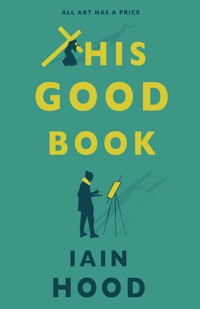
'Sometimes I wonder, if I had known that it was going to take me fourteen years to paint this painting of the Crucifixion with Douglas as Jesus, and what it would take for me to paint this painting, would I have been as happy as I was then?' Susan Alison MacLeod, a Glasgow School of Art graduate with a dark sense of humour, first lays eyes on Douglas MacDougal at a party in 1988, and resolves to put him on the cross in the Crucifixion painting she's been sketching out, but her desire to create 'good' art and a powerful, beautiful portrayal means that a final painting doesn't see the light of day for fourteen years. Over the same years, Douglas's ever-more elaborately designed urine-based installations bring him increasing fame, prizes and commissions, while his modelling for Susan Alison, who continues to work pain and suffering on to the canvas, takes place mostly in the shadows. This Good Book is a wickedly funny, brilliantly observed novel that spins the moral compass and plays with notions of creating art.
Sie lesen das E-Book in den Legimi-Apps auf:
Seitenzahl: 283
Veröffentlichungsjahr: 2021
Das E-Book (TTS) können Sie hören im Abo „Legimi Premium” in Legimi-Apps auf:
Ähnliche




















This Good Book
iain hood
renard press
Renard Press Ltd
124 City Road
London EC1V 2NX
United Kingdom
020 8050 2928
www.renardpress.com
This Good Book first published by Renard Press Ltd in 2021
Text © Iain Hood, 2021
Thanks are given to Mogwai for permission to quote their lyrics. Extracts from ‘A Cheery Wave from Stranded Youngsters’, ‘Yes! I am a Long Way from Home’, ‘Tracy’, ‘Now You’re Taken’ and ‘Take Me Somewhere Nice’ © Mogwai, All Rights Reserved
Cover design by Will Dady
Iain Hood asserts his right to be identified as the author of this work in accordance with the Copyright, Designs and Patents Act 1988.
This is a work of fiction. Any resemblance to actual persons, living or dead, is purely coincidental, or is used fictitiously.
Renard Press is proud to be a climate positive publisher, removing more carbon from the air than we emit and planting a small forest. For more information see renardpress.com/eco.
All rights reserved. This publication may not be reproduced, used to train artificial intelligence systems or models, stored in a retrieval system or transmitted, in any form or by any means – electronic, mechanical, photocopying, recording or otherwise – without the prior permission of the publisher.
EU Authorised Representative: Easy Access System Europe – Mustamäe tee 50, 10621 Tallinn, Estonia, [email protected].
contents
This Good Book
CHAPTER I
CHAPTER II
CHAPTER III
CHAPTER IV
CHAPTER V
CHAPTER VI
CHAPTER VII
CHAPTER VIII
CHAPTER IX
CHAPTER X
CHAPTER XI
CHAPTER XII
CHAPTER XIII
CHAPTER XIV
CHAPTER INNUMERI
this good book
The heresies we should fear are those which can be confused with orthodoxy.
jorge luis borges
(trans. James E. Irby)
‘The Theologians’
I
There was only one man I knew who was exactly six feet tall, and I met him in Glasgow in 1988, in the February. He caught my eye because of the colour of his flesh in the light coming through the darkened hallway at a party in a flat on Hyndland Road. Straight away I said to Stephen, ‘Who is he?’
Looking over, Stephen said, ‘Oh, that’s Douglas.’ Then he turned to me and said, ‘Susan Alison MacLeod! Look at the look on you!’
And I said, ‘He’s the one. Look at the tone of his flesh. Like a Lucian Freud.’
And Stephen said, ‘“Flesh”? Do you mean skin, Susan Alison?’
And I said, ‘I know what I mean and Freud paints flesh.’
Douglas stretched to open the double doors into the kitchen and his white cable-knit rode up to reveal his centre at his belly button. His flesh was yellow ochre and burnt sienna and raw umber and there was a halo of pale blue-white fluorescent light around his head and shoulders. The light around him in the darkness of the hallway formed a circle, and the door frame formed a square. He moved his legs into an isosceles of reflected light from the fake white and blue diamond tile linoleum floor. Eight heads high. The perfection of the proportion of him. The luminousness of him. His hair and moustache and beard were like a young Peter Green, if you know who Peter Green is.
And Stephen said, ‘You’re thinking of meat, perhaps?’
And I said, ‘I’m thinking of my Crucifixion.’
And Stephen said, ‘Anyway, you know him, Susan Alison. Douglas MacDougal’s all over the Art School like a rash.’
And I said, ‘I don’t know him from Adam.’
And Stephen said, ‘You have to.’
And I said, ‘I’ve never seen him before in my puff. Cross my heart and hope to die.’
Douglas was talking to some fresher or other, looming over her.
And Stephen said, ‘Do you want me to introduce you, Suse?’
And I said, ‘No, not just yet. I just want to stand here watching him. But I want you to, after.’
Douglas was stretching his arms above his head and stifling a yawn, and then yawning with an unlit smoke lolling at the side of his mouth.
And Stephen said, ‘Are you in love or something? He’s just a man. Just flesh and blood like you and me and all the rest of us in here.’
And I said, ‘You know it’s bigger than that. He’s the one for my Crucifixion. The end.’
Sometimes I wonder, if I had known that it was going to take me fourteen years to paint this painting of the Crucifixion with Douglas as Jesus, and what it would take for me to paint this painting, would I have been as happy as I was then?
Stephen started bouncing around and said, ‘Amen. In nomine Patris et Filii et Spiritus Sancti.’
If it sounds like we were a bit drunk, that’s because that was the way it was.
Was there always something tragic about Douglas, like he was going to die young and leave a beautiful corpse? Like in the summer, the day he came back from Glastonbury smelling of man and bonfire and lightly fried plantain and good sweat and three-day-worn clothes and his skin golden burnt and his hair just-so sun-bleached? He could not be a better Christ on the cross. God-made man, all man. The more I looked at the sky-baby-blue of his eyes. Like Zeffirelli’s Jesus of Nazareth and the shallow beauty of Robert Powell’s eyes that apparently got him the part. I didn’t want to go for a brutal rendering. MatthiasGrünewald’s lip-smacking relish at twisting the emaciated body of Christ as he tortures the paint and makes Christ bleed near-solid gobbets of blood. Or Nikolai Ge’s hideously terrifying and terrified Christ screaming at the top of his lungs to the sky and a God who cannot be there as his bedraggled rags soak with blood-red paint. A beautiful, western-idealised, perfect Jesus was the point and the reason and the joke, and though perhaps always tragic Douglas did like to laugh, and he liked the joke. It was part of the reason he wanted to do it. But that was later.
When Stephen introduced us, Douglas was so drunk he was close to incoherent. He said to us, ‘Ask me what kinda car I want.’
And Stephen said, ‘What kind of car do you want?’
And Douglas said, ‘A Jaguar. Now ask me what kinda guitar I like.’
And I said, ‘OK. What kind of guitar do you like?’
And he said, ‘A Jaguar. See what I’m saying? A Fender Jaguar. Now ask me what my favourite animal is.’
And I said, ‘Is it a jaguar?’
And Douglas goes, ‘What? No. It’s a lion, isn’t it? A lion is the king of the jungle. A jaguar? That’s like… that’s like the Duke of Windsor or the Earl of Gloucester in comparison to the King. Heh, I was staying in Notting Hill last year, and all the pubs were like The Earl of Gloucester and the Duke of… they don’t name their pubs down there, they give them a title.’
He was so drunk.
When I asked him if he’d model for me for a Crucifixion, he said he wanted to do it because of the paintings of Francis Bacon and I said, ‘Oh, you like the paintings of Francis Bacon?’
And he said, ‘Crucifixion? Three Studies for a Crucifixion? Three Studies for Figures at the Base of a Crucifixion?’
And I said, ‘You like them?’
And he said, ‘No! Ever since I saw them I’ve been trying to obliterate them from my mind, and you painting me as Christ on the cross is about the best way I can think of, eh, of annihilating those images. Annihilating them! To extirpate them from my memory.’ He liked words. Concepts. Ideas. Words. And he said, ‘You kill me, so you do.’
By the end of the night he was telling me that, with him in tow, I was going to create something authentic and genuine and a masterpiece and something that was good. And, after Stephen had disappeared somewhere, Douglas kept rocking back and forth and circling me, never still, every so often suddenly balancing himself with his outstretched arms as though the floor was tilting, as though we were on a ship far out at sea, or like he was a cat landing after being shoved off of somewhere high up.
We weren’t talking, just looking around ourselves, when I heard it – just beyond hearing or something like it could be felt, even if not heard, a sound like sad, longing music. It was like I could make it be heard if I just let myself sing it, so I started singing to him this strange song about old songs and sad songs and being reminded of friends and about fairgrounds and road signs.
And Douglas said, ‘What’s that you’re singing?’
And I said, ‘I don’t know. Mibby a song I heard somewhere. It’s playing in my ears. Or… I think it might be a song that hasn’t been written yet.’
And he said, ‘You’re writing this song?’
And I said, ‘I… Yes. No. I mean… I don’t know.’ My head was swirling.
Of course, because Stephen had disappeared, it was muggins here that had to help Douglas get home. It was like trying to get a six-foot-high stack of cheese-and-ham toasties and art textbooks piled up on a skateboard home.
When we got to the mouth of his close I sort of stopped holding him up and said, ‘In you go.’
He swayed for a wee while. Then he looked round at me, kind of glaikit looking, drunk glaikit, and I was wondering whether this actually was the right close, but I didn’t see I had many options to find out otherwise. He stumbled forward and off he went when I pointed and repeated, ‘In.’
In them days in the 80s every artist in Glasgow was buying or renting or squatting in Tollcross and environs to be near the Transmission Gallery and yes, I had been to Transmission in the year it opened and I had been inspired to go to the Art School because of what I had heard of the artists who started Transmission. But for my sins the year I graduated I found a space, a place to live with a studio attached, out along Argyle Street towards the Kelvingrove and yes, OK, near the Park Bar, where island people and teuchters drank when in Glasgow, though I never went in there because teuchters were what I sought to fly away from.
It was a garden flat that in the back yard had a huge high-walled, high-windowed transparent flat-roofed space that had housed a bakery. Have you ever had dreams where suddenly you find some incredible space in your home that you never realised before was there? A terraced penthouse accessed by way of your loft skylight or a basement that lies below your living-room floorboards? I’ve had those dreams and I assume they’re common enough. Well, my bakery space was like that. It was like a heaven-sent dream space, unbelievably useful to an artist.
As for that part of Glasgow, I think perhaps you would call it Sandyford. I hear it’s rebranded as Finnieston these days – for why, I don’t know. A river crossing – the sandy ford of yore, I doubt – remained prominent down by the Clyde, and the local post office was called Sandyford Post Office. It was a quiet area then, to the point of forsaken. The first spring evening when he arrived at 7:25, the sun was going down, and as we walked into the space the sky was orange and red and purple and you could see all these colours through the transparent plastic corrugated roof of the bakery space and Douglas said to me, ‘This place is perfect.’
And I said, ‘Isn’t it paradise?’
And he said, ‘Halfway to Paradise, anyway.’
He was talking about football. Paradise is what they call Celtic’s ground.
And then he said, ‘The way the light comes down. Amazing. I can see why you’re working on a Crucifixion.’
And I said, ‘Yes. Though I was thinking about it before I came here. It just felt like a miracle to find this place.’
And he said, ‘Perfect. Sure.’ He looked at the piles of wood and other mess around the walls and on the floors and said, ‘You can do something monumental here. Something like Howson.’
And I said, ‘I was thinking more Bellany. Allegory.’
And he said, ‘Allegory?’
And I said, ‘You don’t know it? Triptych. Scene of crucifixion. Of fish.’
And he was like, ‘Eh?’
And I said, ‘Hung, disembowelled fish.’
And he said, ‘You mean gutted.’
And I said, ‘No, they look more disembowelled. I know what I mean.’
And he said, ‘Of course you do, Susan Alison. Have you ever been fishing?’
And I was like, ‘No, have you?’
And he said, ‘What? You’re kidding, right? Fishing? Me? That’ll be right.’
Right. So. You’ll know Douglas’s art. He filled plastic bags with his own urine. I know what you’re thinking. ‘So… modern.’
Much later I remember saying to him, ‘You’re what gives modern art a bad name.’
And he was like, ‘Me, is it? As long as I’m giving it a name.’
And I said, ‘Did you ever hear that thing about the Ancient Egyptians or the Aztecs or the Huns?’
And he said, ‘The Huns?’
And I said, ‘Yes. You know, Attila and the Huns. Attila the Hun and the other…’
And he was like, ‘Huns?’
And I said, ‘Yes.’
And he said, ‘Oh, I know all about the Huns.’
That was about football in Glasgow, too.
And I said, ‘Yes, well, did you know that we call them these things like the Mayans and the Ancient Greeks but their names for themselves all translate from their languages as “the moderns”? Did you know that?’
And he was like, ‘Where do you get this stuff?’
And I said, ‘Books. Good books. Like this good book.’ I held one up and showed him, a 1981 Oxford World’s Classics copy of The Private Memoirs and Confessions of a Justified Sinner – the one with the Henry Fuseli cover.
And he said, ‘Aye. TV. So what about the Moderns? Nineteen-twenties Paris Moderns?’
And I said, ‘I suppose they called themselves “the moderns”. And people now call them Modernists. In the islands, they say “modren” for “modern”. For why, I’ve no idea.’
And he said, ‘Do you think it’s like the way that “hundreds” becomes “hunners”?’
And I said, ‘Yes. Mibby. Though that’s the other way up from modern and modren. The other way round.’
And he said, ‘Do you know about Piero Manzoni?’
And I said, ‘Who?’
And he said, ‘Artist. Italian. Nineteen fifties or thereabouts. Sold his own shite in tins.’
And I said, ‘And people bought it?’
And he was like, ‘Absolutely.’
And I said, ‘A major influence on you?’
And he was like, ‘Oh yes.’
And I said, ‘Nice oeuvre.’
And he said, ‘Nice. It’s what all artists are doing. Selling their shite. They say it. This is my shite. I want to sell my shite.’
And I said, ‘I get you now. You’re a cynic.’
And he said, ‘You’re a funny girl.’
And I was like, ‘Girl?’
And he said, ‘Right. Aye. Right. Sorry.’
And I said, ‘You know there was one time I was at school, down by the huts and…’ But then, no, I couldn’t tell him that story. He didn’t seem to have heard me, anyway.
And he said, ‘Anyway. Don’t put me off my… Manzoni, he was a Modernist.’
And I said, ‘Yes? Futurist, mibby.’
And Douglas said, ‘Aye! Exactly. He sold his own shite. Naw?’
A while later Douglas said, ‘Naw. A gallery of modern Scottish art? In Glasgow? I’m not sure that’s happening any time soon. But you never know.’
And I said, ‘Why not?’
And he said, ‘A celebration of contemporary… of modern art? In Glasgow? All very well for fancy-schmancy Edinburgh, but Glasgow? I’m not sure you know where you live.’
We were standing in the Glasgow Art Gallery in Kelvingrove. He was wrong, by the way. I was right, by the way. A gallery of modern art did open in Glasgow seven years after this conversation. But back then I’m not sure even he thought this was a good idea. Mibby just wanted to stick with his Transmission pals. Yes. I see now. Mibby that was it.
Douglas said, ‘All right. How many times have you stood here before this one?’
And I said, ‘Hundreds?’ I shrugged and then I said, ‘Thousands? Hundreds, anyway.’
And he said, ‘And what draws you back?’
And pointing as though they were there I said, ‘The nails. The blood. The crown of thorns.’
And Douglas looked up and after a minute said, ‘But the painting doesn’t depict any of those things.’
And I said, ‘I know. Their absence was the first thing I noticed. Dalí said the image came to him in a dream and he said he had to paint it without these things because they would undermine the perfection of the image of Christ.’
And Douglas was like, ‘And why is it Christ of St John of the Cross?’
And I said, ‘John of the Cross. Juan de la Cruz. A Spanish mystic. He sketched a Crucifixion with Christ in the same posture. Sagging from the cross. Dalí wanted a triangular arrangement with a circle formed by the head. The trinity. The whole. The four elements. It’s a masonic symbol.’
And he said, ‘Masonic? Lodge people? Orangemen?’
And I said, ‘No, that’s a misnomer. Orange Lodge is a masonic thing…’
And he was like, ‘Moronic?’
And I said, ‘Yes, good one. But the Freemasons weren’t Orangemen. In Italy, the masons were Catholics. And, anyway, then the Pope said, “No secret societies,” like he isn’t in one, and the Church went anti-Freemason. But then, I think Freemasons were just about anti everything that wasn’t Freemasonry… so… there you go. A-one two three four five six seven eight, a-one two three four five six and on you go.’
He looked at me and smiled, swear to God, and he said, ‘You kill me, Susan Alison, you really do.’
And looking up at Dalí’s painting I said, ‘Look at it. It’s miraculous. See the use of the golden ratio, there, there, here and there.’
And he said, ‘That’s the a is to b as…’
And I said, ‘Yes, a plus b is to a as a is to b. See it? Dalí was saying that there is a sacred geometry, a god behind nature. Or at least a god behind art.’
And he said, ‘Aye? Aye, himself.’
And I said, ‘You might be right.’
He stared at it for a good long while, then he said, ‘It gives me a feeling.’
And I said, ‘I should hope so.’
And he said, ‘Aye. Something like… I’m out in space.’
And I said, ‘Yes? Well, thank you, space expert.’
And he said, ‘Aye.’ He looked more, screwing up his eyes, and said, ‘Yes.’
And I said, ‘Something else?’
And he said, ‘Something… something like… Yes, I am a long way from home. Aye. Yes, exclamation mark! I am a long way from home!’
And I said, ‘Oh, yes, it needs that – it needs the exclamation mark, sure sure.’
And he said, ‘I am a long way from home.’
And I said, ‘I am a long way from home!’
And he was like, ‘Here, haud on, I’m a long way from home!?’
And I said, ‘Oh aye. Very good.’
And he said, ‘What’s wrong with your eyes?’
And I said, ‘My eyes? How?’ Except it didn’t come out as ‘How?’ It was more like ‘Howh?’ ‘Howwuuh?’ Something like that. Like time was slowing down as I said the word, but just for me and not the rest of the world. And that’s when I dropped to the floor.
And he said he was like, ‘Susan Alison! Suse! What is this? What should I do?’
I wasn’t writhing around or whatever… like whatever people with epilepsy are supposed to do. I’ve only ever seen one person with epilepsy having a seizure and he wasn’t doing any of that, anyway. He just looked blank and empty like the human being inside of him was gone. And I think from the outside that’s what I looked like, too. But in myself I felt all serene and good and full of… light? Light, mibby? Colour? I knew the definite shapes around me. There was a taste in my mouth mibby like metal and my mouth was filling up with the taste of mibby metal and more than anything else I could hear… like music far off and a rhythm and a line of melody, repeating once, twice… then again.
And I knew I was saying stuff. About music which can put a human being in a trance-like state. About the sneaking feeling of existing. And about music being bigger than words and wider than pictures. That Mogwai are the stars. I would not object. That if the stars had a sound it would sound like this. And that the punishment for these solemn words can be hard. And about how my blood boils like this at the sound of a noisy tape that I’ve heard. And that I knew one thing. On Saturday… the sky will crumble… together – or something – with a huge bang… to fit into the cave. And clapping and music gurgled. And as something like a heartbeat of guitars got noisier and noisier I remember I was thinking and wanted to say to Douglas in capitals, ‘“ART SYMBOLISES THE MEANING OF OUR EXISTENCE” – ANDREI TARKOVSKY.’ Not shouting at him and not shouting over the noise of the guitars like the uppercase letters suggest, but just I saw it that way in my mind’s eye, in upper case.
When I came to, after the final crash of cymbals and guitars and laughing or talking or something playing back to front in my ears, I was like, ‘Man, sorry about that.’
He took me to the Gallery café and because I was shivering made me drink a cup of milky tea with about five or six teaspoons of sugar in it, which he said was what his mother always gave him and his sisters and brothers when they seemed sickly or overheated or whatever, this being her personal panacea for all life’s ills.
And Douglas was like, ‘Well, that was a bit freaky. Are you OK? Has that happened before?’
And I said, ‘I’m brand new. Why?’
And he said, ‘You just freaked me out is all.’
When it seemed as though I could, and he was puffed out on sympathy and questions and advice to see a doctor, I finally changed the subject and said, ‘Do you know Dalí’s other Crucifixion?’
And he said, ‘Aye, the Corpus Hypercube?’
And I said, ‘So you know something about traditional art as well, then? I thought that wasn’t encouraged in Conceptual and Performance.’
He bowed and tipped an imaginary hat, then he said, ‘Aye? Snob.’
And I said, ‘Yes, I am a snob when it comes to art, as a matter of fact. Taste and distinction and judgement are everything.’
And he said, ‘Aye? I’ll be the judge of that. And I know one or two things. Though, have to admit, I know Dalí’s moustache more than I know his art. And anyway, my art is pure taste. You can taste it. It’s all in the taste.’
I forgot to mention the Tarkovsky thing.
Thing is, in the summer, in the August, I was back up on the island visiting my mithair and faither and I was telling my mithair all about him and I said to her, ‘Oh, if only you could see him, Mummy.’ I had no photographs. A Polaroid or a disposable or a PhotoMe booth passport photo would just not have done him justice and a good film camera was well beyond my means with me being impecunious, as my faither said. And so anyway, I said, ‘If only you could see him. So beautiful and with goodness in his eyes and his flesh.’
And my mithair said, ‘Flesh?’
And I said, ‘Skin. So unblemished and oh, now, Mummy, he’s tall. Exactly six feet tall.’
And my mithair said, ‘Dear Lord, no, Susan Alison. There was only ever one man as was exactly six feet tall. Your Lord and Saviour Jesus Christ.’
And I said, ‘Fine. Well he’s almost exactly six feet tall and if of all men only Jesus was exactly six feet tall then that makes Douglas an even more perfect model, don’t you think? What are you like?’
And she said, ‘Stop that.’
And I said, ‘Stop what?’
And Mummy said, ‘That way you’re getting of talking. Like the way they talk down in Glasgow. “What am I like?” Indeed.’
And I said, ‘I’m not… All I’m trying to tell you about is Douglas.’
And Mummy said, ‘Fine, but if you’re going to tell me about him at least make it a story and tell me it from the start. And don’t skip details.’
So I started to tell her the story, not skipping any details I thought she would want to hear. She seemed to be listening quietly, and as I got to the part about painting a Crucifixion scene with Douglas as Jesus she stirred and said, ‘I want you to be doing good paintings of your Saviour. Are you doing good paintings?’
Like all good Christians, she wanted good paintings of suffering and torture and death and rape and incest and child sacrifice and bestiality. Good Bible stories. Good paintings.
And my mithair said, ‘Not that pornography that some people do. Or the paintings by grown-ups who paint like children or the twizzles and wizzles people or those ones that paint a red circle and say it’s art. The Devil’s work, I call that.’
And I said, ‘Yes, I am, Mummy, I am, yes, good paintings.’
And my mithair said, ‘You know, sometimes I think you don’t know Jesus, Susan Alison. Down there in Glasgow you’re not being taken in by those so and sos, are you?’
And I said, ‘Yes Mummy, I am not,’ not bothering a toffee that I was lying.
II
Things were taking a lot longer to get together than I had thought they would and I wasn’t getting to know Douglas much better, even though this didn’t bother me the way, you know, some artists need to know the insides of their sitters, but that wasn’t going to be necessary for my Crucifixion. Creating art, and I mean specific art, you have to know what’s going to be necessary, this being the mother of invention and all that, you know?
He was in his world with his Tollcross buddies and I was in Sandyford making preparations for painting my Crucifixion, what with buying materials and paints and nailing together canvases that were so huge I had to use huge nails to secure them. And the size of the hammer I had to buy! My God! And I’m only five foot nothing. Apart from the time I had let him come to the bakery studio to have a look around and the times we had visited galleries and stuff like that, we went on with our separate lives. I was experimenting with different backgrounds and thinking mibby about doing a Stanley Spencer by setting the Crucifixion on top of the Necropolis, but that was too obvious, or mibby doing a Billy Connolly by painting something called something like Christ Crucified upon the Tollcross, but really only because giving the painting this title appealed to me.
Not me, but all of them, Isobel and Amanda and Marion and Anna, Jenny and Rona and Mairi, Katrina and Maureen and Alison and Bernice, Katy and Frances and Maria, Sharleen and Kate and Nikki and Shonagh and all of them at one time or another seemed to be in love with Douglas.
And I suppose that’s why I was supposed to be in love with him and why I had made him my model for Christ on the cross, but it wasn’t that at all. In fact, I thought he was a stupit so and so. I mean, come on. Urine in bags? What was that? That was nothing. Nothing. Just some sensationalist nonsense with apparent meaning but no meaning manifest. One of my best tutor’s sayings was, and I suppose still is, ‘Art is meaning manifest.’ Douglas would talk of bodies and fluids and this and that. That was nothing. He had nothing. The tutor, my best tutor, would have seen right through him, all right. Miss Brodie, we called her. That wasn’t her name. She was actually called Jean Carmichael, but I think the ‘Jean’ and the way about her led to ‘Miss Brodie’. Anyway. But it has to be said, he was a good model, Douglas. He mostly knew how to pull this way and that way and take up the best version of this and that position. And he would be like, ‘Is this the way you want me?’
He was malleable is what I’m saying. And beautiful. So very beautiful. And Jesus needed to be beautiful, because if he’s not beautiful then what is he? Jesus as God had to be the most beautiful man and the perfection of man, because if he’s not that then what is he? Douglas was malleable and if he was not malleable to what I wanted him to be in my hands then what was he? What was he?
But, you know, all of them loved him. Lived for the parties when they could be near him and find out what he was up to and what he was drinking and what he was saying. The time he cordoned off areas with some DO NOT CROSS THIS LINE tape at that party on Byres Road. (Where the hell does one find DO NOT CROSS THIS LINE tape? Fortuitously, on the way to a party appears to be the answer.) They wanted to know what he was doing and what it meant. ‘What does it mean?’ they asked. Just watching him cordon off. Cordoning off the living room. Oh Jesus, wasn’t this the best thing ever! So creative! So unusual! What a laugh! It was, actually. It was. You should have watched him do it and the look on his face. Beatific and angelic and mischievous and devilish! You could see their point. He was loveable in the act of cordoning. That takes talent.
Anyway, next thing is either Isobel or Jenny or Mairi or Katrina or Maureen or Katy or Frances or Shonagh would be saying to me, ‘Who is he?’ or, ‘Is that Douglas MacDougal?’ or, worst of all, ‘Are you with Douglas?’
And I was thinking, ‘I’m going to make this guy because his art is nothing and my art is meaning manifest and is going to make him famous,’ and for just one second I was like, ‘Drop the guy, he’s not the model for Jesus for you,’ but it only lasted a second and then I was like, ‘Look at him. Look at him and his beautiful triceps. So beautiful. Forget dropping him. He’s the one, even as bag of hammers as he is.’
Then one night I was standing with him and hadn’t seen him for a few weeks and one of them, one of Alison or Katy or Frances… whoever it was, said to him, ‘I heard about you last night.’
And he said, ‘Aye?’
And Alison or Maureen or Katy or Frances or whoever said, ‘Oh aye.’
And he said, ‘Aye, well it’s all true. Naw. Actually it’s all lies.’
And Bernice or Maureen or whoever said, ‘Thought so. What are you like?’
And he just said nothing and had a Goofy smile on him like an idiot. And when Maureen walked away, because it was Maureen, when I come to think about it, I said, ‘What was that all about?’
And Douglas said, ‘Search me.’
And I looked at him and he caught me looking and I was giving him a right dirty look.
And he said, ‘Search me. Honestly. I stayed in and worked last night.’
And I said, ‘Worked? You mean you had a few pishes?’
And he said, ‘Worked on the concept. How it should develop. What it might mean.’
And I said, ‘Of course.’
And he was like, ‘Really.’
And I said, ‘You should be a novelist, you make up such extravagant stories.’
And he said, ‘Aye, right. Novelists are just like lazy conceptual artists who just tell their readers, “Imagine a world like this,” and don’t even bother their arses to paint or build this world or film it or sculpt it or do anything else to actually represent it.’
And I said, ‘So there’s nothing that could have been heard when she said that she heard about you last night?’
And he said, ‘That’s right.’
And I was like, ‘Don’t believe you.’
And he said, ‘Oh? Aye? Believe what you want.’
Just then another of them came by, and it was either Alison or Bernice or Katy or Frances, but not Maureen, and she said, ‘Heh. Douglas. Heard about you last night!’
And he waved at her. Waved. And I’m like staring up at the side of his head. He turned to me and said, ‘What can I tell you? Rumours fly around about me. I’ve no clue why.’




