


9,99 €
Mehr erfahren.
- Herausgeber: Renard Press
- Kategorie: Gesellschafts- und Liebesromane
- Sprache: Englisch
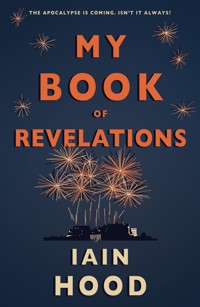
The countdown to the millennium has begun, and people are losing their heads. A so-called Y2K expert gives a presentation to Scotland's eccentric Tech Laird T.S. Mole's entourage in Edinburgh, and soon long hours, days, weeks and months fill with seemingly chaotic and frantic work on the 'bug problem'. Soon enough it'll be just minutes and seconds to go to midnight. Is the world about to end, or will everyone just wake up the next day with the same old New Year's Day hangover? A book about what we know and don't know, about how we communicate and fail to, My Book of Revelations moves from historical revelations to the personal, and climaxes in the bang and flare of fireworks, exploding myths and offering a glimpse of a scandal that will rock Scotland into the twenty-first century. As embers fall silently to earth, all that is left to say is: Are we working in the early days of a better nation?
Das E-Book können Sie in Legimi-Apps oder einer beliebigen App lesen, die das folgende Format unterstützen:
Seitenzahl: 282
Veröffentlichungsjahr: 2023
Ähnliche

















my book of revelations
by the same author
This Good Book
Every Trick in the Book
This Good Book also available as an audiobook,
read by Clare Grogan
my book of revelations
iain hood
renard press
Renard Press Ltd
124 City Road
London EC1V 2NX
United Kingdom
020 8050 2928
www.renardpress.com
My Book of Revelations first published by Renard Press Ltd in 2023
Text © Iain Hood, 2023
Cover design by Will Dady
Iain Hood asserts his moral right to be identified as the author of this work in accordance with the Copyright, Designs and Patents Act 1988.
This is a work of fiction. Any resemblance to actual persons, living or dead, or portrayed living after they are dead, is purely coincidental, or is used fictitiously.
Renard Press is proud to be a climate positive publisher, removing more carbon from the air than we emit and planting a small forest. For more information see renardpress.com/eco.
All rights reserved. This publication may not be reproduced, used to train artificial intelligence systems or models, stored in a retrieval system or transmitted, in any form or by any means – electronic, mechanical, photocopying, recording or otherwise – without the prior permission of the publisher.
EU Authorised Representative: Easy Access System Europe – Mustamäe tee 50, 10621 Tallinn, Estonia, [email protected].
my bookof revelations
A city is more than a place in space, it is a drama in time.
Sir Patrick Geddes, FRSE
Dear _____, I’ll gie ye some advice, You’ll tak it no uncivil: You shouldna paint at angels mair, But try and paint the devil.
To paint an Angel’s kittle wark, Wi’ Nick, there’s little danger: You’ll easy draw a lang-kent face, But no sae weel a stranger.
Robert Burns, ‘To An Artist’
That most ingenious of human inventions, the spoked wheel that turns independently of its axle, had scarcely been seen before in Scotland. Accordingly, when a chaise penetrated to the north no Apollo’s chariot could have created more amazement, and men bowed low before the driver in the belief that none but the owner would be permitted to drive so magnificent a vehicle. Several new stage routes came into existence. The coach between Glasgow and the capital began to make four miles an hour instead of the former three. Once a month passengers of sufficient wealth and daring could set out from the Grassmarket in Edinburgh with a fair chance of reaching London sixteen days later.
Catherine Carswell, The Life of Robert Burns
Everything’s connected to everything else… if you want it to be.
Kirov Tzucanari, Notebooks
1
15 centuries to go
The genius monk Dionysius Exiguus moved to Rome at about the age of thirty, already convinced he had to end the chaos of the various calendars which started from a multiplicity of years 1. There were ones he may not have known that well, like the Vikram Samvat, a lunisolar calendar used by Hindus which counted from Emperor Vikramaditya of Ujjain’s victory over the Saka, though he was a fantastically well-rounded scholar. He would have been familiar with the old Hebrew calendar that counted the years from the destruction of the Temple. From within his own European and specifically Roman traditions he certainly knew the most notable calendar in Europe counted from the putative year of ab urbe condita, the founding of Rome, giving rise to the AUC calendar. But too often calendars were of regnal years, those which counted the number of years a sovereign, pontiff or consul had been on his – mostly his – or her throne, or the year elected to consular office. These calendars were regional and not related to the most important historical event in the history of humankind from Dionysius’s perspective, as a Christian monk, the anno Domini nostri Jesu Christi, the year it was since the birth, or conception, or incarnation – there is some debate about which he meant, and what ‘incarnation’ entailed – of his Lord God, Jesus Christ.
The search was on for the anno Domini nostri Jesu Christi. Using mathematics of various and inventive sorts that we won’t go into just now, Dionysius was able to calculate, about 25 years after he had begun his efforts, that he was, in fact, in the year ad 525, and that thus his strenuous attempt to solidify the birth or conception or incarnation of Jesus as the premiere and ultimate pivotal point in human history had begun in ad 500. The time we now call before Christ, bc, or before the Common Era, bce, was decisively put to bed with the change over from 1 bc to ad 1.
There is no year 0 in Dionysius Exiguus’s calendar: the year ad 1 follows on directly from the year 1 bc. Like much of the mathematics of the mainly Greek mathematicians that Dionysius relied upon, he was himself likely to have had philosophical reasons for opposing the idea that zero could be any sort of natural number at all.
Almost all previous calendars ran from year 1, since noting the first year of a sovereign’s reign or first year on from some significant event makes sense; but counting the year previous to this as the sovereign’s or event’s zero year makes none. We will return to the implications of this decision, the lack of a zero year in thead calendar, in due course. And, of course, we must consider all these dates to be heavily caveated with ‘circa’.
For many reasons, counting systems themselves during these times had inbuilt limits of confidence, as did the provenance of source material time markers, the Gospels of Luke and Matthew, whence so much guesstimate work grew, were contradictory and internally inaccurate, suggesting, for example, that Jesus was 27 when he began his ministry and therefore 30 when he was crucified, died and resurrected, and was born sometime between 6 bc and 4 bc, as opposed to what might have been implied by anno Domini: 1 bc, 30 and 33 years, with Jesus conceived and incarnate at the Annunciation on the 25th of March, 1 bc, gestated for the usual human term of nine months, and therefore born and incarnated on the 25th of December 1 bc. The sharp-eyed among us will note some slipperiness with the concept of incarnation, specifically the Incarnation, and the start date for 1 ad here. For much of this, approximation and fairly rough calculation is all we have. All such calendars of the time, not least the anno Mundi, were fraught with such difficulties.
If you were to have asked Jesus himself – when alive as a man on earth, that is – what year it was, several answers were available to him. As a Galilean he may have said he was living in some tens of years, depending on what age he was, into the reign of the Tetrarch Herod Antipas. As a Jew, he may have said it was in the Jewish calendar year 3780 or 90 or so, again dependent on his age. As a citizen of the Roman Empire, he may have said he was in one of the years of a certain Consulship or Consulships, or in some regnal year of, mostly, the reign of Tiberius Caesar Augustus, or in the AUC years 754 to 784ish. He even may have heard tell of the Vikram Samvat from traders, say, trading along the developing Silk Road or the established spice-trade routes. He didn’t care much what year he was in, I suspect, Jesus, as mostly he thought he was in the end times, after which the Kingdom of God would supersede the earthly world.
By the 9th century, ad was also to comprehensively trump use of anno Mundi, the calendar that counted from a literal reading of the creation of the universe – the ‘world’ in ancient parlance – in the Old Testament. This was part of Dionysius Exiguus’s mission: ad 500 was also the year anno Mundi 6000, which, enthusiastic end-of-the-worldists believed, was to be the year the Apocalypse would be upon them: risen dead, return of Christ, end of everything, et cetera. And yet here he was, Dionysius, and so was the world, after the 1st of Januaryin the year ad 525, am 6025, twenty-five years after no noticeable apocalypse.
The AUC and AD calendars, with adaptations through first the Julian and then Gregorian calendars, carried along the Roman date for the official appointment of consuls, the first day of January, as the change from old to new year. Though, of course, other new year dates persist, and not just from other cultures, like Chinese New Year. If you don’t think so, then do your tax return – calculated according to the fiscal year that runs from the 6th of April one year to the 5th of April the next – on New Year’s Eve while thinking wistfully about your pre-work, pre-tax-worries student days, the days that formed an academic year – the one that runs September, Octoberish through to late May, June. De-Christianised as the Common Era calendar, which may have had Dionysius Exiguus spinning in his grave, anno Domini would go on to conquer the world, with the People’sRepublic of China even choosing to use it for domestic purposes – they had used it for internationaltrading since 1912 – from 1949 onwards.
Dionysius Exiguus died circaad 544, and therefore about 1,405 years before this final triumph of his calendar.
2
15 decades to go
By the year 1850, developments in travel and communication made apparent that local time usage, by which all geographical points defined noon as the time at which the sun reached its highest point overhead, could no longer be sustained. Up until about then, no one moved fast enough nor far enough for time differences to matter. But, for example, the first temporary train terminus of the Great Western Railway had been opened at Paddington in 1838, and since 1840 GWR had used portable precision time pieces, chronometers, set to Greenwich Mean Time, to help with the running of their trains, expected periods of time for the train to travel east or west counted with a single point of reference and therefore the times at which the train would reach intermediate stations and a final terminus. By 1847 most railway companies in the United Kingdom of Great Britain and Ireland – we’ll use the terms of the time – were using GMT as the time throughout the nation for their own purposes and on their timetables. Yet local time still prevailed in many people’s minds over the curious London-centric imposition of GMT, what people who cared to be bothered by it called ‘railway time’. Similarly, the development of telegraphy meant that, by 1852, the Post Office could transmit the time from the Observatory at Greenwich, and soon most if not all public clocks, or noting of the time via other public means, such as church bells, were using GMT, though often with secondary means of noting the local and therefore ‘real’ time. Some realised it could only be a matter of time before the whole world would require such standardised time. And it was a whole new world. Momentous events were taking place in all areas of life. For example, in 1859, Darwin finally published… Yes, OK, we all know that side of things.
(It’s possible you’re pushing it.)
In 1868, New Zealand, at the time still governed as a colony, even though the Constitution Act of 1852 had established a fairly independent New Zealand parliament, adopted a standardised time of GMT+11.30. By 1880 the bulk of the British Isles were using GMT rather than local times, spreading out to the Isle of Man, Jersey and Guernsey, and, finally, Ireland, which in 1880 set Dublin Mean Time, measured at the Dunsink Observatory as GMT minus 25 minutes and 21 seconds. In 1916, GMT superseded Dublin Mean Time. The first inklings of time zones were being established.
During these same years a number of schemes for a worldwide system of time zones were proposed. The foremost of these was developed by the Italian mathematicianQuirico Filopanti in the 1850s, whose system went unrecognised and was never adopted, and then in 1876 by Kirkcaldy-born Scots-Canadian Sir Sandford Fleming, who was instrumental in the invention of twenty-four one-hour time zones, and the setting of Greenwich as the prime meridian – the zero degree by which each part of the earth relates longitudinally by degrees. Not to say he was alone in this endeavour, and indeed there were a number of learned committees and political appointees who took a more or less useful part in these developments. In one sense, Fleming might be considered one of the great obliterators of time: he banished all the other GMT+ and GMT-s of interim minutes – the GMT-s of 5.45, 1.23, 9.58 and the GMT+s of 7.38, 3.46, 6.21 – leaving only 1, 2, 3, et cetera.
It was this eminent Victorian, Sir Sandford Fleming FRSC KCMG, who, travelling in Ireland in 1876, missed a train in Dublin one day, due to an error on the timetable between a.m. and p.m. that obviously irritated the illustrious gentleman greatly. The already reputed ‘most distinguished Canadian of his age’ was then forced to spend a night at the train station. He arrived with twenty minutes to spare for the scheduled 5:35 p.m. train. Unfortunately the train had arrived on schedule too, at 5:35 a.m., the p.m. printed in the timetable being the offending error. As he was left waiting for the next available train, Fleming conceived of a simpler world with a simpler clock, one that would consider all twenty-four hours of the day without the fraught-with-risk possibilities of double-counting the hours in the day. As he thought it through it became clearer and clearer to him that it was only stupidity that kept us from counting past the number twelve in this particular instance. In time, he would go on to not only proposing a twenty-four clock, but also a twenty-four hour terrestrial time that would map over the earth in twenty-four hour intervals, beginning with a prime meridian, proceeding by fifteen longitude degrees around the globe, and define the hour in these geographical locales relative to… oh, let’s say… the time at the zero hour at Greenwich.
(Well, there you go – a ripple of applause and laughter, and in a job-interview presentation, of all things.)
Thanks.
At the International Meridian Conference held in Washington D.C. in 1884, convened at the bequest of one of the, perhaps unfairly, lesser-known presidents of the United States, the 21st president, President Chester A. Arthur, the adoption of Greenwich as the internationally recognised prime meridian and the intention to adopt a time-zone scheme much like Fleming’s were confirmed. Over the coming years, the rail companies pushing west over the States, bringing scientific, political and commercial interests to bear, set out time zones across the land, which were more rough-hewn and less universally adopted than one might hope – certainly more than the precision-minded Fleming might have hoped – but which were, nonetheless, for the most part, workable.
The ingredients for a worldwide and universally agreed set of time zones, based for the most part on Fleming’s principles, if not quite the detail, were all now to hand. This would lead, in time, to the creation of Coordinated Universal Time, UTC, where UTC zero-maps directly on to GMT. The Greenwich prime meridian would denote the middle of the first, zero, hour, with positive and negative offsets running to respectively left and right of the zero, if viewed on a map, or thought of as running anticlockwise as conceived of viewed looking down upon the north pole, and thus the farthest reaches of the offset meet at the opposite side of the spinning earth from Greenwich zero at the point the nominally UTC-12 nominally meets the nominally UTC+12, at the 180th degree. This point is also called the international date line, as it is the point at which one day changes over into another, so that to differentiate those in zone UTC-12 from those in UTC+12, those in UTC-12 are in the next calendar day to those in UTC+12. In practice, and for certain geographical reasons, not least the spread-out nature of atolls and islands in the Pacific Ocean comprising one geopolitical entity, and the nature of the time at which these entities wished sunrise and sunset to be considered, such date-line changes could happen at UTC-10 and UTC+14 or UTC-11 and UTC+13, Kiribati being one such trans-date-line nation.
The 32 atolls that make up the Republic of Kiribati in the Pacific Ocean lie across the international date line. This raised an interesting dilemma for the approximately 120,000 people of the Republic – though I don’t know why, apart from the constant river of births and deaths, it shouldn’t be possible to get a fairly accurate exact number of Kiribatians since they inhabit a fairly contained space and there just aren’t that many of them: could be counted on one day, really – I suppose it comes down to the day you pick. They, or some of them, or someone among them realised, in the run-up to the turn of the millennium – let’s leave aside whether this was the turn of the millennium for now – New Year’s Eve 1999 into New Year’s Day 2000, that as they straddled the international date line, this also meant they could technically jump to one side or the other. Perhaps perceiving the note taken – primacy- over recency-wise – in media coverage of new-year celebrations, Kiribati, not without controversy and mostly due to their unilateral decision, moved from one side to the other, from UTC-11 to UTC+13 and UTC-10 to UTC+14 across the islands at midnight on the 30th December 1994, skipping out on a day, and landing in the moments after midnight on the 1st of January 1995 ahead of the rest of the world as opposed to the last to experience the delights of a New Year’s Eve and morning shindig.
Although there has been other time-zone jiggery-pokery here and there, most often with whole nations choosing the same time zone across their east-to-west expanse, or a nation choosing to be in one time zone over another for political reasons, for the most part, the system that runs closely to Fleming’s principles has held up admirably, with the scheme now universally applied, as it had to become throughout the 20th century, as, again, developments in transportation and communications made an agreed time that applied worldwide an ever greater necessity, reaching to all the nations of the earth, last but not least, Nepal. It is possible that one Victorian gentleman’s irritation and time spent in a Dublin train station, bored, thoughtful, feeding his anger with the facts of the matter regarding time, trains, train timetables and the blithering idiots who misprinted p.m. when a.m. was so patently what they meant never had such far-reachingconsequences as did Sir Sandford Fleming’s irritation at a faulty Dublin train timetable. I imagine him in his high Victoriangrandeur, frock-coated, top-hatted, pince-nezzed and big-bearded, shoving some poor soul sandwichboardman carrying a sandwichboardproclaiming THE END IS NIGH as he made his way towards some other poor dolt of a ticket seller or other railwayman of the Dublin, Wicklow and Wexford Railway Company and sniffily saying, ‘The end will be nigh for someone when I catch the Irish idiot who printed this timetable!’
(You probably are pushing the possibility of their boredom.)
Nepal, that seemingly ever-otherworldly country, that somehow timeless world unto itself, was the last to adopt the UTC system, moving from the local mean solar time set in the nation’s capital Kathmandu of 5 hours, 41 minutes and 16 seconds ahead of GMT/UTC, first joining Indian Standard Time of UTC+5.30 in 1920, then having a wee square-peg, round-hole moment in 1986 sort of typical of this minnow that sits between two whales, creating Nepal Standard Time of UTC+5.45. This all as more people travelled to and communicated with the country, no doubt, and in the foment of nascent Nepalese pro-democracy movements that sought to bring an end to King Birendra’s oppressive Panchayat partyless government’s political system. It also can’t be a coincidence that these years were also notable for the development of worldwide computer systems and networks, which were soon to be the main conduit of the peoples of the world communicating with each other.
3
15 years to go
1985. Let me remind you. Ronald Reagan. Mikhail Gorbachev. Ronald Reagan and Mikhail Gorbachev. Margaret Thatcher doing everything she could to crush the unions here. Ooh. An ooh? That’s not controversial, is it? Maybe I don’t know… your generation… Not that I’m assuming a generation for you lot… Maybe my politics is a bit dinosaur. Anyway. Plane crashes, terrorist attacks and fires. Trouble in the Middle East. Eastenders in the UK and Neighbours in Australia and Moonlighting in the States. The IRA. An earthquake in Chile. The Lebanese Civil War and the Beirut hostage takings. Islamic Jihad blowing up a café in Madrid. Amadeus and The Killing Fields and, right up our thematic street, Back to the Future.
(A whoop? These idiots don’t even know that Peggy Sue Got Married is so much better. The year after.)
The Mujahideen. The end of a ban on interracial marriage in South Africa. New Coke. The death of New Coke. Bradford City stadium fire and Heysel Stadium, the injury and deaths of fans of games of football. The hole in the ozone layer. Bombings in Nepal. The Rainbow Warrior sunk in Auckland harbour by the French secret service. Live Aid. And ‘We Are the World’ by USA for Africa. A state of emergency in South Africa due to protests in black townships. A massacre in Peru. The plane crash killing Samantha Smith. The locating of the Titanic. An earthquake in Mexico. The death of Klinghoffer on the Achille Lauro. A siege in Bogotá, Colombia. Kasparov versus Karpov. A volcano erupts in Colombia killing tens of thousands. Terrorist attacks, assault rifles, grenades, at Rome and Vienna airports. And Dian Fossey was murdered in Rwanda. She worked with mountain gorillas, trying to figure out whether they had language or something. You might have seen the film based on her book, or, who knows, read her book, Gorillas in the Mist. And now I’m remembering something, might have been to do with Fossey, that after years of studying gorillas they did work out what they were saying to each other, that ninety-nine point nine nine per cent of the time what they were saying was, Hello, hi, hey, hi, hello, I’m over here, and now I’m here, I’m me. Doesn’t make them that different from us, really, does it? The other zero point zero one per cent of the time they were asking who was holding the banana stash.
Now, to some other things I didn’t know at the time, but have found out since. First, on the 1st of January 1985, the Internet’s Domain Name System was created. Did you know this? Well, I know you know all about the Domain Name System. I meant, did you know it was created on the 1st of January 1985? I mean, all memory gets misty. And I’m sure you know the implications of the creation of the Domain Name System. I won’t be going into that. And in the States, Microsoft released Windows 1.0 – how about that? I’m sure I don’t have to go into the history and implications of that for our purposes! Windows 1.0. It must have been quite a moment. But was there an even bigger moment in computing that year? Yes, that’s right. You’re a smart crowd! The publication of the first edition of The C++ Programming Language. By Danish genius Bjarne Stroustrup. Mm. I just like trying to say his name. Stroustrup? Bjarne? Bjarne? And I know that, for you lot, I don’t have to say any more about this development. And then there was the formation of the National Science Foundation Network, or NSFNET, with the linking of five supercomputer centres across the United States, at Princeton, Pittsburgh, University of California at San Diego, University of Illinois at Urbana-Champaign and Cornell University. Some bunch of hippies start the connected Bulletin Board System and start calling themselves an online community. Dell sold his first computer, PageMaker for Mac was released, kickstarting the publishing revolution, and Nintendo gave us – wow, am I getting a whoop for that? – Nintendo gave us the Nintendo Entertainment System and we all met Mario the Plumber! Another whoop?! Well, OK.
(The slip from formal to informal all going well. Pull them in. You have to know how to handle dweeboids, geekboys, Hobbits, nerds. Or is that herd nerds?)
1985 was also when Jobs lost out and got kicked out of Apple. On a darker note, outside his computer rental shop, a sign of the times itself… Well, Dell’s computer was selling at $795.00, which was a lot of money in 1985, and rental was the way to go – the same way television and even radio rental had been in the past. Yes, even radios. Haven’t you heard of Radio Rentals? Yes, that was a radio-rental company! Because in, I don’t know, the 1920s and 30s a radio would have cost you more than your house, I’m guessing. We’re getting off the point. Outside his computer-rental shop, Hugh Scrutton was the first fatality in a bombing campaign of domestic terrorism. He was blown up by an explosive device placed there by Ted Kaczynski. Oh! Yes, we’ve all seen Good Will Hunting, haven’t we! We all love a story of a maths genius. I mean Will, not Ted, there. Yes, the Unabomber.
(Don’t let them blow you off course again like that.)
And PlayNet, Inc. in Troy, New York State created the PlayNet online service, which allowed Commodore 64 users to game together remotely and chat via electronic messenger, or what we might call mail – electronic mail, or e-mail, as it would become known. PlayNet licenced the system to Control Video Corporation, which would change name to Quantum Computer Services, which in turn would later change its name to… Yeah, you’re right, America Online, subsequently styled AOL. The online world would, over the next fifteen years, become a place, a cyberspace, which has its own time zone, or zones, and, with the ability for people to communicate instantaneously over huge geographical areas, in whatever time zone they are in in the real world, its own spacelessness and timelessness. A world equivalent and opposite to the real world, IRL or ‘in real life’. That dull, dirty, grey place we’re forced to make our way through in boring real time. Offline. But surely being on is better than being off, right? It just sounds right, doesn’t it? Now, we can debate the realness of the online world, where we can make real decisions that have real consequences, and increasingly we know people can make bad decisions with really bad consequences. But anyway, our concern is that the time, the changing time in the abstract, in our systems and online, can have an effect in our real world, and our question is, what will that effect be?
(OK. Pulled back to where you wanted to be. Thank you, James Burke. Back in those days. The Day the Universe Changed. Connections when I was 12, 13.)
I think that gives us enough to know why we are where we are. I look forward to the technical interview in – three, is it? Two. Two days. Gentlemen. And ladies. Does anyone have any questions?
(Told the company had ‘interests’ in whisky, agrichemicals, pharmaceuticals and computers themselves. The CEO a millionaire several times over. His eccentricity: don’t take offence, they said. No oil in there? I asked. Do not bring that up if you meet him. Well, OK. You mean he won’t be here at the presentation today? Probably not. Possibly, but probably not. He’s possibly in the Caribbean at the moment.)
What else can we say about 1985? The first year that we actually lived through. We – you and I – can actually remember 1985. No one here under 14? No, I suspected not. There are things I have mentioned that I remember about 1985, but I’ll admit for much of this I went to the library and looked up headlines. That’s the way we know things, isn’t it? For the time being, anyway. We’ll get to that, maybe during the technical…
(Old man arriving at the back door. You’re late, mate.)
Yes. There are certain personal experiences I do remember from 1985. Waking up on New Year’s Day, for example, with the same earworm playing in my head that would play in many people’s heads, certainly in the UK, that year: ‘Do They Know It’s Christmas?’, the ‘Feed the World’ end section. Yes? You too? And you? Mmm. As I say, all of us at some point that year. And the Live Aid concert. 13th of July 1985. I wasn’t there, but I spent the day at a barbecue at a then-girlfriend’s parents’ house in Ayr, balancing catching a burger or hotdog with watching most of the hours and hours of coverage of the concert, into the small hours, right through to the end.
Will we wrap this up here?
(Look around. Movement. Unclenching. Prince released his song ‘1999’ for the first time in 1982, alongside the album 1999. But it was rereleased in the UK in 1985 as a twelve inch – it was one of us, probably Andy, that had it, but we all played it – we’re gonna… That New Year’s Eve? Probably, at the Pavilion. Whatever year it was, ‘1999’ was a New Year’s song. A gift to DJs, easy floor filler. It looked to the future then. On New Year’s Eve 1985 it was probably too far in the future, 1999, to really or fully conceive of. We’d be 35 or thereabouts. That was old. We were twenty-year-olds. 35 was for ever away, almost your life again. But was it? I don’t specificallyremember being there that New Year’s. But they are the kinds of things, the repetitions of life, that can roll into one another. You spent one New Year here a few times, there some other times, once before in Edinburgh at the big event, but which year was which? Even the unique one, Edinburgh? I mean, what specific year was that. 1994? 95? 93? Close as I can pin it down.)
Is that…? Is that OK?
(Forming into small groups, chatting. How many are actually in here? Why did they want a presentation to the whole company, anyway? My mother’s friend, a fan from the sixties and seventies – fifties as well – expressing her homophobia by saying she could not forgive Rock Hudson. And now I wonder what it was she could not forgive. Yes, literally him, Rock, she could not forgive him. But what? Couldn’t forgive him for dying? Couldn’t forgive him for being gay? Or she couldn’t forgive that only recently she had found out he was gay? Or worse, in this sense: had been gay through her years of dreaming of him as her – sexual? – partner? During the last year, when he became the first celebrity to disclose an AIDS diagnosis, and promptly died not long after this. She sold the VHS video collection. And Milan Kundera was who we were all reading. The Unbearable Lightness of Being was just starting to circulate. But it was The Book of Laughter and Forgetting that we had all been passing between us. Love a book with Book in the title, me. I remember the shock of recognition of a new thought when at the back of the copy we had there’s an interview between Philip Roth and the author. Roth kicks off, preparing for some point he is about to make about Kundera’s philosophy, asking Kundera if he thinks the end of the world is coming. Kundera asks when Roth is thinking of, and Roth replies something like, Imminently, to which Kundera notes that the idea the whole show was about to end is an idea almost as old as the human species. Oh, so nothing to worry about, says Roth. And this is the kicker. Kundera says something like, What? No! If humanity has been thinking this for as long as it’s been around there must be something to it!)
Any other questions? Perhaps over coffee?
(No one listening. This one has come to stand by me but is saying nothing to me. Just kind of hanging there. We could all be dead by the morning. To think I had almost forgotten those years’ end of the world. Sign of the times. That apocalypse. The big disease with the little name. In 1985 the virus didn’t even have an agreed name. Just ‘the disease’. AIDS. Gay Plague. Jesus. The danger that was a threat to us all. The Tombstone Monolith, the Iceberg. What we knew, just as an adult sex life beckoned and was upon us was that sex could kill again. A double end to the world as we had known it. So that was the gist of the song. Party now. NOW. NOW! Free your mind and your ass will follow. Make my funk the P-Funk. The Subclub in Jamaica Street. And for Prince and all us dancers that would be the big one, the party of the millennium! 2000. The day the earth still stood. Or was destroyed. But it was New Year’s, and did Neil say something about champagne? But. I told him it just wouldn’t be right. I didn’t think it would. Because it wasn’t New Year,




