



1,49 €
Niedrigster Preis in 30 Tagen: 1,99 €
Niedrigster Preis in 30 Tagen: 1,99 €
Mehr erfahren.
- Herausgeber: Edições Sesc SP
- Kategorie: Geisteswissenschaft
- Sprache: Englisch
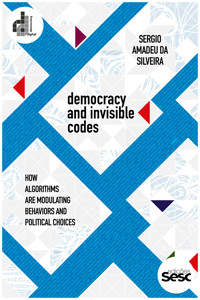
Viewing cybernetic technologies as technologies of communication but also of control, the sociologist and professor Sergio Amadeu da Silveira addresses in this book the implications of the growth of digital networks and the establishment of a market for personal data collection and sale that encroaches on those environments. Referencing both prestigious authors and practical examples, the book brings to light the way in which this so-called "data market" – represented by companies and systems – has strived to approach individual privacy as an obstacle to be removed. Closely linked to the content, the book is published exclusively in digital format.
Sie lesen das E-Book in den Legimi-Apps auf:
Seitenzahl: 122
Veröffentlichungsjahr: 2017
Ähnliche



















I dedicate this book to Bianca Santana, my partner, to my daughters Bruna and Cecília and to my sons Lucas and Pedro.
ACKNOWLEDGMENTS
This book was born from a conversation with the team at Edições Sesc São Paulo. I thank the publisher’s team immensely for their decisive encouragement in publishing it. I would also like to mention my gratitude to my supervisees Rodolfo Avelino, Matheus Cassina and Joyce Souza for exchanging ideas about the dynamics of the data market in Brazil. Despite not mentioning individual names, it would be unfair not to thank the researchers of the Universidade Federal do ABC (UFABC), who maintain an environment conducive to freedom of thought and critical thinking, essential to scientific research. Finally, I thank my partner Bianca Santana for our frequent conversations on the approach to several issues addressed in this work.
...what counts is not the barrier but the computer that tracks each person’s position – licit or illicit – and effects a universal modulation.
Gilles Deleuze
CONTENTS
Presentation
Danilo Santos de Miranda
Introduction
Information economy and the destruction of rights
Chapter 1
Information societies, capitalism, and control
Chapter 2
Inversion in communications ecosystem
Chapter 3
Corporate opacity and daily life transparence
Chapter 4
Microeconomics of data interception
Chapter 5
Modulation and control devices
A very brief conclusion
References
About the author
Credits
FOR ABOUT FIVE DECADES NOW, the idea that we are living in the “information age” has accompanied our search to understand the set of transformations that have made their mark on societies. The early 1970s, which would witness inventions such as the data microprocessor, the emergence of personal computers and the spread of robotics, were already familiar with realities such as satellite transmissions, the use of fiber optics and the networked exchange of electronic data.
In that environment of urban spaces in rapid transformation to incorporate such information and communication technologies, studies like those of the American sociologist Daniel Bell, author of The Coming of Post-Industrial Society, published in 1973, resorted to terms like “information societies” – an idea that authors such as the economist Fritz Machlup had already advanced in the previous decade.
In his book, Daniel Bell (relating to the thought of Alain Touraine and his pioneering 1971 book The Post-Industrial Society) considered that the so-called post-industrial society was characterized by the gradual and continuous replacement of the industrial economy by a services-based economy and, by extension, by the use of information as one of its key resources. In the scenario projected by Bell, which considered the US at the beginning of that decade, societies would be guided by innovation and development, and the architects of those times would be found among the mathematicians and engineers of new technologies.
The expansion of technical information and communication devices as part of the transformations of those societies would therefore have spanned decades, ranging from the accelerated spread of telephony and computer use to the implementation of new technologies by the financial sector in the capitals market, the automation of the different branches of industry and the multiplication of so-called self-services.
However, the debates waged around an “information age” would reemerge vigorously in the 1990s – in works such as that of the Spanish sociologist Manuel Castells – owing to the advance of a medium that seemed to involve, transform and empower all other means of exchange and circulation of information: the internet.
Today, not only has the process of producing, editing and distributing knowledge and information been profoundly altered by a distributed network such as the internet, but social interactions have been equally affected by the volume of information and connections that have become commonplace thanks to the new medium.
Therefore, reflecting on a connection network such as the internet confronts us with both the advances and challenges characteristic of the communication of this “age.” Part of those challenges is the focus of the book by Professor Sergio Amadeu da Silveira which we are now pleased to offer to the public. Inviting reflection at the very moment in which important consequences of the use of networks are revealed, the professor’s work addresses the implications of, for example, privacy and the trade of personal data, issues that the use and increasing reach of digital resources have placed on the current agenda, enhancing the indispensable reading of works such as this.
Closely linked to its content, the book’s format inaugurates a new pathway for the circulation of knowledge by Edições Sesc: the creation and publication of exclusively digital titles. Alongside the publisher’s printed titles already converted to this format, this publication reaffirms the institution’s investment in the development of the so-called digital book. Committed to building a more equal and inclusive society, Sesc recognizes in the encouragement of reading, enhanced by new media, an effective tool in the development of a critical, creative and renovating social environment.
Danilo Santos de Miranda
Regional Director of Sesc São Paulo
THIS BOOK ADDRESSES THE SOCIAL RELATIONS STEMMING from the intensive use of information and communication technologies involving companies, technologies, and devices and which make up one of the most important markets nowadays: the personal data purchase and sale market.
There is nothing new in exposing the existence of companies whose purpose is to collect and process data on consumer habits. Nor is it surprising to increasingly hear and read about terms like “big data”, “data mining”, “predictive algorithms”, among others. Marketing experts affirm our data are essential to enhance our experience as users of specific technologies. By having access to our behavior, companies could rapidly offer what we seek, with the desired quality and effect.
I have recently seen an article in which the journalist praised the fact that credit companies do not only keep registers of bad debtors. Now, they also collect information on everyone, especially good payers, allegedly to reduce interest rates or to provide greater benefits to customers who are up to date with their dues.
Data collection results in an increasingly better world, as companies can improve their products and services.
In early 2012, The New York Times ran a story on how companies learn consumers’ secrets.1 An interesting fact called our attention: a software program could predict when a consumer was pregnant based solely on the purchase analysis of, in general, unscented lotions. The same article revealed that a store gained competitive advantage by predicting that a woman who bought supplements like calcium, magnesium, and zinc would be in her first weeks of pregnancy. Therefore, it could then offer its customers specific products and modulate their future purchases.
The need of catching people’s attention in a society that increasingly uses network communication gives rise to experts in attraction of senses and formulation of strategies in this scenario of attention macroeconomics. Some companies develop software programs that generate statistics and analyze personal behavior, whereas others create solutions to collect people’s data and track their web browsing to analyze their choices, how long they remain on a webpage, the colors and texts that draw their attention in social media advertisements, and the type of postings that repel individuals from specific social segments. What is the raw material for the production of a social behavior-inducing science in a society integrated by digital networks? Personal data are undoubtedly the key elements to make profiles of behavior, consumption, and even cultural and political choices. This book seeks to demonstrate that the post-industrial information society, immersed in cybernetic technologies, has modified the capitalist market to the point of making it dependent on a microeconomics of personal data interception.
At this point, we must fall back on the analyses and ideas of Gilles Deleuze, who, in developing the historical periodicity begun by Michel Foucault, warned us as early as the mid-20th century that we were living in control societies. The researcher Fernanda Bruno, inspired by Foucault and Deleuze’s outlook, advocated that we live in an environment of distributed surveillance and that the observation of individuals and populations would imply the production of behavior-governing knowledge. She argued that in digital networks, devices and “the knowledge associated with them are mainly produced by monitoring, analyzing, and categorizing the immense flow of personal data and traces in circulation.”2 A distributed and widely practiced surveillance by the market, with the aim of modulating behaviors, is part of the reflections of this book and suggests intersubjective relations in social aggregates that require critical analysis.
The ambivalence of most technologies also emerges in this scenario. The systematic collection and analysis of data performed by companies not only enhance experiences, but they can also create socially unacceptable exclusions and costs. When a health insurance plan rejects people or charges twice as much in the knowledge that they are genetically predisposed to certain diseases, we start to worry at what the data collected about us can generate. When companies are able to know much more than what is on a candidate’s résumé and make ideological choices based on the analysis of all job applicants’ online browsing history, we begin to realize that perhaps not all data collection and analysis is performed for the benefit of everyone, but only of a few.
In this new phase of capitalism, strongly based on a behavior modulation biopolitics, there is a conflicting exchange between the microeconomics expansion of data interception, the intrusion of tracking devices, and the right to privacy. The greater the domain considered indispensable to guarantee privacy, the smaller the scope for the expansion of the information economy. Thus, it has become essential, for the expansion of the personal data market, to produce discourses that remove the barriers stemming from liberal doctrine – responsible for the concept of privacy in the field of basic rights of modernity and one of the constituent elements of modern democracies. Economic liberalism (in its contemporary neoliberal strand) is striding in the face of fundamental freedoms, among them the right to privacy and to anonymity.
A detailed analysis on the dynamics and structure of information societies that have developed with cybernetic technologies, i.e. within sociotechnical processes of communication and control, is required. Communication is achieved in such processes through mediated links positioned between communicating entities. The basis for interaction is the establishment of contact between devices used for communication. This process has generated detailed information about each device, computer, router, and machine taking part in the communication. Such information, which goes beyond what is communicated via cybernetic networks, is extremely relevant to the economic system, as well as to what Giorgio Agamben has described as the growing politicization of “naked life,”3 in which states and large corporations increasingly manage all aspects of life.
1 Charles Duhigg, “How companies learn your secrets”, The New York Times Magazine, 16 Feb. 2012.
2 Fernanda Bruno, Máquinas de ver, modos de ser, Porto Alegre: Sulina, 2013, pp. 145-6.
3Giorgio Agamben, Estado de exceção, São Paulo: Boitempo, 2015.
INFORMATION SOCIETIES EMERGEas a historical overshoot of industrial societies. As early as 1962, the economist Fritz Machlup introduced the concept of information society in his book The Production and Distribution of Knowledge in the United States. Machlup was one of the first people to realize the importance of knowledge as a fundamental economic resource. In 1973, the sociologist Daniel Bell released the book The Coming of Post-Industrial Society, in which he sought to demonstrate that the service sector and the information-related activities were generating more value and more jobs than industrial activities.
For some time now, a number of studies and essays have pointed out that machines reproducing physical force and enhanced speed were losing ground to technologies that store, process, and distribute information. Manuel Castells’s trilogy titled The Information Age: Economy, Society and Culture, launched in 1997 in English, described in its first volume the information society as a networked society. A new social morphology would be on the rise with digital networks and their support and expansion technologies. Without disregarding the conceptual differences between the authors who sought to define the bases of social relations in the post-industrial economy, we can perceive the theoretical effort in almost all of them to explain the ongoing changes related to technological transformations.
Information societies are post-industrial societies whose economy is heavily based on technologies that treat information as their primary product. Therefore, the greatest values generated in this economy do not essentially originate mainly from the production of material goods, but from the production of intangible goods, those that can be transferred through digital networks. In addition, information societies are structured on cybernetic technologies, i.e. communication and control technologies, which have social consequences that are widely distinct from those of typically industrial analogue technologies.
One of the main social differences between cybernetic technologies and industrial world technologies is easily seen by comparing a robust metal lock and a digital device for opening doors. When a metal key that fits correctly in the lock is used, we do not leave behind a record of how many times we have opened or closed it. The act of locking the door does not register the exact time when it occurred. However, cybernetic technologies are different in nature. A digital lock opened using a magnetic card or biometrics not only unlocks the door but also records the exact time it happened. It can also register which magnetic card or fingerprint opened the door, if there is more than one. The physical part of the device is commanded by its logical part, generating a set of information that is stored in a software program.
Digital technologies produce a set of information every time they are used, which greatly alters the ability of economic agents to evaluate their practices and businesses. In the 19th century, Karl Marx argued that the capitalist system stimulated the flow of capital and increased its global circulation through time and space.1 The capital as a commodity in the sphere of circulation needed to reduce the time of conversion into money and return to the capitalist to be re-employed in its expansion. In the current phase of post-industrial economy, information about commodity consumption returns to the capitalist as a crucial element in the process of capital reproduction. Data on how the product was consumed, the exact time of purchase, and transaction metadata come before or together with the money resulting from the circulation process. Thus, the growth of purchase and sale transactions carried out via digital networks increasingly generates data on the profile of the consumer who has purchased a good.




