


Erhalten Sie Zugang zu diesem und mehr als 300000 Büchern ab EUR 5,99 monatlich.
- Herausgeber: Origin
- Kategorie: Geisteswissenschaft
- Sprache: Englisch
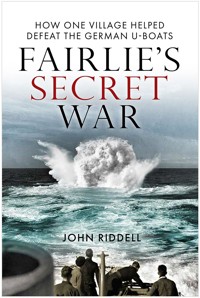
During the Second World War the Royal Navy's vitally important Anti-submarine Experimental Establishment was secretly moved from Portland in Dorset to the Ayrshire village of Fairlie, to escape German bombing on the south coast. For the next six years it occupied the boatyard of yacht builder William Fife on the Firth of Clyde. During this time, highly confidential world-leading research on the acoustic detection of submarines by asdic – now known as sonar – was carried out by hundreds of scientists, officers and local men and women based at Fairlie. As experiments took place into new ways of sinking German U-boats, the peace of the quiet village was shattered. Winston Churchill described the work done at Fairlie as critical to winning the Battle of the Atlantic and ultimately the war. The research remained relevant to anti-submarine warfare long after the war, and is still relevant today. Fairlie's role in the war was not disclosed until relatively recently. Highly illustrated throughout and making use of previously unpublished material, this book tells the full story of the establishment at Fairlie for the first time. It describes the impact it had on local people, and their relationship with the naval officers and scientists who came to work there. Winner of the John Strawhorn Memorial Quaich, awarded by the Ayrshire Federation of Historical Societies 'to an individual or group who is judged to have made an outstanding contribution to the local history of Ayrshire'.
Sie lesen das E-Book in den Legimi-Apps auf:
Seitenzahl: 214
Veröffentlichungsjahr: 2022
Das E-Book (TTS) können Sie hören im Abo „Legimi Premium” in Legimi-Apps auf:
Ähnliche




















FAIRLIE’S SECRET WAR
To Anne
First published in Great Britain in 2022 by
Birlinn Ltd
West Newington House
10 Newington Road
Edinburgh
EH9 1QS
www.birlinn.co.uk
ISBN: 978 1 78885 569 3
Copyright © John Riddell 2022
The right of John Riddell to be identified as the author of this work has been asserted by him in accordance with the Copyright, Designs and Patents Act, 1988.
All rights reserved. No part of this publication may be reproduced, stored, or transmitted in any form, or by any means, electronic, mechanical or photocopying, recording or otherwise, without the express written permission of the publisher.
British Library Cataloguing-in-Publication DataA catalogue record for this book is available on request from the British Library
Typeset by Initial Typesetting Services, EdinburghPrinted and bound in Malta by Gutenberg Press
CONTENTS
Preface
Acknowledgements
1 Introduction
2 To Fairlie
3 Research and experiments: Locating U-boats
4 Research and experiments: Killing U-boats
5 The people
6 The ships
7 Leisure and the locals
8 Time to go home
9 Postscript
Further reading
Picture credits
Index
PREFACE
I came to live in Fairlie in 1972. The small Ayrshire Coast village was not unknown to me, as in my younger days I had often boarded Clyde steamers at Fairlie’s wooden pier for summer holidays on the islands of Bute and Arran. Having a keen interest in all things related to the Clyde and its shipping, I was also aware of the William Fife & Son boatyard, famous throughout the sailing world for the design and construction of beautiful racing yachts. After making my home in the village I made occasional visits to the Bay Street yard to watch the skilled craftsmen building and repairing the boats. Like many others living in Fairlie, I was saddened when the 180-year-old boatyard finally closed.
Over the years I occasionally heard older Fairlie residents talk of what they called ‘The Establishment’. It was part of the Navy, I would be informed, and occupied the Fife yard during the Second World War. Something to do with submarines, those villagers who still recalled it said, but always adding that the activities were very, very secret. Not even the locals who worked there, one elderly man told me, really knew much about what was going on.
In Fairlie Parish Church there is a small wall plaque commemorating six Royal Navy sailors who were drowned close to the village in 1944. They were part of the crew of a warship called hms Kingfisher. I have to say I had taken little notice of this plaque on my visits to the church. With my known interest in ships, however, a few years ago I was asked if I would write a short article about the plaque’s history for the church newsletter. So I started to research the story of not only hms Kingfisher, but also why hms Kingfisher was at Fairlie during the war.
I eventually discovered that the official title of the wartime occupant of the Bay Street yard was His Majesty’s Anti-Submarine Experimental Establishment Fairlie. It was part of the Royal Navy and it was based in the village from October 1940 until February 1946. As the name indicates, it was a place where experiments were carried out into ways of opposing submarines, or as the German ones were called, U-boats. But what kind of experiments and what did they involve? I was told that many very clever people were employed there. Who were these people and where did they come from? Fairlie in 1940 was quite a small village. How did those who lived there react to the five years of secret research carried on within their community?
I hope I have provided answers to these and many more questions in the following pages. I have been fascinated by what my research has discovered. The experimental work undertaken at Fairlie did indeed make a major contribution to Britain not losing the battle against the U-boats. More intriguingly, it also formed the basis of much of the pro- and anti-submarine research activity of the later Cold War years, which is no doubt why everything to do with the Establishment was locked away in the National Archives out of reach until 1975.
There have been many books written about the battle between the Royal Navy and the U-boats during the Second World War. These range from the personal accounts of those who fought in that battle to very technical and detailed descriptions of the techniques and weaponry of anti-submarine warfare. In writing this history of the Establishment I have drawn extensively on the content of a number of these books, particularly with regard to the equipment developed first to find and then to sink the U-boats.
Those undertaking any form of research must strike a balance, a compromise. On the one hand there is the desire to discover more and more about your subject, to explore further avenues, even cul-de-sacs. On the other hand, there is the reality of finite time and having to come to a conclusion, to say ‘enough’. I hope that my decision regarding when to say enough has been made at the right time.
This story is about more than the technical developments of Second World War anti-submarine warfare and Fairlie’s role in these. It is also a local story. It is a story about people and a small seaside village, and how that village played host to a very secret establishment that made a major contribution to winning the Second World War.
John Riddell
ACKNOWLEDGEMENTS
It has been challenging to discover all of the factual information contained in this history. In addition to the specific references listed, a prime source has been the National Archives at Kew and I thank its search staff for the helpful way in which they responded to my numerous emailed requests.
The files of the local newspaper, the Largs & Millport Weekly News, contain useful references to what was going on in Fairlie, albeit ones heavily restricted by wartime censorship.
A wide range of sources have provided the images in the text and these are acknowledged where known. I am particularly grateful to the Imperial War Museum, the National Library of Scotland, the Scottish Maritime Museum, the Clyde River Steamer Club and the relatives of those who served at Fairlie for this assistance.
Many people worked at the Establishment. As will be explained in the following pages, the highly secret nature of the research meant that very few were able to talk or write about what they did, saw or heard. The passing of the years has also meant that there are now very few people still alive who could provide, through meetings or by correspondence, a direct memory of that wartime service. I am very grateful to those who have assisted.
My fellow members of the North Ayrshire Family History Society and the Largs and District Historical Society have provided advice, support and assistance, which is much appreciated.
No history can be written today without reference to the Internet. What a service the creator of that resource has provided to the twenty-first-century researcher!
At Birlinn, Mairi Sutherland has provided much advice. I am very grateful to her for her patient assistance and understanding.
Chapter 1
INTRODUCTION
‘an unfair and underhand way to fight’
It is October 1940. Britain has been at war with Germany for just over a year. An old grey bus with wooden seats arrives in the Ayrshire coastal village of Fairlie and finds its way into Bay Street. It stops outside the entrance to the world-famous yacht building yard of William Fife & Son, closed down since 1939. Fourteen men get off the bus and go into the yard. A notice goes up. It states that the yard has been requisitioned by the Admiralty for the duration of the war. Within days it is a scene of great activity, leading to much local speculation as to what is going on. His Majesty’s Anti-Submarine (A/S) Experimental Establishment Fairlie had come into being.
The story of what was generally referred to in Fairlie as simply ‘the Establishment’ started during the First World War. On 5 September 1914 – just one month after Britain had declared war on Germany – the Royal Navy cruiser HMSPathfinder was torpedoed by a German submarine, or U-boat (from the German Unterseeboot), near the entrance to the Firth of Forth. By chance the torpedo hit the cruiser’s magazine, causing a huge explosion. Two hundred and sixty-one of her crew died as the nine-year-old warship disappeared. Three weeks later, three more British cruisers were sunk off the Dutch coast in less than an hour by another U-boat’s torpedoes. With alarming suddenness the Royal Navy had been made acutely aware of sea warfare’s new and very dangerous dimension.
A contemporary German postcard marking the sinking of HMSAboukir, HMSCressey and HMSHogue by a U-boat commanded by Otto Weddigen; 1,459 crew members of the three cruisers lost their lives.
At the outbreak of the First World War, Britain’s Royal Navy was the largest and most powerful in the world. Its historic role was to protect the country’s shores from attack and to ensure that Britain’s vast sea trade, on which the country and its empire were so dependent, could continue without interruption. The great might of the Royal Navy centred on its fleet of eighteen battleships based on the design of the revolutionary HMSDreadnought, built in 1906. These large, powerfully gunned and well-protected vessels were all of recent construction and were supported by ten battlecruisers, as well as by a large number of smaller cruisers to seek out the enemy, and by even more destroyers which in close engagement could let loose torpedoes. The potential enemy was seen as Germany, which had also built up a formidable, but less numerous, fleet with the same objectives. Future battles between these adversaries were envisaged by both navies as being little different from that of Trafalgar and the Nile around a century before. The range would be very much greater and the firepower much more deadly, but it would still be two fleets of ships bombarding each other to destruction or retreat. The North Sea was seen as the most likely location for such a battle.
The main offensive task given to the Royal Navy from the outset of the First World War was to prevent merchant ships carrying food and raw materials to Germany by using its warships to enforce a blockade within the waters of the North Sea. Both German and neutral vessels were stopped, searched and, if found to be carrying cargo for Germany, seized. But Britain as an island nation was also heavily dependent upon sea trade for food and raw materials and for the oil fuel now increasingly needed by some of the new warships. Might it not also be vulnerable to a blockade of its shipping?
The western approaches to the British Isles from the Atlantic are very much larger in area than those leading through the North Sea and English Channel to Germany. For a blockade of Britain to have any chance of success, Germany would need to deploy a high proportion of its available battleships and cruisers to cover this area. Potentially thinly spread out, the warships would be highly vulnerable to attack by the battleships of the much larger Royal Navy. Thus the German government took the decision to use its submarines – at first intended only to attack British warships such as HMSPathfinder – to intercept and if necessary sink the merchant ships carrying cargoes to Britain. Deploying its fleet of U-boats would involve much less risk than a potentially decisive surface ship battle and, if carried out in sufficient strength, could act as a counter to the British blockade of Germany. The U-boats took on this new role of stopping and sinking British merchant ships in February 1915. So effective were the subsequent attacks that by the end of September of that year some 480 British cargo ships had been sunk by an average of just seven U-boats at sea at any one time.
At first the U-boats gave warning of an attack on a merchant ship, and only when the ship’s crew were safely in lifeboats was the ship sunk by gunfire or by the placement of an explosive charge. But this was a dangerous procedure for the U-boat, particularly as the ships being intercepted began to be armed, and Germany soon announced that it would regard all of the sea around the British coast as a war zone, and that British ships within that zone would be sunk, usually by torpedo, without warning.
On finding a ship sailing on its own, the U-boat’s attack was normally conducted in daylight. In April 1917 the British steamer Maplewood was on a voyage from North Africa to Hartlepool with a cargo of iron ore when it was intercepted by U-35 near Sardinia. The crew were given time to leave the ship, after which she was sunk by a single torpedo.
One of the early casualties of that announcement was the passenger liner Lusitania. Part of the Cunard Line’s transatlantic fleet, this magnificent four-funnelled ship made regular crossings between Liverpool and New York following her completion on the Clyde in 1907, and these continued after the war started. However, Lusitania had attracted the interest of the German government who believed that she might be carrying military cargo on her eastbound crossings. She was thus considered to be a legitimate target for a U-boat attack.
Aware that citizens of the still-neutral United States were crossing the Atlantic on the liner, the German Embassy in Washington placed a warning in American newspapers that such British vessels could be sunk on sight. But the warning was not fully heeded and on the afternoon of 7 May 1915, when nearing the Irish coast, Lusitania was hit by a torpedo fired by the small submarine U-20. The great liner sank quickly, taking to their deaths some 1,195 of her passengers and crew. United States citizens were among those lost, and the disaster was one of the factors that caused the US to join the war against Germany.
As the land war progressed with no obvious conclusion, the German government decided to increase the attacks on the ships carrying supplies to Britain. In February 1917 it announced a policy of unrestricted submarine warfare, claiming the right to attack without warning any ship sailing within the waters approaching and around the British Isles. Some fifty U-boats were then deployed in the Atlantic and North Sea with the result that within six months 3.5 million tons of British and neutral ships had been sunk. Such a rate of loss of ships and their cargoes meant that there was a very real possibility that Britain’s ability to continue to support the troops in France might be in doubt. If food supplies to its population came near to causing starvation, the government would have no option but to seek a peace with Germany by the end of the year. Only the introduction of the convoy system of guarding merchant ships prevented these dire predictions becoming a reality before the land war finally brought peace on 11 November 1918. Up to that date the U-boats had sunk approximately 7,500 ships of all types.
The Lusitania passed down the River Clyde from John Brown’s Clydebank shipyard on 27 June 1907. At that time she was the largest completed ship in the world. A high-water depth of 35 feet was needed along the 15-mile-long channel for her safe passage to the Tail of the Bank anchorage.
A First World War U-boat. In 1914 the German Navy had twenty-four U-boats in its fleet. By 1918 there were 134, but during the course of the war 178 were lost to anti-submarine forces.
The sinking of its four cruisers in 1914 showed the Royal Navy that the submarine was a very different weapon from the powerful battleships and battlecruisers which the Navy foresaw as being its great strength at the start of the war. It did not appear over the horizon to engage in a mighty gun fight. The first a surface ship was aware that it was under attack was usually the explosion of the torpedo fired at it. And where had the attack come from? There was no ship to be seen as the submerged submarine made its escape. As one admiral exclaimed angrily: ‘It was an unfair and underhand way to fight.’ But another young officer stated more bluntly: ‘I really don’t think the Navy knew what it was doing at this stage: it hadn’t been at war for years.’ Irrespective, the U-boat was clearly a very effective way of sinking British ships and means had to be found to locate and destroy the submarine both before it could mount an attack, and after it had disappeared to await another target. Thus the skills and techniques collectively known as anti-submarine warfare came into being.
But how do you find a submerged submarine, and how then do you destroy it? As the public became more aware of the submarine attacks, many suggestions were made to the Admiralty as to ways the U-boats could be located and sunk. Among those given some initial consideration was a proposal to train seagulls to detect and follow a submarine by associating the raised periscope with the availability of food. Another involved sea lions. After initial experiments carried out in one of Glasgow’s public baths, it was found that a sea lion could detect an underwater noise similar to that of a submarine over a distance of up to three miles. But persuading the mammals to be more interested in U-boats than in shoals of fish proved to be an insurmountable challenge. Somewhat more realistic were plans for fishing vessels to drag strong steel nets through the seas where U-boats might be expected, and for fast destroyers to tow a heavy explosive charge which would detonate on hitting a U-boat. While both of these actions were implemented in high-risk areas such as the Firth of Forth, there is no recorded evidence of either resulting in the sinking of a U-boat.
The transmission of sound through water is part of the science known as acoustics. Sound passes quite easily through water and about four times faster than it passes through air. If the noise made in the sea by, say, a propeller turning could be detected by some form of device able to listen for that noise then a warning might be given of a submarine’s presence even when it was fully submerged. That device was the hydrophone.
As sound passes through water it causes very small changes in the water pressure. The hydrophone when placed in the water experiences these changes and, through the resulting oscillation of a small quartz disc, converts the pulses into an electrical signal. At a shore station or on a ship or submarine, the electrical signal is made audible. With experience, the nature of the noise provides the listener with an indication of the source of the sound, for example a shoal of fish or a ship’s propeller, while the strength or loudness of the noise can give an indication as to how close to the hydrophone the source of the noise might be.
Pioneering research on use of the hydrophone for detecting underwater noise had been initiated by the British government in the 1880s and accelerated as the U-boat threat increased after 1914. To gain greater understanding of its potential for the detection of submarines, the Admiralty set up a number of research establishments. In Scotland the main ones were at Hawkcraig Point near Aberdour on the Firth of Forth and at Shandon on the Gare Loch arm of the Firth of Clyde. Hawkcraig was established in 1915 and very quickly developed into one of the Royal Navy’s most important hydrophone research establishments of the First World War. It was also the training centre for those operating the shore listening stations which monitored the lines of hydrophones being laid on the seabed at the entrance to important harbours to detect the passage of any U-boat. These First World War hydrophone arrays included one on the Clyde which extended from Wemyss Bay across to the Cowal shore. The history of the Hawkcraig establishment is described in Diana Maxwell’s book Listen Up!
The research station at the small village of Shandon on the east side of the Gare Loch occupied the building and extensive grounds of West Shandon House, first constructed as a seaside mansion by the Clyde shipbuilder Robert Napier. After his death in 1876 it was redeveloped as one of Scotland’s leading hydropathic hotels. Under the name Shandon Hydro it continued as such until it was requisitioned in 1918 by the Clyde Anti-Submarine Committee, one of several regional groups established by the government to co-ordinate local research work. Selected by the Admiralty to be the main postwar experimental station for underwater acoustics, it operated as Admiralty Experimental Station Shandon from February 1919 until January 1921 when post-armistice budget cuts resulted in its closure. Although Shandon had a very short life, the scientists who worked there undertook valuable research, and the young men who developed their knowledge and experience of underwater acoustics in the sheltered waters of the Gare Loch were among those who, twenty years later, were to come to work at Fairlie. After a return to civilian use, West Shandon House was demolished in 1957. Today the former grounds are part of the Royal Navy’s Faslane submarine base.
It was at the Admiralty’s underwater research establishment located at Harwich in Essex that the first successful trials took place of an acoustic device which could actively transmit a sound signal and also receive an echo from a submerged object which intercepted that signal, rather than passively wait for the occurrence of an underwater noise – which is what the hydrophone did. Conceived by the Canadianborn electrical engineer Reginald Fessenden as a means of transmitting underwater messages to ships, the concept of identifying a submerged object from a reflected echo gained impetus following the Titanic’s 1912 iceberg collision. After observing successful trials of such a transmitter/receiver in France in 1916, the value of the technique for actively detecting U-boats was quickly realised by the Admiralty.
Extensive research and development was instigated at Harwich. By March 1918 the scientists there, led by the Canadian Professor Robert Boyle, were able to demonstrate a trial which showed echoes being received from a submarine over 1,500 feet away from the sound beam transmitter. By the end of the war a device had been sufficiently developed both to send a supersonic sound wave through the water and to receive a return echo from any reflecting object. Most importantly, by noting the time between the outgoing and incoming sound waves, a calculation could be made of the distance of the echo source from the transmitter. The direction of the echo source could also be estimated by noting the change in the strength of the echo as the transmission angle was altered. After further trials the first prototype of the new submarine detecting device was fitted to the former fishing vessel Hiedra in August 1918, and early in 1919 to the small warships HMSP59, HMSCachalot and HMSOsprey, which were part of the Royal Navy’s newly formed 1st Anti-Submarine Flotilla.
To maintain secrecy about the principles of the new detection technique, the Admiralty coined the description ‘asdic’. Despite later assertions about what the letters stood for, it is now accepted that asdic was a meaningless word taken from the informal name – ‘the asdics’ – given to those who worked in the Anti-Submarine Division of the department then responsible for these activities. The word first appeared in print in July 1918 as a replacement for the term ‘supersonic’. However, such was the potential importance of asdic that no public reference to the term was permitted until 1929, and even after that date Royal Navy warships fitted with asdic were instructed to keep the equipment covered when any visitors were aboard. Asdic continued to be the term used by the Royal Navy until the 1950s when it was gradually replaced by the American word ‘sonar’. For the purposes of the Establishment’s story, however, asdic will be the term used throughout.
By the end of the First World War as many as thirty different British government establishments were engaged in anti-submarine research and development work. Such a scattered approach often meant that one group of scientists was not aware of similar research being carried out by another group elsewhere in the country. In 1925 the Admiralty accepted a government inquiry recommendation that the new Admiralty Research Laboratory at Teddington in Middlesex, opened in 1921 as a successor in part to Shandon, should be responsible for the fundamental research into underwater acoustics, while all practical research and experimental work should be centred at the Royal Navy’s base at Portland in Dorset. Situated in Weymouth Bay, Portland had been a Royal Navy base since 1845 and in 1917 had become the home of a school set up to train naval officers and ratings (a rating is a person serving in the Royal Navy who is not an officer) in the use of hydrophone techniques.
HMSIcewhale was built as an anti-submarine coastal patrol vessel in 1915 and in 1919 was one of the first Royal Navy warships to be fitted with asdic apparatus. She was later renamed HMSOsprey.
The effect of that decision was that Teddington would operate as an Admiralty research establishment under the direction of a civil service scientist, with Royal Navy officers serving there acting only in a liaison role. Meanwhile Portland would be a Royal Navy experimental establishment with the scientific staff working there being under the direction of a Royal Navy captain. That at least was the intention, although as will be seen later the conflict between fundamental and applied research was to continue within the Admiralty and the Royal Navy for many more years to come.
The asdic training at Portland included practical experience with the ships of the 1st Anti-Submarine Flotilla. One of these warships was HMSOsprey, formerly the 1919 asdic trial ship HMSIcewhale mentioned above. It has been suggested that she was renamed Osprey by the officer then in charge of anti-submarine activity at Portland, Captain Tillard. The reason for this highly unusual action is not known, but it may be that as the officer had served during the First World War on the Clyde-built destroyer HMSOsprey, later scrapped, he simply wished to continue the name. Whatever the explanation, when a further reorganisation of the Royal Navy’s anti-submarine capability took place in 1927, the HMSOsprey




