


Erhalten Sie Zugang zu diesem und mehr als 300000 Büchern ab EUR 5,99 monatlich.
- Herausgeber: IVP
- Kategorie: Religion und Spiritualität
- Sprache: Englisch
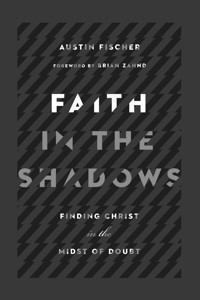
"People don't abandon faith because they have doubts. People abandon faith because they think they're not allowed to have doubts."Too often, our honest questions about faith are met with cold confidence and easy answers. But false certitude doesn't result in strong faith—it results in disillusionment, or worse, in a dogmatic, overweening faith unable to see itself or its object clearly.Even as a pastor, Austin Fischer has experienced the shadows of doubt and disillusionment. In Faith in the Shadows, he leans into perennial questions about Christianity with raw and fearless integrity. He addresses contemporary science, the problem of evil, hell, God's silence, and other issues, offering not only fresh treatments of these questions but also a fresh paradigm for thinking about doubt itself. Doubt, Fischer contends, is no reason to leave the faith. Instead, it's an invitation to a more honest faith—a faith that's not in control, but that trusts more fully in its Lord.
Sie lesen das E-Book in den Legimi-Apps auf:
Seitenzahl: 287
Veröffentlichungsjahr: 2018
Das E-Book (TTS) können Sie hören im Abo „Legimi Premium” in Legimi-Apps auf:
Ähnliche










Faithin theShadows
Finding Christin the Midst of Doubt
Foreword by brian zahnd
For my boys
In memory of Everett
Contents
Foreword
BRIAN ZAHND
A few years ago, a pastor of an evangelical-fundamentalist church with whom I’m acquainted announced on the Sunday after Easter that he had become an atheist. He told his stunned congregation that he had been an atheist for a year and a half and that all attempts to revive his faith had failed. So on the Sunday after Easter he publicly left Christianity and moved on with his life—a life with no more Easters.
A few days after his bombshell resignation I met with this now erstwhile pastor. As I listened to his story, it quickly became apparent that he had not so much lost his faith in Christianity as he had lost his credulity for fundamentalism. Sadly, he had been formed in a tradition where Christianity and fundamentalism were so tightly bound together that he could not make a distinction between them.
For this fundamentalist pastor, if the Bible wasn’t literally, historically, and scientifically factual in a biblicist-empiricist sense, then Christianity was a falsity he had to reject. When his fundamentalist house of cards collapsed, it took his Christian faith down with it. In one remarkable leap of faith, a fundamentalist became a newly minted atheist. I did my best to explain to him that he had made the modern mistake of confusing historical Christian faith with early twentieth-century fundamentalism, but by then the damage was done, and it appears his faith has suffered a fatal blow.
This story I’ve briefly related is true, but it’s also a postmodern parable. By misinterpreting the Enlightenment and the corresponding rise of empiricism as an existential threat to Christian faith, many frightened Christians sequestered themselves in panic rooms of certitude. Unfortunately, this kind of darkness breeds monsters. Most doubts—like most monsters—are not that scary in the daylight. Most Christians can deal with inevitable doubts as long as there is room for doubt. But when a system is enforced that leaves no room for doubt, benign uncertainties can mutate into faith-destroying monsters. When doubts are locked away in a closet of secrecy they can grow into formidable ogres.
As a pastor I’ve seen it happen. I’ve seen fear-based Christian parents place their children in fundamentalist Christian schools for the sole purpose of shielding little Johnny from the “lies of secular science,” only to see Johnny become an atheist before he’s out of high school. When you force Johnny to choose between fundamentalist certitude and peer-reviewed science, Johnny may not always be persuaded by pseudo-apologetics from fundamentalist answer men like Ken Ham. I’ve seen it happen.
I’ve seen too many Christians lose battles they never needed to fight. Like Don Quixote they imagine harmless windmills as threatening giants and fight a needless battle, only to have the windmill-imagined-as-giant win. The culture wars have created these kinds of quixotic crusades—and sometimes the tragic outcome is pastors announcing their atheism on the Sunday after Easter.
These days I have a simple mission statement: to help make Christianity possible for my grandchildren and their generation. I want my seven grandchildren (all under the age of eight) to be able to celebrate Easter for a lifetime. So if my grandchildren are to be able to embrace Easter with any kind of authentic faith when they’re adults, I cannot afford to ignore their inevitable doubts or try to strong-arm them into unquestioning certitude. In our secular age that is a formula for atheism. Instead I will do my best to nurture my grandchildren in the rich soil of historic Christian faith—a faith that in its healthiest forms has always been comfortable with mystery and nuance, metaphor and allegory, candid questions and honest doubt. Because in the end, Christianity has suffered more casualties from faux faith than from honest doubt.
In seeking to pass on Christian faith to my grandchildren I am more interested in presenting them with a beautiful mystery than a collection of iron-clad certitudes. If Jesus is presented as as beautiful and mysterious as we find him in the Gospels, I’m willing to trust in that beauty to win hearts. I’ve heard it said that no one ever became a Christian because they lost an argument. I suspect that’s true. I also suspect far more people than we imagine have become converts to Christianity for the simple reason that they were charmed by the beauty of Christ. I would much rather ground Christian faith on the beauty of Christ than on biblical literalism. Biblical literalism can be debunked by a college freshman, but the beauty of Christ can withstand every attack Nietzsche can muster. If I’m hedging my bets on the survival of Christian faith as we hurdle into a secular age, it’s because the King of Hearts is still so beautiful. I’m willing to bet my grandchildren’s faith on the beauty of Christ.
And in my mission to help make Christianity possible for the generations that follow, I have a trusted and gifted ally in Austin Fischer. Faith in the Shadows is the kind of book that can give faith the space to flourish—not by beating back doubt through dogmatic argument, but by taking the terror out of doubt by exposing it to the sunlight of honest reflection. Fischer’s book bears the subtitle Finding Christ in the Midst of Doubt. I like that. When we succumb to the dualism of Christ versus Doubt locked in a battle to the death, we are taking an unnecessary risk. It’s enough to find the beauty of Christ in the dark night of doubt. I have sufficient faith to believe I don’t have to dispel every doubt with a clever argument; it’s enough to allow the beauty of Christ to shine in the midst of doubt.
Fischer writes with a wonderful combination of keen intellect and unflinching honesty. He hits all the necessary topics, from fundamentalism to theodicy, while drawing on our best Christian thinkers, from Fyodor Dostoyevsky to David Bentley Hart. But what Fischer does best is invite the reader into his own struggles with doubt, showing how he has been able to find Christ even in the midst of doubt. Ultimately, the hero of Fischer’s book is not the brilliant Christian apologists (though we appreciate their fruitful labors) but the beauty of Christ’s love that is the only credible answer to interrogations of doubt. As Fischer says, “Faith is not the absence of doubt. Faith is the presence of love.”
My only regret about Faith in the Shadows is that it wasn’t written in time to be read by a Missouri pastor struggling all alone with growing doubts. If it had, perhaps his faith could have survived to celebrate another Easter.
Chapter one
Graffiti
AN INVITATION TO A REBELLION
Rembrandt’s The Return of the Prodigal Son hangs on a wall in my office, and each day I sit opposite it and meditate on it. This ritual will sound familiar to those acquainted with the work of Henri Nouwen because in The Return of the Prodigal Son, Nouwen recounts his journey with this painting: a window into the mysterious, redemptive way of God in the world. Art historian H. W. Janson calls it “a moment stretching into eternity.” I agree.
When I started following Christ, I saw myself in the prodigal, dressed in rags and tattered sandals, falling on my knees and into the arms of mercy, hoping those arms would wrap me up and not push me away. And they did, because mercy is real.
Time passed and I got my act together. I rose from my knees. I walked with a swagger instead of a limp. And somewhere along the way I forget what it’s like to be barefoot and living on a prayer. I became the older brother.
He stands off to the side, partly in the shadows, disappointed as he watches his father embrace the prodigal. His brow is not furrowed. His hands are not thrown up. He isn’t outraged—he’s mellow, reposed, unmoved. The scene unfolding in front of him is too sentimental and unseemly. His prodigal brother doesn’t deserve this welcome, and his father should have more dignity. Hiking up his robe to run out and greet this son-turned-beggar? Embracing him unreservedly? Important people do not act this way. His father should know better; his brother deserves worse.
More time passed, and as I let the painting do its proper work, my eyes were drawn, again and again, to one place in particular: the father’s hands. Though not the literal center of the painting, they hold the painting together. They have gravity. Our eyes wander but always return to those hands. It’s strange that something so human could point to something so divine; or maybe it isn’t.
Those hands rest on the shoulders of the prodigal. They hold him close. They seem gentle but firm. They will not squeeze him into submission, but they will never let him go. Indeed, the two hands are very different. As many commentators have pointed out, one is masculine and one is feminine. The left hand is thick and muscular; the right hand is elegant and graceful. A father’s hand and a mother’s hand? That was Nouwen’s guess.
These hands hold the painting together and perhaps they hold everything together. Perhaps the what and why of everything—from laughter to cancer to stars—is found in those gentle, firm hands. And perhaps we have no greater purpose than to be those hands. As Nouwen writes, “The return to the Father is ultimately the challenge to become the Father.” Saint Paul concurs: “Therefore, we are ambassadors for Christ, as though God were making an appeal through us; we beg you on behalf of Christ, be reconciled to God” (2 Corinthians 5:20). We walk the world as the reconciliation of God, welcoming prodigal creation back into the arms of its maker. The story of the universe hangs in a print of a painting on a wall in my office, and this brings me to the woman in the shadows. I did not see her at first.
In seminary, I was assigned Nouwen’s book, and on the first day of class, our professor had us look at the picture of Rembrandt’s painting on the front cover. Due to the poor resolution, only five figures were visible: the father, the prodigal, the older brother, and an unidentified man and woman. Three years later, I opened the box containing my recently purchased (and high quality) print, and for the first time, I saw the sixth figure.
There she was, up in the far left corner—tucked away in the shadows, the faintest light on her face. She is watching the father and prodigal embrace, but she is also watching the people who are watching the embrace—the older brother and the unidentified man and woman. Shrouded in darkness, she has one foot in the scene and one foot out. One wonders both what she sees and how she feels about what she sees. These are her secrets, and they are not disclosed cheaply. If you want to see what she sees, you must stand where she stands: on the fringes.
I Am a Pastor
I am a pastor. I did not grow up wanting to be a pastor. I wanted to be a basketball player. From the time I could walk, there was a basketball hoop set up in the living room and we (my father, my little brother, and I) raced up and down the “court” as my mother looked on in adoration, amusement, and anxiety. Many decorative trinkets were broken over the years, but my mother loved her boys and always let the game go on.
But eventually every Peter Pan has to grow up, so, realizing I might need a vocational backup plan should my basketball dreams fail, I decided I could settle for becoming a lawyer. My parents assured me this was a good idea because someone as argumentative as I am might as well get paid handsomely for it. So it was settled—I would be a lawyer.
And yet here I am, a pastor, because I followed a breadcrumb trail that led me to the feet of a crucified God and a mystery I will spend the rest of my life making sense of because it continues to make sense of me. That is a story for another day, but suffice to say, I was not blinded on the road to Damascus. In fact, I often feel like I have more in common with Paul’s bewildered companions than with Paul. I hear the voice he hears but cannot always see what he sees. There are wonders I have not been made privy to, and sometimes, even as a pastor and minister of light, I am left on the outside looking in—one foot in and one foot out.
Indeed I once sat staring at Rembrandt’s painting and found, to my surprise, the center of gravity had changed. I did not look at the father’s hands or the prodigal’s mangy scalp or the older brother’s downward gaze—I looked at the woman in the shadows. I could not stop looking at the woman in the shadows. And suddenly I found myself standing in the shadows with her, seeing the scene from behind her eyes, sharing her secrets. Better yet, I realized that I had been standing in the shadows with her for a while, that, in a certain sense, I have always stood in the shadows with her. And not wanting my faith to stay stuck in the shadows forever, I started a slow journey into the light.
Worshiping Doubters
I love being a pastor and am called to be a pastor, but at times, doubt comes more naturally for me than faith. When a child dies, I don’t see a hidden joy and design behind the tragedy; I see nonsense. I don’t feel divinely comforted; I feel rage. So if you need your pastor to make it all make sense, to tie all the suffering nonsense up with a tidy bow, then I will disappoint you.
There are both a blessing and a curse here. The curse is that many things I’ve been told are “supposed” to come naturally for pastors do not come naturally for me. The blessing is that my situation has forced me to develop habits that can shape and sustain me as I live a life in service to a faith that does not always come naturally. What my faith lacks in ease it makes up for in grit, which is just as well because easy faith comes with its own set of problems: “Just as an athlete with natural gifts may fail to develop the fundamental skills necessary to play his or her sport after the talent fades, so people naturally disposed to faith may fail to develop the skills necessary to sustain them for a lifetime.” My bags are packed for the long haul. I hope yours are too. Because at some point in your life, I suspect you too might find yourself on the fringes of faith, and as you stand there in the shadows you will need grit. You will also need to know you are not alone and many stand with you.
When we walk down the long hallway of Christian faith, we find that many of our saints also had an inner skeptic. Think of Sarah, laughing at God’s promise to give her and Abraham a son in their advanced age. Think of Moses, the man who would argue with a burning and talking bush, insisting God had the wrong guy. Think of the despair in the lament psalms. Think of the apostles scoffing at the prospects of an empty tomb—the great apostles, first skeptics of the resurrection! Their skepticism has something to teach us, which leads us to the story of the Great Commission.
Jesus, newly risen, gathers his apostles and sends them out into the nations, making disciples and baptizing in the name of the Father, Son, and Holy Spirit. But few recall what precedes this. The eleven apostles journey to a mountain in Galilee. They’ve been told Jesus will meet them there. They reach the top and there he is—the resurrected Christ! And what happens next is so incredibly strange: “When they saw him, they worshiped him; but some doubted” (Matthew 28:17 NIV).
Wait. How could someone stand on top of a mountain, stare into the eyes of the resurrected Christ, and still doubt? How is that possible? This is a haunting question, to be sure, but it invites another question:
Why do most of us not know this story?
Given how deeply so many struggle with skepticism and doubt, how is it possible the church has not told us this story over and over? How is it possible so many people think their doubts disqualify them from faith when some of the apostles looked into the eyes of the resurrected Christ and still doubted?
Around a third of people who leave faith do so because of skepticism and doubt. Over a third of young adult Christians feel they cannot ask their most pressing questions in church. And over a third of young adult Christians feel Christians are too confident they have all the answers. Add these numbers and something becomes very clear and very sad. Doubt makes people abandon faith, but people don’t abandon faith because they have doubts. People abandon faith because they think they’re not allowed to have doubts. People abandon faith because, intentionally or unintentionally, they’ve been forced into an impossible, unbiblical, binary choice: you can have Jesus or you can have doubts, but you cannot have both.
So what will it be? Jesus or our doubts?
Thanks be to God, this is not a decision we have to make, and this brings us back to that mountain where the risen Christ stands with the eleven apostles.
Translating the Bible into English can be a bit tricky at times, and Matthew 28:17 is one of those times. Some difficult interpretive decisions have to be made in translation, and many translations make it sound as if some of the disciples are worshiping and some are doubting—as if ten are worshiping and one is doubting (we’re looking at you, Thomas). But a strong argument can be made, on grammatical and narrative grounds, that it is best translated, “When they saw him, they worshiped him, but were not sure.”
In other words, it’s not that some worship while some doubt—it’s that all worship and all doubt. They all worship, even though they’re uncertain. Two thousand years ago, Jesus gathered a group of worshiping doubters on a mountain, sent them out, and the world was never the same. And this is why no one should ever think they must choose between Jesus and doubt. The church is built on people who lived the contradiction.
White Roses and Bright Red Lipstick
On three nights in February 1943, three German university students did something simple, courageous, and reckless. Hans Scholl, Alexander Schmorell, and Willi Graf were members of The White Rose, a nonviolent, anti-Nazi resistance group. Over the course of a few months, they anonymously published six different leaflets deploring Nazi tyranny, calling on Germans to rise up and rebel. “We will not be silent. We are your bad conscience. The White Rose will not leave you in peace!”
Slinking through the shadows, they painted anti-Nazi graffiti on the sides of houses along a busy street near the University of Munich. The people of Munich woke up to “Down with Hitler,” “Freedom,” and crossed-out swastikas defacing their concrete walls. Soon after, they were discovered and beheaded.
Initially, little was made of it all. Their executions incited no rebellion. Many even felt their actions were unpatriotic. But as it often does, time changed things, and The White Rose now stands as a symbol of aggressive compassion and bravery in the face of hatred. They plastered their defiant, hopeful graffiti across a cold, concrete canvas, and though it was little more than an act of amateur vandalism, time has chiseled it into the stone of collective memory. It’s amazing what a bit of graffiti can do, and there are potential canvases everywhere.
I knew a lady in a nursing home who always wore bright red lipstick, which struck me as sad and vain. She was very elderly and sickly, and no one visited. Why did she always wear bright red lipstick?
One day I walked into her room, and as usual, she immediately reapplied a layer of lipstick. My amused judgment must have shown through because she paused mid-application, looked at me, and said, “Oh, I know it probably seems a bit vain, but the hell with it—I’m dying and it reminds me this isn’t the end.” And with that, she held her head high and shamelessly returned to application. She died a few months later, and I wept and laughed simultaneously when I walked by her casket and saw her—pale and gaunt but wearing a fresh coat of bright red lipstick. When I walk with people through the valley of the shadow of death, I now tell them the story of her bright red graffiti.
Some people are ashamed of their doubts, and some are proud of them. I have been both and now I try to be neither—I try to be faithful with my doubts. And so what follows is some of my graffiti, my ongoing and never-quite-finished Easter rebellion against the cold canvas of death and doubt.
The church has always been a place for skeptics and saints and skeptical saints. So wherever you find yourself on the continuum between faith and doubt, grab some paint, or bright red lipstick, or whatever you can find, and make a mess. You don’t have to be Rembrandt. The walls of the kingdom of God will feature the amateur graffiti of many hope-filled vandals.
Chapter two
Ants on a Rollercoaster
LOSING A CERTAINTY-SEEKING FAITH
For thousands of years we thought Earth was the center of the universe. We thought the sun and moon and stars revolved around Earth. And we thought Earth was stable and unmoving—a firm island of objectivity amid the swirling sea of the cosmos. It certainly looks and feels that way. But now we know none of this is true.
Now we know that we are tiny ants who live in a tiny corner of a massive planet; a massive planet spinning on its axis at a thousand miles per hour, while orbiting the sun at the center of our solar system at 66,000 miles per hour; a solar system flying around our galaxy at 450,000 miles per hour; a galaxy whirling through the universe at a couple million miles per hour.
Do you ever trip and not know why?
In the deep ocean of space, there is a giant. Visible to the naked eye on a clear night in the southern hemisphere, Eta Carinae might be the biggest star in the galaxy—one hundred times bigger and five million times brighter than the Sun. Fortunately, it is located about 7,500 light years away. But if it were to die in a hypernova explosion, it could release a gamma-ray burst so powerful that a direct hit might trigger a major extinction event, the end of our little ant colony—sobering, isn’t it? The death of a giant star—impossibly far away, farther than the mind can possibly imagine—might be the death of humanity. And we cannot do a thing about it.
We thought we were the kings of the cosmos, but now we know we’re ants on a rollercoaster. Now we know the universe is a whole lot bigger—and we’re a whole lot smaller—than we could have imagined. As astronomer Carl Sagan has said, “We find that we live on an insignificant planet of a humdrum star lost between two spiral arms in the outskirts of a galaxy which is a member of a sparse cluster of galaxies, tucked away in some forgotten corner of a universe in which there are far more galaxies than people.” A universe in which there are far more galaxies than people—who would have known?
So we’re tiny and we’re not in control. That does not mean we’re insignificant or doomed to the fixed winds of fate, but as fallen kings of the cosmos living in rapidly changing times, it is likely to make us feel insignificant. The times are always changing, but it certainly seems the times are currently changing at a rate never before seen in the history of the world, with no deceleration in sight. David Kinnaman suggests that a “reasonable argument can be made that no generation of Christians has lived through a set of cultural changes so profound and lightning fast.” In particular, technology has created, for all intents and purposes, a new world. Click a few buttons and in a few minutes you can learn more about the world than previous generations could have hoped to learn in a lifetime. Former Google CEO Eric Schmidt claims we now create as much new information every two days as all of humanity collectively created from the dawn of civilization up until 2003.
Our ancient ancestors interacted with a small handful of people each day—their family and perhaps the family who lived in the cave down the street. As technology advanced, social circles widened, and now most of us daily interact with hundreds if not thousands of people. Cars, planes, television, radio, phone, internet—because of them we bump into all sorts of different people all the time, and as we’ve bumped into all these people we’ve discovered that we disagree about many things, some of which are awfully important.
Think of something you would stake your life on, something you believe so deeply you would die for it. No matter what that something is, someone else is willing to die for her belief that you’re wrong about your belief. I suppose this has always been the case, but we’re more aware of it now, and it weighs more heavily on us. We know we’re ants, and there’s no turning back, no putting the genie of hyperpluralism back in the bottle:
Human life in the western world today . . . is characterized by an enormously wide range of incompatible truth claims pertaining to human values, aspirations, norms, morality, and meaning. . . . A hyperpluralism of religious and secular commitments, not any shared or even convergent view about what “we” think is true or right or good, marks the early twenty-first century.
The endless proliferation of truth claims, coupled with our increasing awareness of them, makes the world feel bigger, all the while making us feel smaller. Many people believing many different things does not mean nothing is true (that is, pluralism does not necessitate relativism), but as the beliefs pile up into the heavens, we can’t help but wonder if anyone (God or gods or whatever) is actually at home up there. Maybe we are just making it up as we go.
I once listened to a podcast where a Christian and Christian turned agnostic talked about faith and doubt. The Christian was a brilliant professional theologian whereas the agnostic was an amateur. Predictably, the Christian won the exchanges—all except one.
The theologian had skillfully laid out his case for God and faith, and the agnostic fellow conceded as much and even intimated he would very much like to be a good prodigal and return to faith. But he also knew there were countless Christians (not atheists or Hindus or Muslims) who would not only disagree with the theologian but go so far as to say the Christian theologian wasn’t even really a Christian but a heretic. So how was he to worship God when there was so much disagreement about who God really is and what God is really like, even among those who agree God is Holy Trinity—Father, Son, and Spirit? The theologian lacked a decisive response, and I did too. Some questions haunt us, and their ghosts are not easily exorcised.
Like so many, I was in college when I realized I was an ant. The bigness and diversity of the world accosted me. The claims of science and other religions rang in my ears, contrasting voices ricocheted inside my head, the load on my shoulders grew, and my little ant legs buckled. The universe is a heavy thing for an ant to bear.
Innocence Lost
My son loves our family dog. Her name was one of his first words: Piper. So far as he is concerned, there are no dogs—there are just “Pipers.” We haven’t bothered trying to explain that while Piper is our dog’s name, not all dogs are named Piper. She recently nipped him for the first time, and for a few seconds he didn’t even think to cry. He was too shocked. He had run up and hugged her hundreds of times. He had pulled on her tail and ears. He had crawled all over her. She was his best friend, and his best friend had just hurt him. His watery eyes told the familiar story of innocence lost.
Life is a journey from innocence to doubt. It can travel in various directions after doubt, but it will always venture from innocence to doubt. We embrace the world with the wide-eyed gusto of a child, the world pummels us, and we hobble away bewildered, wounded, and confused.
From the time I had faith, faith was my friend, though I came to it kicking and screaming. I vividly remember walking down the aisle with my little brother at First Baptist Church in Lufkin, Texas. He was going forward to ask Jesus into his heart and be baptized, and while I had no clue what that meant and no desire to let a homeless carpenter live in my heart, big brothers don’t let little brothers finish first in anything, so if baptism was what it took, I was willing to take the plunge. (The commitment runs deep.) But years later, things changed.
I realized I wanted to follow Jesus because Jesus was good and not because my life was bad. “Come follow Jesus because you live a sad, miserable life and will continue to do so; but heaven will be great” was the gospel I heard. It left me moderately intrigued but mostly bored. Fortunately, Jesus didn’t preach this gospel, and in time I discovered that, and I found that faith beckoned me into a life of merciful adventure. Faith was my friend, and then one day it nipped me.
I arrived at college with the brazen gait of someone who just doesn’t know how much he doesn’t know. Ignorance was bliss, and I deflected any and all challenges to my faith with five magic words: “Because the Bible says so.” Yes, there are other religions, but the Bible says Christianity is the truth. Yes, we’ve never seen a dead person walk out of a tomb, walk through walls, and ascend up into the heavens, but the Bible says it happened. Yes, science indicates the earth is very old, but the Bible says it is fairly young.
Those five words worked miraculously, and so long as you don’t think about it too much, they’re all you need. But I thought about it too much and finally made myself ask the question all my “because the Bible says so” answers had been begging all along: Why do we think we can trust the Bible?
For some this question is easy to answer. Point to fulfilled prophecies and corroborating archaeological finds. Assert the Bible is inerrant and infallible and self-authenticating. Believe Solomon affirmed the First Law of Thermodynamics in Ecclesiastes 1:10 thousands of years before Rudolf Clausius and William Rankine stumbled on it. And to some the logic of all this is, more or less, airtight. I certainly used to agree.
But I’ve come to believe it’s all a good bit more complicated than that. For one thing, some of these answers are highly contestable and, worse, deceptively circular. For example, reasoning that we can trust the Bible because the Bible says we can trust the Bible is not really very reasonable. It’s an assertion pretending to be an argument. And this happens a lot when we defend the Bible. We often struggle to answer questions about the Bible because the Bible is what we use to answer most of our questions. It’s like taking off your glasses and trying to inspect them but being unable to do so properly because you can’t see without your glasses. Speaking along parallel lines about worldviews, N. T. Wright says, “When you are questioned about some or all of your worldview, and you have . . . to take [your worldview] off and look at it in order to see what’s going on, you may not be able to examine it very closely because it is itself the thing through which you normally examine everything else.”
On top of that, too much is at stake—we can’t afford to play fair. Better yet, all is fair in the defense of faith.
Sometimes a mild case of doubt pops up and a good night’s sleep will do, but what I was experiencing was far from benign. A potentially terminal skepticism crept through my bones. My doubt was not going anywhere anytime soon.
Blessed are the Bigfoot Hunters?
It is strange that your eternal well-being would be determined by your ability (or lack thereof) to convince yourself that something is true, but in much popular theology, this is, allegedly, the case. Faith




