


Erhalten Sie Zugang zu diesem und mehr als 300000 Büchern ab EUR 5,99 monatlich.
- Herausgeber: Tilted Axis Press
- Kategorie: Gesellschafts- und Liebesromane
- Sprache: Englisch
A young girl is sent away to school to save her from being declared the sexual property of the village's upper-caste men. The village water tank laments to a passing child. A Brahmin boy is considered 'polluted' by the touch of a Dalit girl – the same action that saved his life. Rendered with idiomatic vitality, humour and lightness, these stories revel in rural childhood without nostalgia or romanticism, forcing the reader to question their expectation of violence in the representation of certain lives, and of what the short story can be and do. Shifts in tone and perspective reveal relationships – between the different castes that make up a village, between an individual and the wider community, between identities and the seasonal rhythms of the land. Imbued throughout with a Dalit feminist philosophy that is above all a philosophy of life, to be lived with wit, ingenuity, and defiance.
Sie lesen das E-Book in den Legimi-Apps auf:
Seitenzahl: 289
Veröffentlichungsjahr: 2022
Das E-Book (TTS) können Sie hören im Abo „Legimi Premium” in Legimi-Apps auf:
Ähnliche




















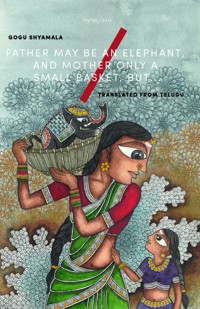
Father May Be an Elephant and Mother Only a Small Basket, But…
Father May Be an Elephant and Mother Only a Small Basket, But…
Trace It!
Braveheart Badeyya
But Why Shouldn’t the Baindla Woman Ask for her Land?
Jambava’s Lineage
Tataki Wins Again
The Village Tank’s Lament
Obstacle Race
Raw Wound
Ellamma is Distressed
The Bottom of the Well
A Beauteous Light
Gogu Shyamala’s World
A Note on the Translation
Lines that Cut to the Very Gut
The Translators
Acknowledgements
1
3
7
8
9
10
11
12
13
14
15
16
17
18
19
20
21
22
23
24
25
26
27
29
30
31
32
33
34
35
36
37
38
39
40
41
42
43
44
45
46
47
48
49
50
51
53
54
55
56
57
58
59
60
61
62
63
64
65
67
68
69
70
71
72
73
74
75
76
77
79
80
81
82
83
84
85
86
87
88
89
90
91
92
93
94
95
96
97
98
99
100
101
102
103
104
105
106
107
108
109
110
111
112
113
114
115
116
117
118
119
120
121
122
123
124
125
126
127
128
129
130
131
132
133
134
135
136
137
139
140
141
142
143
144
145
146
147
148
149
150
151
152
153
154
155
156
157
158
159
160
161
162
163
164
165
166
167
168
169
170
171
172
173
174
175
176
177
178
179
180
181
182
183
184
185
187
188
189
190
191
192
193
194
195
196
197
198
199
201
202
203
204
205
206
207
208
209
210
211
212
213
215
217
Guide
Cover
Table of Contents
Start of Content
Father May Be an Elephant and Mother Only a Small Basket, But…
Enugantha Tandri Kanna
Ekula Buttanta Talli Nayam
Father May Be an Elephant and Mother Only a Small Basket, But…
Enugantha Tandri Kanna
Ekula Buttanta Talli Nayam
All the children gathered on the bunds outside the village as soon as the sun broke briefly through the clouds. It was just before dusk. There had been no rains for a long time. The droplets on the grass glistened in the light. The clouds in motion, now hiding, now revealing, the sun. The boys played chedugudu in one corner and the girls hide-and-seek, running to catch each other. The younger boys always played with the girls, and today it was Baindla Ramulu’s turn to catch us. We hid behind the bushes, between large sleepy rocks and under the mountain-high bunds. Lost in our game, nothing in the world could distract us. We had not played like this for many a rainy day, and we were desperate not to let even a moment go to waste. The newly washed sun pierced once again through the dark clouds. A rainbow blossomed: it was perfect! We counted from one side and from the other, trying to find all the seven colours. Despite many tries, Potbelly Narsi could only find six. When I found all seven, I began jumping with joy until I heard someone singing one of Pandugala Sayanna’s songs somewhere in the distance. It was Talari Anthanna on the bund of the village tank. He was mounted on his buffalo, a long vayili stick in his hand, and singing a kinnera.
I strained to listen. It was my favourite song, this one. When my ears picked up the words I sang along.
Orori Sayanna, oh Panduga Sayanna!
Paalamuri eedigas’
carts of rice are going,
twelve puttis of rice are going,
going to Tandur!
Don’t let go: even if you lose your life
Don’t let go Sayanna,
Kin kin kin…
Ponnalolla Balamani always competed with me. When we played; when we sang; when we ran. Now, as we were running about and playing, we sang together:
Kottapeta market,
on your head a blanket.
Sayalu, you run,
I run, Sayalu.
Children flitted around the bunds like dragonflies. The grass under their feet bounced up and down after them. The droplets had disappeared in the sun. We played and played till it was time for our mothers to return from the fields. We stood on the bunds trying to pick out the women walking towards us from a distance. As if a thousand crows had flocked to the clouds, the sky suddenly darkened. Near the mala–madiga drinking-water well the road split into two. The mala women went towards the mala keri and the madiga women towards the madiga keri. My mother was not among them. I stood there waiting. The rain was heavy but the women did not change their pace. They were drenched anyway. As was I, my body cold and tired, but I just stood there, waiting. Darkness surrounded us as the rain lashed down. But I didn’t notice any of this as I waited for my mother. The women had been weeding the paddy fields all day, taking on the entire day’s rainfall. They squeezed out their wet kulla and placed them back over their heads. As though furrowing their way back home, they walked briskly, one behind the other, along the narrow ridges of the paddy fields. I was still looking for my mother. All the women had their heads covered with kulla and they all looked the same to me. My mother had stitched a new green kulla. She had also torn up an old sari and made a new kunchi. Although my eyes were looking for Mother, my thoughts wandered to that kunchi. First, she had cut the soft bits of the torn sari into neat rectangles; to those she attached the stronger bits and lined both with a piece of my father’s old white dhoti. Then she attached the silk border of the sari to the top of the kunchi and stitched it all together. It looked beautiful from behind when she wrapped it around her head. The silk border shined brightly as it hung down our backs. I draped my head with it and pretended I was a princess. My elder sister always fought with me for it. We would snatch it away from each other to cover ourselves at night. Unable to pacify us, my mother stitched two small kulla for both of us. My mother is brilliant at stitching kunchi. Our neighbour Ningampalli Sayavva praised her often, “Her fingers spin like tops … she is the fastest at stitching kunchis.”
By now I had watched the entire village return from work. But my mother did not come. Then at a distance I saw a woman walking alone, like a whirlwind in the darkness. I knew it had to be her. She was not at all pleased to see me all drenched. I rushed to her and clung to her waist. “Why are you here, my dear? You should have lit the lamp at home and waited with your little brother. Stubborn girl, clinging to me like the rain. What did you think I would bring from the forest—food?” I wanted to search her kulla. But Mother held on to my arm and dragged me home. My younger brother was sitting on the threshold, worried and weeping. The boy was a coward. He was even scared of thunder and lightning. When my mother saw him like that she scolded me even more. She let go of my hand and quickly picked him up.
“Are you scared, son?” she said stroking his back. She turned to me. “Look at this fellow, how scared he is. And what are you doing just standing there? Have you lost something—look at you—you look like an owl drenched in the rain.” Her scolding me made my brother so happy, he forgot his fear. He said, “Amma, I am hungry,” and I was reminded of my own hunger. My anger disappeared. Quickly she put him down, took out some tender green gram from her kunchi and gave it to us. She kept some aside for our elder brother. Only after we had eaten our fill did she notice the smell of wet earth in the house.
Our house always smelt like that when it rained. Damp had seeped deep into the house—up to the nooks where we stored stuff, where we cooked, and by the low dividing wall. Small puddles dotted the floor of the house. Black, grease-like dirt blotched the walls. Mother placed german silver vessels and earthen pots at the spots where rain was dripping from the roof. I joined in, looking for things to place under the remaining spots. The house was filled with the music of rain falling into the many pots and vessels. Tapatapa tan tan tin tin… Mother moved through the music throwing out the water that had collected in her pots and vessels. I was eating tender green gram with one hand and chucking out water with the other.
“Look, behind the ventilator, it’s leaking there,” my younger brother called out. Mother ran to put a metal container under the ventilator. “The house has become a sieve. Where should I put what? Every year he used to re-thatch the hut. But he is not here this year, and look at the mess this house has become,” Mother grumbled as she walked around. The rain did not subside. Amidst the sounds of rain and thunder outside, and the sound of dripping water inside, we could barely hear each other.
“The boy must be drenched by now… Has he reached the village? Is he still in the forest? I have no idea … and the old woman has not come back either.” Just as Mother was saying this, Sangavva entered. She had gone in search of work but had not found any. She had been to the dorasani’s house, cleaned out the sand from three sacks of jowar and for that she got some of yesterday’s rotte and a small vessel of watery dal. She brought it home wrapped within the pleats of her sari. From the kulla bundle she took out a few fistfuls of paddy and poured it into the winnowing basket. Mother gathered it all into the grain pot, covered the pot, and put it in a dry corner. Just then, our elder brother came home, completely drenched. My mother called out loudly, “Ramchandrappa is home!”
“Hang that wet gunny bag on the wall, wash your feet with the water in the pot and come in, son,” she said. Sangavva asked, “Was the rotte that you took enough for you, child?” My brother sounded irritated, “Where avva? Did the calves allow me to sit and eat? They kept trying to push their way into the patel’s fields. I let them graze along the bunds. At three in the afternoon I took them to the pond to drink water. When they finally lay down under the trees to chew cud, I opened my rotte bundle. Just then the rain stole down on me like a thief. I quickly packed up the rotte and came back towards the village.”
Drying my brother’s head with a towel, mother said angrily, “Those rascal calves don’t stay where they should. They have killed my son’s hunger, haven’t they? My son is stunted, roaming like this from place to place. Once this year is over, we can get rid of this trouble. Next year your father will be back from the big city. He’ll pay off our debts. Not too many days now; the harvest is over. The next new moon, it will be one year since he left.” Mother consoled him, stroking his back.
My mother did not believe a single word she was saying. It was all for my brother’s sake. Sangavva lit the stove and we all sat around it for warmth. Brother gave us younger ones some of the rotte he had brought back, and ate the rest. We also took a share of his green gram. After a while he asked, “Mother, when will Father come back from town? Why have Venkatreddy Patel’s people stopped harassing us?”
“No son, don’t utter their name now. It will just give you heartburn. They put the entire blame on your poor father. They separated him from his family. They ruined us. The thief is one of them, but they put the blame on your father. Goddess Ellamma is not blind to this. Thanks to her, the real thief was caught and everyone is witness. If you try to burn another’s house, how can the fire not burn you? They knew the truth but blamed your father. We devote our labour to the patel and we have always trusted them. How can we steal from them? We have no guarantee that we will get paid for our labour, but we have never demanded an account of our wages. Can we be thieves? We, who know only hard work. They know all this, and yet they blame us. He was scared of being beaten to death, so he has gone god knows where. Shameless bastards. Not for nothing did the elders say that frogs have no tails and the kapu have no morals. Your father will give his life but not his pride.”
“If he had heard that they had caught the real thief he may have come home by now. Don’t know where he is or what he is doing … no trace of him even after a year,” Sangavva whined.
*
It kept raining that day. Even then, Mother swept the front of the house, plastered the ground with dung and cleared the rubbish. As she put the basket on her head and was about to cross the threshold, in walked my father. Mother cried out, “Look, children, your father is here!” We sat up. My younger brother ran up and held on to our father and began weeping. My elder brother and I went to him. He put the younger one on his shoulder, held the both of us and wept. In our happiness we stood rooted, taking him in from head to toe. Our Sangavva went in and brought water in a vessel, still weeping. Father took the water and put it next to him on the raised platform outside the hut. Mother started to put her basket down, but neighbour Ellavva called out saying, “It isn’t auspicious to put a basket down as soon as you lift it … walk a few steps, empty it out and come back.” She ran to empty her basket, and then she and Sangavva sat down beside Father.
Sangavva started: “So many days, my son—where were you, what did you eat, what work did you do? You have turned into a black stick, my child. You have become half your size. Your wife, your children … we have all been waiting for you like orphaned birds.” She thought the better of going on like that, and said instead, “Whatever it is son, go wash your feet, quench your thirst, then we can talk.”
Mother quickly took the jowar seeds to the flour mill, exchanged it for flour and began making hot rotte. My father ate his full and burped, saying, “How many days since I ate like this! Today I feel like I have eaten.” He started telling us about his miserable life in the town. He had done all kinds of work. For a few days he worked as a construction labourer, then for a few days he waited at the adda. He even sold peanuts in a basket. With his wages he bought a spade and a crowbar. But then a police raid happened while he was waiting for work and he was charged with a fine. He sold his tools to pay it off and only then was he let go. He had left home with clothes on his body and came back in rags. Our Sangavva felt agonized just looking at my father. “Bad luck followed you from here to there.” With her hand on his shoulder, she cursed, “May those tools and that town be brought to dust! What is lost is lost. You have come back, that is enough, son. Mother and children, all four of us will work hard together and we will not be slaves anymore.” Father sat looking at the floor, running his fingers through the little one’s hair.
Ningampalli Sayavva of the neighbouring keri came, asking, “How are you, Balappa?” Sayavva was holding a big cow-dung basket, two patched gunny bags and a worn-out yellow kunchi. Flies swarmed around her and she smelt of neem fruit. “If a person is alive, we will meet him some day. Only if he is buried will we never see him again. You have come back after so many days, my child. Where had you gone? They banished you to strange lands, those immoral people. Look here at the mother and the daughter-in-law … your people. They looked after your land, they brought up your three children. Life has become a thorny fruit in these days of drought,” said Sayavva to my father. He told her he had gone towards the town. Immediately, Sayavva said, “One of our own has returned to our fold. Work hard, live well … as long as your arms are strong, you have life.” As she said this, she turned to my mother and Sangavva: “Come on now, let’s go quickly. You have three people in the house now, haven’t you?” There were four working people in our house. My younger brother and I were the only ones who had to be fed. My elder sister was already married.
Mother poured thick gruel into a bowl, added a little salt and placed it in the groove of a wall for both of us. “If the dogs come and eat it, you will be hungry. Be careful, don’t leave the doors open when you go play.” They left to gather neem fruit in the forest, and after cleaning their yield in a pond, they dried the fruit and sold the seeds to Komati Narayana Shavukar on their way back. Then they bought food grains for the night like they did every day.
“This famine has come like Yama. People like us will survive only if the rains are good this year, otherwise a time may come when all of us will starve to death,” my mother mumbled as she washed the pots.
“All these days we managed by feeding the children gruel. Now my son has come. The house is full of neem’s bitterness. My mouth tastes like dry grass. Today we have gathered a few more neem seeds… We can buy salt, chilli, broken rice. Why not go to the butcher Ismail and buy a kilo of meat and make a curry?” grandmother said. Mother agreed.
They came back home with everything they needed. My younger brother and I were jumping with excitement. The little fellow didn’t seem to need a reason to keep laughing. Watching us, my mother’s face lit up. The satisfaction of being able to feed us to our heart’s content that day was written all over her face. My younger brother hung on to the end of Mother’s sari, playing the brat, saying, “Mother, a piece for me.” So, my mother took a few pieces from the curry, threw them into the wood fire, and gave us a beautifully roasted piece each. She kept some aside for my elder brother. We came out to where our friends were and made their mouths water as we ate slowly, relishing our pieces of meat.
On one stove the meat curry was cooking and on the other the broken rice was boiling away. A mouth-watering aroma filled the house, spilling out over the threshold. Father came back from the bazaar, and sat on the platform outside. “Is your mother cooking meat? Such a wonderful smell.” He called out to my mother, “Give me a little money, I feel like drinking toddy today.” She said, “Where is the money left after buying salt, chilli and meat? It’s all over.” After some time, he said again in a loud voice, “You give me ten excuses when I ask for a little money to drink toddy.” She said, “This is not fair … do you think I have hidden the money? You’ve seen everything. You know how things are … how can you still ask me for money?” Father pounced on my mother, “It’s not fair? You’ve learnt to talk! What? Have I seen everything? How would I know what you have been doing?”
Mother went inside quietly and sat at the stove adjusting the firewood. “What? You, you! You don’t say anything! I am asking you … what have I seen?” He kicked her hard on the back. My younger brother and I screamed. Father looked at us with menace in his eyes. Scared of him, we quietly hid in a corner. He beat her like she was cattle. She was wailing, saying, “Oh mother, I am dead, he’ll take my life.” But Father did not stop. I felt like I would die, watching my mother being beaten like that. My younger brother trembled and wet his pants. We did not have the courage to stop Father. We were scared that he might beat us too if we went near him. We were also scared that Mother might die.
Women on their way to the drinking water well gathered around our house on hearing the noise. They called out to my father. Finally, he stopped and walked out of the house. We went to Mother. She was lying so still. We could not wake her up. Then Sangavva came and started abusing Father. “Not even three days since you came back and you have started beating her up, you asshole. You have fallen like Yama on her! How much will you beat her? Look at the injuries all over her body. You have made her helpless. How do you think she will work? If you have the balls go show this anger to the people who called you a thief. When you left us to wander around the country, she looked after your children and me. Anyone else would have left us to our fate. She starved her own stomach to fill ours. She kept all those who cast their eyes on her at a distance and looked after this house, you jackass.” Sangavva continued abusing him. All the women scolded, “Is this what you learnt in town … to beat your wife? All this while her eyes were sore, waiting for you to come back … and this is what she gets from you.”
Just then, some of our relatives from the neighbouring village arrived. They brought the news that my elder sister had prematurely given birth. She had gone to the fields to work and had delivered there. Women in the fields helped her out and cut the child’s umbilical cord with a sickle. They told us that they had taken the mother and the child home on a bullock cart. Both were doing well, they said. They had come to take my mother with them, immediately.
Our Sangavva broke into a cold sweat. “The child still had two more months left before it was time. How did it happen now? We thought of bringing her home for delivery. God had other plans. Tell me, my dear, are the mother and child doing well?” she asked again. Then Sangavva turned towards my father: “What will you do now, you shameless idiot? I gave birth to a good-for-nothing fellow. You have broken her back. Now who will wash your daughter’s stained clothes? The tradition is that the mother should help at the first delivery. What shall I do now?” she cried, with her hand on her head.
Ningampalli Sayavva came forward and said, “What is the use of saying all this now? The new mother needs her mother to wash her soiled clothes. Did the elders say in vain that ‘an elephant-like father may go, but the small basket-like mother should stay’?”
She told us to fetch some vayili leaves and massage mother’s back with them to numb her pain. I went running towards the vayili tree.
TRANSLATED BY DIIA RAJAN
Trace It!
Jaada
Weddings and funerals—every member of every family has to attend these. This is the way of our village since god knows when. These are the ceremonies of life, and all the rites are conducted, participated in and followed keeping in mind every particular detail, because—well, that is the way of our village. Times are changing, and life has changed completely, but the way of our village has not changed. Except, maybe, a little. So, we are allowed to take some liberties here and there, but all the same, at least one member of every family in our village must attend every funeral and every wedding. That’s that.
When someone in our village dies, every family sends a drummer. We are a wada of drummers and every drummer sent to a funeral must play his drum and throw in a fistful of earth into the deceased’s grave as a sign of respect. They must.
Narsappa’s daughter, Sukkamma, was related to everyone. Even when she grew old and her back grew crooked and she could not even see the glasses on her nose, she was still considered the daughter of the whole village. It seemed like no one noticed that she was old, that was until the day she suddenly up and died. And in our village such news never went unnoticed or unmentioned. We heard about it from every member of every family.
“Oye! No work today,” Narsappa cried out to the young man working on the other side of the road. “Go, go tell everyone, there is not going to be any work today.”
“Old man, couldn’t you have told us so any earlier? My father has already left for the bazaar,” the young man retorted.
“If your father has left, how does it matter? You can come and play the dappu. Haven’t you heard what I said? There is a dappu hanging on a hook in my house. Go get it, and you can play.”
“Play? What will I do there with your dappu and old men like you? I can come and throw in a fistful of earth if you want.” Youthfulness is usually not useful in these kinds of situations, and the boy’s response irked the good Narsappa.
“You think you are a big guy, huh? That we don’t drum half as well as you? Have you ever heard the sounds that rise from a practised hand? Play with us today and you’ll know that even when a tiger grows old, his stripes don’t fade. Did you learn to play the dappu by watching children play, or did you learn from a master who knows the nuances of his drum? Come today, and you’ll learn from the very best.”
“Are you challenging me, old man? Your dappu will only play as long as your bottles of toddy are not empty… After that both you and your dappu will be flat on the ground. Go find someone else. It would be more challenging to play kabaddi with trees than to play the dappu with all of you. I don’t want to be the only person who is left to play in the end. Go find someone else.”
“What are you saying? Who says you’ll play alone? Bring your friends and tell them to bring their dappu too. Pentadu, Chandrudu, Sammadu, Nagadu, Guruvadu, Yelladu—call all of them, we will all go, and we will play till we drop. No one will have to play for anyone. Young and old, we will all play together and no one need be tired.”
Babaiah was happy to go if his friends were coming. “Okay then.”
Everyone was called and they left for the other village, their drums slung over their shoulders. They played the drums with gusto—dhoom dham—until the corpse was buried.
They lifted up coins with their sweaty foreheads to the rhythm of the dappu; they picked up needles stuck in the sand with their eyelids, keeping time with the drum. The funeral beat of fifty dappu thundered out the message of Sukkamma’s death to ten surrounding villages. The women keened. The men born from her womb, and those born alongside her, wept like women, into their head-cloths. Crowds came to the funeral as if to a jatra. ‘She came upon this earth and saw all, did all, she now takes leave of us all, our Sukkamma. Death must come like this. It is a good death,’ they thought to themselves. ‘She nursed her daughters and her daughters-in-law, but never troubled anyone herself. It is a death as good as gold,’ people felt as they moved along in the wake. They plucked handfuls of tangedu flowers as they walked and strew them on her body as it lay in the burial pit. Each of them picked a fistful of earth and cast it in. Thus was she buried.
Finally, they sat down on one side and drank a bottle of toddy each. The younger ones did not drink, so they took money instead.
“Come, let’s go to Ismail Hotel. We can eat bajji there.” Pentaiah held out his hand to collect a share of everyone’s money. They walked to the place where the bus might stop and the old and the young sat and waited, drinking their toddy and eating their bajji.
The bus arrived after some time, and one by one, the old men, the young boys and their dappu climbed in. They squeezed past the passengers, holding onto their dappu for dear life, crushing all and sundry as they hurried towards empty seats. But the bus had not plied even a mile before it sputtered and hushed to a stop. The driver and conductor walked around it, clicking their tongues at each other before one of them stuck his head into the bus and mumbled something about a mechanic. The driver and the conductor looked at each other, and simultaneously said, “It will take time.” Then they nodded their heads at us.
What could we do? We also looked at each other and nodded our heads. Our dappu were still slung on our shoulders, and at least one of us was losing his patience.
“What the hell … first some tea in the morning and then some toddy … I’ve not had anything to eat or drink and it’s making my body tremble. We are too weak to walk to the next village—and the one after that is even further. I think my stomach is going to eat me from the inside. What are we going to do, kids?” asked Narsappa.
But the young boys just looked at each other. There was nothing they could do. And what did the kids know anyway about what they could do. Slowly, one by one, they left in search of water—maybe there was a well around … and then someone thought they spotted a ditch near a large banyan tree.
“Let’s go and see,” Avvola Nagaiah said, his words a query and a command.
They walked around and stopped at the ditch. It looked like there was only a tiny bit of water, and that too at the very bottom. Mostly, it was dry except for the leaf-green moss growing on the damp mud.
Pentaiah, Sendraiah, and Babaiah began digging into the mud with some sticks. First, two of them dug while the third one scooped the mud out. Then the third one dug and the first two did the scooping. Once the hole was a foot-deep, water began trickling into it from the bottom. It rose up to their wrists, and when all three of them had scooped enough mud out, more and more water seeped in. They plucked the nicest moduga leaves and gave them to Yellaiah, who folded them into small cups. Sammaiah and Guruvaiah scooped out the first of the muddy water with their little cups and threw it away, and when the ditch started to fill with shimmering clear water everyone dipped their cups in and drank.
“Come Narsappa,” Pentaiah and Babaiah called out. “Come, drink this water and tell us if it is not sweeter than your toddy.”
“Beev,” they belched after drinking their fill and sat under the shade of the big banyan tree. In the meanwhile, Nagaiah had gone missing. “Where the hell did Nagadu go? Has he gone to take a leak?” Pentadu wondered aloud. “No, probably gone for the big job … he should be back,” said Yellaiah, Babaiah agreed. “Yeah, looks like that.”
“Did he take his dappu along or did he leave it with someone?” Pentaiah asked, looking around at the men holding on to their dappu. Everyone had only one dappu. “Looks like he’s taken it with him. Can someone call out to him? The bus may be ready to leave now.”
So Sammaiah began shouting “Oree Nagaaa! Nago! O…”
“Oi! What are you shouting out like that for, you fool … what’s that dappu in your hand for? Can’t you use it, shithead?” Babaiah nodded in agreement. And so Sammaiah started to call out with his dappu: “Jagtak jagtak jagtak.”
“Jagintak, jagintak, jagintak




