


0,00 €
Mehr erfahren.
- Herausgeber: Open Book Publishers
- Kategorie: Geisteswissenschaft
- Sprache: Englisch
Every day in Mumbai 5,000 dabbawalas (literally translated as "those who carry boxes") distribute a staggering 200,000 home-cooked lunchboxes to the city’s workers and students. Giving employment and status to thousands of largely illiterate villagers from Mumbai's hinterland, this co-operative has been in operation since the late nineteenth century. It provides one of the most efficient delivery networks in the world: only one lunch in six million goes astray. Feeding the City is an ethnographic study of the fascinating inner workings of Mumbai's dabbawalas. Cultural anthropologist Sara Roncaglia explains how they cater to the various dietary requirements of a diverse and increasingly global city, where the preparation and consumption of food is pervaded with religious and cultural significance. Developing the idea of "gastrosemantics" – a language with which to discuss the broader implications of cooking and eating – Roncaglia's study helps us to rethink our relationship to food at a local and global level. The publication of this book is financed by the generous support of interested readers and organisations, who made donations using the crowd-funding website unglue.it
Das E-Book können Sie in Legimi-Apps oder einer beliebigen App lesen, die das folgende Format unterstützen:
Veröffentlichungsjahr: 2015
Ähnliche




















FEEDING THE CITY
FEEDING THE CITY:
WORK AND FOOD CULTURE OFTHE MUMBAI DABBAWALAS
Sara Roncaglia
© Sara Roncaglia.
This book is licensed under a Creative Commons Attribution-NoDerivs 3.0 Unported Licence: http://creativecommons.org/licenses/by-nd/3.0/
This license allows for copying any part of the work for personal and commercial use, providing the work is not translated or altered and the following author and publisher attribution is clearly stated:
Sara Roncaglia, Feeding the City: Work and Food Culture of the Mumbai Dabbawalas (Cambridge: Open Book Publishers, 2013).
As with all Open Book Publishers titles, digital material and resources associated with this volume are available from our website at:
http://www.openbookpublishers.com/isbn/9781909254008
ISBN Hardback: 978-1-909254-01-5
ISBN Paperback: 978-1-909254-00-8
ISBN Digital (PDF): 978-1-909254-02-2
ISBN Digital ebook (epub): 978-1-909254-03-9
ISBN Digital ebook (mobi): 978-1-909254-04-6
DOI: 10.11647/OBP.0031
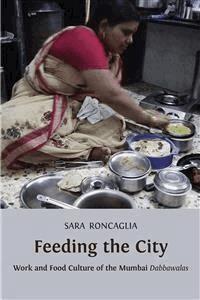
Cover image: Preparation of a meal in Mumbai, May 2007. Photo by Sara Roncaglia.
Translated from the Italian by Angela Arnone.
Typesetting by www.bookgenie.in
All paper used by Open Book Publishers is SFI (Sustainable Forestry Initiative), and PEFC (Programme for the Endorsement of Forest Certification Schemes) Certified.
Printed in the United Kingdom and United States by Lightning Source for Open Book Publishers (Cambridge, UK).
Contents
Acknowledgements
Preface
Introduction
1. Bombay-Mumbai and the Dabbawalas: Origin and Development of a Parallel Economy
2. Dabbawala Ethics in Transition
3. Nutan Mumbai Tiffin Box Suppliers Charity Trust: The Shaping of Dabbawala Relations
Conclusions: Tastes and Cultures
Appendix: Theory and Practice for an Ethnography of Diversities
Glossary
Select Bibliography
Index
One blue-bright Bombay morning, in the middle of the masses on the street, I have a vision: that all these individuals, each with his or her own favourite song and hairstyle, each tormented by an exclusive demon, form but the discrete cells of one gigantic organism, one vast but singular intelligence, one sensibility, one consciousness. Each person is the end product of an exquisitely refined specialization and has a particular task to perform, no less and no more important than that of any other of the six billion components of the organism. It is a terrifying image; it makes me feel crushed, it eliminates my sense of myself, but it is ultimately comforting because it is such a lovely vision of belonging. All these ill-assorted people walking towards the giant clock on Churchgate: they are me; they are my body and my flesh. The crowd is the self, fourteen million avatars of it, fourteen million celebrations. I will not merge into them; I have elaborated myself into them. And if I understand them well, they will all merge back into me, and the crowd will become the self, one, many-splendoured.
Suketu Mehta, Maximum City: Bombay Lost and Found (London: Headline Review, 2005), p. 590.
Acknowledgements
This book is the product of a dual research effort: its subject matter was the topic of my PhD in Political, Social and Psychological Sciences at Genoa University under the supervision of Marco Aime, Professor in Cultural Anthropology; it was also one of the issues addressed by a collective research project I was involved in, called Diversities: A Project On People and Institutions, sponsored by ENI’s Enrico Mattei Foundation (FEEM), and carried out under the scientific supervision of Giulio Sapelli, Professor of Economic History.
I would like to thank ENI’s Enrico Mattei Foundation and Professor Giulio Sapelli for supporting my research in India; Professor Marco Aime for letting me work freely on my own research project; the Human Sciences Research Methodology PhD teaching collegium at the University of Genoa’s Faculty of Education Sciences; Professor Pinuccia Caracchi and, particularly, Professor Alessandra Consolaro, for sharing their profound knowledge of India with me; Professor Giorgio Solinas for the thought-provoking discussion during our PhD evaluation session; and lastly, Professor Giuliano Boccali. My thanks also to Carlo Petrini and Federica Tomatis for letting me know that Raghunath Medge and Gangaram Talekar, President and Secretary of the Nutan Mumbai Tiffin Box Suppliers Charity Trust, would be attending the 2006 “Terra Madre” event in Turin, thus providing me with the opportunity to meet them. My special thanks to all the dabbawalas who were patient enough to talk freely with me during our interviews.
I would never have been able to carry out this research without the help of many different people: I would like to thank Francesca Caccamo for translating my words into Hindi during interviews with non-English-speaking local informants; Usman Sheikh for interview transcriptions; Rebecca and Kenneth David for hosting me during my first stay in Mumbai; Shailindra Kaul and Abjijeet Sandhu for their whimsical yet important friendship; Sandy; Kalpana; Chiara Longo and her husband Sebastien Bastard for their hospitality during my second stay in Mumbai; Clara; Meena Menon; and the Annapurna Association. I would also like to thank Professor Roberta Garruccio, who—after reading and supervising my final dissertation at Milan University several years ago—also offered to comment on my doctoral dissertation. I am particularly grateful to the late Armando Marchi, head of Barilla-Lab, whom I remember fondly for the stimulating food industry research he allowed me to conduct at Barilla. My heartfelt thanks go to Daniele Cologna for all the advice that has been forthcoming over the years, accompanying my intellectual evolution.
I would like to thank Alessandra Tosi and Open Book Publishers for including my book into their catalogue, and my editors Corin Thorsby and Bérénice Guyot-Réchard for their comments and intellectual advice. My heartfelt thanks to Ishan Mukherjee, wishing him all the best for his studies. Finally, I would like to thank my translator Angela Arnone, with whom a close relationship developed as we debated the most appropriate route for rendering my research and ideas for the English-speaking reader.
This work is dedicated to Kenneth David, killed tragically in a fatal plane crash while I was in Mumbai.
And to my loved ones.
Preface
This book is about the anthropology of the city or, more accurately, anthropology in the city, based on the extensive map of one of the many systems of circulation: food. Food that is carried, delivered and returned from the kitchen to the consumer. The Mumbai dabbawalas are food deliverymen that connect homes and workplaces—messenger boys, urban servants who are fast and precise, trustworthy and discreet, clean and punctual. Service, certainly, but service immersed in the teeming ocean of urban modernity. Each day they move along the rail network; their work thus entails a journey and this journey is repeated on a daily basis, with long itineraries cadenced by the sequence of customer addresses where they must deliver without fail the tightly sealed tin that each wife has prepared and handed to them early in the morning, to be taken to a husband working in an office, on a construction site, in a shop, many kilometres away.
A mild sense of duty, of a delicate, humble and scrupulous mission, interwoven with a generous readiness to work for the good of the customer: these are the recurring motifs of work that seem to make the dabbawalas happy. They bring together the beneficiary and the benefactor (and is this not pure Jajmani philosophy?) in a shared satisfaction, yet seem to expand unexpectedly in the heart of frenzied modernisation. Food is a message, transmitted through nutrition: more than in other contexts, its energetic communication is released socially and physically in space. Born out of tender, loving care, it bridges the distance between one individual and another, passing the expanses desecrated by traffic, the mingling of people and vehicles, environmental impurities of exhaust gases, and inclement weather.
The custom of ordering takeaway food, to be delivered from the restaurant to the consumer’s house, is far more widespread in the western world, although it is also to be found in Indian metropolises. This is a formula that every now and again replaces home-cooked food prepared in the family kitchen, like “going out to eat” without actually going out, a small exception to domestic routine. The dabbawala service is just the opposite or the reverse: it conjures up the feeling of home for those away from home. Each day it reinforces ties between the family and the workplace so that the domestic intimacy enclosed in the tiffin can emerge during a lunch break in the office, on a building site, in a factory. In this respect, it is quite similar to the custom once frequent in rural society whereby all kinds of farmworkers were ensured a midday meal.
Sara Roncaglia’s description of the Mumbaite system reveals that, in contrast with more sophisticated market cultures, the order of affections and food containers maintains its tenacious hierarchy of precedence, which is as much about ethics as it is about taste and aesthetics. This is an order that establishes the indissolubility of the nutritional bond between family and work, men and women, etiquette and bodily ritual, and community membership. I believe that this is where the source of an investigative critique can be perceived, suggesting opportunities for research that will sound the innermost depths of the emergence or development of strongly cultural new urban trades. Such trades can take root deep in the cultural sensitivity of a society swarming with ethnic and religious contacts, innervated with open technologies and abysmal poverty, imbued with deep malaise and rocked by the tremors of social distinction. The Mumbai dabbawalas are not just a trade corporation but also a structured community, with dense social identity and cohesive recognition ties. The network of responsibilities, functions and organisational complementarity that forms the setting for the work of something like five thousand meal delivery men does not serve only to ensure the best technical standard for the service system. It could be likened to a modern guild, where work and social identity, devotion and economic gain, even the sharing of beliefs and religious works, as well as mutual aid, are part of this business culture.
Similarly, and from the same root, they produce and administer a symbolic substance without which the very existence of services would be compromised, or at least altered, in that implication of oriental charitas (and quite different from Christian charity) in which the welfare of the customer and the service provider are identified. This concept leads to a reflection on the comparison between the economic principles that distinguish different cultures: Italian, of British origins (slowly assimilated in Latin regions), and Hindu, or more broadly southern Asian. In the first case, it is the meeting of interests (or egotisms) to drive the motor of exchange and ultimately to fuel market solidarity on the basis of a useful cross-calculation: a concordance of convenience. In the second case, which extols trade and links the good to the useful, opportunities to achieve personal benefit is seen (or is represented) as an offering for the benefit of others: the offering of oneself or simply an offer to accord with the customer’s contentment. In the most intense versions of devotion, indicated in traces of tradition, of dharma, this projective orientation achieves forms with greater signs of voluntary dependency. There is no need to stress that in this economic ethic the rhetoric of selflessness (of an uplifting mission) assumes the role of an ideology of social status and easily becomes an image—something that approaches advertising, the self-satisfied glorification of the corporate self, generous, benevolent, humble, and even joyfully submissive.
A fine, tenuous but persistent web enfolds the ramifications of a city that stretches endlessly, enfolds it with an artful ballet of deliveries, cadenced in minutely signed identification symbols (the dabbawala alphabet, writes the author: a system of distinctive symbols for groups and individual carriers, also designating places for sorting, delivery and destination). This sort of encrypted language, similar to an elementary information system that combines space and people, actually accompanies the daily weaving of the impalpable web of clientele and servers. Filaments of paths, competition, commodification: no less than other utilitarian-type exchanges, here the portions of comfort (perhaps consolation or affection) that the tiffin contains in its sealed interior, incorporate the insuppressible quality of the contents.
In the final part of her book, Roncaglia gives an overall (and wide-ranging) key for interpretation: gifts and merchandise move hand in hand in this system. Perhaps they even fuse, complement each other. In the wake of Godbout, the scenario transcends the cold mechanics of efficiency, profitability and monetisation: the ultimate utility of the cycle of patrons, services and remunerations does not drain away in the production or reproduction of material advantages, but in the creation of community ties. Compared to this encompassing aim, dabbawala work appears as a “business activity incorporated in a moral perspective”. In general, this opinion can be accepted, provided that the commitment does not preclude further steps, which may be even more unpredictable and riskier, and may lead to the products of this moral economy flowing effectively into other, uncontrollable market circuits.
Pier Giorgio Solinas
Siena, 3 March 2012
Introduction
This book is an ethnographic analysis of a local workers cooperative in Mumbai: the Nutan Mumbai Tiffin Box Suppliers Charity Trust (NMTBSCT). This enterprise employs up to 5,000 dabbawalas, who have been delivering 200,000 lunch-dabbas daily to students, office workers and factory workers since the end of the nineteenth century.1 A dabba, also known as a “tiffin”, is a specially designed circular steel box made up of three separate sections that fit together to form a cylinder of about 20 cm in height. These food containers are commonly used by Mumbaikars (the inhabitants of Mumbai) to carry their lunch, which is prepared in their home and then delivered to them in their place of work by a dabbawala. The system allows everyone to eat home-cooked food without hygiene and cross-caste contamination risks.
The first chapter looks at the cultural, historical, and economic relationships between the city of Bombay-Mumbai and the NMTBSCT.2 The city provides the dynamic backdrop for the establishment of a system of food distribution that offers a sustainable method of feeding the city in harmony with traditional values. The dabbawalas do not consider this to be merely a job, a viable means for mostly poor and illiterate workers to survive: they see it as their profession.
The second chapter describes how religion, caste, and ideology have converged to generate meaning, ascribing specific values to Indian food. Here I apply a gastrosemantics-oriented approach, exploring how culture makes use of food to signify, comprehend, classify, philosophise, and communicate. This chapter offers a description of the complex relationships that link this process of cultural semantification of food to daily religious practices, the daily routine of Indian women and, lastly, surviving caste-related hierarchies in a vast Indian metropolis like Mumbai.
The third chapter describes the organisational structure of the NMTBSCT—its operational guidelines, its generational turnover, distribution logistics, the delivery process, and the technical solutions that make it extraordinarily efficient despite considerable odds. This includes simple techniques—like the symbols drawn on the dabba to identify the recipient’s location—or more complex expedients, like the use of the railway network as a sort of mind-map that allows the dabbawalas to establish a symbolic and material affinity with this megacity of nineteen million inhabitants.
The closing chapter penetrates the tight-knit relationship that links the entire system of dabba preparation and distribution to the cultural processes of Bombay-Mumbai’s nutritional transformation. The chapter traces this relationship back to the reasons that have made this Indian metropolis a truly global city; it looks at the eating habits and value systems ascribed to food by the many different migrant groups that make up the city’s population. The ongoing acculturation process that accompanies the continuous inflow of migrants of very diverse origins has forged the city’s characteristic nutritional physiognomy, recognisable in the diversity of cuisines and eating habits. Yet as the shift from old Bombay to new Mumbai progressed over time, there have also been changes in the tensions between different minorities and local communities, exacerbated by the city’s growing ethnicisation. Certain groups have claimed collective rights on the grounds of identity and affiliation to particular castes, regional origins or language. Mumbai has become the stage for bloody racial and religious clashes, and the groups involved usually consider food the prime marker of differentiation and separation. Food has come to express distinctions and rivalries that to some extent already existed within the Indian cultural tradition, but have now been allowed to degenerate into overt political hostility and outright violence. In this harsh new climate, the “other” is subject to a kind of cultural cannibalism, as each social group aspires to an exclusive monopoly of power and culture.
These conflicts and changes are examined using the “foodscape” concept—a comprehensive approach to global symbolic and material shifts that affect food itself, food cultures and nutritional practices. The case of the dabbawalas helps us to understand how taste—the discerning and distinctive aspect of any food-related practice—is becoming a key factor in worldwide cultural transformation. Taste is not conceived simply as a sensorial impulse, but as a signifier, a cultural construct that is socially engineered to transform and lend new meaning to geo-political relationships.
Finally the appendix provides an extensive introduction to the fundamental issues that made my fieldwork possible. It analyses the polysemic nature of cultural diversity, embracing the multitude of meanings attributed to the subject. The diversity theme is usually addressed in relation to practices of social acceptance or rejection of otherness within organisations and institutions. In this perspective, my research is closely entwined with notions of identity, gender, and economic and social status in ethnic and religious minorities.
The book’s title, Feeding the City, grew out of this consideration and the verb “to feed” is used here in the sense of “providing nutrition”. It is an explicit reference to the way a nutritional regimen, a specific diet, affects an organism’s state of good or poor health. Stretching the organic metaphor, food can be seen as a vector of phenomena expressing the easy or uneasy coexistence of different cultures in urban contexts. In this perspective, the way the city feeds itself is crucial for a broad cultural anamnesis of Mumbai. Thanks to the daily work of the dabbawalas, these cultural shifts come to light as the meals are ferried around the entire city in a distribution system that offers a tangible testimony of cultural coexistence mediated by one of its most potent signifiers, and the one most essential to human physiology: food.
As the twenty-first century ushers in an era of increasing anxiety with regard to humanity’s ability to feed itself, we also witness the gradual global ascendance of a unified cosmology of tastes well as a heightened concern with nutritional practices. This trend is driven by a growing consensus on the importance of food—what it means, how it is produced and processed—and the deeper ethics of its preparation and consumption.
Foot Notes
1 I decided not to use diacritic marks when spelling Hindi and Marathi terms (nouns, names of people and places); nor do I use any Anglicisms in the transcription – such as double vowels (e, o) to express long vowels (i, u). The only exception is the term “dabbawala”, formed by the noun “dabba” and the suffix “wala”, which turns the word into a compound noun (like, for instance, “milk” and “milkman”). Please see the glossary for original spellings. The names of Mumbai districts are the official versions applied by the city’s authorities.
2 Throughout the text I have attempted to follow a historiographical approach, referring to the city as Bombay when referring to its history up to 1995, when the name was changed to Mumbai, and as Mumbai when discussing its situation during the subsequent years. The name-change came about as part of a concerted government strategy to set modern India apart from its colonial past. Yet given how the city’s inhabitants themselves tend to associate different meanings and allures to the old and the new name, in some cases I have found it more meaningful to keep the two names as one single construct (Bombay-Mumbai), reflecting two different, and yet complementary ways of understanding the city’s complex soul.
1. Bombay-Mumbai and the Dabbawalas: Origin and Development of a Parallel Economy
But if we do look back we must also do so in the knowledge—which gives rise to profound uncertainties—that our physical alienation from India almost inevitably means that we will not be capable of reclaiming precisely the thing that was lost; that we will, in short, create fictions, not actual cities or villages, invisible ones, imaginary homelands, Indias of the mind.
— Salman Rushdie1
Midday in Mumbai: teeming traffic besieges the city, lines of cars creep forward at a snail’s pace, people walk in the road, buses swerve into their bays for a split second, rickshaws and taxis veer into every tiny space, while placid cows browse amongst all kinds of garbage. Hooting horns and chaos. Lunchtime is coming up for most civil servants, office workers, and school children. Nearly two hundred thousand people are waiting for their dabbawalas, who arrive promptly with the tiffins they have to deliver.2Dabbas make a long trip every day to reach the people expecting them: a journey through the winding streets of this metropolis, with its twenty million or so inhabitants, and a solid history that goes back almost one hundred and thirty years.3
Origins of an alliance
The history of the dabbawalas runs parallel to that of Bombay itself. The archipelago that developed into the modern metropolis of Bombay became a centre of international trade during British rule.4 The city was given to Charles II by the Portuguese as part of the dowry for his marriage to Catherine of Braganza in 1661. In 1668, the city was leased by the Crown to the English East India Company (operating at that time out of the port of Surat in present-day Gujarat) for ten gold sovereigns. It was not until about 1780 that Bombay began to exceed the importance of Surat, India’s leading trading port. Thanks to exports of raw cotton and opium to China, what had appeared as a dreary fishing town—where the British had not expected to survive for more than two monsoons—became the second most important city of the colonial Empire.
The 1861 American Civil War gave further stimulus to Bombay’s development as the British textile industry moved its bases to India and used the city as a production and export centre. The metropolis experienced startling economic growth and attracted significant amounts of capital for the creation of new investment and employment opportunities. The most evident aspect of this change, a trait of Bombay still seen today, was a migrant workforce arriving from outlying rural areas in search of employment. The gradual extension of roads and railways (the first railway line from Bombay to Thana was opened in 1853) made it easier for increasing numbers of people to travel all over India. The end of the American Civil War and the ensuing crash of cotton prices were the first stumbling block in the city’s industrial expansion. But when the Suez Canal opened in 1869, it reduced the distance to London by approximately three-quarters, and cotton exports became one of the major contributors to the colonial economy. Bombay, a point where the land meets the seas, was christened by the British and grew into a commercial hub for the whole of India.
Lesen Sie weiter in der vollständigen Ausgabe!
Lesen Sie weiter in der vollständigen Ausgabe!
Lesen Sie weiter in der vollständigen Ausgabe!
Lesen Sie weiter in der vollständigen Ausgabe!
Lesen Sie weiter in der vollständigen Ausgabe!
Lesen Sie weiter in der vollständigen Ausgabe!
Lesen Sie weiter in der vollständigen Ausgabe!
Lesen Sie weiter in der vollständigen Ausgabe!
Lesen Sie weiter in der vollständigen Ausgabe!
Lesen Sie weiter in der vollständigen Ausgabe!




