


18,99 €
Mehr erfahren.
- Herausgeber: John Wiley & Sons
- Kategorie: Geisteswissenschaft
- Sprache: Englisch
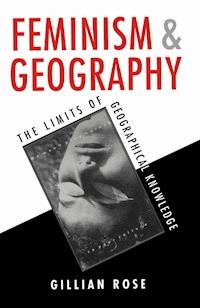
Geography is a subject which throughout its history has been dominated by men; men have undertaken the heroic explorations which form the mythology of its foundation, men have written most of its texts and, as many feminist geographers have remarked, men's interests have structured what counts as legitimate geographical knowledge. This book offers a sustained examination of the masculinism of contemporary geographical discourses.
Drawing on the work of feminist theories about the intersection of power, knowledge and subjectivity, different aspects of the discipline's masculinism are discussed in a series of essays which bring influential approaches in recent geography together with feminist accounts of the space of the everyday, the notion of a sense of place and views of landscape. In the final chapter, the spatial imagery of a variety of feminists is examined in order to argue that the geographical imagination implicit in feminist discussions of the politics of location is one example of a geography which does not deny difference in the name of a universal masculinity.
Sie lesen das E-Book in den Legimi-Apps auf:
Seitenzahl: 415
Veröffentlichungsjahr: 2013
Ähnliche



















FEMINISM AND GEOGRAPHY
The Limits of Geographical Knowledge
GILLIAN ROSE
Polity Press
Copyright © Gillian Rose, 1993
The right of Gillian Rose to be identified as author of this work has been asserted in accordance with the Copyright, Designs and Patents Act 1988.
First published in 1993 by Polity Press in association with Blackwell Publishers Ltd
Reprinted 1996,2004,2007
Polity Press
65 Bridge Street
Cambridge CB2 1UR, UK
Polity Press
350 Main Street
Maiden, MA 02148, USA
All rights reserved. Except for the quotation of short passages for the purposes of criticism and review, no part of this publication may be reproduced, stored in a retrieval system, or transmitted, in any form or by any means, electronic, mechanical, photocopying, recording or otherwise, without the prior permission of the publisher.
Except in the United States of America, this book is sold subject to the condition that it shall not, by way of trade or otherwise, be lent, re-sold, hired out, or otherwise circulated without the publisher’s prior consent in any form of binding or cover other than that in which it is published and without a similar condition including this condition being imposed on the subsequent purchaser.
ISBN: 978-0-7456-6844-4 (Single user eBook)
A CIP catalogue record for this book is available from the British Library.
Typeset in 10 on 12 pt Times
by Best-set Typesetting Ltd., Hong Kong
Printed and bound in Great Britain by
Marston Book Services Limited, Oxford
This book is printed on acid-free paper
For further information on Polity, visit our website: www.polity.co.uk
CONTENTS
Acknowledgements
List of Illustrations
1 Feminism and Geography: an Introduction
2 Women and Everyday Spaces
3 No Place for Women?
4 The Geographical Imagination: Knowledge and Critique
5 Looking at Landscape: the Uneasy Pleasures of Power
6 Spatial Divisions and Other Spaces: Production, Reproduction and Beyond
7 A Politics of Paradoxical Space
Notes
Index
ACKNOWLEDGEMENTS
Many people have helped me to write this book. I can’t name everyone individually here, but to all I’m deeply grateful. Meetings of the Women and Geography Study Group of the Institute of British Geographers first made it seem possible to me that I could write in the academy. The Geography Workshop reading group in London, which frequently debates issues of power and discourse, made a project like this seem important and helped me to formulate my critique. Seminars in Bristol, Cambridge, Edinburgh, Lampeter, London, Oxford and Southampton have heard some of the arguments made here, and I’d like to thank their participants for their comments and suggestions. Liz Bondi, Steve Daniels, Felix Driver, Sue Ford, Louise Johnson, Michael Keith, Linda McDowell, Sarah Radcliffe, Nigel Thrift and Margaret Whitford read versions of various chapters; their comments have been invaluable. Discussions with students taking my course in Cultural Geography at Queen Mary and Westfield College helped me to write chapter 5; Peter Sunley was also very helpful. Jan Penrose gave good advice when it was sorely needed. I’m grateful to my department at Queen Mary and Westfield College for a study leave term. Finally, I especially want to thank Steve Pile and Ann Taket, both of whom read the manuscript in full and talked with me about it in detail. With friends and colleagues like these, all errors of interpretation must remain mine alone.
Illustration 1 is reproduced with permission from D. N. Parkes and N. J. Thrift. Times, Spaces and Places: a Chronogeographic Perspective (John Wiley, Chichester, 1980), p. 252. Illustration 2 is reproduced by courtesy of the Trustees, The National Gallery, London. Illustration 3 is taken from Underweysing der Messung (Nuremburg, 1538).
Gillian Rose
London
LIST OF ILLUSTRATIONS
1 An example of a time-geography diagram.
2 Mr and Mrs Andrews, by Thomas Gainsborough.
3 A Draughtsman Drawing a Nude, by Albrecht Durer.
1
FEMINISMAND GEOGRAPHY:AN INTRODUCTION
The academic discipline of geography has historically been dominated by men, perhaps more so than any other human science. In the UK, the Royal Geographical Society refused, with a few rare exceptions, to elect women as fellows until 1913. Between 1921 and 1971, a mere 2.6 per cent of papers in the Annals of the Association of American Geographers were written by women; in Economic Geography the figure was 6.0 per cent. In 1973, 12.3 per cent of members of the Association of American Geographers were women, and in institutions offering higher degrees in geography in the USA and Canada only 3.1 per cent of regular staff members were female.1 Between 1973 and 1978, women authored 9 per cent of the papers in Australian Geographer.2 Five per cent of the papers in Transactions of the Institute of British Geographers were by women between 1974 and 1978; and between 1989 and 1990, 13 per cent of papers in Area were authored by women.3 In 1978, only 7.3 per cent of full-time university teachers of geography in the UK were women: by 1988, this percentage had actually fallen to 6.9 per cent.4 In 1991, 25.1 per cent of members of the Institute of British Geographers were women.5 There is other evidence to show that women work disproportionately in part-time and temporary posts, are consistently paid less, are awarded fewer honours, and hold positions of power less often than men in the discipline (the Institute of British Geographers has only ever had one woman president, Alice Garnett). Linda McDowell, among others, has catalogued the verbal, vocal and visual power which many men wield in geography, their patronizing attitude to female colleagues, the jokes, the sexual harassment of women, and men’s reluctance to acknowledge either women’s intelligence or their dedication to teaching and to students when it comes to appointments and promotions.6 Clearly, women have been and continue to be marginalized as producers of geographical knowledge. Nor are they prominent as the subjects of that knowledge. Not until 1982 was there enough work on women by geographers (usually women too) for the first systematic survey of geographical studies of women to be published.7 In 1984, the first – and still the only – book-length overview of geography and gender was published; it is now out of print.8
Feminist geographers have long argued that the domination of the discipline by men has serious consequences both for what counts as legitimate geographical knowledge and who can produce such knowledge. They have insisted that geography holds a series of unstated assumptions about what men and women do, and that the discipline concentrates on the spaces, places and landscapes that it sees as men’s.9 This bias in research topics is argued to have two main effects. The first is that it makes the discipline more appealing to men than to women, and it is thus cited as a major reason why women choose to leave geography, particularly in the shift from undergraduate to postgraduate work. The second effect is the assumption held by many male geographers that women should not really be interested in geographical topics – one of the first discussions of the male domination of geography described it as the result of ‘stubborn, persistent discrimination’ against women trying to enter the profession.10 The preponderance of men in the discipline not only results in women not being studied by academic geographers, then, but also in too few women academics in geography.
Open criticism of women’s under-representation in geography began to be published in the discipline’s journals in the early 1970s. According to Zelinsky, the timing of this discussion can be attributed to the slightly belated impact on geography of the liberation movements of the late 1960s, including the civil rights movement and feminism.11 Others have commented that the timing coincides more directly with anti-sex discrimination legislation in the USA and a fear that geography departments there might face legal action;12 certainly interest in women’s position in British geography began rather later in the 1970s. In the USA and the UK, the initial demands were for women to have equal access to the discipline as its practitioners, and for women to receive more attention in geographical research. Rapidly, however, a more explicitly feminist geography developed, which offered a critique not only of what geography looked at, but also of the concepts used by the discipline to organize its knowledge in order to exclude what it saw as women’s issues. This critique has surely been the most challenging and exciting development in geography in the past 15 years. The early insistence that women matter has led to a radical reworking of how geographers can think of social life. The socialist feminism of most – though by no means all – feminist geographers has argued that women are associated with reproductive labour, and that this ideological association is a fundamental aspect of the division of labour in workplaces, between work and home, and in the home. Feminist geographers insist that reproduction is as important a part of social and economic life as the sphere of production that geographers have traditionally explored, and that the interconnections between the two spheres are central to a fully human geography which acknowledges women as social subjects. Feminist geographers have fragmented the old categories of geography and added new concerns through richly complex empirical work. Excellent and detailed feminist geographies of women have already been written, and I will not repeat them here. Instead, I focus on rather a different issue: why contemporary human geography continues to be so resistant to work on and by women.
Lesen Sie weiter in der vollständigen Ausgabe!
Lesen Sie weiter in der vollständigen Ausgabe!
Lesen Sie weiter in der vollständigen Ausgabe!
Lesen Sie weiter in der vollständigen Ausgabe!
Lesen Sie weiter in der vollständigen Ausgabe!
Lesen Sie weiter in der vollständigen Ausgabe!
Lesen Sie weiter in der vollständigen Ausgabe!
Lesen Sie weiter in der vollständigen Ausgabe!




