


Erhalten Sie Zugang zu diesem und mehr als 300000 Büchern ab EUR 5,99 monatlich.
- Herausgeber: Mercier Press
- Kategorie: Geisteswissenschaft
- Sprache: Englisch
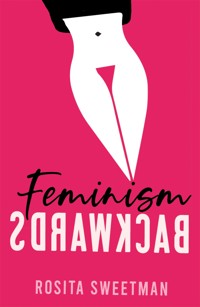
Feminism Backwards is part memoir, part documentary. A founding member of the Irish Women's Liberation Movement Rosita Sweetman gleefully recalls the triumphs – and the tribulations – of trying to drag a reluctant Ireland into the 20th Century, crucially, re-appraising Chains or Change the IWLM's famous pamphlet, detailing what life was like for women in 1970s Ireland - appalling. Feminism Backwards is also a howl of despair at how women have been treated worldwide down through the centuries, and how misogyny and sexual repression got such a stranglehold on Ireland. Having a survived a marriage break up Rosita re-found her feminism sadly buried, along with her chutzpah. She passionately believes feminism is not about blaming men, or pushing a few women to the top so they can be 'she-men' for the patriarchy. It's about creating a world fit for everyone.
Sie lesen das E-Book in den Legimi-Apps auf:
Seitenzahl: 297
Veröffentlichungsjahr: 2020
Das E-Book (TTS) können Sie hören im Abo „Legimi Premium” in Legimi-Apps auf:
Ähnliche



















To my darling Chupi and Luke— my sun, my moon and all my stars.
MERCIER PRESS
3B Oak House, Bessboro Rd
Blackrock, Cork, Ireland.
www.mercierpress.ie
www.twitter.com/MercierBooks
www.facebook.com/mercier.press
© Rosita Sweetman, 2020
Epub ISBN: 978 1 78117 758 7
This eBook is copyright material and must not be copied, reproduced, transferred, distributed, leased, licensed or publicly performed or used in any way except as specifically permitted in writing by the publishers, as allowed under the terms and conditions under which it was purchased or as strictly permitted by applicable copyright law. Any unauthorised distribution or use of this text may be a direct infringement of the author’s and publisher’s rights and those responsible may be liable in law accordingly.
‘The vote, I thought, means nothing to women, we should be armed.’
Edna O’Brien,Girls in their Married Bliss, 1964
‘I wasn’t born a feminist. Life made me one.’
Mamo McDonald, ICA
‘Each time a woman stands up for herself, without knowing it, possibly without claiming it, she stands up for all women.’
Maya Angelou
‘Feminism, in its true sense, is no more than the attempt to restore to the human community part of its own dignity.’
Eavan Boland
Contents
Prologue
SECTION I
All aboard
So, Who I?
Dad’s Side
Seabank
Before and After
Boarding School
The Madrasah
The Night Before I was Expelled
Boys Boys Boys Boys Boys
The Dark Ages
SECTION II
A History of ‘Uppity Women’ in Ireland
Women and the Catholic Church
‘The Burning Times’
The Last Witch Burned in Ireland
The Great Hunger
Uppity Women
The Archbishop and Tampax
SECTION III
Sex,London and the IWLM
London and the 1960s
Really Christine Keeler
Dad’s Death
After
Abortion
‘Big Trinity Blonde’
The Irish Press
The Women’s Movement
Chains or Change
The Late Late Show
The Contraceptive Train
The Beginning of the End
Looking Back
SECTION IV
The Rising Wavesof Feminism
Feminism’s Foremothers in America
Hyena in a Petticoat
Amerikay
The Pill
Simone and Betty and Sigmund and Stokely
Consciousness Raising
Kate Millett and the ‘Lavender Menace’
SECTION V
Disappearing Feminism
On Our Knees and Connemara
How Come Your Feminism Disappears When You Most Need It?
A Love(ett) Child
Lashing Back
‘Crackpots’ and ‘the Eighth’
The Bishop, the American Girl and the Baby
Lethal Peril
Getting Clear
Mum
Ireland Old, Ireland New
How Feminism almost Died
In the End
Feminism Backwards
Bibliography
Acknowledgements
Endnotes
About the Author
About the Publisher
Prologue
Oh Ireland, you mad, crazy, schizophrenic creature you!
One minute you’re hopeless and ruined, a rain-saturated hag, a priest-ridden, drink-sodden curmudgeonly disaster fucked over for centuries by the British, latterly ruled by hatchet-faced Catholic nuns and priests in full drag, one killing the mammies and the babbies inside laundries, the others abusing the babbies behind the altar, in the confessional, on the summer ‘holidays’, all the while delivering po-faced diktats from pulpit and podium about ‘chastity’ and ‘purity’.
Another minute, Ireland, you’re cowed, cowardly, post-colonial, venal, hypocritical, two-faced, with a great big fat inferiority complex stuck on your shoulder. Your politicians, schooled by priests and nuns, don’t need to be told what to do by the Church, they have it done before the bishops even get their croziers out. There is only one kind of misbehaviour – being found out. Everything else can be shoved under the carpet – including the women and the babbies.
Darling Ireland, only nine years ago you went through a bank bust so ferocious it’s classified as one of the worst in banking history, with huge chunks of your beautiful, educated young having to emigrate; your builders, sons and grandsons of the builders of America, much of England, having to up sticks to Australia and Canada; many of your ‘ordinary’ people losing their life savings; with those unlucky enough to be on social welfare routinely abused, even blamed for the crash; with supports for the disabled, blind, sick and old cut to the bone, while the politicians and their banker buddies, who massaged the boom into the hideous bloated beast that it became, walked away with pensions of €3,000 a week! When the country was ruined! With one of the main banking players, who had jovially suggested to colleagues they pull a figure ‘out of their arse’ for the government regulators, getting a risible custodial sentence, and a mere three out of the other hundreds of boom boys, and girls, spending time in jail. Three!
Oh Ireland.
But before you could say ‘Land of Saints and Scholars me arse’, a fabulously beautiful new Ireland came into being on 25 May 2018, when 1.4 million people – many of them young emigrants flying home from Bangkok, Australia, London and Toronto, along with local women, men, grannies and grandads – voted to repeal the hideous Eighth Amendment to our constitution, freeing the way for the setting up of proper, safe and legal abortion services for our women here. At last.
One day we had faux priests and faux nuns, backed up by spineless politician chums, given apparently limitless time on the radio and TV, and in the newspapers, with money pouring in from America, to lecture us all good-o, threatening the usual fire and brimstone, eternal damnation in hell’s hottest hole, etc., for any woman who even dared to think about whether she could or would or should not have a baby. Even if the baby was dying inside her with a fatal foetal abnormality? Yes, said the fire and brimstone ones. Even if she was fourteen, had been raped by her father, and was suicidal? Most definitely, said the fire and brimstoners. Even if she was just too tired, too young, too old, too poor, too scared, too unloved to bring another baby into this world? Absolutely, screamed the fire and brimstone ones. They should have their babies regardless; we’ll get them adopted. Sure people are crying out for babbies to adopt.
As one writer, Donal O’Keefe, put it: ‘The Eighth Amendment meant [a woman] wasn’t dying enough to save her life until she was dying too much to save her life.’1
Yup, that’s weird.
And then the people voted. And then the exit polls were taken. And, ‘Landslide!’ shouted TheIrish Times, unable to bear the tension any longer, even though it was only an hour since the polls closed. ‘Two-thirds majority in favour!’ quoted RTÉ an hour later.
We were all astounded. We watched and waited all the next day as the counts took place, terrified some terrible mistake had been made, that it would be only the cities voting Yes, only the young people, only those returning home. But no. Right across the country, right across every age group, every profession, every class, every sexuality, the two-thirds majority held.
YES, YES, YES, YES!
On the evening of the count there were jubilant scenes in the courtyard of Dublin Castle. The sun shone. The politicians were lauded. The campaigners, veterans and newbies were cheered to the rafters. A dog was held up like Simba in The Lion King and everyone went ballistic.
Next day some were a bit sniffy – imagine celebrating abortion, etc.; it’s unseemly. But it wasn’t the introduction of abortion that was being celebrated – it was the end of rule by Rome, by priests, by nuns, by fear, by hypocrisy, by that odious non-friend of humanity: respectability.
As journalist Fintan O’Toole said in a television discussion after the result, it was the end of an Ireland where we locked up women and children, where we tortured them, to maintain an illusion of piety.
It was a celebration for a new, hypocrisy-free Ireland where equality ruled. Where all the faux priests and nuns and preachers can preach away to their hearts’ content but have no power to ram their doctrines into our laws. Into our constitution. Into our bodies.
Ailbhe Smyth, the seventy-plus-year-old activist in feminist and lesbian politics, and one of the heroines of the referendum, said it was the first time in her entire life that she felt fully free as a woman in this country; it was as if an enormous burden had been lifted – the burden of the puritanical past. Professor Mary Corcoran of Maynooth University said, on RTÉ’s Today with Seán O’Rourke on 28 May 2018, that it was perhaps ‘the final shift from a theocratic republic to a civic republic’.
On 25 May 2018 a new ‘happy’ and ‘compassionate’ Ireland was born; the old black-and-white and grey Ireland, the old hag, the old sow who ate her own farrow, was finally laid to rest as the work begun (again) by feminism reached a successful conclusion.
How far we had come!
SECTION I
all aboard
So, Who I?
I come from what was once a more or less functional big Catholic family in Dublin, Ireland. My mum and dad met on the steps of her mother’s beautiful Georgian house, 24 Fitzwilliam Square, late one summer’s evening when Mum opened the hall door to see her medical student brother – very, very drunk – being held up by a tall, skinny young barrister with very, very blue eyes. Dad said it was love at first sight. They began dating, but Mum told him that love would have to wait; she had a few things to do first.
Having left school, Mum had decided she wanted to become a nurse. Granny – or ‘Gaga’ as we (lovingly) called her after one of us mispronounced ‘grandma’ – who wouldn’t even let her go ‘downstairs’ through the green baize door to the kitchens in Fitzwilliam Square to make a cup of tea, nearly lost her mind. There was NO WAY her daughter, whom she had spent years moulding into a ‘lady’, was going to become a nurse. No way! Nurses were skivvies! Nurses were nothing more than maids! Nurses were out of the question! There was a battle royale and, having lost the battle, Mum did what any young woman with self-respect would do – she left Gaga and Dad behind and headed up to Belfast, where she joined the war by signing on as an ambulance driver for the FANYs.
Take that, Mommie dearest.
She was there when the Nazis bombed seven kinds of hell out of Belfast in early May 1941: 900 people were killed, 1,500 seriously injured and, by some accounts, half of Belfast’s housing stock was damaged or destroyed. Half of it.
Dad and Granny sat in the latter’s drawing room, where Dad had been invited for afternoon tea. They listened to reports from the North on the radio, blank with terror.
Three days later a telegram arrived at Gaga’s house. ‘Alive and kicking, Una’.
Mum’s finest hour.
Mum seems to have battled, had to battle, Gaga from the get-go. She was determined not to be her mother’s plaything – a doll dressed in hand-stitched lawn-linen dresses with starched bonnets to match, photographed by the photographer of the day. Non! Mum wanted to be out riding with her brother, Denis; out with the other children who lived around the square; out with her adored dad, proudly holding the reins of his horse at a ‘meet’. Her nickname was ‘Punk’. Nothing and no one seemed to scare her.
Mum’s father, a doctor with the British Army, then Master of the Coombe Lying-in Hospital in Dublin, had been killed out hunting when his horse rolled on top of him at a water ditch. He had adored Mum and she him. Aged fourteen, she had made the journey home from boarding school in England on the mailboat to find her father laid out on the dining-room table for an autopsy, Gaga white-haired with shock and out in the garden screaming at God for taking her beloved.
After Mum’s return from Belfast, of course, all problems dissolved in the face of early married bliss. She and Dad set up home in ‘Phoenix Hill’, a beautiful Georgian house within the walls of the Phoenix Park; this was Grandfather and Granny Sweetman’s wedding present to them. Their first baby was a boy – very important in those patriarchal days – and they were much in love. It was still during the war, or the ‘Emergency’ as we referred to it in Ireland. A time when huge drays brought carts stacked high with turf in from the mountain bogs, barefoot children from the slums running alongside to catch windfalls, with rationing on everything – butter, tea, eggs, not to mention nylon stockings. Still, Mum always seemed happy when she remembered those times: Dad just about to saw off the bannisters on the stairs to make a fire when a friend delivered a bucket of coal; Mum heading off on her bicycle, lamp dimmed for the blackout, to collect the butter and sugar Gaga had saved for her; Dad, in desperation, smoking cigarette butts stuck through with a pin, retrieved from the ashes of the grate.
Life was an adventure. Fun.
Then catastrophe struck. Dad contracted TB. In those days the barbaric treatment on offer involved sawing open the chest, collapsing the lungs – removing, in Dad’s case, all of one lung and part of the second – followed by weeks lying on your back in a sanatorium. It was a disaster from which he never truly recovered.
Dad’s ill health soon returned. By now they had four children, and my twin sister and I were ‘on the way’. Dad was packed off to a sanatorium in Switzerland again, ‘Phoenix Hill’ had to be sold and Mum had to go back and live in her mother’s house.
She hated it. She raged against Dad for getting ill. It was his fault they’d been forced to sell their home, his fault she’d been forced, now with six children, back on her mother’s hospitality. He was useless.
Of course it was unfair of Mum to blame him. But where does fair come into matters of the heart?
Much, much later, when we young ones regaled each other with Mum’s sins, we remembered her reaction (told to us by Mum herself) to the nurse who had hurried in with an X-ray showing that two babies, not one, were on the way. ‘You’ll be very pleased to know you’re having twins, Mrs Sweetman,’ was met with Mum’s, ‘I’m not pleased at all, thank you very much.’
‘What a monster she is!’ we chanted. ‘How uncaring! What a bitch! No wonder we are all so fucked up!’
Not one of us thought: Jesus, the poor thing, she was still only in her thirties, her man was ill, her beautiful home was gone, she already had four children under five and was stuck back under her mother’s roof. Of course she didn’t want bloody twins! But by that time the female energy in the family had gotten so distorted that not one of us thought to support her, to try to understand.
Dad’s Side
Dad’s family, the Sweetmans, were originally Norman and ‘came over’ in the twelfth century. Unlike the largely Protestant Anglo-Irish, the Normans were mainly Catholic and so often sided with the Catholic/Irish cause. Many were landowners, brewers, lawyers.
Grandfather trained as a barrister, but was so shy, according to Mum, that he never once practised. Luckily for him he inherited money and was able to set up as a ‘gentleman farmer’ in ‘Derrybawn House’, a beautiful Italianate early 1800s Georgian mansion in Glendalough, home of the earliest monastic settlements in Co. Wicklow. ‘Derrybawn’ had its own mountains, ancient oak woods, rivers, parkland, farm and gardens. Once ensconced, Grandfather set about developing a pedigree Friesian cattle herd – the first in Ireland – and raising a large family. Perhaps, more accurately, giving Granny a large family to raise.
Grandfather was a seriously right-wing Catholic, supporting some very strange über-Catholic organisations – the Knights of Columbanus and the Order of Malta. He also had a legendary temper. Mum remembers the first time the dining room in Derrybawn mysteriously cleared, with six-foot-plus men suddenly plunging out through the French doors as Grandfather began his tic-tic-tic noises, the prelude to one of his explosions. Weathering such storms meant that Mum didn’t scare easily.
Staying in Derrybawn and heavily pregnant with her first child, she was cycling down to The Royal Hotel in Glendalough to meet Gaga for dinner one evening when Grandfather, who considered The Royal a den of low-life iniquity, came scorching down the avenue after her wielding his walking stick: ‘NOBODY FROM THIS FAMILY IS ALLOWED GO TO THE ROYAL HOTEL!’ Mum, unfazed, replied, ‘I am going to meet my mother in The Royal Hotel for dinner, and there’s nothing you can do about it Mr Sweetman’ and cycled on.
Apart from Granny Sweetman, had anyone else ever stood up to him so? I think not.
Dad was midway in a big noisy family of five brothers – Paddy, Rory, Michael, Hugh and Dad – and six sisters – Peggy, Maureen, Catherine, Joan, Bon and Bid. All the boys were educated, entered the professions – solicitor, barrister, farmer, priest, etc. – got married and had children. Only one of ‘the aunts’ did – Aunt Catherine. Mum thought it outrageous. Not a single party thrown in their honour! Not a single attempt to get them ‘out’ and into the world, to find them careers, husbands! Very old-fashioned, was Mum’s crisp verdict.
Seabank
When Dad finally came home from the sanatorium in Switzerland, he and Mum were given a present of another house. This time it came from Mum’s side of the family, or, more precisely, her father’s sister, Winifred Stack. Winifred had had a busy past. First married to an RIC man, after he died she had married Austin Stack, the Irish revolutionary and republican on the anti-Treaty side, and later minister for justice under Éamon de Valera. She was a member of Cumann na mBan, the revolutionary women’s branch of the Irish struggle, and had allowed her home, ‘Seabank’, to be used as a first-aid station, a locale for meetings, and a place to hide guns and men. Mum adored her.
It was at ‘Seabank’, looking out over Dublin Bay, that we became our own big, noisy, more or less functional family with me in the middle – four above and four below.
Oh ‘Seabank’, where happiness began. And ended.
It was there that Mum and Dad, on good terms again, gave dinner parties with roses cut from the garden in the centre of the dining table, a roast in the oven, a bottle of red wine opened and carefully decanted into the cut-glass Georgian decanter just washed in hot water and soap, their best dinner service and pungent Silvo’d candelabra on newspapers laid out on the kitchen table. Mum would be in a dress and wearing a necklace Dad had bought at Christmas.
It was also there that Mum got us ready for the hunt, me weak with nerves, the white shirt cold on goose-bumped skin and Mum saying, ‘Remember to keep your seat.’ Mum trialling a bay hunter the week before and Dad saying, ‘Just look at your Mother’s seat.’ Mum cantering around a lumpy field looking like a stranger – young, confident, whole, at ease.
It was from ‘Seabank’ that the big ones went off to boarding school, us middle ones doing homework at the nursery table, the little ones upstairs in the drawing room with Mum and Dad. It was in the hangar-sized garage that we kept the Connemara ponies, riding them, fat-tummied, farting from too much oats and grass, out across miles of wrinkled sands, the sea a ribbon of aquamarine in the distance. It was here that Dad cooked Sunday breakfast on the big stove, pockets bulging with eggs: ‘How many takers for eggs have I got today?’
Me, Dad, me, me, me!
It was at ‘Seabank’ that we had our own little empire: meat delivered in bloody brown-paper parcels tied with string by the butcher’s boy on his black bike; coal delivered on a horse and cart, the coalmen’s eyes blue diamonds in blackened faces, blackened sacks tied around their shoulders like shawls; and the dry-cleaning carried carefully up the front steps in crackling paper by a man in suede shoes, Mum saying they were ‘co-respondent shoes’. Dad laughing, his head thrown back, me saying, ‘What does co-respondent mean?’ Mum and Dad exchanging glances, more laughter, the laundry delivered and collected in big, creaking wicker baskets in a red van loudly bannered ‘SWASTIKA LAUNDRY’.
In the summer, Mum and Dad gave drinks parties upstairs, with us children out all day in the garden, building dens and hideouts, and playing games that went on for days. My brother teaching us how to play cricket: LBW! Catch the bloody ball, would you? It hurts! The hurtling ball, brick-heavy inside its tight leather stitching. My brother teaching us how to box, how to use his air gun.
The last summer before disaster hit was a scorcher, everyone brown, in shorts, summer dresses, linen jackets, out in the garden under the big old greengage tree from June till September.
In the black-and-white photos, I look as if I’m turning into a boy. I wanted to be a boy. I would be a boy. I would ditch all girliness and save my family from the storm to come.
In the same photos Mum has a strained expression, her face a Modigliani, inscrutable, tilted, holding my younger sister; Dad, festooned with brown-skinned children, looking across anxiously at her.
Before and After
Then, when I was ten, my little sister, Cathy, died.
Mum remembered a sort of ‘attack’ one night during her pregnancy but this was pre-scan days and only when Cathy was born was it discovered that she had ‘reversed ventricles’ and a hole in her heart. A ‘blue baby’. Being so vulnerable, she crept in under Mum’s defences and for the six short years of her life she was Mum and Dad’s main focus, the love of their lives. In a desperate last-ditch gamble to try to mend Cathy’s failing health, Mum had taken her over to a hospital in London for an operation. She died on the operating table. Dad hadn’t had the strength – or the courage? – to go over and be there with them.
Mum came home alone. She got into bed. And didn’t speak to any of us for what seemed to my ten-year-old self like 100 years. She particularly didn’t speak to Dad.
A fault line, one that had opened inside Mum when her own father had been killed, now yawned. Mum froze to the bone, travelling alone into a profound depression. Dad, broken with grief and guilt, peered in helpless.
Before Cathy’s death we were a family – Mum, Dad, one brother, eight sisters, beautiful old house by the sea with acres of garden, orchards, espaliered peaches on a warm granite wall, the front garden, the rose garden, the pussy willow orchard, the vegetable garden and the apple orchard. Life involved us sitting on the floor in the evenings, drying our hair in front of the banked turf fire in the drawing room, the long dark turves leaning in over the vermilion flames like upturned currachs, eating corn on the cob straight from Dad’s vegetable garden, hot butter running down our fingers, Mum one side, Dad the other. Mum after supper in front of the fire, reading us the classics: Little Women, Robinson Crusoe, Little Lord Fauntleroy, Tom Brown’s School Days, The Red Badge of Courage, all of Charles Dickens, Jane Austen, and Daniel Defoe. Dad listening, watching, enjoying. Huge, delicious roasts every Sunday with lashings of hot gravy, big trays of roast potatoes, mashed potatoes, vegetables, fruits, all from the garden. Ice cream! Children’s parties, visits to Gaga, weekends in Derrybawn. Aunt Maureen chasing a bat around the bedroom with a tennis racket at two in the morning. Us leaning in over the stable door, eyeing the gigantic bull all muscle and steam and snort. Piano lessons with Aunt Bon. Granny at the piano after dinner, an Edwardian lady in silk chiffon floor-length dress, softest blue cardigan and pearls: ‘Be-e-lieve me if all those endearing young charms’, everyone singing including the adults. Hanging out in the dairy with Aunt Bid, helping her churn, every surface sluiced, spotless, the air rich with wet butter glistening with oil, thick cream, warm milk straight from the Friesians. Winter hunting, getting ready, white shirt pressed, jodhpurs brushed, hard hat brushed, inside butterflies. Summer gymkhanas, the rich smells of horse dung, tea from flasks, churned grass. Visiting cousins, arguments, shouting, charades and dinner dances for the older ones. Month-long summer breaks when Dad got holidays and he and Mum rented a house in the country, Connemara or Kerry, decamping en famille for a month’s heaven with Dad around, Mum happier, everyone happier, days to explore, swim, new beaches, lakes or rivers every day, sea swims in freezing, salty, green-blue water, lake swims in silky brown, Dad fishing, picnics with cold sausages in tinfoil, hard-boiled eggs, a twist of salt in greaseproof paper, white-bread sandwiches, tomato or egg, make up your mind, quick, I’m starving, hot sweet tea from the flask, skin prickling with sunburn, climbing mountains – only one more ridge to go! – collecting blackberries, meeting strange boys with their hot country breath at evening ceilidhs, cousins visiting from England, blond-skinned, blond-haired and a little nervous.
After Cathy’s death we were Mum, Dad, brother, seven sisters, all in whited-out shock, in a shit, horrible house in middle-class suburbia because Dad wouldn’t stay at ‘Seabank’ – too many memories, he sobbed, while Mum silent-shrieked MEMORIES ARE ALL WE’VE GOT NOW! Dad gone, like a skeleton, a cut-out man barely able to breathe, heralding our new abode – ‘Here we are!’ I remember clenched red bricks, thorn bushes, thin gravel, earth that smelt of dog shit. Ponies gone, hunting gone, garden gone, vegetables gone, peaches espaliered against a warm granite wall gone, sea gone, sand gone, cantering farting ponies over ridged wet sand gone, salty wind cutting your face gone, Sunday roasts gone, big delicious Sunday breakfasts with everything piled up high on the oval dinner plate gone, big brother and big sister gone, sunny summer days under the greengage tree with garden chairs pulled out of the greenhouse and freshly whitely painted gone. Mum gone. Mum in bed day after day, sister number two standing at the end of the bed yelling, ‘YOU HAVE TO GET UP!’ ‘No,’ says Mum, shifting further down the bed, our no-to-everything Mum: No, no, no, no, no, no, no. Sister number two yelling at us. Air gone, hope gone, little sister Cathy gone gone gone.
Before it had been Mum and Dad suns at the centre, children planets held in their respective orbits around them. Now it was Mum lost in the frozen dark, Dad frantically sending out distress signals. The more we starving young ones orbited around Dad for warmth, the more frozen, isolated and bitter Mum became. We were a household crowded with females, but the chief female had withdrawn and so the balance in the family between male and female energy became fatally distorted. There was no therapy for Mum. No counselling. No help. Just the GP, a family friend, who was told to ‘buzz off’ when he stood uncertainly in the doorway of Mum’s room.
Boarding School
Three months before Cathy died, my sister and I had been sent off to boarding school.
The first time I dipped my toe into therapy, years later, I went straight back to walking down a long corridor, a nun beside me, my stiff new shoes echoing on the polished cement, marble-effect floor, my head blank but, weirdly, buzzing at the same time.
‘Walking into shock,’ the therapist said, delighted with all the imagery. ‘Classic.’
‘You mean I went into shock going to boarding school?’
‘Naturally!’
Two things I remember before Mum and Dad drove us down: a fortnight of mounting nausea, a strange, removed-from-reality feeling. Thinking: they cannot be sending us away from home – away from the family, away from supper, away from the ponies, away from the evenings in the drawing room, away from our dog Scutch, away from ‘Seabank’, away from the wrinkled sands – can they?
The other memory is standing in front of the mirror on Mum’s desk, my eldest sister giving me and my sister pudding-bowl haircuts. We went from pretty pre-teen girls with ‘Irish blonde’ hair to sexless (confused) choirboys with mud-coloured bobs. Was she trying to make us ugly? Several days later, off we went with our terrible haircuts and our trunks, school lists taped to the inside lids: two pairs of navy outdoor knickers, four pairs of white indoor knickers, two pairs of brown knee socks, two detachable white collars, one navy Sunday dress, two day uniforms, two jumpers, three vests, one sports skirt, one toothbrush, one flannel, one hand towel, one bath towel and two flannel nightdresses.
The morning Cathy died, a nun pulled us out of the refectory queue and said, ‘Your sister Cathy died this morning.’ Then she told us to rejoin the queue for maths. We were not brought home for Cathy’s funeral.
When we came home for the holidays everything that had been our family was over – Mum, Dad, the older ones, all cowed inside a tragedy we hadn’t been there for. Estranged at boarding school, we were now strangers at home.
With a young person’s blunt selfishness, I thought that I understood a little of Mum and Dad’s loss with Cathy’s death, but mostly felt alone and bewildered inside my own loss of them (to grief) and loss of home (to grief and to boarding school).
Oh good God, boarding school – how did anyone ever think it was an acceptable, desirable, character-building thing to do to young human beings? When we get more civilised I’m certain we’ll see it as akin to foot-binding in traditional China. Take a young, unsuspecting creature and, while they are smiling trustingly, bend their little foot back on itself with one savage twist, smashing tiny bones, cracking the arch. Next, bind up the mutilation and make them walk crippled for the rest of their life. Then, cruellest twist of all, make them believe it all was, and is, for the best.
Arguably boarding school is worse, as it involves mutilation of the self.
No wonder my ten-year-old self went into shock.
I hated the smells that didn’t smell like home. I hated the harsh surfaces, everything reeking of floor polish. I hated the thunder and clatter of the refectory. I hated the food boiled up in the industrial-sized kitchen smelling of cabbage and floor cloths. I hated the narrow beds lined up in the dormitories; the huge, badly shuttered windows; the nun in the morning annunciating the prayer, then hurrying down the centre aisle, whipping back the white curtains, whipping back your bed covers, ‘Up! Up!’, clanging her bell. I hated the way the older nuns’ false teeth whistled when they spoke. I hated their colourless spectacle frames. I hated the gargantuan size of everything, the huge grey prison of a building, the endless corridors, the massive stairs, the ceilings that seemed to be hundreds of feet high, the great lonely playing fields and the cawing rooks descending in clouds at dusk against grey skies. I hated that there were no men, no uncles, no cousins, no brothers, no boys. Nobody to turn to when things got too intense. Nobody to say, ‘Cut it out’, when things got too bitchy. Nobody to say, ‘Oh relax.’
Underpinning the unhappiness was the brutal unanswerable question: how could this new reality actually be? How could it be that from now on, i.e. forever, thirty-five weeks out of every fifty-two would be spent away from home, here in this prison run by all-female strangers, with all the adults agreeing it was a terrific thing, a fantastic opportunity, a gift?
The scariest thing is, you adapt. You develop what psychiatrists now call a ‘Strategic Survival Personality’ or a ‘false self’, a ‘Miss Jolly Hockey Sticks’ persona – a self who goes out into the world and does stuff loudly and jollily, while the real you, the shocked and frozen you, disappears ever deeper inside.
The more one adapted, the more the adults proclaimed: ‘How marvellous! She’s come round at last! They all do, you know! Well done, Reverend Mother! Bravo, Mistress of Studies!’
I turned into ‘Miss Jolly Hockey Sticks’. Then I was lost.
Years after leaving school I was coming up the front steps to a children’s party at Mum’s, baby in arms, toddler at my side. A friend from the old alma mater, also invited by Mum, appeared. In between chivvying toddler, shifting babe from one arm to another, ditto baby kit, going chat, chat, chat, chat, how are you, how are things, etc., in a flush of bonhomie I said, ‘It wasn’t that bad, was it?’ I can’t remember my old school friend’s reply because Mum looked up from her chair by the fire: ‘Don’t you remember how you used to cry?’
Talk about coming back down to earth with a fucking crash.
The Madrasah
Boarding school went like this: up at seven to a loudly called prayer from the dormitory nun. Tearing back of curtains, etc., nun calling ‘Up! Up!’ Slippers on, stand in line in the middle of the dorm to wash face with cold wet flannel and cold wet water at one basin, teeth done separately, spitting into blue tooth mug. Back to cubicle, get dressed, put veil on and file down to chapel. Hour-long mass, then a stampede to the refectory for breakfast. Their worst-ever breakfast concoction? Stewed cooking apples with cornflakes gone blotting-paper soggy on top. Otherwise, lumpy porridge, bread and jam. On Sunday, eggs fried to rubber, hanks of bacon with the hair still on, tea. After breakfast, lessons till 11 a.m. break. Fifteen minutes in the yard, then back to class till lunchtime. Most hideous lunch? Sausages cooked to the texture of a dead elephant scrotum with warm mashed potatoes, the eyes still in, made without salt or butter.
Letters – oh, precious letters! – were handed out after lunch so that the Mistress of Studies had time to read and, if necessary, censor them. The best one was on my sixteenth birthday from my very dashing boyfriend at boarding school in England with a 45 rpm copy of ‘Happy Birthday Sweet Sixteen’ – ‘since you’ve grown up your future is sewn up’ – the little disc played to near death in the recreation hall every evening, my whole class going demented with the romance of it.
After lunch there was forty-five minutes’ recreation: hockey or tennis outside, if it wasn’t raining; inside if it was. Lessons for the afternoon. Tea. Study for two hours. Then supper – more boiled sausages, the smell of them pervading the whole school. Half-hour recreation after supper. Dormitory. Bed.
Saturday was confession day. Sunday was benediction in the afternoon with incense, flowers and hymns, as well as an extra-long morning mass with white veils.
When I tried to explain it all, years later, to my darling daughter, she listened carefully. ‘So basically it was a Madrasah?’ (A college strictly for religious instruction.)
Oh my God, I thought, she’s right!




